Comparing Fire Retardancy in Polyurethane and Polyester Foams
FEB 26, 20269 MIN READ
Generate Your Research Report Instantly with AI Agent
Patsnap Eureka helps you evaluate technical feasibility & market potential.
Fire Retardancy Background and Foam Safety Goals
Fire retardancy has emerged as a critical safety consideration in foam manufacturing due to the inherent flammability characteristics of polymeric materials. The development of fire-resistant foam technologies traces back to the 1960s when increasing applications in furniture, automotive, and construction industries highlighted the urgent need for improved flame resistance. Early approaches focused primarily on additive flame retardants, but environmental and health concerns have driven the evolution toward more sophisticated molecular-level solutions.
The fundamental challenge in foam fire retardancy lies in the cellular structure that promotes rapid flame propagation through interconnected air pockets. When exposed to ignition sources, conventional foams undergo thermal decomposition, releasing volatile compounds that fuel combustion and generate toxic gases. This phenomenon has been responsible for numerous fire-related casualties, particularly in residential and commercial building fires where foam-containing furniture and insulation materials significantly accelerate fire spread.
Polyurethane and polyester foams represent two dominant categories in the global foam market, each presenting distinct fire behavior characteristics. Polyurethane foams, widely used in furniture and bedding applications, typically exhibit rapid ignition and intense heat release rates due to their chemical composition and cellular architecture. Polyester foams, commonly found in automotive and industrial applications, demonstrate different combustion patterns influenced by their aromatic polymer backbone structure.
The regulatory landscape has significantly shaped fire retardancy requirements, with standards such as ASTM E84, UL 94, and various international building codes establishing minimum performance thresholds. These regulations have driven technological advancement in flame retardant systems, pushing manufacturers toward solutions that balance fire safety with environmental sustainability and human health considerations.
Current safety objectives focus on achieving comprehensive fire protection through multiple mechanisms including ignition resistance, flame spread limitation, heat release reduction, and toxic gas emission minimization. The target performance criteria typically include achieving self-extinguishing properties within specified timeframes, maintaining structural integrity under fire exposure, and reducing smoke density generation. These goals necessitate integrated approaches combining material chemistry optimization, flame retardant incorporation, and manufacturing process refinement to deliver foam products that meet increasingly stringent safety requirements while maintaining essential performance characteristics such as comfort, durability, and cost-effectiveness.
The fundamental challenge in foam fire retardancy lies in the cellular structure that promotes rapid flame propagation through interconnected air pockets. When exposed to ignition sources, conventional foams undergo thermal decomposition, releasing volatile compounds that fuel combustion and generate toxic gases. This phenomenon has been responsible for numerous fire-related casualties, particularly in residential and commercial building fires where foam-containing furniture and insulation materials significantly accelerate fire spread.
Polyurethane and polyester foams represent two dominant categories in the global foam market, each presenting distinct fire behavior characteristics. Polyurethane foams, widely used in furniture and bedding applications, typically exhibit rapid ignition and intense heat release rates due to their chemical composition and cellular architecture. Polyester foams, commonly found in automotive and industrial applications, demonstrate different combustion patterns influenced by their aromatic polymer backbone structure.
The regulatory landscape has significantly shaped fire retardancy requirements, with standards such as ASTM E84, UL 94, and various international building codes establishing minimum performance thresholds. These regulations have driven technological advancement in flame retardant systems, pushing manufacturers toward solutions that balance fire safety with environmental sustainability and human health considerations.
Current safety objectives focus on achieving comprehensive fire protection through multiple mechanisms including ignition resistance, flame spread limitation, heat release reduction, and toxic gas emission minimization. The target performance criteria typically include achieving self-extinguishing properties within specified timeframes, maintaining structural integrity under fire exposure, and reducing smoke density generation. These goals necessitate integrated approaches combining material chemistry optimization, flame retardant incorporation, and manufacturing process refinement to deliver foam products that meet increasingly stringent safety requirements while maintaining essential performance characteristics such as comfort, durability, and cost-effectiveness.
Market Demand for Fire-Resistant Foam Materials
The global demand for fire-resistant foam materials has experienced substantial growth driven by increasingly stringent fire safety regulations across multiple industries. Building codes worldwide have evolved to mandate higher fire safety standards, particularly in commercial construction, residential housing, and public infrastructure projects. This regulatory landscape creates a compelling market pull for advanced fire-retardant foam solutions that can meet or exceed these safety requirements while maintaining functional performance characteristics.
The construction industry represents the largest market segment for fire-resistant foams, where both polyurethane and polyester variants find extensive applications in insulation, structural components, and interior furnishing. The automotive sector has emerged as another significant demand driver, with manufacturers seeking lightweight foam materials that provide superior fire resistance for seat cushioning, dashboard components, and interior panels. Aerospace applications further amplify market demand, where strict fire safety certifications require foam materials to demonstrate exceptional flame retardancy under extreme conditions.
Consumer awareness regarding fire safety has intensified following high-profile incidents involving foam-related fire hazards. This heightened awareness translates into increased demand for fire-resistant foam products in furniture manufacturing, mattress production, and home insulation applications. The hospitality industry, including hotels and commercial establishments, has become particularly focused on specifying fire-resistant foam materials to ensure guest safety and regulatory compliance.
Market growth patterns indicate strong regional variations, with developed markets emphasizing premium fire-resistant solutions while emerging economies focus on cost-effective alternatives that meet basic safety standards. The industrial sector, including chemical processing and manufacturing facilities, continues to drive demand for specialized fire-resistant foams capable of withstanding harsh operating environments.
Technological advancements in fire retardant additives and foam formulations have expanded application possibilities, creating new market opportunities in electronics, marine, and transportation sectors. The trend toward sustainable and environmentally friendly fire retardant solutions has opened additional market segments focused on halogen-free and bio-based foam alternatives.
Market dynamics suggest continued expansion driven by urbanization trends, infrastructure development, and evolving safety consciousness across both commercial and residential applications.
The construction industry represents the largest market segment for fire-resistant foams, where both polyurethane and polyester variants find extensive applications in insulation, structural components, and interior furnishing. The automotive sector has emerged as another significant demand driver, with manufacturers seeking lightweight foam materials that provide superior fire resistance for seat cushioning, dashboard components, and interior panels. Aerospace applications further amplify market demand, where strict fire safety certifications require foam materials to demonstrate exceptional flame retardancy under extreme conditions.
Consumer awareness regarding fire safety has intensified following high-profile incidents involving foam-related fire hazards. This heightened awareness translates into increased demand for fire-resistant foam products in furniture manufacturing, mattress production, and home insulation applications. The hospitality industry, including hotels and commercial establishments, has become particularly focused on specifying fire-resistant foam materials to ensure guest safety and regulatory compliance.
Market growth patterns indicate strong regional variations, with developed markets emphasizing premium fire-resistant solutions while emerging economies focus on cost-effective alternatives that meet basic safety standards. The industrial sector, including chemical processing and manufacturing facilities, continues to drive demand for specialized fire-resistant foams capable of withstanding harsh operating environments.
Technological advancements in fire retardant additives and foam formulations have expanded application possibilities, creating new market opportunities in electronics, marine, and transportation sectors. The trend toward sustainable and environmentally friendly fire retardant solutions has opened additional market segments focused on halogen-free and bio-based foam alternatives.
Market dynamics suggest continued expansion driven by urbanization trends, infrastructure development, and evolving safety consciousness across both commercial and residential applications.
Current Fire Retardancy Status in PU and Polyester Foams
Polyurethane (PU) foams currently exhibit inherently poor fire resistance due to their organic polymer structure and high surface area-to-volume ratio. When exposed to heat sources, PU foams undergo rapid thermal decomposition, releasing flammable gases and generating significant heat release rates. The combustion process typically initiates at temperatures around 250-300°C, with complete thermal degradation occurring between 400-500°C. Standard PU foams demonstrate limited oxygen index values of 17-19%, well below the 21% threshold required for self-extinguishing properties.
Polyester foams present similarly challenging fire retardancy characteristics, though with distinct behavioral patterns. These materials typically exhibit higher ignition temperatures compared to PU foams, ranging from 300-350°C, but demonstrate sustained burning once ignition occurs. The aromatic structure in polyester foams contributes to char formation during combustion, which can provide some degree of thermal barrier effect. However, unmodified polyester foams still fail to meet stringent fire safety standards required for most commercial applications.
Current fire retardancy enhancement strategies for both foam types rely heavily on additive incorporation. Halogenated flame retardants, particularly brominated compounds, have historically dominated the market due to their high efficiency at relatively low loading levels. These additives function through radical scavenging mechanisms in the gas phase, effectively interrupting the combustion chain reaction. Typical loading levels range from 10-25% by weight, depending on the desired fire performance level.
Phosphorus-based flame retardants represent the most significant alternative approach, operating through both condensed and gas phase mechanisms. These systems promote char formation while releasing phosphoric acid derivatives that dilute flammable gases. Red phosphorus, ammonium polyphosphate, and organophosphorus compounds are commonly employed, with loading levels typically ranging from 15-30% by weight.
Intumescent systems have gained considerable attention for both PU and polyester foam applications. These multi-component systems typically combine acid sources, carbon sources, and blowing agents to create expanded char layers during thermal exposure. The resulting protective barrier significantly reduces heat transfer and limits oxygen access to the underlying polymer matrix.
Mineral-based flame retardants, including aluminum trihydrate and magnesium hydroxide, provide environmentally favorable alternatives through endothermic decomposition mechanisms. These materials release water vapor during thermal decomposition, simultaneously cooling the polymer and diluting combustible gases. However, achieving adequate fire performance typically requires high loading levels of 40-60%, which can significantly compromise mechanical properties.
Recent regulatory pressures have accelerated the development of halogen-free flame retardant systems. Environmental and health concerns surrounding brominated flame retardants have driven extensive research into alternative chemistries. Nitrogen-based compounds, particularly melamine derivatives, have shown promising results through gas phase dilution and char promotion mechanisms.
The current technological landscape reveals significant performance trade-offs between fire retardancy and other critical foam properties. Mechanical strength, thermal insulation efficiency, and processing characteristics often deteriorate with increasing flame retardant loading levels, necessitating careful optimization of additive selection and concentration levels for specific application requirements.
Polyester foams present similarly challenging fire retardancy characteristics, though with distinct behavioral patterns. These materials typically exhibit higher ignition temperatures compared to PU foams, ranging from 300-350°C, but demonstrate sustained burning once ignition occurs. The aromatic structure in polyester foams contributes to char formation during combustion, which can provide some degree of thermal barrier effect. However, unmodified polyester foams still fail to meet stringent fire safety standards required for most commercial applications.
Current fire retardancy enhancement strategies for both foam types rely heavily on additive incorporation. Halogenated flame retardants, particularly brominated compounds, have historically dominated the market due to their high efficiency at relatively low loading levels. These additives function through radical scavenging mechanisms in the gas phase, effectively interrupting the combustion chain reaction. Typical loading levels range from 10-25% by weight, depending on the desired fire performance level.
Phosphorus-based flame retardants represent the most significant alternative approach, operating through both condensed and gas phase mechanisms. These systems promote char formation while releasing phosphoric acid derivatives that dilute flammable gases. Red phosphorus, ammonium polyphosphate, and organophosphorus compounds are commonly employed, with loading levels typically ranging from 15-30% by weight.
Intumescent systems have gained considerable attention for both PU and polyester foam applications. These multi-component systems typically combine acid sources, carbon sources, and blowing agents to create expanded char layers during thermal exposure. The resulting protective barrier significantly reduces heat transfer and limits oxygen access to the underlying polymer matrix.
Mineral-based flame retardants, including aluminum trihydrate and magnesium hydroxide, provide environmentally favorable alternatives through endothermic decomposition mechanisms. These materials release water vapor during thermal decomposition, simultaneously cooling the polymer and diluting combustible gases. However, achieving adequate fire performance typically requires high loading levels of 40-60%, which can significantly compromise mechanical properties.
Recent regulatory pressures have accelerated the development of halogen-free flame retardant systems. Environmental and health concerns surrounding brominated flame retardants have driven extensive research into alternative chemistries. Nitrogen-based compounds, particularly melamine derivatives, have shown promising results through gas phase dilution and char promotion mechanisms.
The current technological landscape reveals significant performance trade-offs between fire retardancy and other critical foam properties. Mechanical strength, thermal insulation efficiency, and processing characteristics often deteriorate with increasing flame retardant loading levels, necessitating careful optimization of additive selection and concentration levels for specific application requirements.
Existing Fire Retardant Solutions for Foam Materials
01 Use of halogenated flame retardants in polyurethane and polyester foams
Halogenated compounds, particularly brominated and chlorinated flame retardants, can be incorporated into polyurethane and polyester foam formulations to significantly improve fire resistance. These additives work by releasing halogen radicals during combustion, which interfere with the flame propagation process. The halogenated compounds can be added during the foam manufacturing process or applied as surface treatments to achieve desired fire retardancy levels.- Use of halogenated flame retardants in polyurethane and polyester foams: Halogenated compounds, particularly brominated and chlorinated flame retardants, can be incorporated into polyurethane and polyester foam formulations to significantly improve fire resistance. These additives work by releasing halogen radicals during combustion, which interfere with the flame propagation process. The halogenated compounds can be added during the foam manufacturing process or applied as surface treatments to achieve desired fire retardancy levels.
- Incorporation of phosphorus-based flame retardants: Phosphorus-containing compounds serve as effective flame retardants for both polyurethane and polyester foams by promoting char formation and reducing flammable gas evolution during combustion. These flame retardants can be reactive or additive types, with reactive phosphorus compounds chemically bonding to the polymer structure. The phosphorus-based systems provide fire protection while maintaining the physical and mechanical properties of the foam materials.
- Application of intumescent flame retardant systems: Intumescent flame retardant systems consist of multiple components that work synergistically to form an insulating char layer when exposed to heat or flame. These systems typically include an acid source, a carbon source, and a blowing agent that expand upon heating to create a protective barrier. The intumescent approach is particularly effective for polyurethane and polyester foams as it provides both thermal insulation and flame barrier properties without significantly affecting the foam structure.
- Use of inorganic flame retardant fillers: Inorganic fillers such as metal hydroxides, metal oxides, and expandable graphite can be dispersed within polyurethane and polyester foam matrices to enhance fire retardancy. These materials function through endothermic decomposition, releasing water vapor or other non-combustible gases that dilute flammable gases and cool the combustion zone. The inorganic approach offers advantages in terms of low toxicity and smoke generation compared to some organic flame retardants.
- Combination of multiple flame retardant mechanisms: Synergistic combinations of different flame retardant types can provide superior fire protection for polyurethane and polyester foams compared to single-component systems. These formulations may combine halogenated compounds with phosphorus-based additives, or integrate inorganic fillers with intumescent systems to achieve enhanced flame retardancy at lower overall additive loadings. The multi-component approach allows for optimization of fire performance while minimizing negative impacts on foam properties such as density, flexibility, and cost.
02 Incorporation of phosphorus-based flame retardants
Phosphorus-containing compounds serve as effective flame retardants for both polyurethane and polyester foams by promoting char formation and reducing flammable gas evolution during combustion. These flame retardants can be reactive or additive types, with reactive phosphorus compounds being chemically bonded into the polymer structure. The phosphorus-based systems provide excellent fire protection while maintaining the physical and mechanical properties of the foam materials.Expand Specific Solutions03 Application of intumescent flame retardant systems
Intumescent flame retardant systems consist of multiple components that work synergistically to form an insulating char layer when exposed to heat or flame. These systems typically include an acid source, a carbon source, and a blowing agent that expand upon heating to create a protective barrier. The intumescent approach is particularly effective for polyurethane and polyester foams as it provides both thermal insulation and physical protection against flame spread.Expand Specific Solutions04 Use of inorganic flame retardant fillers
Inorganic fillers such as metal hydroxides, metal oxides, and expandable graphite can be incorporated into foam formulations to enhance fire retardancy. These materials function by endothermic decomposition, releasing water vapor or other non-combustible gases that dilute flammable gases and cool the combustion zone. The inorganic fillers also contribute to char formation and provide a physical barrier to heat and flame propagation.Expand Specific Solutions05 Synergistic combinations of multiple flame retardant additives
Combining different types of flame retardants in polyurethane and polyester foams can produce synergistic effects that enhance overall fire performance beyond what individual additives can achieve. These combinations may include mixtures of halogenated and phosphorus compounds, or blends of organic and inorganic flame retardants. The synergistic approach allows for lower total additive loading while achieving superior fire retardancy, smoke suppression, and reduced toxic gas emission.Expand Specific Solutions
Key Players in Fire Retardant Foam Manufacturing
The fire retardancy comparison between polyurethane and polyester foams represents a mature market segment within the broader flame retardant industry, currently valued at approximately $8-10 billion globally and experiencing steady 4-6% annual growth. The industry is in a consolidation phase, dominated by established chemical giants including Dow Global Technologies, BASF Corp., Bayer AG, and Covestro Deutschland AG, who leverage extensive R&D capabilities and global distribution networks. Technology maturity varies significantly across regions, with companies like Wanhua Chemical Group and INOAC Corp. driving innovation in specialized applications, while traditional players like ICL-IP America and Albemarle Corp. focus on halogenated solutions. The competitive landscape shows increasing emphasis on sustainable, non-toxic alternatives, with emerging players from Asia-Pacific challenging established Western manufacturers through cost-effective production and localized solutions.
Dow Global Technologies LLC
Technical Solution: Dow has developed comprehensive fire retardant solutions for both polyurethane and polyester foams through their PAPI polymeric MDI systems and specialty polyols. Their approach focuses on incorporating halogen-free flame retardants directly into the foam formulation, achieving UL94 V-0 ratings while maintaining foam flexibility and durability. The company's technology emphasizes reactive flame retardants that chemically bond with the polymer matrix, providing superior fire resistance compared to additive approaches. Their solutions demonstrate significant improvements in limiting oxygen index (LOI) values, typically achieving 26-28% for polyurethane foams and 24-26% for polyester foams, while reducing smoke generation and toxic gas emissions during combustion.
Strengths: Market-leading chemical integration expertise, comprehensive product portfolio covering both foam types, strong regulatory compliance. Weaknesses: Higher cost compared to traditional additives, complex formulation requirements.
ICL-IP America, Inc.
Technical Solution: ICL specializes in phosphorus-based flame retardant systems specifically designed for polyurethane and polyester foam applications. Their FR-245 and FR-370 product lines utilize reactive phosphorus compounds that provide excellent fire retardancy through both gas-phase and condensed-phase mechanisms. The technology achieves flame retardancy by promoting char formation and releasing phosphoric acid derivatives that dilute flammable gases. Their solutions typically improve LOI values to 28-32% for polyurethane foams while maintaining foam cell structure integrity. The company's approach focuses on halogen-free formulations that meet stringent environmental regulations while providing superior fire performance in furniture, automotive, and construction applications.
Strengths: Specialized phosphorus chemistry expertise, environmentally friendly halogen-free solutions, proven performance in multiple applications. Weaknesses: Limited to phosphorus-based systems, potential hydrolysis issues in humid conditions.
Core Fire Retardant Mechanisms in Foam Chemistry
Polyurethane foam and manufacturing method therefor
PatentWO2022260363A1
Innovation
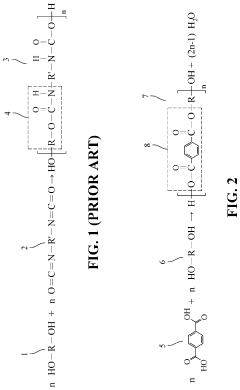
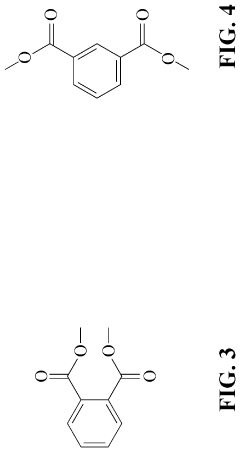
- A polyurethane foam is produced using a reaction product of polyester polyol and isocyanate, where the polyester polyol is formed from a composition containing isophthalic acid and phthalic acid, optimizing the molar ratio and equivalent ratio of these aromatic carboxylic acids and alcohols to achieve a flame retardant index of 130 or less, thereby improving both flame retardancy and heat resistance.


Flame-resistant polyurethane foam material
PatentInactiveUS20210122872A1
Innovation
- A flame-resistant polyurethane foam material is developed using a polyester polyol with a high content of terephthalic acid structure and a phosphate ester with a benzene structure as a flame retardant, improving structural strength, hardness, and flame resistance through a condensation polymerization reaction and addition of a foaming agent, catalyst, and optional additives.
Fire Safety Regulations and Standards for Foam Products
Fire safety regulations and standards for foam products represent a complex landscape of international, national, and industry-specific requirements that directly impact the development and application of polyurethane and polyester foams. These regulatory frameworks have evolved significantly over the past decades, driven by tragic fire incidents and advancing scientific understanding of foam combustion behavior.
The International Organization for Standardization (ISO) provides foundational standards such as ISO 5660 for cone calorimetry testing and ISO 9705 for room corner fire tests, which establish baseline methodologies for evaluating foam fire performance. In Europe, the Construction Products Regulation (CPR) mandates specific fire classification systems ranging from A1 (non-combustible) to F (no performance determined), with most foam applications requiring minimum Class E performance.
North American regulations are primarily governed by ASTM International standards, including ASTM E84 for surface burning characteristics and ASTM E1354 for heat release rates using cone calorimetry. The National Fire Protection Association (NFPA) codes, particularly NFPA 286 for wall and ceiling materials, establish critical benchmarks that foam manufacturers must meet for building applications.
Aviation industry standards present particularly stringent requirements, with Federal Aviation Regulation (FAR) 25.853 specifying heat release and smoke generation limits that significantly favor certain foam chemistries over others. Similarly, automotive applications must comply with FMVSS 302 horizontal burn rate requirements, influencing foam selection in vehicle interiors.
Furniture and bedding applications face varying regional standards, with California Technical Bulletin 117-2013 representing a landmark shift toward more realistic fire scenarios while reducing reliance on chemical flame retardants. The European Union's furniture flammability requirements under EN 1021 series provide alternative testing protocols that may favor different foam formulations.
Recent regulatory trends emphasize comprehensive fire safety assessment beyond simple ignition resistance, incorporating heat release rates, smoke production, and toxic gas emissions. These evolving standards increasingly influence the comparative advantages of polyurethane versus polyester foam systems in specific applications.
The International Organization for Standardization (ISO) provides foundational standards such as ISO 5660 for cone calorimetry testing and ISO 9705 for room corner fire tests, which establish baseline methodologies for evaluating foam fire performance. In Europe, the Construction Products Regulation (CPR) mandates specific fire classification systems ranging from A1 (non-combustible) to F (no performance determined), with most foam applications requiring minimum Class E performance.
North American regulations are primarily governed by ASTM International standards, including ASTM E84 for surface burning characteristics and ASTM E1354 for heat release rates using cone calorimetry. The National Fire Protection Association (NFPA) codes, particularly NFPA 286 for wall and ceiling materials, establish critical benchmarks that foam manufacturers must meet for building applications.
Aviation industry standards present particularly stringent requirements, with Federal Aviation Regulation (FAR) 25.853 specifying heat release and smoke generation limits that significantly favor certain foam chemistries over others. Similarly, automotive applications must comply with FMVSS 302 horizontal burn rate requirements, influencing foam selection in vehicle interiors.
Furniture and bedding applications face varying regional standards, with California Technical Bulletin 117-2013 representing a landmark shift toward more realistic fire scenarios while reducing reliance on chemical flame retardants. The European Union's furniture flammability requirements under EN 1021 series provide alternative testing protocols that may favor different foam formulations.
Recent regulatory trends emphasize comprehensive fire safety assessment beyond simple ignition resistance, incorporating heat release rates, smoke production, and toxic gas emissions. These evolving standards increasingly influence the comparative advantages of polyurethane versus polyester foam systems in specific applications.
Environmental Impact of Fire Retardant Chemicals
The environmental implications of fire retardant chemicals used in polyurethane and polyester foams represent a critical concern in contemporary materials science and environmental policy. These chemicals, while essential for meeting fire safety standards, introduce complex ecological and health challenges that extend far beyond their immediate protective function.
Halogenated flame retardants, particularly brominated compounds commonly employed in both foam types, pose significant environmental persistence issues. These substances demonstrate remarkable stability in natural environments, leading to bioaccumulation in food chains and potential endocrine disruption in wildlife populations. Polybrominated diphenyl ethers (PBDEs), frequently utilized in polyurethane applications, have been detected in marine ecosystems worldwide, raising concerns about their long-term ecological impact.
Phosphorus-based flame retardants, increasingly adopted as alternatives to halogenated compounds, present a different environmental profile. While generally considered less bioaccumulative, certain organophosphate flame retardants exhibit aquatic toxicity and may contribute to eutrophication in water bodies. The migration of these chemicals from foam products during use and disposal phases creates ongoing environmental exposure pathways.
The manufacturing processes for fire retardant chemicals generate substantial environmental burdens, including greenhouse gas emissions and industrial waste streams. Production facilities often require extensive pollution control measures to manage volatile organic compounds and other hazardous byproducts. The carbon footprint associated with synthesizing complex flame retardant molecules adds to the overall environmental cost of fire-safe foam products.
End-of-life disposal presents particularly challenging environmental scenarios. Incineration of flame retardant-treated foams can release toxic compounds, including dioxins and furans, while landfill disposal risks groundwater contamination through chemical leaching. Recycling processes face complications due to flame retardant contamination, often rendering recovered materials unsuitable for high-value applications.
Regulatory frameworks worldwide increasingly restrict problematic flame retardants, driving industry toward greener alternatives. However, the environmental assessment of newer formulations remains incomplete, creating uncertainty about long-term ecological impacts. The development of bio-based and inherently flame-resistant materials represents a promising direction for reducing chemical dependency while maintaining fire safety performance standards.
Halogenated flame retardants, particularly brominated compounds commonly employed in both foam types, pose significant environmental persistence issues. These substances demonstrate remarkable stability in natural environments, leading to bioaccumulation in food chains and potential endocrine disruption in wildlife populations. Polybrominated diphenyl ethers (PBDEs), frequently utilized in polyurethane applications, have been detected in marine ecosystems worldwide, raising concerns about their long-term ecological impact.
Phosphorus-based flame retardants, increasingly adopted as alternatives to halogenated compounds, present a different environmental profile. While generally considered less bioaccumulative, certain organophosphate flame retardants exhibit aquatic toxicity and may contribute to eutrophication in water bodies. The migration of these chemicals from foam products during use and disposal phases creates ongoing environmental exposure pathways.
The manufacturing processes for fire retardant chemicals generate substantial environmental burdens, including greenhouse gas emissions and industrial waste streams. Production facilities often require extensive pollution control measures to manage volatile organic compounds and other hazardous byproducts. The carbon footprint associated with synthesizing complex flame retardant molecules adds to the overall environmental cost of fire-safe foam products.
End-of-life disposal presents particularly challenging environmental scenarios. Incineration of flame retardant-treated foams can release toxic compounds, including dioxins and furans, while landfill disposal risks groundwater contamination through chemical leaching. Recycling processes face complications due to flame retardant contamination, often rendering recovered materials unsuitable for high-value applications.
Regulatory frameworks worldwide increasingly restrict problematic flame retardants, driving industry toward greener alternatives. However, the environmental assessment of newer formulations remains incomplete, creating uncertainty about long-term ecological impacts. The development of bio-based and inherently flame-resistant materials represents a promising direction for reducing chemical dependency while maintaining fire safety performance standards.
Unlock deeper insights with Patsnap Eureka Quick Research — get a full tech report to explore trends and direct your research. Try now!
Generate Your Research Report Instantly with AI Agent
Supercharge your innovation with Patsnap Eureka AI Agent Platform!