Comparing Horizontal vs Vertical Drainage Systems
FEB 11, 20269 MIN READ
Generate Your Research Report Instantly with AI Agent
PatSnap Eureka helps you evaluate technical feasibility & market potential.
Drainage System Technology Background and Objectives
Drainage systems have evolved significantly over centuries, transitioning from rudimentary surface channels to sophisticated engineered solutions that address complex water management challenges. The fundamental distinction between horizontal and vertical drainage systems emerged from diverse geographical conditions, soil characteristics, and hydrological requirements across different regions. Horizontal drainage systems, characterized by lateral water movement through pipes, ditches, or subsurface conduits, have traditionally dominated agricultural and urban applications where gravity-driven flow is feasible. Conversely, vertical drainage systems, which facilitate downward water percolation through soil profiles or employ vertical wells and shafts, have gained prominence in areas with specific geological constraints or where rapid water table management is essential.
The technological evolution of drainage systems has been driven by increasing urbanization, climate change impacts, and the need for sustainable water resource management. Modern drainage infrastructure must address multiple objectives simultaneously: preventing waterlogging and soil salinization in agricultural contexts, managing stormwater runoff in urban environments, controlling groundwater levels to protect building foundations, and mitigating flood risks in vulnerable areas. The choice between horizontal and vertical approaches significantly influences system efficiency, installation costs, maintenance requirements, and long-term sustainability.
Current research objectives focus on optimizing drainage system selection based on site-specific parameters including soil permeability, topography, precipitation patterns, and land use requirements. Engineers and researchers aim to develop comprehensive evaluation frameworks that integrate hydraulic performance, environmental impact, economic viability, and adaptability to changing climatic conditions. Advanced modeling techniques and sensor technologies are being deployed to enhance system design accuracy and operational monitoring.
The comparative analysis of horizontal versus vertical drainage systems seeks to establish evidence-based guidelines for practitioners, enabling informed decision-making that balances technical effectiveness with economic and environmental considerations. This technological assessment aims to identify performance benchmarks, delineate optimal application scenarios, and highlight emerging innovations that may reshape conventional drainage paradigms in both developed and developing regions.
The technological evolution of drainage systems has been driven by increasing urbanization, climate change impacts, and the need for sustainable water resource management. Modern drainage infrastructure must address multiple objectives simultaneously: preventing waterlogging and soil salinization in agricultural contexts, managing stormwater runoff in urban environments, controlling groundwater levels to protect building foundations, and mitigating flood risks in vulnerable areas. The choice between horizontal and vertical approaches significantly influences system efficiency, installation costs, maintenance requirements, and long-term sustainability.
Current research objectives focus on optimizing drainage system selection based on site-specific parameters including soil permeability, topography, precipitation patterns, and land use requirements. Engineers and researchers aim to develop comprehensive evaluation frameworks that integrate hydraulic performance, environmental impact, economic viability, and adaptability to changing climatic conditions. Advanced modeling techniques and sensor technologies are being deployed to enhance system design accuracy and operational monitoring.
The comparative analysis of horizontal versus vertical drainage systems seeks to establish evidence-based guidelines for practitioners, enabling informed decision-making that balances technical effectiveness with economic and environmental considerations. This technological assessment aims to identify performance benchmarks, delineate optimal application scenarios, and highlight emerging innovations that may reshape conventional drainage paradigms in both developed and developing regions.
Market Demand for Drainage Solutions
The global drainage systems market is experiencing sustained growth driven by rapid urbanization, climate change impacts, and increasing infrastructure investment across both developed and emerging economies. Urban expansion has intensified the need for effective water management solutions, as impervious surfaces proliferate and natural drainage patterns become disrupted. Municipalities and developers face mounting pressure to implement drainage systems that can handle increased stormwater volumes while meeting stringent environmental regulations.
Infrastructure modernization initiatives represent a significant demand driver, particularly in regions where aging drainage networks require replacement or upgrading. Many existing systems, predominantly horizontal configurations installed decades ago, are reaching the end of their operational lifespan. This creates substantial market opportunities for both traditional horizontal replacements and innovative vertical drainage alternatives that offer space-efficient solutions in densely built environments.
The construction sector's evolution toward sustainable building practices has amplified interest in advanced drainage technologies. Green building certifications and environmental impact assessments increasingly mandate efficient water management systems, pushing developers to evaluate drainage solutions based on performance metrics, spatial requirements, and long-term maintenance costs. This shift has opened pathways for vertical drainage systems to gain traction in specific applications where footprint constraints are critical.
Climate resilience has emerged as a paramount concern, with extreme weather events becoming more frequent and severe. Flooding incidents in urban centers have exposed vulnerabilities in conventional drainage infrastructure, prompting governments and private entities to invest in more robust solutions. This urgency translates into heightened demand for drainage systems capable of handling peak flow conditions while maintaining operational reliability under diverse environmental stresses.
Regional variations in demand reflect differing development stages and regulatory frameworks. Mature markets prioritize system upgrades and efficiency improvements, while rapidly developing regions focus on new installations to support expanding urban footprints. Industrial facilities, agricultural operations, and transportation infrastructure projects constitute additional demand segments, each with distinct technical requirements that influence the selection between horizontal and vertical drainage configurations.
Infrastructure modernization initiatives represent a significant demand driver, particularly in regions where aging drainage networks require replacement or upgrading. Many existing systems, predominantly horizontal configurations installed decades ago, are reaching the end of their operational lifespan. This creates substantial market opportunities for both traditional horizontal replacements and innovative vertical drainage alternatives that offer space-efficient solutions in densely built environments.
The construction sector's evolution toward sustainable building practices has amplified interest in advanced drainage technologies. Green building certifications and environmental impact assessments increasingly mandate efficient water management systems, pushing developers to evaluate drainage solutions based on performance metrics, spatial requirements, and long-term maintenance costs. This shift has opened pathways for vertical drainage systems to gain traction in specific applications where footprint constraints are critical.
Climate resilience has emerged as a paramount concern, with extreme weather events becoming more frequent and severe. Flooding incidents in urban centers have exposed vulnerabilities in conventional drainage infrastructure, prompting governments and private entities to invest in more robust solutions. This urgency translates into heightened demand for drainage systems capable of handling peak flow conditions while maintaining operational reliability under diverse environmental stresses.
Regional variations in demand reflect differing development stages and regulatory frameworks. Mature markets prioritize system upgrades and efficiency improvements, while rapidly developing regions focus on new installations to support expanding urban footprints. Industrial facilities, agricultural operations, and transportation infrastructure projects constitute additional demand segments, each with distinct technical requirements that influence the selection between horizontal and vertical drainage configurations.
Current Status of Horizontal and Vertical Drainage Technologies
Horizontal drainage systems have evolved significantly over the past decades, establishing themselves as the predominant solution for subsurface water management in agricultural and civil engineering applications. These systems typically consist of perforated pipes or tiles installed at depths ranging from 0.6 to 1.5 meters below the surface, creating a network that intercepts and conveys excess groundwater. Modern horizontal drainage technology has benefited from advances in synthetic materials, particularly corrugated polyethylene and PVC pipes, which offer superior durability and hydraulic efficiency compared to traditional clay tiles. Current installations frequently incorporate geotextile filters to prevent sediment intrusion and extend system longevity.
Vertical drainage systems represent a more specialized approach, primarily deployed in scenarios where horizontal solutions prove impractical or insufficient. Contemporary vertical drainage technologies encompass deep wells, relief wells, and prefabricated vertical drains (PVDs). PVDs have gained substantial traction in geotechnical engineering, particularly for accelerating consolidation in soft clay deposits during construction projects. These systems typically consist of plastic core boards wrapped in geotextile fabric, installed at depths exceeding 10 meters with spacing determined by soil permeability characteristics.
The current technological landscape reveals distinct application domains for each system type. Horizontal drainage dominates agricultural land reclamation, sports field construction, and shallow groundwater control, with installation costs ranging from $1,500 to $4,000 per hectare depending on soil conditions and design specifications. Vertical drainage systems command higher initial investments but demonstrate superior performance in deep soil stabilization, landslide mitigation, and foundation dewatering projects.
Recent technological developments have introduced hybrid approaches that combine both methodologies to optimize drainage efficiency. Smart drainage systems incorporating sensor networks and automated control mechanisms are emerging in high-value applications, enabling real-time monitoring of water table levels and system performance. However, challenges persist in both technologies, including maintenance accessibility for horizontal systems and potential clogging issues in vertical installations. The geographical distribution of these technologies reflects regional soil conditions, with horizontal systems prevalent in flat agricultural regions and vertical solutions concentrated in urban construction zones and mountainous terrain requiring slope stabilization.
Vertical drainage systems represent a more specialized approach, primarily deployed in scenarios where horizontal solutions prove impractical or insufficient. Contemporary vertical drainage technologies encompass deep wells, relief wells, and prefabricated vertical drains (PVDs). PVDs have gained substantial traction in geotechnical engineering, particularly for accelerating consolidation in soft clay deposits during construction projects. These systems typically consist of plastic core boards wrapped in geotextile fabric, installed at depths exceeding 10 meters with spacing determined by soil permeability characteristics.
The current technological landscape reveals distinct application domains for each system type. Horizontal drainage dominates agricultural land reclamation, sports field construction, and shallow groundwater control, with installation costs ranging from $1,500 to $4,000 per hectare depending on soil conditions and design specifications. Vertical drainage systems command higher initial investments but demonstrate superior performance in deep soil stabilization, landslide mitigation, and foundation dewatering projects.
Recent technological developments have introduced hybrid approaches that combine both methodologies to optimize drainage efficiency. Smart drainage systems incorporating sensor networks and automated control mechanisms are emerging in high-value applications, enabling real-time monitoring of water table levels and system performance. However, challenges persist in both technologies, including maintenance accessibility for horizontal systems and potential clogging issues in vertical installations. The geographical distribution of these technologies reflects regional soil conditions, with horizontal systems prevalent in flat agricultural regions and vertical solutions concentrated in urban construction zones and mountainous terrain requiring slope stabilization.
Mainstream Horizontal vs Vertical Drainage Solutions
01 Modular drainage system components and assemblies
Drainage systems can be designed with modular components that allow for flexible installation and configuration. These systems typically include interconnecting channels, grates, and outlet structures that can be assembled on-site to accommodate various drainage requirements. The modular approach enables easier maintenance, replacement of individual components, and adaptation to different site conditions. Such systems often incorporate features for secure connection between modules and may include adjustable elements to accommodate varying flow rates and installation depths.- Modular drainage system components and assemblies: Drainage systems can be designed with modular components that allow for flexible installation and configuration. These systems typically include interconnecting channels, grates, and outlet structures that can be assembled on-site to accommodate various drainage requirements. The modular approach enables easier maintenance, replacement of individual components, and adaptation to different site conditions. Such systems often incorporate features for secure connection between modules and may include adjustable elements to accommodate varying flow rates and installation depths.
- Subsurface drainage systems with filtration layers: Advanced subsurface drainage solutions incorporate multiple filtration layers to prevent clogging while maintaining efficient water flow. These systems typically feature geotextile fabrics, aggregate layers, and perforated pipes arranged in specific configurations to optimize drainage performance. The filtration components work together to separate soil particles from water while allowing adequate drainage capacity. Such systems are particularly effective in agricultural applications, sports fields, and areas requiring long-term drainage performance with minimal maintenance.
- Surface water collection and channel systems: Surface drainage systems are designed to efficiently collect and channel water from paved areas, roadways, and other surfaces. These systems typically include linear drains, catch basins, and sloped channels that direct water flow to designated discharge points. The design often incorporates grating systems that allow water entry while preventing debris accumulation and ensuring pedestrian and vehicle safety. Materials used in these systems are selected for durability, load-bearing capacity, and resistance to environmental conditions.
- Drainage systems with flow control and regulation mechanisms: Sophisticated drainage systems incorporate flow control devices to manage water discharge rates and prevent system overload during peak flow conditions. These mechanisms may include adjustable weirs, flow restrictors, and detention chambers that temporarily store excess water before controlled release. The systems can be designed to meet specific regulatory requirements for stormwater management and can include features for water quality treatment. Integration of flow control elements helps prevent downstream flooding and erosion while optimizing system capacity.
- Specialized drainage applications for buildings and infrastructure: Drainage systems designed for specific building and infrastructure applications address unique challenges such as roof drainage, foundation waterproofing, and plaza deck systems. These specialized solutions often incorporate membrane systems, drainage boards, and protection layers tailored to the specific installation environment. The systems must accommodate structural loads, temperature variations, and long-term exposure to moisture while maintaining drainage efficiency. Design considerations include compatibility with waterproofing systems, ease of inspection, and integration with building envelope components.
02 Subsurface drainage systems with filtration layers
Advanced subsurface drainage solutions incorporate multiple filtration layers to prevent clogging while maintaining effective water removal. These systems typically feature permeable materials arranged in specific configurations to filter sediments and debris while allowing water to flow freely. The design may include geotextile fabrics, graded aggregates, or specialized filter media that extend the operational life of the drainage system. Such configurations are particularly effective in agricultural, landscaping, and civil engineering applications where long-term performance is critical.Expand Specific Solutions03 Smart drainage systems with monitoring capabilities
Modern drainage systems can be equipped with sensors and monitoring devices to track water flow, detect blockages, and provide real-time performance data. These intelligent systems may include flow meters, level sensors, and communication modules that enable remote monitoring and predictive maintenance. The integration of smart technology allows for proactive management of drainage infrastructure, reducing the risk of system failures and optimizing maintenance schedules. Such systems are increasingly used in urban environments and critical infrastructure applications.Expand Specific Solutions04 Drainage systems with improved structural support
Enhanced drainage systems incorporate reinforced structures and load-bearing components designed to withstand heavy traffic and environmental stresses. These systems feature robust materials and engineering designs that distribute loads effectively while maintaining drainage functionality. The structural improvements may include reinforced channels, heavy-duty grates, and anchoring systems that ensure stability under various loading conditions. Such designs are essential for applications in roadways, parking areas, and industrial facilities where durability is paramount.Expand Specific Solutions05 Eco-friendly drainage systems with water management features
Sustainable drainage solutions integrate water conservation and environmental protection features into their design. These systems may include components for water retention, infiltration, or treatment to reduce runoff and improve water quality. The designs often incorporate permeable materials, bio-retention elements, or storage chambers that manage stormwater in an environmentally responsible manner. Such systems support green infrastructure initiatives and help mitigate the impact of urbanization on natural water cycles.Expand Specific Solutions
Major Players in Drainage System Industry
The horizontal versus vertical drainage systems technology operates in a mature construction and infrastructure market, with established players demonstrating diverse specialization levels. The competitive landscape spans major construction conglomerates like China Construction Second Engineering Bureau and China Harbour Engineering Co., specialized drainage technology leaders such as ACO Severin Ahlmann and Kessel GmbH, and geotechnical specialists including Keller North America and Hydrogeo Limited. Market dynamics reflect regional consolidation, particularly in Asian markets through companies like HASEKO Corp. and Nomura Real Estate Development, while European firms like Wiedemann GmbH and Gutmann AG focus on premium engineered solutions. Technology maturity varies significantly: established players like Bridgestone Corp. and Ebara Corp. leverage advanced materials science, whereas emerging participants from academic institutions such as South China Agricultural University and Yancheng Institute of Technology drive innovation in sustainable drainage methodologies, indicating an evolving market transitioning toward environmentally-conscious engineering solutions.
Hydrogeo Limited
Technical Solution: Hydrogeo Limited specializes in comprehensive groundwater management and drainage engineering solutions, with particular expertise in comparing horizontal and vertical drainage systems for various geological conditions. Their technical approach involves detailed hydrogeological assessment to determine optimal drainage configurations based on soil permeability, water table depth, and site-specific requirements. The company employs advanced numerical modeling to simulate drainage efficiency, comparing horizontal collector drains with vertical well systems. Their methodology includes cost-benefit analysis considering installation complexity, maintenance requirements, and long-term performance. For horizontal systems, they utilize perforated pipes or geocomposite drains installed in trenches, while vertical solutions incorporate deep wells with pumping systems or gravity-fed drainage shafts.
Strengths: Specialized hydrogeological expertise and site-specific optimization capabilities. Weaknesses: Limited scalability for large-scale infrastructure projects and higher consulting costs.
Keller North America, Inc.
Technical Solution: Keller North America provides geotechnical solutions including both horizontal and vertical drainage systems for ground improvement and water management. Their vertical drainage approach primarily utilizes prefabricated vertical drains (PVDs) installed to depths of 20-40 meters for soil consolidation and groundwater control in soft clay deposits. The PVD system accelerates consolidation by reducing drainage path length compared to natural vertical drainage. For horizontal applications, Keller implements trench drains and horizontal directional drilling for subsurface drainage networks. Their comparative analysis focuses on soil type suitability, with vertical drains preferred for deep soft soils requiring consolidation, while horizontal systems are optimal for shallow water table control and surface water management. Installation efficiency is enhanced through specialized equipment achieving installation rates of 1000+ linear meters per day for vertical drains.
Strengths: Extensive geotechnical experience and high-speed installation capabilities for large projects. Weaknesses: Solutions primarily focused on consolidation rather than comprehensive drainage comparison.
Core Technical Innovations in Drainage Systems
Improvements in sunk wells and drainage systems
PatentInactiveGB347603A
Innovation
- Surrounding perforated tubes with a wall of pebbles, which acts as a natural filtration medium, and creating spaced circumferential rows of stepped portions to form narrow slits for water entry, eliminating the need for wire netting or metallic cloth.


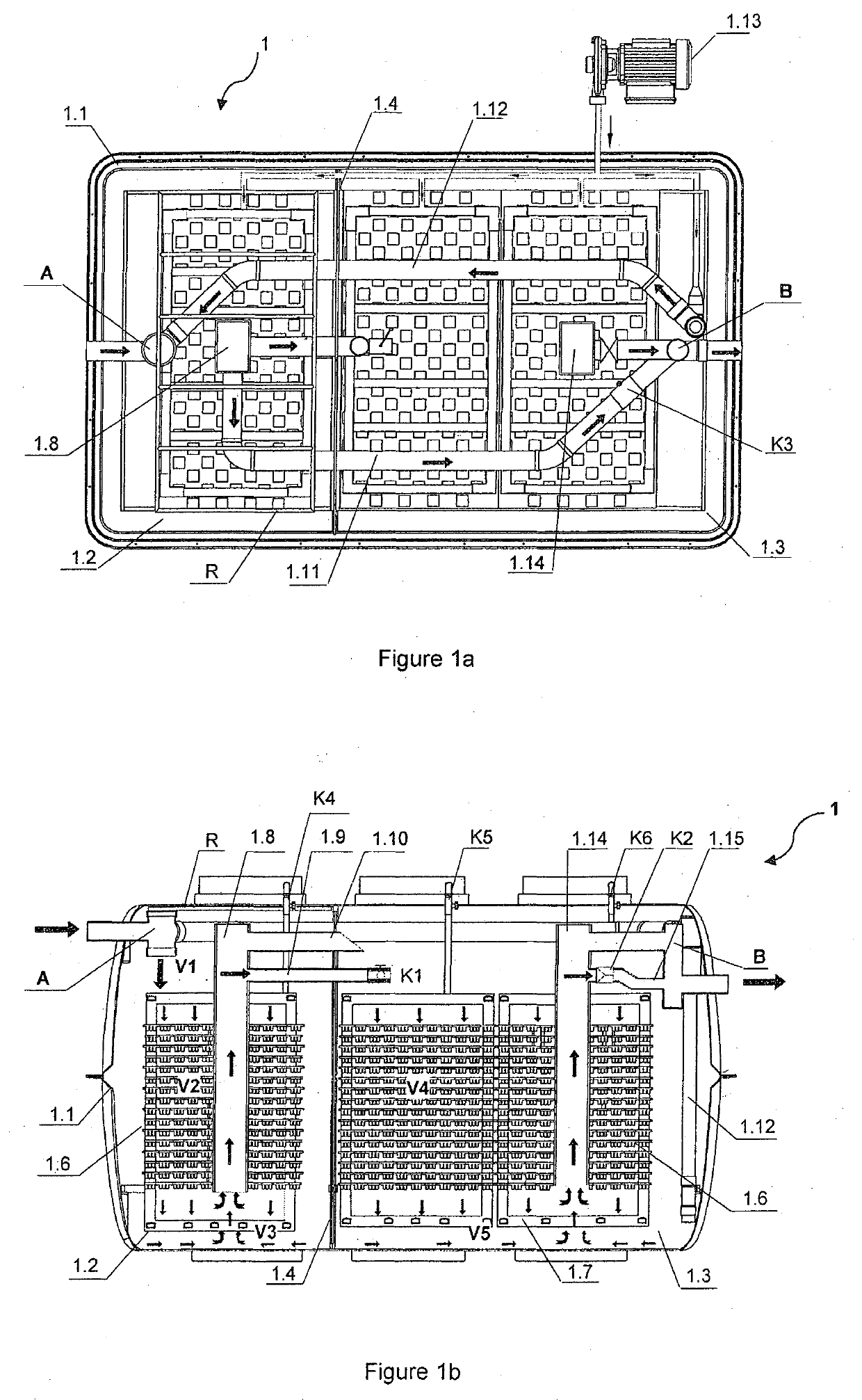
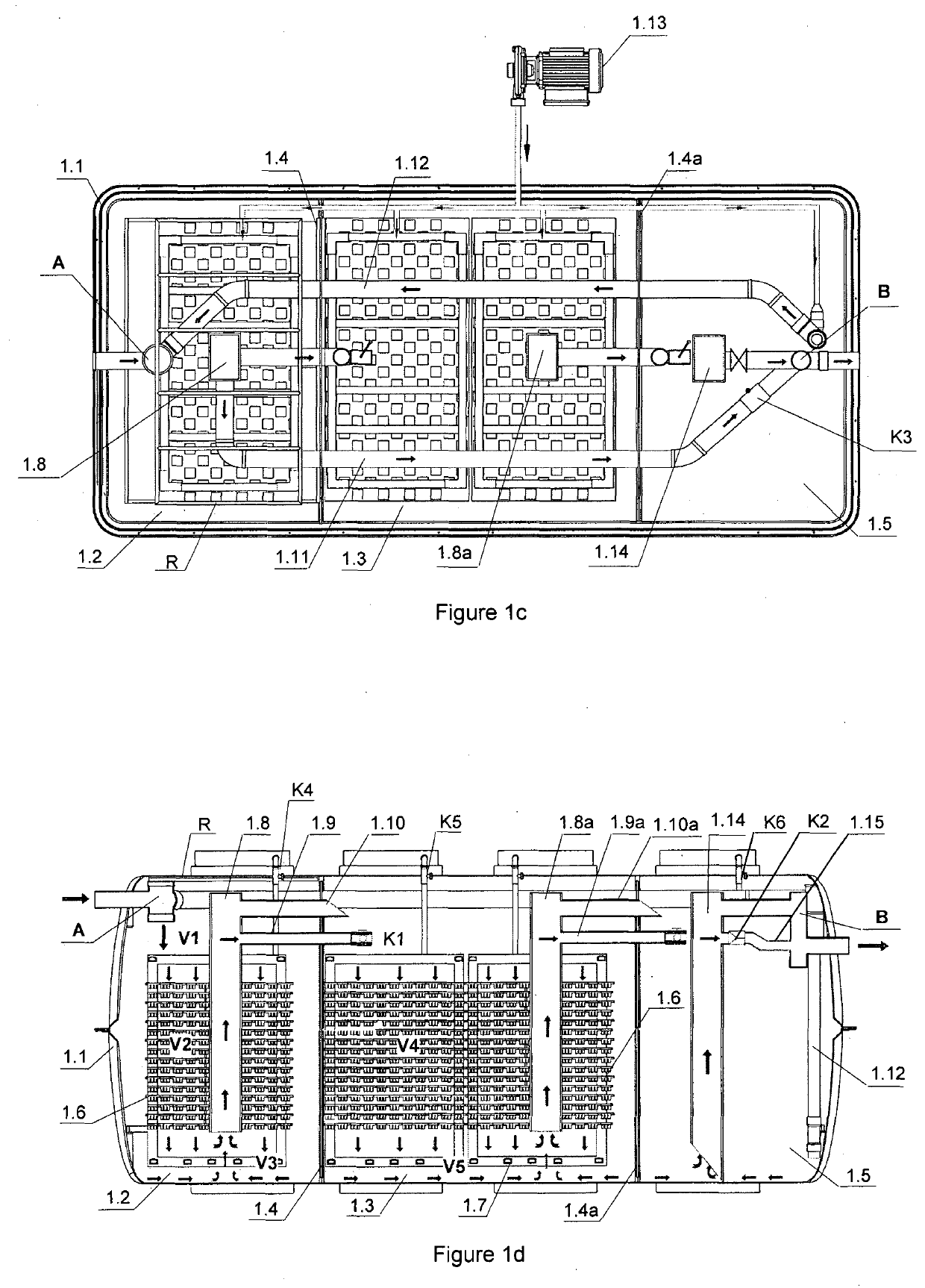
Apparatus for treating wastewater and a system for collecting and treating wastewater combining rainwater drainage
PatentActiveUS20210032137A1
Innovation
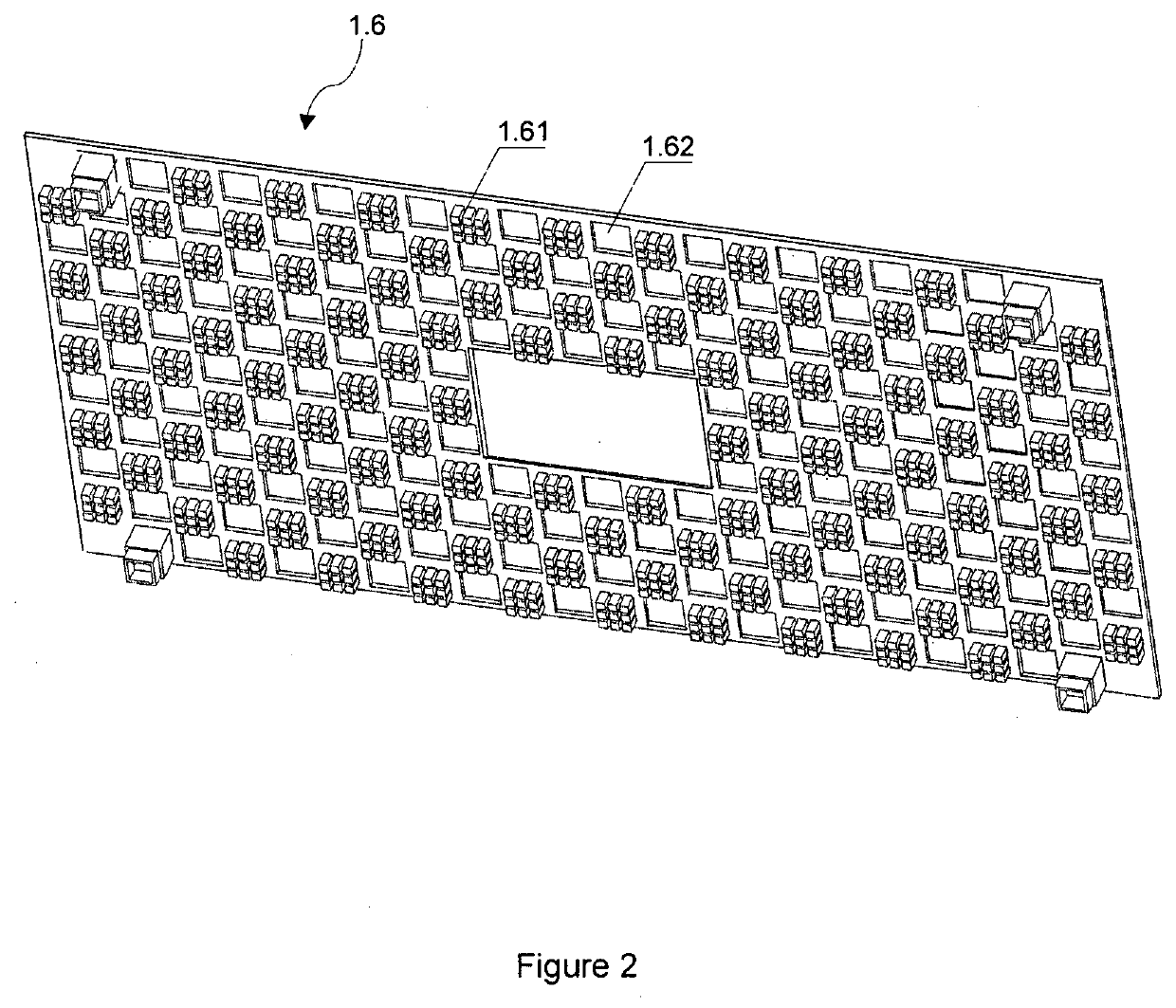
- The implementation of a modular wastewater treatment apparatus using the Biodegradation-Recombination-Biodegradation process, which employs autotrophic and heterotrophic microorganisms to digest and oxidize organic compounds without chemical disinfection, reducing sludge generation and allowing for the treatment of mixed wastewater and rainwater, with a simple and energy-efficient design.

Environmental Impact Assessment of Drainage Methods
The environmental implications of drainage system selection represent a critical consideration in contemporary infrastructure planning, as both horizontal and vertical drainage methods generate distinct ecological footprints throughout their lifecycle. Horizontal drainage systems, characterized by extensive networks of perforated pipes or trenches installed at shallow depths, typically require substantial land disturbance during installation. This excavation process disrupts soil structure, affects existing vegetation, and can temporarily alter local hydrological patterns. The construction phase often involves heavy machinery operation across wide areas, leading to soil compaction, habitat fragmentation, and increased sediment runoff into adjacent water bodies.
Vertical drainage systems, conversely, concentrate their environmental impact within smaller footprint areas through the installation of deep wells or vertical drains. While the surface disturbance is minimized, these systems introduce different environmental considerations, including potential aquifer interference and the risk of creating preferential pathways for contaminant migration between soil layers. The drilling process may generate drilling fluids and cuttings requiring proper disposal, and the energy consumption for pumping operations in active vertical systems contributes to ongoing carbon emissions.
Water quality impacts differ significantly between the two approaches. Horizontal systems typically facilitate gradual filtration through soil layers, potentially improving water quality before discharge. However, their extensive surface area increases vulnerability to contamination from surface pollutants. Vertical systems may bypass natural filtration zones, potentially introducing untreated water directly into deeper aquifers or discharge points, though their concentrated nature allows for more targeted treatment interventions.
Long-term ecological considerations include maintenance requirements and system longevity. Horizontal systems generally demand periodic inspection and cleaning across extensive networks, involving repeated site access and potential re-excavation. Vertical systems concentrate maintenance activities but may require more intensive interventions such as well rehabilitation or pump replacement. The material composition of both systems, including plastics, metals, and concrete, presents end-of-life disposal challenges and embodied carbon considerations that vary based on system scale and design specifications.
Vertical drainage systems, conversely, concentrate their environmental impact within smaller footprint areas through the installation of deep wells or vertical drains. While the surface disturbance is minimized, these systems introduce different environmental considerations, including potential aquifer interference and the risk of creating preferential pathways for contaminant migration between soil layers. The drilling process may generate drilling fluids and cuttings requiring proper disposal, and the energy consumption for pumping operations in active vertical systems contributes to ongoing carbon emissions.
Water quality impacts differ significantly between the two approaches. Horizontal systems typically facilitate gradual filtration through soil layers, potentially improving water quality before discharge. However, their extensive surface area increases vulnerability to contamination from surface pollutants. Vertical systems may bypass natural filtration zones, potentially introducing untreated water directly into deeper aquifers or discharge points, though their concentrated nature allows for more targeted treatment interventions.
Long-term ecological considerations include maintenance requirements and system longevity. Horizontal systems generally demand periodic inspection and cleaning across extensive networks, involving repeated site access and potential re-excavation. Vertical systems concentrate maintenance activities but may require more intensive interventions such as well rehabilitation or pump replacement. The material composition of both systems, including plastics, metals, and concrete, presents end-of-life disposal challenges and embodied carbon considerations that vary based on system scale and design specifications.
Cost-Benefit Analysis of Drainage System Selection
When evaluating horizontal versus vertical drainage systems, a comprehensive cost-benefit analysis must account for multiple financial and operational dimensions that extend beyond initial installation expenses. The selection process requires careful consideration of both immediate capital requirements and long-term operational implications, as each system type presents distinct economic profiles that vary significantly based on site-specific conditions and project objectives.
Initial capital investment represents the most immediately apparent cost differential between these systems. Horizontal drainage systems typically require lower upfront expenditure due to simpler installation procedures, reduced equipment needs, and less specialized labor requirements. The shallow trenching and gravity-based design minimize excavation costs and allow for faster deployment. Conversely, vertical drainage systems demand substantial initial investment, including specialized drilling equipment, skilled operators, and more complex materials such as prefabricated vertical drains or deep well components. However, this higher entry cost must be weighed against the system's superior performance in specific geological conditions.
Operational and maintenance costs present a contrasting economic picture over the system lifecycle. Horizontal systems, while cheaper initially, often incur higher maintenance expenses due to sediment accumulation, vegetation intrusion, and potential clogging issues that require regular inspection and cleaning. The distributed nature of horizontal networks also complicates maintenance access and increases labor time. Vertical systems generally demonstrate lower maintenance requirements once installed, with fewer access points and reduced susceptibility to surface-level interference, though repairs when needed can be more technically demanding and costly.
Land use efficiency introduces another critical economic consideration. Horizontal drainage systems consume significant surface area, potentially reducing available land for productive use or requiring additional property acquisition costs. This spatial footprint becomes particularly expensive in urban environments or high-value agricultural areas. Vertical systems minimize surface disruption and preserve land utility, offering substantial indirect economic benefits that may offset higher installation costs in land-constrained scenarios.
Performance effectiveness directly impacts the economic value proposition. Vertical drainage systems typically achieve faster consolidation rates and more effective water table control in deep soil profiles, potentially reducing project timelines and accelerating return on investment for development projects. The enhanced drainage capacity can prevent costly delays and enable earlier utilization of treated areas, generating significant time-value benefits that horizontal systems may not deliver in challenging soil conditions.
Initial capital investment represents the most immediately apparent cost differential between these systems. Horizontal drainage systems typically require lower upfront expenditure due to simpler installation procedures, reduced equipment needs, and less specialized labor requirements. The shallow trenching and gravity-based design minimize excavation costs and allow for faster deployment. Conversely, vertical drainage systems demand substantial initial investment, including specialized drilling equipment, skilled operators, and more complex materials such as prefabricated vertical drains or deep well components. However, this higher entry cost must be weighed against the system's superior performance in specific geological conditions.
Operational and maintenance costs present a contrasting economic picture over the system lifecycle. Horizontal systems, while cheaper initially, often incur higher maintenance expenses due to sediment accumulation, vegetation intrusion, and potential clogging issues that require regular inspection and cleaning. The distributed nature of horizontal networks also complicates maintenance access and increases labor time. Vertical systems generally demonstrate lower maintenance requirements once installed, with fewer access points and reduced susceptibility to surface-level interference, though repairs when needed can be more technically demanding and costly.
Land use efficiency introduces another critical economic consideration. Horizontal drainage systems consume significant surface area, potentially reducing available land for productive use or requiring additional property acquisition costs. This spatial footprint becomes particularly expensive in urban environments or high-value agricultural areas. Vertical systems minimize surface disruption and preserve land utility, offering substantial indirect economic benefits that may offset higher installation costs in land-constrained scenarios.
Performance effectiveness directly impacts the economic value proposition. Vertical drainage systems typically achieve faster consolidation rates and more effective water table control in deep soil profiles, potentially reducing project timelines and accelerating return on investment for development projects. The enhanced drainage capacity can prevent costly delays and enable earlier utilization of treated areas, generating significant time-value benefits that horizontal systems may not deliver in challenging soil conditions.
Unlock deeper insights with PatSnap Eureka Quick Research — get a full tech report to explore trends and direct your research. Try now!
Generate Your Research Report Instantly with AI Agent
Supercharge your innovation with PatSnap Eureka AI Agent Platform!