Comparing Reverse Osmosis vs Distillation Efficiency
MAR 2, 20269 MIN READ
Generate Your Research Report Instantly with AI Agent
Patsnap Eureka helps you evaluate technical feasibility & market potential.
RO vs Distillation Technology Background and Objectives
Water purification technologies have evolved significantly over the past century, driven by increasing global water scarcity and stringent quality requirements across industrial, municipal, and residential applications. Among the various separation technologies available, reverse osmosis and distillation represent two fundamentally different approaches to achieving high-purity water, each leveraging distinct physical principles and operational mechanisms.
Reverse osmosis technology emerged in the 1950s through pioneering research on semi-permeable membranes, gaining commercial viability in the 1970s with the development of cellulose acetate and later polyamide thin-film composite membranes. This pressure-driven membrane process operates by forcing water molecules through selective barriers while rejecting dissolved salts, organic compounds, and other contaminants. The technology has undergone continuous refinement, with modern RO systems achieving rejection rates exceeding 99% for most dissolved solids.
Distillation, conversely, represents one of humanity's oldest separation techniques, with industrial applications dating back centuries. This thermal process relies on phase change principles, where water is vaporized and subsequently condensed to achieve purification. Traditional distillation methods have evolved to include multi-stage flash distillation, multi-effect distillation, and vapor compression distillation, each optimized for specific operational conditions and energy efficiency requirements.
The comparative evaluation of these technologies has become increasingly critical as organizations seek optimal solutions balancing performance, energy consumption, operational costs, and environmental impact. Current market demands emphasize not only purification effectiveness but also sustainability metrics, including carbon footprint, waste generation, and resource utilization efficiency.
The primary objective of this technological assessment centers on establishing comprehensive efficiency benchmarks for both reverse osmosis and distillation systems across multiple performance dimensions. This includes quantitative analysis of energy consumption per unit of purified water produced, capital and operational expenditure comparisons, and purification effectiveness across diverse feed water compositions and quality requirements.
Secondary objectives encompass identifying optimal application scenarios for each technology, considering factors such as feed water salinity, required product water quality, production capacity, and operational flexibility. The analysis aims to provide strategic guidance for technology selection decisions while highlighting emerging innovations that may influence future competitive positioning between these established purification approaches.
Reverse osmosis technology emerged in the 1950s through pioneering research on semi-permeable membranes, gaining commercial viability in the 1970s with the development of cellulose acetate and later polyamide thin-film composite membranes. This pressure-driven membrane process operates by forcing water molecules through selective barriers while rejecting dissolved salts, organic compounds, and other contaminants. The technology has undergone continuous refinement, with modern RO systems achieving rejection rates exceeding 99% for most dissolved solids.
Distillation, conversely, represents one of humanity's oldest separation techniques, with industrial applications dating back centuries. This thermal process relies on phase change principles, where water is vaporized and subsequently condensed to achieve purification. Traditional distillation methods have evolved to include multi-stage flash distillation, multi-effect distillation, and vapor compression distillation, each optimized for specific operational conditions and energy efficiency requirements.
The comparative evaluation of these technologies has become increasingly critical as organizations seek optimal solutions balancing performance, energy consumption, operational costs, and environmental impact. Current market demands emphasize not only purification effectiveness but also sustainability metrics, including carbon footprint, waste generation, and resource utilization efficiency.
The primary objective of this technological assessment centers on establishing comprehensive efficiency benchmarks for both reverse osmosis and distillation systems across multiple performance dimensions. This includes quantitative analysis of energy consumption per unit of purified water produced, capital and operational expenditure comparisons, and purification effectiveness across diverse feed water compositions and quality requirements.
Secondary objectives encompass identifying optimal application scenarios for each technology, considering factors such as feed water salinity, required product water quality, production capacity, and operational flexibility. The analysis aims to provide strategic guidance for technology selection decisions while highlighting emerging innovations that may influence future competitive positioning between these established purification approaches.
Market Demand for Advanced Water Purification Systems
The global water purification market is experiencing unprecedented growth driven by escalating water scarcity, industrial contamination, and stringent regulatory requirements. Municipal water treatment facilities, industrial manufacturing plants, and residential consumers are increasingly seeking advanced purification technologies that can deliver superior water quality while maintaining operational efficiency.
Industrial sectors including pharmaceuticals, electronics manufacturing, and food processing represent the largest demand segment for advanced water purification systems. These industries require ultra-pure water with specific conductivity and contamination levels that traditional filtration methods cannot achieve. The semiconductor industry alone drives substantial demand for high-efficiency purification systems capable of removing ionic and organic contaminants to parts-per-billion levels.
Residential markets are witnessing rapid adoption of advanced purification technologies, particularly in regions with compromised municipal water supplies. Consumer awareness regarding water quality has intensified following high-profile contamination incidents, creating sustained demand for reliable home purification solutions. The preference is shifting toward systems that combine multiple purification mechanisms to address diverse contaminant profiles.
Geographic demand patterns reveal significant growth in Asia-Pacific regions, where rapid industrialization coincides with water quality challenges. Emerging economies are investing heavily in water infrastructure upgrades, creating substantial opportunities for advanced purification technologies. Developed markets focus on replacement and efficiency improvements of existing systems.
The healthcare sector presents another critical demand driver, requiring purified water for medical device sterilization, pharmaceutical formulation, and laboratory applications. Hospitals and clinical facilities increasingly specify advanced purification systems that can consistently meet stringent microbiological and chemical purity standards.
Energy efficiency considerations are reshaping market preferences, with end-users prioritizing systems that minimize operational costs while maximizing purification effectiveness. This trend particularly influences the comparison between reverse osmosis and distillation technologies, as organizations seek optimal balance between energy consumption and water quality outcomes.
Regulatory compliance requirements continue expanding globally, mandating higher purification standards across multiple industries. These evolving regulations create sustained market demand for advanced technologies capable of meeting increasingly stringent water quality specifications while maintaining economic viability.
Industrial sectors including pharmaceuticals, electronics manufacturing, and food processing represent the largest demand segment for advanced water purification systems. These industries require ultra-pure water with specific conductivity and contamination levels that traditional filtration methods cannot achieve. The semiconductor industry alone drives substantial demand for high-efficiency purification systems capable of removing ionic and organic contaminants to parts-per-billion levels.
Residential markets are witnessing rapid adoption of advanced purification technologies, particularly in regions with compromised municipal water supplies. Consumer awareness regarding water quality has intensified following high-profile contamination incidents, creating sustained demand for reliable home purification solutions. The preference is shifting toward systems that combine multiple purification mechanisms to address diverse contaminant profiles.
Geographic demand patterns reveal significant growth in Asia-Pacific regions, where rapid industrialization coincides with water quality challenges. Emerging economies are investing heavily in water infrastructure upgrades, creating substantial opportunities for advanced purification technologies. Developed markets focus on replacement and efficiency improvements of existing systems.
The healthcare sector presents another critical demand driver, requiring purified water for medical device sterilization, pharmaceutical formulation, and laboratory applications. Hospitals and clinical facilities increasingly specify advanced purification systems that can consistently meet stringent microbiological and chemical purity standards.
Energy efficiency considerations are reshaping market preferences, with end-users prioritizing systems that minimize operational costs while maximizing purification effectiveness. This trend particularly influences the comparison between reverse osmosis and distillation technologies, as organizations seek optimal balance between energy consumption and water quality outcomes.
Regulatory compliance requirements continue expanding globally, mandating higher purification standards across multiple industries. These evolving regulations create sustained market demand for advanced technologies capable of meeting increasingly stringent water quality specifications while maintaining economic viability.
Current State and Challenges in Water Treatment Technologies
Water treatment technologies have reached a critical juncture where traditional methods face increasing pressure to meet growing global demand while addressing environmental sustainability concerns. The current landscape is dominated by two primary desalination approaches: reverse osmosis and thermal distillation, each representing distinct technological paradigms with unique operational characteristics and efficiency profiles.
Reverse osmosis technology has emerged as the leading membrane-based solution, utilizing semi-permeable membranes to separate water molecules from dissolved salts and contaminants. Modern RO systems achieve water recovery rates of 35-60% in seawater applications and up to 85% in brackish water treatment. However, membrane fouling remains a persistent challenge, requiring sophisticated pretreatment systems and regular membrane replacement, which significantly impacts operational costs and system reliability.
Thermal distillation technologies, including multi-stage flash distillation and multi-effect distillation, continue to dominate large-scale installations, particularly in the Middle East. These systems demonstrate superior reliability and can handle high-salinity feedwater with minimal pretreatment requirements. Nevertheless, their energy-intensive nature poses substantial operational challenges, with specific energy consumption ranging from 50-80 kWh per cubic meter of produced water.
Energy efficiency represents the most significant technical challenge across both technologies. While RO systems have achieved remarkable improvements, reducing energy consumption to 2.5-4.0 kWh/m³ for seawater desalination, they remain vulnerable to membrane degradation and require consistent high-pressure operation. Distillation processes struggle with thermal energy recovery optimization, despite advances in heat exchanger design and process integration.
Emerging challenges include brine management, environmental impact mitigation, and the integration of renewable energy sources. Both technologies face increasing regulatory pressure regarding concentrate disposal and marine ecosystem protection. Additionally, the intermittent nature of renewable energy sources presents operational challenges for continuous water production systems, requiring innovative energy storage and process flexibility solutions.
The technological gap between laboratory achievements and commercial implementation continues to widen, particularly in hybrid system development and advanced materials integration. Current research focuses on addressing these scalability challenges while maintaining economic viability in diverse geographical and operational contexts.
Reverse osmosis technology has emerged as the leading membrane-based solution, utilizing semi-permeable membranes to separate water molecules from dissolved salts and contaminants. Modern RO systems achieve water recovery rates of 35-60% in seawater applications and up to 85% in brackish water treatment. However, membrane fouling remains a persistent challenge, requiring sophisticated pretreatment systems and regular membrane replacement, which significantly impacts operational costs and system reliability.
Thermal distillation technologies, including multi-stage flash distillation and multi-effect distillation, continue to dominate large-scale installations, particularly in the Middle East. These systems demonstrate superior reliability and can handle high-salinity feedwater with minimal pretreatment requirements. Nevertheless, their energy-intensive nature poses substantial operational challenges, with specific energy consumption ranging from 50-80 kWh per cubic meter of produced water.
Energy efficiency represents the most significant technical challenge across both technologies. While RO systems have achieved remarkable improvements, reducing energy consumption to 2.5-4.0 kWh/m³ for seawater desalination, they remain vulnerable to membrane degradation and require consistent high-pressure operation. Distillation processes struggle with thermal energy recovery optimization, despite advances in heat exchanger design and process integration.
Emerging challenges include brine management, environmental impact mitigation, and the integration of renewable energy sources. Both technologies face increasing regulatory pressure regarding concentrate disposal and marine ecosystem protection. Additionally, the intermittent nature of renewable energy sources presents operational challenges for continuous water production systems, requiring innovative energy storage and process flexibility solutions.
The technological gap between laboratory achievements and commercial implementation continues to widen, particularly in hybrid system development and advanced materials integration. Current research focuses on addressing these scalability challenges while maintaining economic viability in diverse geographical and operational contexts.
Existing RO and Distillation Process Solutions
01 Hybrid reverse osmosis and distillation systems
Integration of reverse osmosis and distillation processes in a combined system can enhance overall water purification efficiency. These hybrid systems leverage the strengths of both technologies, where reverse osmosis provides initial filtration and distillation offers additional purification through thermal separation. The combination allows for improved energy utilization and higher quality output water while reducing operational costs compared to standalone systems.- Hybrid reverse osmosis and distillation systems: Integration of reverse osmosis and distillation processes in a combined system can enhance overall water purification efficiency. These hybrid systems leverage the strengths of both technologies, where reverse osmosis provides initial filtration and distillation offers additional purification through thermal separation. The combination allows for improved energy utilization and higher quality output water while reducing operational costs compared to standalone systems.
- Membrane optimization for reverse osmosis efficiency: Advanced membrane materials and configurations can significantly improve reverse osmosis performance. Innovations include enhanced membrane permeability, fouling resistance, and selectivity through novel polymer compositions and surface modifications. These improvements result in higher water recovery rates, reduced energy consumption, and extended membrane lifespan, making the reverse osmosis process more economically viable for large-scale applications.
- Energy recovery and optimization in distillation processes: Implementation of energy recovery mechanisms and process optimization techniques can substantially improve distillation efficiency. Methods include multi-effect distillation, vapor compression, and heat integration systems that recycle thermal energy within the process. These approaches minimize energy input requirements while maintaining high separation efficiency, making distillation more sustainable and cost-effective for water treatment applications.
- Pre-treatment and post-treatment process integration: Effective pre-treatment and post-treatment stages are crucial for maximizing the efficiency of both reverse osmosis and distillation systems. Pre-treatment methods remove suspended solids, scale-forming compounds, and biological contaminants that could impair system performance. Post-treatment processes ensure final water quality meets required standards. Proper integration of these stages reduces maintenance requirements, prevents system degradation, and ensures consistent output quality.
- Monitoring and control systems for process optimization: Advanced monitoring and automated control systems enable real-time optimization of reverse osmosis and distillation operations. These systems utilize sensors, data analytics, and feedback mechanisms to adjust operating parameters such as pressure, temperature, flow rates, and chemical dosing. Intelligent control strategies improve process stability, reduce waste, enhance energy efficiency, and extend equipment lifespan through predictive maintenance capabilities.
02 Membrane optimization for reverse osmosis efficiency
Advanced membrane materials and configurations can significantly improve reverse osmosis performance. Innovations include enhanced membrane permeability, fouling resistance, and selectivity through novel polymer compositions and surface modifications. These improvements result in higher water recovery rates, reduced energy consumption, and extended membrane lifespan, making the reverse osmosis process more economically viable for large-scale applications.Expand Specific Solutions03 Energy recovery and optimization in distillation processes
Implementation of energy recovery mechanisms and process optimization techniques can substantially improve distillation efficiency. Methods include multi-effect distillation, vapor compression, and heat integration systems that capture and reuse thermal energy. These approaches minimize energy input requirements while maintaining high purification standards, making distillation more competitive with other water treatment technologies.Expand Specific Solutions04 Pre-treatment and post-treatment enhancement methods
Effective pre-treatment and post-treatment processes are crucial for maximizing the efficiency of both reverse osmosis and distillation systems. Pre-treatment methods remove suspended solids, scale-forming compounds, and biological contaminants that can impair system performance. Post-treatment processes ensure final water quality meets specific standards. These complementary treatments reduce maintenance requirements, prevent system degradation, and improve overall water recovery rates.Expand Specific Solutions05 Monitoring and control systems for process optimization
Advanced monitoring and automated control systems enable real-time optimization of reverse osmosis and distillation operations. These systems utilize sensors, data analytics, and feedback mechanisms to adjust operating parameters such as pressure, temperature, flow rates, and chemical dosing. Intelligent control strategies maximize efficiency, minimize energy consumption, and extend equipment lifespan while ensuring consistent water quality output.Expand Specific Solutions
Key Players in RO and Distillation Equipment Industry
The water treatment industry comparing reverse osmosis versus distillation efficiency is experiencing robust growth driven by increasing water scarcity and stringent quality regulations. The market demonstrates significant scale with diverse applications across industrial, municipal, and specialized sectors. Technology maturity varies considerably across market participants. Leading research institutions like MIT, Tianjin University, and Zhejiang University are advancing fundamental separation science, while specialized companies such as Evoqua Water Technologies, Aquatech International, and Micronic Technologies are commercializing innovative solutions. Industrial giants including BASF, Siemens Water Technologies, and various SINOPEC entities leverage established manufacturing capabilities for large-scale deployment. Government organizations like NASA and DRDO drive specialized applications requiring extreme efficiency. The competitive landscape reflects a maturing industry where established membrane technologies compete with emerging advanced distillation systems, creating opportunities for both incremental improvements and breakthrough innovations.
Evoqua Water Technologies LLC
Technical Solution: Evoqua develops advanced reverse osmosis systems with high-efficiency membrane technology that achieves 99.5% contaminant removal rates while consuming 50% less energy than traditional RO systems. Their ADVANCEDRO series incorporates energy recovery devices and optimized membrane configurations to maximize water recovery rates up to 85%. The company also offers hybrid distillation-RO systems for industrial applications, combining the benefits of both technologies to achieve superior water quality while minimizing operational costs through intelligent process control and automated cleaning cycles.
Strengths: Industry-leading energy efficiency, proven track record in municipal and industrial water treatment, comprehensive service network. Weaknesses: Higher initial capital investment, complex system maintenance requirements.
Massachusetts Institute of Technology
Technical Solution: MIT researchers have developed breakthrough membrane technologies including graphene oxide membranes for reverse osmosis that demonstrate 2-3 times higher water permeability than conventional polyamide membranes while maintaining excellent salt rejection rates above 99%. Their research on solar-powered distillation systems achieves thermal efficiencies exceeding 80% through advanced light absorption materials and heat recovery mechanisms. MIT's comparative studies show that optimized RO systems can achieve energy consumption as low as 2-3 kWh/m³ for seawater desalination, while their novel distillation approaches reduce energy requirements to 15-20 kWh/m³ through multi-stage heat recovery.
Strengths: Pioneering research in next-generation membrane materials, strong fundamental understanding of separation processes, innovative solar distillation concepts. Weaknesses: Technologies primarily at research stage, limited commercial scalability demonstrated.
Core Innovations in Membrane and Thermal Efficiency
Solar ocean thermal energy seawater distillation system
PatentInactiveUS20210380437A1
Innovation
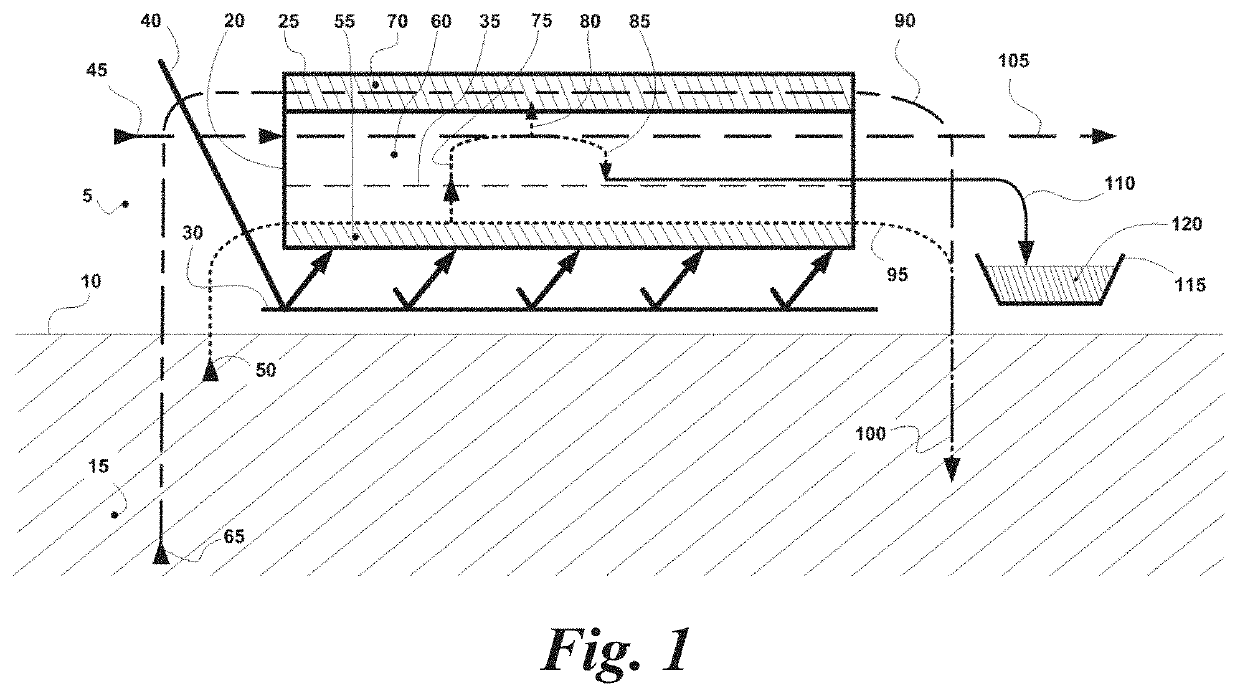
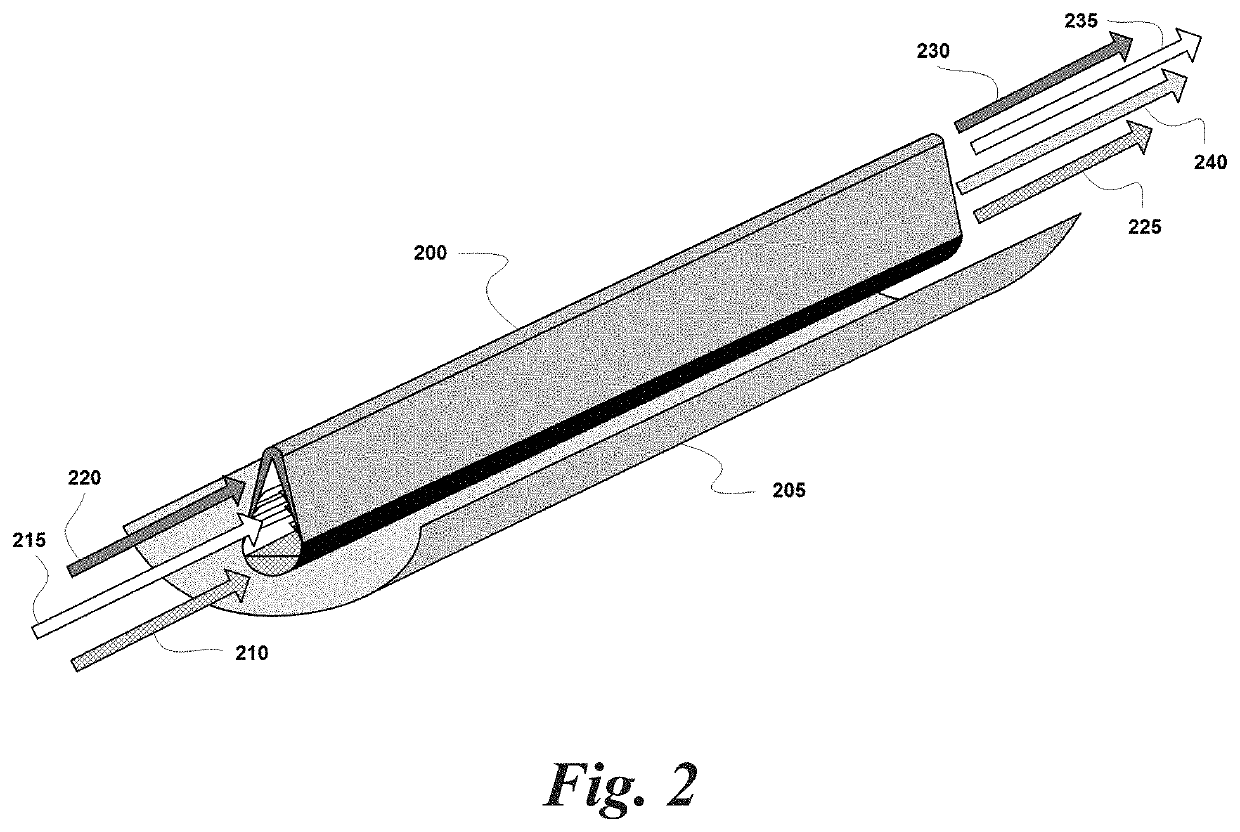
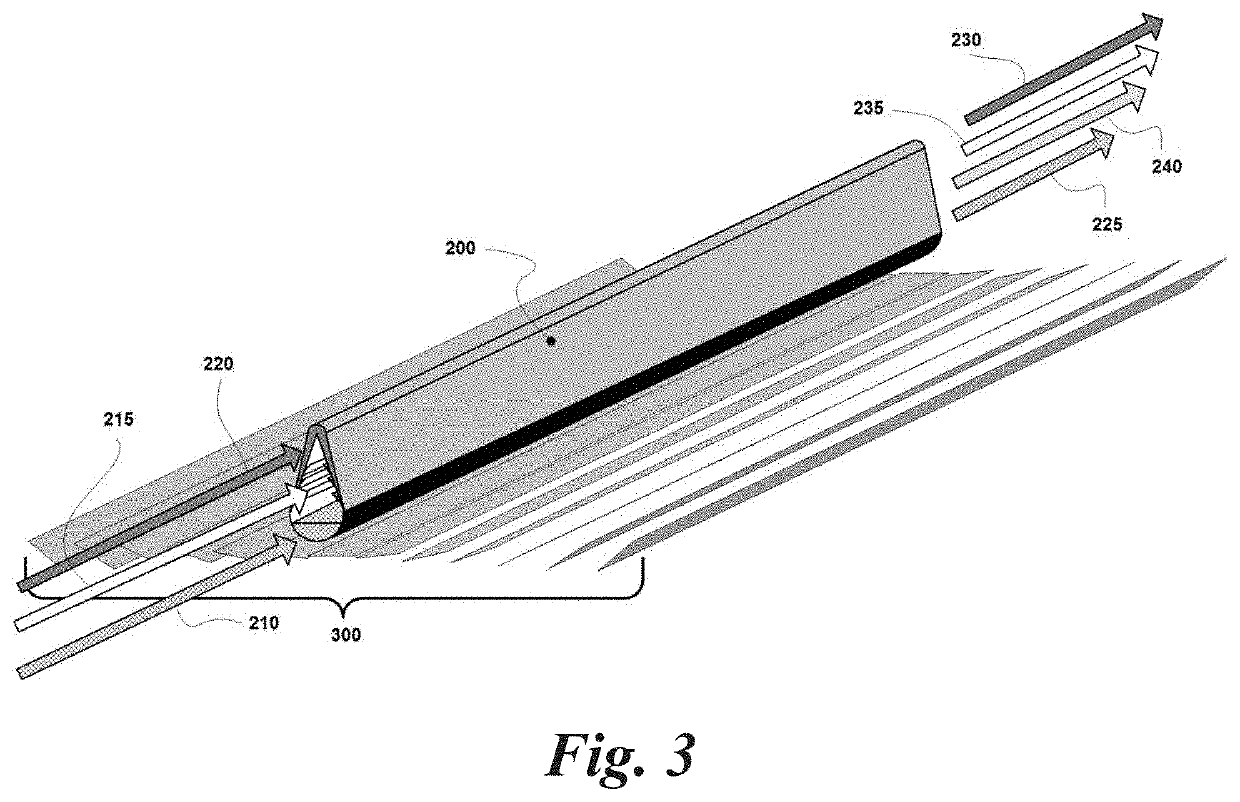
- A hybrid solar still system, known as Solar Ocean Thermal Energy Conversion (SOTEC), which enhances temperature differences between the hot and cold sides of the distillation process using concentrated sunlight and cold seawater, combined with reduced-pressure evaporators to minimize energy requirements and fluid flow, thereby increasing efficiency.

Energy-efficient method and device for manufacturing distilled water and/or concentrated water
PatentWO2010026953A1
Innovation
- A method involving supplying raw water 5°C below the boiling point to an evaporator, evaporating part of it, pressurizing the steam to increase condensation temperature, and using a heat transfer plate to transfer condensation heat back to the evaporator for boiling, thereby reducing energy consumption and improving efficiency.


Environmental Impact Assessment of Water Treatment Methods
The environmental implications of reverse osmosis and distillation technologies present distinct profiles that significantly influence their adoption in water treatment applications. Both methods demonstrate varying degrees of environmental burden across multiple impact categories, necessitating comprehensive assessment frameworks to evaluate their ecological footprints.
Energy consumption represents the most significant environmental differentiator between these technologies. Reverse osmosis systems typically require 3-10 kWh per cubic meter of treated water, primarily for high-pressure pumping operations. In contrast, thermal distillation processes demand substantially higher energy inputs, ranging from 50-80 kWh per cubic meter due to phase change requirements and heat recovery inefficiencies. This energy disparity directly translates to carbon footprint variations, with distillation systems generating approximately 5-8 times higher greenhouse gas emissions when powered by conventional electricity grids.
Water recovery rates fundamentally impact resource utilization efficiency and waste generation patterns. Modern reverse osmosis installations achieve recovery rates of 75-85% in municipal applications, producing concentrated brine streams containing rejected contaminants. Distillation systems typically demonstrate superior recovery rates of 90-95%, generating smaller volumes of concentrated waste but requiring extensive thermal energy input for vapor generation and condensation processes.
Chemical usage patterns differ substantially between methodologies, influencing downstream environmental effects. Reverse osmosis operations require periodic membrane cleaning with acids, bases, and biocides, generating chemical-laden waste streams requiring specialized treatment. Distillation processes minimize chemical additives but may necessitate scale inhibitors and corrosion control agents in high-temperature environments, particularly in multi-stage flash configurations.
Waste stream characteristics present unique environmental management challenges for each technology. Reverse osmosis brine contains concentrated dissolved solids, requiring careful disposal strategies to prevent soil and groundwater contamination. Distillation residues typically exhibit higher concentration factors but smaller volumes, potentially simplifying waste management protocols while intensifying treatment requirements.
Life cycle assessment studies indicate that membrane manufacturing for reverse osmosis systems involves energy-intensive polymer production and specialized coating processes, contributing to embodied carbon footprints. Conversely, distillation equipment primarily utilizes conventional materials with lower manufacturing environmental impacts but requires more robust construction for high-temperature operations, extending operational lifespans but increasing initial material requirements.
Energy consumption represents the most significant environmental differentiator between these technologies. Reverse osmosis systems typically require 3-10 kWh per cubic meter of treated water, primarily for high-pressure pumping operations. In contrast, thermal distillation processes demand substantially higher energy inputs, ranging from 50-80 kWh per cubic meter due to phase change requirements and heat recovery inefficiencies. This energy disparity directly translates to carbon footprint variations, with distillation systems generating approximately 5-8 times higher greenhouse gas emissions when powered by conventional electricity grids.
Water recovery rates fundamentally impact resource utilization efficiency and waste generation patterns. Modern reverse osmosis installations achieve recovery rates of 75-85% in municipal applications, producing concentrated brine streams containing rejected contaminants. Distillation systems typically demonstrate superior recovery rates of 90-95%, generating smaller volumes of concentrated waste but requiring extensive thermal energy input for vapor generation and condensation processes.
Chemical usage patterns differ substantially between methodologies, influencing downstream environmental effects. Reverse osmosis operations require periodic membrane cleaning with acids, bases, and biocides, generating chemical-laden waste streams requiring specialized treatment. Distillation processes minimize chemical additives but may necessitate scale inhibitors and corrosion control agents in high-temperature environments, particularly in multi-stage flash configurations.
Waste stream characteristics present unique environmental management challenges for each technology. Reverse osmosis brine contains concentrated dissolved solids, requiring careful disposal strategies to prevent soil and groundwater contamination. Distillation residues typically exhibit higher concentration factors but smaller volumes, potentially simplifying waste management protocols while intensifying treatment requirements.
Life cycle assessment studies indicate that membrane manufacturing for reverse osmosis systems involves energy-intensive polymer production and specialized coating processes, contributing to embodied carbon footprints. Conversely, distillation equipment primarily utilizes conventional materials with lower manufacturing environmental impacts but requires more robust construction for high-temperature operations, extending operational lifespans but increasing initial material requirements.
Energy Consumption Optimization in Water Purification
Energy consumption represents the most critical factor determining the economic viability and environmental sustainability of water purification technologies. Both reverse osmosis and distillation systems require substantial energy inputs, but their consumption patterns and optimization opportunities differ significantly across operational parameters and system configurations.
Reverse osmosis systems primarily consume energy through high-pressure pumps that force water molecules through semi-permeable membranes. Typical energy requirements range from 3-6 kWh per cubic meter of produced water, depending on feed water salinity and system efficiency. The energy consumption correlates directly with osmotic pressure, which increases exponentially with salt concentration. Modern RO systems incorporate energy recovery devices such as pressure exchangers and turbochargers, achieving energy recovery rates of 85-95% in seawater applications.
Distillation processes, particularly multi-stage flash and multi-effect distillation, consume significantly more energy, typically requiring 15-25 kWh per cubic meter. However, these systems can utilize waste heat or low-grade thermal energy sources, making them attractive for industrial applications with abundant heat availability. The energy consumption in distillation is primarily thermal, with electrical requirements limited to pumps and control systems representing only 10-15% of total energy input.
Optimization strategies for RO systems focus on membrane technology advancement, including development of high-flux, low-fouling membranes that reduce required operating pressures. Variable frequency drives on high-pressure pumps enable dynamic pressure adjustment based on real-time permeate quality requirements. Advanced process control systems optimize recovery rates while maintaining membrane integrity, reducing specific energy consumption by 15-20%.
Distillation energy optimization leverages heat integration principles, utilizing vapor compression techniques and thermal vapor recompression to minimize external energy requirements. Hybrid configurations combining multiple distillation effects with heat pumps achieve significant efficiency improvements. Integration with renewable energy sources, particularly solar thermal and geothermal systems, presents substantial optimization potential for distillation processes.
Emerging optimization approaches include artificial intelligence-driven predictive maintenance systems that optimize cleaning cycles and operational parameters. Machine learning algorithms analyze real-time performance data to predict optimal operating conditions, reducing energy consumption while maintaining water quality standards. These intelligent systems demonstrate energy savings of 10-25% compared to conventional control methods.
The selection between RO and distillation for energy-optimized water purification depends on local energy costs, availability of waste heat, water quality requirements, and system scale. Hybrid systems combining both technologies offer promising optimization potential, utilizing RO for initial concentration and distillation for final purification stages.
Reverse osmosis systems primarily consume energy through high-pressure pumps that force water molecules through semi-permeable membranes. Typical energy requirements range from 3-6 kWh per cubic meter of produced water, depending on feed water salinity and system efficiency. The energy consumption correlates directly with osmotic pressure, which increases exponentially with salt concentration. Modern RO systems incorporate energy recovery devices such as pressure exchangers and turbochargers, achieving energy recovery rates of 85-95% in seawater applications.
Distillation processes, particularly multi-stage flash and multi-effect distillation, consume significantly more energy, typically requiring 15-25 kWh per cubic meter. However, these systems can utilize waste heat or low-grade thermal energy sources, making them attractive for industrial applications with abundant heat availability. The energy consumption in distillation is primarily thermal, with electrical requirements limited to pumps and control systems representing only 10-15% of total energy input.
Optimization strategies for RO systems focus on membrane technology advancement, including development of high-flux, low-fouling membranes that reduce required operating pressures. Variable frequency drives on high-pressure pumps enable dynamic pressure adjustment based on real-time permeate quality requirements. Advanced process control systems optimize recovery rates while maintaining membrane integrity, reducing specific energy consumption by 15-20%.
Distillation energy optimization leverages heat integration principles, utilizing vapor compression techniques and thermal vapor recompression to minimize external energy requirements. Hybrid configurations combining multiple distillation effects with heat pumps achieve significant efficiency improvements. Integration with renewable energy sources, particularly solar thermal and geothermal systems, presents substantial optimization potential for distillation processes.
Emerging optimization approaches include artificial intelligence-driven predictive maintenance systems that optimize cleaning cycles and operational parameters. Machine learning algorithms analyze real-time performance data to predict optimal operating conditions, reducing energy consumption while maintaining water quality standards. These intelligent systems demonstrate energy savings of 10-25% compared to conventional control methods.
The selection between RO and distillation for energy-optimized water purification depends on local energy costs, availability of waste heat, water quality requirements, and system scale. Hybrid systems combining both technologies offer promising optimization potential, utilizing RO for initial concentration and distillation for final purification stages.
Unlock deeper insights with Patsnap Eureka Quick Research — get a full tech report to explore trends and direct your research. Try now!
Generate Your Research Report Instantly with AI Agent
Supercharge your innovation with Patsnap Eureka AI Agent Platform!