
Comparing Solid-State vs. Anode-Free Batteries for EVs
JUN 16, 20269 MIN READ
Generate Your Research Report Instantly with AI Agent
Patsnap Eureka helps you evaluate technical feasibility & market potential.
Solid-State and Anode-Free Battery Technology Background and Goals
The evolution of electric vehicle battery technology has reached a critical juncture where traditional lithium-ion batteries face fundamental limitations in energy density, safety, and charging speed. Two revolutionary approaches have emerged as potential game-changers: solid-state batteries and anode-free batteries. Both technologies represent paradigm shifts from conventional liquid electrolyte systems, each addressing different aspects of current battery limitations through distinct technological pathways.
Solid-state battery technology emerged from decades of materials science research, with early concepts dating back to the 1950s. The technology gained renewed momentum in the 2000s as researchers developed advanced solid electrolyte materials including ceramics, polymers, and sulfides. Major breakthroughs in ionic conductivity and interface stability have positioned solid-state batteries as a leading candidate for next-generation EV applications.
Anode-free battery technology represents a more recent innovation, conceptualized in the 2010s as researchers sought to maximize energy density by eliminating the traditional graphite anode. This approach relies on in-situ lithium metal plating during charging, effectively creating the anode during operation. The technology has gained significant attention due to its potential to achieve unprecedented energy densities while utilizing existing manufacturing infrastructure.
The primary technological objective for solid-state batteries centers on achieving commercial viability through improved ionic conductivity, reduced interfacial resistance, and scalable manufacturing processes. Current research focuses on developing solid electrolytes that can match or exceed the ionic conductivity of liquid electrolytes while maintaining mechanical stability and electrochemical compatibility with high-capacity electrode materials.
For anode-free batteries, the core technological goals involve controlling lithium metal deposition to prevent dendrite formation, optimizing current collector design for uniform plating, and developing electrolyte formulations that promote stable solid electrolyte interphase formation. These objectives aim to unlock the theoretical energy density advantages while ensuring cycle life and safety standards required for automotive applications.
Both technologies share common aspirations of enhancing EV performance through increased driving range, reduced charging times, and improved safety profiles. The convergence of these goals reflects the industry's commitment to overcoming the energy density ceiling of conventional lithium-ion systems while addressing consumer demands for more practical and reliable electric vehicles.
Solid-state battery technology emerged from decades of materials science research, with early concepts dating back to the 1950s. The technology gained renewed momentum in the 2000s as researchers developed advanced solid electrolyte materials including ceramics, polymers, and sulfides. Major breakthroughs in ionic conductivity and interface stability have positioned solid-state batteries as a leading candidate for next-generation EV applications.
Anode-free battery technology represents a more recent innovation, conceptualized in the 2010s as researchers sought to maximize energy density by eliminating the traditional graphite anode. This approach relies on in-situ lithium metal plating during charging, effectively creating the anode during operation. The technology has gained significant attention due to its potential to achieve unprecedented energy densities while utilizing existing manufacturing infrastructure.
The primary technological objective for solid-state batteries centers on achieving commercial viability through improved ionic conductivity, reduced interfacial resistance, and scalable manufacturing processes. Current research focuses on developing solid electrolytes that can match or exceed the ionic conductivity of liquid electrolytes while maintaining mechanical stability and electrochemical compatibility with high-capacity electrode materials.
For anode-free batteries, the core technological goals involve controlling lithium metal deposition to prevent dendrite formation, optimizing current collector design for uniform plating, and developing electrolyte formulations that promote stable solid electrolyte interphase formation. These objectives aim to unlock the theoretical energy density advantages while ensuring cycle life and safety standards required for automotive applications.
Both technologies share common aspirations of enhancing EV performance through increased driving range, reduced charging times, and improved safety profiles. The convergence of these goals reflects the industry's commitment to overcoming the energy density ceiling of conventional lithium-ion systems while addressing consumer demands for more practical and reliable electric vehicles.
EV Battery Market Demand and Performance Requirements
The global electric vehicle market is experiencing unprecedented growth, driven by stringent environmental regulations, government incentives, and increasing consumer awareness of climate change. This surge in EV adoption has created substantial demand for advanced battery technologies that can address the fundamental limitations of current lithium-ion systems. The market requires batteries that deliver extended driving range, rapid charging capabilities, enhanced safety profiles, and cost-effectiveness to achieve mass market penetration.
Range anxiety remains the primary barrier to EV adoption, with consumers demanding batteries capable of providing over 500 kilometers of real-world driving range. Current lithium-ion batteries struggle to meet this requirement while maintaining reasonable vehicle weight and cost parameters. The market specifically seeks energy densities exceeding 300 Wh/kg at the cell level, representing a significant improvement over conventional lithium-ion technologies that typically achieve 150-250 Wh/kg.
Charging speed requirements have intensified as EV infrastructure expands globally. The market demands batteries capable of accepting ultra-fast charging rates, ideally achieving 10-80% state of charge within 15 minutes without compromising battery lifespan. This necessitates battery chemistries and architectures that can handle high current densities while managing thermal effects and maintaining structural integrity throughout thousands of charge cycles.
Safety considerations have become paramount following high-profile thermal runaway incidents in consumer electronics and early EV deployments. The market requires battery technologies that eliminate or significantly reduce fire and explosion risks, particularly during crash scenarios, overcharging events, and extreme temperature conditions. This demand has intensified focus on solid-state and alternative battery architectures that inherently provide improved safety characteristics.
Cost reduction remains critical for mass market EV adoption, with industry targets aiming for battery pack costs below $100 per kWh. Current lithium-ion systems typically cost $130-150 per kWh at the pack level, creating pressure for innovative battery technologies that can achieve cost parity with internal combustion engines while delivering superior performance characteristics.
Temperature performance requirements span extreme operating conditions, from arctic environments below -30°C to desert conditions exceeding 50°C. The market demands batteries that maintain consistent performance across this temperature range while preserving cycle life and safety margins. Additionally, calendar life expectations exceed 10-15 years with minimal capacity degradation, aligning with typical vehicle ownership patterns and warranty requirements.
Range anxiety remains the primary barrier to EV adoption, with consumers demanding batteries capable of providing over 500 kilometers of real-world driving range. Current lithium-ion batteries struggle to meet this requirement while maintaining reasonable vehicle weight and cost parameters. The market specifically seeks energy densities exceeding 300 Wh/kg at the cell level, representing a significant improvement over conventional lithium-ion technologies that typically achieve 150-250 Wh/kg.
Charging speed requirements have intensified as EV infrastructure expands globally. The market demands batteries capable of accepting ultra-fast charging rates, ideally achieving 10-80% state of charge within 15 minutes without compromising battery lifespan. This necessitates battery chemistries and architectures that can handle high current densities while managing thermal effects and maintaining structural integrity throughout thousands of charge cycles.
Safety considerations have become paramount following high-profile thermal runaway incidents in consumer electronics and early EV deployments. The market requires battery technologies that eliminate or significantly reduce fire and explosion risks, particularly during crash scenarios, overcharging events, and extreme temperature conditions. This demand has intensified focus on solid-state and alternative battery architectures that inherently provide improved safety characteristics.
Cost reduction remains critical for mass market EV adoption, with industry targets aiming for battery pack costs below $100 per kWh. Current lithium-ion systems typically cost $130-150 per kWh at the pack level, creating pressure for innovative battery technologies that can achieve cost parity with internal combustion engines while delivering superior performance characteristics.
Temperature performance requirements span extreme operating conditions, from arctic environments below -30°C to desert conditions exceeding 50°C. The market demands batteries that maintain consistent performance across this temperature range while preserving cycle life and safety margins. Additionally, calendar life expectations exceed 10-15 years with minimal capacity degradation, aligning with typical vehicle ownership patterns and warranty requirements.
Current Status and Challenges of Next-Gen Battery Technologies
Solid-state batteries represent a significant advancement in energy storage technology, utilizing solid electrolytes instead of liquid or gel electrolytes found in conventional lithium-ion batteries. Current solid-state battery technologies primarily employ ceramic, polymer, or sulfide-based electrolytes, with companies like QuantumScape, Toyota, and Samsung leading development efforts. These batteries demonstrate superior energy density, enhanced safety profiles, and extended cycle life compared to traditional batteries.
However, solid-state batteries face substantial manufacturing challenges, particularly in achieving consistent solid-solid interfaces and scaling production processes. Interface resistance between electrodes and solid electrolytes remains a critical bottleneck, limiting power output and charging speeds. Manufacturing costs are significantly higher due to complex fabrication processes and specialized materials, with current production methods unsuitable for mass market applications.
Anode-free battery technology eliminates the traditional graphite anode, allowing lithium metal to plate directly onto a current collector during charging. This approach, pursued by companies like Sion Power and SolidEnergy Systems, offers exceptional energy density improvements of 30-50% over conventional designs. The technology promises reduced material costs and simplified manufacturing processes by removing anode materials entirely.
The primary challenge facing anode-free batteries is lithium dendrite formation, which causes capacity fade and safety concerns. Electrolyte decomposition and solid electrolyte interphase instability lead to rapid performance degradation, typically limiting cycle life to fewer than 500 cycles. Current research focuses on advanced electrolyte formulations and protective coatings to mitigate these issues.
Both technologies struggle with temperature sensitivity and require sophisticated battery management systems for optimal performance. Solid-state batteries exhibit limited ionic conductivity at low temperatures, while anode-free designs show accelerated degradation under thermal stress. Manufacturing scalability remains a shared challenge, with neither technology achieving cost parity with conventional lithium-ion batteries.
The integration of these technologies into electric vehicle platforms requires significant modifications to existing battery pack designs and thermal management systems. Current prototypes demonstrate promising laboratory results, but real-world automotive applications demand improvements in power delivery, charging speeds, and long-term reliability under diverse operating conditions.
However, solid-state batteries face substantial manufacturing challenges, particularly in achieving consistent solid-solid interfaces and scaling production processes. Interface resistance between electrodes and solid electrolytes remains a critical bottleneck, limiting power output and charging speeds. Manufacturing costs are significantly higher due to complex fabrication processes and specialized materials, with current production methods unsuitable for mass market applications.
Anode-free battery technology eliminates the traditional graphite anode, allowing lithium metal to plate directly onto a current collector during charging. This approach, pursued by companies like Sion Power and SolidEnergy Systems, offers exceptional energy density improvements of 30-50% over conventional designs. The technology promises reduced material costs and simplified manufacturing processes by removing anode materials entirely.
The primary challenge facing anode-free batteries is lithium dendrite formation, which causes capacity fade and safety concerns. Electrolyte decomposition and solid electrolyte interphase instability lead to rapid performance degradation, typically limiting cycle life to fewer than 500 cycles. Current research focuses on advanced electrolyte formulations and protective coatings to mitigate these issues.
Both technologies struggle with temperature sensitivity and require sophisticated battery management systems for optimal performance. Solid-state batteries exhibit limited ionic conductivity at low temperatures, while anode-free designs show accelerated degradation under thermal stress. Manufacturing scalability remains a shared challenge, with neither technology achieving cost parity with conventional lithium-ion batteries.
The integration of these technologies into electric vehicle platforms requires significant modifications to existing battery pack designs and thermal management systems. Current prototypes demonstrate promising laboratory results, but real-world automotive applications demand improvements in power delivery, charging speeds, and long-term reliability under diverse operating conditions.
Current Technical Solutions for Next-Gen EV Batteries
01 Solid electrolyte materials and compositions
Development of advanced solid electrolyte materials that replace liquid electrolytes in traditional batteries. These materials include ceramic, polymer, and composite electrolytes that provide enhanced safety, thermal stability, and ionic conductivity. The solid electrolytes enable higher energy density and eliminate the risk of electrolyte leakage while maintaining efficient ion transport between electrodes.- Solid electrolyte materials and compositions: Development of advanced solid electrolyte materials that replace liquid electrolytes in traditional batteries. These materials include ceramic, polymer, and composite electrolytes that provide enhanced safety, thermal stability, and ionic conductivity. The solid electrolytes enable higher energy density and eliminate the risk of electrolyte leakage while maintaining efficient ion transport between electrodes.
- Anode-free battery architectures and designs: Battery configurations that eliminate the traditional anode material, allowing lithium metal to plate directly onto a current collector during charging. This approach significantly increases energy density by removing the weight and volume of conventional anode materials. The design requires specialized current collectors and electrolyte formulations to ensure stable lithium deposition and stripping cycles.
- Interface engineering and protective layers: Development of interfacial materials and protective coatings to address challenges at electrode-electrolyte interfaces in solid-state systems. These solutions include artificial solid electrolyte interphases, buffer layers, and surface modifications that prevent dendrite formation, reduce interfacial resistance, and improve cycling stability. The protective layers are crucial for maintaining battery performance over extended charge-discharge cycles.
- Manufacturing processes and fabrication methods: Advanced manufacturing techniques for producing solid-state and anode-free batteries, including thin-film deposition, co-sintering processes, and roll-to-roll manufacturing. These methods address the challenges of creating intimate contact between solid components, controlling layer thickness, and achieving scalable production. The fabrication processes are designed to minimize defects and ensure uniform performance across battery cells.
- Battery management and performance optimization: Systems and methods for controlling and optimizing the performance of solid-state and anode-free batteries, including charging protocols, thermal management, and state-of-charge monitoring. These technologies address the unique operational characteristics of these advanced battery types, ensuring safe operation, maximizing cycle life, and maintaining consistent performance under various operating conditions.
02 Anode-free battery architectures and designs
Battery configurations that eliminate the traditional anode material, allowing lithium metal to be deposited directly onto a current collector during charging. This approach significantly increases energy density by removing the weight and volume of conventional anode materials. The design focuses on controlling lithium plating and stripping processes to prevent dendrite formation and ensure stable cycling performance.Expand Specific Solutions03 Interface engineering and protective layers
Development of interfacial materials and protective coatings to address challenges at the electrode-electrolyte interface in solid-state systems. These solutions include artificial solid electrolyte interphase layers, buffer layers, and surface modifications that improve contact between solid components, reduce interfacial resistance, and prevent unwanted side reactions during battery operation.Expand Specific Solutions04 Manufacturing processes and fabrication methods
Advanced manufacturing techniques for producing solid-state and anode-free batteries, including thin-film deposition, co-sintering processes, and roll-to-roll manufacturing. These methods address the challenges of creating intimate contact between solid components, controlling layer thickness, and scaling up production while maintaining performance and reducing costs.Expand Specific Solutions05 Performance optimization and cycling stability
Strategies to enhance the electrochemical performance, cycle life, and operational stability of solid-state and anode-free battery systems. This includes optimization of charging protocols, temperature management, pressure application during operation, and material compositions to achieve high capacity retention, fast charging capabilities, and long-term durability under various operating conditions.Expand Specific Solutions
Major Players in Solid-State and Anode-Free Battery Development
The solid-state versus anode-free battery competition for EVs represents a rapidly evolving market segment within the broader $100+ billion EV battery industry, currently in its early commercialization phase. Major automotive manufacturers including Toyota, Hyundai, Nissan, Honda, Mercedes-Benz, and Ford are actively investing in both technologies through their research divisions, while specialized battery companies like LG Energy Solution and TeraWatt Technology focus on advanced cell development. The technology maturity varies significantly, with solid-state batteries showing promise for enhanced safety and energy density but facing manufacturing scalability challenges, while anode-free designs offer cost advantages but require breakthrough materials science. Research institutions like MIT, University of California system, and Korea Institute of Science and Technology are advancing fundamental research, while companies like EnergyX and Corning develop supporting materials and manufacturing processes, indicating a competitive landscape where multiple technological approaches are being pursued simultaneously.
GM Global Technology Operations LLC
Technical Solution: General Motors has invested heavily in both solid-state and anode-free battery technologies through partnerships and internal development. Their solid-state approach utilizes sulfide electrolytes with silicon-enhanced anodes, targeting energy densities of 450+ Wh/kg for next-generation EVs. GM's anode-free battery research focuses on lithium plating directly onto copper current collectors during charging, eliminating traditional anode materials entirely. This approach reduces cell weight by 15-20% and material costs significantly. The company collaborates with LG Energy Solution and has established dedicated research facilities for advanced battery chemistries, with commercial applications planned for mid-2020s deployment.
Strengths: Strong automotive integration expertise, strategic partnerships, comprehensive testing capabilities. Weaknesses: Dependent on supplier partnerships, high development costs, technology maturity challenges.
Toyota Motor Corp.
Technical Solution: Toyota has developed comprehensive solid-state battery technology featuring sulfide-based solid electrolytes with lithium metal anodes. Their approach focuses on achieving high energy density of 500 Wh/kg while maintaining operational stability at room temperature. The company has established pilot production lines and plans commercial deployment by 2027-2028. Toyota's solid-state batteries utilize ceramic electrolytes that eliminate liquid electrolyte flammability risks and enable faster charging capabilities. Their technology demonstrates superior cycle life performance with over 1000 charge-discharge cycles while maintaining 80% capacity retention.
Strengths: Extensive R&D experience, established manufacturing capabilities, proven safety improvements. Weaknesses: High production costs, complex manufacturing processes, limited current production scale.
Core Patent Analysis in Advanced Battery Technologies
Anode-free all-solid-state battery including solid electrolyte having high ion conductivity and surface-roughened anode current collector
PatentPendingUS20220393180A1
Innovation
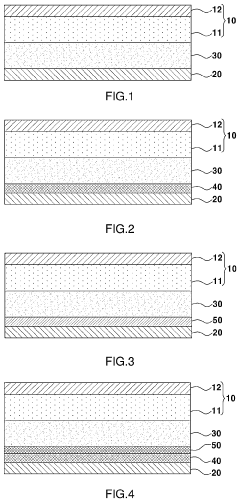
- An anode-free all-solid-state battery design featuring an anode current collector layer with surface roughness of 100 nm to 1,000 nm, directly contacting a solid electrolyte layer with ionic conductivity of 1 mS/cm to 20 mS/cm, and optionally a coating layer containing carbon and lithium-forming metals, which enhances lithium deposition uniformity and stability without additional layers.

All-solid-state battery
PatentWO2025143840A1
Innovation
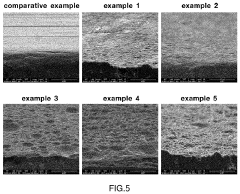
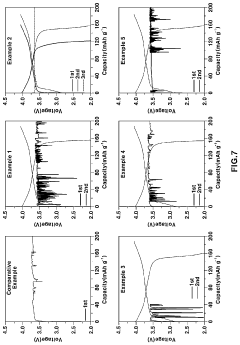
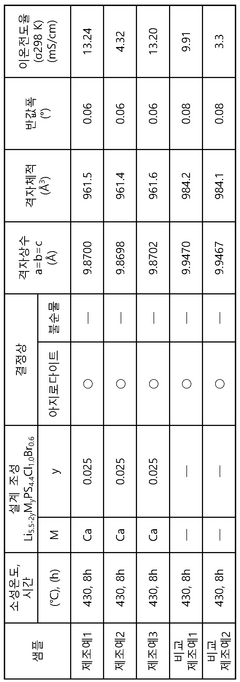
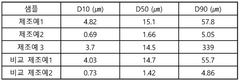
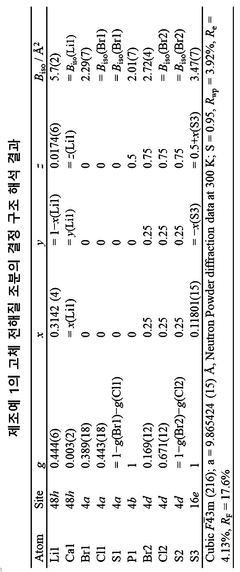
- An anode-free all-solid-state battery design where lithium metal is formed on the negative electrode current collector during charging, using a sulfide-based solid electrolyte with a Group 2 element and argyrodite-type crystal structure, allowing for low confining pressures and improved adhesion between electrodes.

Safety Standards and Regulations for Advanced EV Batteries
The regulatory landscape for advanced EV batteries, particularly solid-state and anode-free technologies, is rapidly evolving to address the unique safety challenges these innovations present. Current international standards such as UN 38.3 for transportation safety and IEC 62660 series for lithium-ion battery systems provide foundational frameworks, but these were primarily developed for conventional lithium-ion technologies and require significant updates to accommodate next-generation battery chemistries.
Solid-state batteries present distinct regulatory challenges due to their novel electrolyte materials and manufacturing processes. The absence of liquid electrolytes reduces fire and thermal runaway risks, potentially allowing for relaxed safety requirements in some areas. However, regulators are developing new testing protocols to evaluate solid electrolyte stability, interface integrity, and mechanical stress tolerance. The European Union's Battery Regulation 2023/1542 has begun incorporating provisions for solid-state technologies, requiring comprehensive lifecycle assessments and specific recycling protocols.
Anode-free battery architectures face even more complex regulatory scrutiny due to their dynamic lithium plating mechanisms. Safety standards must address the unique failure modes associated with lithium metal deposition, including dendrite formation and capacity fade patterns. The Society of Automotive Engineers (SAE) is developing specialized test procedures under SAE J2464 to evaluate anode-free battery performance under various stress conditions, including overcharge scenarios and mechanical abuse.
Regional regulatory approaches vary significantly, with the United States focusing on performance-based standards through the National Highway Traffic Safety Administration, while the European Union emphasizes precautionary principles with stricter material disclosure requirements. China's GB standards are being updated to include specific provisions for solid-state technologies, particularly regarding thermal management and cell-to-pack integration safety.
The certification process for these advanced batteries requires extensive validation testing, including accelerated aging studies, abuse tolerance assessments, and electromagnetic compatibility evaluations. Manufacturers must demonstrate compliance through third-party testing facilities certified for next-generation battery technologies, with certification timelines extending 18-24 months due to the comprehensive nature of required testing protocols.
Solid-state batteries present distinct regulatory challenges due to their novel electrolyte materials and manufacturing processes. The absence of liquid electrolytes reduces fire and thermal runaway risks, potentially allowing for relaxed safety requirements in some areas. However, regulators are developing new testing protocols to evaluate solid electrolyte stability, interface integrity, and mechanical stress tolerance. The European Union's Battery Regulation 2023/1542 has begun incorporating provisions for solid-state technologies, requiring comprehensive lifecycle assessments and specific recycling protocols.
Anode-free battery architectures face even more complex regulatory scrutiny due to their dynamic lithium plating mechanisms. Safety standards must address the unique failure modes associated with lithium metal deposition, including dendrite formation and capacity fade patterns. The Society of Automotive Engineers (SAE) is developing specialized test procedures under SAE J2464 to evaluate anode-free battery performance under various stress conditions, including overcharge scenarios and mechanical abuse.
Regional regulatory approaches vary significantly, with the United States focusing on performance-based standards through the National Highway Traffic Safety Administration, while the European Union emphasizes precautionary principles with stricter material disclosure requirements. China's GB standards are being updated to include specific provisions for solid-state technologies, particularly regarding thermal management and cell-to-pack integration safety.
The certification process for these advanced batteries requires extensive validation testing, including accelerated aging studies, abuse tolerance assessments, and electromagnetic compatibility evaluations. Manufacturers must demonstrate compliance through third-party testing facilities certified for next-generation battery technologies, with certification timelines extending 18-24 months due to the comprehensive nature of required testing protocols.
Manufacturing Scalability and Cost Analysis for Next-Gen Batteries
Manufacturing scalability represents a critical differentiator between solid-state and anode-free battery technologies for electric vehicle applications. Solid-state batteries face significant manufacturing challenges due to their complex multi-layer architecture and the need for precise interface control between solid electrolyte and electrode materials. Current production methods require specialized equipment for thin-film deposition, high-temperature sintering, and vacuum processing, which substantially increases capital expenditure requirements compared to conventional lithium-ion manufacturing lines.
Anode-free batteries present a more favorable scalability profile as they can leverage existing lithium-ion production infrastructure with minimal modifications. The elimination of anode materials simplifies the manufacturing process by reducing coating steps, calendering operations, and quality control checkpoints. This streamlined approach enables faster production ramp-up and lower initial investment costs for manufacturers transitioning from traditional battery technologies.
Cost analysis reveals contrasting economic trajectories for both technologies. Solid-state batteries currently exhibit material costs 3-5 times higher than conventional batteries, primarily driven by expensive solid electrolyte materials such as sulfide-based compounds and specialized separator layers. Manufacturing yield rates remain low at 60-70% due to interface defects and processing complexities, further inflating per-unit costs.
Anode-free batteries demonstrate superior cost reduction potential through material savings, eliminating approximately 15-20% of active materials while maintaining energy density advantages. Production yields approach 85-90% using optimized electrolyte formulations and current collector surface treatments, significantly improving manufacturing economics.
Scale-up projections indicate that solid-state battery costs may decrease to $120-150 per kWh by 2030 with gigawatt-scale production, while anode-free technologies could achieve $80-100 per kWh within the same timeframe. The manufacturing learning curve favors anode-free batteries due to their compatibility with existing production ecosystems and reduced technical complexity, positioning them as more commercially viable for near-term EV market penetration.
Anode-free batteries present a more favorable scalability profile as they can leverage existing lithium-ion production infrastructure with minimal modifications. The elimination of anode materials simplifies the manufacturing process by reducing coating steps, calendering operations, and quality control checkpoints. This streamlined approach enables faster production ramp-up and lower initial investment costs for manufacturers transitioning from traditional battery technologies.
Cost analysis reveals contrasting economic trajectories for both technologies. Solid-state batteries currently exhibit material costs 3-5 times higher than conventional batteries, primarily driven by expensive solid electrolyte materials such as sulfide-based compounds and specialized separator layers. Manufacturing yield rates remain low at 60-70% due to interface defects and processing complexities, further inflating per-unit costs.
Anode-free batteries demonstrate superior cost reduction potential through material savings, eliminating approximately 15-20% of active materials while maintaining energy density advantages. Production yields approach 85-90% using optimized electrolyte formulations and current collector surface treatments, significantly improving manufacturing economics.
Scale-up projections indicate that solid-state battery costs may decrease to $120-150 per kWh by 2030 with gigawatt-scale production, while anode-free technologies could achieve $80-100 per kWh within the same timeframe. The manufacturing learning curve favors anode-free batteries due to their compatibility with existing production ecosystems and reduced technical complexity, positioning them as more commercially viable for near-term EV market penetration.
Unlock deeper insights with Patsnap Eureka Quick Research — get a full tech report to explore trends and direct your research. Try now!
Generate Your Research Report Instantly with AI Agent
Supercharge your innovation with Patsnap Eureka AI Agent Platform!