Comparing Supercritical and Subcritical Fluid Technologies
JAN 20, 20269 MIN READ
Generate Your Research Report Instantly with AI Agent
Patsnap Eureka helps you evaluate technical feasibility & market potential.
Supercritical vs Subcritical Fluid Technology Background and Objectives
Fluid technology has evolved significantly since the mid-19th century when scientists first observed the critical point phenomenon in carbon dioxide. The distinction between subcritical and supercritical fluid states emerged as a fundamental concept in thermodynamics, with supercritical fluids exhibiting unique properties that combine liquid-like density with gas-like diffusivity. Early industrial applications focused primarily on subcritical extraction methods, particularly in petroleum refining and chemical processing, where conventional liquid solvents operated below their critical points.
The breakthrough in supercritical fluid technology occurred in the 1970s when researchers discovered that supercritical carbon dioxide could effectively extract caffeine from coffee beans, leading to commercial decaffeination processes. This milestone demonstrated the superior selectivity and environmental benefits of supercritical fluids compared to traditional subcritical solvent extraction. Since then, both technologies have developed along parallel paths, each finding distinct niches in industrial applications ranging from pharmaceutical manufacturing to food processing and materials synthesis.
The fundamental objective of comparing these two fluid technologies centers on identifying optimal operating conditions for specific industrial processes. Supercritical fluid technology aims to leverage enhanced mass transfer rates, tunable solvent properties through pressure and temperature adjustments, and reduced environmental impact by eliminating toxic organic solvents. The technology targets applications requiring high purity, selective extraction, and minimal thermal degradation of sensitive compounds.
Conversely, subcritical fluid technology focuses on cost-effectiveness, operational simplicity, and compatibility with existing industrial infrastructure. The primary goal involves maintaining adequate extraction efficiency while operating at lower pressures and temperatures, thereby reducing equipment costs and energy consumption. This approach particularly suits large-scale continuous processes where the marginal performance advantages of supercritical conditions may not justify the additional capital investment.
Current research objectives emphasize developing hybrid approaches that strategically combine both technologies, optimizing process economics while maintaining product quality standards. The evolution continues toward intelligent process control systems that can dynamically switch between subcritical and supercritical regimes based on real-time feedstock characteristics and desired product specifications, representing the next frontier in fluid technology advancement.
The breakthrough in supercritical fluid technology occurred in the 1970s when researchers discovered that supercritical carbon dioxide could effectively extract caffeine from coffee beans, leading to commercial decaffeination processes. This milestone demonstrated the superior selectivity and environmental benefits of supercritical fluids compared to traditional subcritical solvent extraction. Since then, both technologies have developed along parallel paths, each finding distinct niches in industrial applications ranging from pharmaceutical manufacturing to food processing and materials synthesis.
The fundamental objective of comparing these two fluid technologies centers on identifying optimal operating conditions for specific industrial processes. Supercritical fluid technology aims to leverage enhanced mass transfer rates, tunable solvent properties through pressure and temperature adjustments, and reduced environmental impact by eliminating toxic organic solvents. The technology targets applications requiring high purity, selective extraction, and minimal thermal degradation of sensitive compounds.
Conversely, subcritical fluid technology focuses on cost-effectiveness, operational simplicity, and compatibility with existing industrial infrastructure. The primary goal involves maintaining adequate extraction efficiency while operating at lower pressures and temperatures, thereby reducing equipment costs and energy consumption. This approach particularly suits large-scale continuous processes where the marginal performance advantages of supercritical conditions may not justify the additional capital investment.
Current research objectives emphasize developing hybrid approaches that strategically combine both technologies, optimizing process economics while maintaining product quality standards. The evolution continues toward intelligent process control systems that can dynamically switch between subcritical and supercritical regimes based on real-time feedstock characteristics and desired product specifications, representing the next frontier in fluid technology advancement.
Market Demand Analysis for Fluid Extraction Technologies
The global market for fluid extraction technologies has experienced substantial growth driven by increasing demand across pharmaceutical, food and beverage, cosmetics, and chemical industries. Supercritical and subcritical fluid extraction methods have emerged as preferred alternatives to conventional solvent-based processes due to their environmental sustainability, product purity advantages, and regulatory compliance benefits. The pharmaceutical sector represents a particularly significant demand driver, where these technologies enable extraction of bioactive compounds, essential oils, and active pharmaceutical ingredients with minimal thermal degradation and solvent residues.
Food and beverage industries demonstrate strong adoption patterns, particularly in natural ingredient extraction, decaffeination processes, and nutraceutical production. Consumer preferences shifting toward clean-label products and organic ingredients have accelerated market penetration of supercritical carbon dioxide extraction systems. The cosmetics and personal care sector similarly shows growing interest in these technologies for obtaining high-quality botanical extracts and essential oils that meet stringent purity standards.
Environmental regulations and sustainability mandates across major economies have created additional market momentum. Traditional organic solvent extraction faces increasing restrictions due to environmental concerns and worker safety issues, positioning supercritical and subcritical fluid technologies as compliant alternatives. Industries seeking to reduce their carbon footprint and eliminate hazardous waste streams view these technologies as strategic investments aligned with corporate sustainability goals.
The cannabis and hemp extraction market has emerged as a rapidly expanding application area, particularly in regions with legalized cannabis industries. These sectors require precise extraction methods that preserve cannabinoid profiles while meeting regulatory requirements for residual solvent limits. Market demand in this segment has driven technological innovations and equipment miniaturization to serve both large-scale commercial operations and smaller specialized producers.
Emerging economies in Asia-Pacific and Latin America represent high-growth potential markets as local industries modernize their extraction capabilities. Increasing investments in pharmaceutical manufacturing, herbal medicine production, and specialty chemical synthesis within these regions are expected to sustain long-term demand growth for advanced fluid extraction technologies.
Food and beverage industries demonstrate strong adoption patterns, particularly in natural ingredient extraction, decaffeination processes, and nutraceutical production. Consumer preferences shifting toward clean-label products and organic ingredients have accelerated market penetration of supercritical carbon dioxide extraction systems. The cosmetics and personal care sector similarly shows growing interest in these technologies for obtaining high-quality botanical extracts and essential oils that meet stringent purity standards.
Environmental regulations and sustainability mandates across major economies have created additional market momentum. Traditional organic solvent extraction faces increasing restrictions due to environmental concerns and worker safety issues, positioning supercritical and subcritical fluid technologies as compliant alternatives. Industries seeking to reduce their carbon footprint and eliminate hazardous waste streams view these technologies as strategic investments aligned with corporate sustainability goals.
The cannabis and hemp extraction market has emerged as a rapidly expanding application area, particularly in regions with legalized cannabis industries. These sectors require precise extraction methods that preserve cannabinoid profiles while meeting regulatory requirements for residual solvent limits. Market demand in this segment has driven technological innovations and equipment miniaturization to serve both large-scale commercial operations and smaller specialized producers.
Emerging economies in Asia-Pacific and Latin America represent high-growth potential markets as local industries modernize their extraction capabilities. Increasing investments in pharmaceutical manufacturing, herbal medicine production, and specialty chemical synthesis within these regions are expected to sustain long-term demand growth for advanced fluid extraction technologies.
Current Status and Technical Challenges in Fluid Processing
Fluid processing technologies have evolved significantly over the past decades, with both supercritical and subcritical fluid systems finding widespread applications across pharmaceutical, food, chemical, and materials industries. Supercritical fluid technology, particularly using carbon dioxide, has matured into a commercially viable platform for extraction, purification, and particle formation processes. Meanwhile, subcritical fluid processing continues to dominate in conventional extraction and separation operations due to its lower capital investment and operational simplicity.
The current landscape reveals a clear technological divide between these two approaches. Supercritical fluid systems operate above the critical point of the working fluid, typically requiring pressures exceeding 73.8 bar and temperatures above 31°C for CO2. This state enables unique solvent properties with liquid-like density and gas-like diffusivity, facilitating superior mass transfer and selectivity. Subcritical systems, operating below these thresholds, maintain distinct liquid and gas phases with more predictable but limited solvent characteristics.
Despite technological advances, several critical challenges persist in both domains. For supercritical fluid processing, the primary obstacles include high equipment costs associated with pressure-resistant vessels and pumping systems, energy-intensive compression requirements, and scale-up complexities from laboratory to industrial production. Process optimization remains challenging due to the sensitive relationship between pressure, temperature, and solvent power, requiring precise control systems and extensive parameter screening.
Subcritical fluid technologies face different constraints, primarily related to extraction efficiency and selectivity limitations. Lower operating pressures result in reduced mass transfer rates and longer processing times, impacting throughput and economic viability. Solvent recovery and environmental concerns associated with organic solvents in subcritical systems present additional regulatory and sustainability challenges.
Technical barriers also exist in hybrid approaches attempting to leverage advantages of both technologies. Integration challenges include managing phase transitions, maintaining process stability across different operating regimes, and developing equipment capable of flexible operation across wide pressure and temperature ranges. Furthermore, limited understanding of fluid behavior at near-critical conditions creates uncertainties in process design and optimization.
The geographical distribution of technological expertise shows concentration in Europe and North America for supercritical applications, while subcritical processing capabilities remain more globally distributed. This disparity reflects differences in research investment, regulatory frameworks, and industrial infrastructure supporting advanced fluid processing technologies.
The current landscape reveals a clear technological divide between these two approaches. Supercritical fluid systems operate above the critical point of the working fluid, typically requiring pressures exceeding 73.8 bar and temperatures above 31°C for CO2. This state enables unique solvent properties with liquid-like density and gas-like diffusivity, facilitating superior mass transfer and selectivity. Subcritical systems, operating below these thresholds, maintain distinct liquid and gas phases with more predictable but limited solvent characteristics.
Despite technological advances, several critical challenges persist in both domains. For supercritical fluid processing, the primary obstacles include high equipment costs associated with pressure-resistant vessels and pumping systems, energy-intensive compression requirements, and scale-up complexities from laboratory to industrial production. Process optimization remains challenging due to the sensitive relationship between pressure, temperature, and solvent power, requiring precise control systems and extensive parameter screening.
Subcritical fluid technologies face different constraints, primarily related to extraction efficiency and selectivity limitations. Lower operating pressures result in reduced mass transfer rates and longer processing times, impacting throughput and economic viability. Solvent recovery and environmental concerns associated with organic solvents in subcritical systems present additional regulatory and sustainability challenges.
Technical barriers also exist in hybrid approaches attempting to leverage advantages of both technologies. Integration challenges include managing phase transitions, maintaining process stability across different operating regimes, and developing equipment capable of flexible operation across wide pressure and temperature ranges. Furthermore, limited understanding of fluid behavior at near-critical conditions creates uncertainties in process design and optimization.
The geographical distribution of technological expertise shows concentration in Europe and North America for supercritical applications, while subcritical processing capabilities remain more globally distributed. This disparity reflects differences in research investment, regulatory frameworks, and industrial infrastructure supporting advanced fluid processing technologies.
Comparative Technical Solutions for Fluid Processing
01 Supercritical fluid extraction and processing methods
Supercritical fluid technology is utilized for extraction and processing of various materials. This method employs fluids at temperatures and pressures above their critical points, where they exhibit unique properties combining liquid-like density and gas-like diffusivity. The technology enables efficient extraction of target compounds from natural materials, pharmaceutical ingredients, and food products while maintaining product quality and purity. The process can be optimized by controlling pressure, temperature, and flow rates to achieve selective extraction.- Supercritical fluid extraction and processing methods: Supercritical fluid technology is utilized for extraction and processing of various materials. This method employs fluids at temperatures and pressures above their critical points, where they exhibit unique properties combining liquid-like density and gas-like diffusivity. The technology enables efficient extraction of target compounds from natural materials, pharmaceutical ingredients, and food products while maintaining product quality and purity. The process can be optimized by controlling pressure, temperature, and flow rates to achieve selective extraction.
- Subcritical water extraction and treatment processes: Subcritical fluid technology operates below the critical point of the fluid, particularly using water as the primary medium. This approach is effective for extracting bioactive compounds, treating waste materials, and processing heat-sensitive substances. The method provides advantages in terms of environmental friendliness and cost-effectiveness compared to organic solvent extraction. Applications include extraction of natural products, food processing, and pharmaceutical manufacturing where moderate conditions are preferred.
- Equipment and apparatus design for supercritical and subcritical fluid systems: Specialized equipment and apparatus are designed to handle the extreme conditions required for supercritical and subcritical fluid operations. These systems include high-pressure vessels, pumps, heat exchangers, and separation units capable of withstanding elevated pressures and temperatures. The design considerations focus on safety, efficiency, and scalability. Advanced control systems monitor and regulate process parameters to ensure optimal operation and product quality.
- Application in pharmaceutical and nutraceutical production: Supercritical and subcritical fluid technologies are extensively applied in pharmaceutical and nutraceutical industries for purification, particle formation, and drug delivery system development. These methods enable the production of ultra-fine particles, encapsulation of active ingredients, and removal of impurities without thermal degradation. The technology supports the manufacturing of high-purity products with enhanced bioavailability and stability. Applications include extraction of plant-based medicines, production of liposomes, and formulation of controlled-release systems.
- Food processing and preservation using supercritical and subcritical fluids: The food industry employs supercritical and subcritical fluid technologies for extraction of flavors, oils, and bioactive compounds, as well as for sterilization and preservation processes. These methods offer advantages in maintaining nutritional value, flavor profiles, and functional properties of food products. The technology enables solvent-free processing, which is particularly important for organic and natural food products. Applications include decaffeination, extraction of essential oils, and pasteurization of liquid foods.
02 Subcritical water extraction and treatment processes
Subcritical fluid technology operates at conditions below the critical point, particularly using water as the primary solvent. This approach is effective for extracting bioactive compounds, treating waste materials, and processing heat-sensitive substances. The method offers environmental benefits by reducing the need for organic solvents and can be applied to various industries including food processing, pharmaceuticals, and environmental remediation. Temperature and pressure parameters are carefully controlled to optimize extraction efficiency while preserving the integrity of target compounds.Expand Specific Solutions03 Equipment and apparatus design for supercritical and subcritical fluid systems
Specialized equipment and apparatus are designed to handle the extreme conditions required for supercritical and subcritical fluid operations. These systems include high-pressure vessels, pumps, heat exchangers, and separation units capable of withstanding elevated pressures and temperatures. The design considerations focus on safety, efficiency, and scalability, incorporating features such as pressure control systems, temperature regulation mechanisms, and automated monitoring devices. The equipment is engineered to ensure consistent operation and product quality across various applications.Expand Specific Solutions04 Application in pharmaceutical and nutraceutical production
Supercritical and subcritical fluid technologies are extensively applied in pharmaceutical and nutraceutical industries for producing high-purity compounds and formulations. These methods enable the extraction of active pharmaceutical ingredients, production of micro and nanoparticles, and development of drug delivery systems. The technology offers advantages in terms of solvent-free processing, enhanced bioavailability, and precise control over particle size and morphology. Applications include the processing of herbal extracts, production of liposomes, and formulation of sustained-release medications.Expand Specific Solutions05 Food processing and natural product extraction applications
The technology is widely employed in food processing and natural product industries for extracting flavors, fragrances, oils, and bioactive compounds. Supercritical and subcritical fluid methods provide clean extraction without residual solvents, preserve nutritional value, and maintain the sensory properties of food products. Applications include decaffeination of coffee and tea, extraction of essential oils, processing of spices and herbs, and production of functional food ingredients. The process parameters can be adjusted to achieve selective extraction of desired components while minimizing degradation of sensitive compounds.Expand Specific Solutions
Major Players in Fluid Extraction Equipment and Applications
The supercritical and subcritical fluid technologies sector represents a mature yet evolving market, primarily driven by semiconductor manufacturing and specialty materials processing applications. The competitive landscape is dominated by established semiconductor equipment manufacturers including Applied Materials, Tokyo Electron, SCREEN Holdings, and Novellus Systems, alongside materials companies like DuPont and Ferro (VIBRANTZ). The technology has achieved commercial maturity in semiconductor cleaning and coating processes, with companies like ACM Research and GLOBALFOUNDRIES actively implementing these solutions. Research institutions such as MIT, Beijing University of Chemical Technology, and Industrial Technology Research Institute continue advancing the technology's boundaries. The market exhibits strong growth potential, particularly in advanced semiconductor nodes and sustainable manufacturing processes, with increasing adoption across pharmaceutical, food processing, and materials extraction sectors driven by environmental regulations and efficiency demands.
Novellus Systems, Inc.
Technical Solution: Novellus Systems has developed advanced supercritical CO2-based cleaning and drying technologies specifically for semiconductor manufacturing processes. Their supercritical fluid systems utilize CO2 at pressures above 1070 psi and temperatures above 31°C to achieve superior cleaning of high-aspect-ratio structures and photoresist removal. The technology enables particle-free drying by eliminating surface tension effects that cause pattern collapse in sub-20nm features. Their systems integrate precise pressure and temperature control to transition between subcritical and supercritical states, optimizing cleaning efficiency while minimizing chemical waste and environmental impact compared to traditional wet chemical processes.
Strengths: Excellent pattern collapse prevention, environmentally friendly with minimal chemical usage, highly effective for advanced semiconductor nodes. Weaknesses: High capital equipment costs, requires precise process control, limited to specific semiconductor applications.
Industrial Technology Research Institute
Technical Solution: ITRI has conducted extensive comparative research on supercritical versus subcritical fluid extraction and processing technologies for both semiconductor and biomedical applications. Their studies evaluate supercritical CO2 systems operating above critical point (>73.8 bar, >31.1°C) against subcritical systems for material processing efficiency. Research findings indicate supercritical fluids demonstrate 3-5 times higher mass transfer rates and superior selectivity in extraction processes compared to subcritical conditions. ITRI's technology assessment covers energy consumption analysis showing supercritical systems require 25-35% more energy input but deliver 50-70% higher throughput. Their comparative framework examines equipment complexity, operational safety, product quality, and economic viability across different industrial applications, providing decision matrices for technology selection based on specific process requirements.
Strengths: Comprehensive comparative analysis methodology, strong research foundation, applicable across multiple industries. Weaknesses: Primarily research-focused with limited commercial deployment, technology transfer challenges, requires significant customization for specific applications.
Core Patents in Supercritical and Subcritical Processes
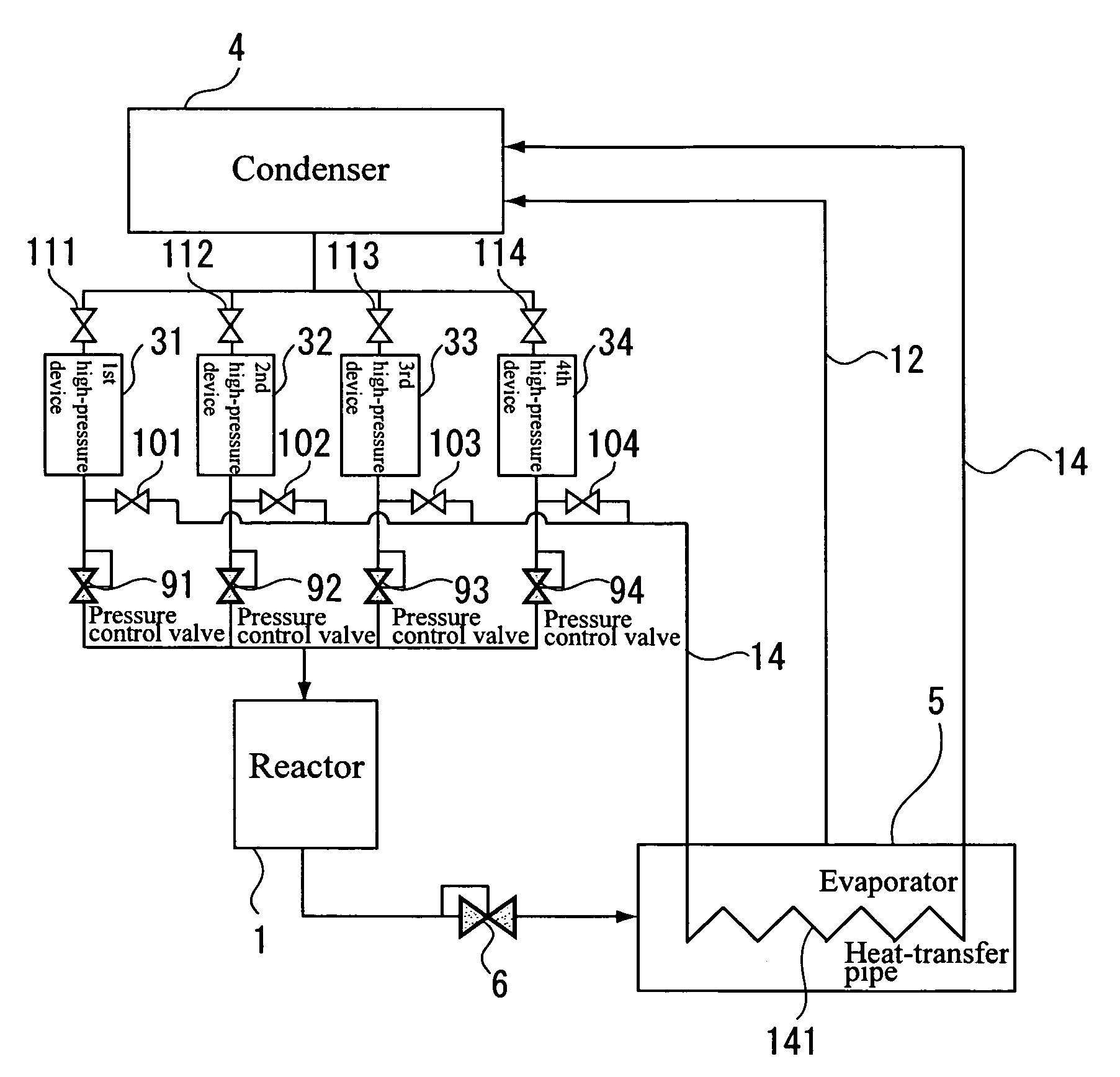
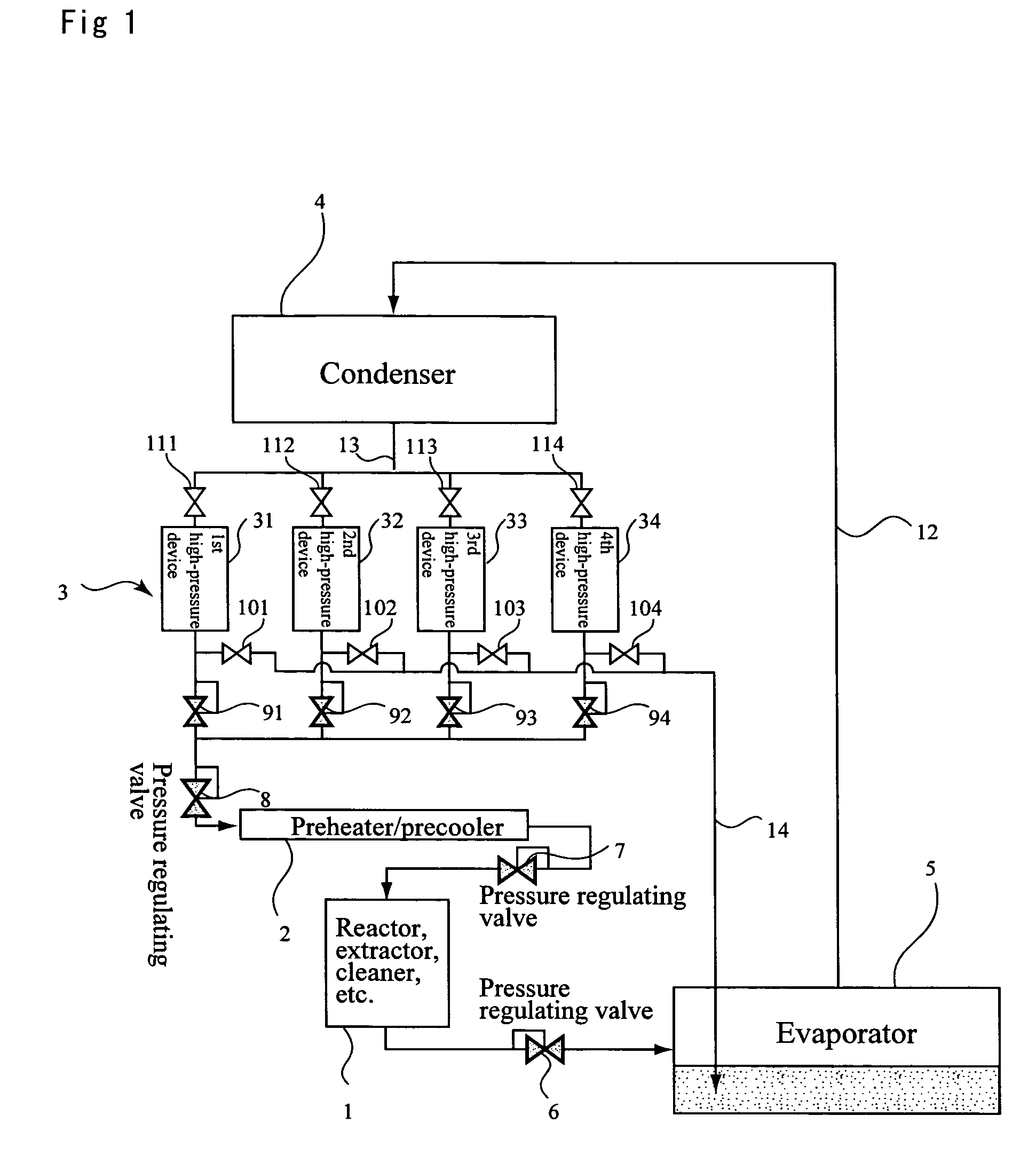
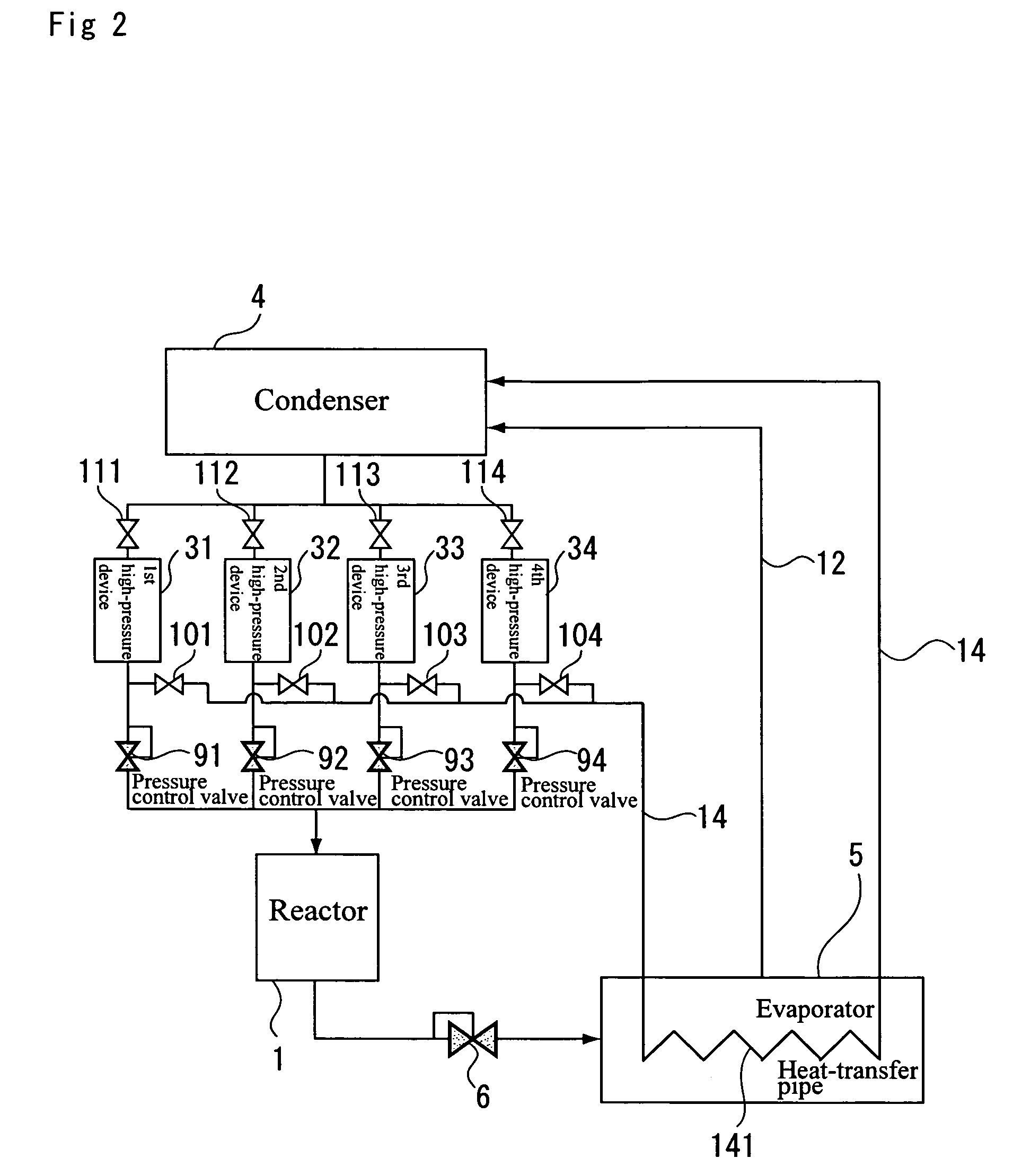
System and device for processing supercritical and subcritical fluid
PatentInactiveUS7335296B2
Innovation
- A system that utilizes thermal energy to create a pressure difference by thermal expansion of fluids within high-pressure devices, eliminating the need for compressing devices and allowing for continuous and stable high-pressure fluid supply to processing containers without the use of pumps, enabling efficient and resource-saving operations.

Apparatus and method for transferring a fluid from a subcritical gaseous state into a supercritical state
PatentPendingUS20250327617A1
Innovation
- An integrated apparatus combining a compressor unit, pump unit, and liquefaction unit, driven by a common drive unit, compresses and liquefies the fluid to achieve the supercritical state efficiently, reducing complexity and space requirements.


Environmental and Safety Regulations for Fluid Technologies
The regulatory landscape governing supercritical and subcritical fluid technologies has evolved significantly in response to growing environmental concerns and workplace safety imperatives. Both technology categories are subject to comprehensive regulatory frameworks that address operational safety, environmental impact, and worker protection. Supercritical fluid systems, particularly those utilizing carbon dioxide, generally benefit from more favorable regulatory treatment due to CO2's non-toxic and non-flammable properties. However, the high-pressure requirements of supercritical operations necessitate strict compliance with pressure vessel codes and safety standards established by organizations such as ASME and ISO.
Subcritical fluid technologies face more stringent environmental regulations, especially when employing organic solvents. The use of volatile organic compounds in subcritical extraction processes triggers compliance requirements under air quality regulations, including emission monitoring and control systems. Many jurisdictions mandate solvent recovery systems and impose strict limits on atmospheric releases. Additionally, waste disposal protocols for spent solvents require adherence to hazardous waste management regulations, increasing operational complexity and costs.
Safety regulations for both technologies emphasize risk assessment, emergency response planning, and personnel training requirements. Supercritical systems must implement robust pressure relief mechanisms and containment protocols to prevent catastrophic failures. Regular inspection schedules and certification requirements for high-pressure equipment are mandatory across most regulatory jurisdictions. Subcritical operations require comprehensive chemical handling procedures, including proper ventilation systems, personal protective equipment standards, and exposure monitoring programs.
The regulatory divergence between these technologies significantly influences their commercial viability and market adoption. Industries operating in heavily regulated sectors, such as pharmaceuticals and food processing, increasingly favor supercritical CO2 systems to minimize regulatory burden and environmental liability. Conversely, subcritical technologies remain viable in applications where regulatory frameworks are less restrictive or where specific solvent properties justify the additional compliance requirements. Understanding these regulatory distinctions is essential for strategic technology selection and long-term operational planning.
Subcritical fluid technologies face more stringent environmental regulations, especially when employing organic solvents. The use of volatile organic compounds in subcritical extraction processes triggers compliance requirements under air quality regulations, including emission monitoring and control systems. Many jurisdictions mandate solvent recovery systems and impose strict limits on atmospheric releases. Additionally, waste disposal protocols for spent solvents require adherence to hazardous waste management regulations, increasing operational complexity and costs.
Safety regulations for both technologies emphasize risk assessment, emergency response planning, and personnel training requirements. Supercritical systems must implement robust pressure relief mechanisms and containment protocols to prevent catastrophic failures. Regular inspection schedules and certification requirements for high-pressure equipment are mandatory across most regulatory jurisdictions. Subcritical operations require comprehensive chemical handling procedures, including proper ventilation systems, personal protective equipment standards, and exposure monitoring programs.
The regulatory divergence between these technologies significantly influences their commercial viability and market adoption. Industries operating in heavily regulated sectors, such as pharmaceuticals and food processing, increasingly favor supercritical CO2 systems to minimize regulatory burden and environmental liability. Conversely, subcritical technologies remain viable in applications where regulatory frameworks are less restrictive or where specific solvent properties justify the additional compliance requirements. Understanding these regulatory distinctions is essential for strategic technology selection and long-term operational planning.
Energy Efficiency and Cost-Benefit Analysis
Energy efficiency represents a critical differentiator between supercritical and subcritical fluid technologies, directly impacting operational economics and environmental sustainability. Supercritical fluid systems typically demonstrate superior energy performance due to enhanced mass transfer rates and reduced processing times. The elimination of phase boundaries in supercritical conditions enables more efficient heat and mass transfer, potentially reducing energy consumption by 20-40% compared to conventional subcritical extraction methods. However, this advantage must be weighed against the substantial energy requirements for achieving and maintaining supercritical conditions, particularly the compression energy needed to exceed critical pressure thresholds.
The initial capital investment for supercritical fluid systems significantly exceeds that of subcritical alternatives, with equipment costs often 2-3 times higher due to requirements for high-pressure vessels, specialized pumps, and advanced safety systems. Subcritical systems benefit from lower pressure ratings, simpler construction materials, and reduced safety infrastructure, translating to more accessible entry costs for smaller operations. Maintenance expenses follow similar patterns, with supercritical systems demanding more frequent inspections and specialized technical expertise.
Operational cost analysis reveals nuanced trade-offs between the two approaches. Supercritical systems often achieve higher extraction yields and shorter cycle times, improving throughput and reducing solvent consumption per unit of product. These efficiency gains can offset higher energy costs in high-volume production scenarios. Conversely, subcritical operations may prove more economical for smaller-scale applications or when processing materials with lower value-added potential, where the premium performance of supercritical conditions cannot justify the additional investment.
The cost-benefit equation shifts considerably when considering product quality and market positioning. Supercritical fluid extraction frequently produces higher-purity products with minimal thermal degradation, commanding premium pricing in pharmaceutical and specialty chemical markets. This quality advantage can generate substantial revenue differentials that fundamentally alter return-on-investment calculations. Environmental compliance costs also factor prominently, as supercritical systems using carbon dioxide offer significant advantages in regulatory environments with stringent solvent emission standards, potentially avoiding costly waste treatment infrastructure required for subcritical organic solvent systems.
The initial capital investment for supercritical fluid systems significantly exceeds that of subcritical alternatives, with equipment costs often 2-3 times higher due to requirements for high-pressure vessels, specialized pumps, and advanced safety systems. Subcritical systems benefit from lower pressure ratings, simpler construction materials, and reduced safety infrastructure, translating to more accessible entry costs for smaller operations. Maintenance expenses follow similar patterns, with supercritical systems demanding more frequent inspections and specialized technical expertise.
Operational cost analysis reveals nuanced trade-offs between the two approaches. Supercritical systems often achieve higher extraction yields and shorter cycle times, improving throughput and reducing solvent consumption per unit of product. These efficiency gains can offset higher energy costs in high-volume production scenarios. Conversely, subcritical operations may prove more economical for smaller-scale applications or when processing materials with lower value-added potential, where the premium performance of supercritical conditions cannot justify the additional investment.
The cost-benefit equation shifts considerably when considering product quality and market positioning. Supercritical fluid extraction frequently produces higher-purity products with minimal thermal degradation, commanding premium pricing in pharmaceutical and specialty chemical markets. This quality advantage can generate substantial revenue differentials that fundamentally alter return-on-investment calculations. Environmental compliance costs also factor prominently, as supercritical systems using carbon dioxide offer significant advantages in regulatory environments with stringent solvent emission standards, potentially avoiding costly waste treatment infrastructure required for subcritical organic solvent systems.
Unlock deeper insights with Patsnap Eureka Quick Research — get a full tech report to explore trends and direct your research. Try now!
Generate Your Research Report Instantly with AI Agent
Supercharge your innovation with Patsnap Eureka AI Agent Platform!