

Determining Problem Hotspots for Better Signal Level Management
MAR 19, 20269 MIN READ
Generate Your Research Report Instantly with AI Agent
PatSnap Eureka helps you evaluate technical feasibility & market potential.
Signal Hotspot Detection Background and Objectives
Signal hotspot detection has emerged as a critical technology domain within telecommunications and wireless network management, driven by the exponential growth of mobile data consumption and the increasing complexity of network infrastructures. The evolution of wireless communication systems from 2G to 5G has fundamentally transformed how networks handle signal distribution and quality management, creating unprecedented challenges in maintaining optimal service levels across diverse geographical and demographic landscapes.
The historical development of signal management can be traced back to early cellular network deployments in the 1980s, where coverage optimization was primarily achieved through manual site surveys and basic propagation modeling. As network densification accelerated through the 1990s and 2000s, the industry witnessed a paradigm shift toward automated monitoring systems and real-time performance analytics. The introduction of smartphones and data-intensive applications further amplified the need for sophisticated signal quality management solutions.
Contemporary wireless networks face mounting pressure to deliver consistent high-quality service while managing increasingly heterogeneous traffic patterns. The proliferation of Internet of Things devices, autonomous vehicles, and augmented reality applications has created dynamic hotspot scenarios that traditional static planning methods cannot adequately address. These evolving demands have necessitated the development of intelligent hotspot detection mechanisms capable of identifying problematic areas before they impact user experience.
The primary objective of signal hotspot detection technology centers on proactive identification and mitigation of network performance degradation points. This encompasses the development of algorithms and systems capable of analyzing multiple signal quality indicators simultaneously, including received signal strength, signal-to-noise ratio, interference levels, and traffic congestion patterns. The technology aims to enable network operators to implement targeted optimization strategies that maximize resource utilization while minimizing service disruptions.
Advanced hotspot detection systems seek to achieve real-time monitoring capabilities with predictive analytics functionality, allowing operators to anticipate network stress points before they manifest as service quality issues. The ultimate goal involves creating self-optimizing networks that can automatically adjust parameters and resource allocation based on detected hotspot patterns, thereby reducing operational costs and improving overall network performance efficiency.
The historical development of signal management can be traced back to early cellular network deployments in the 1980s, where coverage optimization was primarily achieved through manual site surveys and basic propagation modeling. As network densification accelerated through the 1990s and 2000s, the industry witnessed a paradigm shift toward automated monitoring systems and real-time performance analytics. The introduction of smartphones and data-intensive applications further amplified the need for sophisticated signal quality management solutions.
Contemporary wireless networks face mounting pressure to deliver consistent high-quality service while managing increasingly heterogeneous traffic patterns. The proliferation of Internet of Things devices, autonomous vehicles, and augmented reality applications has created dynamic hotspot scenarios that traditional static planning methods cannot adequately address. These evolving demands have necessitated the development of intelligent hotspot detection mechanisms capable of identifying problematic areas before they impact user experience.
The primary objective of signal hotspot detection technology centers on proactive identification and mitigation of network performance degradation points. This encompasses the development of algorithms and systems capable of analyzing multiple signal quality indicators simultaneously, including received signal strength, signal-to-noise ratio, interference levels, and traffic congestion patterns. The technology aims to enable network operators to implement targeted optimization strategies that maximize resource utilization while minimizing service disruptions.
Advanced hotspot detection systems seek to achieve real-time monitoring capabilities with predictive analytics functionality, allowing operators to anticipate network stress points before they manifest as service quality issues. The ultimate goal involves creating self-optimizing networks that can automatically adjust parameters and resource allocation based on detected hotspot patterns, thereby reducing operational costs and improving overall network performance efficiency.
Market Demand for Advanced Signal Management Solutions
The telecommunications industry faces unprecedented challenges in managing signal quality and network performance as data traffic continues to surge globally. Network operators are experiencing increasing pressure to maintain optimal signal levels while managing complex infrastructure that spans diverse geographical and technological environments. Traditional signal management approaches often rely on reactive maintenance strategies, leading to service disruptions and customer dissatisfaction.
Enterprise customers across various sectors are driving demand for more sophisticated signal management solutions. Financial institutions require ultra-reliable connectivity for high-frequency trading operations, while healthcare organizations need consistent signal quality for telemedicine applications and critical patient monitoring systems. Manufacturing companies implementing Industry 4.0 initiatives depend on stable wireless communications for automated production lines and real-time quality control systems.
The proliferation of Internet of Things devices has created new market dynamics, with billions of connected sensors and smart devices requiring consistent signal coverage. Smart city initiatives worldwide are generating substantial demand for advanced signal management capabilities to support traffic management systems, environmental monitoring networks, and public safety communications infrastructure.
Mobile network operators are investing heavily in proactive signal management technologies to reduce operational expenditures and improve customer experience metrics. The competitive landscape in telecommunications services has intensified focus on network quality as a key differentiator, driving operators to seek solutions that can identify and resolve signal issues before they impact end users.
Edge computing deployments are creating additional market opportunities for signal management solutions, as distributed computing resources require reliable connectivity to function effectively. The emergence of private 5G networks in industrial settings has opened new market segments where precise signal level control is critical for mission-critical applications.
Regulatory requirements in various regions are mandating improved network reliability and coverage standards, compelling operators to adopt more advanced monitoring and management technologies. Emergency services and public safety organizations represent another significant market segment requiring guaranteed signal availability and quality during critical situations.
The market demand is further amplified by the increasing complexity of modern wireless networks, which operate across multiple frequency bands and utilize advanced technologies such as massive MIMO and beamforming. These sophisticated systems require equally advanced management solutions capable of handling the intricate relationships between signal propagation, interference patterns, and network performance optimization.
Enterprise customers across various sectors are driving demand for more sophisticated signal management solutions. Financial institutions require ultra-reliable connectivity for high-frequency trading operations, while healthcare organizations need consistent signal quality for telemedicine applications and critical patient monitoring systems. Manufacturing companies implementing Industry 4.0 initiatives depend on stable wireless communications for automated production lines and real-time quality control systems.
The proliferation of Internet of Things devices has created new market dynamics, with billions of connected sensors and smart devices requiring consistent signal coverage. Smart city initiatives worldwide are generating substantial demand for advanced signal management capabilities to support traffic management systems, environmental monitoring networks, and public safety communications infrastructure.
Mobile network operators are investing heavily in proactive signal management technologies to reduce operational expenditures and improve customer experience metrics. The competitive landscape in telecommunications services has intensified focus on network quality as a key differentiator, driving operators to seek solutions that can identify and resolve signal issues before they impact end users.
Edge computing deployments are creating additional market opportunities for signal management solutions, as distributed computing resources require reliable connectivity to function effectively. The emergence of private 5G networks in industrial settings has opened new market segments where precise signal level control is critical for mission-critical applications.
Regulatory requirements in various regions are mandating improved network reliability and coverage standards, compelling operators to adopt more advanced monitoring and management technologies. Emergency services and public safety organizations represent another significant market segment requiring guaranteed signal availability and quality during critical situations.
The market demand is further amplified by the increasing complexity of modern wireless networks, which operate across multiple frequency bands and utilize advanced technologies such as massive MIMO and beamforming. These sophisticated systems require equally advanced management solutions capable of handling the intricate relationships between signal propagation, interference patterns, and network performance optimization.
Current Signal Level Management Challenges and Limitations
Signal level management in modern communication systems faces significant challenges stemming from the increasing complexity of network architectures and the exponential growth in data traffic demands. Traditional approaches often rely on reactive methodologies that address signal degradation issues after they have already impacted system performance, leading to service interruptions and reduced quality of experience for end users.
One of the primary limitations in current signal level management is the lack of real-time visibility into network performance hotspots. Many existing systems operate with monitoring intervals that are too coarse to capture rapid signal fluctuations, particularly in dynamic environments where interference patterns change frequently. This temporal blindness creates gaps in understanding where and when signal quality issues emerge, making proactive management nearly impossible.
Geographic coverage presents another substantial challenge, especially in heterogeneous network deployments spanning urban, suburban, and rural environments. Signal propagation characteristics vary dramatically across different terrains and building densities, yet many management systems apply uniform approaches that fail to account for these environmental variations. The result is often over-provisioning in some areas while leaving others underserved.
The integration complexity between different network layers and technologies compounds these difficulties. Modern networks typically involve multiple radio access technologies, frequency bands, and vendor equipment operating simultaneously. Current signal level management solutions frequently operate in silos, lacking the comprehensive view necessary to identify cross-layer interference patterns and optimization opportunities.
Scalability constraints further limit the effectiveness of existing approaches. As network densities increase with small cell deployments and IoT device proliferation, traditional centralized management architectures struggle to process the volume of signal quality data generated across the entire network infrastructure. This processing bottleneck delays critical decision-making and reduces the system's ability to respond to emerging hotspots.
Additionally, the lack of predictive capabilities in current systems represents a fundamental limitation. Most solutions focus on historical analysis and current state monitoring without incorporating machine learning algorithms that could anticipate future problem areas based on traffic patterns, environmental conditions, and historical performance data.
One of the primary limitations in current signal level management is the lack of real-time visibility into network performance hotspots. Many existing systems operate with monitoring intervals that are too coarse to capture rapid signal fluctuations, particularly in dynamic environments where interference patterns change frequently. This temporal blindness creates gaps in understanding where and when signal quality issues emerge, making proactive management nearly impossible.
Geographic coverage presents another substantial challenge, especially in heterogeneous network deployments spanning urban, suburban, and rural environments. Signal propagation characteristics vary dramatically across different terrains and building densities, yet many management systems apply uniform approaches that fail to account for these environmental variations. The result is often over-provisioning in some areas while leaving others underserved.
The integration complexity between different network layers and technologies compounds these difficulties. Modern networks typically involve multiple radio access technologies, frequency bands, and vendor equipment operating simultaneously. Current signal level management solutions frequently operate in silos, lacking the comprehensive view necessary to identify cross-layer interference patterns and optimization opportunities.
Scalability constraints further limit the effectiveness of existing approaches. As network densities increase with small cell deployments and IoT device proliferation, traditional centralized management architectures struggle to process the volume of signal quality data generated across the entire network infrastructure. This processing bottleneck delays critical decision-making and reduces the system's ability to respond to emerging hotspots.
Additionally, the lack of predictive capabilities in current systems represents a fundamental limitation. Most solutions focus on historical analysis and current state monitoring without incorporating machine learning algorithms that could anticipate future problem areas based on traffic patterns, environmental conditions, and historical performance data.
Existing Approaches for Signal Problem Hotspot Identification
01 Automatic gain control and signal level adjustment techniques
Signal level management can be achieved through automatic gain control (AGC) circuits and adaptive signal level adjustment mechanisms. These techniques dynamically monitor and adjust signal amplitudes to maintain optimal levels, preventing signal distortion and ensuring consistent performance across varying input conditions. The systems employ feedback loops and threshold detection to automatically compensate for signal variations and maintain desired output levels.- Automatic gain control and signal level adjustment techniques: Signal level management can be achieved through automatic gain control (AGC) circuits and adaptive signal level adjustment mechanisms. These techniques dynamically monitor and adjust signal amplitudes to maintain optimal levels, preventing signal distortion and ensuring consistent performance across varying input conditions. The systems employ feedback loops and threshold detection to automatically compensate for signal variations and maintain desired output levels.
- Power control and transmission level optimization: Managing signal levels through power control mechanisms involves adjusting transmission power based on channel conditions and interference levels. These methods optimize signal-to-noise ratios and minimize interference by dynamically controlling output power levels. The approach includes measuring received signal strength, calculating optimal transmission parameters, and implementing closed-loop power control algorithms to maintain appropriate signal levels throughout the communication system.
- Signal threshold detection and level monitoring: Signal level management incorporates threshold detection circuits and continuous monitoring systems to identify and respond to signal level variations. These systems compare incoming signals against predetermined thresholds and trigger appropriate responses when levels exceed or fall below acceptable ranges. The monitoring mechanisms provide real-time feedback for maintaining signal integrity and preventing overload or underflow conditions.
- Multi-level signal processing and equalization: Advanced signal level management employs multi-level signal processing techniques including equalization, filtering, and dynamic range compression. These methods address signal level variations caused by channel impairments, multipath effects, and frequency-dependent attenuation. The processing algorithms adaptively adjust signal characteristics to maintain consistent levels across different frequency bands and compensate for transmission medium effects.
- Interference mitigation and signal quality enhancement: Signal level management addresses interference and noise issues through techniques that enhance signal quality while maintaining appropriate levels. These approaches include interference cancellation, noise reduction algorithms, and selective signal amplification. The systems identify problematic signal conditions and apply corrective measures to improve overall signal quality, ensuring reliable communication even in challenging environments with multiple interference sources.
02 Power control and transmission level optimization
Managing signal levels through power control mechanisms involves adjusting transmission power based on channel conditions and interference levels. These methods optimize signal-to-noise ratios and minimize interference by dynamically controlling output power levels. The approach includes measuring received signal strength, calculating optimal transmission parameters, and implementing closed-loop power control to maintain quality of service while reducing power consumption.Expand Specific Solutions03 Signal threshold detection and level monitoring
Effective signal level management requires continuous monitoring and threshold-based detection systems. These solutions implement comparators, level detectors, and monitoring circuits to identify when signals exceed or fall below predetermined thresholds. The systems can trigger alerts, initiate corrective actions, or switch between operating modes based on detected signal levels, ensuring reliable operation and preventing system failures due to improper signal levels.Expand Specific Solutions04 Multi-level signal processing and equalization
Advanced signal level management incorporates multi-level signal processing techniques and equalization methods to handle complex signal environments. These approaches use digital signal processing algorithms, adaptive filtering, and equalization to compensate for signal degradation, inter-symbol interference, and channel impairments. The methods enable accurate signal level restoration and improve overall system performance in challenging transmission conditions.Expand Specific Solutions05 Dynamic range management and signal scaling
Signal level management systems employ dynamic range compression, expansion, and scaling techniques to optimize signal levels across wide amplitude ranges. These solutions implement logarithmic amplifiers, variable gain stages, and digital scaling algorithms to accommodate signals with large dynamic ranges while maintaining resolution and preventing clipping. The techniques ensure that both weak and strong signals are properly processed without saturation or loss of information.Expand Specific Solutions
Key Players in Signal Management and Network Optimization Industry
The signal level management technology sector is experiencing rapid evolution driven by the proliferation of 5G networks and IoT devices, creating a substantial market opportunity estimated in billions globally. The industry is transitioning from a growth phase to maturity, with established telecommunications infrastructure providers like Ericsson, Huawei, and Qualcomm leading technological advancement through extensive R&D investments. Technology maturity varies significantly across market segments, with companies like Samsung Electronics, Apple, and Intel demonstrating high sophistication in consumer device integration, while telecom operators including NTT Docomo, Verizon, and China Unicom focus on network-level optimization solutions. Emerging players such as Honor Device and Nubia Technology are contributing innovative approaches to mobile signal management, while traditional technology giants like Sony and LG Electronics leverage their hardware expertise for comprehensive signal processing solutions, indicating a highly competitive landscape with diverse technological approaches.
Telefonaktiebolaget LM Ericsson
Technical Solution: Ericsson has developed advanced Radio Access Network (RAN) intelligence solutions that utilize machine learning algorithms to identify signal level hotspots in real-time. Their solution employs network analytics platforms that continuously monitor key performance indicators (KPIs) such as Reference Signal Received Power (RSRP), Signal-to-Interference-plus-Noise Ratio (SINR), and cell load distribution across the network. The system automatically detects areas with poor signal coverage, interference patterns, and capacity bottlenecks through predictive analytics and automated root cause analysis, enabling proactive network optimization and dynamic resource allocation to maintain optimal signal levels.
Strengths: Comprehensive network-wide visibility, proven scalability in large deployments, strong integration with existing infrastructure. Weaknesses: High implementation complexity, requires significant computational resources for real-time processing.
Huawei Technologies Co., Ltd.
Technical Solution: Huawei's Intelligent Network Operations Center (iNOC) platform incorporates AI-driven hotspot detection capabilities that leverage big data analytics and deep learning models to identify signal level problems. The solution uses multi-dimensional data correlation including drive test data, customer complaints, network performance metrics, and geographical information to pinpoint problematic areas. Their system employs automated anomaly detection algorithms that can identify degraded signal conditions up to 70% faster than traditional methods, while providing predictive insights for network planning and optimization. The platform integrates seamlessly with their CloudRAN architecture for dynamic signal level management.
Strengths: Advanced AI capabilities, fast detection speed, integrated ecosystem approach. Weaknesses: Limited interoperability with non-Huawei equipment, concerns about data security in some markets.
Core Algorithms for Signal Level Optimization and Hotspot Analysis
Systems and methods for tracking signal strength in wireless networks
PatentInactiveUS7826837B1
Innovation
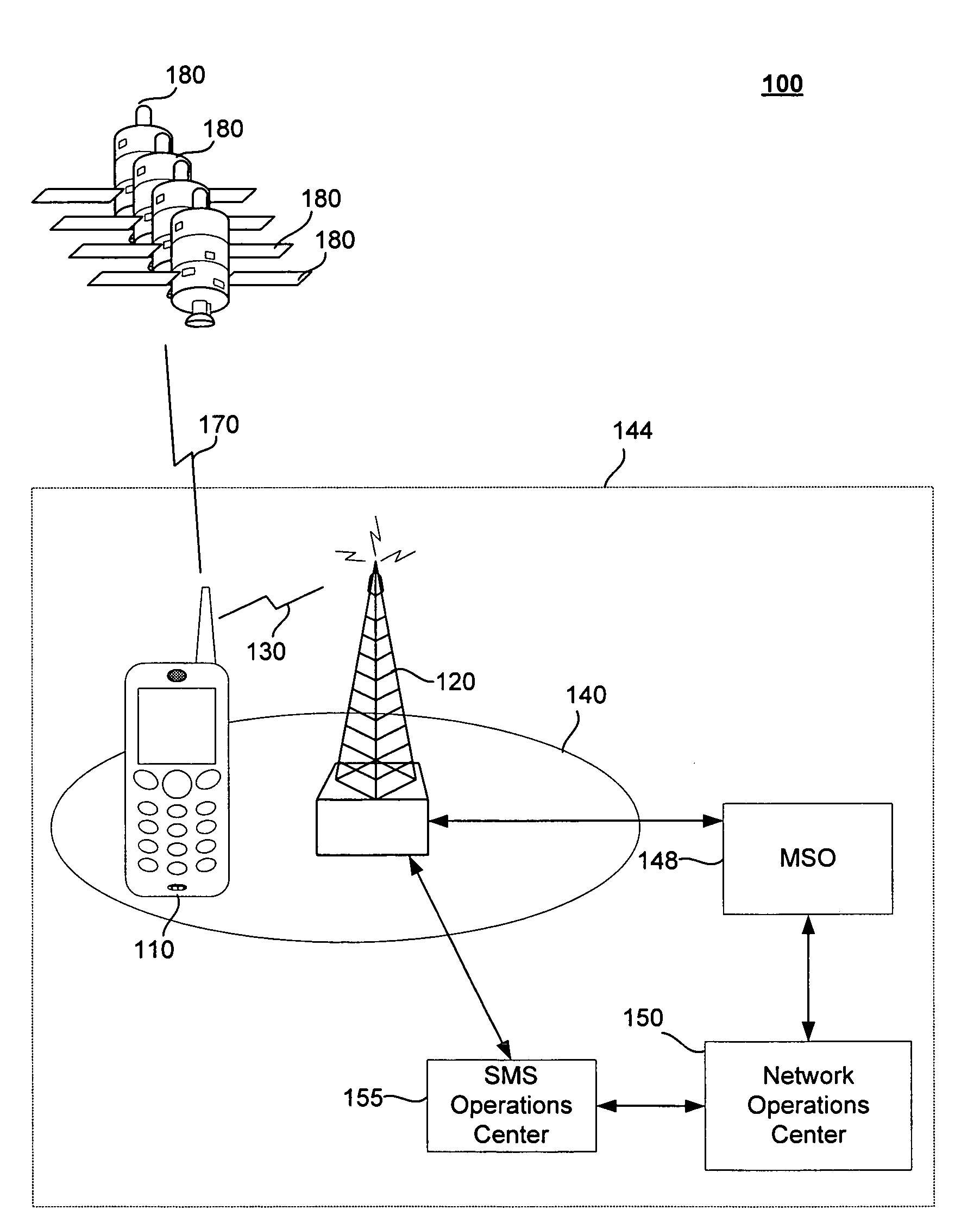
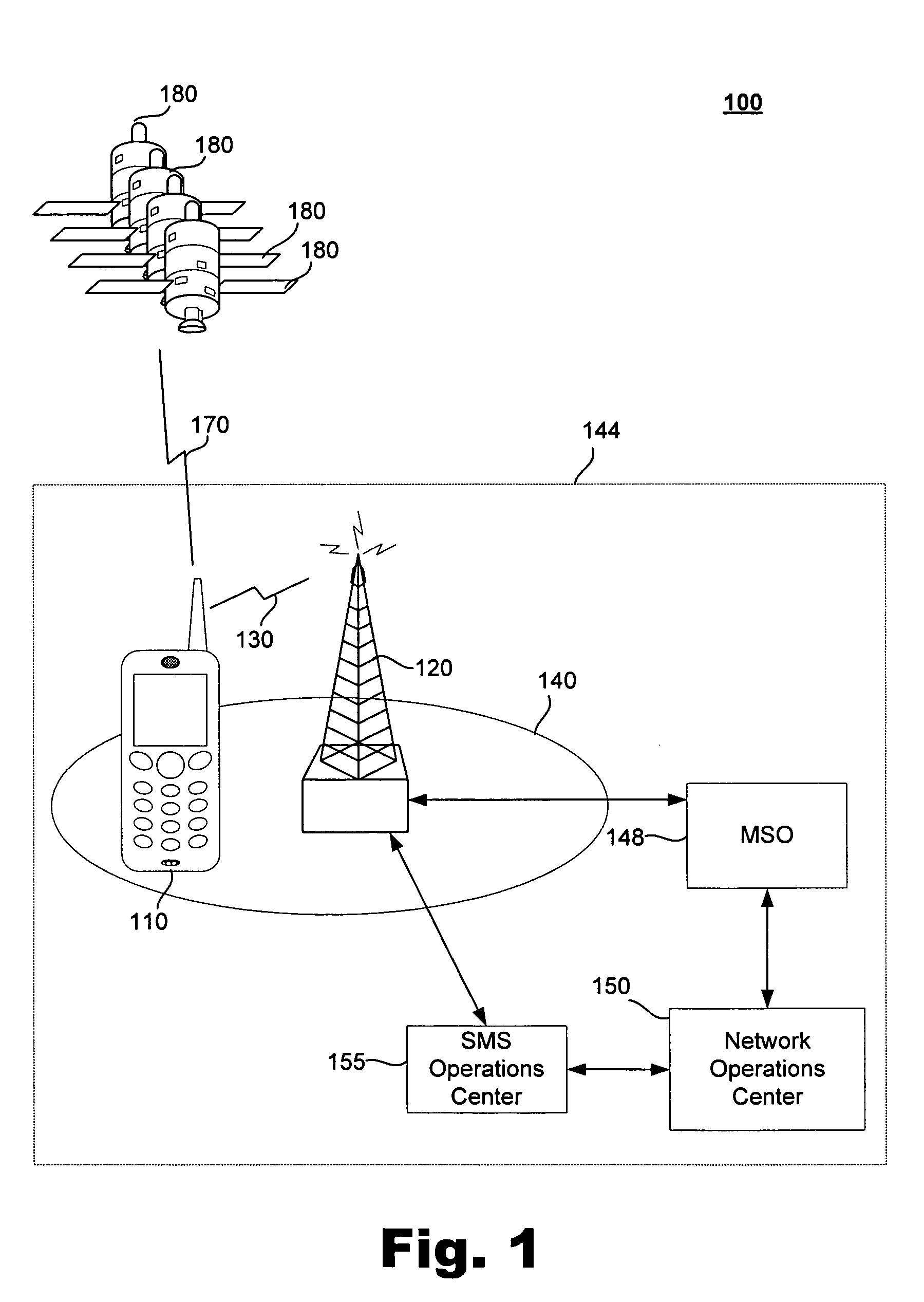
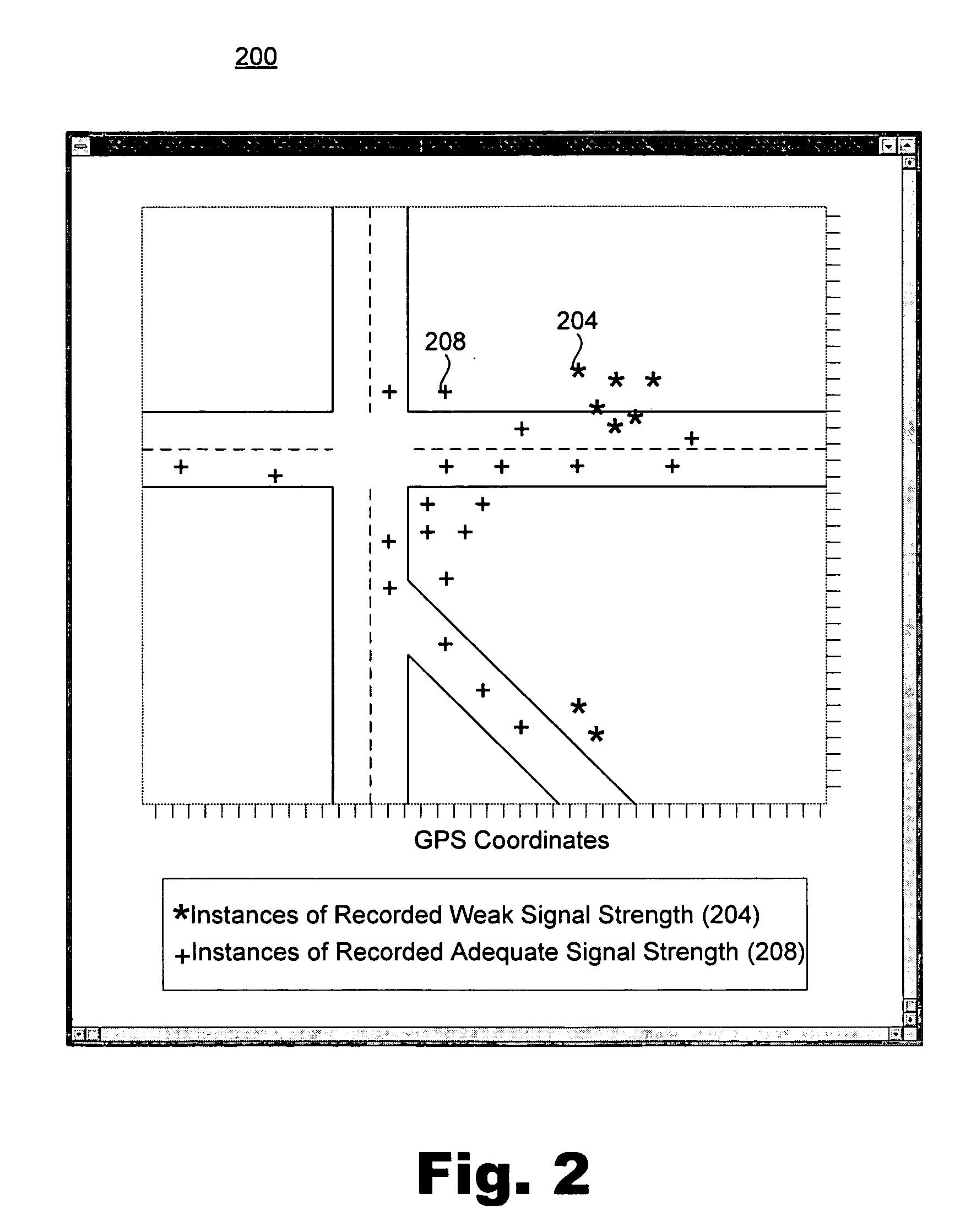
- A system that uses parameter data, such as location and time data from GPS technology, to track signal strength within wireless networks, allowing wireless devices to measure and transmit signal strength and location information to a central location for analysis and optimization, enabling network operators to identify and correct dead spots efficiently.

Detection of user terminal distribution in a wireless communication system
PatentWO2013174442A1
Innovation
- A wireless communication network node with multiple spatially separated antenna functions analyzes user terminal data, specifically precoding matrix indicator (PMI) reports, to determine user terminal distribution within an angular span, allowing for precise detection and localization of hotspots and adjusting reconfigurable antennas accordingly.

Standardization Framework for Signal Quality Assessment
The establishment of a comprehensive standardization framework for signal quality assessment represents a critical foundation for effective problem hotspot identification in signal level management systems. Current industry practices reveal significant fragmentation in assessment methodologies, with different organizations employing varying metrics, measurement protocols, and quality thresholds. This inconsistency creates substantial challenges when attempting to correlate signal degradation patterns across different network segments or equipment vendors.
International standardization bodies, including the International Telecommunication Union and Institute of Electrical and Electronics Engineers, have initiated efforts to harmonize signal quality metrics. These initiatives focus on defining universal parameters such as signal-to-noise ratio thresholds, bit error rate benchmarks, and latency tolerance levels. However, the complexity of modern communication systems, particularly in heterogeneous network environments, demands more sophisticated standardization approaches that can accommodate diverse transmission technologies and operational contexts.
The framework must incorporate multi-dimensional assessment criteria that extend beyond traditional signal strength measurements. Key components include temporal consistency metrics, spatial coverage uniformity indicators, and dynamic adaptation capabilities for varying environmental conditions. Standardized testing procedures should encompass both laboratory-controlled environments and real-world deployment scenarios to ensure practical applicability.
Emerging technologies such as artificial intelligence and machine learning are driving the need for standardized data formats and algorithmic benchmarks in signal quality assessment. The framework should establish common data exchange protocols that enable seamless integration between different monitoring systems and analytical platforms. This interoperability is essential for creating comprehensive problem hotspot identification capabilities across complex network infrastructures.
Implementation challenges include balancing technical precision with practical deployment constraints, ensuring backward compatibility with existing systems, and maintaining flexibility for future technological evolution. The standardization framework must also address regulatory compliance requirements across different geographical regions while providing sufficient granularity for accurate problem localization and resolution prioritization in signal level management operations.
International standardization bodies, including the International Telecommunication Union and Institute of Electrical and Electronics Engineers, have initiated efforts to harmonize signal quality metrics. These initiatives focus on defining universal parameters such as signal-to-noise ratio thresholds, bit error rate benchmarks, and latency tolerance levels. However, the complexity of modern communication systems, particularly in heterogeneous network environments, demands more sophisticated standardization approaches that can accommodate diverse transmission technologies and operational contexts.
The framework must incorporate multi-dimensional assessment criteria that extend beyond traditional signal strength measurements. Key components include temporal consistency metrics, spatial coverage uniformity indicators, and dynamic adaptation capabilities for varying environmental conditions. Standardized testing procedures should encompass both laboratory-controlled environments and real-world deployment scenarios to ensure practical applicability.
Emerging technologies such as artificial intelligence and machine learning are driving the need for standardized data formats and algorithmic benchmarks in signal quality assessment. The framework should establish common data exchange protocols that enable seamless integration between different monitoring systems and analytical platforms. This interoperability is essential for creating comprehensive problem hotspot identification capabilities across complex network infrastructures.
Implementation challenges include balancing technical precision with practical deployment constraints, ensuring backward compatibility with existing systems, and maintaining flexibility for future technological evolution. The standardization framework must also address regulatory compliance requirements across different geographical regions while providing sufficient granularity for accurate problem localization and resolution prioritization in signal level management operations.
AI-Driven Predictive Signal Optimization Strategies
AI-driven predictive signal optimization represents a paradigm shift from reactive to proactive signal management approaches. By leveraging machine learning algorithms and real-time data analytics, these strategies enable telecommunications networks to anticipate signal degradation patterns before they manifest as service disruptions. The integration of artificial intelligence transforms traditional signal management from a manual, threshold-based system into an intelligent, self-optimizing network infrastructure.
Machine learning models form the cornerstone of predictive optimization, utilizing historical signal data, environmental factors, and network topology information to identify patterns that precede signal quality issues. Deep learning architectures, particularly recurrent neural networks and transformer models, excel at processing temporal signal data sequences to predict future signal strength variations. These models continuously learn from network behavior, adapting their predictions as network conditions evolve and new interference patterns emerge.
Real-time data fusion techniques combine multiple signal quality indicators, including received signal strength indicator (RSSI), signal-to-noise ratio (SNR), and bit error rates, with external factors such as weather conditions, traffic patterns, and equipment aging metrics. Advanced feature engineering extracts meaningful predictive indicators from raw signal measurements, enabling more accurate forecasting of potential hotspots before they impact user experience.
Predictive algorithms employ ensemble methods that combine multiple forecasting models to improve prediction accuracy and reduce false positives. These systems utilize sliding window approaches to maintain model relevance, continuously updating predictions based on the most recent network performance data. Anomaly detection algorithms identify unusual signal patterns that deviate from established baselines, triggering preemptive optimization actions.
The implementation of reinforcement learning enables dynamic optimization strategies that adapt to changing network conditions. These systems learn optimal resource allocation policies through trial and error, continuously improving their decision-making capabilities. Multi-agent reinforcement learning approaches coordinate optimization actions across multiple network nodes, ensuring system-wide performance improvements while avoiding conflicting optimization decisions that could degrade overall network performance.
Machine learning models form the cornerstone of predictive optimization, utilizing historical signal data, environmental factors, and network topology information to identify patterns that precede signal quality issues. Deep learning architectures, particularly recurrent neural networks and transformer models, excel at processing temporal signal data sequences to predict future signal strength variations. These models continuously learn from network behavior, adapting their predictions as network conditions evolve and new interference patterns emerge.
Real-time data fusion techniques combine multiple signal quality indicators, including received signal strength indicator (RSSI), signal-to-noise ratio (SNR), and bit error rates, with external factors such as weather conditions, traffic patterns, and equipment aging metrics. Advanced feature engineering extracts meaningful predictive indicators from raw signal measurements, enabling more accurate forecasting of potential hotspots before they impact user experience.
Predictive algorithms employ ensemble methods that combine multiple forecasting models to improve prediction accuracy and reduce false positives. These systems utilize sliding window approaches to maintain model relevance, continuously updating predictions based on the most recent network performance data. Anomaly detection algorithms identify unusual signal patterns that deviate from established baselines, triggering preemptive optimization actions.
The implementation of reinforcement learning enables dynamic optimization strategies that adapt to changing network conditions. These systems learn optimal resource allocation policies through trial and error, continuously improving their decision-making capabilities. Multi-agent reinforcement learning approaches coordinate optimization actions across multiple network nodes, ensuring system-wide performance improvements while avoiding conflicting optimization decisions that could degrade overall network performance.
Unlock deeper insights with PatSnap Eureka Quick Research — get a full tech report to explore trends and direct your research. Try now!
Generate Your Research Report Instantly with AI Agent
Supercharge your innovation with PatSnap Eureka AI Agent Platform!