

Evaluating Site Selection: Signal Level Assurance
MAR 19, 20269 MIN READ
Generate Your Research Report Instantly with AI Agent
PatSnap Eureka helps you evaluate technical feasibility & market potential.
Site Selection Signal Assurance Background and Objectives
Site selection for wireless communication networks has evolved from a primarily coverage-focused discipline to a sophisticated engineering practice that balances multiple technical, economic, and regulatory factors. The fundamental challenge lies in identifying optimal locations that can deliver consistent signal quality while meeting capacity demands and operational constraints. This process has become increasingly complex as network technologies advance from traditional cellular systems to 5G and beyond, where signal characteristics and propagation behaviors differ significantly.
The historical development of site selection methodologies reflects the evolution of wireless communication itself. Early cellular networks prioritized basic coverage extension, with engineers primarily concerned with eliminating dead zones and ensuring minimum signal strength across service areas. However, as user expectations increased and data services became predominant, the focus shifted toward ensuring not just signal presence but signal quality that can support high-throughput applications and maintain consistent user experiences.
Modern site selection processes must address multiple technical objectives simultaneously. Primary among these is signal level assurance, which encompasses maintaining adequate received signal strength indicator values, optimizing signal-to-interference-plus-noise ratios, and minimizing coverage gaps. These requirements become particularly challenging in dense urban environments where signal propagation is affected by complex multipath scenarios, building penetration losses, and interference from multiple sources.
The integration of advanced network technologies has introduced additional complexity layers to site selection decisions. Network densification strategies, driven by capacity requirements and spectrum efficiency goals, demand careful coordination between macro and small cell deployments. This coordination requires sophisticated modeling approaches that can predict signal interactions and optimize overall network performance rather than individual site performance.
Contemporary site selection methodologies increasingly rely on data-driven approaches that combine traditional radio frequency engineering principles with machine learning algorithms and big data analytics. These approaches enable more accurate prediction of signal behavior in complex environments and support dynamic optimization strategies that can adapt to changing network conditions and user patterns.
The emergence of network slicing and edge computing requirements has further expanded the scope of site selection considerations. Modern deployments must account for latency requirements, computational resource distribution, and service-specific performance metrics that extend beyond traditional signal strength measurements. This evolution represents a fundamental shift from reactive coverage solutions to proactive network architecture design that anticipates future service requirements and technological developments.
The historical development of site selection methodologies reflects the evolution of wireless communication itself. Early cellular networks prioritized basic coverage extension, with engineers primarily concerned with eliminating dead zones and ensuring minimum signal strength across service areas. However, as user expectations increased and data services became predominant, the focus shifted toward ensuring not just signal presence but signal quality that can support high-throughput applications and maintain consistent user experiences.
Modern site selection processes must address multiple technical objectives simultaneously. Primary among these is signal level assurance, which encompasses maintaining adequate received signal strength indicator values, optimizing signal-to-interference-plus-noise ratios, and minimizing coverage gaps. These requirements become particularly challenging in dense urban environments where signal propagation is affected by complex multipath scenarios, building penetration losses, and interference from multiple sources.
The integration of advanced network technologies has introduced additional complexity layers to site selection decisions. Network densification strategies, driven by capacity requirements and spectrum efficiency goals, demand careful coordination between macro and small cell deployments. This coordination requires sophisticated modeling approaches that can predict signal interactions and optimize overall network performance rather than individual site performance.
Contemporary site selection methodologies increasingly rely on data-driven approaches that combine traditional radio frequency engineering principles with machine learning algorithms and big data analytics. These approaches enable more accurate prediction of signal behavior in complex environments and support dynamic optimization strategies that can adapt to changing network conditions and user patterns.
The emergence of network slicing and edge computing requirements has further expanded the scope of site selection considerations. Modern deployments must account for latency requirements, computational resource distribution, and service-specific performance metrics that extend beyond traditional signal strength measurements. This evolution represents a fundamental shift from reactive coverage solutions to proactive network architecture design that anticipates future service requirements and technological developments.
Market Demand for Reliable Site Selection Solutions
The telecommunications industry faces unprecedented pressure to deliver consistent, high-quality network coverage as mobile data consumption continues to surge globally. Network operators are increasingly recognizing that traditional site selection methodologies, often based on geographical convenience or cost considerations alone, are insufficient to meet modern performance standards. The demand for reliable site selection solutions that prioritize signal level assurance has become a critical business imperative, driven by both regulatory requirements and competitive market dynamics.
Enterprise customers represent a particularly lucrative segment driving demand for enhanced site selection capabilities. Large corporations, government agencies, and industrial facilities require guaranteed signal strength and reliability for mission-critical communications. These organizations are willing to invest significantly in network infrastructure that can demonstrate measurable performance improvements through scientifically-backed site selection processes. The growing adoption of Internet of Things devices and industrial automation systems further amplifies this demand, as these applications cannot tolerate signal degradation or coverage gaps.
The emergence of 5G networks has fundamentally transformed market expectations for site selection precision. Unlike previous generations of wireless technology, 5G's higher frequency bands and shorter propagation characteristics demand extremely accurate site placement to achieve optimal coverage patterns. Network operators are discovering that legacy site selection approaches result in substantial capital waste and suboptimal network performance, creating strong market pull for advanced evaluation methodologies that can predict and guarantee signal levels before deployment.
Regulatory frameworks across major markets are increasingly mandating minimum service quality standards, particularly for emergency communications and rural coverage obligations. These requirements create compliance-driven demand for site selection solutions that can demonstrate adherence to signal strength thresholds through rigorous evaluation processes. Network operators face significant financial penalties for failing to meet coverage commitments, making reliable site selection tools essential risk management investments.
The competitive landscape among network operators has intensified focus on network quality as a key differentiator. Consumer expectations for seamless connectivity have reached levels where even brief signal degradation can trigger customer churn. This market reality has elevated site selection from a technical consideration to a strategic business function, with operators seeking solutions that can provide competitive advantages through superior coverage planning and signal level optimization.
Enterprise customers represent a particularly lucrative segment driving demand for enhanced site selection capabilities. Large corporations, government agencies, and industrial facilities require guaranteed signal strength and reliability for mission-critical communications. These organizations are willing to invest significantly in network infrastructure that can demonstrate measurable performance improvements through scientifically-backed site selection processes. The growing adoption of Internet of Things devices and industrial automation systems further amplifies this demand, as these applications cannot tolerate signal degradation or coverage gaps.
The emergence of 5G networks has fundamentally transformed market expectations for site selection precision. Unlike previous generations of wireless technology, 5G's higher frequency bands and shorter propagation characteristics demand extremely accurate site placement to achieve optimal coverage patterns. Network operators are discovering that legacy site selection approaches result in substantial capital waste and suboptimal network performance, creating strong market pull for advanced evaluation methodologies that can predict and guarantee signal levels before deployment.
Regulatory frameworks across major markets are increasingly mandating minimum service quality standards, particularly for emergency communications and rural coverage obligations. These requirements create compliance-driven demand for site selection solutions that can demonstrate adherence to signal strength thresholds through rigorous evaluation processes. Network operators face significant financial penalties for failing to meet coverage commitments, making reliable site selection tools essential risk management investments.
The competitive landscape among network operators has intensified focus on network quality as a key differentiator. Consumer expectations for seamless connectivity have reached levels where even brief signal degradation can trigger customer churn. This market reality has elevated site selection from a technical consideration to a strategic business function, with operators seeking solutions that can provide competitive advantages through superior coverage planning and signal level optimization.
Current Signal Assessment Challenges in Site Selection
Signal assessment in site selection faces numerous technical and operational challenges that significantly impact the accuracy and reliability of deployment decisions. Traditional measurement approaches often rely on limited sampling points and static measurement conditions, which fail to capture the dynamic nature of radio frequency environments. These conventional methods typically provide snapshot assessments that may not represent actual operational conditions throughout different time periods and environmental variations.
Measurement accuracy represents a fundamental challenge in current signal assessment practices. Existing equipment limitations, calibration inconsistencies, and environmental interference contribute to measurement uncertainties that can lead to suboptimal site selection decisions. The lack of standardized measurement protocols across different organizations further compounds these accuracy issues, resulting in inconsistent evaluation criteria and unreliable comparative analyses between potential sites.
Temporal variability poses another significant obstacle in signal level assurance. Radio frequency conditions fluctuate considerably due to atmospheric changes, seasonal variations, and daily traffic patterns. Current assessment methodologies often fail to account for these temporal dynamics, leading to incomplete understanding of long-term signal performance characteristics. Short-term measurements may not adequately represent the full spectrum of operational conditions that sites will experience over their intended service lifetime.
Interference characterization remains inadequately addressed in existing assessment frameworks. The growing complexity of electromagnetic environments, with increasing numbers of wireless devices and services, creates challenging interference scenarios that are difficult to predict and quantify. Current tools often lack the sophistication to accurately model and assess potential interference sources, particularly those that may emerge after site deployment.
Geographic and topographical factors introduce additional complexity to signal assessment processes. Terrain variations, building structures, and vegetation changes can significantly impact signal propagation characteristics in ways that are challenging to model accurately. Existing prediction tools frequently oversimplify these environmental factors, leading to discrepancies between predicted and actual signal performance.
Data integration and analysis capabilities represent critical limitations in current approaches. The volume and complexity of signal assessment data often exceed the processing capabilities of existing analytical frameworks. Limited correlation between different measurement parameters and insufficient predictive modeling capabilities hinder comprehensive evaluation of site suitability and long-term performance expectations.
Measurement accuracy represents a fundamental challenge in current signal assessment practices. Existing equipment limitations, calibration inconsistencies, and environmental interference contribute to measurement uncertainties that can lead to suboptimal site selection decisions. The lack of standardized measurement protocols across different organizations further compounds these accuracy issues, resulting in inconsistent evaluation criteria and unreliable comparative analyses between potential sites.
Temporal variability poses another significant obstacle in signal level assurance. Radio frequency conditions fluctuate considerably due to atmospheric changes, seasonal variations, and daily traffic patterns. Current assessment methodologies often fail to account for these temporal dynamics, leading to incomplete understanding of long-term signal performance characteristics. Short-term measurements may not adequately represent the full spectrum of operational conditions that sites will experience over their intended service lifetime.
Interference characterization remains inadequately addressed in existing assessment frameworks. The growing complexity of electromagnetic environments, with increasing numbers of wireless devices and services, creates challenging interference scenarios that are difficult to predict and quantify. Current tools often lack the sophistication to accurately model and assess potential interference sources, particularly those that may emerge after site deployment.
Geographic and topographical factors introduce additional complexity to signal assessment processes. Terrain variations, building structures, and vegetation changes can significantly impact signal propagation characteristics in ways that are challenging to model accurately. Existing prediction tools frequently oversimplify these environmental factors, leading to discrepancies between predicted and actual signal performance.
Data integration and analysis capabilities represent critical limitations in current approaches. The volume and complexity of signal assessment data often exceed the processing capabilities of existing analytical frameworks. Limited correlation between different measurement parameters and insufficient predictive modeling capabilities hinder comprehensive evaluation of site suitability and long-term performance expectations.
Existing Signal Level Assurance Methodologies
01 Signal strength measurement and analysis for site selection
Methods and systems for measuring and analyzing signal strength at potential sites to determine optimal locations for communication infrastructure. This involves collecting signal level data from multiple locations, processing the measurements, and evaluating coverage quality to identify sites with adequate signal reception. The analysis may include comparing signal levels against predetermined thresholds and mapping signal distribution patterns across geographical areas.- Signal strength measurement and analysis for site selection: Methods and systems for measuring and analyzing signal strength at potential sites to determine optimal locations for communication infrastructure. This involves collecting signal level data from multiple locations, processing the measurements, and evaluating coverage quality to identify sites with adequate signal reception. The analysis may include comparing received signal strength indicators (RSSI) against predetermined thresholds and mapping signal distribution patterns across geographical areas.
- Automated site selection based on signal quality metrics: Automated systems that utilize signal quality parameters to select optimal sites for network deployment. These systems evaluate multiple signal characteristics including signal-to-noise ratio, interference levels, and propagation conditions to rank potential locations. The automation process reduces manual effort in site planning and improves decision-making accuracy through algorithmic assessment of signal performance indicators.
- Multi-frequency signal level assessment for site optimization: Techniques for evaluating signal levels across multiple frequency bands to optimize site selection for multi-band communication systems. This approach involves measuring signal strength at different frequencies, analyzing frequency-dependent propagation characteristics, and determining which sites provide optimal performance across the required spectrum. The assessment helps ensure consistent coverage quality regardless of operating frequency.
- Geographic information system integration for signal-based site planning: Integration of signal level data with geographic information systems to enhance site selection processes. This involves overlaying signal measurements onto digital maps, incorporating terrain data and building information, and using spatial analysis tools to identify optimal locations. The integration enables visualization of coverage patterns and facilitates consideration of geographical constraints in site planning decisions.
- Dynamic site selection using real-time signal monitoring: Systems that perform continuous signal monitoring and use real-time data to support dynamic site selection and network optimization. These solutions collect ongoing signal measurements from deployed equipment and mobile devices, analyze temporal variations in signal quality, and provide recommendations for site additions or modifications based on current network performance. The dynamic approach allows networks to adapt to changing environmental conditions and usage patterns.
02 Automated site selection based on signal quality metrics
Automated systems that utilize signal quality parameters to select optimal sites for network deployment. These systems evaluate multiple signal characteristics including received signal strength, signal-to-noise ratio, and interference levels to rank potential locations. The automation process reduces manual effort and improves accuracy in identifying sites that meet specific coverage requirements.Expand Specific Solutions03 Multi-criteria optimization for base station placement
Techniques that consider multiple factors beyond signal level for site selection, including geographical constraints, population density, traffic demand, and cost considerations. These methods employ optimization algorithms to balance various criteria and determine the most suitable locations for installing communication equipment while ensuring adequate signal coverage and network performance.Expand Specific Solutions04 Dynamic site selection with real-time signal monitoring
Systems that continuously monitor signal levels and dynamically adjust site selection decisions based on changing network conditions. This approach involves real-time data collection from mobile devices and network infrastructure to identify areas with poor coverage and trigger site evaluation processes. The dynamic nature allows for adaptive network planning that responds to evolving coverage needs.Expand Specific Solutions05 Predictive modeling for signal propagation in site planning
Methods that use propagation models and simulation techniques to predict signal levels at candidate sites before actual deployment. These approaches incorporate terrain data, building information, and environmental factors to estimate coverage patterns and signal strength. Predictive modeling enables cost-effective site evaluation by reducing the need for extensive field measurements while providing reliable forecasts of network performance.Expand Specific Solutions
Key Players in Site Selection and Signal Analysis Industry
The signal level assurance for site selection operates within a mature telecommunications infrastructure market experiencing steady growth driven by 5G deployment and network densification requirements. The competitive landscape is dominated by established telecommunications equipment manufacturers and network operators, with market size reaching hundreds of billions globally. Technology maturity varies significantly across players, with Ericsson, Huawei, ZTE, and Nokia Technologies leading in advanced radio access network solutions and signal optimization algorithms. Tier-one operators like China Mobile, China Unicom, and KT Corp demonstrate high implementation maturity through extensive field deployment experience. Supporting technology providers including Fujitsu, Realtek Semiconductor, and HERE Global contribute specialized components for signal processing and location services. The ecosystem shows strong consolidation around proven technologies, though emerging players like DISH Wireless and various Chinese technology firms are driving innovation in software-defined networking approaches for enhanced signal assurance methodologies.
Telefonaktiebolaget LM Ericsson
Technical Solution: Ericsson has developed comprehensive site selection solutions that integrate advanced signal prediction algorithms with real-world measurement validation. Their approach combines propagation modeling with machine learning techniques to predict signal coverage and quality across different geographical areas. The system utilizes multi-layer analysis including terrain data, building information, and environmental factors to ensure optimal signal level assurance. Their solution incorporates automated drive testing capabilities and crowdsourced signal data to continuously validate and refine site placement decisions. The platform provides real-time signal strength mapping and predictive analytics to minimize coverage gaps and optimize network performance before actual deployment.
Strengths: Extensive field experience and proven track record in global deployments, advanced AI-driven prediction models. Weaknesses: High implementation costs and complexity requiring specialized expertise.
ZTE Corp.
Technical Solution: ZTE has developed an integrated site selection platform that leverages their VMAX series planning tools combined with AI-enhanced signal prediction capabilities. Their approach utilizes multi-dimensional analysis including geographical information systems, population density mapping, and traffic flow patterns to optimize site placement for maximum signal level assurance. The system incorporates advanced ray-tracing algorithms for accurate signal propagation modeling in complex urban environments. ZTE's solution features automated interference mitigation and self-optimizing network capabilities that continuously monitor and adjust signal parameters. The platform also includes crowd-sourced data integration to validate theoretical predictions with real-world performance metrics.
Strengths: Cost-effective solutions with good performance in emerging markets and flexible deployment options. Weaknesses: Limited global market presence and concerns about technology transfer restrictions in some regions.
Core Innovations in Signal Prediction and Site Evaluation
Test device and method for selecting address of base station
PatentActiveCN109462854A
Innovation
- UAV test platform and ground control platform are used to conduct signal testing and data interaction through GPS unit positioning and radio frequency transceiver units. Adjustable radio frequency and CW antennas are used to simulate base stations and terminals to achieve flexible adjustment of base station and terminal position testing.


Base station construction planning method for wireless private network of electric power system based on map information
PatentActiveCN108990074A
Innovation
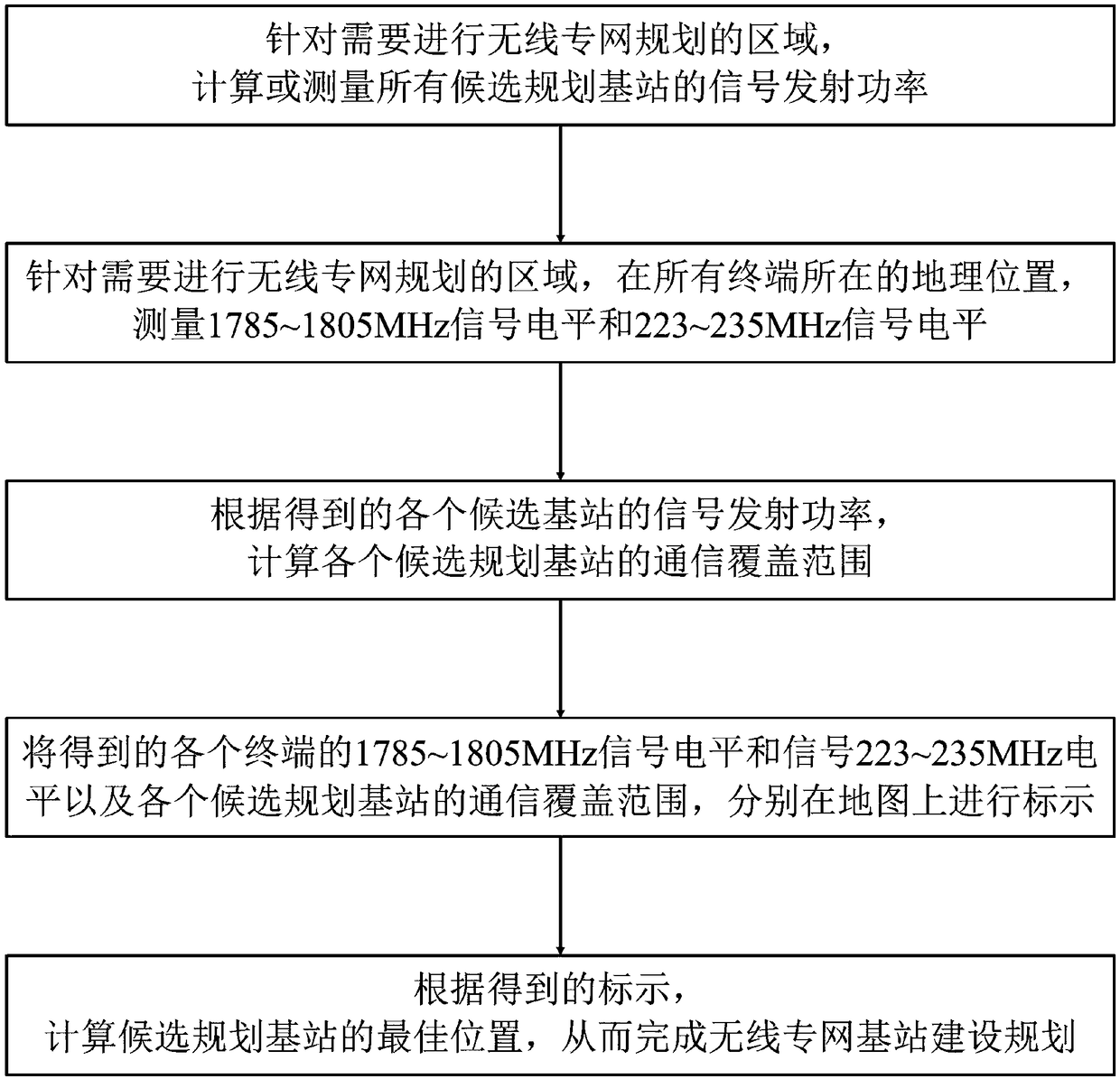
- Using a method based on map information, by measuring the signal transmission power and noise interference level of candidate planning base stations, combined with the COST231-Hata and Okumura-Hata models to calculate the communication coverage, select the best location, and study the LTE230M and LTE1800M signal spectrum and differences. Frequency networking strategy, using maximum coverage and minimum base station search algorithm to optimize base station layout.
Regulatory Framework for Site Selection Standards
The regulatory framework for site selection standards in telecommunications infrastructure represents a complex ecosystem of international, national, and local governance structures that directly impact signal level assurance methodologies. These frameworks establish the foundational requirements for how telecommunications operators must evaluate and validate site locations to ensure adequate coverage and service quality.
International standards organizations, particularly the International Telecommunication Union (ITU) and the European Telecommunications Standards Institute (ETSI), provide overarching guidelines for radio frequency planning and site selection criteria. ITU-R recommendations, specifically P.1546 and P.526, establish propagation models and coverage prediction methodologies that form the basis for regulatory compliance in signal level evaluation. These standards define minimum signal strength thresholds, interference limits, and coverage obligations that operators must meet.
National regulatory authorities implement these international standards through country-specific licensing conditions and technical requirements. The Federal Communications Commission in the United States, Ofcom in the United Kingdom, and similar bodies worldwide establish mandatory coverage obligations, quality of service metrics, and reporting requirements that directly influence site selection decisions. These regulations typically specify minimum signal levels for different service areas, population coverage targets, and geographic coverage requirements.
Local planning authorities introduce additional layers of regulatory complexity through zoning restrictions, environmental impact assessments, and community consultation requirements. These local regulations often constrain site placement options, forcing operators to optimize signal coverage within limited deployment scenarios. Height restrictions, setback requirements, and aesthetic considerations can significantly impact antenna positioning and subsequently affect signal propagation characteristics.
Spectrum licensing conditions impose specific technical constraints on site selection, including power limitations, antenna pattern restrictions, and coordination requirements with adjacent frequency users. These regulatory parameters directly influence the signal level calculations and coverage predictions that drive site selection decisions.
The regulatory framework also encompasses safety standards, including radio frequency exposure limits established by organizations such as the International Commission on Non-Ionizing Radiation Protection (ICNIRP). These safety requirements can restrict antenna placement and power levels, requiring careful consideration during the site evaluation process to ensure both regulatory compliance and adequate signal coverage.
International standards organizations, particularly the International Telecommunication Union (ITU) and the European Telecommunications Standards Institute (ETSI), provide overarching guidelines for radio frequency planning and site selection criteria. ITU-R recommendations, specifically P.1546 and P.526, establish propagation models and coverage prediction methodologies that form the basis for regulatory compliance in signal level evaluation. These standards define minimum signal strength thresholds, interference limits, and coverage obligations that operators must meet.
National regulatory authorities implement these international standards through country-specific licensing conditions and technical requirements. The Federal Communications Commission in the United States, Ofcom in the United Kingdom, and similar bodies worldwide establish mandatory coverage obligations, quality of service metrics, and reporting requirements that directly influence site selection decisions. These regulations typically specify minimum signal levels for different service areas, population coverage targets, and geographic coverage requirements.
Local planning authorities introduce additional layers of regulatory complexity through zoning restrictions, environmental impact assessments, and community consultation requirements. These local regulations often constrain site placement options, forcing operators to optimize signal coverage within limited deployment scenarios. Height restrictions, setback requirements, and aesthetic considerations can significantly impact antenna positioning and subsequently affect signal propagation characteristics.
Spectrum licensing conditions impose specific technical constraints on site selection, including power limitations, antenna pattern restrictions, and coordination requirements with adjacent frequency users. These regulatory parameters directly influence the signal level calculations and coverage predictions that drive site selection decisions.
The regulatory framework also encompasses safety standards, including radio frequency exposure limits established by organizations such as the International Commission on Non-Ionizing Radiation Protection (ICNIRP). These safety requirements can restrict antenna placement and power levels, requiring careful consideration during the site evaluation process to ensure both regulatory compliance and adequate signal coverage.
Environmental Impact Assessment in Site Selection
Environmental impact assessment represents a critical dimension in telecommunications site selection that directly influences signal level assurance capabilities. The deployment of cellular towers, base stations, and related infrastructure must navigate complex environmental regulations while maintaining optimal signal propagation characteristics. This assessment process evaluates how proposed installations interact with natural ecosystems, wildlife habitats, and environmental protection zones.
The relationship between environmental constraints and signal coverage creates unique challenges for network planners. Protected areas, wetlands, and wildlife corridors often coincide with strategically important locations for signal propagation. Environmental regulations may restrict tower heights, limit construction activities during breeding seasons, or require specific mitigation measures that can affect antenna positioning and signal optimization strategies.
Electromagnetic field exposure considerations form another crucial component of environmental assessment. Regulatory frameworks worldwide establish specific absorption rate limits and power density thresholds that directly impact transmitter configurations and coverage patterns. These limitations require careful modeling to ensure compliance while maintaining adequate signal strength across service areas.
Habitat fragmentation and wildlife protection measures increasingly influence site selection decisions. Bird migration corridors, endangered species habitats, and sensitive ecological zones may necessitate alternative site locations or modified infrastructure designs. These environmental constraints can force suboptimal placement decisions that compromise signal level assurance objectives.
Visual impact assessments and landscape preservation requirements add additional layers of complexity to site selection processes. Camouflaged installations, underground cabling requirements, and height restrictions in scenic areas can significantly affect signal propagation characteristics and coverage reliability.
Climate change adaptation considerations are becoming increasingly relevant in environmental impact assessments. Sea level rise projections, extreme weather patterns, and changing precipitation levels influence long-term site viability and signal infrastructure resilience. These factors require comprehensive evaluation to ensure sustained signal level performance under evolving environmental conditions.
The integration of renewable energy systems and sustainable infrastructure practices within environmental assessments creates opportunities for enhanced site performance while meeting ecological requirements. Solar installations, wind power integration, and energy-efficient cooling systems can support improved signal reliability while addressing environmental compliance objectives.
The relationship between environmental constraints and signal coverage creates unique challenges for network planners. Protected areas, wetlands, and wildlife corridors often coincide with strategically important locations for signal propagation. Environmental regulations may restrict tower heights, limit construction activities during breeding seasons, or require specific mitigation measures that can affect antenna positioning and signal optimization strategies.
Electromagnetic field exposure considerations form another crucial component of environmental assessment. Regulatory frameworks worldwide establish specific absorption rate limits and power density thresholds that directly impact transmitter configurations and coverage patterns. These limitations require careful modeling to ensure compliance while maintaining adequate signal strength across service areas.
Habitat fragmentation and wildlife protection measures increasingly influence site selection decisions. Bird migration corridors, endangered species habitats, and sensitive ecological zones may necessitate alternative site locations or modified infrastructure designs. These environmental constraints can force suboptimal placement decisions that compromise signal level assurance objectives.
Visual impact assessments and landscape preservation requirements add additional layers of complexity to site selection processes. Camouflaged installations, underground cabling requirements, and height restrictions in scenic areas can significantly affect signal propagation characteristics and coverage reliability.
Climate change adaptation considerations are becoming increasingly relevant in environmental impact assessments. Sea level rise projections, extreme weather patterns, and changing precipitation levels influence long-term site viability and signal infrastructure resilience. These factors require comprehensive evaluation to ensure sustained signal level performance under evolving environmental conditions.
The integration of renewable energy systems and sustainable infrastructure practices within environmental assessments creates opportunities for enhanced site performance while meeting ecological requirements. Solar installations, wind power integration, and energy-efficient cooling systems can support improved signal reliability while addressing environmental compliance objectives.
Unlock deeper insights with PatSnap Eureka Quick Research — get a full tech report to explore trends and direct your research. Try now!
Generate Your Research Report Instantly with AI Agent
Supercharge your innovation with PatSnap Eureka AI Agent Platform!