
Developing Compacted Graphite Iron for Aerospace Components
APR 2, 20269 MIN READ
Generate Your Research Report Instantly with AI Agent
Patsnap Eureka helps you evaluate technical feasibility & market potential.
CGI Aerospace Development Background and Objectives
Compacted Graphite Iron (CGI) represents a critical materials advancement positioned between conventional gray cast iron and ductile iron in terms of mechanical properties and performance characteristics. The aerospace industry's relentless pursuit of lightweight, high-strength materials with superior thermal and mechanical properties has driven significant interest in CGI technology over the past two decades. This material offers a unique combination of enhanced tensile strength, improved fatigue resistance, and excellent thermal conductivity compared to traditional cast iron variants.
The historical development of CGI technology traces back to the 1970s, when researchers first identified the potential of vermicular graphite structures in cast iron matrices. Early applications focused primarily on automotive engine blocks and cylinder heads, where the material's superior thermal properties and dimensional stability provided substantial advantages. The aerospace sector began exploring CGI applications in the 1990s, recognizing its potential for engine components, structural elements, and heat management systems.
Current technological evolution in CGI development emphasizes precise control of graphite morphology, matrix microstructure optimization, and advanced alloying strategies. The aerospace industry demands materials that can withstand extreme temperature variations, high-stress loading conditions, and corrosive environments while maintaining dimensional accuracy and reliability. These requirements have pushed CGI technology toward more sophisticated metallurgical approaches, including controlled solidification processes, specialized inoculation techniques, and post-processing treatments.
The primary technical objectives for aerospace CGI development center on achieving consistent mechanical properties across large castings, improving high-temperature performance characteristics, and enhancing corrosion resistance in aerospace environments. Weight reduction remains a paramount concern, as every kilogram saved in aerospace components translates to significant fuel efficiency improvements and payload capacity increases. Additionally, the industry seeks to develop CGI formulations that can replace heavier steel components or more expensive superalloy materials in specific applications.
Manufacturing scalability and cost-effectiveness represent equally important objectives in CGI aerospace development. The technology must demonstrate reproducible quality control measures, predictable processing parameters, and economic viability for both high-volume production and specialized aerospace applications. Integration with existing aerospace manufacturing infrastructure and compliance with stringent aerospace quality standards constitute fundamental requirements for successful technology adoption.
The historical development of CGI technology traces back to the 1970s, when researchers first identified the potential of vermicular graphite structures in cast iron matrices. Early applications focused primarily on automotive engine blocks and cylinder heads, where the material's superior thermal properties and dimensional stability provided substantial advantages. The aerospace sector began exploring CGI applications in the 1990s, recognizing its potential for engine components, structural elements, and heat management systems.
Current technological evolution in CGI development emphasizes precise control of graphite morphology, matrix microstructure optimization, and advanced alloying strategies. The aerospace industry demands materials that can withstand extreme temperature variations, high-stress loading conditions, and corrosive environments while maintaining dimensional accuracy and reliability. These requirements have pushed CGI technology toward more sophisticated metallurgical approaches, including controlled solidification processes, specialized inoculation techniques, and post-processing treatments.
The primary technical objectives for aerospace CGI development center on achieving consistent mechanical properties across large castings, improving high-temperature performance characteristics, and enhancing corrosion resistance in aerospace environments. Weight reduction remains a paramount concern, as every kilogram saved in aerospace components translates to significant fuel efficiency improvements and payload capacity increases. Additionally, the industry seeks to develop CGI formulations that can replace heavier steel components or more expensive superalloy materials in specific applications.
Manufacturing scalability and cost-effectiveness represent equally important objectives in CGI aerospace development. The technology must demonstrate reproducible quality control measures, predictable processing parameters, and economic viability for both high-volume production and specialized aerospace applications. Integration with existing aerospace manufacturing infrastructure and compliance with stringent aerospace quality standards constitute fundamental requirements for successful technology adoption.
Market Demand for Advanced CGI Aerospace Components
The aerospace industry's demand for advanced Compacted Graphite Iron components is experiencing significant growth driven by the sector's continuous pursuit of lightweight, high-performance materials that can withstand extreme operating conditions. Traditional cast iron and steel components are increasingly being replaced by CGI alternatives due to their superior strength-to-weight ratio and enhanced thermal properties, making them particularly attractive for next-generation aircraft and spacecraft applications.
Commercial aviation represents the largest market segment for CGI aerospace components, with manufacturers seeking materials that can reduce overall aircraft weight while maintaining structural integrity. The growing emphasis on fuel efficiency and emission reduction has intensified the search for advanced materials like CGI that can contribute to lighter airframe structures and more efficient engine components. Airlines' operational cost pressures further amplify this demand as weight reduction directly translates to fuel savings over aircraft lifecycles.
The space exploration sector presents another rapidly expanding market for CGI components, particularly as private space companies and government agencies increase launch frequencies and develop more sophisticated spacecraft systems. CGI's excellent thermal conductivity and dimensional stability make it ideal for components exposed to the extreme temperature variations encountered in space environments, from launch through orbital operations.
Military and defense applications constitute a specialized but high-value market segment where CGI's superior mechanical properties and reliability are critical factors. Advanced fighter aircraft, unmanned aerial vehicles, and missile systems require materials that can perform consistently under high-stress conditions while contributing to overall system performance optimization.
The market demand is further accelerated by regulatory pressures for improved environmental performance in aviation. International aviation organizations are implementing stricter emissions standards, compelling manufacturers to adopt advanced materials like CGI that enable more efficient designs. Additionally, the aerospace industry's shift toward more electric aircraft architectures creates new opportunities for CGI components in electrical and thermal management systems.
Regional market dynamics show particularly strong demand growth in Asia-Pacific regions, where expanding aerospace manufacturing capabilities and increasing air travel demand drive component requirements. European and North American markets remain significant, with established aerospace manufacturers increasingly incorporating CGI into their advanced material strategies for both commercial and military applications.
Commercial aviation represents the largest market segment for CGI aerospace components, with manufacturers seeking materials that can reduce overall aircraft weight while maintaining structural integrity. The growing emphasis on fuel efficiency and emission reduction has intensified the search for advanced materials like CGI that can contribute to lighter airframe structures and more efficient engine components. Airlines' operational cost pressures further amplify this demand as weight reduction directly translates to fuel savings over aircraft lifecycles.
The space exploration sector presents another rapidly expanding market for CGI components, particularly as private space companies and government agencies increase launch frequencies and develop more sophisticated spacecraft systems. CGI's excellent thermal conductivity and dimensional stability make it ideal for components exposed to the extreme temperature variations encountered in space environments, from launch through orbital operations.
Military and defense applications constitute a specialized but high-value market segment where CGI's superior mechanical properties and reliability are critical factors. Advanced fighter aircraft, unmanned aerial vehicles, and missile systems require materials that can perform consistently under high-stress conditions while contributing to overall system performance optimization.
The market demand is further accelerated by regulatory pressures for improved environmental performance in aviation. International aviation organizations are implementing stricter emissions standards, compelling manufacturers to adopt advanced materials like CGI that enable more efficient designs. Additionally, the aerospace industry's shift toward more electric aircraft architectures creates new opportunities for CGI components in electrical and thermal management systems.
Regional market dynamics show particularly strong demand growth in Asia-Pacific regions, where expanding aerospace manufacturing capabilities and increasing air travel demand drive component requirements. European and North American markets remain significant, with established aerospace manufacturers increasingly incorporating CGI into their advanced material strategies for both commercial and military applications.
Current CGI Technology Status and Manufacturing Challenges
Compacted Graphite Iron technology has reached a mature stage in automotive applications, particularly in diesel engine blocks and cylinder heads, where it has demonstrated superior thermal conductivity and mechanical properties compared to conventional gray iron. However, the aerospace sector presents significantly more stringent requirements that challenge current CGI manufacturing capabilities. The technology gap between automotive-grade CGI and aerospace-grade materials remains substantial, primarily due to the demanding operational environments in aerospace applications.
Current CGI production relies heavily on precise control of graphite morphology through careful management of sulfur, oxygen, and magnesium levels during the casting process. The compacted graphite structure, characterized by vermicular graphite flakes, provides enhanced thermal conductivity while maintaining superior mechanical strength compared to gray iron. However, achieving consistent microstructural uniformity across large aerospace components remains problematic with existing manufacturing techniques.
Manufacturing challenges in aerospace CGI applications center around several critical areas. Dimensional accuracy and surface finish requirements for aerospace components exceed current CGI casting capabilities, often necessitating extensive post-processing operations that increase production costs and complexity. The inherent porosity issues in CGI castings, while acceptable in automotive applications, pose significant concerns for aerospace components subjected to high-stress cyclic loading conditions.
Quality control and non-destructive testing present additional manufacturing hurdles. Current inspection methods struggle to detect internal defects and microstructural variations that could compromise component integrity under aerospace operating conditions. The lack of standardized aerospace-specific testing protocols for CGI materials further complicates quality assurance processes.
Scalability challenges emerge when transitioning from laboratory-scale production to industrial manufacturing of aerospace CGI components. Maintaining consistent chemical composition and microstructural properties across large production batches requires advanced process control systems that are not yet widely implemented in CGI foundries. Temperature control during solidification becomes increasingly difficult for complex aerospace geometries, leading to variations in mechanical properties within individual components.
The integration of advanced manufacturing technologies, such as 3D printing and hybrid manufacturing processes, with traditional CGI casting methods remains in early development stages. These emerging approaches could potentially address current limitations but require significant technological advancement and validation for aerospace applications.
Current CGI production relies heavily on precise control of graphite morphology through careful management of sulfur, oxygen, and magnesium levels during the casting process. The compacted graphite structure, characterized by vermicular graphite flakes, provides enhanced thermal conductivity while maintaining superior mechanical strength compared to gray iron. However, achieving consistent microstructural uniformity across large aerospace components remains problematic with existing manufacturing techniques.
Manufacturing challenges in aerospace CGI applications center around several critical areas. Dimensional accuracy and surface finish requirements for aerospace components exceed current CGI casting capabilities, often necessitating extensive post-processing operations that increase production costs and complexity. The inherent porosity issues in CGI castings, while acceptable in automotive applications, pose significant concerns for aerospace components subjected to high-stress cyclic loading conditions.
Quality control and non-destructive testing present additional manufacturing hurdles. Current inspection methods struggle to detect internal defects and microstructural variations that could compromise component integrity under aerospace operating conditions. The lack of standardized aerospace-specific testing protocols for CGI materials further complicates quality assurance processes.
Scalability challenges emerge when transitioning from laboratory-scale production to industrial manufacturing of aerospace CGI components. Maintaining consistent chemical composition and microstructural properties across large production batches requires advanced process control systems that are not yet widely implemented in CGI foundries. Temperature control during solidification becomes increasingly difficult for complex aerospace geometries, leading to variations in mechanical properties within individual components.
The integration of advanced manufacturing technologies, such as 3D printing and hybrid manufacturing processes, with traditional CGI casting methods remains in early development stages. These emerging approaches could potentially address current limitations but require significant technological advancement and validation for aerospace applications.
Existing CGI Manufacturing and Treatment Solutions
01 Inoculation methods and agents for producing compacted graphite iron
Various inoculation methods and agents are used to produce compacted graphite iron with desired microstructure. These methods involve adding specific inoculants containing elements such as magnesium, rare earth metals, and other alloying elements to molten iron. The inoculation process controls the graphite morphology to achieve the characteristic compacted or vermicular form, which provides superior mechanical properties compared to gray iron while maintaining better castability than ductile iron.- Inoculation methods and agents for producing compacted graphite iron: Various inoculation methods and agents are used to control the graphite morphology in compacted graphite iron production. These methods involve adding specific inoculants containing elements such as magnesium, rare earth metals, calcium, and other modifying agents to the molten iron. The inoculation process is critical for achieving the desired compacted graphite structure, which provides superior mechanical properties compared to gray iron while maintaining good castability and machinability.
- Alloy composition and chemical control for compacted graphite iron: The chemical composition of compacted graphite iron is carefully controlled to achieve the desired microstructure and properties. This includes precise control of carbon, silicon, manganese, sulfur, and trace elements. The balance of these elements, particularly the carbon equivalent and the ratio of various alloying elements, is crucial for obtaining stable compacted graphite formation. Specific compositional ranges and ratios are maintained to ensure consistent quality and performance characteristics.
- Heat treatment and thermal processing of compacted graphite iron: Heat treatment processes are applied to compacted graphite iron to enhance its mechanical properties and performance characteristics. These thermal processing methods include annealing, normalizing, and other temperature-controlled treatments that modify the matrix structure while maintaining the compacted graphite morphology. The heat treatment parameters such as temperature, holding time, and cooling rate are optimized to achieve desired hardness, strength, and wear resistance properties.
- Manufacturing processes and casting techniques for compacted graphite iron: Specialized manufacturing processes and casting techniques are employed to produce compacted graphite iron components with consistent quality. These methods include specific melting practices, mold design considerations, pouring techniques, and process control measures. The manufacturing approach addresses challenges such as maintaining narrow processing windows, controlling cooling rates, and ensuring uniform graphite distribution throughout the casting. Advanced process monitoring and control systems are utilized to maintain stable production.
- Applications and component design using compacted graphite iron: Compacted graphite iron is utilized in various industrial applications where its unique combination of properties provides advantages over other cast iron types. The material is particularly suitable for components requiring high strength, good thermal conductivity, and excellent damping characteristics. Design considerations for compacted graphite iron components include optimization of section thickness, geometric features, and structural requirements to maximize the benefits of the material's properties in specific applications such as engine blocks, cylinder heads, and other high-performance components.
02 Composition and alloying elements for compacted graphite iron
The chemical composition of compacted graphite iron is carefully controlled to achieve optimal properties. Key alloying elements include carbon, silicon, manganese, and trace amounts of sulfur and other elements. The balance of these elements, particularly the carbon and silicon content, is critical for obtaining the desired compacted graphite structure. Specific compositional ranges are maintained to ensure proper graphite formation and to achieve target mechanical properties such as strength, ductility, and thermal conductivity.Expand Specific Solutions03 Heat treatment processes for compacted graphite iron
Heat treatment processes are applied to compacted graphite iron to enhance its mechanical properties and performance characteristics. These processes include annealing, normalizing, and other thermal treatments that modify the matrix structure while maintaining the compacted graphite morphology. Heat treatment can improve properties such as hardness, wear resistance, and dimensional stability, making the material suitable for specific applications requiring enhanced performance.Expand Specific Solutions04 Manufacturing methods and casting techniques for compacted graphite iron
Specialized manufacturing methods and casting techniques are employed to produce compacted graphite iron components. These techniques include controlled cooling rates, mold design considerations, and process parameters that ensure consistent graphite morphology throughout the casting. The manufacturing process must carefully control factors such as pouring temperature, mold material, and solidification conditions to achieve uniform compacted graphite structure and minimize defects.Expand Specific Solutions05 Applications and properties optimization of compacted graphite iron
Compacted graphite iron is optimized for various industrial applications, particularly in automotive and engine components. The material offers an excellent combination of properties including high thermal conductivity, good machinability, superior fatigue resistance, and enhanced damping capacity. These characteristics make it ideal for applications such as engine blocks, cylinder heads, and brake components. Optimization efforts focus on balancing mechanical strength, thermal properties, and manufacturing efficiency to meet specific application requirements.Expand Specific Solutions
Major Players in CGI Aerospace Materials Industry
The compacted graphite iron (CGI) aerospace components market represents an emerging sector within the broader advanced materials landscape, currently in its early-to-mid development stage with significant growth potential driven by aerospace industry demands for lightweight, high-strength materials. Market adoption remains limited but is accelerating as aerospace manufacturers seek alternatives to traditional materials. Technology maturity varies significantly across key players, with established aerospace giants like Boeing and engine manufacturers such as AVIC Shenyang Liming Aero-Engine demonstrating advanced implementation capabilities, while materials specialists including Sandvik Intellectual Property AB and automotive-focused companies like BorgWarner and MAHLE International GmbH are adapting their foundry expertise to aerospace applications. Research institutions like Hunan University and Kunming University of Science & Technology are advancing fundamental CGI metallurgy, while casting specialists such as Zanardi Fonderie SpA and NovaCast Technologies AB are developing aerospace-grade production processes, indicating a competitive landscape where traditional aerospace suppliers, materials technology companies, and specialized foundries are converging to establish market leadership in this technically demanding application area.
NovaCast Technologies AB
Technical Solution: NovaCast Technologies specializes in precision CGI casting for aerospace applications, utilizing advanced foundry techniques with controlled atmosphere melting and specialized mold designs. Their process incorporates precise chemical composition control and optimized cooling strategies to achieve the desired graphite morphology for aerospace-grade components. The company focuses on producing lightweight, high-strength CGI parts for aircraft structural applications, employing vacuum-assisted casting and automated quality control systems to ensure consistent material properties and dimensional accuracy throughout the manufacturing process.
Strengths: Specialized casting expertise and flexible manufacturing capabilities. Weaknesses: Limited scale compared to major aerospace manufacturers and higher per-unit costs.
The Boeing Co.
Technical Solution: Boeing has developed advanced compacted graphite iron (CGI) manufacturing processes specifically for aerospace applications, focusing on precision casting techniques that achieve superior mechanical properties. Their approach involves controlled solidification processes with specialized inoculants and precise temperature management to optimize the graphite morphology. The company utilizes vacuum casting methods combined with post-casting heat treatment cycles to enhance fatigue resistance and dimensional stability. Boeing's CGI components are designed for critical aerospace applications including engine mounts, structural brackets, and landing gear components where high strength-to-weight ratios are essential.
Strengths: Extensive aerospace expertise and established supply chains. Weaknesses: High development costs and lengthy certification processes for new materials.
Core Innovations in CGI Microstructure Control Patents
Compacted graphite cast iron alloy and its method of making
PatentInactiveUS6746550B1
Innovation
- Alloying CGI with higher silicon content (2.8-4.0% by weight) promotes graphite formation, depletes the matrix of free carbon, and results in a hard ferrite, enhancing chip removal and tool life while maintaining strength and wear resistance, allowing for improved machinability without altering conventional machining procedures.
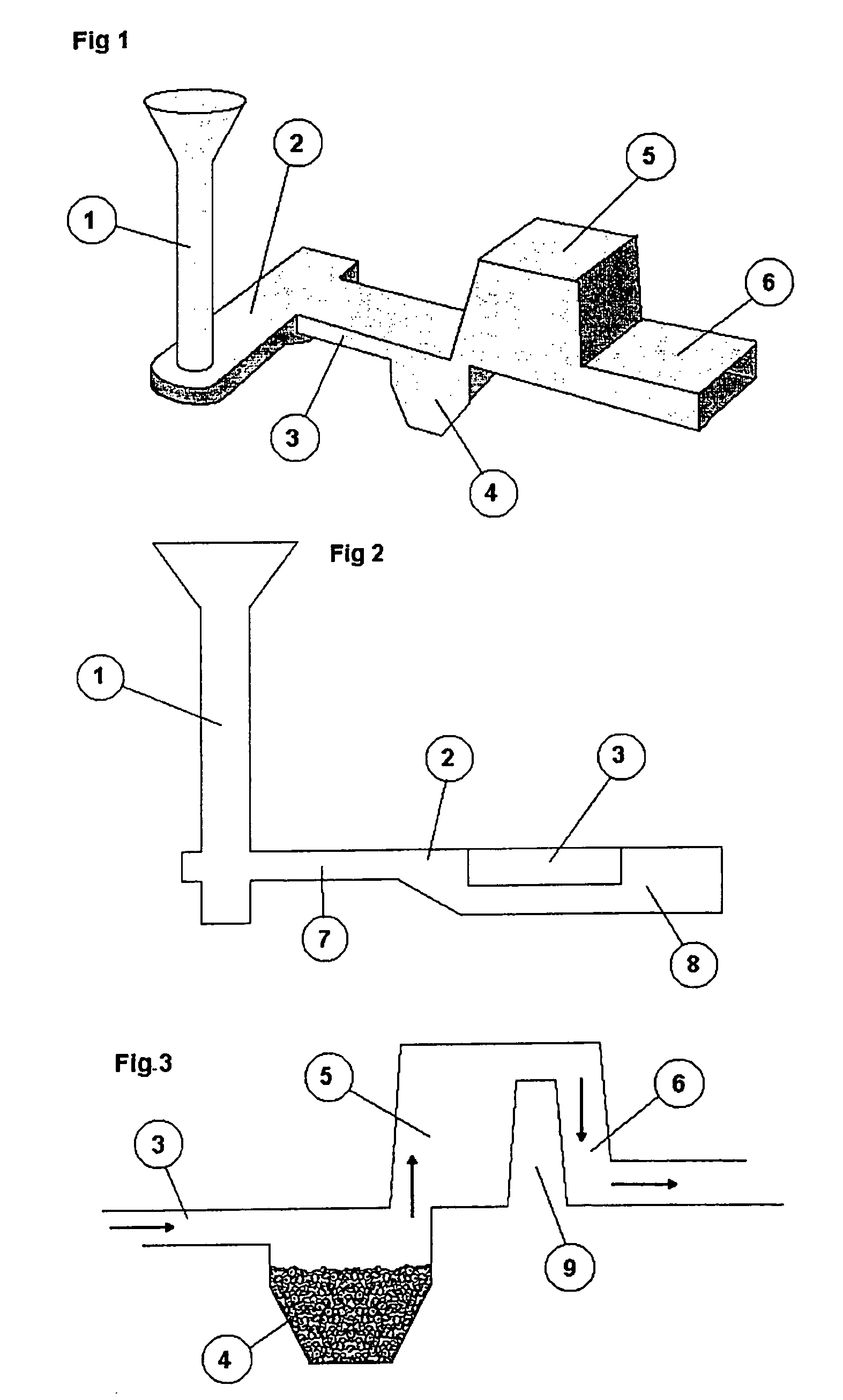
Process for Production of Compacted Graphite Iron
PatentInactiveUS20090183848A1
Innovation
- Adjusting the cerium level based on sulphur content and adding cerium to the oven or ladle, while using a magnesium alloy with lanthanum in the mould to minimize magnesium addition and reduce defects, with a treatment alloy composition of 3-6% magnesium and 0.5-1.5% lanthanum, and optionally including cerium alloy with rare earth elements.
Aerospace Material Certification and Quality Standards
Aerospace material certification represents one of the most stringent regulatory frameworks in manufacturing, requiring compacted graphite iron (CGI) components to meet exceptionally rigorous standards before deployment in aircraft applications. The certification process encompasses multiple international standards including AS9100 for quality management systems, ASTM E8 for mechanical testing, and AMS specifications that define precise material properties and performance criteria.
The Federal Aviation Administration (FAA) and European Aviation Safety Agency (EASA) mandate comprehensive material qualification programs that can span several years for new materials like CGI. These programs require extensive documentation of material properties, manufacturing processes, and quality control procedures. For CGI aerospace components, particular attention focuses on fatigue resistance, thermal stability, and dimensional consistency under extreme operating conditions.
Quality standards for aerospace CGI components demand statistical process control throughout manufacturing, with acceptance criteria typically requiring Cpk values exceeding 1.67 for critical dimensions and material properties. Non-destructive testing protocols including ultrasonic inspection, magnetic particle testing, and computed tomography scanning are mandatory to detect internal defects that could compromise component integrity during service.
Traceability requirements necessitate complete documentation from raw material sourcing through final component delivery, with each CGI casting requiring unique identification and accompanying certificates of conformance. Material test reports must demonstrate compliance with specified tensile strength, yield strength, elongation, and hardness values, typically with sample sizes following military standards for statistical significance.
The certification timeline for CGI aerospace components typically extends 18-36 months, encompassing material characterization, prototype testing, and validation under simulated service conditions. This extended timeframe reflects the aerospace industry's zero-tolerance approach to material failures, where comprehensive validation prevents catastrophic in-service failures that could endanger aircraft safety and operational reliability.
The Federal Aviation Administration (FAA) and European Aviation Safety Agency (EASA) mandate comprehensive material qualification programs that can span several years for new materials like CGI. These programs require extensive documentation of material properties, manufacturing processes, and quality control procedures. For CGI aerospace components, particular attention focuses on fatigue resistance, thermal stability, and dimensional consistency under extreme operating conditions.
Quality standards for aerospace CGI components demand statistical process control throughout manufacturing, with acceptance criteria typically requiring Cpk values exceeding 1.67 for critical dimensions and material properties. Non-destructive testing protocols including ultrasonic inspection, magnetic particle testing, and computed tomography scanning are mandatory to detect internal defects that could compromise component integrity during service.
Traceability requirements necessitate complete documentation from raw material sourcing through final component delivery, with each CGI casting requiring unique identification and accompanying certificates of conformance. Material test reports must demonstrate compliance with specified tensile strength, yield strength, elongation, and hardness values, typically with sample sizes following military standards for statistical significance.
The certification timeline for CGI aerospace components typically extends 18-36 months, encompassing material characterization, prototype testing, and validation under simulated service conditions. This extended timeframe reflects the aerospace industry's zero-tolerance approach to material failures, where comprehensive validation prevents catastrophic in-service failures that could endanger aircraft safety and operational reliability.
CGI Environmental Impact and Sustainability Considerations
The environmental impact of Compacted Graphite Iron (CGI) in aerospace applications presents both challenges and opportunities for sustainable manufacturing practices. CGI production generates significantly lower carbon emissions compared to traditional aerospace materials such as titanium alloys and advanced composites, primarily due to its iron-based composition and established manufacturing infrastructure. The material's production process requires approximately 30-40% less energy than aluminum casting and 60% less than titanium forging, contributing to reduced overall environmental footprint.
Lifecycle assessment studies indicate that CGI components demonstrate superior sustainability metrics throughout their operational lifespan. The material's exceptional durability and resistance to thermal cycling reduce component replacement frequency, thereby minimizing waste generation and resource consumption over the aircraft's service life. Additionally, CGI's inherent recyclability allows for near-complete material recovery at end-of-life, with recycled content potentially reaching 95% without significant property degradation.
The manufacturing sustainability of CGI is enhanced by its compatibility with existing foundry infrastructure, eliminating the need for specialized production facilities that characterize advanced aerospace materials. This compatibility reduces capital investment requirements and associated environmental impacts from facility construction and equipment manufacturing. Furthermore, CGI machining generates recyclable chips that can be directly reintroduced into the melting process, creating a closed-loop manufacturing system.
Water consumption and waste management in CGI production present manageable environmental considerations. Modern foundries employ closed-loop cooling systems and advanced filtration technologies to minimize water usage and eliminate contaminated discharge. Sand casting processes utilize recyclable molding materials, with spent sand finding applications in construction and civil engineering projects.
The carbon footprint reduction potential of CGI extends beyond manufacturing to operational phases. Components manufactured from CGI typically exhibit 15-20% weight reduction compared to conventional cast iron alternatives while maintaining superior mechanical properties. This weight optimization contributes to improved fuel efficiency and reduced emissions throughout the aircraft's operational lifetime, amplifying the material's sustainability benefits across the aerospace value chain.
Lifecycle assessment studies indicate that CGI components demonstrate superior sustainability metrics throughout their operational lifespan. The material's exceptional durability and resistance to thermal cycling reduce component replacement frequency, thereby minimizing waste generation and resource consumption over the aircraft's service life. Additionally, CGI's inherent recyclability allows for near-complete material recovery at end-of-life, with recycled content potentially reaching 95% without significant property degradation.
The manufacturing sustainability of CGI is enhanced by its compatibility with existing foundry infrastructure, eliminating the need for specialized production facilities that characterize advanced aerospace materials. This compatibility reduces capital investment requirements and associated environmental impacts from facility construction and equipment manufacturing. Furthermore, CGI machining generates recyclable chips that can be directly reintroduced into the melting process, creating a closed-loop manufacturing system.
Water consumption and waste management in CGI production present manageable environmental considerations. Modern foundries employ closed-loop cooling systems and advanced filtration technologies to minimize water usage and eliminate contaminated discharge. Sand casting processes utilize recyclable molding materials, with spent sand finding applications in construction and civil engineering projects.
The carbon footprint reduction potential of CGI extends beyond manufacturing to operational phases. Components manufactured from CGI typically exhibit 15-20% weight reduction compared to conventional cast iron alternatives while maintaining superior mechanical properties. This weight optimization contributes to improved fuel efficiency and reduced emissions throughout the aircraft's operational lifetime, amplifying the material's sustainability benefits across the aerospace value chain.
Unlock deeper insights with Patsnap Eureka Quick Research — get a full tech report to explore trends and direct your research. Try now!
Generate Your Research Report Instantly with AI Agent
Supercharge your innovation with Patsnap Eureka AI Agent Platform!