

Developing Robust Applications For Aerogel Insulation
APR 8, 20269 MIN READ
Generate Your Research Report Instantly with AI Agent
PatSnap Eureka helps you evaluate technical feasibility & market potential.
Aerogel Insulation Development Background and Objectives
Aerogel insulation represents one of the most significant breakthroughs in thermal management technology, emerging from decades of materials science research aimed at creating ultra-lightweight, highly efficient insulating materials. Originally developed by Samuel Kistler in 1931, aerogels have evolved from laboratory curiosities to critical components in aerospace, industrial, and building applications where extreme thermal performance is essential.
The historical development of aerogel technology has been driven by the persistent challenge of achieving superior insulation performance while minimizing weight and thickness constraints. Early applications in space exploration demonstrated aerogel's exceptional capability to withstand extreme temperature variations, leading to its adoption in Mars rover missions and satellite thermal protection systems. This aerospace heritage established aerogel as the benchmark for high-performance insulation materials.
The evolution of aerogel insulation technology has progressed through distinct phases, beginning with silica-based formulations and expanding to include organic, carbon, and hybrid aerogel compositions. Each advancement has addressed specific limitations in mechanical strength, moisture resistance, and manufacturing scalability that initially restricted broader commercial adoption.
Current technological objectives focus on developing robust aerogel applications that can withstand real-world operational stresses while maintaining exceptional thermal performance. The primary goal involves enhancing mechanical durability without compromising the material's inherently low thermal conductivity, typically ranging from 0.013 to 0.025 W/mK. This represents a critical engineering challenge as traditional reinforcement methods often create thermal bridges that diminish insulation effectiveness.
Manufacturing scalability remains a central objective, with research concentrated on developing cost-effective production processes that can deliver consistent quality at industrial volumes. The transition from supercritical drying to ambient pressure drying techniques exemplifies efforts to reduce production complexity and associated costs while maintaining material performance characteristics.
Environmental sustainability has emerged as an increasingly important objective, driving development of bio-based aerogel precursors and recyclable formulations. This focus addresses growing regulatory requirements and market demands for environmentally responsible insulation solutions across construction, automotive, and industrial sectors.
The integration of aerogel insulation into composite systems represents another key objective, enabling the creation of multifunctional materials that combine thermal management with structural capabilities. This approach addresses application-specific requirements where traditional insulation methods prove inadequate due to space constraints or performance limitations.
The historical development of aerogel technology has been driven by the persistent challenge of achieving superior insulation performance while minimizing weight and thickness constraints. Early applications in space exploration demonstrated aerogel's exceptional capability to withstand extreme temperature variations, leading to its adoption in Mars rover missions and satellite thermal protection systems. This aerospace heritage established aerogel as the benchmark for high-performance insulation materials.
The evolution of aerogel insulation technology has progressed through distinct phases, beginning with silica-based formulations and expanding to include organic, carbon, and hybrid aerogel compositions. Each advancement has addressed specific limitations in mechanical strength, moisture resistance, and manufacturing scalability that initially restricted broader commercial adoption.
Current technological objectives focus on developing robust aerogel applications that can withstand real-world operational stresses while maintaining exceptional thermal performance. The primary goal involves enhancing mechanical durability without compromising the material's inherently low thermal conductivity, typically ranging from 0.013 to 0.025 W/mK. This represents a critical engineering challenge as traditional reinforcement methods often create thermal bridges that diminish insulation effectiveness.
Manufacturing scalability remains a central objective, with research concentrated on developing cost-effective production processes that can deliver consistent quality at industrial volumes. The transition from supercritical drying to ambient pressure drying techniques exemplifies efforts to reduce production complexity and associated costs while maintaining material performance characteristics.
Environmental sustainability has emerged as an increasingly important objective, driving development of bio-based aerogel precursors and recyclable formulations. This focus addresses growing regulatory requirements and market demands for environmentally responsible insulation solutions across construction, automotive, and industrial sectors.
The integration of aerogel insulation into composite systems represents another key objective, enabling the creation of multifunctional materials that combine thermal management with structural capabilities. This approach addresses application-specific requirements where traditional insulation methods prove inadequate due to space constraints or performance limitations.
Market Demand Analysis for Advanced Aerogel Applications
The global aerogel insulation market is experiencing unprecedented growth driven by stringent energy efficiency regulations and increasing environmental consciousness across multiple industries. Building and construction sectors represent the largest demand segment, where aerogel materials are increasingly specified for high-performance thermal insulation applications in commercial buildings, residential construction, and industrial facilities. The superior thermal performance of aerogel insulation, with thermal conductivity values significantly lower than traditional materials, makes it particularly attractive for space-constrained applications where maximum insulation efficiency is required.
Industrial applications constitute another major demand driver, particularly in oil and gas pipeline insulation, petrochemical processing facilities, and power generation infrastructure. The extreme temperature resistance and lightweight properties of aerogel materials address critical operational challenges in these sectors, where traditional insulation materials often fail to meet performance requirements. Aerospace and automotive industries are emerging as high-growth segments, seeking advanced thermal management solutions for electric vehicle battery systems, spacecraft thermal protection, and next-generation aircraft components.
The renewable energy sector presents substantial market opportunities, particularly in solar thermal systems, wind turbine nacelles, and energy storage applications. As renewable energy deployment accelerates globally, the demand for high-performance insulation materials that can withstand harsh environmental conditions while maintaining thermal efficiency continues to expand. Additionally, the growing focus on green building certifications and net-zero energy buildings is driving specification of advanced insulation materials in premium construction projects.
Market demand is further amplified by the increasing adoption of district heating systems and industrial energy efficiency initiatives. Government incentives and regulatory frameworks promoting energy conservation are creating favorable conditions for aerogel insulation adoption. The technology's ability to reduce material thickness while maintaining superior thermal performance addresses space optimization requirements in urban construction and retrofit applications.
Emerging applications in electronics thermal management, particularly for data centers and high-performance computing systems, represent new growth vectors. The miniaturization trends in electronic devices coupled with increasing heat generation requirements are driving demand for advanced thermal insulation solutions that aerogel materials can uniquely provide.
Industrial applications constitute another major demand driver, particularly in oil and gas pipeline insulation, petrochemical processing facilities, and power generation infrastructure. The extreme temperature resistance and lightweight properties of aerogel materials address critical operational challenges in these sectors, where traditional insulation materials often fail to meet performance requirements. Aerospace and automotive industries are emerging as high-growth segments, seeking advanced thermal management solutions for electric vehicle battery systems, spacecraft thermal protection, and next-generation aircraft components.
The renewable energy sector presents substantial market opportunities, particularly in solar thermal systems, wind turbine nacelles, and energy storage applications. As renewable energy deployment accelerates globally, the demand for high-performance insulation materials that can withstand harsh environmental conditions while maintaining thermal efficiency continues to expand. Additionally, the growing focus on green building certifications and net-zero energy buildings is driving specification of advanced insulation materials in premium construction projects.
Market demand is further amplified by the increasing adoption of district heating systems and industrial energy efficiency initiatives. Government incentives and regulatory frameworks promoting energy conservation are creating favorable conditions for aerogel insulation adoption. The technology's ability to reduce material thickness while maintaining superior thermal performance addresses space optimization requirements in urban construction and retrofit applications.
Emerging applications in electronics thermal management, particularly for data centers and high-performance computing systems, represent new growth vectors. The miniaturization trends in electronic devices coupled with increasing heat generation requirements are driving demand for advanced thermal insulation solutions that aerogel materials can uniquely provide.
Current Aerogel Technology Status and Manufacturing Challenges
Aerogel technology has reached a significant maturity level in laboratory settings, with silica aerogels being the most commercially developed variant. Current aerogel materials demonstrate exceptional thermal insulation properties, achieving thermal conductivities as low as 0.013 W/m·K, which surpasses traditional insulation materials by substantial margins. The technology encompasses various aerogel types including silica, carbon, alumina, and organic polymer-based formulations, each offering distinct performance characteristics for specific applications.
Manufacturing processes have evolved from traditional supercritical drying methods to more advanced techniques including ambient pressure drying and freeze-drying approaches. Supercritical CO2 extraction remains the gold standard for producing high-quality aerogels, though it requires sophisticated equipment and precise process control. Recent developments in subcritical drying have shown promise for reducing manufacturing complexity while maintaining acceptable material properties.
The primary manufacturing challenge lies in achieving cost-effective production at industrial scales. Current production costs remain significantly higher than conventional insulation materials, primarily due to expensive precursor materials, energy-intensive drying processes, and specialized equipment requirements. Typical manufacturing costs range from $5-15 per square foot for aerogel blankets, compared to $0.50-2.00 for traditional insulation materials.
Mechanical fragility represents another critical challenge limiting widespread adoption. Pure aerogel materials exhibit brittle behavior and poor mechanical strength, necessitating reinforcement strategies such as fiber integration or composite matrix approaches. These reinforcement methods often compromise thermal performance while improving mechanical durability, creating optimization trade-offs.
Quality control and consistency in large-scale production present ongoing technical hurdles. Achieving uniform pore structure, consistent density distribution, and reproducible thermal properties across large batches requires sophisticated monitoring systems and precise process parameter control. Variations in ambient conditions, precursor quality, and processing parameters can significantly impact final product characteristics.
Environmental and safety considerations during manufacturing include handling of hazardous solvents, managing supercritical processing conditions, and ensuring proper waste treatment protocols. The industry continues developing more environmentally sustainable production methods, including water-based synthesis routes and solvent recovery systems to address these concerns while maintaining product quality standards.
Manufacturing processes have evolved from traditional supercritical drying methods to more advanced techniques including ambient pressure drying and freeze-drying approaches. Supercritical CO2 extraction remains the gold standard for producing high-quality aerogels, though it requires sophisticated equipment and precise process control. Recent developments in subcritical drying have shown promise for reducing manufacturing complexity while maintaining acceptable material properties.
The primary manufacturing challenge lies in achieving cost-effective production at industrial scales. Current production costs remain significantly higher than conventional insulation materials, primarily due to expensive precursor materials, energy-intensive drying processes, and specialized equipment requirements. Typical manufacturing costs range from $5-15 per square foot for aerogel blankets, compared to $0.50-2.00 for traditional insulation materials.
Mechanical fragility represents another critical challenge limiting widespread adoption. Pure aerogel materials exhibit brittle behavior and poor mechanical strength, necessitating reinforcement strategies such as fiber integration or composite matrix approaches. These reinforcement methods often compromise thermal performance while improving mechanical durability, creating optimization trade-offs.
Quality control and consistency in large-scale production present ongoing technical hurdles. Achieving uniform pore structure, consistent density distribution, and reproducible thermal properties across large batches requires sophisticated monitoring systems and precise process parameter control. Variations in ambient conditions, precursor quality, and processing parameters can significantly impact final product characteristics.
Environmental and safety considerations during manufacturing include handling of hazardous solvents, managing supercritical processing conditions, and ensuring proper waste treatment protocols. The industry continues developing more environmentally sustainable production methods, including water-based synthesis routes and solvent recovery systems to address these concerns while maintaining product quality standards.
Existing Aerogel Application Solutions and Methods
01 Fiber reinforcement in aerogel composites
Incorporating fibrous materials into aerogel structures significantly enhances mechanical robustness and structural integrity. The fiber reinforcement provides tensile strength and prevents cracking or fragmentation during handling and installation. Various types of fibers including ceramic, glass, and organic fibers can be integrated into the aerogel matrix through different manufacturing processes to create composite materials with improved durability while maintaining excellent thermal insulation properties.- Reinforcement of aerogel structure with fibrous materials: Aerogel insulation robustness can be enhanced by incorporating fibrous reinforcement materials into the aerogel matrix. These fibers provide mechanical support and prevent the brittle aerogel structure from cracking or crumbling under stress. The fibrous materials can be distributed throughout the aerogel or layered to create composite structures that maintain excellent thermal insulation properties while significantly improving mechanical strength and durability.
- Surface modification and coating techniques for aerogel protection: The robustness of aerogel insulation can be improved through surface modification and protective coating applications. These treatments create a protective barrier that shields the delicate aerogel structure from environmental factors such as moisture, mechanical abrasion, and handling damage. Surface treatments can include hydrophobic coatings, polymer encapsulation, or chemical modifications that enhance the aerogel's resistance to degradation while preserving its insulating capabilities.
- Composite aerogel panels with structural support layers: Aerogel insulation robustness can be achieved by creating composite panel structures that combine aerogel with rigid or semi-rigid support layers. These multi-layer configurations provide structural integrity and protect the aerogel core from compression and impact forces. The support layers can be made from various materials that complement the aerogel's thermal properties while adding mechanical strength for practical installation and long-term performance.
- Optimization of aerogel density and pore structure: The mechanical robustness of aerogel insulation can be enhanced by optimizing the material's density and internal pore structure during the manufacturing process. By controlling synthesis parameters, it is possible to create aerogels with improved compressive strength and flexibility without significantly compromising thermal insulation performance. This approach involves balancing the porosity, pore size distribution, and solid network connectivity to achieve both durability and effective insulation.
- Hybrid aerogel formulations with polymer additives: Aerogel robustness can be improved through the development of hybrid formulations that incorporate polymer additives or organic-inorganic hybrid networks. These additives enhance the flexibility and toughness of the aerogel structure, making it more resistant to mechanical stress and handling damage. The polymer components can be integrated during the sol-gel process or applied as interpenetrating networks that reinforce the aerogel framework while maintaining low thermal conductivity.
02 Surface modification and coating techniques
Applying protective coatings or surface treatments to aerogel materials improves their resistance to environmental factors and mechanical stress. Surface modification methods can include hydrophobic treatments, polymer coatings, or chemical functionalization that enhance moisture resistance and structural stability. These treatments help prevent degradation from humidity, physical abrasion, and other environmental challenges while preserving the insulating characteristics of the aerogel.Expand Specific Solutions03 Density optimization and pore structure control
Controlling the density and pore structure of aerogels is crucial for balancing mechanical strength with thermal performance. By adjusting synthesis parameters and processing conditions, the pore size distribution and overall density can be optimized to achieve enhanced compressive strength and resistance to deformation. This approach allows for the production of aerogel materials that maintain structural integrity under load while retaining low thermal conductivity.Expand Specific Solutions04 Hybrid aerogel systems with multiple components
Developing hybrid aerogel systems by combining different materials or incorporating additional phases creates synergistic effects that improve overall robustness. These multi-component systems may include combinations of organic and inorganic materials, or the integration of nanoparticles and other reinforcing agents. The hybrid approach allows for tailoring mechanical properties, thermal stability, and durability to meet specific application requirements.Expand Specific Solutions05 Manufacturing process optimization for enhanced durability
Refining manufacturing processes including gelation, aging, drying, and post-processing steps significantly impacts the final mechanical properties of aerogel insulation. Advanced processing techniques such as controlled supercritical drying, ambient pressure drying modifications, and thermal treatment protocols can produce aerogels with improved structural stability and resistance to handling damage. Process optimization also addresses scalability and cost-effectiveness while maintaining superior robustness characteristics.Expand Specific Solutions
Leading Aerogel Manufacturers and Industry Competition
The aerogel insulation industry is experiencing significant growth driven by increasing demand across energy infrastructure, aerospace, and electric vehicle markets. The competitive landscape reveals a maturing technology sector with established market leaders like Aspen Aerogels and Cabot Corp. dominating commercial applications, while aerospace giants such as Boeing integrate aerogel solutions into advanced systems. Technology maturity varies significantly across applications, with companies like W.L. Gore & Associates and Henkel AG demonstrating advanced manufacturing capabilities for specialized industrial uses. Emerging players including Guangdong Alison Hi-Tech and BYD Co. are expanding market reach, particularly in Asian markets and EV applications. Research institutions like Sichuan University and Virginia Commonwealth University continue advancing fundamental aerogel science, while companies such as Resonac Corp. and various Chinese manufacturers are scaling production capabilities, indicating the technology's transition from niche applications toward broader commercial adoption across multiple industrial sectors.
Aspen Aerogels, Inc.
Technical Solution: Aspen Aerogels specializes in developing high-performance aerogel insulation materials with proprietary manufacturing processes that create flexible, durable blankets for industrial applications. Their Pyrogel and Cryogel product lines offer superior thermal performance with thermal conductivity as low as 0.013 W/m-K, while maintaining mechanical flexibility and hydrophobic properties. The company focuses on creating robust aerogel solutions that can withstand harsh industrial environments including high temperatures up to 650°C, mechanical stress, and moisture exposure, making them suitable for oil & gas, petrochemical, and power generation applications.
Strengths: Market leader with proven commercial products, excellent thermal performance, mechanical durability. Weaknesses: Higher cost compared to traditional insulation, limited temperature range for some applications.
Cabot Corp.
Technical Solution: Cabot Corporation develops aerogel insulation solutions through their ENOVA aerogel technology platform, focusing on creating robust formulations for building and industrial applications. Their approach emphasizes scalable manufacturing processes and cost-effective production methods while maintaining the superior insulating properties of aerogels. The company works on enhancing the mechanical strength and durability of aerogel materials through advanced surface treatments and composite structures, targeting applications in construction, appliances, and transportation where both thermal performance and structural integrity are critical requirements.
Strengths: Large-scale manufacturing capabilities, cost optimization focus, diverse application portfolio. Weaknesses: Less specialized than pure-play aerogel companies, newer entrant to aerogel market.
Key Patents in Robust Aerogel Insulation Technologies
Sprayable Aerogel Insulation
PatentInactiveUS20080241490A1
Innovation
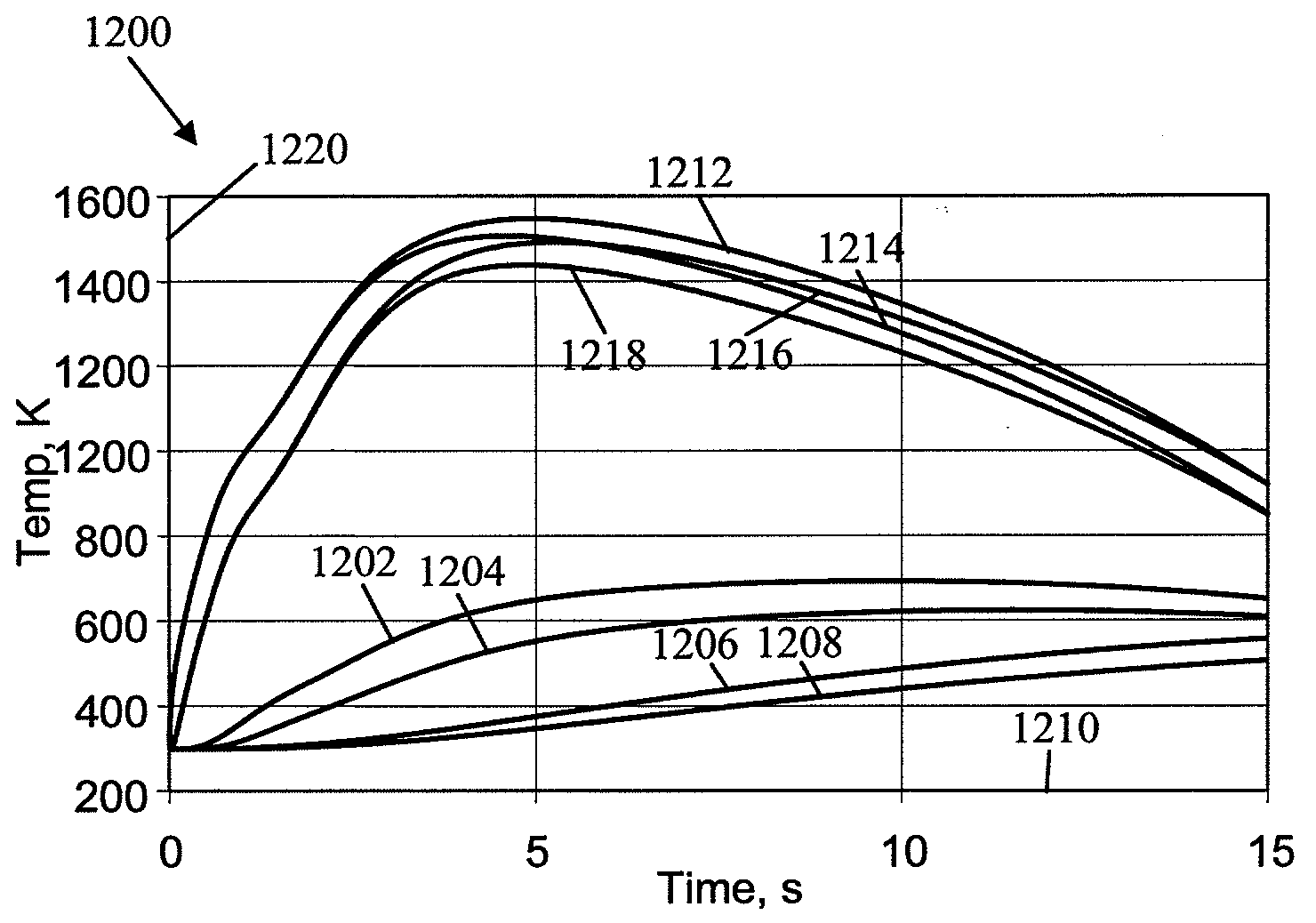
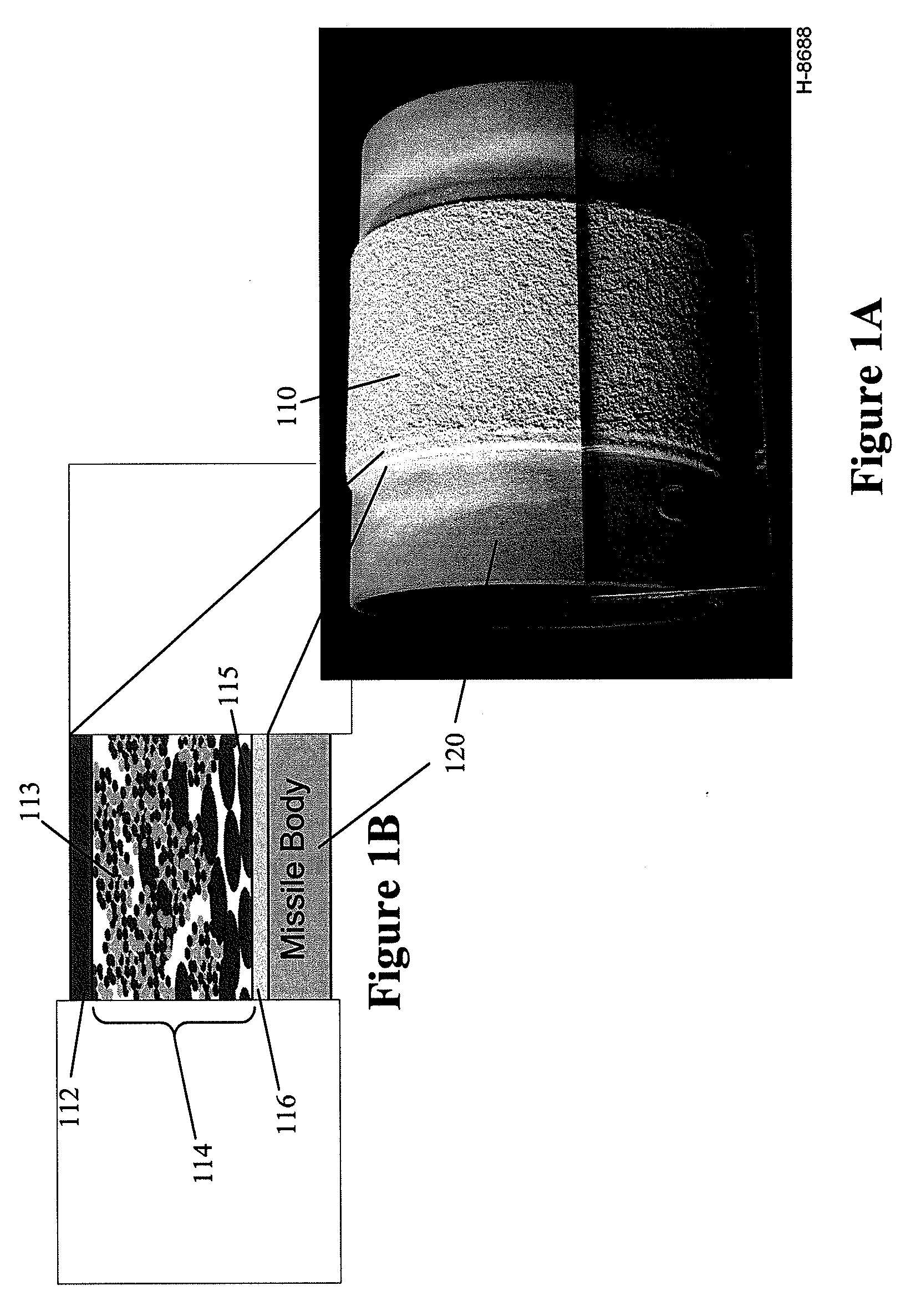
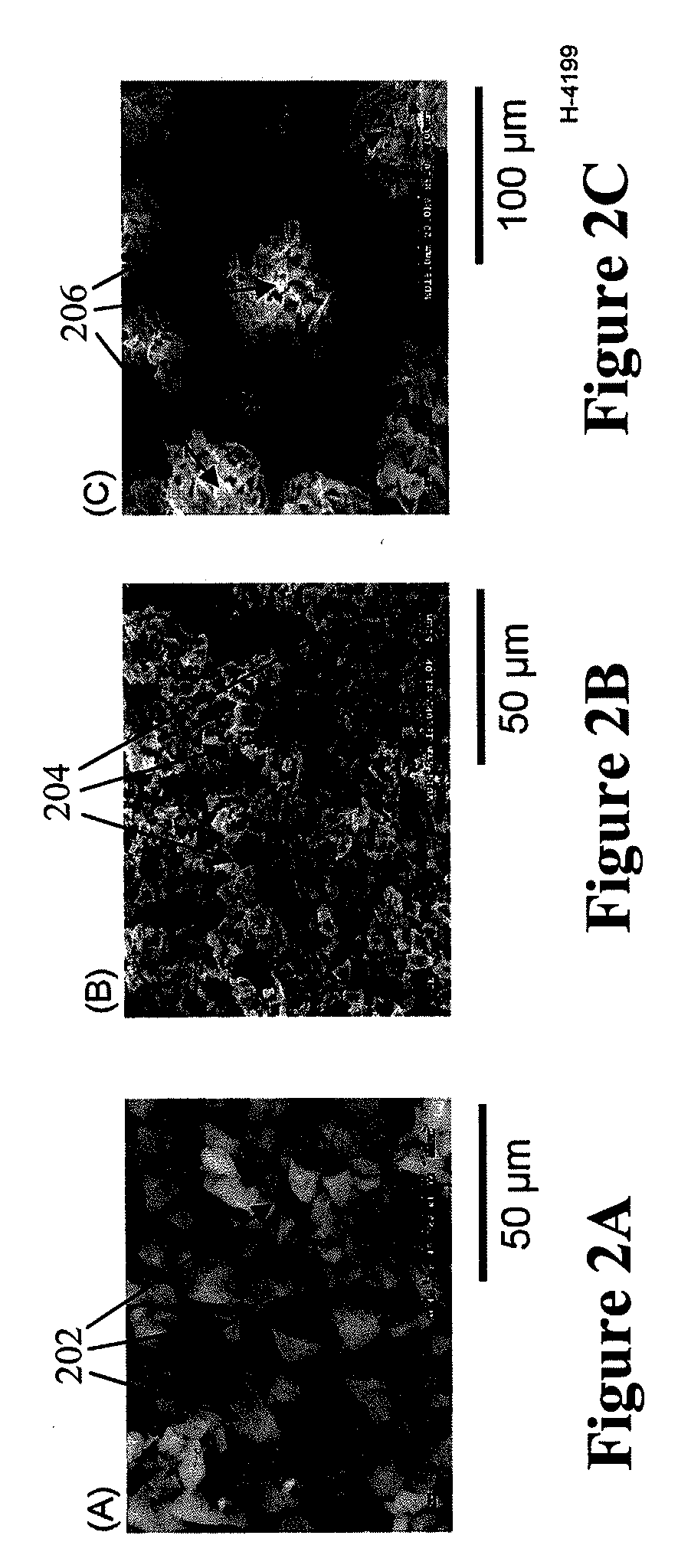
- A mechanically robust insulation structure is created by thermal spraying agglomerated aerogel particles combined with ceramic particles, which provides both mechanical integrity and insulation, using a graded or layered structure with controlled proportions of ceramic and aerogel materials, and employing thermal spraying technologies like plasma spraying.

Heat resistant aerogel insulation composite and method for its preparation;aerogel binder composition and method for its preparation
PatentInactiveEP1787716A1
Innovation
- A heat-resistant aerogel insulation composite is developed, comprising a hydrophobic aerogel particle-based insulation base layer with an aqueous binder and optionally a foaming agent, combined with a thermally reflective top layer containing a protective binder and an infrared reflecting agent, enhancing mechanical strength and thermal stability.


Environmental Impact and Sustainability of Aerogel Materials
The environmental impact of aerogel materials presents a complex landscape of both challenges and opportunities in the context of sustainable insulation solutions. Traditional aerogel production methods, particularly those involving supercritical drying processes, require significant energy inputs and often utilize solvents that may pose environmental concerns. The manufacturing of silica aerogels typically involves the use of silicon alkoxides and organic solvents, which can generate chemical waste streams requiring careful management and treatment.
However, recent developments in aerogel production have demonstrated substantial improvements in environmental performance. Bio-based aerogels derived from renewable sources such as cellulose, chitosan, and agricultural waste materials offer promising alternatives to conventional synthetic aerogels. These materials not only reduce dependence on petroleum-based precursors but also provide end-of-life biodegradability, addressing long-term waste management concerns.
The carbon footprint analysis of aerogel insulation reveals favorable outcomes when considering the entire lifecycle perspective. Despite higher initial production energy requirements, aerogels' superior thermal performance enables significant energy savings during building operation phases. Studies indicate that aerogel insulation can reduce heating and cooling energy consumption by 30-50% compared to conventional insulation materials, resulting in net positive environmental benefits over typical building lifespans.
Recycling and circular economy approaches for aerogel materials are gaining traction through innovative processing techniques. Mechanical recycling methods allow for the reprocessing of aerogel waste into new insulation products, while chemical recycling enables the recovery of valuable precursor materials. Additionally, the development of water-based synthesis routes and ambient pressure drying techniques significantly reduces the environmental burden associated with traditional supercritical processing methods.
The sustainability profile of aerogel insulation is further enhanced by its durability and longevity characteristics. Unlike organic insulation materials that may degrade over time, aerogels maintain their thermal properties for extended periods, reducing replacement frequency and associated environmental impacts. This durability factor, combined with space-saving benefits due to thinner insulation requirements, contributes to more sustainable building designs and reduced material consumption overall.
However, recent developments in aerogel production have demonstrated substantial improvements in environmental performance. Bio-based aerogels derived from renewable sources such as cellulose, chitosan, and agricultural waste materials offer promising alternatives to conventional synthetic aerogels. These materials not only reduce dependence on petroleum-based precursors but also provide end-of-life biodegradability, addressing long-term waste management concerns.
The carbon footprint analysis of aerogel insulation reveals favorable outcomes when considering the entire lifecycle perspective. Despite higher initial production energy requirements, aerogels' superior thermal performance enables significant energy savings during building operation phases. Studies indicate that aerogel insulation can reduce heating and cooling energy consumption by 30-50% compared to conventional insulation materials, resulting in net positive environmental benefits over typical building lifespans.
Recycling and circular economy approaches for aerogel materials are gaining traction through innovative processing techniques. Mechanical recycling methods allow for the reprocessing of aerogel waste into new insulation products, while chemical recycling enables the recovery of valuable precursor materials. Additionally, the development of water-based synthesis routes and ambient pressure drying techniques significantly reduces the environmental burden associated with traditional supercritical processing methods.
The sustainability profile of aerogel insulation is further enhanced by its durability and longevity characteristics. Unlike organic insulation materials that may degrade over time, aerogels maintain their thermal properties for extended periods, reducing replacement frequency and associated environmental impacts. This durability factor, combined with space-saving benefits due to thinner insulation requirements, contributes to more sustainable building designs and reduced material consumption overall.
Cost-Performance Optimization Strategies for Aerogel Products
The optimization of cost-performance ratios in aerogel products requires a multifaceted approach that balances manufacturing expenses with functional capabilities. Traditional aerogel production methods, particularly supercritical drying, represent the largest cost component, often accounting for 60-70% of total manufacturing expenses. Alternative drying techniques such as ambient pressure drying and freeze-drying have emerged as viable pathways to reduce production costs while maintaining acceptable performance characteristics for specific applications.
Material composition strategies play a crucial role in cost optimization. Hybrid aerogel formulations incorporating lower-cost precursors like rice husk ash or fly ash can reduce raw material costs by 30-40% compared to pure silica aerogels. These composite materials often demonstrate enhanced mechanical properties while maintaining thermal insulation performance within acceptable ranges for building and industrial applications.
Manufacturing scale optimization presents significant opportunities for cost reduction. Continuous production processes and modular manufacturing systems can achieve economies of scale, reducing per-unit costs by 25-35% when production volumes exceed critical thresholds. Investment in automated handling systems and quality control technologies further enhances production efficiency while maintaining consistent product quality.
Performance-based design approaches enable targeted optimization for specific applications. Rather than pursuing maximum performance across all parameters, tailored aerogel formulations can optimize specific properties such as thermal conductivity, mechanical strength, or hydrophobicity based on end-use requirements. This selective optimization approach can reduce material costs while delivering superior performance in critical application areas.
Supply chain integration and vertical manufacturing strategies offer additional cost optimization opportunities. Direct partnerships with precursor suppliers and investment in upstream processing capabilities can reduce material costs by 15-20%. Strategic location of manufacturing facilities near key markets minimizes transportation costs and enables responsive customer service.
Value engineering methodologies applied to aerogel product development focus on eliminating non-essential features while enhancing core performance attributes. Standardization of product specifications and manufacturing processes reduces complexity costs and enables more efficient quality control systems, ultimately improving the overall cost-performance ratio of aerogel insulation products.
Material composition strategies play a crucial role in cost optimization. Hybrid aerogel formulations incorporating lower-cost precursors like rice husk ash or fly ash can reduce raw material costs by 30-40% compared to pure silica aerogels. These composite materials often demonstrate enhanced mechanical properties while maintaining thermal insulation performance within acceptable ranges for building and industrial applications.
Manufacturing scale optimization presents significant opportunities for cost reduction. Continuous production processes and modular manufacturing systems can achieve economies of scale, reducing per-unit costs by 25-35% when production volumes exceed critical thresholds. Investment in automated handling systems and quality control technologies further enhances production efficiency while maintaining consistent product quality.
Performance-based design approaches enable targeted optimization for specific applications. Rather than pursuing maximum performance across all parameters, tailored aerogel formulations can optimize specific properties such as thermal conductivity, mechanical strength, or hydrophobicity based on end-use requirements. This selective optimization approach can reduce material costs while delivering superior performance in critical application areas.
Supply chain integration and vertical manufacturing strategies offer additional cost optimization opportunities. Direct partnerships with precursor suppliers and investment in upstream processing capabilities can reduce material costs by 15-20%. Strategic location of manufacturing facilities near key markets minimizes transportation costs and enables responsive customer service.
Value engineering methodologies applied to aerogel product development focus on eliminating non-essential features while enhancing core performance attributes. Standardization of product specifications and manufacturing processes reduces complexity costs and enables more efficient quality control systems, ultimately improving the overall cost-performance ratio of aerogel insulation products.
Unlock deeper insights with PatSnap Eureka Quick Research — get a full tech report to explore trends and direct your research. Try now!
Generate Your Research Report Instantly with AI Agent
Supercharge your innovation with PatSnap Eureka AI Agent Platform!