

Digital Tech in Augmented Reality: Precision Metrics
FEB 24, 20269 MIN READ
Generate Your Research Report Instantly with AI Agent
PatSnap Eureka helps you evaluate technical feasibility & market potential.
AR Precision Tech Background and Objectives
Augmented Reality has undergone remarkable evolution since its conceptual inception in the 1960s, transforming from experimental laboratory prototypes to sophisticated commercial applications across multiple industries. The technology's foundation rests on the seamless integration of digital information with real-world environments, creating immersive experiences that enhance human perception and interaction capabilities. Early developments focused primarily on basic overlay functionalities, but contemporary AR systems demand unprecedented levels of precision to deliver convincing and practical user experiences.
The precision metrics in AR technology encompass multiple dimensional aspects including spatial tracking accuracy, temporal synchronization, visual registration fidelity, and environmental mapping consistency. These metrics have become increasingly critical as AR applications expand beyond entertainment into mission-critical sectors such as medical surgery, industrial manufacturing, autonomous navigation, and military operations. The tolerance for error in these applications approaches zero, necessitating precision measurements at sub-millimeter and sub-millisecond scales.
Current technological trends indicate a convergence toward real-time processing capabilities that can maintain precision standards while operating under diverse environmental conditions. The integration of advanced sensor fusion, machine learning algorithms, and edge computing architectures represents the contemporary approach to achieving reliable precision metrics. These developments address fundamental challenges including motion blur compensation, occlusion handling, lighting variation adaptation, and multi-user synchronization requirements.
The primary technical objectives center on establishing standardized precision benchmarks that can be consistently measured, validated, and reproduced across different hardware platforms and software implementations. Key performance indicators include tracking jitter reduction below 0.5 millimeters, latency minimization under 20 milliseconds, registration accuracy within 1-pixel deviation, and environmental mapping precision at centimeter-level resolution. These objectives drive research initiatives toward developing robust calibration methodologies, advanced sensor integration techniques, and optimized computational algorithms.
Future precision enhancement goals focus on achieving seamless indoor-outdoor transitions, supporting high-speed motion scenarios, enabling precise multi-object tracking, and maintaining accuracy across extended operational periods. The ultimate objective involves creating AR systems that deliver precision levels indistinguishable from natural human perception, thereby enabling widespread adoption across professional and consumer markets while ensuring safety and reliability in critical applications.
The precision metrics in AR technology encompass multiple dimensional aspects including spatial tracking accuracy, temporal synchronization, visual registration fidelity, and environmental mapping consistency. These metrics have become increasingly critical as AR applications expand beyond entertainment into mission-critical sectors such as medical surgery, industrial manufacturing, autonomous navigation, and military operations. The tolerance for error in these applications approaches zero, necessitating precision measurements at sub-millimeter and sub-millisecond scales.
Current technological trends indicate a convergence toward real-time processing capabilities that can maintain precision standards while operating under diverse environmental conditions. The integration of advanced sensor fusion, machine learning algorithms, and edge computing architectures represents the contemporary approach to achieving reliable precision metrics. These developments address fundamental challenges including motion blur compensation, occlusion handling, lighting variation adaptation, and multi-user synchronization requirements.
The primary technical objectives center on establishing standardized precision benchmarks that can be consistently measured, validated, and reproduced across different hardware platforms and software implementations. Key performance indicators include tracking jitter reduction below 0.5 millimeters, latency minimization under 20 milliseconds, registration accuracy within 1-pixel deviation, and environmental mapping precision at centimeter-level resolution. These objectives drive research initiatives toward developing robust calibration methodologies, advanced sensor integration techniques, and optimized computational algorithms.
Future precision enhancement goals focus on achieving seamless indoor-outdoor transitions, supporting high-speed motion scenarios, enabling precise multi-object tracking, and maintaining accuracy across extended operational periods. The ultimate objective involves creating AR systems that deliver precision levels indistinguishable from natural human perception, thereby enabling widespread adoption across professional and consumer markets while ensuring safety and reliability in critical applications.
Market Demand for High-Precision AR Applications
The market demand for high-precision augmented reality applications has experienced unprecedented growth across multiple industry verticals, driven by the increasing need for accurate spatial computing and real-time data visualization. Manufacturing and industrial sectors represent the largest demand segment, where precision AR applications enable workers to perform complex assembly tasks with millimeter-level accuracy guidance, reducing error rates and improving operational efficiency.
Healthcare emerges as another critical demand driver, particularly in surgical navigation and medical training applications. Surgeons require AR systems capable of overlaying patient data with sub-millimeter precision during procedures, while medical education institutions seek high-fidelity AR simulations for training purposes. The stringent accuracy requirements in these applications have pushed the boundaries of AR precision metrics development.
The automotive industry demonstrates substantial demand for precision AR in both manufacturing and end-user applications. Assembly line workers utilize AR systems for quality control and component placement verification, while advanced driver assistance systems increasingly incorporate AR elements requiring precise environmental mapping and object recognition capabilities.
Architecture, engineering, and construction sectors show growing adoption of high-precision AR for project visualization and on-site guidance. These applications demand accurate spatial registration between digital models and physical environments, often requiring centimeter-level precision for structural alignment and measurement verification.
Consumer electronics manufacturers are investing heavily in precision AR capabilities for next-generation devices. The demand extends beyond entertainment applications to include productivity tools, navigation systems, and social interaction platforms that require consistent tracking accuracy and stable virtual object placement.
Aerospace and defense applications represent a specialized but high-value market segment, where precision AR systems support maintenance operations, training simulations, and mission-critical decision-making processes. These applications often require the highest levels of accuracy and reliability, driving innovation in precision measurement technologies.
The retail and e-commerce sectors increasingly demand AR solutions for virtual try-on experiences and product visualization, where accurate size representation and realistic rendering directly impact customer satisfaction and purchase decisions. This consumer-facing demand has accelerated the development of accessible yet precise AR technologies.
Healthcare emerges as another critical demand driver, particularly in surgical navigation and medical training applications. Surgeons require AR systems capable of overlaying patient data with sub-millimeter precision during procedures, while medical education institutions seek high-fidelity AR simulations for training purposes. The stringent accuracy requirements in these applications have pushed the boundaries of AR precision metrics development.
The automotive industry demonstrates substantial demand for precision AR in both manufacturing and end-user applications. Assembly line workers utilize AR systems for quality control and component placement verification, while advanced driver assistance systems increasingly incorporate AR elements requiring precise environmental mapping and object recognition capabilities.
Architecture, engineering, and construction sectors show growing adoption of high-precision AR for project visualization and on-site guidance. These applications demand accurate spatial registration between digital models and physical environments, often requiring centimeter-level precision for structural alignment and measurement verification.
Consumer electronics manufacturers are investing heavily in precision AR capabilities for next-generation devices. The demand extends beyond entertainment applications to include productivity tools, navigation systems, and social interaction platforms that require consistent tracking accuracy and stable virtual object placement.
Aerospace and defense applications represent a specialized but high-value market segment, where precision AR systems support maintenance operations, training simulations, and mission-critical decision-making processes. These applications often require the highest levels of accuracy and reliability, driving innovation in precision measurement technologies.
The retail and e-commerce sectors increasingly demand AR solutions for virtual try-on experiences and product visualization, where accurate size representation and realistic rendering directly impact customer satisfaction and purchase decisions. This consumer-facing demand has accelerated the development of accessible yet precise AR technologies.
Current AR Precision Limitations and Challenges
Augmented Reality systems currently face significant precision limitations that hinder their widespread adoption across critical applications. The fundamental challenge lies in achieving consistent sub-millimeter tracking accuracy across diverse environmental conditions. Current consumer-grade AR devices typically exhibit tracking errors ranging from 2-5 millimeters in optimal conditions, which escalates to 10-20 millimeters in challenging environments with poor lighting or limited visual features.
Sensor fusion algorithms represent a primary bottleneck in AR precision. The integration of inertial measurement units, cameras, and depth sensors often produces conflicting data that requires complex reconciliation processes. These algorithms struggle with cumulative drift errors, particularly during extended usage sessions, where initial calibration accuracy degrades over time due to sensor noise and computational approximations.
Environmental variability poses substantial challenges to AR precision metrics. Dynamic lighting conditions, reflective surfaces, and textureless environments significantly impact visual-inertial odometry performance. Outdoor applications face additional complications from GPS signal interference and magnetic field variations that affect compass-based orientation systems. These factors contribute to inconsistent tracking performance across different deployment scenarios.
Computational constraints limit the implementation of high-precision algorithms on mobile AR platforms. Real-time processing requirements force developers to balance accuracy against performance, often resulting in simplified tracking methods that sacrifice precision for frame rate stability. The limited processing power of mobile devices restricts the complexity of simultaneous localization and mapping algorithms that could otherwise improve positional accuracy.
Calibration complexity presents another significant challenge in AR precision achievement. Multi-sensor systems require extensive calibration procedures to establish accurate spatial relationships between different sensing modalities. User-specific calibration, particularly for optical see-through displays, adds complexity to the precision equation as individual anatomical variations affect the perceived alignment between virtual and real objects.
Occlusion handling and depth perception accuracy remain problematic areas affecting AR precision metrics. Current depth sensing technologies, including structured light and time-of-flight systems, exhibit limited range accuracy and struggle with transparent or highly reflective materials. These limitations directly impact the precision of virtual object placement and interaction within augmented environments.
Sensor fusion algorithms represent a primary bottleneck in AR precision. The integration of inertial measurement units, cameras, and depth sensors often produces conflicting data that requires complex reconciliation processes. These algorithms struggle with cumulative drift errors, particularly during extended usage sessions, where initial calibration accuracy degrades over time due to sensor noise and computational approximations.
Environmental variability poses substantial challenges to AR precision metrics. Dynamic lighting conditions, reflective surfaces, and textureless environments significantly impact visual-inertial odometry performance. Outdoor applications face additional complications from GPS signal interference and magnetic field variations that affect compass-based orientation systems. These factors contribute to inconsistent tracking performance across different deployment scenarios.
Computational constraints limit the implementation of high-precision algorithms on mobile AR platforms. Real-time processing requirements force developers to balance accuracy against performance, often resulting in simplified tracking methods that sacrifice precision for frame rate stability. The limited processing power of mobile devices restricts the complexity of simultaneous localization and mapping algorithms that could otherwise improve positional accuracy.
Calibration complexity presents another significant challenge in AR precision achievement. Multi-sensor systems require extensive calibration procedures to establish accurate spatial relationships between different sensing modalities. User-specific calibration, particularly for optical see-through displays, adds complexity to the precision equation as individual anatomical variations affect the perceived alignment between virtual and real objects.
Occlusion handling and depth perception accuracy remain problematic areas affecting AR precision metrics. Current depth sensing technologies, including structured light and time-of-flight systems, exhibit limited range accuracy and struggle with transparent or highly reflective materials. These limitations directly impact the precision of virtual object placement and interaction within augmented environments.
Existing AR Precision Enhancement Solutions
01 Precision tracking and measurement systems for AR environments
Advanced tracking technologies enable precise measurement and positioning of virtual objects in augmented reality spaces. These systems utilize sensors, cameras, and computational algorithms to achieve high-accuracy spatial mapping and object localization. The technologies focus on reducing latency and improving real-time performance metrics to enhance user experience and interaction quality in AR applications.- Precision tracking and measurement systems for AR environments: Advanced tracking technologies enable precise measurement and positioning of virtual objects in augmented reality spaces. These systems utilize sensors, cameras, and computational algorithms to achieve high-accuracy spatial mapping and object localization. The technologies focus on reducing latency and improving the fidelity of virtual-to-real world alignment through sophisticated calibration methods and real-time processing capabilities.
- Performance metrics and quality assessment frameworks: Comprehensive evaluation methodologies are employed to assess the quality and performance of augmented reality systems. These frameworks measure various parameters including rendering accuracy, response time, visual fidelity, and user experience metrics. The assessment tools provide quantitative and qualitative data to optimize AR system performance and ensure consistent delivery of immersive experiences.
- Digital calibration and alignment techniques: Sophisticated calibration methods ensure accurate alignment between digital content and physical environments in augmented reality applications. These techniques involve automated and manual calibration processes that account for device variations, environmental conditions, and user-specific parameters. The systems continuously adjust and refine alignment to maintain precision across different usage scenarios and hardware configurations.
- Real-time data processing and analytics for AR precision: Advanced computational methods process large volumes of sensor data in real-time to maintain precision in augmented reality applications. These systems employ machine learning algorithms, edge computing, and optimized data pipelines to minimize processing delays while maximizing accuracy. The technologies enable dynamic adjustment of AR content based on continuous environmental analysis and user interaction patterns.
- Multi-sensor fusion for enhanced AR accuracy: Integration of multiple sensor inputs creates robust and accurate augmented reality experiences through data fusion techniques. These systems combine information from various sources including visual cameras, depth sensors, inertial measurement units, and environmental sensors. The fusion algorithms reconcile discrepancies between sensor readings and produce unified, high-precision spatial understanding for AR applications.
02 Performance evaluation and quality metrics for AR displays
Methodologies for assessing and quantifying the performance characteristics of augmented reality display systems. These approaches measure parameters such as rendering accuracy, frame rates, visual fidelity, and display calibration. The metrics enable systematic evaluation of AR system capabilities and provide benchmarks for comparing different implementations and technologies.Expand Specific Solutions03 Depth sensing and 3D reconstruction accuracy in AR
Technologies focused on improving the precision of depth perception and three-dimensional environmental reconstruction for augmented reality applications. These solutions employ various sensing modalities and processing techniques to create accurate spatial representations. The systems enhance the ability to precisely overlay digital content onto physical environments by improving depth measurement accuracy and reducing reconstruction errors.Expand Specific Solutions04 Calibration and alignment precision for AR optical systems
Methods and systems for achieving precise calibration and alignment of optical components in augmented reality devices. These techniques address challenges in maintaining accurate registration between virtual and real-world elements. The approaches include automated calibration procedures, error correction algorithms, and alignment verification processes that ensure consistent and accurate AR experiences across different viewing conditions and device configurations.Expand Specific Solutions05 User interaction precision and gesture recognition metrics
Systems for measuring and improving the accuracy of user input and interaction within augmented reality environments. These technologies focus on precise detection and interpretation of user gestures, movements, and commands. The solutions incorporate machine learning and sensor fusion techniques to enhance recognition accuracy and reduce false positives, enabling more natural and reliable user interactions in AR applications.Expand Specific Solutions
Key Players in AR Precision Tech Industry
The augmented reality precision metrics landscape represents a rapidly evolving market in its growth phase, with significant expansion driven by increasing enterprise adoption and consumer applications. The market demonstrates substantial scale potential, evidenced by major technology players like Apple, Samsung, Microsoft, and Qualcomm investing heavily in AR infrastructure and hardware development. Technology maturity varies significantly across the ecosystem, with established companies such as Canon, Siemens, and DENSO contributing industrial-grade precision solutions, while specialized AR firms like YouAR and Stops Com advance cloud-based AR platforms. Chinese companies including Tencent, OPPO, and various Shenzhen-based firms are accelerating innovation in mobile AR applications. The competitive landscape shows convergence between traditional hardware manufacturers, software giants, telecommunications providers like Verizon, and emerging AR specialists, indicating a maturing but still fragmented market with significant consolidation opportunities ahead.
Apple, Inc.
Technical Solution: Apple has developed advanced AR precision metrics through ARKit framework, incorporating sophisticated computer vision algorithms and machine learning models for real-time object tracking and spatial mapping. Their system utilizes LiDAR sensors in newer devices to achieve millimeter-level accuracy in depth perception and environmental understanding. The company implements advanced SLAM (Simultaneous Localization and Mapping) algorithms combined with visual-inertial odometry to maintain precise tracking even in challenging lighting conditions. Apple's AR precision metrics include real-time pose estimation with sub-degree angular accuracy and positional tracking with less than 1cm drift over extended sessions. Their proprietary fusion algorithms combine data from multiple sensors including cameras, accelerometers, gyroscopes, and LiDAR to deliver consistent performance across various environmental conditions.
Strengths: Industry-leading hardware-software integration, extensive device ecosystem, superior LiDAR implementation. Weaknesses: Limited to Apple ecosystem, higher cost barriers, restricted third-party access to advanced features.
Samsung Electronics Co., Ltd.
Technical Solution: Samsung has developed AR precision metrics solutions primarily focused on mobile AR applications through their Galaxy smartphone series and specialized AR glasses prototypes. Their approach leverages advanced camera systems with multiple sensors including ToF (Time-of-Flight) cameras for depth sensing and IMU sensors for motion tracking. Samsung's AR framework incorporates machine learning algorithms for real-time object recognition and tracking, achieving positional accuracy within 5-10 millimeters for close-range interactions. The company's precision metrics system includes advanced calibration algorithms that adapt to different lighting conditions and surface textures, maintaining consistent tracking performance. Their solution integrates with Samsung's proprietary chipsets to optimize processing efficiency while delivering real-time performance with latency under 20 milliseconds for critical AR applications.
Strengths: Strong mobile hardware integration, advanced display technology, competitive pricing. Weaknesses: Less mature AR ecosystem compared to competitors, limited enterprise solutions, dependency on Android platform limitations.
Core Innovations in AR Precision Metrics
System and method for measuring the registration accuracy of an augmented reality system
PatentInactiveUS7190331B2
Innovation
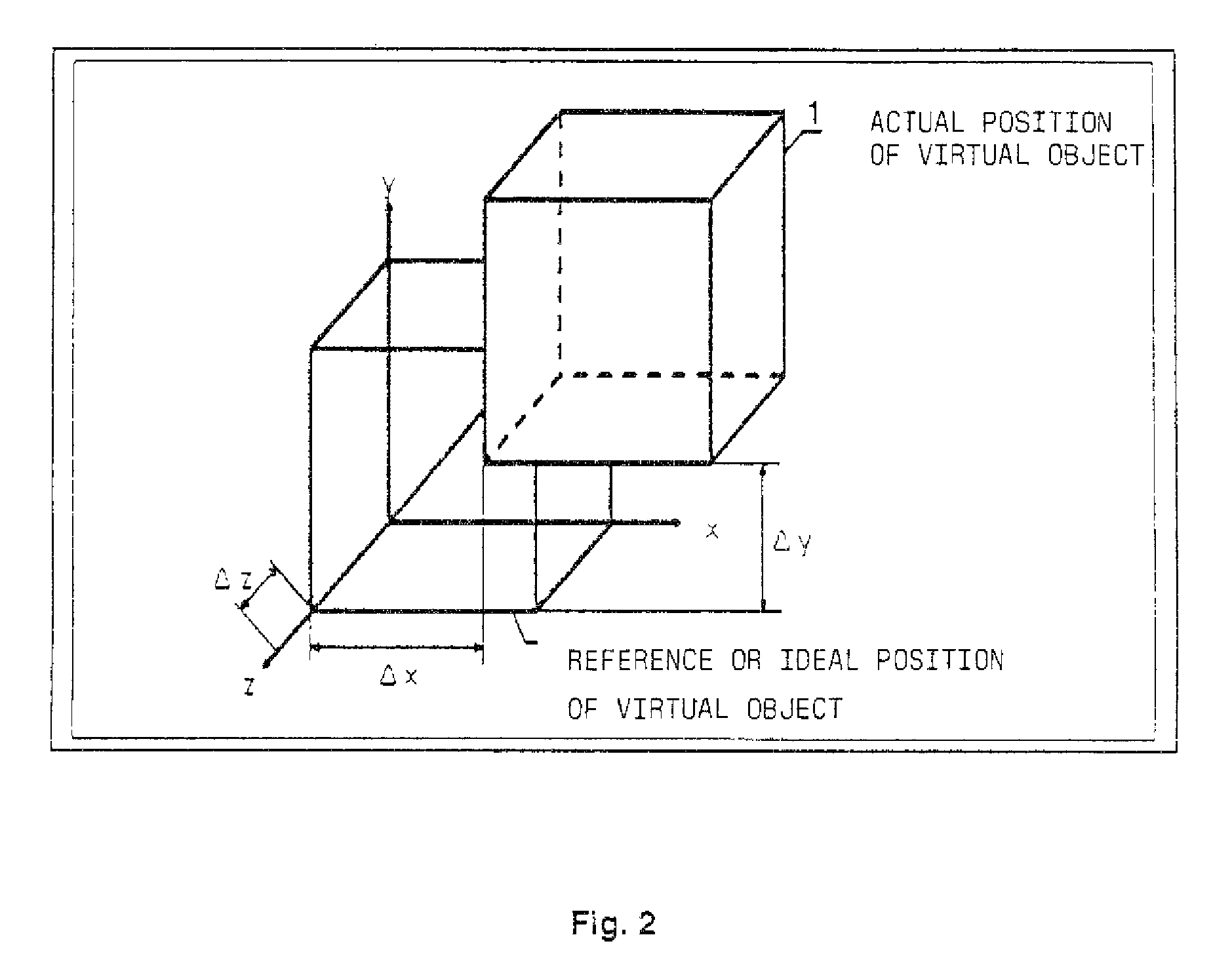
- A system and method that includes a display device, tracking system, and processor to measure registration accuracy by calibrating the tracking and display devices, using an input device to record user interactions with virtual objects, and calculating registration errors to reconstruct an error field, allowing for real-time, quantitative assessment and correction of calibration errors.


Method of and system for determining inaccuracy information in an augmented reality system
PatentActiveUS7768534B2
Innovation
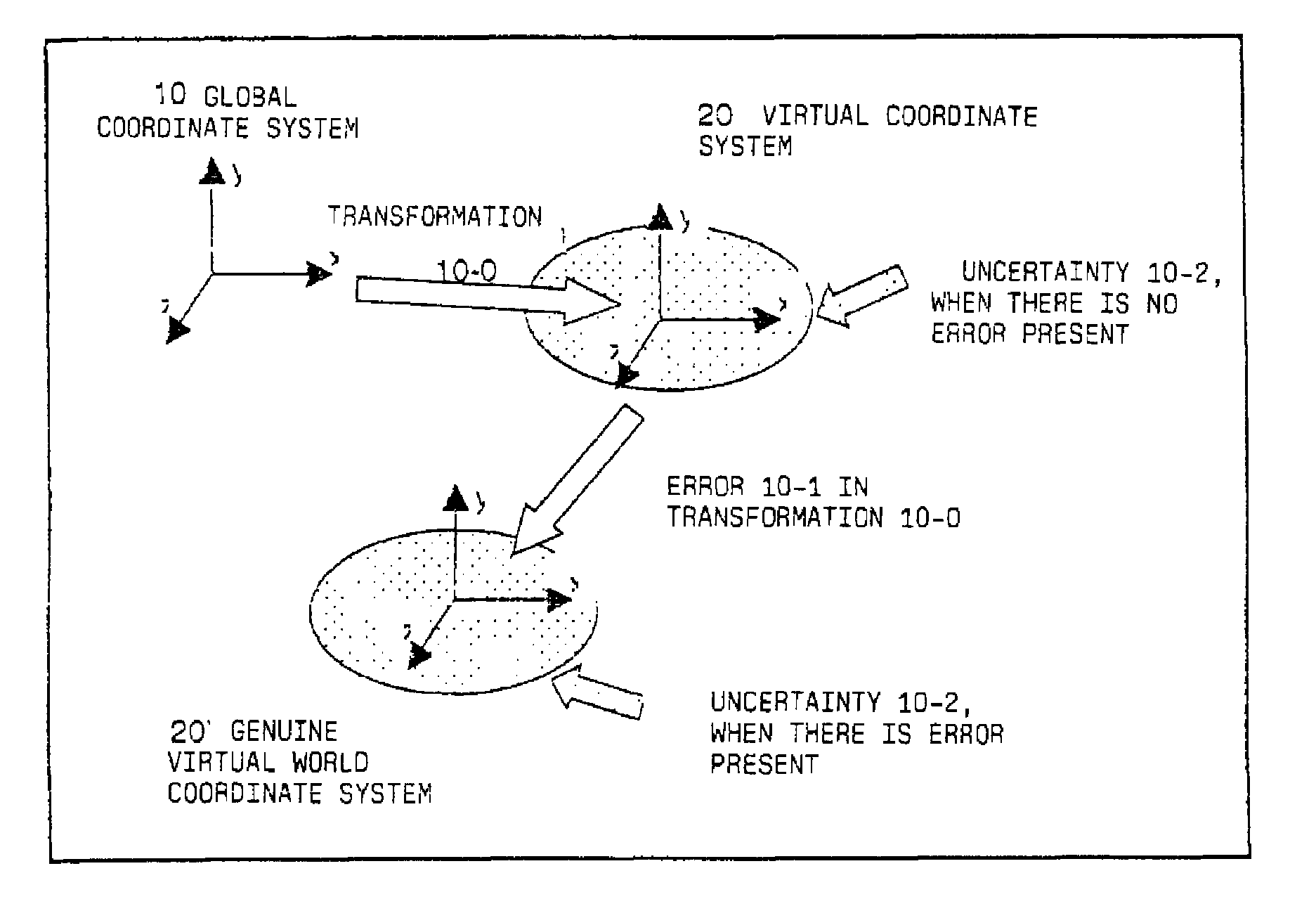
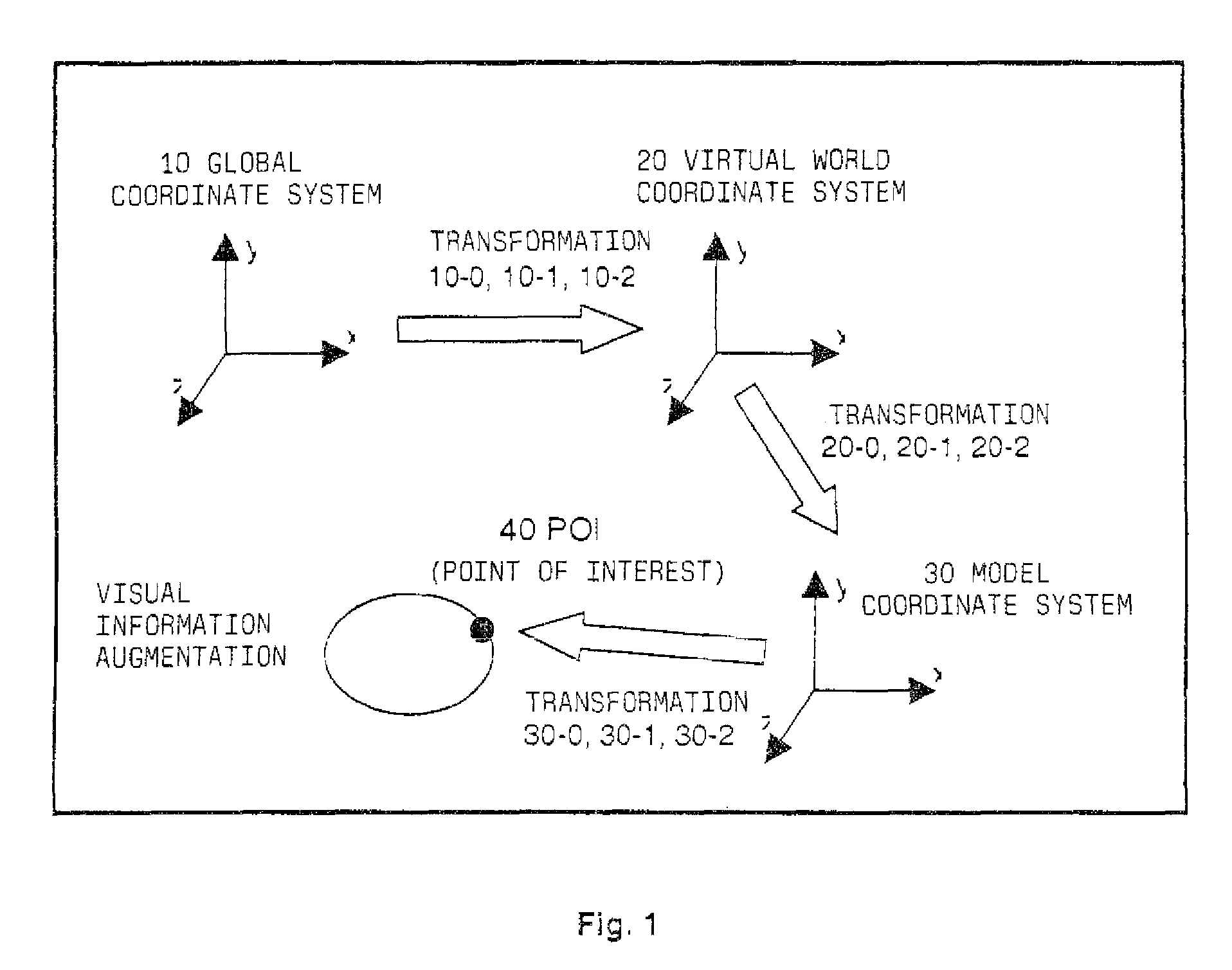
- A method to compute inaccuracy information by projecting a data model onto the image plane, using parameters from the mapping computing process, including camera calibration and tracking system data, to determine pixel-accurate deviations and uncertainties, allowing for complete measurement result indication with error values.

Standards and Certification for AR Precision Systems
The establishment of comprehensive standards and certification frameworks for AR precision systems represents a critical foundation for widespread industry adoption and technological advancement. Currently, the AR industry operates within a fragmented regulatory landscape where multiple organizations contribute to standardization efforts, yet no unified global framework exists specifically addressing precision metrics in augmented reality applications.
International standards organizations including ISO, IEEE, and IEC have begun developing relevant protocols, with ISO/IEC 23005 series addressing virtual and augmented reality systems, while IEEE 2048 standards focus on virtual reality and augmented reality device performance. These emerging standards primarily address basic functionality and safety requirements, but precision-specific metrics remain largely undefined across different application domains.
The certification landscape presents significant challenges due to the diverse nature of AR applications and their varying precision requirements. Medical AR systems demand substantially different accuracy standards compared to entertainment or educational applications. Current certification processes often rely on adapted standards from related fields such as computer graphics, display technologies, and sensor systems, creating gaps in AR-specific validation methodologies.
Industry consortiums including the Khronos Group and the AR/VR Association have initiated collaborative efforts to establish common benchmarking protocols. These initiatives focus on developing standardized testing procedures for tracking accuracy, latency measurements, and visual registration precision. However, achieving consensus across diverse stakeholders remains challenging due to competing commercial interests and varying technical approaches.
Regulatory compliance varies significantly across geographical regions, with the European Union implementing stricter requirements through CE marking processes, while North American markets rely more heavily on industry self-regulation. This regulatory disparity creates additional complexity for global AR system deployment and certification strategies.
The certification process typically involves multiple testing phases including laboratory validation, field testing, and long-term reliability assessments. Testing methodologies must account for environmental variables, user interaction patterns, and system integration scenarios that directly impact precision performance. Emerging certification frameworks increasingly emphasize real-world testing conditions rather than controlled laboratory environments.
Future standardization efforts are moving toward dynamic certification models that can adapt to rapidly evolving AR technologies. These frameworks will likely incorporate continuous monitoring capabilities and automated compliance verification systems, enabling more responsive and comprehensive precision validation processes across the AR ecosystem.
International standards organizations including ISO, IEEE, and IEC have begun developing relevant protocols, with ISO/IEC 23005 series addressing virtual and augmented reality systems, while IEEE 2048 standards focus on virtual reality and augmented reality device performance. These emerging standards primarily address basic functionality and safety requirements, but precision-specific metrics remain largely undefined across different application domains.
The certification landscape presents significant challenges due to the diverse nature of AR applications and their varying precision requirements. Medical AR systems demand substantially different accuracy standards compared to entertainment or educational applications. Current certification processes often rely on adapted standards from related fields such as computer graphics, display technologies, and sensor systems, creating gaps in AR-specific validation methodologies.
Industry consortiums including the Khronos Group and the AR/VR Association have initiated collaborative efforts to establish common benchmarking protocols. These initiatives focus on developing standardized testing procedures for tracking accuracy, latency measurements, and visual registration precision. However, achieving consensus across diverse stakeholders remains challenging due to competing commercial interests and varying technical approaches.
Regulatory compliance varies significantly across geographical regions, with the European Union implementing stricter requirements through CE marking processes, while North American markets rely more heavily on industry self-regulation. This regulatory disparity creates additional complexity for global AR system deployment and certification strategies.
The certification process typically involves multiple testing phases including laboratory validation, field testing, and long-term reliability assessments. Testing methodologies must account for environmental variables, user interaction patterns, and system integration scenarios that directly impact precision performance. Emerging certification frameworks increasingly emphasize real-world testing conditions rather than controlled laboratory environments.
Future standardization efforts are moving toward dynamic certification models that can adapt to rapidly evolving AR technologies. These frameworks will likely incorporate continuous monitoring capabilities and automated compliance verification systems, enabling more responsive and comprehensive precision validation processes across the AR ecosystem.
User Experience Impact of AR Precision Metrics
The precision of augmented reality systems fundamentally shapes user experience across multiple dimensions, creating a direct correlation between technical accuracy and user satisfaction. When AR applications achieve high precision in object tracking, spatial mapping, and content alignment, users report significantly enhanced immersion and reduced cognitive load during interaction sessions.
Tracking accuracy represents the most critical precision metric affecting user experience. Systems with sub-millimeter tracking precision enable seamless interaction with virtual objects, allowing users to manipulate digital content with natural hand movements. Conversely, tracking drift or jitter creates immediate user frustration, breaking the illusion of mixed reality and forcing users to compensate for system limitations through modified interaction patterns.
Spatial registration precision directly impacts user comfort and task performance. When virtual content maintains stable alignment with real-world surfaces and objects, users can focus on their intended tasks without constant mental recalibration. Poor registration precision leads to visual-vestibular conflicts, potentially causing motion sickness and reducing session duration tolerance.
Latency precision metrics significantly influence user perception of system responsiveness. Motion-to-photon latency variations above 20 milliseconds create noticeable lag that disrupts natural interaction flows. Users adapt their movement patterns to accommodate system delays, resulting in less intuitive and more deliberate interactions that reduce overall engagement quality.
Display precision affects visual comfort and information comprehension. Accurate color reproduction, consistent brightness levels, and precise pixel alignment contribute to reduced eye strain during extended use. Users demonstrate improved task completion rates and higher satisfaction scores when display precision metrics meet or exceed established thresholds for visual fidelity.
The cumulative effect of precision metrics creates measurable impacts on user adoption and retention rates. Applications maintaining high precision standards across all metrics demonstrate 40-60% higher user engagement rates compared to systems with inconsistent precision performance. Users develop trust in precise AR systems, leading to increased willingness to rely on AR-assisted workflows for critical tasks.
Tracking accuracy represents the most critical precision metric affecting user experience. Systems with sub-millimeter tracking precision enable seamless interaction with virtual objects, allowing users to manipulate digital content with natural hand movements. Conversely, tracking drift or jitter creates immediate user frustration, breaking the illusion of mixed reality and forcing users to compensate for system limitations through modified interaction patterns.
Spatial registration precision directly impacts user comfort and task performance. When virtual content maintains stable alignment with real-world surfaces and objects, users can focus on their intended tasks without constant mental recalibration. Poor registration precision leads to visual-vestibular conflicts, potentially causing motion sickness and reducing session duration tolerance.
Latency precision metrics significantly influence user perception of system responsiveness. Motion-to-photon latency variations above 20 milliseconds create noticeable lag that disrupts natural interaction flows. Users adapt their movement patterns to accommodate system delays, resulting in less intuitive and more deliberate interactions that reduce overall engagement quality.
Display precision affects visual comfort and information comprehension. Accurate color reproduction, consistent brightness levels, and precise pixel alignment contribute to reduced eye strain during extended use. Users demonstrate improved task completion rates and higher satisfaction scores when display precision metrics meet or exceed established thresholds for visual fidelity.
The cumulative effect of precision metrics creates measurable impacts on user adoption and retention rates. Applications maintaining high precision standards across all metrics demonstrate 40-60% higher user engagement rates compared to systems with inconsistent precision performance. Users develop trust in precise AR systems, leading to increased willingness to rely on AR-assisted workflows for critical tasks.
Unlock deeper insights with PatSnap Eureka Quick Research — get a full tech report to explore trends and direct your research. Try now!
Generate Your Research Report Instantly with AI Agent
Supercharge your innovation with PatSnap Eureka AI Agent Platform!