
Direct Air Capture Standardization and Cost Transparency Challenges
MAR 26, 20269 MIN READ
Generate Your Research Report Instantly with AI Agent
Patsnap Eureka helps you evaluate technical feasibility & market potential.
DAC Technology Background and Standardization Goals
Direct Air Capture (DAC) technology represents a critical frontier in atmospheric carbon dioxide removal, emerging from decades of research into chemical absorption and adsorption processes. The technology's foundation lies in established industrial gas separation techniques, adapted specifically for capturing CO2 directly from ambient air rather than concentrated emission sources. Early development began in the 1990s with theoretical frameworks, evolving through laboratory demonstrations in the 2000s to commercial-scale deployments in the 2010s.
The evolution of DAC technology has been driven by two primary approaches: liquid solvent systems utilizing hydroxide solutions, and solid sorbent systems employing amine-functionalized materials. These methodologies have progressed from energy-intensive proof-of-concept systems requiring over 2,000 kWh per ton of CO2 captured, to more efficient second-generation systems targeting sub-1,500 kWh performance levels. The technology trajectory indicates continued optimization toward theoretical minimum energy requirements of approximately 1,500-2,000 kWh per ton.
Current standardization challenges stem from the nascent nature of the industry and the diversity of technological approaches being pursued. Unlike established carbon capture technologies applied to point sources, DAC systems operate under highly variable atmospheric conditions, creating complexity in performance measurement and comparison. The absence of universally accepted testing protocols has resulted in inconsistent reporting of capture rates, energy consumption, and lifecycle assessments across different developers.
The primary standardization goals encompass establishing unified measurement protocols for capture efficiency, energy intensity, and environmental impact assessment. Industry stakeholders are working toward developing standardized testing conditions that account for varying atmospheric CO2 concentrations, humidity levels, and temperature ranges. Additionally, there is growing recognition of the need for standardized lifecycle assessment methodologies that encompass manufacturing, operation, and end-of-life considerations for DAC systems.
Cost transparency represents another critical standardization objective, as current cost reporting varies significantly in scope and methodology across industry participants. Establishing standardized cost accounting frameworks that separate capital expenditures, operational expenses, and externality costs will enable more accurate technology comparisons and investment decision-making. These standardization efforts are essential for building investor confidence and enabling policy frameworks that can effectively support DAC deployment at climate-relevant scales.
The evolution of DAC technology has been driven by two primary approaches: liquid solvent systems utilizing hydroxide solutions, and solid sorbent systems employing amine-functionalized materials. These methodologies have progressed from energy-intensive proof-of-concept systems requiring over 2,000 kWh per ton of CO2 captured, to more efficient second-generation systems targeting sub-1,500 kWh performance levels. The technology trajectory indicates continued optimization toward theoretical minimum energy requirements of approximately 1,500-2,000 kWh per ton.
Current standardization challenges stem from the nascent nature of the industry and the diversity of technological approaches being pursued. Unlike established carbon capture technologies applied to point sources, DAC systems operate under highly variable atmospheric conditions, creating complexity in performance measurement and comparison. The absence of universally accepted testing protocols has resulted in inconsistent reporting of capture rates, energy consumption, and lifecycle assessments across different developers.
The primary standardization goals encompass establishing unified measurement protocols for capture efficiency, energy intensity, and environmental impact assessment. Industry stakeholders are working toward developing standardized testing conditions that account for varying atmospheric CO2 concentrations, humidity levels, and temperature ranges. Additionally, there is growing recognition of the need for standardized lifecycle assessment methodologies that encompass manufacturing, operation, and end-of-life considerations for DAC systems.
Cost transparency represents another critical standardization objective, as current cost reporting varies significantly in scope and methodology across industry participants. Establishing standardized cost accounting frameworks that separate capital expenditures, operational expenses, and externality costs will enable more accurate technology comparisons and investment decision-making. These standardization efforts are essential for building investor confidence and enabling policy frameworks that can effectively support DAC deployment at climate-relevant scales.
Market Demand for Transparent DAC Solutions
The global market for transparent Direct Air Capture solutions is experiencing unprecedented growth driven by mounting regulatory pressures and corporate sustainability commitments. Organizations across industries are increasingly demanding clear visibility into DAC technology performance metrics, cost structures, and environmental impact assessments. This demand stems from the need to make informed investment decisions and meet stringent reporting requirements under emerging carbon accounting frameworks.
Corporate buyers represent the largest segment driving demand for transparent DAC solutions. Fortune 500 companies seeking to achieve net-zero targets require detailed documentation of carbon removal efficacy, permanence guarantees, and lifecycle assessments. These organizations are willing to pay premium prices for DAC services that provide comprehensive transparency reports, third-party verification, and real-time monitoring capabilities. The lack of standardized reporting mechanisms has created significant friction in procurement processes, with buyers often requiring custom due diligence procedures.
Government agencies and public sector organizations constitute another critical demand segment. National and regional governments implementing carbon removal procurement programs require standardized metrics for comparing DAC providers. The absence of unified measurement standards has complicated public tender processes and hindered large-scale deployment initiatives. Regulatory bodies are increasingly mandating detailed cost breakdowns and performance documentation for DAC projects receiving public funding or carbon credit certification.
Financial institutions and carbon credit markets are driving demand for enhanced transparency to enable proper risk assessment and pricing mechanisms. Investment funds focused on climate technologies require detailed financial modeling capabilities and standardized performance benchmarks to evaluate DAC ventures. Carbon credit buyers demand verifiable removal quantities, permanence assurances, and clear additionality demonstrations to justify premium pricing for DAC-generated credits.
The voluntary carbon market represents a rapidly expanding demand source, with buyers seeking high-quality removal credits backed by transparent methodologies. Corporate purchasers in this market prioritize DAC solutions offering detailed provenance tracking, independent verification protocols, and comprehensive environmental impact assessments. Market research indicates strong willingness to pay significant premiums for DAC credits with superior transparency credentials compared to traditional offset mechanisms.
Emerging demand patterns indicate growing interest in standardized DAC solution packages that combine technology deployment with integrated transparency frameworks. Early adopters are requesting turnkey solutions incorporating automated monitoring systems, standardized reporting dashboards, and third-party verification services. This integrated approach addresses the current market fragmentation where transparency services are typically procured separately from core DAC technology.
Corporate buyers represent the largest segment driving demand for transparent DAC solutions. Fortune 500 companies seeking to achieve net-zero targets require detailed documentation of carbon removal efficacy, permanence guarantees, and lifecycle assessments. These organizations are willing to pay premium prices for DAC services that provide comprehensive transparency reports, third-party verification, and real-time monitoring capabilities. The lack of standardized reporting mechanisms has created significant friction in procurement processes, with buyers often requiring custom due diligence procedures.
Government agencies and public sector organizations constitute another critical demand segment. National and regional governments implementing carbon removal procurement programs require standardized metrics for comparing DAC providers. The absence of unified measurement standards has complicated public tender processes and hindered large-scale deployment initiatives. Regulatory bodies are increasingly mandating detailed cost breakdowns and performance documentation for DAC projects receiving public funding or carbon credit certification.
Financial institutions and carbon credit markets are driving demand for enhanced transparency to enable proper risk assessment and pricing mechanisms. Investment funds focused on climate technologies require detailed financial modeling capabilities and standardized performance benchmarks to evaluate DAC ventures. Carbon credit buyers demand verifiable removal quantities, permanence assurances, and clear additionality demonstrations to justify premium pricing for DAC-generated credits.
The voluntary carbon market represents a rapidly expanding demand source, with buyers seeking high-quality removal credits backed by transparent methodologies. Corporate purchasers in this market prioritize DAC solutions offering detailed provenance tracking, independent verification protocols, and comprehensive environmental impact assessments. Market research indicates strong willingness to pay significant premiums for DAC credits with superior transparency credentials compared to traditional offset mechanisms.
Emerging demand patterns indicate growing interest in standardized DAC solution packages that combine technology deployment with integrated transparency frameworks. Early adopters are requesting turnkey solutions incorporating automated monitoring systems, standardized reporting dashboards, and third-party verification services. This integrated approach addresses the current market fragmentation where transparency services are typically procured separately from core DAC technology.
Current DAC Standards and Cost Transparency Issues
The Direct Air Capture industry currently operates without comprehensive standardization frameworks, creating significant challenges for technology assessment and market development. Existing standards are fragmented across different organizations, with limited coordination between regulatory bodies, industry associations, and research institutions. The International Organization for Standardization has initiated preliminary discussions on DAC measurement protocols, but comprehensive standards remain in early development stages.
Measurement and verification protocols represent a critical gap in current standardization efforts. Different DAC technologies employ varying methodologies for calculating CO2 capture rates, energy consumption metrics, and lifecycle assessments. This inconsistency makes it difficult to compare performance across different systems and vendors. The lack of standardized testing conditions, measurement intervals, and reporting formats creates confusion among potential buyers and investors seeking reliable performance data.
Cost transparency issues plague the DAC sector due to the absence of standardized cost accounting frameworks. Companies report costs using different methodologies, time horizons, and inclusion criteria. Some organizations report levelized costs that include only operational expenses, while others incorporate capital expenditures, financing costs, and infrastructure development. This inconsistency makes it challenging to establish realistic cost benchmarks and track industry progress toward cost reduction targets.
Energy accounting standards present another significant challenge, as DAC systems require substantial energy inputs that vary based on electricity sources, heat recovery systems, and operational optimization. Current reporting practices often lack clarity regarding renewable energy integration, grid electricity usage, and thermal energy requirements. The absence of standardized energy accounting makes it difficult to assess the true environmental impact and economic viability of different DAC approaches.
Financial reporting transparency remains limited across the industry, with many companies providing incomplete cost breakdowns or using proprietary methodologies that obscure actual operational expenses. This opacity hinders investment decision-making and prevents accurate market analysis. The lack of standardized financial reporting also complicates government policy development and subsidy program design, as policymakers struggle to establish appropriate support mechanisms without reliable cost data.
Regulatory compliance frameworks vary significantly across jurisdictions, creating additional complexity for companies operating in multiple markets. Different regions have developed distinct approaches to DAC technology approval, environmental impact assessment, and carbon credit verification. This regulatory fragmentation increases compliance costs and slows technology deployment, particularly for companies seeking to scale operations internationally.
Measurement and verification protocols represent a critical gap in current standardization efforts. Different DAC technologies employ varying methodologies for calculating CO2 capture rates, energy consumption metrics, and lifecycle assessments. This inconsistency makes it difficult to compare performance across different systems and vendors. The lack of standardized testing conditions, measurement intervals, and reporting formats creates confusion among potential buyers and investors seeking reliable performance data.
Cost transparency issues plague the DAC sector due to the absence of standardized cost accounting frameworks. Companies report costs using different methodologies, time horizons, and inclusion criteria. Some organizations report levelized costs that include only operational expenses, while others incorporate capital expenditures, financing costs, and infrastructure development. This inconsistency makes it challenging to establish realistic cost benchmarks and track industry progress toward cost reduction targets.
Energy accounting standards present another significant challenge, as DAC systems require substantial energy inputs that vary based on electricity sources, heat recovery systems, and operational optimization. Current reporting practices often lack clarity regarding renewable energy integration, grid electricity usage, and thermal energy requirements. The absence of standardized energy accounting makes it difficult to assess the true environmental impact and economic viability of different DAC approaches.
Financial reporting transparency remains limited across the industry, with many companies providing incomplete cost breakdowns or using proprietary methodologies that obscure actual operational expenses. This opacity hinders investment decision-making and prevents accurate market analysis. The lack of standardized financial reporting also complicates government policy development and subsidy program design, as policymakers struggle to establish appropriate support mechanisms without reliable cost data.
Regulatory compliance frameworks vary significantly across jurisdictions, creating additional complexity for companies operating in multiple markets. Different regions have developed distinct approaches to DAC technology approval, environmental impact assessment, and carbon credit verification. This regulatory fragmentation increases compliance costs and slows technology deployment, particularly for companies seeking to scale operations internationally.
Existing DAC Cost Assessment Methodologies
01 Standardized measurement and verification protocols for carbon capture
Establishing standardized protocols for measuring and verifying the amount of CO2 captured from the atmosphere is essential for ensuring accuracy and consistency across different direct air capture systems. These protocols include defining measurement methodologies, calibration procedures, and reporting standards that enable reliable quantification of captured carbon dioxide. Standardization in this area helps build trust among stakeholders and facilitates comparison between different technologies and implementations.- Standardized measurement and verification protocols for carbon capture: Establishing standardized protocols for measuring and verifying the amount of CO2 captured from the atmosphere is essential for ensuring accuracy and consistency across different direct air capture systems. These protocols include defining measurement methodologies, calibration procedures, and reporting standards that enable reliable quantification of captured carbon dioxide. Standardization in this area helps build trust among stakeholders and facilitates comparison between different technologies and implementations.
- Cost accounting and economic modeling frameworks: Transparent cost accounting frameworks are critical for understanding the economic viability of direct air capture technologies. These frameworks encompass detailed breakdowns of capital expenditures, operational costs, energy consumption, and maintenance requirements. Economic modeling tools help project long-term cost trajectories and identify opportunities for cost reduction through technological improvements and economies of scale. Such transparency enables investors and policymakers to make informed decisions about deployment and support mechanisms.
- Performance benchmarking and efficiency metrics: Developing standardized performance benchmarks and efficiency metrics allows for objective comparison of different direct air capture technologies and systems. These metrics include energy efficiency ratios, capture rates, system uptime, and carbon intensity of the capture process itself. Standardized benchmarking enables identification of best practices and drives continuous improvement across the industry while providing clear performance indicators for technology assessment.
- Life cycle assessment and environmental impact standardization: Comprehensive life cycle assessment standards ensure that the full environmental impact of direct air capture systems is accurately evaluated. This includes assessing emissions from manufacturing, construction, operation, and decommissioning phases, as well as evaluating resource consumption and waste generation. Standardized assessment methodologies enable fair comparison of environmental benefits and help identify areas where environmental performance can be improved throughout the system lifecycle.
- Data reporting and transparency platforms: Implementation of standardized data reporting systems and transparency platforms facilitates open sharing of operational data, cost information, and performance metrics across the direct air capture industry. These platforms enable stakeholders to access verified information about system performance, costs, and environmental impacts. Digital infrastructure for data collection, validation, and dissemination supports informed decision-making and accelerates technology development through shared learning and collaborative improvement.
02 Cost accounting and economic modeling frameworks
Transparent cost accounting frameworks are critical for understanding the economic viability of direct air capture technologies. These frameworks encompass detailed breakdowns of capital expenditures, operational costs, energy consumption, and maintenance expenses. Economic modeling tools help project long-term cost trajectories and identify opportunities for cost reduction through technological improvements and economies of scale. Such transparency enables investors and policymakers to make informed decisions about deployment and support mechanisms.Expand Specific Solutions03 Performance benchmarking and efficiency metrics
Developing standardized performance benchmarks and efficiency metrics allows for objective comparison of different direct air capture technologies and systems. These metrics include energy efficiency ratios, capture rates per unit of input, system uptime, and carbon capture intensity. Standardized benchmarking facilitates technology assessment, identifies best practices, and drives continuous improvement across the industry. Performance data transparency helps stakeholders evaluate technology maturity and scalability potential.Expand Specific Solutions04 Life cycle assessment and environmental impact reporting
Comprehensive life cycle assessment standards ensure that the full environmental impact of direct air capture systems is accurately evaluated and reported. This includes assessing emissions from manufacturing, construction, operation, and decommissioning phases, as well as evaluating net carbon removal effectiveness. Standardized environmental reporting frameworks provide transparency about the true climate benefits and help identify areas where environmental performance can be improved throughout the system lifecycle.Expand Specific Solutions05 Data management and reporting systems for carbon credits
Robust data management and reporting systems are essential for tracking captured carbon and facilitating carbon credit markets. These systems include digital platforms for recording capture data, blockchain-based verification mechanisms, and standardized reporting formats that ensure transparency and prevent double-counting. Clear data management protocols support the development of liquid carbon markets and enable accurate accounting of carbon removal contributions toward climate goals.Expand Specific Solutions
Key Players in DAC Industry and Standards Bodies
The Direct Air Capture (DAC) standardization and cost transparency sector represents an emerging but rapidly evolving market currently in its early commercialization phase. The industry is experiencing significant growth momentum, with market projections indicating substantial expansion as carbon removal becomes increasingly critical for global climate goals. The competitive landscape features a diverse mix of established industrial giants and specialized technology innovators. Leading DAC specialists like Climeworks AG and Mission Zero Technologies Ltd. are pioneering commercial-scale deployment, while major corporations including Siemens Energy Global GmbH & Co. KG, Robert Bosch GmbH, and China National Petroleum Corporation are leveraging their industrial expertise to enter the market. Technology maturity varies significantly across players, with companies like 8 Rivers Capital LLC and Clairity Technology Inc. developing next-generation solutions, while research institutions such as Shanghai Jiao Tong University and Huazhong University of Science & Technology contribute fundamental technological advances. The sector faces critical challenges in achieving cost competitiveness and establishing standardized measurement protocols, driving intense innovation and strategic partnerships across the value chain.
Climeworks AG
Technical Solution: Climeworks has developed a comprehensive direct air capture technology using solid amine-based sorbents in modular collector units. Their approach involves ambient air being drawn through collectors containing specialized filter materials that selectively capture CO2. The captured CO2 is then released through a heating process powered by renewable energy or waste heat, achieving capture rates of approximately 4,000 tons of CO2 per year per facility. The company has established standardized modular designs that can be scaled and replicated across different locations, with transparent cost structures ranging from $600-800 per ton of CO2 captured. Their technology addresses standardization through proven, repeatable engineering solutions and cost transparency through published pricing models and operational data from multiple commercial facilities.
Strengths: Proven commercial-scale operations with transparent cost reporting and standardized modular designs. Weaknesses: High current costs per ton of CO2 and significant energy requirements for regeneration processes.
Mission Zero Technologies Ltd.
Technical Solution: Mission Zero Technologies has developed an innovative electrochemical direct air capture system that uses proprietary electrode materials and electrolyte solutions to selectively capture CO2 from ambient air. Their technology operates at lower energy requirements compared to thermal-based systems, utilizing electrical energy to drive the capture and release cycles. The system is designed with standardized electrochemical modules that can be manufactured at scale, providing consistent performance metrics and transparent energy consumption data. Their approach addresses cost transparency through detailed energy consumption reporting and standardization through modular electrochemical cell designs that can be quality-controlled during manufacturing. The technology aims to achieve costs below $200 per ton of CO2 at commercial scale through reduced energy requirements and simplified system architecture.
Strengths: Lower energy requirements than thermal systems and potential for significant cost reductions through electrochemical efficiency. Weaknesses: Early-stage technology with limited commercial deployment and unproven long-term durability of electrochemical components.
Core Innovations in DAC Standardization Protocols
A methodology and system for optimising and improving the cost and performance of direct air carbon dioxide capture systems, thereby contributing to a lessening of the threat of catastrophic climate change
PatentWO2019161420A1
Innovation
- A direct air carbon dioxide capture system utilizing a cyclic process with a porous carbon dioxide capture contactor structure and a sorbent that binds CO2, followed by regeneration with saturated steam, allowing for efficient and cost-effective CO2 removal from ambient air, optimizing geometry for laminar flow and high surface area contact to minimize energy and costs.


Direct air capture and bioelectrochemical conversion of co 2
PatentWO2022240659A1
Innovation
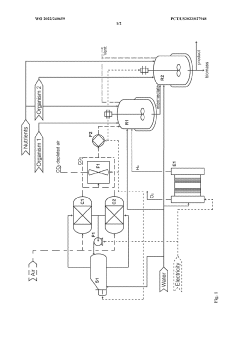
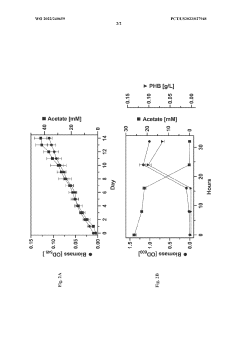
- An integrated modular system combining direct air capture using functionalized metal-organic frameworks or covalent organic frameworks with bioelectrochemical conversion by autotrophic microorganisms to produce high-purity CO2, which is then converted into value-added products like biopolymers, fuels, and chemicals, utilizing renewable energy sources to reduce carbon footprint and land occupation.
Policy Framework for DAC Standards and Pricing
The establishment of a comprehensive policy framework for Direct Air Capture (DAC) standards and pricing represents a critical foundation for addressing the current fragmentation in the industry. Regulatory bodies across major economies are beginning to recognize the need for harmonized approaches that can facilitate technology deployment while ensuring environmental integrity and economic viability.
International coordination mechanisms are emerging through multilateral platforms such as the International Energy Agency's Carbon Capture, Utilisation and Storage Technology Roadmap and the Mission Innovation Carbon Dioxide Removal initiative. These frameworks aim to establish common measurement protocols, verification standards, and lifecycle assessment methodologies that can be adopted across different jurisdictions. The development of ISO standards specifically for DAC technologies is currently underway, focusing on carbon accounting, energy efficiency metrics, and permanence verification.
Carbon pricing mechanisms present both opportunities and challenges for DAC standardization. The integration of DAC credits into existing carbon markets requires robust measurement, reporting, and verification protocols that can ensure additionality and prevent double counting. Current voluntary carbon markets show significant price variations for DAC credits, ranging from $100 to over $1,000 per ton of CO2, highlighting the urgent need for standardized pricing frameworks.
Regulatory approaches vary significantly across regions, with the European Union advancing through its Innovation Fund and Emissions Trading System integration, while the United States focuses on tax credit mechanisms such as the 45Q program. These divergent approaches create complexity for technology developers and investors seeking to scale DAC solutions globally.
Policy frameworks must address several key areas including technology certification processes, grid integration standards for renewable energy requirements, and long-term storage verification protocols. The establishment of clear regulatory pathways for DAC facility permitting and operation is essential for reducing deployment barriers and investment risks.
Future policy development should prioritize the creation of international standards bodies specifically dedicated to DAC technologies, establishment of transparent cost reporting requirements, and development of risk-sharing mechanisms that can support early-stage commercial deployment while maintaining rigorous environmental standards.
International coordination mechanisms are emerging through multilateral platforms such as the International Energy Agency's Carbon Capture, Utilisation and Storage Technology Roadmap and the Mission Innovation Carbon Dioxide Removal initiative. These frameworks aim to establish common measurement protocols, verification standards, and lifecycle assessment methodologies that can be adopted across different jurisdictions. The development of ISO standards specifically for DAC technologies is currently underway, focusing on carbon accounting, energy efficiency metrics, and permanence verification.
Carbon pricing mechanisms present both opportunities and challenges for DAC standardization. The integration of DAC credits into existing carbon markets requires robust measurement, reporting, and verification protocols that can ensure additionality and prevent double counting. Current voluntary carbon markets show significant price variations for DAC credits, ranging from $100 to over $1,000 per ton of CO2, highlighting the urgent need for standardized pricing frameworks.
Regulatory approaches vary significantly across regions, with the European Union advancing through its Innovation Fund and Emissions Trading System integration, while the United States focuses on tax credit mechanisms such as the 45Q program. These divergent approaches create complexity for technology developers and investors seeking to scale DAC solutions globally.
Policy frameworks must address several key areas including technology certification processes, grid integration standards for renewable energy requirements, and long-term storage verification protocols. The establishment of clear regulatory pathways for DAC facility permitting and operation is essential for reducing deployment barriers and investment risks.
Future policy development should prioritize the creation of international standards bodies specifically dedicated to DAC technologies, establishment of transparent cost reporting requirements, and development of risk-sharing mechanisms that can support early-stage commercial deployment while maintaining rigorous environmental standards.
Carbon Credit Verification for DAC Technologies
Carbon credit verification for Direct Air Capture technologies represents a critical component in establishing market confidence and ensuring environmental integrity within the voluntary and compliance carbon markets. The verification process for DAC-generated carbon credits involves multiple layers of validation, from initial project registration through ongoing monitoring and third-party auditing protocols.
The verification framework for DAC technologies typically follows established standards such as the Verified Carbon Standard (VCS) or Gold Standard, adapted specifically for engineered carbon removal methods. These standards require comprehensive documentation of capture rates, energy consumption, storage permanence, and lifecycle emissions accounting. Verification bodies must assess the additionality of DAC projects, ensuring that carbon removal would not have occurred without carbon credit revenue incentives.
Technical verification challenges arise from the need to accurately measure and monitor CO2 capture volumes in real-time. DAC facilities must implement robust measurement, reporting, and verification (MRV) systems that can track atmospheric CO2 intake, processing efficiency, and final storage or utilization pathways. Advanced sensor networks, mass balance calculations, and continuous monitoring systems form the backbone of credible verification protocols.
Third-party verification entities face unique challenges when auditing DAC projects due to the nascent nature of the technology and limited standardized methodologies. Verifiers must possess specialized technical expertise to evaluate complex engineering systems, energy integration approaches, and storage permanence claims. The verification process typically involves on-site inspections, data validation, and assessment of operational procedures against approved methodologies.
Permanence verification remains particularly complex for DAC technologies, especially when captured CO2 is utilized rather than permanently stored. Verification protocols must distinguish between temporary storage, permanent geological sequestration, and utilization pathways that may result in eventual atmospheric release. This requires ongoing monitoring and potential liability mechanisms to address reversal risks.
The integration of blockchain technology and digital monitoring systems is emerging as a solution to enhance verification transparency and reduce costs. Smart contracts can automate certain verification processes, while IoT sensors provide continuous data streams for real-time credit generation and verification, potentially reducing the reliance on periodic third-party audits while maintaining credibility standards.
The verification framework for DAC technologies typically follows established standards such as the Verified Carbon Standard (VCS) or Gold Standard, adapted specifically for engineered carbon removal methods. These standards require comprehensive documentation of capture rates, energy consumption, storage permanence, and lifecycle emissions accounting. Verification bodies must assess the additionality of DAC projects, ensuring that carbon removal would not have occurred without carbon credit revenue incentives.
Technical verification challenges arise from the need to accurately measure and monitor CO2 capture volumes in real-time. DAC facilities must implement robust measurement, reporting, and verification (MRV) systems that can track atmospheric CO2 intake, processing efficiency, and final storage or utilization pathways. Advanced sensor networks, mass balance calculations, and continuous monitoring systems form the backbone of credible verification protocols.
Third-party verification entities face unique challenges when auditing DAC projects due to the nascent nature of the technology and limited standardized methodologies. Verifiers must possess specialized technical expertise to evaluate complex engineering systems, energy integration approaches, and storage permanence claims. The verification process typically involves on-site inspections, data validation, and assessment of operational procedures against approved methodologies.
Permanence verification remains particularly complex for DAC technologies, especially when captured CO2 is utilized rather than permanently stored. Verification protocols must distinguish between temporary storage, permanent geological sequestration, and utilization pathways that may result in eventual atmospheric release. This requires ongoing monitoring and potential liability mechanisms to address reversal risks.
The integration of blockchain technology and digital monitoring systems is emerging as a solution to enhance verification transparency and reduce costs. Smart contracts can automate certain verification processes, while IoT sensors provide continuous data streams for real-time credit generation and verification, potentially reducing the reliance on periodic third-party audits while maintaining credibility standards.
Unlock deeper insights with Patsnap Eureka Quick Research — get a full tech report to explore trends and direct your research. Try now!
Generate Your Research Report Instantly with AI Agent
Supercharge your innovation with Patsnap Eureka AI Agent Platform!