

Diverse Frame Adjustments Impacting Scene Playability Feedback
MAR 30, 20269 MIN READ
Generate Your Research Report Instantly with AI Agent
PatSnap Eureka helps you evaluate technical feasibility & market potential.
Frame Adjustment Technology Background and Objectives
Frame adjustment technology has emerged as a critical component in modern interactive media systems, fundamentally addressing the complex relationship between visual presentation parameters and user engagement metrics. This technology encompasses a broad spectrum of methodologies designed to dynamically modify frame-level characteristics including resolution, refresh rate, color depth, and temporal synchronization to optimize user experience across diverse hardware configurations and network conditions.
The historical development of frame adjustment technology traces back to early video compression standards in the 1990s, where basic frame rate adaptation was primarily driven by bandwidth limitations. The evolution accelerated significantly with the advent of real-time gaming applications and streaming media platforms, necessitating more sophisticated approaches to maintain visual quality while ensuring responsive user interactions. Contemporary implementations have expanded beyond simple rate adjustments to include intelligent content-aware modifications that consider scene complexity, motion vectors, and perceptual importance.
Current technological trends indicate a paradigm shift toward predictive frame adjustment systems that leverage machine learning algorithms to anticipate optimal settings based on content analysis and user behavior patterns. These systems demonstrate particular relevance in gaming environments, virtual reality applications, and interactive streaming platforms where maintaining consistent playability while adapting to varying system capabilities represents a fundamental challenge.
The primary objective of advancing frame adjustment technology centers on achieving seamless balance between visual fidelity and interactive responsiveness. This involves developing algorithms capable of real-time decision making regarding frame parameter modifications while maintaining perceptual quality standards that preserve user immersion and engagement.
Secondary objectives include establishing standardized metrics for quantifying scene playability impact, creating adaptive frameworks that can operate across heterogeneous device ecosystems, and implementing feedback mechanisms that enable continuous optimization based on user interaction data. These technological goals collectively aim to eliminate the traditional trade-offs between visual quality and system performance, enabling more inclusive and accessible interactive media experiences across diverse user scenarios and hardware configurations.
The historical development of frame adjustment technology traces back to early video compression standards in the 1990s, where basic frame rate adaptation was primarily driven by bandwidth limitations. The evolution accelerated significantly with the advent of real-time gaming applications and streaming media platforms, necessitating more sophisticated approaches to maintain visual quality while ensuring responsive user interactions. Contemporary implementations have expanded beyond simple rate adjustments to include intelligent content-aware modifications that consider scene complexity, motion vectors, and perceptual importance.
Current technological trends indicate a paradigm shift toward predictive frame adjustment systems that leverage machine learning algorithms to anticipate optimal settings based on content analysis and user behavior patterns. These systems demonstrate particular relevance in gaming environments, virtual reality applications, and interactive streaming platforms where maintaining consistent playability while adapting to varying system capabilities represents a fundamental challenge.
The primary objective of advancing frame adjustment technology centers on achieving seamless balance between visual fidelity and interactive responsiveness. This involves developing algorithms capable of real-time decision making regarding frame parameter modifications while maintaining perceptual quality standards that preserve user immersion and engagement.
Secondary objectives include establishing standardized metrics for quantifying scene playability impact, creating adaptive frameworks that can operate across heterogeneous device ecosystems, and implementing feedback mechanisms that enable continuous optimization based on user interaction data. These technological goals collectively aim to eliminate the traditional trade-offs between visual quality and system performance, enabling more inclusive and accessible interactive media experiences across diverse user scenarios and hardware configurations.
Market Demand for Dynamic Scene Playability Solutions
The gaming and interactive media industry is experiencing unprecedented growth in demand for sophisticated scene playability solutions, driven by evolving consumer expectations for immersive and responsive digital experiences. Modern users increasingly expect real-time environmental adaptability that responds intelligently to their actions and preferences, creating a substantial market opportunity for dynamic scene adjustment technologies.
Enterprise applications represent a rapidly expanding segment, particularly in training simulations, virtual collaboration platforms, and digital twin environments. Organizations across aerospace, healthcare, and manufacturing sectors require adaptive scene systems that can modify environmental parameters based on user performance metrics and learning objectives. This demand stems from the proven effectiveness of personalized training environments in improving skill acquisition and retention rates.
The entertainment sector continues to drive significant market demand, with game developers seeking technologies that can dynamically adjust scene complexity, lighting conditions, and interactive elements based on player behavior patterns. Streaming platforms and content creators are also exploring adaptive scene technologies to enhance viewer engagement through personalized visual experiences that respond to audience preferences and viewing contexts.
Architectural visualization and real estate industries present emerging market opportunities, where clients demand interactive environments that can showcase properties under various conditions and configurations. The ability to adjust lighting, weather, seasonal effects, and furnishing options in real-time has become a competitive differentiator in property marketing and design consultation services.
Educational technology represents another growing market segment, with institutions seeking adaptive learning environments that can modify scene complexity and visual elements based on student comprehension levels and learning styles. The shift toward immersive educational experiences has created demand for systems that can seamlessly adjust environmental factors to optimize learning outcomes.
Market research indicates strong growth potential in automotive and transportation sectors, where manufacturers require dynamic scene systems for vehicle testing simulations and customer experience centers. The ability to simulate diverse driving conditions and environmental scenarios while maintaining optimal system performance has become essential for product development and marketing applications.
The convergence of artificial intelligence and real-time rendering technologies is expanding market opportunities across multiple verticals, creating demand for integrated solutions that can intelligently manage scene adjustments while maintaining consistent playability standards across diverse hardware platforms and user scenarios.
Enterprise applications represent a rapidly expanding segment, particularly in training simulations, virtual collaboration platforms, and digital twin environments. Organizations across aerospace, healthcare, and manufacturing sectors require adaptive scene systems that can modify environmental parameters based on user performance metrics and learning objectives. This demand stems from the proven effectiveness of personalized training environments in improving skill acquisition and retention rates.
The entertainment sector continues to drive significant market demand, with game developers seeking technologies that can dynamically adjust scene complexity, lighting conditions, and interactive elements based on player behavior patterns. Streaming platforms and content creators are also exploring adaptive scene technologies to enhance viewer engagement through personalized visual experiences that respond to audience preferences and viewing contexts.
Architectural visualization and real estate industries present emerging market opportunities, where clients demand interactive environments that can showcase properties under various conditions and configurations. The ability to adjust lighting, weather, seasonal effects, and furnishing options in real-time has become a competitive differentiator in property marketing and design consultation services.
Educational technology represents another growing market segment, with institutions seeking adaptive learning environments that can modify scene complexity and visual elements based on student comprehension levels and learning styles. The shift toward immersive educational experiences has created demand for systems that can seamlessly adjust environmental factors to optimize learning outcomes.
Market research indicates strong growth potential in automotive and transportation sectors, where manufacturers require dynamic scene systems for vehicle testing simulations and customer experience centers. The ability to simulate diverse driving conditions and environmental scenarios while maintaining optimal system performance has become essential for product development and marketing applications.
The convergence of artificial intelligence and real-time rendering technologies is expanding market opportunities across multiple verticals, creating demand for integrated solutions that can intelligently manage scene adjustments while maintaining consistent playability standards across diverse hardware platforms and user scenarios.
Current State of Frame Adjustment Impact on Scene Feedback
The current landscape of frame adjustment technologies and their impact on scene feedback mechanisms reveals a complex ecosystem of solutions addressing diverse performance optimization challenges. Contemporary gaming and interactive media platforms have developed sophisticated systems that dynamically modify frame rates, resolution scaling, and temporal adjustments to maintain optimal user experience across varying hardware configurations and network conditions.
Modern frame adjustment implementations primarily operate through adaptive rendering pipelines that continuously monitor system performance metrics and user interaction patterns. These systems employ real-time analysis of GPU utilization, CPU load, memory bandwidth, and thermal constraints to determine optimal frame delivery strategies. The feedback mechanisms integrate multiple data streams including frame time consistency, input latency measurements, and visual quality assessments to create comprehensive scene playability profiles.
Current technical approaches demonstrate significant variation in their methodologies for correlating frame adjustments with scene feedback quality. Hardware-accelerated solutions leverage dedicated processing units to implement variable rate shading, temporal upsampling, and dynamic resolution scaling while maintaining consistent feedback responsiveness. Software-based implementations focus on algorithmic optimization of frame pacing, predictive rendering, and adaptive quality scaling to achieve similar objectives through computational efficiency improvements.
The integration challenges facing contemporary systems primarily stem from the complex interdependencies between frame adjustment parameters and scene feedback accuracy. Existing solutions struggle with maintaining consistent haptic feedback timing when frame rates fluctuate, preserving audio-visual synchronization during resolution transitions, and ensuring predictable input response characteristics across diverse adjustment scenarios. These technical constraints significantly impact the overall user experience quality and system reliability.
Industry analysis reveals that current implementations exhibit notable performance disparities across different application domains. Gaming applications demonstrate more mature frame adjustment capabilities with sophisticated feedback integration, while virtual reality and augmented reality platforms continue to face substantial technical hurdles in maintaining immersive experience quality during dynamic adjustments. Professional visualization and simulation environments require even more stringent performance criteria, often necessitating specialized hardware solutions to achieve acceptable feedback consistency.
The technological maturity assessment indicates that while fundamental frame adjustment mechanisms have reached commercial viability, the sophisticated integration of diverse adjustment strategies with comprehensive scene feedback systems remains an active area of development, with significant opportunities for innovation in predictive algorithms, machine learning-based optimization, and cross-platform compatibility solutions.
Modern frame adjustment implementations primarily operate through adaptive rendering pipelines that continuously monitor system performance metrics and user interaction patterns. These systems employ real-time analysis of GPU utilization, CPU load, memory bandwidth, and thermal constraints to determine optimal frame delivery strategies. The feedback mechanisms integrate multiple data streams including frame time consistency, input latency measurements, and visual quality assessments to create comprehensive scene playability profiles.
Current technical approaches demonstrate significant variation in their methodologies for correlating frame adjustments with scene feedback quality. Hardware-accelerated solutions leverage dedicated processing units to implement variable rate shading, temporal upsampling, and dynamic resolution scaling while maintaining consistent feedback responsiveness. Software-based implementations focus on algorithmic optimization of frame pacing, predictive rendering, and adaptive quality scaling to achieve similar objectives through computational efficiency improvements.
The integration challenges facing contemporary systems primarily stem from the complex interdependencies between frame adjustment parameters and scene feedback accuracy. Existing solutions struggle with maintaining consistent haptic feedback timing when frame rates fluctuate, preserving audio-visual synchronization during resolution transitions, and ensuring predictable input response characteristics across diverse adjustment scenarios. These technical constraints significantly impact the overall user experience quality and system reliability.
Industry analysis reveals that current implementations exhibit notable performance disparities across different application domains. Gaming applications demonstrate more mature frame adjustment capabilities with sophisticated feedback integration, while virtual reality and augmented reality platforms continue to face substantial technical hurdles in maintaining immersive experience quality during dynamic adjustments. Professional visualization and simulation environments require even more stringent performance criteria, often necessitating specialized hardware solutions to achieve acceptable feedback consistency.
The technological maturity assessment indicates that while fundamental frame adjustment mechanisms have reached commercial viability, the sophisticated integration of diverse adjustment strategies with comprehensive scene feedback systems remains an active area of development, with significant opportunities for innovation in predictive algorithms, machine learning-based optimization, and cross-platform compatibility solutions.
Existing Frame Adjustment Solutions for Scene Playability
01 Dynamic frame rate adjustment for gameplay optimization
Systems and methods for dynamically adjusting frame rates during gameplay to optimize performance and visual quality. The adjustment can be based on scene complexity, computational load, or user preferences to maintain smooth playability while managing system resources efficiently. This approach ensures consistent gaming experience across varying scene demands.- Dynamic frame rate adjustment for gameplay optimization: Systems and methods for dynamically adjusting frame rates during gameplay to optimize performance and visual quality. The adjustment can be based on scene complexity, computational load, or user preferences. This approach ensures smooth gameplay by adapting rendering parameters in real-time to maintain consistent performance across varying game scenarios.
- Adaptive resolution scaling based on scene complexity: Techniques for automatically adjusting display resolution or rendering quality based on the complexity of the current scene. The system analyzes scene elements and computational requirements to scale resolution up or down, maintaining playability while optimizing visual fidelity. This ensures that demanding scenes remain playable without sacrificing overall game experience.
- Field of view and camera perspective adjustments: Methods for adjusting camera angles, field of view, and perspective parameters to enhance scene playability and user experience. These adjustments can be automatic or user-controlled, allowing for better visibility of game elements and improved spatial awareness. The techniques help prevent visual obstruction and optimize viewing angles for different gameplay situations.
- Level of detail management for performance optimization: Systems for managing level of detail in rendered scenes by adjusting geometric complexity, texture quality, and object rendering based on distance and importance. This approach maintains playability by reducing computational load for distant or less important objects while preserving detail for critical gameplay elements. The technique balances visual quality with performance requirements.
- User interface scaling and accessibility adjustments: Techniques for adjusting user interface elements, including menus, controls, and display overlays, to accommodate different screen sizes, resolutions, and accessibility needs. These adjustments ensure that interface elements remain readable and interactive across various display configurations, enhancing overall playability and user experience regardless of hardware specifications.
02 Scene complexity analysis for frame rendering
Techniques for analyzing scene complexity to determine appropriate frame rendering parameters. The analysis considers factors such as object count, texture detail, lighting effects, and geometric complexity to adjust rendering quality and frame timing. This enables adaptive performance management based on real-time scene characteristics.Expand Specific Solutions03 Adaptive resolution scaling for playability
Methods for dynamically scaling resolution and frame parameters to maintain playability during demanding scenes. The system automatically adjusts rendering resolution, level of detail, and frame timing based on performance metrics to prevent frame drops and maintain responsive gameplay. This balances visual fidelity with performance requirements.Expand Specific Solutions04 Predictive frame adjustment based on scene transitions
Systems that predict upcoming scene changes and preemptively adjust frame parameters to ensure smooth transitions. The prediction algorithms analyze scene data, player behavior, and historical patterns to optimize frame timing and resource allocation before complex scenes are rendered. This proactive approach minimizes performance disruptions.Expand Specific Solutions05 User-configurable frame adjustment settings
Interfaces and systems allowing users to configure frame adjustment preferences for different gameplay scenarios. Users can set priorities between visual quality and performance, define custom adjustment profiles for specific scene types, and establish thresholds for automatic adjustments. This provides personalized control over the balance between graphics quality and playability.Expand Specific Solutions
Key Players in Frame Adjustment and Scene Optimization Industry
The competitive landscape for diverse frame adjustments impacting scene playability feedback represents a rapidly evolving sector within the gaming and interactive entertainment industry. The market is currently in a growth phase, driven by increasing demand for enhanced user experiences and real-time performance optimization. Major players include established gaming giants like Tencent Technology, NetEase, Sony Group Corp., Nintendo Co. Ltd., and Microsoft Corp., alongside specialized developers such as Cygames Inc. and Shanghai Lilith Technology. The technology demonstrates moderate to high maturity levels, with companies like Bandai Namco Entertainment and Sega Group Corp. implementing advanced frame adjustment systems. Chinese market leaders including Beijing Zitiao Network Technology and Perfect World Software are particularly active in developing sophisticated playability feedback mechanisms, indicating strong regional competition and innovation in this technical domain.
NetEase (Hangzhou) Network Co. Ltd.
Technical Solution: NetEase has implemented adaptive scene management systems that dynamically adjust environmental complexity based on player proximity and interaction likelihood. Their technology uses spatial partitioning algorithms to identify critical gameplay areas and allocate rendering resources accordingly. The system can reduce non-essential visual elements by up to 40% during intense gameplay moments while preserving core interactive elements. They employ real-time performance monitoring that triggers automatic adjustments to particle density, animation quality, and environmental detail levels to maintain target frame rates across diverse hardware configurations.
Strengths: Strong mobile optimization expertise, effective resource management for lower-end devices. Weaknesses: Solutions primarily tailored for mobile platforms, may lack advanced features for high-end gaming systems.
Tencent Technology (Shenzhen) Co., Ltd.
Technical Solution: Tencent has developed comprehensive frame adjustment systems that utilize machine learning algorithms to analyze player behavior patterns and automatically adjust scene complexity based on real-time performance metrics. Their technology incorporates dynamic level-of-detail (LOD) systems that can reduce polygon counts by up to 60% while maintaining visual quality. The system monitors frame rate fluctuations and implements predictive adjustments to prevent performance drops before they impact gameplay experience. Additionally, they employ adaptive rendering techniques that modify lighting, shadow quality, and particle effects based on device capabilities and current scene load.
Strengths: Extensive user base for testing and optimization, strong AI capabilities for predictive adjustments. Weaknesses: Complex implementation requiring significant computational overhead for real-time analysis.
Core Innovations in Dynamic Frame Scene Feedback Systems
Dynamic frame system
PatentInactiveUS7951000B2
Innovation
- A dynamic approach is implemented by dividing the game screen into multiple frames, where one frame contains interactive content and others display non-interactive cutscenes, with the ability for cutscenes to evolve into playable frames, using dynamic borders and animations, ensuring seamless integration with gameplay.


System and Method for Identifying, Analyzing, and Reporting on Players in a Game from Video
PatentActiveUS20170154222A1
Innovation
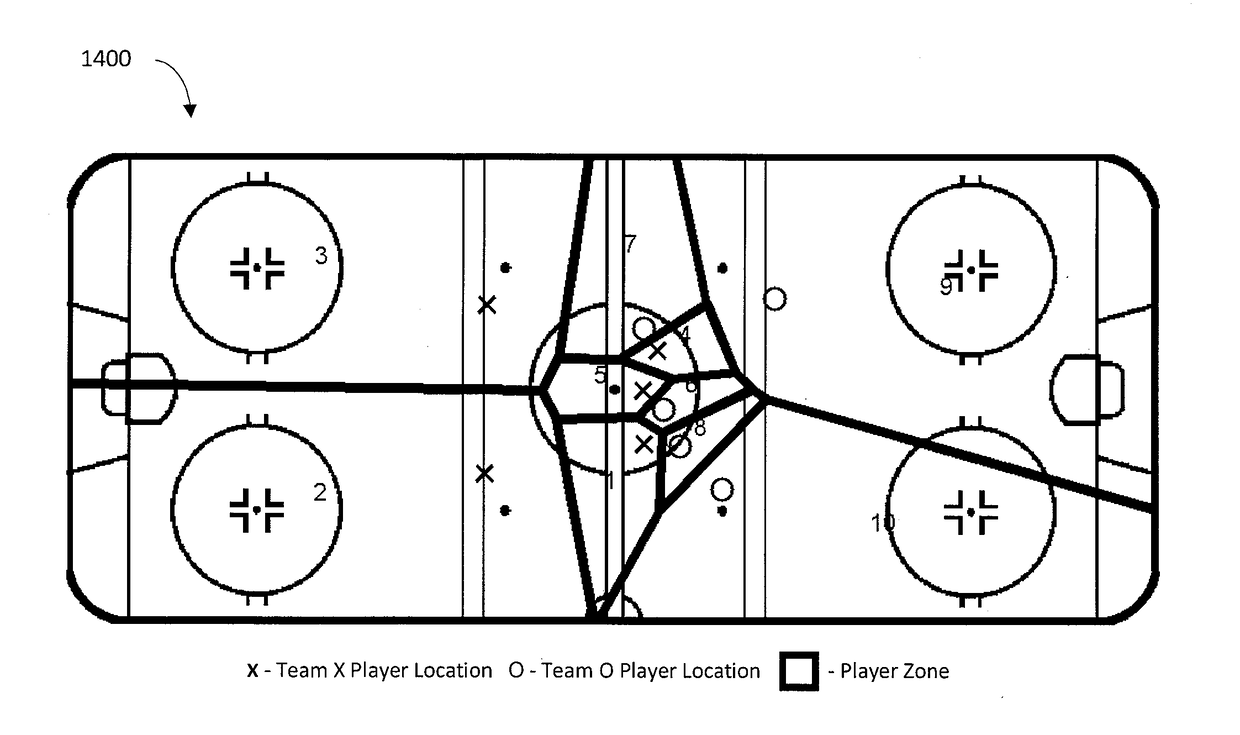
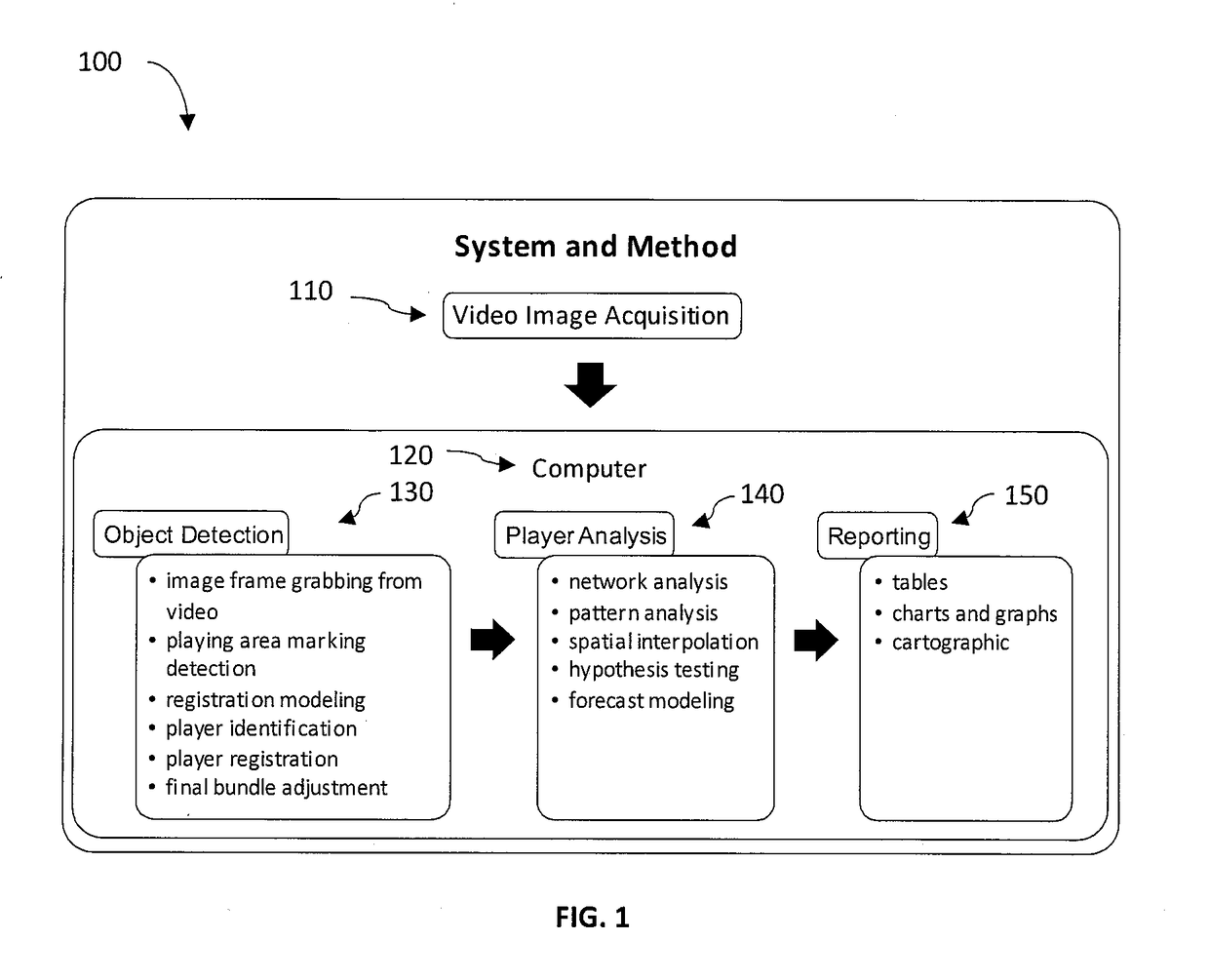
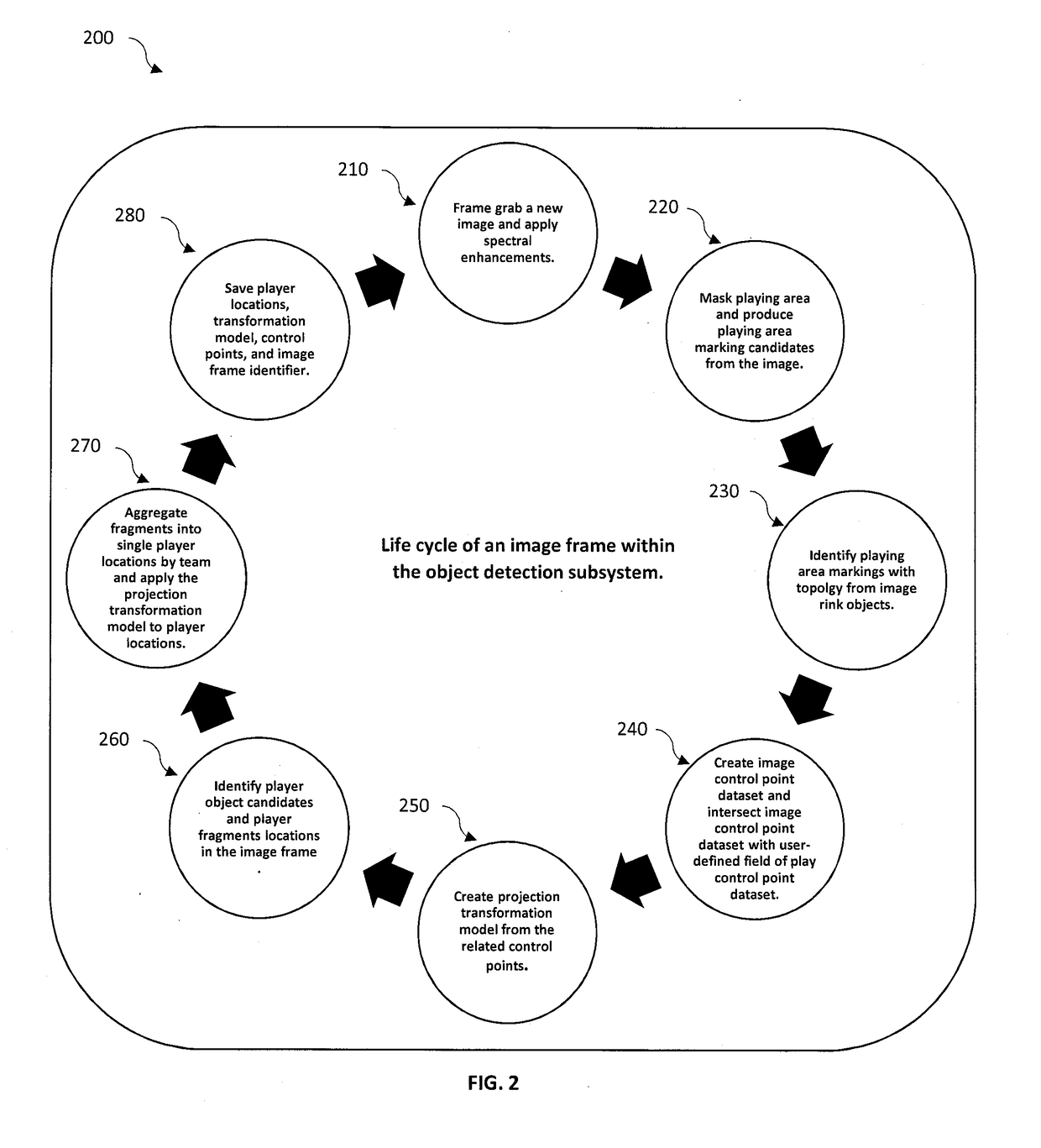
- A computer-implemented method utilizing multispectral ratios, multispectral indices, and transformations to create a field of play mask, identify player candidates, and project them onto a common XY Cartesian plane, using ANN models and Radon transforms for accurate player location registration and aggregation, thereby avoiding the need for multiple cameras or specialized spectral regions.

Performance Standards for Interactive Scene Rendering
Interactive scene rendering performance standards have evolved significantly to address the complex relationship between frame adjustments and scene playability feedback. These standards establish quantitative metrics that define acceptable performance thresholds for real-time interactive environments, particularly focusing on how dynamic frame modifications impact user experience and system responsiveness.
The fundamental performance benchmark centers on maintaining consistent frame rates above 60 FPS for high-fidelity interactive scenes, with frame time variance not exceeding 16.67 milliseconds. This standard becomes critical when implementing diverse frame adjustments, as temporal inconsistencies can severely compromise playability feedback mechanisms. Advanced rendering pipelines must accommodate frame rate scaling between 30-120 FPS while preserving visual coherence and interactive responsiveness.
Latency standards define maximum acceptable delays between user input and visual feedback at 20 milliseconds for competitive applications and 50 milliseconds for general interactive content. When frame adjustments occur dynamically, these latency thresholds must remain stable to prevent degradation in scene playability. Motion-to-photon latency becomes particularly crucial in VR environments, where standards mandate sub-20ms response times to prevent motion sickness and maintain immersion.
Memory bandwidth utilization standards specify that frame buffer operations should not exceed 80% of available bandwidth during peak adjustment periods. This ensures sufficient headroom for unexpected frame complexity variations while maintaining stable playability feedback. GPU memory allocation standards require maintaining at least 15% free VRAM to handle dynamic frame adjustment scenarios without performance degradation.
Quality assurance metrics establish minimum visual fidelity thresholds that must be preserved during frame adjustments. These include maintaining texture resolution above 1024x1024 for primary scene elements, preserving anti-aliasing quality at 4x MSAA equivalent, and ensuring shadow map resolution remains above 2048x2048 for primary light sources. Adaptive quality scaling must operate within these bounds to maintain acceptable scene playability.
Thermal and power consumption standards limit GPU utilization to 85% sustained load to prevent thermal throttling during intensive frame adjustment operations. This standard ensures consistent performance delivery without hardware-induced frame rate fluctuations that could impact playability feedback systems.
The fundamental performance benchmark centers on maintaining consistent frame rates above 60 FPS for high-fidelity interactive scenes, with frame time variance not exceeding 16.67 milliseconds. This standard becomes critical when implementing diverse frame adjustments, as temporal inconsistencies can severely compromise playability feedback mechanisms. Advanced rendering pipelines must accommodate frame rate scaling between 30-120 FPS while preserving visual coherence and interactive responsiveness.
Latency standards define maximum acceptable delays between user input and visual feedback at 20 milliseconds for competitive applications and 50 milliseconds for general interactive content. When frame adjustments occur dynamically, these latency thresholds must remain stable to prevent degradation in scene playability. Motion-to-photon latency becomes particularly crucial in VR environments, where standards mandate sub-20ms response times to prevent motion sickness and maintain immersion.
Memory bandwidth utilization standards specify that frame buffer operations should not exceed 80% of available bandwidth during peak adjustment periods. This ensures sufficient headroom for unexpected frame complexity variations while maintaining stable playability feedback. GPU memory allocation standards require maintaining at least 15% free VRAM to handle dynamic frame adjustment scenarios without performance degradation.
Quality assurance metrics establish minimum visual fidelity thresholds that must be preserved during frame adjustments. These include maintaining texture resolution above 1024x1024 for primary scene elements, preserving anti-aliasing quality at 4x MSAA equivalent, and ensuring shadow map resolution remains above 2048x2048 for primary light sources. Adaptive quality scaling must operate within these bounds to maintain acceptable scene playability.
Thermal and power consumption standards limit GPU utilization to 85% sustained load to prevent thermal throttling during intensive frame adjustment operations. This standard ensures consistent performance delivery without hardware-induced frame rate fluctuations that could impact playability feedback systems.
User Experience Considerations in Frame-Scene Integration
User experience considerations in frame-scene integration represent a critical dimension that directly influences the effectiveness and adoption of diverse frame adjustment technologies. The seamless integration between dynamic frame modifications and scene content requires careful attention to cognitive load management, visual comfort, and interactive responsiveness to ensure optimal user engagement.
The primary consideration involves maintaining visual coherence during frame transitions. Users demonstrate heightened sensitivity to abrupt changes in aspect ratios, resolution scaling, or frame positioning that can disrupt their immersive experience. Research indicates that gradual transitions with appropriate easing functions significantly reduce user discomfort and maintain engagement levels. The integration process must account for human visual perception limitations, particularly regarding motion sensitivity and adaptation time requirements.
Cognitive load represents another fundamental factor in successful frame-scene integration. Complex frame adjustments that require users to constantly readjust their focus or reorient their understanding of spatial relationships can lead to fatigue and reduced performance. Effective integration strategies employ predictive algorithms that anticipate user needs and implement frame changes proactively rather than reactively, minimizing the mental effort required for adaptation.
Accessibility considerations play an increasingly important role in frame-scene integration design. Users with visual impairments, motion sensitivity disorders, or cognitive processing differences require specialized accommodation strategies. This includes implementing customizable transition speeds, providing alternative visual cues, and ensuring compatibility with assistive technologies. Universal design principles guide the development of inclusive frame adjustment systems that maintain functionality across diverse user populations.
Interactive feedback mechanisms constitute essential components of user-centered frame integration. Real-time responsiveness to user preferences, gesture inputs, and environmental context enables personalized experiences that adapt to individual usage patterns. Advanced systems incorporate machine learning algorithms to predict optimal frame configurations based on user behavior history and current task requirements.
Performance optimization directly impacts user satisfaction in frame-scene integration scenarios. Latency reduction, smooth rendering, and efficient resource utilization ensure that frame adjustments enhance rather than hinder the user experience. Cross-platform compatibility and device-specific optimization strategies address the diverse hardware capabilities and display characteristics encountered in real-world deployment scenarios.
The primary consideration involves maintaining visual coherence during frame transitions. Users demonstrate heightened sensitivity to abrupt changes in aspect ratios, resolution scaling, or frame positioning that can disrupt their immersive experience. Research indicates that gradual transitions with appropriate easing functions significantly reduce user discomfort and maintain engagement levels. The integration process must account for human visual perception limitations, particularly regarding motion sensitivity and adaptation time requirements.
Cognitive load represents another fundamental factor in successful frame-scene integration. Complex frame adjustments that require users to constantly readjust their focus or reorient their understanding of spatial relationships can lead to fatigue and reduced performance. Effective integration strategies employ predictive algorithms that anticipate user needs and implement frame changes proactively rather than reactively, minimizing the mental effort required for adaptation.
Accessibility considerations play an increasingly important role in frame-scene integration design. Users with visual impairments, motion sensitivity disorders, or cognitive processing differences require specialized accommodation strategies. This includes implementing customizable transition speeds, providing alternative visual cues, and ensuring compatibility with assistive technologies. Universal design principles guide the development of inclusive frame adjustment systems that maintain functionality across diverse user populations.
Interactive feedback mechanisms constitute essential components of user-centered frame integration. Real-time responsiveness to user preferences, gesture inputs, and environmental context enables personalized experiences that adapt to individual usage patterns. Advanced systems incorporate machine learning algorithms to predict optimal frame configurations based on user behavior history and current task requirements.
Performance optimization directly impacts user satisfaction in frame-scene integration scenarios. Latency reduction, smooth rendering, and efficient resource utilization ensure that frame adjustments enhance rather than hinder the user experience. Cross-platform compatibility and device-specific optimization strategies address the diverse hardware capabilities and display characteristics encountered in real-world deployment scenarios.
Unlock deeper insights with PatSnap Eureka Quick Research — get a full tech report to explore trends and direct your research. Try now!
Generate Your Research Report Instantly with AI Agent
Supercharge your innovation with PatSnap Eureka AI Agent Platform!