Dry Room Technology Vs. Pressurized Air Systems: Control Dynamics Explained
MAY 11, 20269 MIN READ
Generate Your Research Report Instantly with AI Agent
PatSnap Eureka helps you evaluate technical feasibility & market potential.
Dry Room vs Pressurized Air Technology Background and Objectives
Dry room technology and pressurized air systems represent two distinct approaches to environmental control in manufacturing environments, each addressing critical challenges in moisture management and contamination prevention. These technologies have evolved from fundamental industrial needs to maintain precise atmospheric conditions for sensitive manufacturing processes, particularly in electronics, pharmaceuticals, and advanced materials production.
The historical development of dry room technology traces back to the semiconductor industry's expansion in the 1970s and 1980s, when manufacturers recognized that ambient humidity could severely impact product quality and yield rates. Early implementations focused on creating controlled low-humidity environments using desiccant-based dehumidification systems. Concurrently, pressurized air systems emerged from cleanroom technology, emphasizing positive pressure differentials to prevent external contaminant infiltration while maintaining controlled atmospheric conditions.
The evolution of these technologies has been driven by increasingly stringent manufacturing requirements and the miniaturization of electronic components. Modern dry rooms typically maintain relative humidity levels below 1% RH, while pressurized systems focus on maintaining precise pressure differentials ranging from 0.03 to 0.05 inches of water column above ambient conditions. Both approaches have incorporated advanced control systems, real-time monitoring capabilities, and energy optimization features to meet contemporary industrial demands.
Current technological objectives center on achieving superior control dynamics that ensure rapid response to environmental disturbances while maintaining energy efficiency. For dry room technology, primary goals include minimizing moisture ingress recovery time, optimizing desiccant regeneration cycles, and integrating predictive maintenance capabilities. The target specifications typically involve maintaining dew points below -40°C with recovery times under 30 minutes following door openings or equipment cycling.
Pressurized air system objectives focus on maintaining consistent pressure differentials across multiple zones while minimizing energy consumption through variable air volume controls. Advanced implementations target pressure stability within ±0.002 inches of water column while incorporating cascade pressure control across interconnected spaces. Integration with building management systems enables predictive control algorithms that anticipate disturbances and preemptively adjust system parameters.
The convergence of these technologies represents an emerging objective where hybrid systems combine moisture control with pressure management. Such integrated approaches aim to optimize both humidity and pressure parameters simultaneously, potentially offering superior performance for applications requiring dual environmental control. Future development targets include autonomous system operation, machine learning-based optimization, and seamless integration with Industry 4.0 manufacturing ecosystems.
The historical development of dry room technology traces back to the semiconductor industry's expansion in the 1970s and 1980s, when manufacturers recognized that ambient humidity could severely impact product quality and yield rates. Early implementations focused on creating controlled low-humidity environments using desiccant-based dehumidification systems. Concurrently, pressurized air systems emerged from cleanroom technology, emphasizing positive pressure differentials to prevent external contaminant infiltration while maintaining controlled atmospheric conditions.
The evolution of these technologies has been driven by increasingly stringent manufacturing requirements and the miniaturization of electronic components. Modern dry rooms typically maintain relative humidity levels below 1% RH, while pressurized systems focus on maintaining precise pressure differentials ranging from 0.03 to 0.05 inches of water column above ambient conditions. Both approaches have incorporated advanced control systems, real-time monitoring capabilities, and energy optimization features to meet contemporary industrial demands.
Current technological objectives center on achieving superior control dynamics that ensure rapid response to environmental disturbances while maintaining energy efficiency. For dry room technology, primary goals include minimizing moisture ingress recovery time, optimizing desiccant regeneration cycles, and integrating predictive maintenance capabilities. The target specifications typically involve maintaining dew points below -40°C with recovery times under 30 minutes following door openings or equipment cycling.
Pressurized air system objectives focus on maintaining consistent pressure differentials across multiple zones while minimizing energy consumption through variable air volume controls. Advanced implementations target pressure stability within ±0.002 inches of water column while incorporating cascade pressure control across interconnected spaces. Integration with building management systems enables predictive control algorithms that anticipate disturbances and preemptively adjust system parameters.
The convergence of these technologies represents an emerging objective where hybrid systems combine moisture control with pressure management. Such integrated approaches aim to optimize both humidity and pressure parameters simultaneously, potentially offering superior performance for applications requiring dual environmental control. Future development targets include autonomous system operation, machine learning-based optimization, and seamless integration with Industry 4.0 manufacturing ecosystems.
Market Demand Analysis for Controlled Environment Systems
The global controlled environment systems market demonstrates robust growth driven by increasing demands across multiple industrial sectors. Manufacturing facilities, particularly in electronics, pharmaceuticals, and precision engineering, require stringent environmental controls to maintain product quality and operational efficiency. The semiconductor industry represents one of the most significant demand drivers, where moisture-sensitive components necessitate ultra-low humidity environments that dry room technology can effectively provide.
Pharmaceutical and biotechnology sectors exhibit substantial market demand for controlled environment solutions, driven by regulatory compliance requirements and product integrity concerns. These industries require precise control over temperature, humidity, and contamination levels throughout manufacturing and storage processes. The growing emphasis on biologics and personalized medicine further amplifies the need for sophisticated environmental control systems.
The automotive industry increasingly demands controlled environments for advanced manufacturing processes, particularly in electric vehicle battery production and precision component assembly. Lithium-ion battery manufacturing requires extremely low moisture levels to prevent degradation and safety hazards, creating substantial opportunities for dry room technology applications.
Data centers and telecommunications infrastructure represent emerging high-growth segments for controlled environment systems. As digital transformation accelerates globally, the need for reliable environmental control in mission-critical facilities continues to expand. These applications typically favor pressurized air systems for their ability to maintain consistent conditions across large spaces while providing effective contamination control.
Food and beverage processing industries demonstrate steady demand for controlled environment solutions, driven by food safety regulations and quality preservation requirements. The pharmaceutical-grade food processing segment particularly values the precision control capabilities offered by advanced environmental systems.
Regional market dynamics reveal strong growth in Asia-Pacific markets, driven by expanding manufacturing capabilities and increasing quality standards. North American and European markets show mature demand patterns with emphasis on system upgrades and energy efficiency improvements. The market trend indicates a shift toward integrated solutions that combine multiple environmental control technologies to optimize performance and operational costs.
Market research indicates that end-users increasingly prioritize energy efficiency, operational flexibility, and real-time monitoring capabilities when selecting controlled environment systems. This trend drives innovation in both dry room technology and pressurized air systems, with manufacturers focusing on developing hybrid solutions that leverage the advantages of both approaches.
Pharmaceutical and biotechnology sectors exhibit substantial market demand for controlled environment solutions, driven by regulatory compliance requirements and product integrity concerns. These industries require precise control over temperature, humidity, and contamination levels throughout manufacturing and storage processes. The growing emphasis on biologics and personalized medicine further amplifies the need for sophisticated environmental control systems.
The automotive industry increasingly demands controlled environments for advanced manufacturing processes, particularly in electric vehicle battery production and precision component assembly. Lithium-ion battery manufacturing requires extremely low moisture levels to prevent degradation and safety hazards, creating substantial opportunities for dry room technology applications.
Data centers and telecommunications infrastructure represent emerging high-growth segments for controlled environment systems. As digital transformation accelerates globally, the need for reliable environmental control in mission-critical facilities continues to expand. These applications typically favor pressurized air systems for their ability to maintain consistent conditions across large spaces while providing effective contamination control.
Food and beverage processing industries demonstrate steady demand for controlled environment solutions, driven by food safety regulations and quality preservation requirements. The pharmaceutical-grade food processing segment particularly values the precision control capabilities offered by advanced environmental systems.
Regional market dynamics reveal strong growth in Asia-Pacific markets, driven by expanding manufacturing capabilities and increasing quality standards. North American and European markets show mature demand patterns with emphasis on system upgrades and energy efficiency improvements. The market trend indicates a shift toward integrated solutions that combine multiple environmental control technologies to optimize performance and operational costs.
Market research indicates that end-users increasingly prioritize energy efficiency, operational flexibility, and real-time monitoring capabilities when selecting controlled environment systems. This trend drives innovation in both dry room technology and pressurized air systems, with manufacturers focusing on developing hybrid solutions that leverage the advantages of both approaches.
Current Status and Challenges in Humidity Control Technologies
Humidity control technologies have reached a critical juncture where traditional approaches face increasing scrutiny against emerging alternatives. Current market implementations predominantly rely on two distinct paradigms: dry room technology and pressurized air systems, each presenting unique operational characteristics and control dynamics that significantly impact industrial applications.
Dry room technology represents the established standard in moisture-sensitive manufacturing environments, particularly in lithium-ion battery production and pharmaceutical processing. These systems maintain ultra-low humidity levels through continuous dehumidification processes, typically achieving dew points below -40°C. However, the technology faces substantial energy consumption challenges, with dehumidification systems accounting for 30-40% of total facility energy usage in typical installations.
The control dynamics of dry room systems exhibit inherent limitations in response time and precision. Traditional feedback control mechanisms struggle with the thermal mass of large-scale facilities, resulting in response delays of 15-30 minutes for humidity adjustments. This sluggish response creates operational inefficiencies and potential quality control issues in time-sensitive manufacturing processes.
Pressurized air systems have emerged as a compelling alternative, offering superior control dynamics through localized atmospheric management. These systems create positive pressure environments using conditioned air, enabling rapid humidity adjustments within 2-5 minutes. The technology demonstrates particular advantages in applications requiring frequent environmental transitions or zone-specific humidity control.
Current challenges in pressurized air implementations center on maintaining consistent pressure differentials and managing air quality across multiple zones. Contamination control becomes increasingly complex as system scale expands, requiring sophisticated filtration and monitoring infrastructure. Additionally, energy efficiency optimization remains problematic due to continuous air circulation requirements.
Integration challenges persist across both technologies, particularly in hybrid implementations where manufacturers attempt to leverage advantages of each approach. Control system compatibility, sensor accuracy at extreme humidity levels, and maintenance complexity represent ongoing technical barriers. The lack of standardized control protocols further complicates system optimization and performance benchmarking.
Emerging regulatory requirements for energy efficiency and environmental impact are driving technological evolution in both domains. New standards demand improved control precision while reducing overall energy consumption, creating pressure for innovative solutions that transcend traditional technology boundaries.
Dry room technology represents the established standard in moisture-sensitive manufacturing environments, particularly in lithium-ion battery production and pharmaceutical processing. These systems maintain ultra-low humidity levels through continuous dehumidification processes, typically achieving dew points below -40°C. However, the technology faces substantial energy consumption challenges, with dehumidification systems accounting for 30-40% of total facility energy usage in typical installations.
The control dynamics of dry room systems exhibit inherent limitations in response time and precision. Traditional feedback control mechanisms struggle with the thermal mass of large-scale facilities, resulting in response delays of 15-30 minutes for humidity adjustments. This sluggish response creates operational inefficiencies and potential quality control issues in time-sensitive manufacturing processes.
Pressurized air systems have emerged as a compelling alternative, offering superior control dynamics through localized atmospheric management. These systems create positive pressure environments using conditioned air, enabling rapid humidity adjustments within 2-5 minutes. The technology demonstrates particular advantages in applications requiring frequent environmental transitions or zone-specific humidity control.
Current challenges in pressurized air implementations center on maintaining consistent pressure differentials and managing air quality across multiple zones. Contamination control becomes increasingly complex as system scale expands, requiring sophisticated filtration and monitoring infrastructure. Additionally, energy efficiency optimization remains problematic due to continuous air circulation requirements.
Integration challenges persist across both technologies, particularly in hybrid implementations where manufacturers attempt to leverage advantages of each approach. Control system compatibility, sensor accuracy at extreme humidity levels, and maintenance complexity represent ongoing technical barriers. The lack of standardized control protocols further complicates system optimization and performance benchmarking.
Emerging regulatory requirements for energy efficiency and environmental impact are driving technological evolution in both domains. New standards demand improved control precision while reducing overall energy consumption, creating pressure for innovative solutions that transcend traditional technology boundaries.
Current Technical Solutions for Moisture and Pressure Control
01 Humidity control and moisture management systems
Advanced humidity control systems are essential for maintaining optimal dry room conditions. These systems utilize sophisticated sensors and control algorithms to monitor and regulate moisture levels in real-time. The technology includes dehumidification processes, moisture detection mechanisms, and automated adjustment capabilities to ensure consistent environmental conditions within controlled spaces.- Pressure control systems and regulation mechanisms: Advanced pressure control systems utilize sophisticated regulation mechanisms to maintain optimal pressure levels in dry room environments. These systems incorporate feedback loops, sensors, and automated valves to ensure consistent pressure maintenance. The technology focuses on real-time monitoring and adjustment capabilities to respond to environmental changes and operational demands.
- Air filtration and purification systems: Specialized air filtration and purification technologies are essential for maintaining clean environments in dry rooms. These systems employ multi-stage filtration processes, including particle removal, moisture control, and contaminant elimination. The technology integrates various filter types and purification methods to achieve required cleanliness standards.
- Environmental monitoring and control dynamics: Comprehensive environmental monitoring systems provide continuous surveillance of temperature, humidity, and pressure parameters in dry room facilities. These control dynamics incorporate intelligent algorithms and sensor networks to maintain optimal conditions. The technology enables predictive maintenance and automated responses to environmental fluctuations.
- Airflow management and distribution systems: Sophisticated airflow management systems ensure uniform air distribution throughout dry room environments. These technologies optimize air circulation patterns, minimize turbulence, and maintain consistent flow rates. The systems incorporate computational fluid dynamics principles and advanced ductwork designs to achieve optimal performance.
- Automated control interfaces and system integration: Modern dry room facilities utilize integrated control interfaces that combine multiple system components into unified management platforms. These automated systems provide centralized control over pressure, filtration, and environmental parameters. The technology enables remote monitoring, data logging, and system optimization through advanced software interfaces.
02 Pressurized air distribution and flow control mechanisms
Pressurized air systems require precise control mechanisms to maintain optimal pressure differentials and air flow patterns. These systems incorporate variable flow controllers, pressure regulation valves, and distribution networks that ensure uniform air delivery throughout the controlled environment. The technology focuses on maintaining stable pressure conditions while optimizing energy efficiency.Expand Specific Solutions03 Environmental monitoring and sensor integration
Comprehensive monitoring systems integrate multiple sensor technologies to track environmental parameters in real-time. These systems collect data on temperature, humidity, pressure, and air quality to provide feedback for automated control systems. The integration enables predictive maintenance and ensures optimal performance of dry room and pressurized air systems.Expand Specific Solutions04 Automated control systems and dynamic response mechanisms
Dynamic control systems utilize advanced algorithms and feedback loops to automatically adjust system parameters based on real-time conditions. These systems incorporate machine learning capabilities, predictive control strategies, and adaptive response mechanisms to optimize performance while minimizing energy consumption and maintaining precise environmental conditions.Expand Specific Solutions05 Energy efficiency and system optimization technologies
Modern dry room and pressurized air systems incorporate energy-efficient technologies and optimization strategies to reduce operational costs. These include variable speed drives, heat recovery systems, intelligent scheduling algorithms, and power management solutions that maintain performance standards while minimizing energy consumption and environmental impact.Expand Specific Solutions
Major Players in Environmental Control System Industry
The dry room technology versus pressurized air systems market represents a mature industrial sector experiencing steady growth, driven by increasing demand for moisture-sensitive manufacturing processes in electronics, pharmaceuticals, and battery production. The market demonstrates significant scale with established players like Samsung Electronics, LG Electronics, Mitsubishi Electric, and Toyota Motor Corp. leading technological advancement alongside specialized providers such as Weiss Klimatechnik GmbH and Schilling Engineering GmbH. Technology maturity varies across applications, with companies like Robert Bosch GmbH and Hitachi Global Life Solutions advancing AI-integrated climate control systems, while traditional manufacturers like Midea Group and Nabtesco Automotive Corp. focus on conventional pressurized solutions. The competitive landscape shows consolidation around comprehensive environmental control solutions, indicating market evolution toward integrated smart systems rather than standalone technologies.
LG Electronics, Inc.
Technical Solution: LG Electronics implements advanced dry room technology for lithium-ion battery manufacturing, utilizing precise humidity control systems that maintain dew points below -40°C. Their approach combines multi-stage dehumidification with nitrogen purging systems to create ultra-low moisture environments essential for electrode processing. The company's dry room solutions feature integrated monitoring systems that continuously track moisture levels, temperature, and air quality parameters. LG's technology incorporates energy recovery systems to optimize operational costs while maintaining strict environmental controls. Their dry rooms are designed with modular construction allowing for scalable implementation across different production volumes.
Strengths: Proven track record in battery manufacturing with excellent moisture control precision. Weaknesses: High initial capital investment and significant energy consumption requirements.
Ingersoll-Rand Industrial U.S., Inc.
Technical Solution: Ingersoll-Rand specializes in pressurized air systems with advanced control dynamics for industrial applications. Their compressed air solutions feature variable speed drive technology that automatically adjusts compressor output based on demand, achieving energy savings of up to 35%. The company's control systems utilize smart sensors and predictive analytics to optimize pressure regulation and minimize energy waste. Their pressurized air systems incorporate multi-stage filtration and drying technologies to ensure consistent air quality. Ingersoll-Rand's solutions include centralized monitoring capabilities that provide real-time performance data and maintenance scheduling to maximize system reliability and efficiency.
Strengths: Industry-leading energy efficiency and robust control systems with excellent reliability. Weaknesses: Complex installation requirements and higher maintenance costs compared to simpler alternatives.
Key Innovations in Control Dynamics and System Integration
Adaptive optimization for dynamic room pressurization control
PatentActiveUS20170356666A1
Innovation
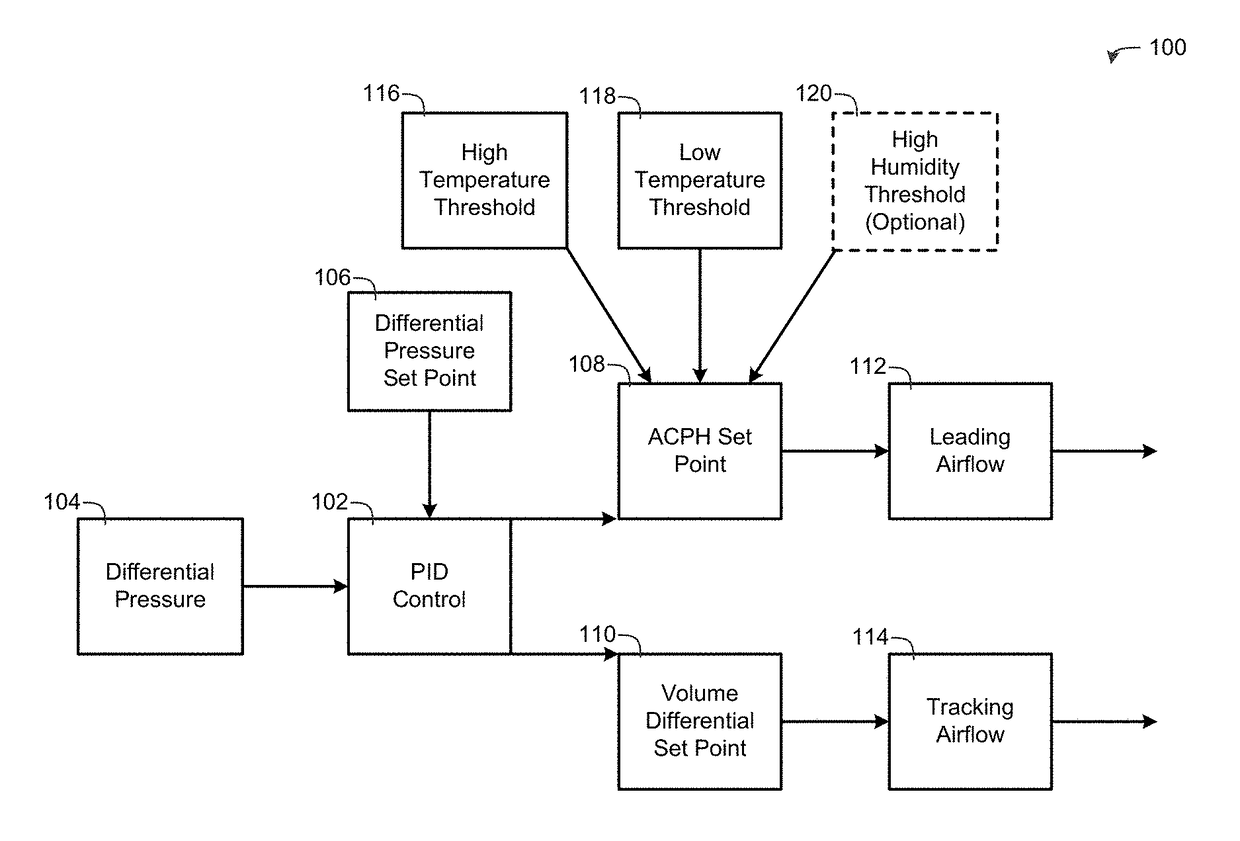
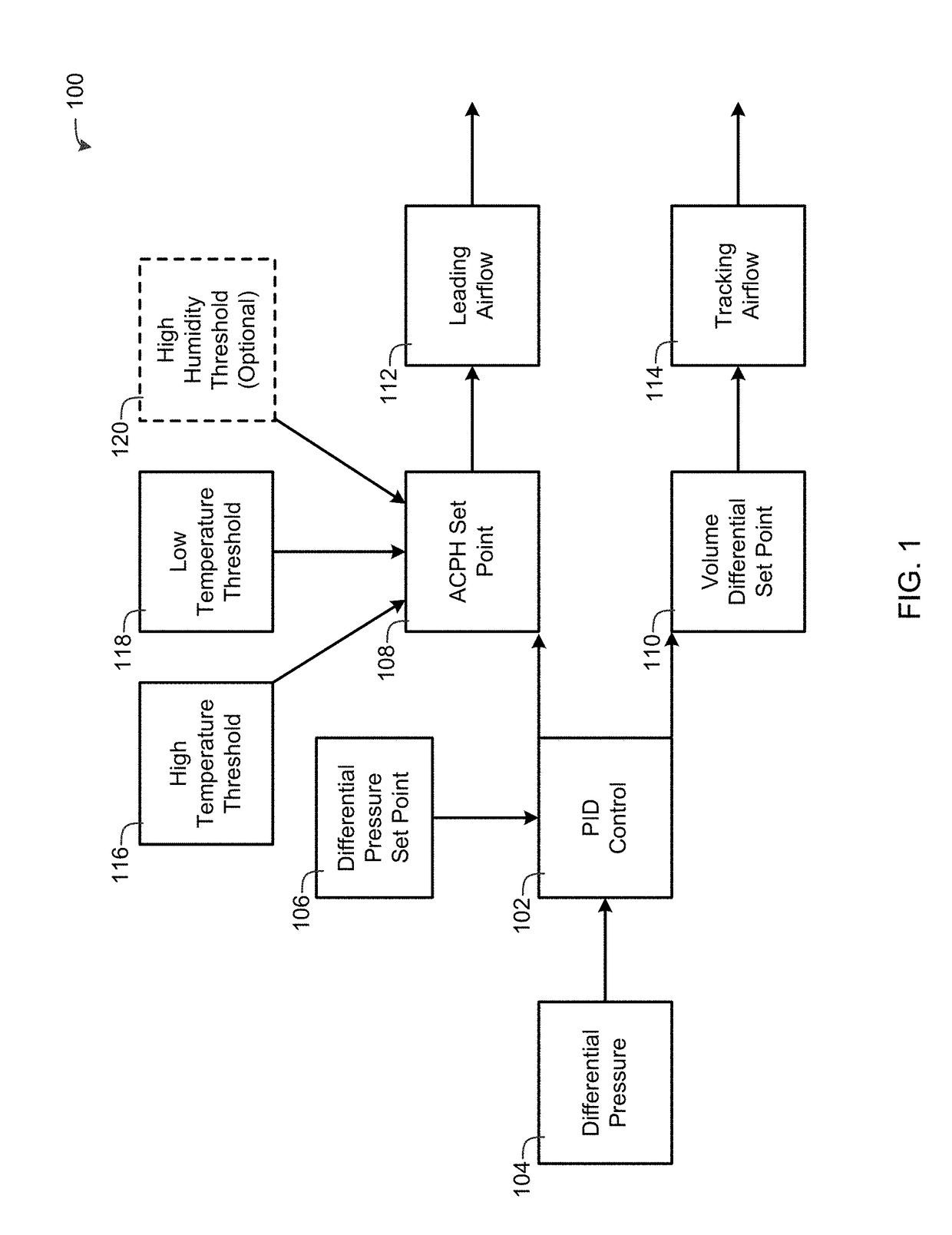
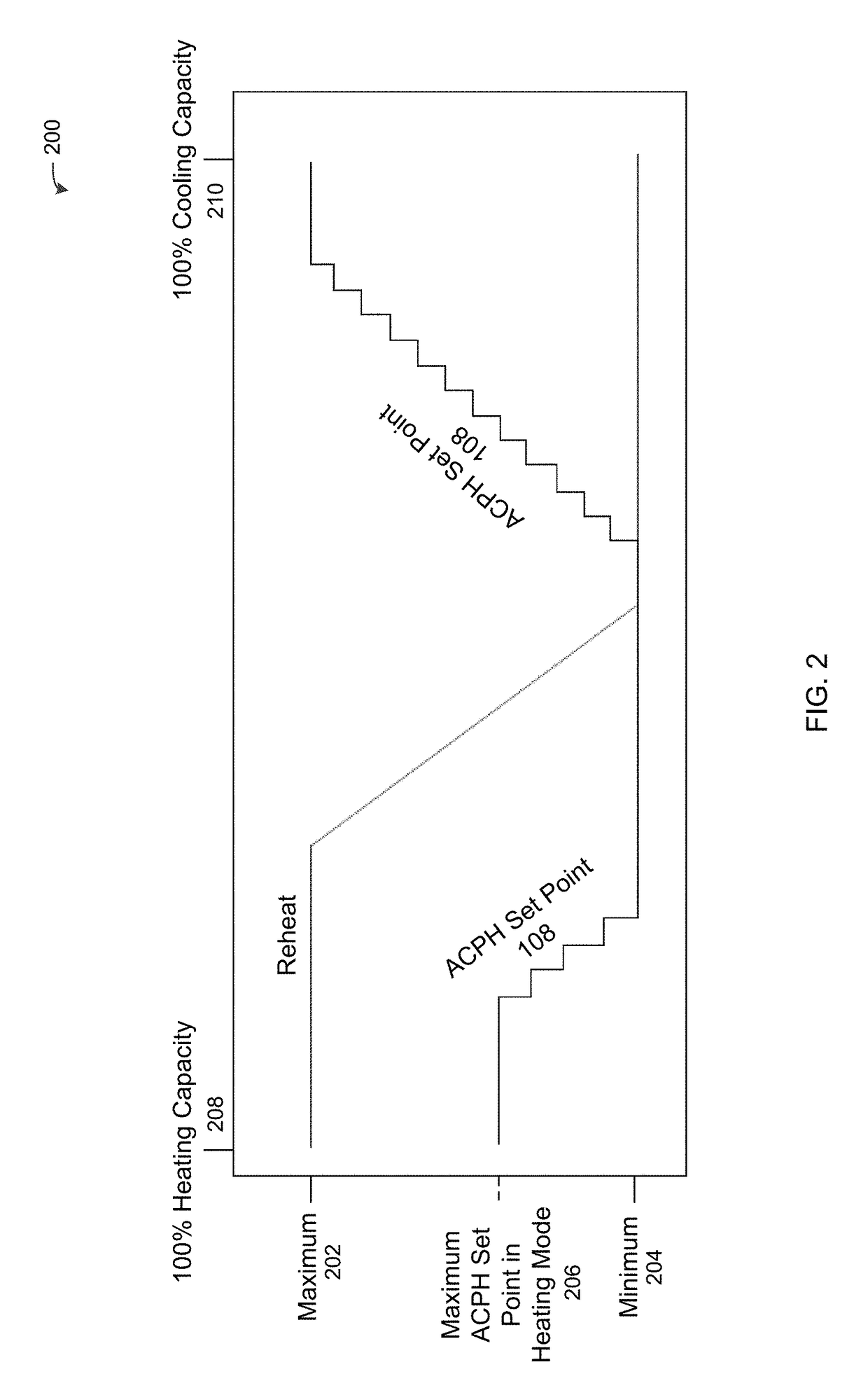
- Adaptive optimization of the air change per hour set point using a proportional-integral-derivative (PID) controller to dynamically adjust airflow, increasing or decreasing the set point based on temperature thresholds and differential pressure errors, thereby optimizing energy savings while maintaining environmental requirements.

Method, device and computer program product for controlling and/or regulating a process air system
PatentWO2019101520A1
Innovation
- An automated method and device that use pressure and temperature sensors to regulate the interspace pressure and temperature between the drying hood and cylinder, ensuring they remain within optimal ranges, thereby eliminating the need for manual adjustments and maintaining stable operation.

Energy Efficiency Standards and Environmental Regulations
The implementation of dry room technology and pressurized air systems in industrial applications is increasingly governed by stringent energy efficiency standards and environmental regulations worldwide. These regulatory frameworks are driving significant changes in how manufacturers approach humidity control and atmospheric management systems, particularly in sectors such as battery manufacturing, pharmaceutical production, and semiconductor fabrication.
Energy efficiency standards have become more demanding across major markets, with regulations such as the EU's Energy Efficiency Directive and similar frameworks in North America and Asia requiring industrial facilities to demonstrate measurable improvements in energy consumption. Dry room technologies typically consume 30-50% less energy compared to traditional pressurized air systems due to their targeted moisture control approach, making them increasingly attractive under these regulatory pressures.
Environmental regulations are particularly impactful in shaping technology adoption patterns. The phase-out of certain refrigerants under the Montreal Protocol and its amendments has forced manufacturers to reconsider their dehumidification strategies. Dry room systems often utilize more environmentally friendly refrigerants and require lower overall energy inputs, aligning better with emerging environmental compliance requirements.
Carbon emission reduction mandates are creating additional pressure for technology selection. Many jurisdictions now require industrial facilities to report and reduce their carbon footprint, with specific targets for energy-intensive processes. The lower energy consumption profile of dry room technology directly translates to reduced carbon emissions, making it a preferred choice for companies seeking to meet sustainability goals.
Regulatory incentives and penalties are also influencing adoption decisions. Tax credits, rebates, and preferential treatment for energy-efficient technologies are making dry room implementations more economically attractive. Conversely, carbon taxes and energy surcharges are increasing the operational costs of less efficient pressurized air systems.
The regulatory landscape continues to evolve, with emerging standards focusing on lifecycle environmental impact assessments and circular economy principles. These developments favor technologies that demonstrate superior resource efficiency and lower environmental impact throughout their operational lifespan, further supporting the transition toward advanced dry room solutions.
Energy efficiency standards have become more demanding across major markets, with regulations such as the EU's Energy Efficiency Directive and similar frameworks in North America and Asia requiring industrial facilities to demonstrate measurable improvements in energy consumption. Dry room technologies typically consume 30-50% less energy compared to traditional pressurized air systems due to their targeted moisture control approach, making them increasingly attractive under these regulatory pressures.
Environmental regulations are particularly impactful in shaping technology adoption patterns. The phase-out of certain refrigerants under the Montreal Protocol and its amendments has forced manufacturers to reconsider their dehumidification strategies. Dry room systems often utilize more environmentally friendly refrigerants and require lower overall energy inputs, aligning better with emerging environmental compliance requirements.
Carbon emission reduction mandates are creating additional pressure for technology selection. Many jurisdictions now require industrial facilities to report and reduce their carbon footprint, with specific targets for energy-intensive processes. The lower energy consumption profile of dry room technology directly translates to reduced carbon emissions, making it a preferred choice for companies seeking to meet sustainability goals.
Regulatory incentives and penalties are also influencing adoption decisions. Tax credits, rebates, and preferential treatment for energy-efficient technologies are making dry room implementations more economically attractive. Conversely, carbon taxes and energy surcharges are increasing the operational costs of less efficient pressurized air systems.
The regulatory landscape continues to evolve, with emerging standards focusing on lifecycle environmental impact assessments and circular economy principles. These developments favor technologies that demonstrate superior resource efficiency and lower environmental impact throughout their operational lifespan, further supporting the transition toward advanced dry room solutions.
Cost-Benefit Analysis of Dry Room vs Pressurized Systems
The economic evaluation of dry room technology versus pressurized air systems reveals significant differences in both initial capital expenditure and long-term operational costs. Dry room systems typically require higher upfront investments, with initial costs ranging from $500,000 to $2 million for industrial-scale installations, depending on room size and humidity control precision requirements. This includes specialized dehumidification equipment, air handling units, and environmental monitoring systems.
Pressurized air systems present lower initial capital requirements, generally ranging from $200,000 to $800,000 for comparable capacity installations. The primary cost components include air compressors, filtration systems, and distribution networks. However, the operational cost structure differs substantially between these technologies.
Energy consumption represents the most significant operational expense differential. Dry room systems consume approximately 15-25% less energy than pressurized air systems due to their continuous environmental control approach versus the intermittent high-pressure air generation. Annual energy costs for dry room operations typically range from $50,000 to $150,000, while pressurized systems often exceed $200,000 annually for similar production volumes.
Maintenance costs favor dry room technology, with annual maintenance expenses averaging 3-5% of initial investment compared to 8-12% for pressurized systems. The reduced mechanical stress in dry room environments contributes to extended equipment lifespan and lower component replacement frequencies.
Product quality improvements in dry room environments translate to measurable financial benefits. Reduced defect rates, typically 40-60% lower than pressurized systems, result in decreased material waste and rework costs. For high-volume manufacturing operations, these quality improvements can generate annual savings of $100,000 to $500,000.
The payback period analysis indicates that despite higher initial investments, dry room systems typically achieve cost parity within 18-24 months through operational savings and quality improvements. Long-term projections over five years demonstrate 25-35% lower total cost of ownership for dry room implementations compared to pressurized air alternatives.
Pressurized air systems present lower initial capital requirements, generally ranging from $200,000 to $800,000 for comparable capacity installations. The primary cost components include air compressors, filtration systems, and distribution networks. However, the operational cost structure differs substantially between these technologies.
Energy consumption represents the most significant operational expense differential. Dry room systems consume approximately 15-25% less energy than pressurized air systems due to their continuous environmental control approach versus the intermittent high-pressure air generation. Annual energy costs for dry room operations typically range from $50,000 to $150,000, while pressurized systems often exceed $200,000 annually for similar production volumes.
Maintenance costs favor dry room technology, with annual maintenance expenses averaging 3-5% of initial investment compared to 8-12% for pressurized systems. The reduced mechanical stress in dry room environments contributes to extended equipment lifespan and lower component replacement frequencies.
Product quality improvements in dry room environments translate to measurable financial benefits. Reduced defect rates, typically 40-60% lower than pressurized systems, result in decreased material waste and rework costs. For high-volume manufacturing operations, these quality improvements can generate annual savings of $100,000 to $500,000.
The payback period analysis indicates that despite higher initial investments, dry room systems typically achieve cost parity within 18-24 months through operational savings and quality improvements. Long-term projections over five years demonstrate 25-35% lower total cost of ownership for dry room implementations compared to pressurized air alternatives.
Unlock deeper insights with PatSnap Eureka Quick Research — get a full tech report to explore trends and direct your research. Try now!
Generate Your Research Report Instantly with AI Agent
Supercharge your innovation with PatSnap Eureka AI Agent Platform!