Electroactive Polymers vs Conventional Polymers: Mechanical Flexibility
APR 30, 20269 MIN READ
Generate Your Research Report Instantly with AI Agent
PatSnap Eureka helps you evaluate technical feasibility & market potential.
Electroactive Polymer Development Background and Objectives
Electroactive polymers represent a revolutionary class of smart materials that emerged from the convergence of polymer science and electrochemistry in the mid-20th century. Unlike conventional polymers that remain static under electrical stimulation, electroactive polymers exhibit remarkable mechanical responses when subjected to electrical fields, fundamentally altering their shape, size, or stiffness. This unique capability positions them as biomimetic materials that can replicate muscle-like actuation and sensing functions.
The historical development of electroactive polymers traces back to the 1880s when Wilhelm Röntgen first observed electromechanical effects in natural rubber strips. However, significant breakthroughs occurred in the 1990s with the development of ionic polymer-metal composites and dielectric elastomers, which demonstrated substantial mechanical deformation under relatively low voltages. These advances sparked intensive research into creating artificial muscles and adaptive structures.
The fundamental distinction between electroactive and conventional polymers lies in their molecular architecture and charge transport mechanisms. Conventional polymers typically function as electrical insulators with fixed mechanical properties, while electroactive polymers incorporate ionic or electronic conduction pathways that enable electromechanical coupling. This coupling mechanism allows for reversible mechanical deformation through electrical stimulation, creating opportunities for dynamic mechanical flexibility control.
Current technological objectives focus on enhancing the mechanical flexibility characteristics of electroactive polymers to surpass conventional polymer limitations. Key targets include achieving larger strain amplitudes, faster response times, and improved durability under cyclic loading conditions. Researchers aim to develop materials capable of generating strains exceeding 100% while maintaining structural integrity over millions of actuation cycles.
The primary technical challenges involve optimizing the trade-off between electrical conductivity and mechanical properties. Increasing ionic mobility often compromises mechanical strength, while enhancing mechanical robustness may reduce electromechanical sensitivity. Advanced polymer synthesis techniques, including block copolymerization and nanocomposite integration, are being explored to achieve optimal balance between these competing requirements.
Strategic development goals encompass creating next-generation electroactive polymers with tunable mechanical flexibility that can adapt to varying operational demands. This includes developing materials with programmable stiffness modulation, enabling structures that can transition between rigid and flexible states on command, thereby revolutionizing applications in robotics, biomedical devices, and adaptive aerospace systems.
The historical development of electroactive polymers traces back to the 1880s when Wilhelm Röntgen first observed electromechanical effects in natural rubber strips. However, significant breakthroughs occurred in the 1990s with the development of ionic polymer-metal composites and dielectric elastomers, which demonstrated substantial mechanical deformation under relatively low voltages. These advances sparked intensive research into creating artificial muscles and adaptive structures.
The fundamental distinction between electroactive and conventional polymers lies in their molecular architecture and charge transport mechanisms. Conventional polymers typically function as electrical insulators with fixed mechanical properties, while electroactive polymers incorporate ionic or electronic conduction pathways that enable electromechanical coupling. This coupling mechanism allows for reversible mechanical deformation through electrical stimulation, creating opportunities for dynamic mechanical flexibility control.
Current technological objectives focus on enhancing the mechanical flexibility characteristics of electroactive polymers to surpass conventional polymer limitations. Key targets include achieving larger strain amplitudes, faster response times, and improved durability under cyclic loading conditions. Researchers aim to develop materials capable of generating strains exceeding 100% while maintaining structural integrity over millions of actuation cycles.
The primary technical challenges involve optimizing the trade-off between electrical conductivity and mechanical properties. Increasing ionic mobility often compromises mechanical strength, while enhancing mechanical robustness may reduce electromechanical sensitivity. Advanced polymer synthesis techniques, including block copolymerization and nanocomposite integration, are being explored to achieve optimal balance between these competing requirements.
Strategic development goals encompass creating next-generation electroactive polymers with tunable mechanical flexibility that can adapt to varying operational demands. This includes developing materials with programmable stiffness modulation, enabling structures that can transition between rigid and flexible states on command, thereby revolutionizing applications in robotics, biomedical devices, and adaptive aerospace systems.
Market Demand for Flexible Electroactive Materials
The global demand for flexible electroactive materials has experienced unprecedented growth across multiple industrial sectors, driven by the convergence of miniaturization trends, wearable technology adoption, and the Internet of Things expansion. Consumer electronics manufacturers are increasingly seeking materials that can maintain electrical functionality while withstanding repeated mechanical deformation, particularly for foldable displays, flexible sensors, and conformable electronic devices.
Healthcare and biomedical applications represent one of the most promising market segments for flexible electroactive polymers. The aging global population and rising healthcare costs have accelerated demand for continuous health monitoring solutions, including flexible biosensors, smart bandages, and implantable medical devices. These applications require materials that can seamlessly integrate with human tissue while providing reliable electrical performance over extended periods.
The automotive industry has emerged as a significant driver of market demand, particularly with the transition toward electric vehicles and autonomous driving systems. Flexible electroactive materials are essential for developing adaptive seating systems, flexible lighting solutions, and conformable sensor arrays for vehicle safety applications. The industry's emphasis on weight reduction and design flexibility has further amplified the need for mechanically adaptable electroactive solutions.
Robotics and automation sectors are experiencing substantial growth in demand for flexible electroactive materials, particularly for soft robotics applications. The development of human-robot interaction systems requires materials that can provide both sensing and actuation capabilities while maintaining mechanical compliance. Industrial automation increasingly relies on flexible sensors and actuators that can operate in complex geometries and harsh environments.
The aerospace and defense industries present specialized market opportunities, where flexible electroactive materials enable the development of morphing wing structures, flexible antennas, and adaptive camouflage systems. These applications demand materials with exceptional durability and performance consistency across extreme temperature ranges and mechanical stress conditions.
Energy harvesting and storage applications constitute an emerging market segment, where flexible electroactive polymers enable the development of wearable energy generators and conformable battery systems. The growing emphasis on sustainable energy solutions and portable power systems has created substantial market opportunities for materials that can efficiently convert mechanical energy into electrical energy while maintaining structural flexibility.
Market growth is further supported by advancing manufacturing capabilities and decreasing production costs, making flexible electroactive materials increasingly viable for commercial applications across diverse industries.
Healthcare and biomedical applications represent one of the most promising market segments for flexible electroactive polymers. The aging global population and rising healthcare costs have accelerated demand for continuous health monitoring solutions, including flexible biosensors, smart bandages, and implantable medical devices. These applications require materials that can seamlessly integrate with human tissue while providing reliable electrical performance over extended periods.
The automotive industry has emerged as a significant driver of market demand, particularly with the transition toward electric vehicles and autonomous driving systems. Flexible electroactive materials are essential for developing adaptive seating systems, flexible lighting solutions, and conformable sensor arrays for vehicle safety applications. The industry's emphasis on weight reduction and design flexibility has further amplified the need for mechanically adaptable electroactive solutions.
Robotics and automation sectors are experiencing substantial growth in demand for flexible electroactive materials, particularly for soft robotics applications. The development of human-robot interaction systems requires materials that can provide both sensing and actuation capabilities while maintaining mechanical compliance. Industrial automation increasingly relies on flexible sensors and actuators that can operate in complex geometries and harsh environments.
The aerospace and defense industries present specialized market opportunities, where flexible electroactive materials enable the development of morphing wing structures, flexible antennas, and adaptive camouflage systems. These applications demand materials with exceptional durability and performance consistency across extreme temperature ranges and mechanical stress conditions.
Energy harvesting and storage applications constitute an emerging market segment, where flexible electroactive polymers enable the development of wearable energy generators and conformable battery systems. The growing emphasis on sustainable energy solutions and portable power systems has created substantial market opportunities for materials that can efficiently convert mechanical energy into electrical energy while maintaining structural flexibility.
Market growth is further supported by advancing manufacturing capabilities and decreasing production costs, making flexible electroactive materials increasingly viable for commercial applications across diverse industries.
Current State of EAP vs Conventional Polymer Flexibility
Electroactive polymers represent a paradigm shift in material science, offering dynamic mechanical properties that conventional polymers cannot match. Current EAPs demonstrate remarkable flexibility characteristics, with ionic EAPs like conducting polymers and ionic polymer-metal composites achieving strain levels exceeding 10% under electrical stimulation. Electronic EAPs, including dielectric elastomers and piezoelectric polymers, exhibit even more impressive performance, with some dielectric elastomers reaching strain levels of over 300%.
Conventional polymers maintain static flexibility profiles determined by their molecular structure and cross-linking density. Thermoplastic elastomers like polyurethane and silicone rubbers typically achieve maximum elongation rates between 200-800%, but these properties remain constant throughout their operational lifetime. The flexibility of conventional polymers depends primarily on glass transition temperature, molecular weight, and plasticizer content, with limited ability to modify these characteristics post-manufacturing.
The key distinction lies in controllability and responsiveness. EAPs can dynamically adjust their mechanical flexibility in real-time through electrical input, enabling applications in adaptive structures and smart materials. Ionic EAPs operate at low voltages (1-5V) but require hydrated environments, limiting their operational flexibility in dry conditions. Electronic EAPs function across broader environmental conditions but typically require higher activation voltages (kilovolts range).
Current manufacturing capabilities for EAPs remain limited compared to conventional polymer processing. Conventional polymers benefit from decades of industrial optimization, achieving consistent mechanical properties through established extrusion, molding, and curing processes. EAP production involves more complex synthesis routes, often requiring specialized electrode integration and environmental controls that impact scalability.
Performance durability presents another critical differentiation. Conventional polymers demonstrate predictable aging characteristics and mechanical degradation patterns over extended periods. EAPs face additional challenges including electrode delamination, electrolyte migration in ionic systems, and dielectric breakdown in electronic variants. Current EAP systems typically exhibit shorter operational lifespans, with cycling performance varying significantly based on activation frequency and environmental exposure.
Recent developments in hybrid polymer systems attempt to bridge this gap by incorporating EAP functionality into conventional polymer matrices. These approaches aim to combine the processing advantages and durability of conventional polymers with the adaptive flexibility of electroactive materials, though commercial viability remains under evaluation.
Conventional polymers maintain static flexibility profiles determined by their molecular structure and cross-linking density. Thermoplastic elastomers like polyurethane and silicone rubbers typically achieve maximum elongation rates between 200-800%, but these properties remain constant throughout their operational lifetime. The flexibility of conventional polymers depends primarily on glass transition temperature, molecular weight, and plasticizer content, with limited ability to modify these characteristics post-manufacturing.
The key distinction lies in controllability and responsiveness. EAPs can dynamically adjust their mechanical flexibility in real-time through electrical input, enabling applications in adaptive structures and smart materials. Ionic EAPs operate at low voltages (1-5V) but require hydrated environments, limiting their operational flexibility in dry conditions. Electronic EAPs function across broader environmental conditions but typically require higher activation voltages (kilovolts range).
Current manufacturing capabilities for EAPs remain limited compared to conventional polymer processing. Conventional polymers benefit from decades of industrial optimization, achieving consistent mechanical properties through established extrusion, molding, and curing processes. EAP production involves more complex synthesis routes, often requiring specialized electrode integration and environmental controls that impact scalability.
Performance durability presents another critical differentiation. Conventional polymers demonstrate predictable aging characteristics and mechanical degradation patterns over extended periods. EAPs face additional challenges including electrode delamination, electrolyte migration in ionic systems, and dielectric breakdown in electronic variants. Current EAP systems typically exhibit shorter operational lifespans, with cycling performance varying significantly based on activation frequency and environmental exposure.
Recent developments in hybrid polymer systems attempt to bridge this gap by incorporating EAP functionality into conventional polymer matrices. These approaches aim to combine the processing advantages and durability of conventional polymers with the adaptive flexibility of electroactive materials, though commercial viability remains under evaluation.
Current Solutions for Enhanced Polymer Flexibility
01 Polymer composition and molecular structure optimization
The mechanical flexibility of electroactive polymers can be enhanced through careful selection and optimization of polymer composition and molecular structure. This involves designing polymer chains with specific backbone structures, side chain modifications, and crosslinking densities to achieve desired flexibility while maintaining electroactive properties. The molecular architecture plays a crucial role in determining the balance between mechanical properties and electrical conductivity.- Polymer composition and molecular structure optimization: The mechanical flexibility of electroactive polymers can be enhanced through careful selection and optimization of polymer composition and molecular structure. This involves modifying the backbone structure, side chains, and crosslinking density to achieve desired flexibility while maintaining electroactive properties. Various polymer architectures and chemical modifications are employed to balance mechanical properties with electrical conductivity.
- Plasticizer and additive incorporation: Mechanical flexibility can be significantly improved by incorporating plasticizers and other additives into the electroactive polymer matrix. These additives help reduce the glass transition temperature and increase chain mobility, resulting in more flexible materials. The selection and concentration of these additives must be carefully balanced to maintain the electroactive functionality while achieving the desired mechanical properties.
- Composite and blend systems: Creating composite materials or polymer blends represents an effective approach to enhance mechanical flexibility. This involves combining electroactive polymers with other flexible polymers or incorporating reinforcing materials that maintain flexibility while providing structural support. The synergistic effects of different components can lead to improved overall performance characteristics.
- Processing and fabrication techniques: The mechanical flexibility of electroactive polymers is significantly influenced by processing conditions and fabrication methods. Techniques such as controlled polymerization, specific curing conditions, and post-processing treatments can optimize the final mechanical properties. The processing parameters directly affect the polymer morphology and chain organization, which in turn determines flexibility characteristics.
- Surface modification and coating strategies: Surface treatments and coating applications provide methods to enhance mechanical flexibility without compromising the bulk electroactive properties. These approaches involve applying flexible surface layers or modifying the surface chemistry to reduce stiffness and improve bendability. Such strategies are particularly useful for applications requiring frequent mechanical deformation while maintaining electrical functionality.
02 Plasticizer and additive incorporation
Mechanical flexibility can be significantly improved by incorporating plasticizers and specific additives into the electroactive polymer matrix. These components help reduce the glass transition temperature and increase chain mobility, resulting in more flexible materials. The selection of compatible plasticizers that do not compromise the electroactive properties is essential for maintaining overall performance while enhancing flexibility.Expand Specific Solutions03 Copolymerization and blend systems
Creating copolymer systems or polymer blends allows for the combination of rigid electroactive segments with flexible polymer chains. This approach enables the design of materials that maintain their electroactive functionality while exhibiting improved mechanical flexibility. The ratio and distribution of different polymer components can be tailored to achieve specific flexibility requirements for various applications.Expand Specific Solutions04 Processing and fabrication techniques
The mechanical flexibility of electroactive polymers can be enhanced through specialized processing and fabrication methods. These techniques include controlled thermal processing, solvent casting, electrospinning, and other manufacturing approaches that influence the final morphology and mechanical properties. The processing conditions directly affect the polymer chain orientation and crystallinity, which in turn impact flexibility.Expand Specific Solutions05 Nanocomposite and reinforcement strategies
Incorporating nanoscale fillers and reinforcing agents can improve the mechanical flexibility of electroactive polymers while maintaining or enhancing their electrical properties. These nanocomposite approaches involve the addition of carbon nanotubes, graphene, conductive nanoparticles, or other nanomaterials that can provide mechanical reinforcement without significantly compromising flexibility. The dispersion and interfacial interactions between the polymer matrix and nanofillers are critical factors.Expand Specific Solutions
Key Players in Electroactive Polymer Industry
The electroactive polymers versus conventional polymers mechanical flexibility landscape represents an emerging technology sector in early-to-mid development stages. The market demonstrates significant growth potential driven by applications in soft robotics, biomedical devices, and smart materials, though commercial adoption remains limited. Technology maturity varies considerably across key players: established industrial giants like BASF Corp., Dow Silicones Corp., and Covestro Deutschland AG leverage advanced polymer expertise for incremental innovations, while research institutions including ETH Zurich, Technical University of Denmark, and Tsinghua University pioneer breakthrough electroactive polymer architectures. Companies like SRI International and Danfoss A/S bridge research-to-application gaps through specialized development programs. The competitive landscape shows a clear division between fundamental research conducted by universities such as National University of Singapore and Beijing University of Chemical Technology, and commercial development led by multinational corporations including General Motors LLC and Koninklijke Philips NV, indicating technology transition from laboratory to market applications.
SRI International
Technical Solution: SRI International has developed advanced dielectric elastomer actuators (DEAs) using electroactive polymers that demonstrate superior mechanical flexibility compared to conventional polymers. Their technology focuses on silicone-based elastomers that can achieve strains exceeding 300% while maintaining elastic properties[1][3]. The company's electroactive polymer systems utilize high dielectric constant materials combined with compliant electrodes to enable large-scale deformation under electric fields. Their approach emphasizes the development of soft robotics applications where mechanical flexibility is paramount, including artificial muscles and adaptive structures that can bend, stretch, and conform to complex geometries without mechanical failure[5][7].
Strengths: Pioneer in dielectric elastomer technology with proven large strain capabilities and extensive soft robotics applications. Weaknesses: High voltage requirements and potential durability issues under repeated cycling compared to some conventional polymer alternatives.
Arkema France SA
Technical Solution: Arkema has developed specialized fluoropolymer-based electroactive materials that offer enhanced mechanical flexibility while maintaining chemical resistance properties. Their PVDF (polyvinylidene fluoride) and P(VDF-TrFE) copolymer systems demonstrate piezoelectric and ferroelectric properties with excellent mechanical durability[2][4]. The company's approach focuses on creating electroactive polymers that can withstand repeated mechanical stress while providing consistent electromechanical response. Their materials exhibit superior flexibility compared to conventional rigid polymers, with the ability to maintain performance across wide temperature ranges and under various environmental conditions. Arkema's technology particularly excels in applications requiring both electrical activity and mechanical robustness[6][8].
Strengths: Excellent chemical resistance and temperature stability with proven industrial scalability. Weaknesses: Limited strain capabilities compared to elastomer-based systems and higher material costs than conventional polymers.
Core Innovations in Electroactive Polymer Mechanics
Electroactive polymers transducers and actuators
PatentInactiveUS6940211B2
Innovation
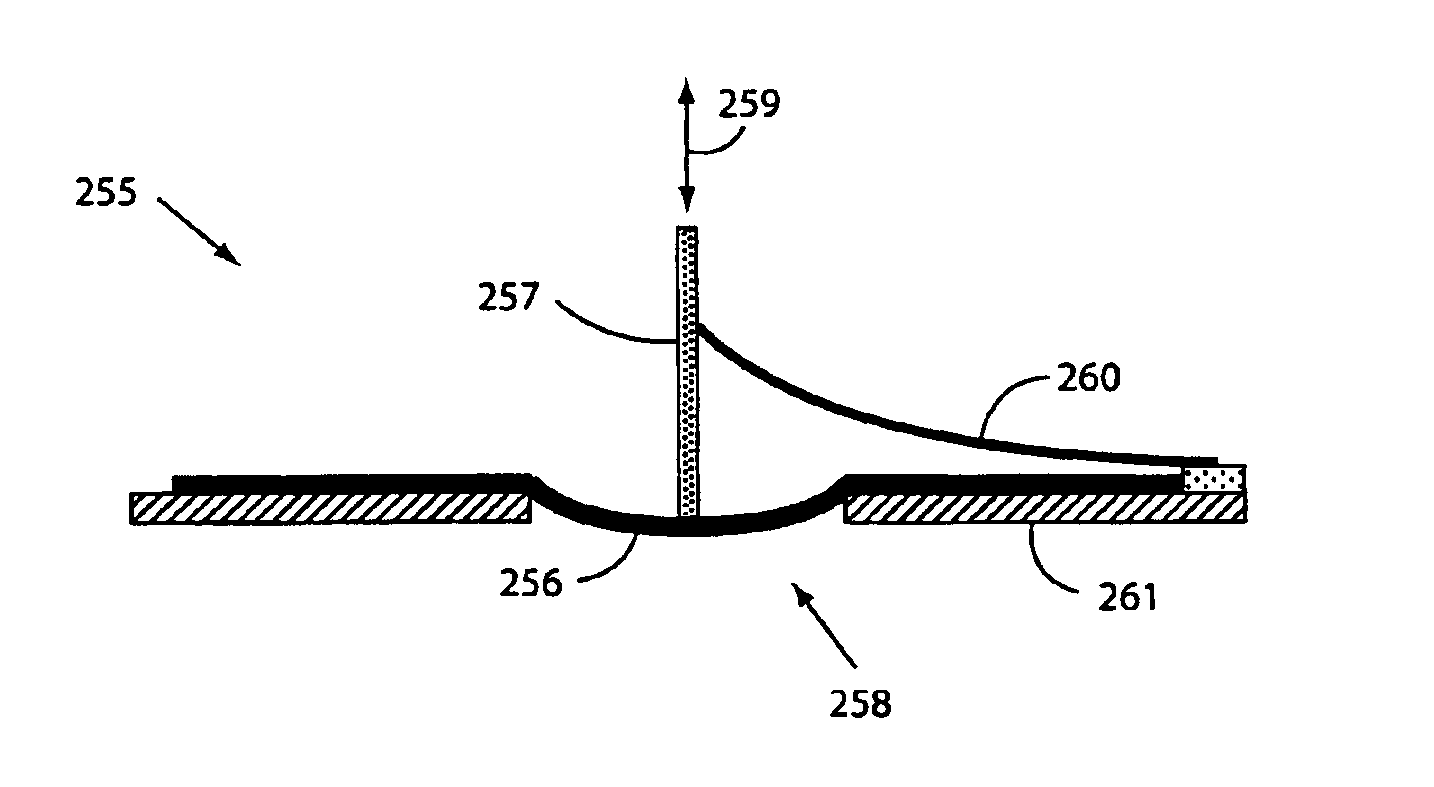
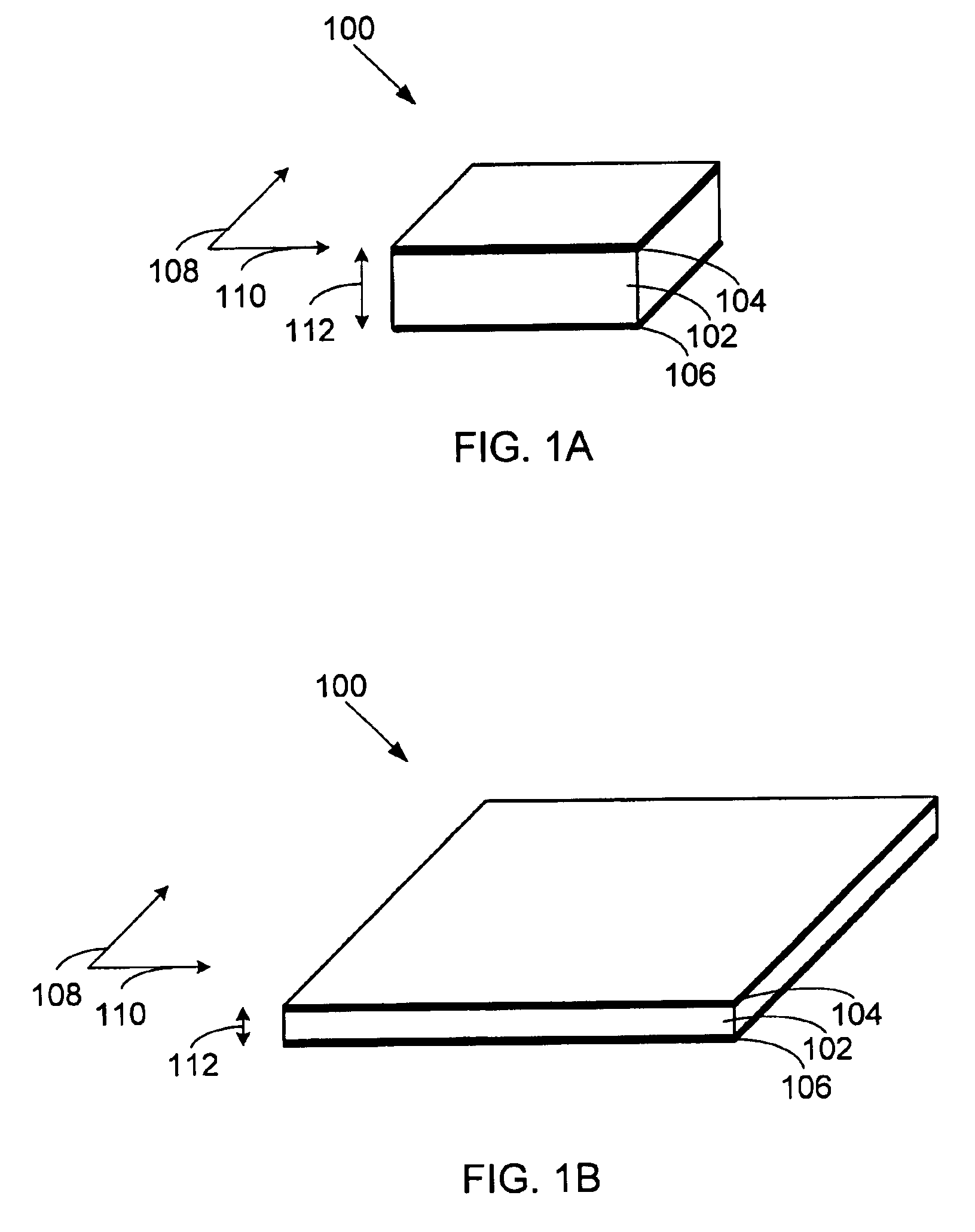
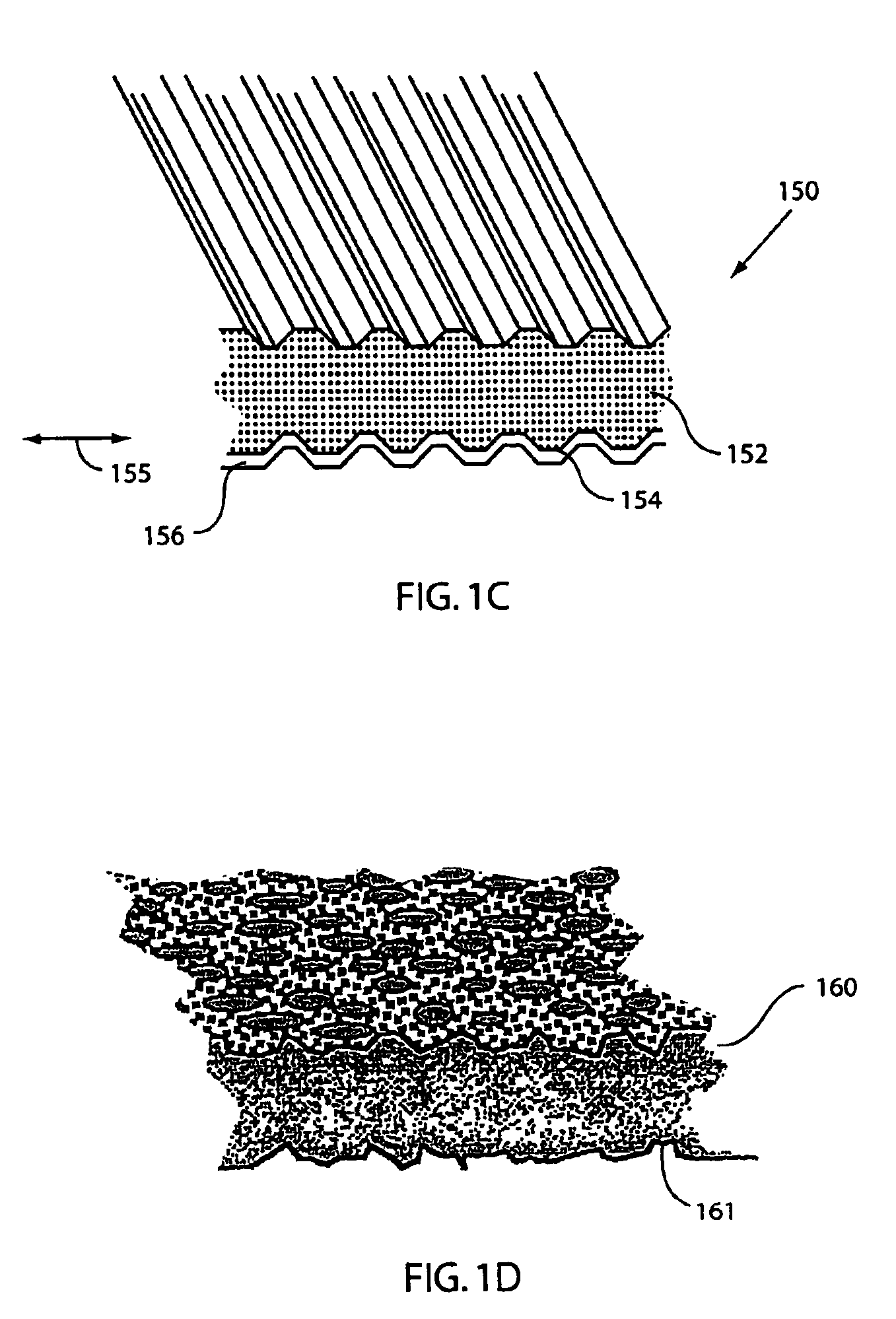
- Pre-strained electroactive polymers with compliant electrodes that deflect significantly in response to electrical energy, allowing for high mechanical work output and improved mechanical response, fabricated using techniques like mechanical stretching and fixing to solid members, and processed through methods like casting or spin coating.

Enhanced electroactive actuator using nonlinear loading techniques
PatentWO2017158485A1
Innovation
- The use of nonlinear magnetic loading techniques, such as repelling and attracting magnets, to amplify strain and force in dielectric elastomers, allowing for higher performance without the need for bulky frames, and the incorporation of multiple elastomer layers and segmented electrodes for enhanced actuation.


Material Safety Standards for Electroactive Polymers
Material safety standards for electroactive polymers represent a critical regulatory framework that addresses the unique challenges posed by these advanced materials compared to conventional polymers. The inherent electrical conductivity and responsive nature of electroactive polymers introduce novel safety considerations that traditional polymer safety protocols do not adequately address. Current international standards, including ISO 10993 for biological evaluation and IEC 62304 for medical device software, require significant modifications to accommodate the dynamic electrical properties of these materials.
The primary safety concerns stem from the electrical activation mechanisms that enable mechanical flexibility in electroactive polymers. Unlike conventional polymers that maintain static properties, electroactive variants can generate electrical fields, experience voltage-induced deformation, and potentially create electromagnetic interference. These characteristics necessitate specialized testing protocols for biocompatibility, particularly when considering implantable applications where mechanical flexibility is crucial for device integration with human tissue.
Regulatory bodies including the FDA, CE marking authorities, and ISO technical committees are developing comprehensive guidelines specifically addressing electroactive polymer safety. These emerging standards focus on electrical safety thresholds, long-term stability under repeated electrical stimulation, and potential degradation products that may differ significantly from conventional polymer breakdown mechanisms. The standards also address the unique challenge of maintaining safety margins while preserving the mechanical flexibility advantages that make these materials attractive for advanced applications.
Testing methodologies for electroactive polymers require specialized equipment capable of simultaneous electrical and mechanical evaluation. Standard protocols now include accelerated aging tests under electrical stress, cytotoxicity assessments of electrically-stimulated degradation products, and electromagnetic compatibility evaluations. These comprehensive testing requirements significantly extend validation timelines compared to conventional polymers but are essential for ensuring safe deployment in applications where mechanical flexibility and electrical responsiveness are critical performance parameters.
The evolving regulatory landscape continues to balance innovation encouragement with safety assurance, establishing frameworks that support the unique advantages of electroactive polymers while maintaining rigorous safety standards appropriate for their intended applications.
The primary safety concerns stem from the electrical activation mechanisms that enable mechanical flexibility in electroactive polymers. Unlike conventional polymers that maintain static properties, electroactive variants can generate electrical fields, experience voltage-induced deformation, and potentially create electromagnetic interference. These characteristics necessitate specialized testing protocols for biocompatibility, particularly when considering implantable applications where mechanical flexibility is crucial for device integration with human tissue.
Regulatory bodies including the FDA, CE marking authorities, and ISO technical committees are developing comprehensive guidelines specifically addressing electroactive polymer safety. These emerging standards focus on electrical safety thresholds, long-term stability under repeated electrical stimulation, and potential degradation products that may differ significantly from conventional polymer breakdown mechanisms. The standards also address the unique challenge of maintaining safety margins while preserving the mechanical flexibility advantages that make these materials attractive for advanced applications.
Testing methodologies for electroactive polymers require specialized equipment capable of simultaneous electrical and mechanical evaluation. Standard protocols now include accelerated aging tests under electrical stress, cytotoxicity assessments of electrically-stimulated degradation products, and electromagnetic compatibility evaluations. These comprehensive testing requirements significantly extend validation timelines compared to conventional polymers but are essential for ensuring safe deployment in applications where mechanical flexibility and electrical responsiveness are critical performance parameters.
The evolving regulatory landscape continues to balance innovation encouragement with safety assurance, establishing frameworks that support the unique advantages of electroactive polymers while maintaining rigorous safety standards appropriate for their intended applications.
Performance Testing Methods for Flexible Polymers
The evaluation of mechanical flexibility in electroactive polymers versus conventional polymers requires standardized testing methodologies that can accurately capture the unique deformation characteristics of both material categories. Current testing protocols must address the fundamental differences in how these materials respond to mechanical stress, particularly considering the electromechanical coupling effects present in electroactive systems.
Tensile testing remains the cornerstone methodology for assessing polymer flexibility, utilizing ASTM D638 and ISO 527 standards. For electroactive polymers, modified protocols incorporate simultaneous electrical stimulation during mechanical loading to evaluate performance under operational conditions. The testing apparatus requires specialized grips and environmental chambers to maintain consistent temperature and humidity, as these parameters significantly influence both electrical conductivity and mechanical properties.
Dynamic mechanical analysis provides critical insights into viscoelastic behavior across varying frequencies and temperatures. This technique proves particularly valuable for electroactive polymers, where the glass transition temperature and storage modulus directly correlate with actuation performance. The methodology involves applying oscillatory stress while monitoring the material's response, revealing time-dependent mechanical properties that static tests cannot capture.
Cyclic loading tests evaluate fatigue resistance and long-term durability under repeated deformation cycles. For electroactive polymers, these tests must incorporate electrical cycling protocols that simulate real-world operational patterns. The testing parameters include maximum strain levels, cycling frequency, and environmental conditions, with failure criteria defined by both mechanical degradation and electrical property deterioration.
Specialized bend testing protocols assess flexibility under controlled curvature conditions, particularly relevant for applications requiring specific bending radii. The three-point and four-point bending configurations provide different stress distributions, enabling comprehensive evaluation of material behavior under various loading scenarios. Advanced testing setups incorporate real-time strain measurement using digital image correlation techniques.
Nanoindentation and microindentation methods offer localized mechanical property assessment, crucial for understanding heterogeneous material structures common in electroactive polymer composites. These techniques provide high-resolution mapping of elastic modulus and hardness variations across sample surfaces, revealing microstructural influences on overall flexibility performance.
Environmental testing protocols evaluate mechanical flexibility under extreme conditions including temperature cycling, humidity exposure, and chemical resistance. These accelerated aging tests predict long-term performance degradation and establish operational boundaries for practical applications.
Tensile testing remains the cornerstone methodology for assessing polymer flexibility, utilizing ASTM D638 and ISO 527 standards. For electroactive polymers, modified protocols incorporate simultaneous electrical stimulation during mechanical loading to evaluate performance under operational conditions. The testing apparatus requires specialized grips and environmental chambers to maintain consistent temperature and humidity, as these parameters significantly influence both electrical conductivity and mechanical properties.
Dynamic mechanical analysis provides critical insights into viscoelastic behavior across varying frequencies and temperatures. This technique proves particularly valuable for electroactive polymers, where the glass transition temperature and storage modulus directly correlate with actuation performance. The methodology involves applying oscillatory stress while monitoring the material's response, revealing time-dependent mechanical properties that static tests cannot capture.
Cyclic loading tests evaluate fatigue resistance and long-term durability under repeated deformation cycles. For electroactive polymers, these tests must incorporate electrical cycling protocols that simulate real-world operational patterns. The testing parameters include maximum strain levels, cycling frequency, and environmental conditions, with failure criteria defined by both mechanical degradation and electrical property deterioration.
Specialized bend testing protocols assess flexibility under controlled curvature conditions, particularly relevant for applications requiring specific bending radii. The three-point and four-point bending configurations provide different stress distributions, enabling comprehensive evaluation of material behavior under various loading scenarios. Advanced testing setups incorporate real-time strain measurement using digital image correlation techniques.
Nanoindentation and microindentation methods offer localized mechanical property assessment, crucial for understanding heterogeneous material structures common in electroactive polymer composites. These techniques provide high-resolution mapping of elastic modulus and hardness variations across sample surfaces, revealing microstructural influences on overall flexibility performance.
Environmental testing protocols evaluate mechanical flexibility under extreme conditions including temperature cycling, humidity exposure, and chemical resistance. These accelerated aging tests predict long-term performance degradation and establish operational boundaries for practical applications.
Unlock deeper insights with PatSnap Eureka Quick Research — get a full tech report to explore trends and direct your research. Try now!
Generate Your Research Report Instantly with AI Agent
Supercharge your innovation with PatSnap Eureka AI Agent Platform!