Electroactive Polymers vs Shape Memory Polymers: Elastic Fit Comparison
APR 30, 20269 MIN READ
Generate Your Research Report Instantly with AI Agent
PatSnap Eureka helps you evaluate technical feasibility & market potential.
EAP vs SMP Background and Elastic Fit Goals
Electroactive polymers and shape memory polymers represent two distinct classes of smart materials that have emerged as transformative technologies in the development of adaptive and responsive systems. EAPs are materials that exhibit dimensional changes when subjected to electrical stimulation, functioning through either ionic or electronic mechanisms. These polymers can act as actuators, sensors, or artificial muscles, responding to electrical fields with mechanical deformation. Conversely, SMPs are materials capable of recovering their original shape from a temporary deformed state when exposed to specific external stimuli, typically heat, light, or chemical triggers.
The evolution of both technologies stems from the growing demand for materials that can provide dynamic mechanical responses in applications ranging from biomedical devices to aerospace systems. EAPs gained prominence in the 1990s with the development of ionic polymer-metal composites and dielectric elastomers, while SMPs have roots dating back to the 1960s but experienced significant advancement with the introduction of thermally-triggered polyurethane-based systems in the 1980s.
The convergence of interest in elastic fit applications has driven intensive research into both material classes, as traditional static materials fail to address the dynamic requirements of modern engineering challenges. The ability to achieve reversible, controllable deformation while maintaining structural integrity has positioned both EAPs and SMPs as candidates for next-generation adaptive systems.
In the context of elastic fit applications, the primary technical objectives center on achieving optimal conformability, responsiveness, and durability. The goal is to develop materials that can dynamically adjust their mechanical properties to provide consistent contact pressure, accommodate dimensional variations, and maintain performance across extended operational cycles. This requires materials to demonstrate predictable stress-strain relationships, rapid response times, and minimal hysteresis during deformation cycles.
The elastic fit paradigm demands materials capable of providing controlled compliance while maintaining sufficient structural integrity to transmit forces effectively. Both EAPs and SMPs offer unique advantages in this regard, with EAPs providing real-time electrical control over mechanical properties and SMPs offering programmable shape recovery capabilities that can be triggered by environmental conditions.
The evolution of both technologies stems from the growing demand for materials that can provide dynamic mechanical responses in applications ranging from biomedical devices to aerospace systems. EAPs gained prominence in the 1990s with the development of ionic polymer-metal composites and dielectric elastomers, while SMPs have roots dating back to the 1960s but experienced significant advancement with the introduction of thermally-triggered polyurethane-based systems in the 1980s.
The convergence of interest in elastic fit applications has driven intensive research into both material classes, as traditional static materials fail to address the dynamic requirements of modern engineering challenges. The ability to achieve reversible, controllable deformation while maintaining structural integrity has positioned both EAPs and SMPs as candidates for next-generation adaptive systems.
In the context of elastic fit applications, the primary technical objectives center on achieving optimal conformability, responsiveness, and durability. The goal is to develop materials that can dynamically adjust their mechanical properties to provide consistent contact pressure, accommodate dimensional variations, and maintain performance across extended operational cycles. This requires materials to demonstrate predictable stress-strain relationships, rapid response times, and minimal hysteresis during deformation cycles.
The elastic fit paradigm demands materials capable of providing controlled compliance while maintaining sufficient structural integrity to transmit forces effectively. Both EAPs and SMPs offer unique advantages in this regard, with EAPs providing real-time electrical control over mechanical properties and SMPs offering programmable shape recovery capabilities that can be triggered by environmental conditions.
Market Demand for Smart Elastic Materials
The global smart materials market is experiencing unprecedented growth driven by increasing demand for adaptive and responsive materials across multiple industries. Smart elastic materials, particularly electroactive polymers and shape memory polymers, represent a rapidly expanding segment within this market due to their unique ability to change shape, stiffness, and mechanical properties in response to external stimuli.
Healthcare and medical device sectors constitute the largest demand driver for smart elastic materials. The aging global population and rising prevalence of chronic conditions create substantial market opportunities for adaptive medical devices, prosthetics, and wearable health monitoring systems. Smart elastic materials enable the development of personalized medical solutions that can adjust to individual patient needs and physiological changes over time.
The automotive industry represents another significant market segment, where smart elastic materials are increasingly sought after for adaptive seating systems, vibration damping components, and morphing aerodynamic surfaces. As vehicle manufacturers prioritize passenger comfort and fuel efficiency, the demand for materials that can dynamically adjust their properties continues to grow substantially.
Consumer electronics and wearable technology markets are driving demand for ultra-thin, flexible smart materials that can maintain elasticity while providing actuation capabilities. The proliferation of flexible displays, haptic feedback systems, and smart textiles creates new application opportunities for both electroactive and shape memory polymers with superior elastic properties.
Aerospace and defense applications require smart elastic materials that can operate reliably under extreme conditions while maintaining precise control over mechanical properties. The need for lightweight, adaptive structures in aircraft and spacecraft drives continuous demand for advanced smart materials with enhanced elastic performance characteristics.
The textile and fashion industry is emerging as a promising market segment, where smart elastic materials enable the creation of adaptive clothing that responds to environmental conditions or user preferences. This application area particularly values materials that can maintain comfort and fit across varying conditions while providing functional benefits.
Industrial automation and robotics sectors increasingly require smart elastic materials for soft robotics applications, where traditional rigid materials cannot provide the necessary adaptability and safety features. The growing emphasis on human-robot collaboration drives demand for materials that can provide compliant, adaptive interfaces.
Market growth is further accelerated by increasing investment in research and development activities, supportive government policies promoting advanced materials adoption, and growing awareness of smart materials capabilities across various industries. The convergence of multiple technological trends creates a favorable environment for sustained market expansion in smart elastic materials.
Healthcare and medical device sectors constitute the largest demand driver for smart elastic materials. The aging global population and rising prevalence of chronic conditions create substantial market opportunities for adaptive medical devices, prosthetics, and wearable health monitoring systems. Smart elastic materials enable the development of personalized medical solutions that can adjust to individual patient needs and physiological changes over time.
The automotive industry represents another significant market segment, where smart elastic materials are increasingly sought after for adaptive seating systems, vibration damping components, and morphing aerodynamic surfaces. As vehicle manufacturers prioritize passenger comfort and fuel efficiency, the demand for materials that can dynamically adjust their properties continues to grow substantially.
Consumer electronics and wearable technology markets are driving demand for ultra-thin, flexible smart materials that can maintain elasticity while providing actuation capabilities. The proliferation of flexible displays, haptic feedback systems, and smart textiles creates new application opportunities for both electroactive and shape memory polymers with superior elastic properties.
Aerospace and defense applications require smart elastic materials that can operate reliably under extreme conditions while maintaining precise control over mechanical properties. The need for lightweight, adaptive structures in aircraft and spacecraft drives continuous demand for advanced smart materials with enhanced elastic performance characteristics.
The textile and fashion industry is emerging as a promising market segment, where smart elastic materials enable the creation of adaptive clothing that responds to environmental conditions or user preferences. This application area particularly values materials that can maintain comfort and fit across varying conditions while providing functional benefits.
Industrial automation and robotics sectors increasingly require smart elastic materials for soft robotics applications, where traditional rigid materials cannot provide the necessary adaptability and safety features. The growing emphasis on human-robot collaboration drives demand for materials that can provide compliant, adaptive interfaces.
Market growth is further accelerated by increasing investment in research and development activities, supportive government policies promoting advanced materials adoption, and growing awareness of smart materials capabilities across various industries. The convergence of multiple technological trends creates a favorable environment for sustained market expansion in smart elastic materials.
Current State of EAP and SMP Elastic Performance
Electroactive polymers currently demonstrate varying elastic performance characteristics depending on their specific type and actuation mechanism. Dielectric elastomers, representing the most commercially viable EAP category, typically exhibit elastic moduli ranging from 0.1 to 10 MPa with strain capabilities reaching up to 380% in laboratory conditions. However, practical applications often limit strains to 100-200% to ensure reliability and prevent material degradation. The elastic response of dielectric EAPs shows strong frequency dependence, with optimal performance occurring at frequencies between 0.1 to 100 Hz.
Ionic polymer-metal composites display significantly different elastic characteristics, with lower elastic moduli typically below 1 MPa but demonstrating excellent low-voltage actuation capabilities. Their elastic performance is heavily influenced by hydration levels and ionic conductivity, creating challenges for consistent performance in varying environmental conditions. The strain recovery rates in IPMCs are generally slower compared to dielectric elastomers, limiting their application in high-frequency dynamic systems.
Shape memory polymers exhibit fundamentally different elastic behavior profiles compared to EAPs. Thermally-activated SMPs demonstrate elastic moduli that can vary by several orders of magnitude across their glass transition temperature, ranging from 1-10 MPa in the rubbery state to 1-3 GPa in the glassy state. This dramatic modulus change enables shape recovery ratios exceeding 95% in many commercial formulations, with some advanced systems achieving near-perfect recovery rates.
The elastic performance of SMPs is characterized by their ability to maintain temporary shapes under stress while retaining the capacity for complete recovery upon activation. Current SMP formulations can achieve strain fixity ratios above 90% and strain recovery ratios exceeding 98% in controlled conditions. However, the response time for shape recovery typically ranges from seconds to minutes, significantly slower than EAP actuation speeds.
Recent developments in both fields focus on enhancing elastic performance through material hybridization and nanocomposite integration. Advanced EAP systems incorporating carbon nanotubes or graphene demonstrate improved elastic modulus control and enhanced durability. Similarly, SMP systems with embedded conductive networks show promise for faster activation and more precise elastic property tuning, though commercial implementation remains limited due to manufacturing complexity and cost considerations.
Ionic polymer-metal composites display significantly different elastic characteristics, with lower elastic moduli typically below 1 MPa but demonstrating excellent low-voltage actuation capabilities. Their elastic performance is heavily influenced by hydration levels and ionic conductivity, creating challenges for consistent performance in varying environmental conditions. The strain recovery rates in IPMCs are generally slower compared to dielectric elastomers, limiting their application in high-frequency dynamic systems.
Shape memory polymers exhibit fundamentally different elastic behavior profiles compared to EAPs. Thermally-activated SMPs demonstrate elastic moduli that can vary by several orders of magnitude across their glass transition temperature, ranging from 1-10 MPa in the rubbery state to 1-3 GPa in the glassy state. This dramatic modulus change enables shape recovery ratios exceeding 95% in many commercial formulations, with some advanced systems achieving near-perfect recovery rates.
The elastic performance of SMPs is characterized by their ability to maintain temporary shapes under stress while retaining the capacity for complete recovery upon activation. Current SMP formulations can achieve strain fixity ratios above 90% and strain recovery ratios exceeding 98% in controlled conditions. However, the response time for shape recovery typically ranges from seconds to minutes, significantly slower than EAP actuation speeds.
Recent developments in both fields focus on enhancing elastic performance through material hybridization and nanocomposite integration. Advanced EAP systems incorporating carbon nanotubes or graphene demonstrate improved elastic modulus control and enhanced durability. Similarly, SMP systems with embedded conductive networks show promise for faster activation and more precise elastic property tuning, though commercial implementation remains limited due to manufacturing complexity and cost considerations.
Existing Elastic Fit Solutions Using EAP and SMP
01 Electroactive polymer actuators for shape-changing applications
Electroactive polymers that can change shape, size, or stiffness in response to electrical stimulation are used in applications requiring dynamic fit adjustment. These materials can contract, expand, or bend when voltage is applied, enabling active control of elastic properties and dimensional changes for improved fit and comfort in wearable devices and adaptive structures.- Electroactive polymer actuators for shape control: Electroactive polymers that can change shape, size, or stiffness when subjected to electrical stimulation are used to create actuators for various applications. These materials can provide controlled deformation and movement, enabling adaptive fit mechanisms in wearable devices and flexible structures. The polymers respond to electrical fields by undergoing mechanical deformation, allowing for precise control of shape and positioning.
- Shape memory polymer mechanisms for elastic recovery: Shape memory polymers exhibit the ability to return to a predetermined shape when triggered by external stimuli such as temperature, electrical current, or chemical exposure. These materials can be programmed to maintain temporary shapes and then recover their original form, providing elastic fit capabilities in applications requiring adaptive conformability and recovery properties.
- Composite structures combining electroactive and shape memory properties: Hybrid systems that integrate both electroactive and shape memory polymer functionalities to achieve enhanced performance characteristics. These composite materials can provide both electrical responsiveness and thermal or chemical shape recovery, enabling multi-modal actuation and improved elastic fit properties for complex applications requiring multiple triggering mechanisms.
- Flexible electronic integration with adaptive polymers: Integration of flexible electronic components with electroactive and shape memory polymers to create smart systems capable of sensing and responding to environmental conditions. These systems can automatically adjust their fit and performance based on detected parameters, providing intelligent elastic behavior and enhanced user comfort in wearable applications.
- Manufacturing methods for polymer-based elastic fit systems: Specialized fabrication techniques and processing methods for creating electroactive and shape memory polymer systems with optimized elastic fit properties. These manufacturing approaches focus on controlling polymer structure, crosslinking density, and material composition to achieve desired mechanical and electrical properties while maintaining durability and performance consistency.
02 Shape memory polymer-based elastic fitting systems
Shape memory polymers that can return to a predetermined shape when triggered by external stimuli such as temperature, electrical current, or chemical activation are utilized for creating adaptive elastic fit mechanisms. These polymers can be programmed to change their elastic modulus and dimensional properties to provide customized fit and support in various applications.Expand Specific Solutions03 Hybrid electroactive and shape memory polymer composites
Composite materials combining both electroactive and shape memory polymer properties to achieve enhanced elastic fit capabilities. These hybrid systems can respond to multiple stimuli and provide both active control through electrical activation and passive shape recovery through thermal or other triggers, offering superior adaptability for elastic fitting applications.Expand Specific Solutions04 Smart textile integration with responsive polymers
Integration of electroactive and shape memory polymers into textile structures to create smart fabrics with adaptive elastic properties. These materials can automatically adjust tension, compression, and fit based on environmental conditions or user requirements, providing dynamic comfort and performance enhancement in clothing and medical applications.Expand Specific Solutions05 Biomedical applications of adaptive elastic polymer systems
Application of electroactive and shape memory polymers in biomedical devices requiring adaptive elastic fit, such as prosthetics, orthotic devices, and implants. These materials can adjust their mechanical properties to match biological tissues and provide optimal fit and function while responding to physiological conditions or external control signals.Expand Specific Solutions
Key Players in Smart Polymer Industry
The electroactive polymers versus shape memory polymers market represents an emerging technology sector in the early growth stage, with significant potential across automotive, healthcare, and consumer electronics applications. The global smart materials market, encompassing both polymer types, is experiencing rapid expansion driven by increasing demand for adaptive and responsive materials. Technology maturity varies considerably among market participants, with established chemical giants like Covestro Deutschland AG and Bayer Intellectual Property GmbH leading in polymer synthesis and commercialization, while companies such as Koninklijke Philips NV and Johnson & Johnson Vision Care demonstrate advanced application development in medical devices. Academic institutions including MIT, ETH Zurich, and various Chinese universities are driving fundamental research breakthroughs, particularly in material properties and processing techniques. Industrial players like General Motors LLC and LG Display are actively integrating these materials into next-generation products, indicating strong market adoption potential and technological convergence across multiple sectors.
Covestro Deutschland AG
Technical Solution: Covestro has developed advanced thermoplastic polyurethane (TPU) systems that exhibit both electroactive and shape memory properties for elastic fit applications. Their Desmopan series incorporates conductive fillers and crosslinking agents to achieve dual functionality, enabling materials that can respond to electrical stimuli while maintaining shape recovery capabilities. The company's approach focuses on molecular engineering to optimize the balance between electrical conductivity and mechanical elasticity, particularly for wearable electronics and adaptive textiles where consistent elastic fit is crucial.
Strengths: Strong industrial manufacturing capabilities and established supply chains for scalable production. Weaknesses: Limited fundamental research compared to academic institutions, potentially slower innovation cycles.
The Regents of the University of California
Technical Solution: UC researchers have pioneered comparative studies on electroactive versus shape memory polymers for biomedical elastic fit applications, particularly in prosthetics and medical devices. Their work demonstrates that EAPs like polypyrrole-based systems provide real-time adjustability with electrical control, while SMPs offer passive shape recovery through thermal activation. The research quantifies elastic modulus matching with human tissue, showing EAPs achieve 0.1-10 MPa range suitable for soft tissue interfaces, while SMPs provide 10-100 MPa range for structural applications. Their comparative framework evaluates biocompatibility, fatigue resistance, and elastic recovery efficiency.
Strengths: Extensive biomedical application expertise and strong clinical collaboration networks. Weaknesses: Focus primarily on biomedical applications may limit broader industrial applicability.
Core Patents in Polymer Elasticity Technologies
Bistable electroactive polymers
PatentInactiveUS20100171393A1
Innovation
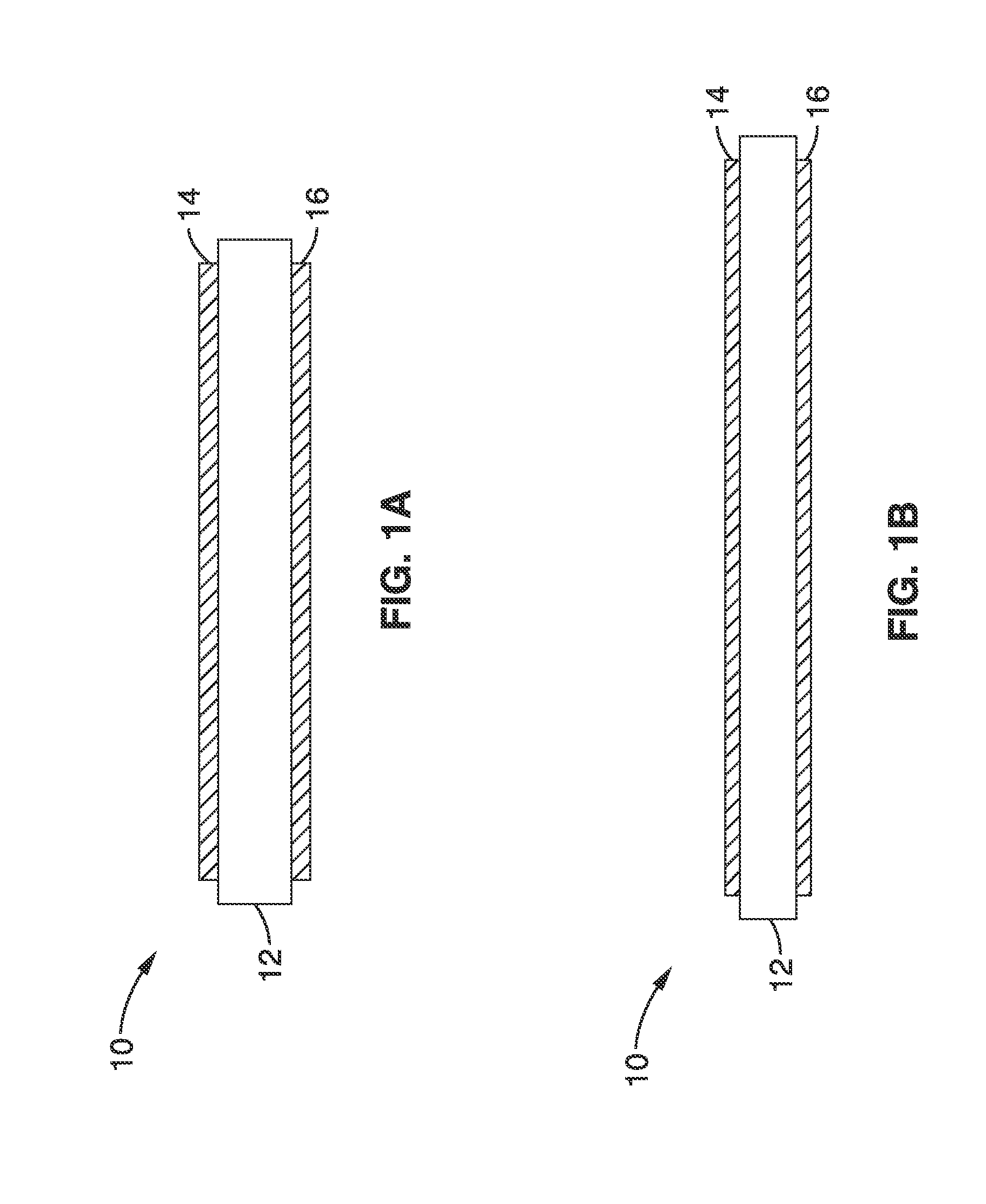
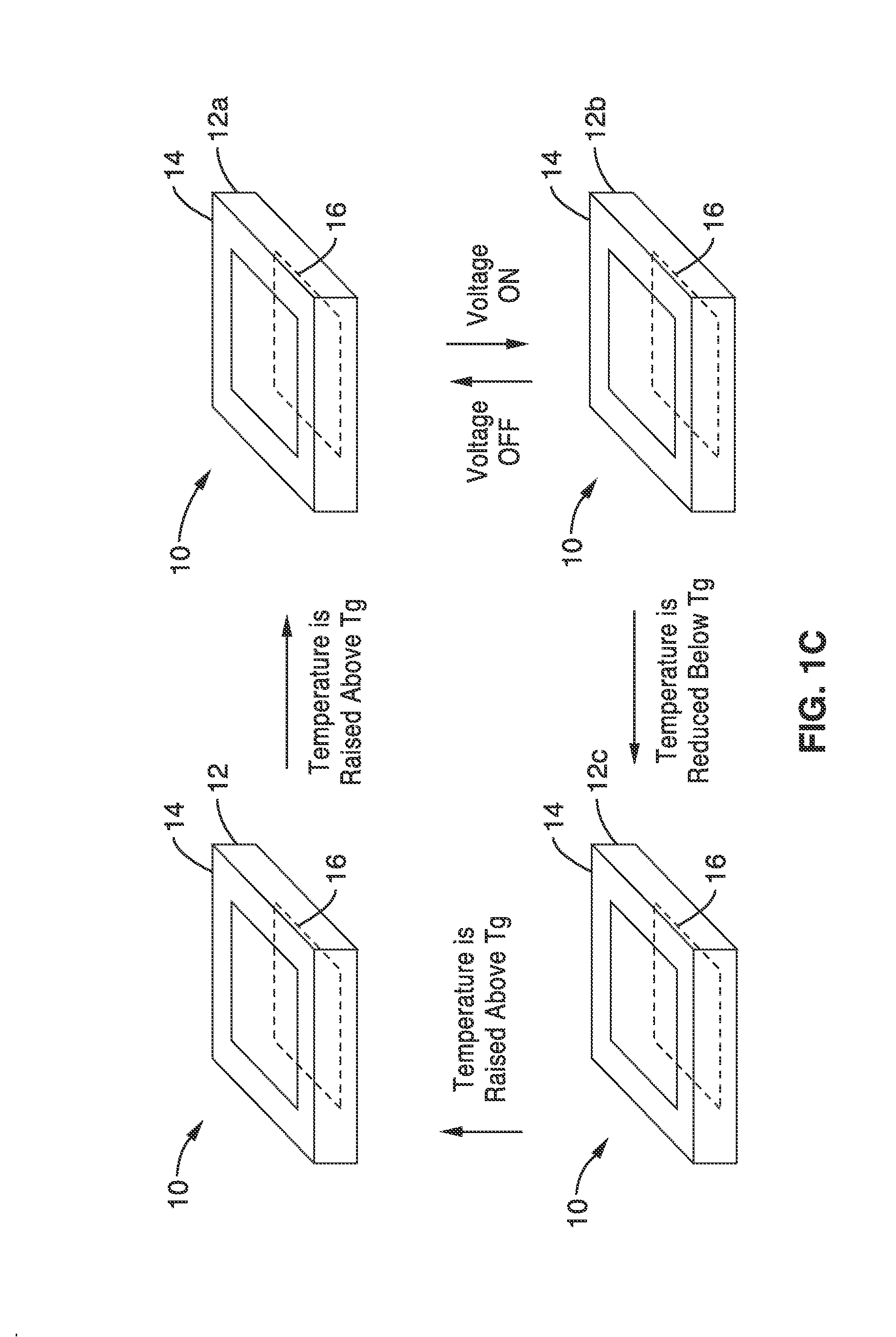
- Development of a bistable electroactive polymer that combines a shape memory polymer with a dielectrically induced actuation mechanism, using compliant electrodes and pre-straining techniques to achieve reversible and repeatable deformation at high strains, allowing the polymer to retain its shape below the glass transition temperature.
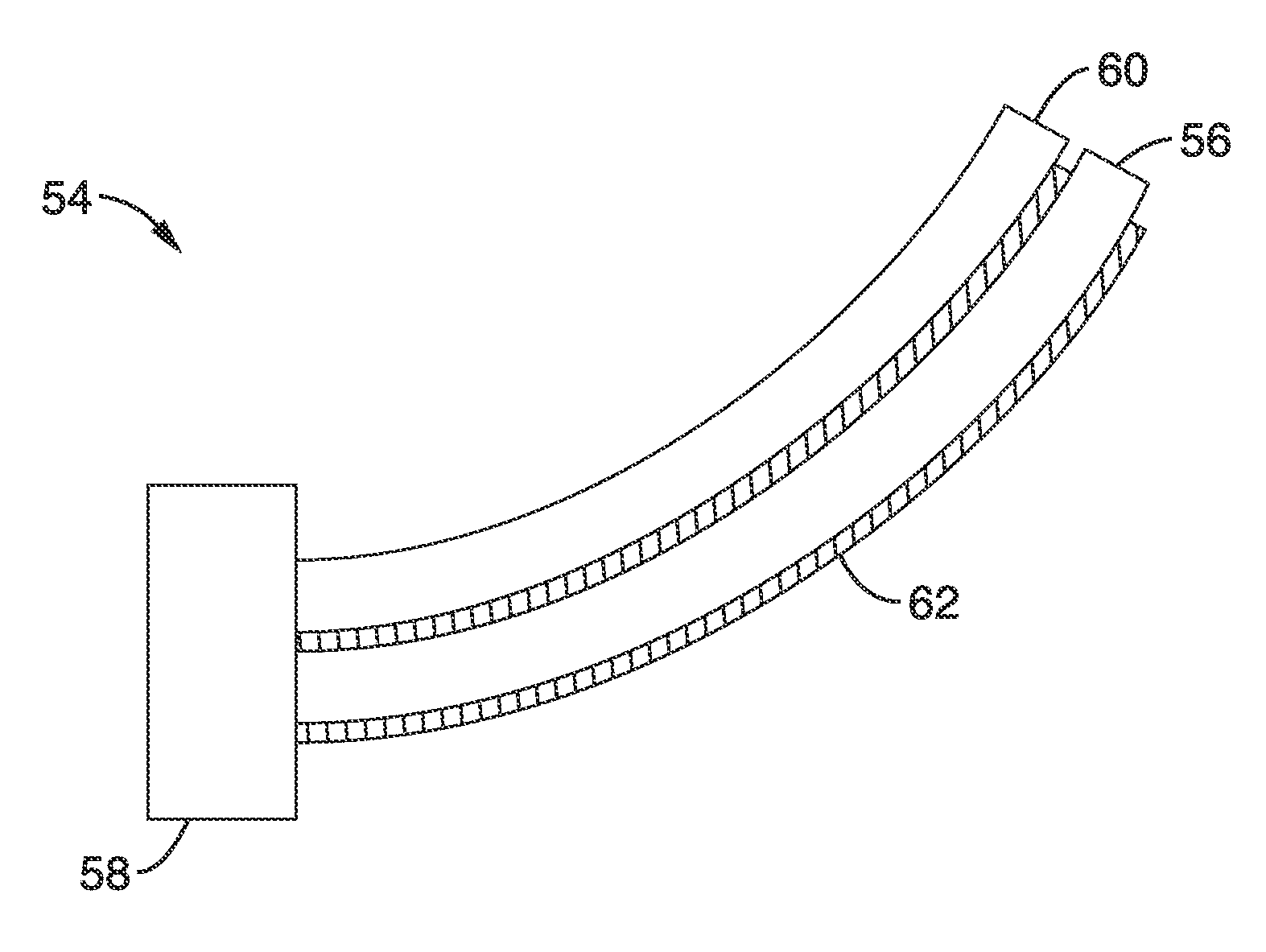

Card with dynamic shape memory alloy tactile feature
PatentWO2019036412A1
Innovation
- Integration of shape memory alloy (SMA) actuators, such as nitinol, into card designs, which transition between relaxed and deformed states upon power activation, providing reversible tactile differences and enabling dynamic features like raised logos for tactile feedback.


Material Safety Standards for Smart Polymers
The development of comprehensive material safety standards for smart polymers, particularly electroactive polymers (EAPs) and shape memory polymers (SMPs), has become increasingly critical as these materials transition from laboratory research to commercial applications. Current regulatory frameworks primarily rely on adaptations of existing polymer safety guidelines, which often fail to address the unique properties and behaviors exhibited by smart polymers during their active states.
Biocompatibility assessment represents a fundamental pillar of smart polymer safety standards. For EAPs used in biomedical applications, cytotoxicity testing must account for the electrical stimulation conditions and potential ion migration during actuation cycles. Standard ISO 10993 series protocols require modification to evaluate cellular responses under dynamic electrical fields. Similarly, SMPs demand specialized biocompatibility testing that considers the material's behavior across its glass transition temperature range, as thermal activation may alter surface chemistry and release previously bound substances.
Chemical stability evaluation protocols for smart polymers extend beyond traditional polymer testing methodologies. EAPs require assessment of electrochemical stability under repeated voltage cycling, including evaluation of degradation products formed during oxidation-reduction processes. Accelerated aging tests must simulate real-world electrical stimulation patterns rather than simple thermal aging. For SMPs, chemical stability testing encompasses multiple temperature cycles through the transition range, monitoring molecular weight changes, crosslink density variations, and potential plasticizer migration.
Mechanical safety standards address the unique failure modes associated with smart polymer actuation. EAPs require fatigue testing under combined mechanical and electrical stress conditions, as simultaneous loading can accelerate material degradation through different pathways than individual stress applications. Failure criteria must account for gradual performance degradation rather than catastrophic failure, establishing minimum acceptable actuation force thresholds over operational lifespans.
Environmental impact assessment protocols for smart polymers consider both material composition and energy consumption during operation. Life cycle analysis frameworks must incorporate the electrical energy requirements for EAP actuation and thermal energy needs for SMP activation. Disposal protocols require special consideration for EAPs containing ionic liquids or conductive fillers that may pose environmental risks if not properly managed.
Standardization efforts currently involve collaboration between materials science organizations, regulatory bodies, and industry consortiums to establish unified testing protocols that balance innovation encouragement with public safety protection.
Biocompatibility assessment represents a fundamental pillar of smart polymer safety standards. For EAPs used in biomedical applications, cytotoxicity testing must account for the electrical stimulation conditions and potential ion migration during actuation cycles. Standard ISO 10993 series protocols require modification to evaluate cellular responses under dynamic electrical fields. Similarly, SMPs demand specialized biocompatibility testing that considers the material's behavior across its glass transition temperature range, as thermal activation may alter surface chemistry and release previously bound substances.
Chemical stability evaluation protocols for smart polymers extend beyond traditional polymer testing methodologies. EAPs require assessment of electrochemical stability under repeated voltage cycling, including evaluation of degradation products formed during oxidation-reduction processes. Accelerated aging tests must simulate real-world electrical stimulation patterns rather than simple thermal aging. For SMPs, chemical stability testing encompasses multiple temperature cycles through the transition range, monitoring molecular weight changes, crosslink density variations, and potential plasticizer migration.
Mechanical safety standards address the unique failure modes associated with smart polymer actuation. EAPs require fatigue testing under combined mechanical and electrical stress conditions, as simultaneous loading can accelerate material degradation through different pathways than individual stress applications. Failure criteria must account for gradual performance degradation rather than catastrophic failure, establishing minimum acceptable actuation force thresholds over operational lifespans.
Environmental impact assessment protocols for smart polymers consider both material composition and energy consumption during operation. Life cycle analysis frameworks must incorporate the electrical energy requirements for EAP actuation and thermal energy needs for SMP activation. Disposal protocols require special consideration for EAPs containing ionic liquids or conductive fillers that may pose environmental risks if not properly managed.
Standardization efforts currently involve collaboration between materials science organizations, regulatory bodies, and industry consortiums to establish unified testing protocols that balance innovation encouragement with public safety protection.
Performance Testing Methods for Elastic Polymers
Performance testing methods for elastic polymers require standardized protocols to accurately evaluate and compare the mechanical properties of electroactive polymers (EAPs) and shape memory polymers (SMPs). These testing methodologies are essential for determining elastic fit characteristics and establishing reliable performance benchmarks across different polymer systems.
Tensile testing represents the fundamental approach for assessing elastic properties, utilizing universal testing machines equipped with specialized grips designed for polymer specimens. The standard test follows ASTM D638 protocols, measuring stress-strain relationships under controlled loading conditions. For EAPs, testing must account for electrical stimulation effects, requiring modified fixtures that accommodate electrode connections while maintaining mechanical integrity during deformation cycles.
Dynamic mechanical analysis (DMA) provides comprehensive viscoelastic characterization across temperature and frequency ranges. This method proves particularly valuable for SMPs, as it captures the glass transition behavior critical to shape memory functionality. The testing protocol involves oscillatory loading at multiple frequencies while controlling temperature gradients, enabling precise determination of storage modulus, loss modulus, and damping characteristics.
Cyclic loading tests evaluate fatigue resistance and elastic recovery properties under repeated deformation cycles. These protocols typically involve programmed loading sequences with varying strain amplitudes and frequencies, monitoring mechanical property degradation over extended periods. For elastic fit applications, cyclic testing simulates real-world usage conditions and provides crucial data for predicting service life performance.
Specialized testing methods address unique polymer characteristics, including electromechanical coupling measurements for EAPs using synchronized electrical and mechanical stimulation. Shape fixity and recovery ratio testing for SMPs involves controlled heating and cooling cycles while monitoring dimensional changes. Environmental testing chambers enable property evaluation under various temperature, humidity, and chemical exposure conditions relevant to specific applications.
Advanced characterization techniques incorporate real-time monitoring systems using digital image correlation and laser extensometry for precise strain measurement. These methods eliminate grip effects and provide detailed deformation field analysis, particularly important for understanding local elastic behavior variations across polymer specimens during comparative performance evaluation.
Tensile testing represents the fundamental approach for assessing elastic properties, utilizing universal testing machines equipped with specialized grips designed for polymer specimens. The standard test follows ASTM D638 protocols, measuring stress-strain relationships under controlled loading conditions. For EAPs, testing must account for electrical stimulation effects, requiring modified fixtures that accommodate electrode connections while maintaining mechanical integrity during deformation cycles.
Dynamic mechanical analysis (DMA) provides comprehensive viscoelastic characterization across temperature and frequency ranges. This method proves particularly valuable for SMPs, as it captures the glass transition behavior critical to shape memory functionality. The testing protocol involves oscillatory loading at multiple frequencies while controlling temperature gradients, enabling precise determination of storage modulus, loss modulus, and damping characteristics.
Cyclic loading tests evaluate fatigue resistance and elastic recovery properties under repeated deformation cycles. These protocols typically involve programmed loading sequences with varying strain amplitudes and frequencies, monitoring mechanical property degradation over extended periods. For elastic fit applications, cyclic testing simulates real-world usage conditions and provides crucial data for predicting service life performance.
Specialized testing methods address unique polymer characteristics, including electromechanical coupling measurements for EAPs using synchronized electrical and mechanical stimulation. Shape fixity and recovery ratio testing for SMPs involves controlled heating and cooling cycles while monitoring dimensional changes. Environmental testing chambers enable property evaluation under various temperature, humidity, and chemical exposure conditions relevant to specific applications.
Advanced characterization techniques incorporate real-time monitoring systems using digital image correlation and laser extensometry for precise strain measurement. These methods eliminate grip effects and provide detailed deformation field analysis, particularly important for understanding local elastic behavior variations across polymer specimens during comparative performance evaluation.
Unlock deeper insights with PatSnap Eureka Quick Research — get a full tech report to explore trends and direct your research. Try now!
Generate Your Research Report Instantly with AI Agent
Supercharge your innovation with PatSnap Eureka AI Agent Platform!