

Electrolyte Wetting For Solid-State Batteries: Challenges And Solutions
MAY 15, 20268 MIN READ
Generate Your Research Report Instantly with AI Agent
PatSnap Eureka helps you evaluate technical feasibility & market potential.
Solid-State Battery Electrolyte Wetting Background and Objectives
Solid-state batteries represent a paradigm shift in energy storage technology, emerging from decades of research aimed at overcoming the fundamental limitations of conventional lithium-ion batteries. The evolution began in the 1970s with early investigations into solid electrolytes, driven by the need for enhanced safety, higher energy density, and improved thermal stability. Traditional liquid electrolyte systems, while commercially successful, present inherent risks including flammability, thermal runaway, and limited operating temperature ranges.
The development trajectory of solid-state battery technology has been marked by significant milestones in materials science and electrochemistry. Initial research focused on ceramic electrolytes such as beta-alumina and NASICON structures, followed by the discovery of superionic conductors and polymer electrolytes in the 1980s and 1990s. The breakthrough came with the identification of sulfide-based and oxide-based solid electrolytes exhibiting ionic conductivities approaching those of liquid electrolytes.
Contemporary solid-state battery research has identified electrolyte wetting as a critical bottleneck preventing widespread commercialization. Unlike liquid electrolytes that naturally conform to electrode surfaces through capillary action and molecular mobility, solid electrolytes face fundamental challenges in establishing intimate contact with active materials. This wetting phenomenon directly impacts ionic transport pathways, interfacial resistance, and overall battery performance.
The primary objective of addressing electrolyte wetting challenges encompasses multiple technical goals. Achieving uniform electrolyte distribution across electrode surfaces is essential for maintaining consistent ionic conductivity throughout the battery cell. Minimizing interfacial resistance between solid electrolyte and electrode materials represents another crucial target, as high resistance leads to voltage losses and reduced power capability.
Furthermore, the technology aims to establish mechanically stable interfaces that can withstand volume changes during charge-discharge cycles without compromising electrical contact. Long-term interface stability under various operating conditions, including temperature fluctuations and mechanical stress, constitutes a fundamental requirement for commercial viability.
The ultimate technological vision involves developing manufacturing processes and material formulations that enable scalable production of solid-state batteries with superior performance metrics compared to conventional systems, while maintaining cost-effectiveness and reliability standards demanded by automotive and consumer electronics applications.
The development trajectory of solid-state battery technology has been marked by significant milestones in materials science and electrochemistry. Initial research focused on ceramic electrolytes such as beta-alumina and NASICON structures, followed by the discovery of superionic conductors and polymer electrolytes in the 1980s and 1990s. The breakthrough came with the identification of sulfide-based and oxide-based solid electrolytes exhibiting ionic conductivities approaching those of liquid electrolytes.
Contemporary solid-state battery research has identified electrolyte wetting as a critical bottleneck preventing widespread commercialization. Unlike liquid electrolytes that naturally conform to electrode surfaces through capillary action and molecular mobility, solid electrolytes face fundamental challenges in establishing intimate contact with active materials. This wetting phenomenon directly impacts ionic transport pathways, interfacial resistance, and overall battery performance.
The primary objective of addressing electrolyte wetting challenges encompasses multiple technical goals. Achieving uniform electrolyte distribution across electrode surfaces is essential for maintaining consistent ionic conductivity throughout the battery cell. Minimizing interfacial resistance between solid electrolyte and electrode materials represents another crucial target, as high resistance leads to voltage losses and reduced power capability.
Furthermore, the technology aims to establish mechanically stable interfaces that can withstand volume changes during charge-discharge cycles without compromising electrical contact. Long-term interface stability under various operating conditions, including temperature fluctuations and mechanical stress, constitutes a fundamental requirement for commercial viability.
The ultimate technological vision involves developing manufacturing processes and material formulations that enable scalable production of solid-state batteries with superior performance metrics compared to conventional systems, while maintaining cost-effectiveness and reliability standards demanded by automotive and consumer electronics applications.
Market Demand Analysis for Solid-State Battery Technologies
The global solid-state battery market is experiencing unprecedented growth momentum, driven by the urgent need for safer, higher-energy-density energy storage solutions across multiple industries. Electric vehicle manufacturers are particularly driving demand as they seek to overcome the limitations of conventional lithium-ion batteries, including thermal runaway risks, limited energy density, and charging speed constraints. The automotive sector represents the largest market segment, with major manufacturers investing heavily in solid-state battery technology to achieve longer driving ranges and faster charging capabilities.
Consumer electronics manufacturers constitute another significant demand driver, seeking thinner, lighter, and more durable battery solutions for smartphones, laptops, and wearable devices. The miniaturization trend in electronics requires batteries with higher volumetric energy density, making solid-state technology increasingly attractive despite current cost premiums. Grid-scale energy storage applications are emerging as a substantial market opportunity, particularly as renewable energy deployment accelerates globally.
The market demand is intensifying due to regulatory pressures and environmental concerns. Government mandates for electric vehicle adoption and carbon neutrality targets are creating substantial pull-through demand for advanced battery technologies. Safety regulations in aviation and marine applications are also driving interest in solid-state solutions, where fire risk mitigation is paramount.
However, electrolyte wetting challenges significantly impact market readiness and commercial viability. Poor interfacial contact between solid electrolytes and electrodes directly affects battery performance metrics that customers prioritize, including cycle life, power density, and temperature stability. Manufacturing scalability concerns related to achieving consistent electrolyte wetting across large-format cells are delaying mass market adoption timelines.
The market exhibits strong regional variations, with Asia-Pacific leading in manufacturing capacity development, while North America and Europe focus on automotive applications and advanced materials research. Supply chain considerations are becoming increasingly important as companies seek to establish domestic solid-state battery production capabilities.
Current market dynamics suggest that successful resolution of electrolyte wetting challenges will be critical for capturing the substantial commercial opportunity. Early market entry will likely focus on premium applications where performance advantages justify higher costs, gradually expanding to mass market segments as manufacturing processes mature and costs decline.
Consumer electronics manufacturers constitute another significant demand driver, seeking thinner, lighter, and more durable battery solutions for smartphones, laptops, and wearable devices. The miniaturization trend in electronics requires batteries with higher volumetric energy density, making solid-state technology increasingly attractive despite current cost premiums. Grid-scale energy storage applications are emerging as a substantial market opportunity, particularly as renewable energy deployment accelerates globally.
The market demand is intensifying due to regulatory pressures and environmental concerns. Government mandates for electric vehicle adoption and carbon neutrality targets are creating substantial pull-through demand for advanced battery technologies. Safety regulations in aviation and marine applications are also driving interest in solid-state solutions, where fire risk mitigation is paramount.
However, electrolyte wetting challenges significantly impact market readiness and commercial viability. Poor interfacial contact between solid electrolytes and electrodes directly affects battery performance metrics that customers prioritize, including cycle life, power density, and temperature stability. Manufacturing scalability concerns related to achieving consistent electrolyte wetting across large-format cells are delaying mass market adoption timelines.
The market exhibits strong regional variations, with Asia-Pacific leading in manufacturing capacity development, while North America and Europe focus on automotive applications and advanced materials research. Supply chain considerations are becoming increasingly important as companies seek to establish domestic solid-state battery production capabilities.
Current market dynamics suggest that successful resolution of electrolyte wetting challenges will be critical for capturing the substantial commercial opportunity. Early market entry will likely focus on premium applications where performance advantages justify higher costs, gradually expanding to mass market segments as manufacturing processes mature and costs decline.
Current Electrolyte Wetting Challenges in Solid-State Systems
Solid-state batteries face significant electrolyte wetting challenges that fundamentally differ from conventional liquid electrolyte systems. The primary obstacle stems from the inherently poor interfacial contact between solid electrolytes and electrode materials, particularly at the cathode interface where mechanical stress and chemical incompatibilities create substantial barriers to effective ion transport.
Interface resistance represents the most critical challenge in solid-state systems. Unlike liquid electrolytes that naturally conform to electrode surface irregularities, solid electrolytes maintain rigid structures that create microscopic gaps and voids at interfaces. These discontinuities dramatically increase ionic resistance, often by several orders of magnitude compared to liquid systems, severely limiting battery performance and cycle life.
Mechanical contact issues arise from the fundamental mismatch between solid electrolyte and electrode materials. During battery operation, volume changes in electrode materials during charge-discharge cycles create and expand interfacial gaps. The inability of solid electrolytes to flow and maintain contact, as liquid electrolytes do, results in progressive degradation of ionic pathways and increasing cell resistance over time.
Chemical compatibility presents another major challenge, particularly with oxide-based solid electrolytes and high-voltage cathode materials. Interfacial reactions can form resistive interphases that impede ion transport while consuming active materials. These reactions are often irreversible and accelerate under operating conditions, leading to capacity fade and performance degradation.
Processing-related wetting challenges emerge during battery manufacturing. Achieving intimate contact between solid electrolyte and electrode materials requires high-temperature sintering or high-pressure processing, which can damage temperature-sensitive electrode materials or create unwanted interfacial reactions. The lack of penetration capability, inherent to liquid electrolytes, means solid electrolytes cannot access the full electrode surface area, particularly in porous electrode structures.
Thermal expansion mismatches between different solid components create additional complications. Differential expansion and contraction during temperature cycling can generate mechanical stress that opens interfacial gaps or causes delamination, further compromising electrolyte wetting and ionic conductivity throughout the solid-state system.
Interface resistance represents the most critical challenge in solid-state systems. Unlike liquid electrolytes that naturally conform to electrode surface irregularities, solid electrolytes maintain rigid structures that create microscopic gaps and voids at interfaces. These discontinuities dramatically increase ionic resistance, often by several orders of magnitude compared to liquid systems, severely limiting battery performance and cycle life.
Mechanical contact issues arise from the fundamental mismatch between solid electrolyte and electrode materials. During battery operation, volume changes in electrode materials during charge-discharge cycles create and expand interfacial gaps. The inability of solid electrolytes to flow and maintain contact, as liquid electrolytes do, results in progressive degradation of ionic pathways and increasing cell resistance over time.
Chemical compatibility presents another major challenge, particularly with oxide-based solid electrolytes and high-voltage cathode materials. Interfacial reactions can form resistive interphases that impede ion transport while consuming active materials. These reactions are often irreversible and accelerate under operating conditions, leading to capacity fade and performance degradation.
Processing-related wetting challenges emerge during battery manufacturing. Achieving intimate contact between solid electrolyte and electrode materials requires high-temperature sintering or high-pressure processing, which can damage temperature-sensitive electrode materials or create unwanted interfacial reactions. The lack of penetration capability, inherent to liquid electrolytes, means solid electrolytes cannot access the full electrode surface area, particularly in porous electrode structures.
Thermal expansion mismatches between different solid components create additional complications. Differential expansion and contraction during temperature cycling can generate mechanical stress that opens interfacial gaps or causes delamination, further compromising electrolyte wetting and ionic conductivity throughout the solid-state system.
Current Electrolyte Wetting Enhancement Solutions
01 Electrolyte composition optimization for enhanced wetting
Solid-state battery electrolytes can be formulated with specific ionic compositions and additives to improve their wetting properties at electrode interfaces. The optimization involves adjusting the concentration of lithium salts, incorporating plasticizers, and using polymer matrices that enhance ionic conductivity while maintaining good contact with electrode materials. These formulations help reduce interfacial resistance and improve overall battery performance.- Electrolyte composition and additives for improved wetting: Solid-state battery electrolytes can be formulated with specific compositions and additives to enhance wetting properties at electrode interfaces. These formulations may include polymer matrices, ceramic materials, or hybrid compositions that improve ionic conductivity and interfacial contact. The optimization of electrolyte chemistry helps reduce interfacial resistance and enhances battery performance through better electrode-electrolyte interaction.
- Surface modification techniques for enhanced wetting: Various surface modification approaches can be employed to improve electrolyte wetting on electrode surfaces in solid-state batteries. These techniques may involve surface treatments, coatings, or chemical modifications that alter surface energy and promote better electrolyte spreading. Such modifications help establish intimate contact between solid electrolyte and electrode materials, reducing interfacial impedance.
- Interface engineering and interlayer materials: The development of specialized interlayer materials and interface engineering strategies addresses wetting challenges in solid-state batteries. These approaches involve creating buffer layers or gradient compositions that facilitate better electrolyte-electrode contact. Interface engineering helps minimize void formation and ensures uniform current distribution across the electrode surface.
- Processing methods for improved electrolyte-electrode contact: Specific manufacturing and processing techniques can enhance electrolyte wetting during solid-state battery fabrication. These methods may include controlled temperature processing, pressure application, or specialized deposition techniques that promote better interfacial contact. Optimized processing conditions help achieve uniform electrolyte distribution and minimize interfacial defects.
- Composite electrolyte systems for enhanced wetting properties: Composite electrolyte systems combining different materials can be designed to improve wetting characteristics in solid-state batteries. These systems may incorporate multiple phases or components that work synergistically to enhance interfacial properties. The composite approach allows for tailoring of mechanical, chemical, and electrical properties while maintaining good electrode contact.
02 Surface modification techniques for improved electrolyte-electrode contact
Various surface treatment methods can be applied to electrode materials to enhance wetting behavior with solid-state electrolytes. These techniques include surface coating with compatible materials, creating micro-structured surfaces, and applying interfacial layers that promote better adhesion. The modifications help establish intimate contact between the electrolyte and electrode, reducing contact resistance and improving charge transfer kinetics.Expand Specific Solutions03 Processing methods for enhanced electrolyte penetration
Specialized manufacturing processes can be employed to improve electrolyte wetting in solid-state batteries. These methods include controlled temperature and pressure conditions during assembly, vacuum infiltration techniques, and sequential deposition processes. The processing parameters are optimized to ensure complete penetration of the electrolyte into electrode pores and establish uniform contact across the interface.Expand Specific Solutions04 Interfacial layer engineering for wetting enhancement
The development of specialized interfacial layers between solid electrolytes and electrodes can significantly improve wetting characteristics. These layers act as compatibility agents that bridge the gap between different materials, reducing interfacial energy and promoting better adhesion. The interfacial engineering approach involves selecting materials with appropriate chemical and physical properties to facilitate smooth ion transport while maintaining structural integrity.Expand Specific Solutions05 Additive incorporation for wetting property improvement
Various additives can be incorporated into solid-state electrolyte formulations to enhance their wetting behavior. These include surfactants, coupling agents, and compatibility enhancers that reduce surface tension and improve spreading characteristics. The additives are carefully selected to maintain the electrochemical stability of the electrolyte while promoting better contact with electrode surfaces, leading to improved battery performance and cycle life.Expand Specific Solutions
Major Players in Solid-State Battery Development
The solid-state battery electrolyte wetting sector represents an emerging technology landscape in the early commercialization phase, with significant market potential driven by electric vehicle adoption and energy storage demands. The industry exhibits a fragmented competitive structure spanning established electronics giants, automotive manufacturers, specialized battery companies, and research institutions. Technology maturity varies considerably across players, with companies like Samsung SDI, LG Energy Solution, and Murata Manufacturing leveraging advanced manufacturing capabilities, while QuantumScape and Solid Power focus on breakthrough solid-state innovations. Traditional automotive players like Honda and Guangzhou Automobile Group are integrating these technologies into vehicle platforms, supported by materials specialists such as Shenzhen Capchem and component manufacturers like Nippon Kodoshi. Research institutions including University of Michigan and Battelle Memorial Institute contribute fundamental breakthroughs, while emerging companies like Ionic Materials and LICAP Technologies develop novel electrolyte solutions, creating a dynamic ecosystem poised for rapid technological advancement.
Murata Manufacturing Co. Ltd.
Technical Solution: Murata has developed solid-state battery technology focusing on ceramic electrolyte systems with enhanced wetting properties through precision manufacturing and surface engineering approaches. Their solution addresses interfacial challenges by utilizing advanced ceramic processing techniques including controlled sintering and co-firing processes that promote better contact formation between electrolyte and electrode materials. The company employs specialized powder preparation methods and particle surface modifications to improve wetting characteristics and reduce interfacial resistance. Their manufacturing approach includes precision screen printing and lamination techniques that ensure uniform electrolyte distribution and optimal contact formation. Murata's technology incorporates temperature and pressure optimization during assembly to enhance interfacial bonding while maintaining the structural integrity of ceramic components throughout the battery manufacturing process.
Strengths: Precision ceramic manufacturing expertise, miniaturization capabilities, proven reliability in electronic applications. Weaknesses: Limited to smaller format applications, higher per-unit costs, challenges in scaling to large automotive cells.
LG Chem Ltd.
Technical Solution: LG Chem has developed advanced solid-state battery technology focusing on oxide-based electrolytes with improved wetting characteristics through innovative processing techniques. Their approach combines thin-film deposition methods with pressure-assisted assembly to enhance electrolyte-electrode interfacial contact. The company utilizes specialized coating technologies and surface treatments to modify electrode surfaces for better compatibility with solid electrolytes. Their manufacturing process includes controlled atmosphere processing and optimized sintering techniques to promote better adhesion between solid components. LG Chem's technology incorporates buffer layers and interfacial engineering solutions to address thermal expansion mismatches and maintain good contact during cycling. The company has developed proprietary binder systems and processing aids that facilitate better wetting and conformability of solid electrolyte materials.
Strengths: Extensive battery manufacturing experience, strong R&D capabilities, established supply chain infrastructure. Weaknesses: Higher production costs compared to liquid electrolyte systems, challenges in achieving uniform interfacial contact at scale.
Core Innovations in Solid-State Electrolyte Interface Engineering
Method of improving electrode-to-solid-electrolyte interface contact in solid-state batteries
PatentPendingUS20230361266A1
Innovation
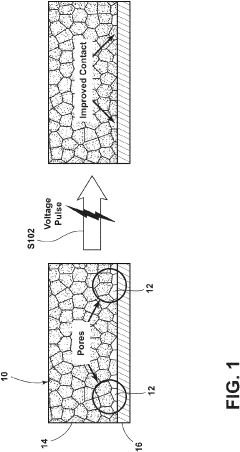
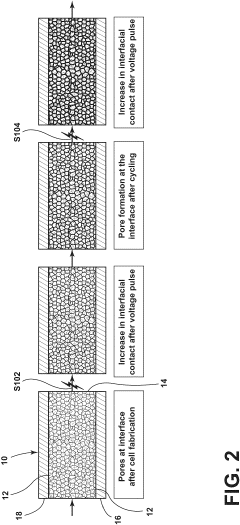
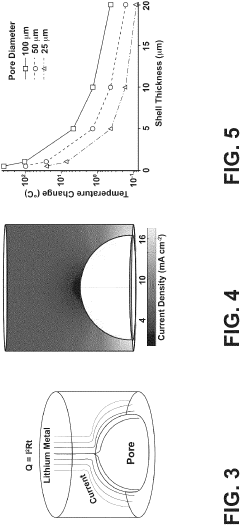
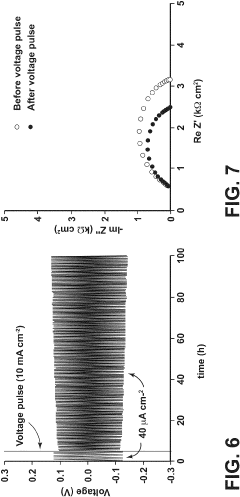
- Applying a voltage pulse at high current density for a short duration to electrochemically improve interfacial contact by causing electrode material to diffuse into pores in the solid electrolyte, thereby healing the interface and eliminating space charge effects, which can be repeated in-operando to maintain contact and prevent failure.
Gel electrolyte for solid-state battery
PatentActiveUS11735768B2
Innovation
- A method for forming bipolar solid-state batteries using a polymeric gel electrolyte, where a polymeric precursor with crosslinkable polymers, plasticizers, and lithium salts is used to create a continuous solid-state electrolyte network by filling voids between electrodes, enhancing interfacial contact and conductivity.


Safety Standards for Solid-State Battery Manufacturing
The manufacturing of solid-state batteries requires comprehensive safety standards that address unique risks associated with electrolyte wetting processes and material handling. Current regulatory frameworks primarily focus on conventional lithium-ion battery safety, creating gaps in addressing solid-state battery-specific hazards such as high-temperature processing, ceramic electrolyte handling, and interface formation procedures.
International standards organizations including IEC, UL, and ISO are developing specialized protocols for solid-state battery manufacturing. These emerging standards emphasize controlled atmosphere requirements during electrolyte deposition, mandatory humidity control systems, and specific handling procedures for solid electrolyte materials. The standards also mandate real-time monitoring of interface formation processes to prevent thermal runaway and ensure consistent electrolyte wetting.
Manufacturing facilities must implement multi-tier safety protocols including Class 1000 cleanroom environments, inert gas handling systems, and specialized fire suppression designed for solid electrolyte materials. Personnel safety requirements include advanced training on ceramic material handling, exposure limits for solid electrolyte dust, and emergency response procedures for high-temperature processing equipment failures.
Quality assurance standards mandate continuous monitoring of electrolyte wetting uniformity through advanced imaging systems and impedance spectroscopy. These standards require statistical process control with defined control limits for wetting coverage, interface resistance, and thermal stability parameters. Documentation requirements include complete traceability of electrolyte batches and processing conditions.
Emerging safety standards also address environmental considerations including waste management protocols for solid electrolyte materials, air filtration requirements for ceramic dust control, and energy recovery systems for high-temperature processing. These standards establish baseline requirements for sustainable manufacturing while maintaining strict safety protocols throughout the production lifecycle.
International standards organizations including IEC, UL, and ISO are developing specialized protocols for solid-state battery manufacturing. These emerging standards emphasize controlled atmosphere requirements during electrolyte deposition, mandatory humidity control systems, and specific handling procedures for solid electrolyte materials. The standards also mandate real-time monitoring of interface formation processes to prevent thermal runaway and ensure consistent electrolyte wetting.
Manufacturing facilities must implement multi-tier safety protocols including Class 1000 cleanroom environments, inert gas handling systems, and specialized fire suppression designed for solid electrolyte materials. Personnel safety requirements include advanced training on ceramic material handling, exposure limits for solid electrolyte dust, and emergency response procedures for high-temperature processing equipment failures.
Quality assurance standards mandate continuous monitoring of electrolyte wetting uniformity through advanced imaging systems and impedance spectroscopy. These standards require statistical process control with defined control limits for wetting coverage, interface resistance, and thermal stability parameters. Documentation requirements include complete traceability of electrolyte batches and processing conditions.
Emerging safety standards also address environmental considerations including waste management protocols for solid electrolyte materials, air filtration requirements for ceramic dust control, and energy recovery systems for high-temperature processing. These standards establish baseline requirements for sustainable manufacturing while maintaining strict safety protocols throughout the production lifecycle.
Environmental Impact of Solid-State Battery Production
The environmental implications of solid-state battery production present a complex landscape of both opportunities and challenges compared to conventional lithium-ion battery manufacturing. While solid-state batteries promise enhanced safety and energy density, their production processes introduce unique environmental considerations that require careful evaluation across the entire manufacturing lifecycle.
Material extraction for solid-state batteries involves several critical elements with varying environmental footprints. Lithium mining remains a significant concern, requiring substantial water resources and potentially impacting local ecosystems. The production of solid electrolytes, particularly ceramic-based materials like LLZO (Li7La3Zr2O12), demands rare earth elements such as lanthanum and zirconium, which involve energy-intensive extraction processes. Sulfide-based electrolytes require sulfur compounds that, while more abundant, necessitate careful handling to prevent environmental contamination during processing.
Manufacturing energy consumption represents another crucial environmental factor. Solid-state battery production typically requires higher processing temperatures for sintering ceramic electrolytes, potentially increasing energy demands compared to liquid electrolyte systems. However, the elimination of organic solvents used in conventional battery production reduces volatile organic compound emissions and associated air quality impacts. The dry processing techniques employed in solid-state manufacturing also minimize water usage and eliminate the need for extensive solvent recovery systems.
Waste generation patterns differ significantly from traditional battery production. The absence of liquid electrolytes eliminates hazardous organic waste streams, while the increased use of ceramic materials creates different waste profiles. Manufacturing defects in solid-state batteries may result in ceramic waste that, while chemically stable, requires specialized recycling approaches due to the complex material compositions involved.
The carbon footprint assessment reveals mixed environmental outcomes. Higher processing temperatures and specialized equipment increase direct manufacturing emissions, yet the improved energy density and longer lifespan of solid-state batteries can offset these impacts through enhanced vehicle efficiency and reduced replacement frequency. Life cycle analyses suggest that despite higher initial production emissions, solid-state batteries may achieve lower overall environmental impact through extended operational phases and improved recyclability of stable ceramic components.
Material extraction for solid-state batteries involves several critical elements with varying environmental footprints. Lithium mining remains a significant concern, requiring substantial water resources and potentially impacting local ecosystems. The production of solid electrolytes, particularly ceramic-based materials like LLZO (Li7La3Zr2O12), demands rare earth elements such as lanthanum and zirconium, which involve energy-intensive extraction processes. Sulfide-based electrolytes require sulfur compounds that, while more abundant, necessitate careful handling to prevent environmental contamination during processing.
Manufacturing energy consumption represents another crucial environmental factor. Solid-state battery production typically requires higher processing temperatures for sintering ceramic electrolytes, potentially increasing energy demands compared to liquid electrolyte systems. However, the elimination of organic solvents used in conventional battery production reduces volatile organic compound emissions and associated air quality impacts. The dry processing techniques employed in solid-state manufacturing also minimize water usage and eliminate the need for extensive solvent recovery systems.
Waste generation patterns differ significantly from traditional battery production. The absence of liquid electrolytes eliminates hazardous organic waste streams, while the increased use of ceramic materials creates different waste profiles. Manufacturing defects in solid-state batteries may result in ceramic waste that, while chemically stable, requires specialized recycling approaches due to the complex material compositions involved.
The carbon footprint assessment reveals mixed environmental outcomes. Higher processing temperatures and specialized equipment increase direct manufacturing emissions, yet the improved energy density and longer lifespan of solid-state batteries can offset these impacts through enhanced vehicle efficiency and reduced replacement frequency. Life cycle analyses suggest that despite higher initial production emissions, solid-state batteries may achieve lower overall environmental impact through extended operational phases and improved recyclability of stable ceramic components.
Unlock deeper insights with PatSnap Eureka Quick Research — get a full tech report to explore trends and direct your research. Try now!
Generate Your Research Report Instantly with AI Agent
Supercharge your innovation with PatSnap Eureka AI Agent Platform!