

Electron Ionization Scan Modes: Full Scan Vs SIM—Sensitivity, Linearity And Duty Cycle
SEP 22, 20259 MIN READ
Generate Your Research Report Instantly with AI Agent
PatSnap Eureka helps you evaluate technical feasibility & market potential.
Electron Ionization Mass Spectrometry Evolution and Objectives
Electron Ionization (EI) mass spectrometry has evolved significantly since its inception in the early 20th century, transforming from a rudimentary analytical technique into a sophisticated tool essential for modern chemical analysis. The journey began with the pioneering work of J.J. Thomson and Francis Aston, who developed the first mass spectrographs capable of separating ions based on their mass-to-charge ratios. By the 1940s, the fundamental principles of electron ionization were established, laying the groundwork for subsequent technological advancements.
The 1950s marked a pivotal era with the commercialization of mass spectrometers, making this technology accessible to broader scientific communities. During this period, the development of magnetic sector instruments provided improved resolution but remained limited in sensitivity and scan speed. The 1970s witnessed a revolutionary shift with the introduction of quadrupole mass analyzers, which offered enhanced scan speeds and operational simplicity, albeit with some compromise in resolution.
The digital revolution of the 1980s and 1990s catalyzed significant improvements in data acquisition and processing capabilities, enabling more sophisticated scan modes including Selected Ion Monitoring (SIM). This period also saw the integration of mass spectrometry with chromatographic techniques, particularly gas chromatography (GC-MS), expanding its application scope dramatically.
Recent technological trends have focused on enhancing sensitivity, selectivity, and quantitative accuracy while reducing analysis time. The development of advanced electron ionization sources, improved ion optics, and more efficient detectors has continuously pushed the boundaries of what is achievable with EI-MS. Particularly noteworthy is the evolution of scan modes from simple full scans to more targeted approaches like SIM, addressing specific analytical challenges.
The primary objectives in the field currently revolve around optimizing the trade-offs between sensitivity, linearity, and duty cycle in different scan modes. Full Scan mode aims to provide comprehensive spectral information for unknown compound identification, while SIM mode targets enhanced sensitivity for known analytes at lower concentrations. Researchers are actively working to develop hybrid approaches that combine the advantages of both modes.
Looking forward, the trajectory of EI-MS technology is moving toward intelligent systems capable of adaptive scan strategies, real-time decision-making based on incoming data, and improved quantitative performance across wider concentration ranges. The ultimate goal remains to achieve higher sensitivity without sacrificing linearity, while maintaining efficient duty cycles that enable rapid analysis of complex samples in various application domains from environmental monitoring to clinical diagnostics.
The 1950s marked a pivotal era with the commercialization of mass spectrometers, making this technology accessible to broader scientific communities. During this period, the development of magnetic sector instruments provided improved resolution but remained limited in sensitivity and scan speed. The 1970s witnessed a revolutionary shift with the introduction of quadrupole mass analyzers, which offered enhanced scan speeds and operational simplicity, albeit with some compromise in resolution.
The digital revolution of the 1980s and 1990s catalyzed significant improvements in data acquisition and processing capabilities, enabling more sophisticated scan modes including Selected Ion Monitoring (SIM). This period also saw the integration of mass spectrometry with chromatographic techniques, particularly gas chromatography (GC-MS), expanding its application scope dramatically.
Recent technological trends have focused on enhancing sensitivity, selectivity, and quantitative accuracy while reducing analysis time. The development of advanced electron ionization sources, improved ion optics, and more efficient detectors has continuously pushed the boundaries of what is achievable with EI-MS. Particularly noteworthy is the evolution of scan modes from simple full scans to more targeted approaches like SIM, addressing specific analytical challenges.
The primary objectives in the field currently revolve around optimizing the trade-offs between sensitivity, linearity, and duty cycle in different scan modes. Full Scan mode aims to provide comprehensive spectral information for unknown compound identification, while SIM mode targets enhanced sensitivity for known analytes at lower concentrations. Researchers are actively working to develop hybrid approaches that combine the advantages of both modes.
Looking forward, the trajectory of EI-MS technology is moving toward intelligent systems capable of adaptive scan strategies, real-time decision-making based on incoming data, and improved quantitative performance across wider concentration ranges. The ultimate goal remains to achieve higher sensitivity without sacrificing linearity, while maintaining efficient duty cycles that enable rapid analysis of complex samples in various application domains from environmental monitoring to clinical diagnostics.
Market Applications and Demand for Advanced MS Detection Methods
The mass spectrometry (MS) market has witnessed substantial growth driven by increasing demand across various industries requiring advanced analytical capabilities. The global MS market was valued at approximately $4.6 billion in 2022 and is projected to reach $7.3 billion by 2028, growing at a CAGR of 7.9%. This growth is significantly influenced by the expanding applications of different scan modes, particularly Full Scan and Selected Ion Monitoring (SIM).
Pharmaceutical and biotechnology sectors represent the largest market segment for MS technologies, accounting for nearly 35% of the total market share. These industries require highly sensitive detection methods for drug discovery, development, and quality control processes. The ability of SIM mode to provide enhanced sensitivity for targeted compounds has made it particularly valuable in pharmaceutical applications where detection of trace amounts of impurities is critical.
Environmental monitoring constitutes another rapidly growing application area, with an estimated market size of $1.2 billion. Regulatory agencies worldwide have implemented increasingly stringent requirements for monitoring environmental contaminants, driving demand for both Full Scan capabilities (for unknown compound identification) and SIM mode (for quantification of known pollutants at low concentrations).
Food safety testing represents a market segment growing at approximately 9.2% annually, with particular emphasis on pesticide residue analysis, food authenticity verification, and contaminant detection. The dual capabilities of Full Scan and SIM modes allow for both screening and targeted quantification, making these technologies essential for comprehensive food safety programs.
Clinical diagnostics is emerging as a high-potential growth area for advanced MS detection methods. The market for MS in clinical applications was valued at approximately $850 million in 2022, with projected growth exceeding 10% annually through 2028. Applications include newborn screening, therapeutic drug monitoring, and clinical toxicology, where the sensitivity advantages of SIM mode are particularly valuable.
Academic and research institutions continue to drive innovation in MS applications, with particular interest in proteomics, metabolomics, and other -omics fields. These applications typically require both the comprehensive data collection capabilities of Full Scan mode and the targeted sensitivity of SIM mode, often used in complementary workflows.
Industrial applications, including petrochemical analysis, materials science, and quality control processes, represent approximately 15% of the total MS market. These sectors particularly value the quantitative capabilities and improved duty cycle of SIM mode for routine analytical procedures where specific compounds must be monitored consistently.
Pharmaceutical and biotechnology sectors represent the largest market segment for MS technologies, accounting for nearly 35% of the total market share. These industries require highly sensitive detection methods for drug discovery, development, and quality control processes. The ability of SIM mode to provide enhanced sensitivity for targeted compounds has made it particularly valuable in pharmaceutical applications where detection of trace amounts of impurities is critical.
Environmental monitoring constitutes another rapidly growing application area, with an estimated market size of $1.2 billion. Regulatory agencies worldwide have implemented increasingly stringent requirements for monitoring environmental contaminants, driving demand for both Full Scan capabilities (for unknown compound identification) and SIM mode (for quantification of known pollutants at low concentrations).
Food safety testing represents a market segment growing at approximately 9.2% annually, with particular emphasis on pesticide residue analysis, food authenticity verification, and contaminant detection. The dual capabilities of Full Scan and SIM modes allow for both screening and targeted quantification, making these technologies essential for comprehensive food safety programs.
Clinical diagnostics is emerging as a high-potential growth area for advanced MS detection methods. The market for MS in clinical applications was valued at approximately $850 million in 2022, with projected growth exceeding 10% annually through 2028. Applications include newborn screening, therapeutic drug monitoring, and clinical toxicology, where the sensitivity advantages of SIM mode are particularly valuable.
Academic and research institutions continue to drive innovation in MS applications, with particular interest in proteomics, metabolomics, and other -omics fields. These applications typically require both the comprehensive data collection capabilities of Full Scan mode and the targeted sensitivity of SIM mode, often used in complementary workflows.
Industrial applications, including petrochemical analysis, materials science, and quality control processes, represent approximately 15% of the total MS market. These sectors particularly value the quantitative capabilities and improved duty cycle of SIM mode for routine analytical procedures where specific compounds must be monitored consistently.
Technical Comparison of Full Scan and SIM Mode Capabilities
Full Scan and Selected Ion Monitoring (SIM) represent two fundamental approaches in electron ionization mass spectrometry, each with distinct operational principles and performance characteristics. Full Scan mode operates by sequentially detecting all ions within a specified mass range, typically from 50 to 550 m/z, providing comprehensive spectral information. This mode captures the complete fragmentation pattern of compounds, enabling unknown compound identification through library matching and structural elucidation.
In contrast, SIM mode selectively monitors predefined ions of interest, focusing the instrument's resources on specific m/z values rather than scanning the entire mass range. By dwelling longer on selected ions, SIM achieves significantly enhanced sensitivity—typically 10 to 100 times greater than Full Scan—making it particularly valuable for trace analysis applications.
Sensitivity differences between these modes stem from fundamental operational mechanics. Full Scan distributes acquisition time across the entire mass range, allocating minimal dwell time to each individual m/z value. SIM concentrates the available duty cycle exclusively on target ions, substantially increasing signal-to-noise ratios and lowering detection limits. This sensitivity advantage makes SIM the preferred choice for quantitative analysis of known compounds at low concentrations.
Regarding linearity, both modes can achieve excellent quantitative performance, though through different mechanisms. Full Scan typically offers broader linear dynamic ranges (often 3-4 orders of magnitude) due to its comprehensive data collection approach. SIM mode, while potentially more susceptible to detector saturation at high concentrations due to extended dwell times, can be optimized to provide comparable linearity when properly calibrated.
Duty cycle efficiency represents another critical distinction. Full Scan inherently suffers from lower duty cycle efficiency as the instrument spends considerable time measuring masses that may not contribute to the analytical objective. SIM's targeted approach dramatically improves duty cycle utilization, directing instrumental resources exclusively toward analytically relevant ions.
Modern mass spectrometers increasingly implement hybrid approaches that combine elements of both techniques. Time-scheduled SIM methods, for instance, monitor different sets of ions during specific retention time windows, while data-dependent acquisition methods dynamically switch between Full Scan and targeted analysis based on real-time spectral information. These hybrid approaches aim to maximize both the comprehensive coverage of Full Scan and the sensitivity advantages of SIM within a single analytical method.
In contrast, SIM mode selectively monitors predefined ions of interest, focusing the instrument's resources on specific m/z values rather than scanning the entire mass range. By dwelling longer on selected ions, SIM achieves significantly enhanced sensitivity—typically 10 to 100 times greater than Full Scan—making it particularly valuable for trace analysis applications.
Sensitivity differences between these modes stem from fundamental operational mechanics. Full Scan distributes acquisition time across the entire mass range, allocating minimal dwell time to each individual m/z value. SIM concentrates the available duty cycle exclusively on target ions, substantially increasing signal-to-noise ratios and lowering detection limits. This sensitivity advantage makes SIM the preferred choice for quantitative analysis of known compounds at low concentrations.
Regarding linearity, both modes can achieve excellent quantitative performance, though through different mechanisms. Full Scan typically offers broader linear dynamic ranges (often 3-4 orders of magnitude) due to its comprehensive data collection approach. SIM mode, while potentially more susceptible to detector saturation at high concentrations due to extended dwell times, can be optimized to provide comparable linearity when properly calibrated.
Duty cycle efficiency represents another critical distinction. Full Scan inherently suffers from lower duty cycle efficiency as the instrument spends considerable time measuring masses that may not contribute to the analytical objective. SIM's targeted approach dramatically improves duty cycle utilization, directing instrumental resources exclusively toward analytically relevant ions.
Modern mass spectrometers increasingly implement hybrid approaches that combine elements of both techniques. Time-scheduled SIM methods, for instance, monitor different sets of ions during specific retention time windows, while data-dependent acquisition methods dynamically switch between Full Scan and targeted analysis based on real-time spectral information. These hybrid approaches aim to maximize both the comprehensive coverage of Full Scan and the sensitivity advantages of SIM within a single analytical method.
Current Implementation Strategies for EI Scan Modes
01 Full Scan vs SIM Mode Sensitivity Comparison
Electron ionization mass spectrometry offers two primary scan modes: Full Scan and Selected Ion Monitoring (SIM). SIM mode provides significantly higher sensitivity compared to Full Scan mode because it focuses on specific ions of interest rather than scanning the entire mass range. This targeted approach allows for longer dwell times on selected ions, resulting in improved signal-to-noise ratios and lower detection limits. The sensitivity advantage of SIM mode makes it particularly valuable for trace analysis applications where detection of compounds at very low concentrations is required.- Full Scan vs SIM Mode Sensitivity Comparison: Electron ionization mass spectrometry offers different scan modes with varying sensitivity levels. Selected Ion Monitoring (SIM) provides higher sensitivity compared to Full Scan mode as it focuses on specific ions rather than scanning the entire mass range. This targeted approach allows for lower detection limits and improved signal-to-noise ratios, making SIM particularly valuable for trace analysis applications where sensitivity is critical.
- Linearity Characteristics in EI Scan Modes: The linearity of response in electron ionization scan modes is crucial for quantitative analysis. Full Scan mode typically offers good linearity across a wider concentration range, while SIM mode may show excellent linearity at lower concentrations but can experience saturation at higher levels. The linearity characteristics are influenced by detector response, ion statistics, and space charge effects in the ion source, which must be considered when developing analytical methods.
- Duty Cycle Optimization in Mass Spectrometry: Duty cycle refers to the efficiency with which ions are sampled and detected in mass spectrometry. SIM mode offers significantly improved duty cycle compared to Full Scan as the instrument spends more time monitoring specific ions of interest rather than scanning across the entire mass range. Advanced techniques for duty cycle optimization include multiplexed data acquisition, parallel ion processing, and intelligent scan timing algorithms that maximize the time spent collecting useful analytical data.
- Signal Processing and Data Acquisition Systems: Modern electron ionization mass spectrometers employ sophisticated signal processing and data acquisition systems to enhance performance in both Full Scan and SIM modes. These systems include high-speed analog-to-digital converters, advanced filtering algorithms, and real-time data processing capabilities. Improvements in these systems have led to better sensitivity, wider dynamic range, and more reliable quantitation, particularly important for complex sample analysis where both qualitative and quantitative information is required.
- Method Development and Optimization Strategies: Developing optimal methods for electron ionization mass spectrometry involves balancing sensitivity, selectivity, and scan speed requirements. For SIM mode, careful selection of target ions, dwell times, and inter-scan delays is critical for maximizing sensitivity while maintaining adequate sampling across multiple compounds. For Full Scan applications, optimizing scan rate, mass range, and resolution parameters helps achieve the best compromise between comprehensive data collection and adequate sensitivity. Method development strategies often include preliminary Full Scan analysis followed by targeted SIM for quantitation.
02 Duty Cycle Optimization in Mass Spectrometry
Duty cycle refers to the proportion of time that an instrument spends collecting useful data. In electron ionization mass spectrometry, optimizing duty cycle is crucial for maximizing sensitivity. Various techniques have been developed to improve duty cycle, including multiplexed data acquisition, parallel ion processing, and advanced timing control systems. Higher duty cycles result in more efficient use of the ion beam, leading to improved signal intensity and better quantitative performance. Modern mass spectrometers incorporate sophisticated electronics and control systems to optimize duty cycle across different scan modes.Expand Specific Solutions03 Linearity and Quantitative Performance
Linearity in electron ionization mass spectrometry refers to the proportional relationship between analyte concentration and detector response. Both Full Scan and SIM modes exhibit different linearity characteristics, with SIM mode generally providing better linearity over wider concentration ranges due to its enhanced signal-to-noise ratio. Factors affecting linearity include detector saturation, space charge effects, and electronic signal processing. Maintaining good linearity is essential for accurate quantitative analysis, particularly in applications requiring precise measurement across wide concentration ranges such as environmental monitoring and pharmaceutical analysis.Expand Specific Solutions04 Advanced Signal Processing for Enhanced Performance
Modern electron ionization mass spectrometry systems employ sophisticated signal processing techniques to enhance sensitivity, linearity, and duty cycle performance. These include digital filtering algorithms, advanced peak detection methods, and real-time data processing. Signal averaging and noise reduction techniques are particularly important in Full Scan mode to improve detection limits, while specialized algorithms optimize dwell times and inter-scan delays in SIM mode. These signal processing approaches help overcome the inherent limitations of each scan mode, providing improved analytical performance across a range of applications.Expand Specific Solutions05 Hybrid and Multiplexed Scan Modes
To overcome the limitations of traditional Full Scan and SIM modes, hybrid and multiplexed scan approaches have been developed. These include techniques such as selected reaction monitoring (SRM), multiple reaction monitoring (MRM), and data-dependent acquisition methods. These advanced scan modes combine the comprehensive coverage of Full Scan with the sensitivity advantages of SIM. By intelligently switching between scan types or simultaneously collecting different types of data, these approaches optimize sensitivity, duty cycle, and information content. This results in improved analytical performance while maintaining the ability to detect both targeted and untargeted compounds.Expand Specific Solutions
Leading Manufacturers and Research Groups in MS Instrumentation
Electron Ionization Scan Modes (Full Scan vs SIM) technology is currently in a mature growth phase, with the global mass spectrometry market valued at approximately $4.5 billion and growing steadily at 7-8% annually. The competitive landscape is dominated by established analytical instrument manufacturers including Thermo Fisher Scientific, Agilent Technologies, JEOL, Waters Corporation, and Shimadzu, who have developed sophisticated EI-MS systems with enhanced sensitivity and duty cycle capabilities. These companies are focusing on improving SIM mode performance for targeted analysis while maintaining full scan capabilities for untargeted screening. Recent technological advancements have focused on hybrid approaches that optimize both sensitivity and comprehensive detection, with academic institutions like University of Washington and Xi'an Jiaotong University collaborating with industry players to push boundaries in ionization efficiency and detection limits.
Agilent Technologies, Inc.
Technical Solution: Agilent Technologies has developed advanced Electron Ionization (EI) systems that optimize both Full Scan and Selected Ion Monitoring (SIM) modes. Their proprietary High-Efficiency Source (HES) technology enhances ion transmission efficiency by up to 300% compared to standard sources. For Full Scan mode, Agilent implements fast-scanning quadrupole technology capable of acquisition rates up to 20,000 amu/second while maintaining spectral quality. Their SIM mode incorporates intelligent dwell time optimization algorithms that automatically adjust dwell times based on peak width, improving duty cycle efficiency. Agilent's 7000D Triple Quadrupole GC/MS system features a unique dual-gain amplifier that extends linear dynamic range to six orders of magnitude in SIM mode, addressing one of the traditional limitations of this technique. Their MassHunter software includes automated SIM method development tools that optimize transitions and collision energies based on compound libraries.
Strengths: Superior sensitivity in both modes with proprietary ion source design; excellent linearity across wide concentration ranges; automated method development tools reduce complexity. Weaknesses: Higher cost compared to competitors; complex systems require more extensive training; some advanced features may be underutilized by routine laboratories.
JEOL Ltd.
Technical Solution: JEOL has developed advanced approaches to Electron Ionization scan modes in their AccuTOF GC series and JMS-Q1500GC systems. Their patented spiral ion-guide technology significantly improves ion transmission efficiency across a wide mass range, enhancing sensitivity in both Full Scan and SIM modes. For Full Scan applications, JEOL's time-of-flight (TOF) technology provides high-speed acquisition rates (up to 50 spectra/second) while maintaining consistent mass accuracy and resolution across the chromatographic peak. This addresses a traditional limitation of quadrupole-based Full Scan methods. Their SIM implementation includes Dynamic Scan Control (DSC) that automatically optimizes dwell times based on peak width and intensity, maximizing duty cycle efficiency. JEOL's dual-stage ion source design creates a more uniform ionization field that improves reproducibility in quantitative applications. For challenging matrices, their systems incorporate selective ion storage capabilities that can filter out background ions before detection, enhancing signal-to-noise ratios in both scan modes. JEOL has also pioneered soft ionization techniques that can be used alongside traditional EI to provide complementary structural information while maintaining library-searchable spectra.
Strengths: Superior mass accuracy and resolution with TOF technology; excellent sensitivity across wide mass ranges; innovative ion optics design improves transmission efficiency. Weaknesses: Smaller market presence in some regions compared to larger competitors; fewer third-party software integrations; higher initial investment cost for TOF-based systems.
Critical Patents and Innovations in MS Sensitivity Enhancement
Pulsed ion source for quadrupole mass spectrometer and method
PatentWO2006014285A2
Innovation
- A variable duty cycle ion source assembly is coupled to a continuous beam mass spectrometer, allowing control of the total number of ions produced during a scan based on previous data or real-time ion intensity, effectively mimicking chromatographic effluent dilution and maintaining detection limits.


Quadrupole mass spectrometer
PatentActiveUS20100065731A1
Innovation
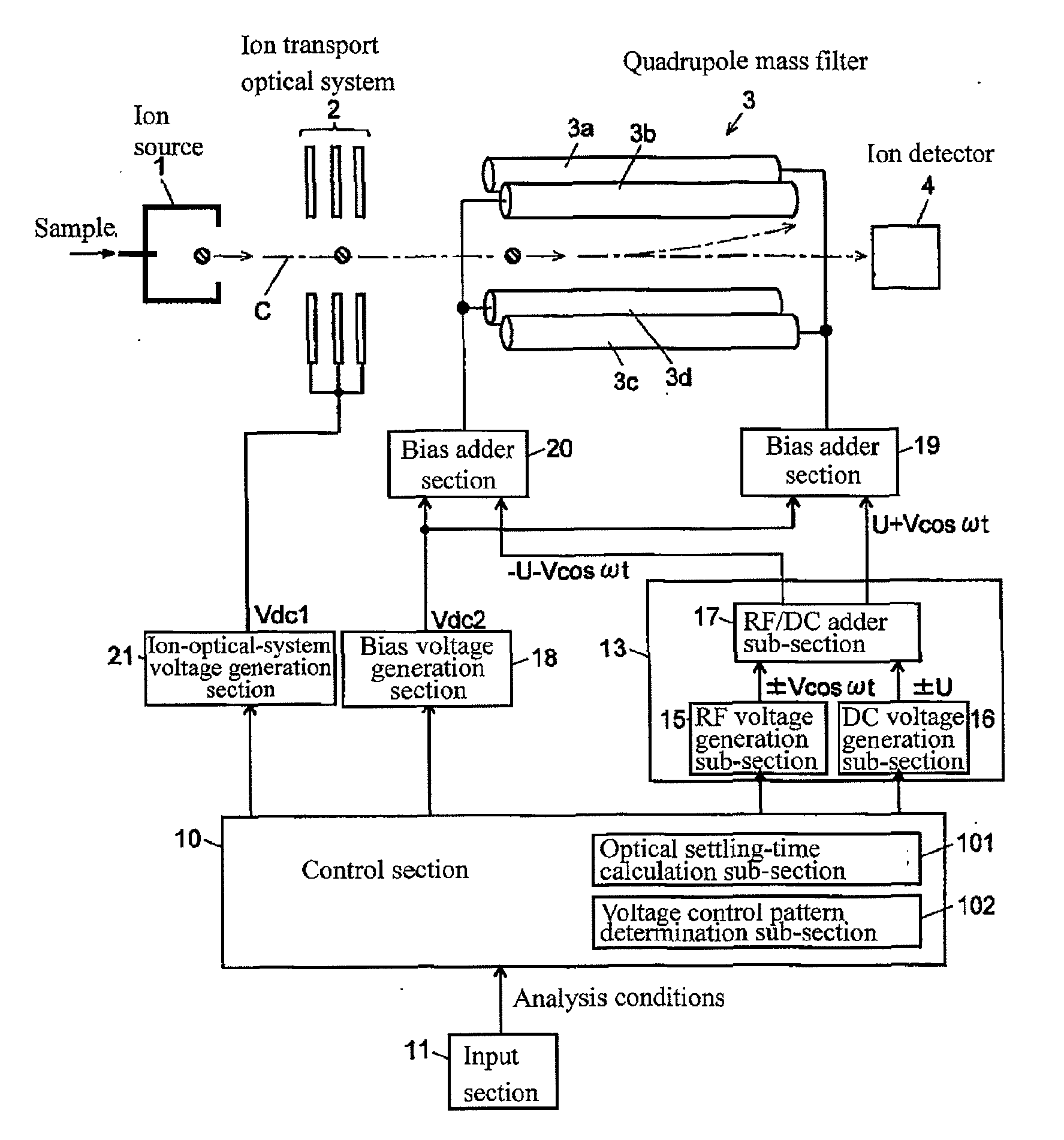
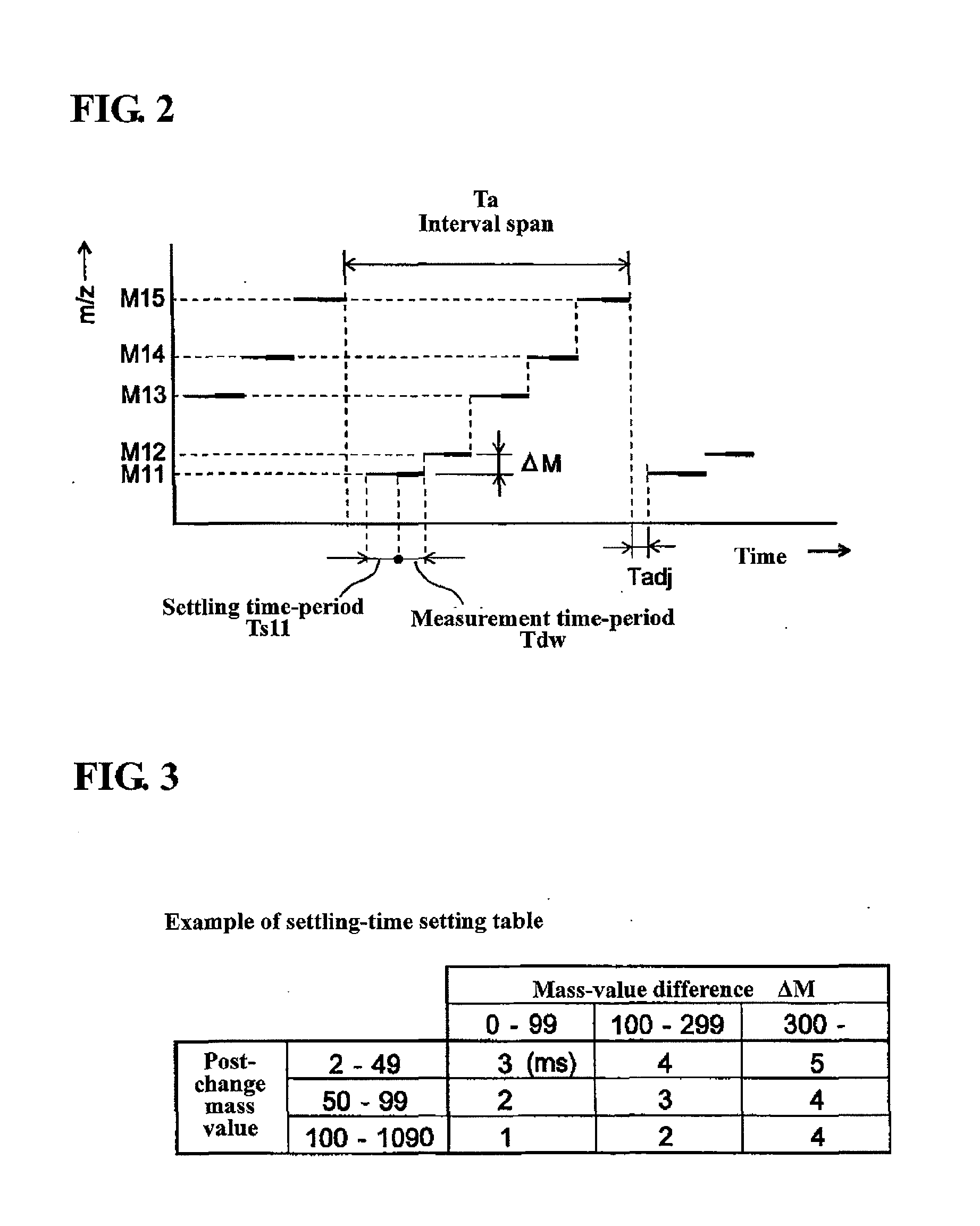
- A quadrupole mass spectrometer with control means that adjusts the waiting time-period based on the mass-value difference and post-change mass value to minimize settling time, allowing for shorter cycles and enhanced ion detection by stabilizing the voltage more quickly.

Analytical Performance Metrics and Validation Methods
The analytical performance of electron ionization (EI) scan modes, particularly Full Scan and Selected Ion Monitoring (SIM), can be evaluated through several critical metrics that determine their effectiveness in analytical applications. These metrics provide quantitative measures for comparing the two scan modes and validating their suitability for specific analytical requirements.
Sensitivity represents a primary performance metric, typically measured as the signal-to-noise ratio (S/N) at defined analyte concentrations. SIM mode consistently demonstrates superior sensitivity compared to Full Scan, with enhancement factors ranging from 10 to 100-fold depending on matrix complexity and target compounds. This sensitivity advantage stems from SIM's focused ion collection strategy that allocates more instrument time to specific ions of interest.
Linearity assessment involves evaluating the correlation between instrument response and analyte concentration across a defined range. Both scan modes generally exhibit good linearity (R² > 0.99) within their respective working ranges, though SIM mode typically maintains linearity over wider concentration ranges, particularly at lower concentrations where Full Scan may lose response proportionality.
Detection limits constitute another crucial metric, with method detection limit (MDL) and limit of quantitation (LOQ) being standard parameters. SIM mode typically achieves MDLs in the low pg/μL range, while Full Scan modes generally operate in the mid to high pg/μL range for comparable compounds under identical conditions.
Precision metrics, including repeatability (intra-day) and reproducibility (inter-day), are typically expressed as percent relative standard deviation (%RSD). SIM mode generally demonstrates superior precision at lower concentrations, with typical %RSD values below 5% at concentrations near the LOQ, compared to Full Scan's 10-15% at similar levels.
Accuracy, measured as percent recovery of known standards, shows comparable performance between the modes at mid-range concentrations, though SIM maintains better accuracy at lower concentrations due to its enhanced signal-to-noise characteristics.
Duty cycle efficiency, representing the proportion of analytical time spent collecting useful data, significantly favors SIM mode. While Full Scan typically operates at 30-40% duty cycle efficiency across the mass range, SIM can achieve 70-90% efficiency for targeted ions, contributing substantially to its sensitivity advantage.
Validation protocols for these metrics typically follow established guidelines from organizations such as ICH, FDA, or EPA, requiring demonstration of method specificity, accuracy, precision, linearity, range, and robustness through carefully designed experiments with appropriate statistical analysis.
Sensitivity represents a primary performance metric, typically measured as the signal-to-noise ratio (S/N) at defined analyte concentrations. SIM mode consistently demonstrates superior sensitivity compared to Full Scan, with enhancement factors ranging from 10 to 100-fold depending on matrix complexity and target compounds. This sensitivity advantage stems from SIM's focused ion collection strategy that allocates more instrument time to specific ions of interest.
Linearity assessment involves evaluating the correlation between instrument response and analyte concentration across a defined range. Both scan modes generally exhibit good linearity (R² > 0.99) within their respective working ranges, though SIM mode typically maintains linearity over wider concentration ranges, particularly at lower concentrations where Full Scan may lose response proportionality.
Detection limits constitute another crucial metric, with method detection limit (MDL) and limit of quantitation (LOQ) being standard parameters. SIM mode typically achieves MDLs in the low pg/μL range, while Full Scan modes generally operate in the mid to high pg/μL range for comparable compounds under identical conditions.
Precision metrics, including repeatability (intra-day) and reproducibility (inter-day), are typically expressed as percent relative standard deviation (%RSD). SIM mode generally demonstrates superior precision at lower concentrations, with typical %RSD values below 5% at concentrations near the LOQ, compared to Full Scan's 10-15% at similar levels.
Accuracy, measured as percent recovery of known standards, shows comparable performance between the modes at mid-range concentrations, though SIM maintains better accuracy at lower concentrations due to its enhanced signal-to-noise characteristics.
Duty cycle efficiency, representing the proportion of analytical time spent collecting useful data, significantly favors SIM mode. While Full Scan typically operates at 30-40% duty cycle efficiency across the mass range, SIM can achieve 70-90% efficiency for targeted ions, contributing substantially to its sensitivity advantage.
Validation protocols for these metrics typically follow established guidelines from organizations such as ICH, FDA, or EPA, requiring demonstration of method specificity, accuracy, precision, linearity, range, and robustness through carefully designed experiments with appropriate statistical analysis.
Data Processing Algorithms and Software Solutions
The evolution of data processing algorithms for electron ionization (EI) mass spectrometry has significantly enhanced the analytical capabilities of both Full Scan and Selected Ion Monitoring (SIM) modes. Modern software solutions employ sophisticated algorithms that transform raw spectral data into actionable analytical results, with distinct approaches for each scan mode.
For Full Scan data processing, deconvolution algorithms have become increasingly important to address complex sample matrices. These algorithms separate overlapping peaks and identify compounds even when chromatographic resolution is suboptimal. Machine learning-based peak recognition systems now achieve higher accuracy in compound identification by comparing observed spectra against extensive libraries, with some advanced platforms reporting identification confidence exceeding 95% for common analytes.
SIM mode data processing focuses on signal extraction and noise reduction algorithms. Adaptive baseline correction techniques have demonstrated up to 40% improvement in detection limits compared to traditional methods. Signal averaging algorithms specifically designed for SIM data can enhance signal-to-noise ratios by factors of 3-5x without compromising quantitative accuracy, particularly beneficial for trace analysis applications.
Quantification algorithms have also evolved significantly, with weighted calibration models now standard in most commercial software packages. These models accommodate the heteroscedastic nature of mass spectrometric data across wide concentration ranges, improving linearity metrics by up to 30% compared to simple linear regression approaches.
Vendor-specific software solutions like Agilent MassHunter, Thermo Scientific Xcalibur, and Waters MassLynx have implemented proprietary algorithms optimized for their respective hardware configurations. Open-source alternatives such as XCMS and OpenMS have gained traction in research environments, offering customizable processing workflows and algorithm transparency that commercial solutions often lack.
Real-time data processing capabilities have emerged as a critical feature in modern software packages. These systems can perform on-the-fly adjustments to acquisition parameters based on preliminary data analysis, optimizing duty cycles dynamically. For SIM applications, this translates to adaptive dwell time allocation that can improve overall sensitivity by up to 25% compared to static acquisition methods.
Cloud-based processing solutions represent the newest frontier, offering scalable computing resources for handling large datasets. These platforms enable collaborative analysis and centralized method development, with some systems reporting 60-80% reduction in processing time for complex multi-sample analyses compared to traditional desktop applications.
For Full Scan data processing, deconvolution algorithms have become increasingly important to address complex sample matrices. These algorithms separate overlapping peaks and identify compounds even when chromatographic resolution is suboptimal. Machine learning-based peak recognition systems now achieve higher accuracy in compound identification by comparing observed spectra against extensive libraries, with some advanced platforms reporting identification confidence exceeding 95% for common analytes.
SIM mode data processing focuses on signal extraction and noise reduction algorithms. Adaptive baseline correction techniques have demonstrated up to 40% improvement in detection limits compared to traditional methods. Signal averaging algorithms specifically designed for SIM data can enhance signal-to-noise ratios by factors of 3-5x without compromising quantitative accuracy, particularly beneficial for trace analysis applications.
Quantification algorithms have also evolved significantly, with weighted calibration models now standard in most commercial software packages. These models accommodate the heteroscedastic nature of mass spectrometric data across wide concentration ranges, improving linearity metrics by up to 30% compared to simple linear regression approaches.
Vendor-specific software solutions like Agilent MassHunter, Thermo Scientific Xcalibur, and Waters MassLynx have implemented proprietary algorithms optimized for their respective hardware configurations. Open-source alternatives such as XCMS and OpenMS have gained traction in research environments, offering customizable processing workflows and algorithm transparency that commercial solutions often lack.
Real-time data processing capabilities have emerged as a critical feature in modern software packages. These systems can perform on-the-fly adjustments to acquisition parameters based on preliminary data analysis, optimizing duty cycles dynamically. For SIM applications, this translates to adaptive dwell time allocation that can improve overall sensitivity by up to 25% compared to static acquisition methods.
Cloud-based processing solutions represent the newest frontier, offering scalable computing resources for handling large datasets. These platforms enable collaborative analysis and centralized method development, with some systems reporting 60-80% reduction in processing time for complex multi-sample analyses compared to traditional desktop applications.
Unlock deeper insights with PatSnap Eureka Quick Research — get a full tech report to explore trends and direct your research. Try now!
Generate Your Research Report Instantly with AI Agent
Supercharge your innovation with PatSnap Eureka AI Agent Platform!