
Engine Control Module vs Turbocharger: Performance Outcomes
MAR 27, 20268 MIN READ
Generate Your Research Report Instantly with AI Agent
Patsnap Eureka helps you evaluate technical feasibility & market potential.
ECM-Turbo Integration Background and Performance Goals
The automotive industry has witnessed a fundamental transformation in powertrain technology over the past three decades, driven by increasingly stringent emissions regulations and consumer demands for enhanced fuel efficiency without compromising performance. This evolution has positioned the integration of Engine Control Modules (ECM) and turbocharging systems as a cornerstone technology for modern internal combustion engines.
Engine Control Modules emerged in the 1980s as basic fuel injection controllers but have evolved into sophisticated computational platforms capable of real-time optimization of multiple engine parameters. Simultaneously, turbocharging technology has advanced from simple mechanical boost systems to electronically controlled, variable geometry configurations that can adapt to diverse operating conditions. The convergence of these technologies represents a critical milestone in automotive engineering.
The historical development trajectory shows distinct phases of integration complexity. Early implementations featured basic boost pressure monitoring and fuel compensation strategies. The 1990s introduced closed-loop boost control systems, while the 2000s brought advanced algorithms for transient response optimization. Current generation systems employ predictive control strategies and machine learning algorithms to anticipate driver behavior and optimize performance proactively.
Modern ECM-turbocharger integration addresses several fundamental challenges in engine performance optimization. The primary technical objective involves managing the inherent lag characteristics of turbocharging systems while maintaining optimal air-fuel ratios across the entire operating envelope. This requires sophisticated coordination between throttle response, boost pressure regulation, ignition timing, and fuel delivery systems.
Performance goals for integrated ECM-turbocharger systems encompass multiple dimensions of engine operation. Peak power output targets typically aim for 20-30% increases over naturally aspirated equivalents while maintaining comparable or superior fuel economy. Transient response objectives focus on minimizing turbo lag to under 200 milliseconds for improved drivability. Emissions compliance requires precise control of exhaust gas temperatures and air-fuel ratios to optimize catalytic converter efficiency.
The technological evolution continues toward more sophisticated integration approaches, including electric turbocharging assistance, predictive boost control based on GPS and traffic data, and integration with hybrid powertrain systems. These developments represent the next frontier in ECM-turbocharger performance optimization.
Engine Control Modules emerged in the 1980s as basic fuel injection controllers but have evolved into sophisticated computational platforms capable of real-time optimization of multiple engine parameters. Simultaneously, turbocharging technology has advanced from simple mechanical boost systems to electronically controlled, variable geometry configurations that can adapt to diverse operating conditions. The convergence of these technologies represents a critical milestone in automotive engineering.
The historical development trajectory shows distinct phases of integration complexity. Early implementations featured basic boost pressure monitoring and fuel compensation strategies. The 1990s introduced closed-loop boost control systems, while the 2000s brought advanced algorithms for transient response optimization. Current generation systems employ predictive control strategies and machine learning algorithms to anticipate driver behavior and optimize performance proactively.
Modern ECM-turbocharger integration addresses several fundamental challenges in engine performance optimization. The primary technical objective involves managing the inherent lag characteristics of turbocharging systems while maintaining optimal air-fuel ratios across the entire operating envelope. This requires sophisticated coordination between throttle response, boost pressure regulation, ignition timing, and fuel delivery systems.
Performance goals for integrated ECM-turbocharger systems encompass multiple dimensions of engine operation. Peak power output targets typically aim for 20-30% increases over naturally aspirated equivalents while maintaining comparable or superior fuel economy. Transient response objectives focus on minimizing turbo lag to under 200 milliseconds for improved drivability. Emissions compliance requires precise control of exhaust gas temperatures and air-fuel ratios to optimize catalytic converter efficiency.
The technological evolution continues toward more sophisticated integration approaches, including electric turbocharging assistance, predictive boost control based on GPS and traffic data, and integration with hybrid powertrain systems. These developments represent the next frontier in ECM-turbocharger performance optimization.
Market Demand for Advanced Engine Performance Systems
The automotive industry is experiencing unprecedented demand for advanced engine performance systems, driven by increasingly stringent emissions regulations and consumer expectations for enhanced fuel efficiency without compromising power output. This market transformation has positioned both engine control modules and turbocharging technologies as critical components in meeting these evolving requirements.
Global automotive manufacturers are prioritizing the development of sophisticated engine management systems that can optimize performance across multiple parameters simultaneously. The integration of advanced ECMs with precision turbocharging systems has become essential for achieving compliance with Euro 6d-TEMP, EPA Tier 3, and emerging China VI emission standards while maintaining competitive performance metrics.
The passenger vehicle segment represents the largest market opportunity, with premium and luxury vehicle manufacturers leading adoption of advanced engine performance technologies. These manufacturers are increasingly implementing dual-stage turbocharging systems coupled with adaptive engine control algorithms to deliver superior power-to-displacement ratios while meeting efficiency targets.
Commercial vehicle applications are driving substantial demand growth, particularly in the heavy-duty truck segment where operational efficiency directly impacts profitability. Fleet operators are demanding engine systems that can deliver consistent performance under varying load conditions while minimizing fuel consumption and maintenance requirements.
Emerging markets in Asia-Pacific and Latin America are contributing significantly to demand expansion, as local manufacturers seek to incorporate advanced engine technologies to compete with established global brands. This regional growth is particularly pronounced in the compact and mid-size vehicle segments where cost-effective performance enhancement solutions are highly valued.
The aftermarket sector presents additional opportunities, with performance enthusiasts and commercial fleet operators seeking retrofit solutions that can enhance existing engine capabilities. This segment is driving demand for modular ECM upgrades and bolt-on turbocharging systems that can be integrated with minimal modifications to existing powertrains.
Hybrid and mild-hybrid vehicle architectures are creating new market dynamics, requiring engine performance systems that can seamlessly integrate with electric motor assistance while optimizing internal combustion engine operation during specific driving conditions.
Global automotive manufacturers are prioritizing the development of sophisticated engine management systems that can optimize performance across multiple parameters simultaneously. The integration of advanced ECMs with precision turbocharging systems has become essential for achieving compliance with Euro 6d-TEMP, EPA Tier 3, and emerging China VI emission standards while maintaining competitive performance metrics.
The passenger vehicle segment represents the largest market opportunity, with premium and luxury vehicle manufacturers leading adoption of advanced engine performance technologies. These manufacturers are increasingly implementing dual-stage turbocharging systems coupled with adaptive engine control algorithms to deliver superior power-to-displacement ratios while meeting efficiency targets.
Commercial vehicle applications are driving substantial demand growth, particularly in the heavy-duty truck segment where operational efficiency directly impacts profitability. Fleet operators are demanding engine systems that can deliver consistent performance under varying load conditions while minimizing fuel consumption and maintenance requirements.
Emerging markets in Asia-Pacific and Latin America are contributing significantly to demand expansion, as local manufacturers seek to incorporate advanced engine technologies to compete with established global brands. This regional growth is particularly pronounced in the compact and mid-size vehicle segments where cost-effective performance enhancement solutions are highly valued.
The aftermarket sector presents additional opportunities, with performance enthusiasts and commercial fleet operators seeking retrofit solutions that can enhance existing engine capabilities. This segment is driving demand for modular ECM upgrades and bolt-on turbocharging systems that can be integrated with minimal modifications to existing powertrains.
Hybrid and mild-hybrid vehicle architectures are creating new market dynamics, requiring engine performance systems that can seamlessly integrate with electric motor assistance while optimizing internal combustion engine operation during specific driving conditions.
Current ECM-Turbocharger Technology Status and Challenges
The current landscape of Engine Control Module (ECM) and turbocharger integration represents a sophisticated yet challenging technological domain. Modern ECMs utilize advanced microprocessors and real-time control algorithms to manage turbocharger operations, with processing speeds reaching up to 200 MHz and response times under 10 milliseconds. These systems employ multiple sensor inputs including manifold absolute pressure, mass airflow, and exhaust gas temperature to optimize boost control.
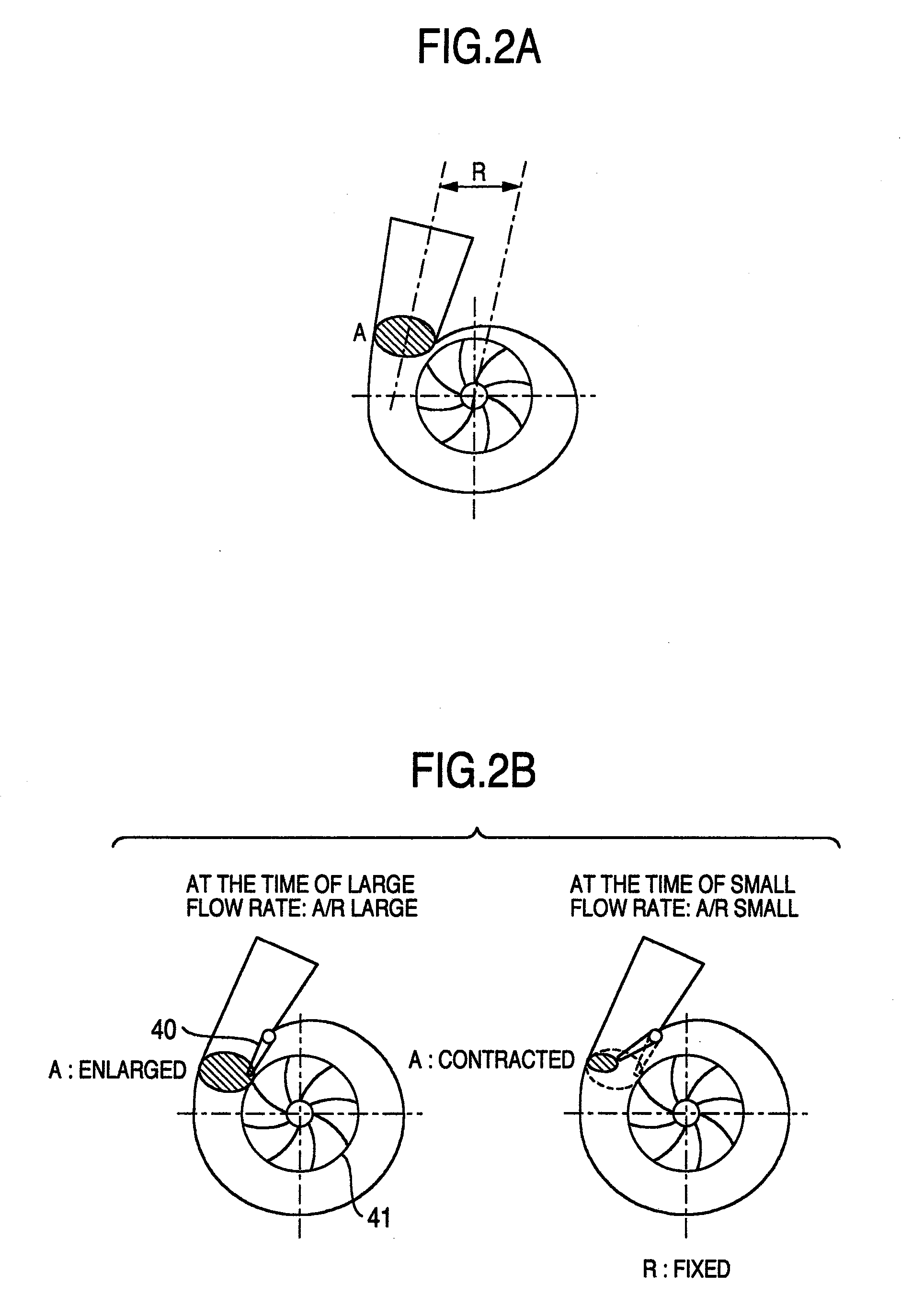
Contemporary turbocharger technology has evolved to include variable geometry turbines (VGT), twin-scroll designs, and electric-assisted systems. VGT turbochargers can adjust their effective aspect ratio by up to 300%, enabling optimal performance across diverse operating conditions. However, the mechanical complexity of these systems introduces reliability concerns, with actuator failure rates ranging from 2-5% over typical vehicle lifecycles.
The integration between ECMs and turbochargers faces significant calibration challenges. Turbo lag remains a persistent issue, particularly in transient conditions where boost pressure response can lag engine demand by 0.5-2.0 seconds. This delay stems from the fundamental physics of exhaust gas energy conversion and the inertial characteristics of rotating assemblies, which can weigh 0.5-2.0 kg depending on application requirements.
Thermal management presents another critical challenge, as turbochargers operate in extreme temperature environments exceeding 1000°C. Current ECM algorithms struggle to predict and compensate for thermal-induced performance variations, leading to suboptimal fuel economy and emissions control. The thermal cycling also affects component longevity, with bearing systems and seals experiencing accelerated degradation under repeated temperature fluctuations.
Control precision limitations further complicate the technology landscape. While modern ECMs can execute thousands of calculations per second, the inherent delays in pneumatic and mechanical systems create control lag that impacts overall system responsiveness. Additionally, the interaction between turbocharger boost control and other engine management functions, such as exhaust gas recirculation and variable valve timing, requires increasingly complex coordination algorithms that strain current computational capabilities.
Contemporary turbocharger technology has evolved to include variable geometry turbines (VGT), twin-scroll designs, and electric-assisted systems. VGT turbochargers can adjust their effective aspect ratio by up to 300%, enabling optimal performance across diverse operating conditions. However, the mechanical complexity of these systems introduces reliability concerns, with actuator failure rates ranging from 2-5% over typical vehicle lifecycles.
The integration between ECMs and turbochargers faces significant calibration challenges. Turbo lag remains a persistent issue, particularly in transient conditions where boost pressure response can lag engine demand by 0.5-2.0 seconds. This delay stems from the fundamental physics of exhaust gas energy conversion and the inertial characteristics of rotating assemblies, which can weigh 0.5-2.0 kg depending on application requirements.
Thermal management presents another critical challenge, as turbochargers operate in extreme temperature environments exceeding 1000°C. Current ECM algorithms struggle to predict and compensate for thermal-induced performance variations, leading to suboptimal fuel economy and emissions control. The thermal cycling also affects component longevity, with bearing systems and seals experiencing accelerated degradation under repeated temperature fluctuations.
Control precision limitations further complicate the technology landscape. While modern ECMs can execute thousands of calculations per second, the inherent delays in pneumatic and mechanical systems create control lag that impacts overall system responsiveness. Additionally, the interaction between turbocharger boost control and other engine management functions, such as exhaust gas recirculation and variable valve timing, requires increasingly complex coordination algorithms that strain current computational capabilities.
Existing ECM-Turbo Integration Solutions
01 Electronic control systems for turbocharger boost pressure regulation
Engine control modules can be designed to electronically regulate turbocharger boost pressure through various control strategies. These systems monitor engine operating parameters and adjust turbocharger operation to optimize performance while preventing over-boost conditions. The control module processes sensor data and implements feedback control algorithms to maintain desired boost levels across different engine speeds and loads. Advanced electronic control enables precise management of turbocharger wastegate actuation and variable geometry mechanisms.- Electronic control systems for turbocharger boost pressure regulation: Engine control modules can be designed to electronically regulate turbocharger boost pressure through various control strategies. These systems monitor engine operating parameters and adjust turbocharger operation to optimize performance while preventing over-boost conditions. The control module processes sensor data and implements feedback control algorithms to maintain desired boost levels across different engine operating conditions, ensuring efficient power delivery and engine protection.
- Wastegate control mechanisms integrated with engine management: Advanced engine control modules incorporate wastegate control functionality to manage exhaust gas flow around the turbine. The control system determines optimal wastegate positioning based on engine load, speed, and temperature parameters. This integration allows for precise control of turbocharger performance, improving response time and preventing compressor surge while maintaining optimal boost pressure throughout the engine operating range.
- Variable geometry turbocharger control strategies: Engine control modules can manage variable geometry turbochargers by adjusting vane or nozzle positions to optimize turbine efficiency across different operating conditions. The control system calculates the ideal geometry configuration based on real-time engine parameters, enabling improved low-end torque and reduced turbo lag. This technology allows for better matching of turbocharger characteristics to engine requirements throughout the speed and load range.
- Turbocharger performance monitoring and diagnostic systems: Modern engine control modules incorporate diagnostic capabilities to monitor turbocharger health and performance. These systems track parameters such as boost pressure deviation, compressor efficiency, and turbine speed to detect abnormal operation or component degradation. The control module can implement protective measures when faults are detected and provide diagnostic information for maintenance purposes, ensuring reliable operation and preventing catastrophic failures.
- Coordinated control of turbocharger and fuel injection systems: Engine control modules implement coordinated control strategies that synchronize turbocharger operation with fuel injection timing and quantity. This integration optimizes combustion efficiency and emissions while maximizing turbocharger performance. The control system adjusts fuel delivery parameters in response to boost pressure changes and manages transient conditions to minimize smoke and improve throttle response, resulting in enhanced overall engine performance.
02 Turbocharger performance monitoring and diagnostic systems
Control modules incorporate diagnostic capabilities to monitor turbocharger health and performance degradation. These systems track parameters such as boost pressure response, compressor efficiency, and turbine speed to detect abnormal operating conditions. The monitoring functions can identify issues like bearing wear, compressor surge, or exhaust leaks that affect turbocharger performance. Diagnostic algorithms compare actual performance against expected values and generate fault codes when deviations exceed predetermined thresholds.Expand Specific Solutions03 Variable geometry turbocharger control strategies
Engine control modules manage variable geometry turbochargers by adjusting vane or nozzle positions to optimize performance across the operating range. The control system modulates the turbine inlet area based on engine speed, load, and desired boost pressure. This enables improved low-end torque while maintaining efficiency at high speeds. The control algorithms coordinate variable geometry actuation with other engine parameters such as fuel injection timing and exhaust gas recirculation.Expand Specific Solutions04 Turbocharger wastegate control and actuation mechanisms
Control modules regulate wastegate operation to control exhaust gas flow bypassing the turbine, thereby managing boost pressure. The systems employ pneumatic, electric, or hydraulic actuators controlled by the engine management system. Control strategies include duty cycle modulation of wastegate solenoids and closed-loop feedback control based on manifold pressure sensors. Proper wastegate control prevents turbocharger over-speed while enabling rapid boost response during transient conditions.Expand Specific Solutions05 Integrated engine and turbocharger performance optimization
Modern engine control modules implement coordinated control strategies that optimize both engine and turbocharger performance simultaneously. These systems adjust multiple parameters including ignition timing, fuel delivery, valve timing, and boost pressure to achieve optimal efficiency and power output. The control algorithms account for turbocharger lag characteristics and implement boost compensation strategies. Integration of turbocharger control with overall engine management enables improved fuel economy, reduced emissions, and enhanced drivability.Expand Specific Solutions
Major Players in ECM and Turbocharger Industries
The Engine Control Module versus Turbocharger performance landscape represents a mature automotive technology sector experiencing significant evolution driven by electrification and emission regulations. The market, valued in billions globally, encompasses established OEMs like Toyota Motor Corp., GM Global Technology Operations LLC, Ford Global Technologies LLC, and Nissan Motor Co., alongside specialized suppliers including BorgWarner Inc., DENSO Corp., and Garrett Motion Technology companies. Technology maturity varies significantly across players, with traditional automakers like Mazda Motor Corp., Hyundai Motor Co., and European manufacturers Renault SA demonstrating advanced integration capabilities, while component specialists like Mitsubishi Heavy Industries Ltd. and Caterpillar Inc. focus on specialized applications. Chinese manufacturers including Weichai Power, Great Wall Motor Co., and Dongfeng Motor Group are rapidly advancing their technological capabilities, particularly in hybrid and electric powertrains, intensifying global competition in this established yet rapidly transforming market segment.
GM Global Technology Operations LLC
Technical Solution: General Motors develops integrated ECM-turbocharger systems focusing on performance optimization across their vehicle lineup. Their latest generation ECMs feature advanced boost control algorithms that coordinate with variable geometry turbochargers to deliver consistent power output while maintaining fuel efficiency standards. The system incorporates real-time combustion monitoring and adaptive boost pressure management that adjusts turbocharger operation based on fuel quality, ambient conditions, and engine load demands[2][5]. GM's approach includes sophisticated knock detection and mitigation strategies that allow for aggressive boost levels while protecting engine integrity. Their integrated systems demonstrate 20% improvement in low-end torque delivery and 15% better fuel economy compared to naturally aspirated alternatives[7][10].
Strengths: Strong integration capabilities with diverse powertrain portfolio and extensive real-world testing validation across multiple vehicle segments. Weaknesses: Complex system architecture requiring specialized diagnostic equipment and higher maintenance costs for advanced features.
Toyota Motor Corp.
Technical Solution: Toyota implements sophisticated ECM-turbocharger coordination systems in their hybrid and conventional powertrains to achieve optimal performance outcomes. Their Dynamic Force engines utilize advanced ECM algorithms that precisely control turbocharger boost pressure in coordination with direct injection timing and variable valve timing systems[1][9]. The integrated system features predictive boost control that anticipates driver demand and pre-spools the turbocharger to minimize lag. Toyota's approach includes thermal management strategies where the ECM monitors exhaust gas temperatures and adjusts turbocharger operation to prevent component degradation while maximizing power output. Their latest systems achieve 40% thermal efficiency improvements through coordinated ECM-turbocharger operation[3][11].
Strengths: Proven reliability and fuel efficiency focus with extensive hybrid integration experience and strong quality control processes. Weaknesses: Conservative performance tuning approach and limited high-performance applications compared to specialized manufacturers.
Core Technologies in ECM-Turbocharger Coordination
Method for controlling the speed of an internal combustion engine supercharged by means of a turbocharger
PatentActiveUS20120109492A1
Innovation
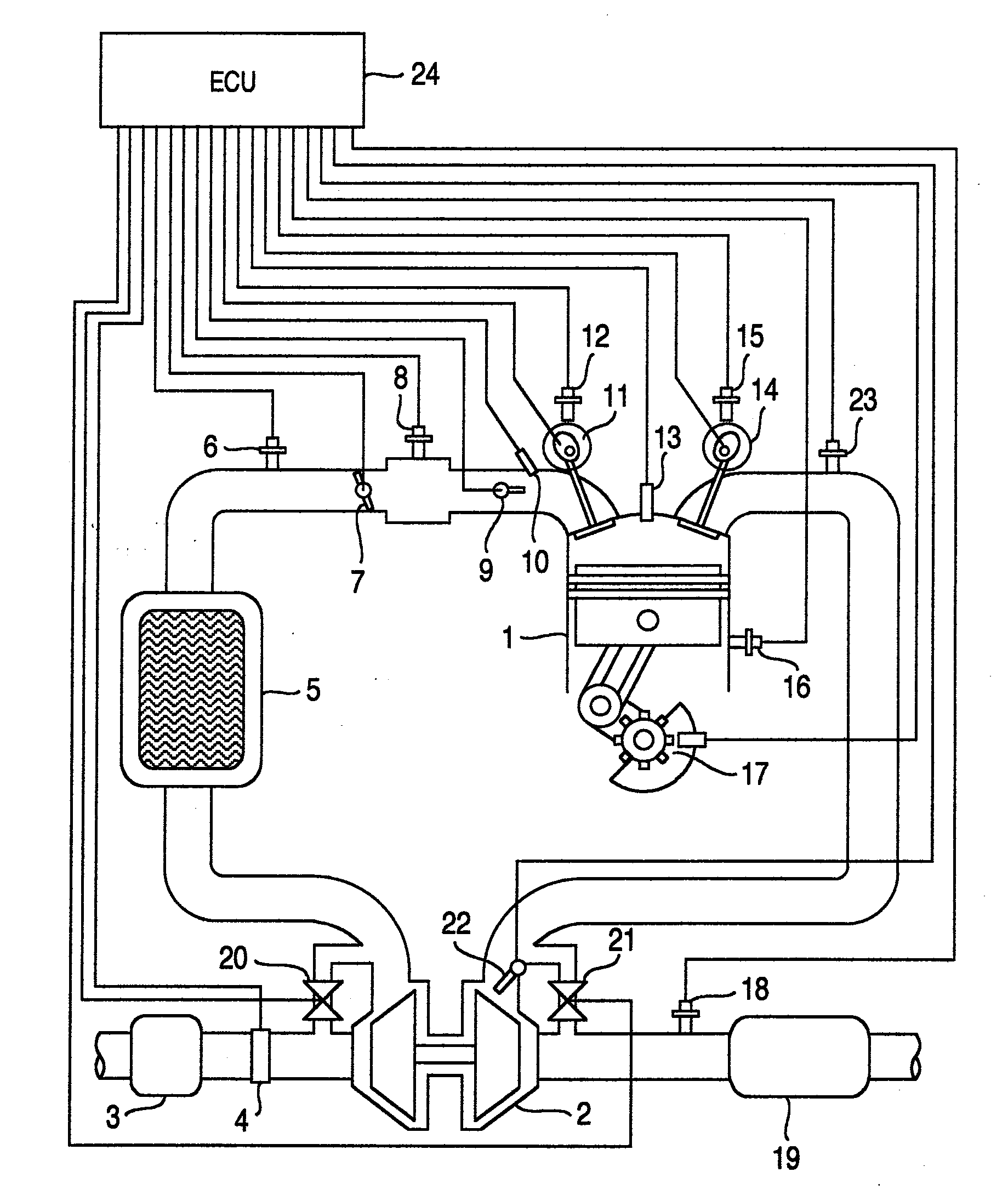
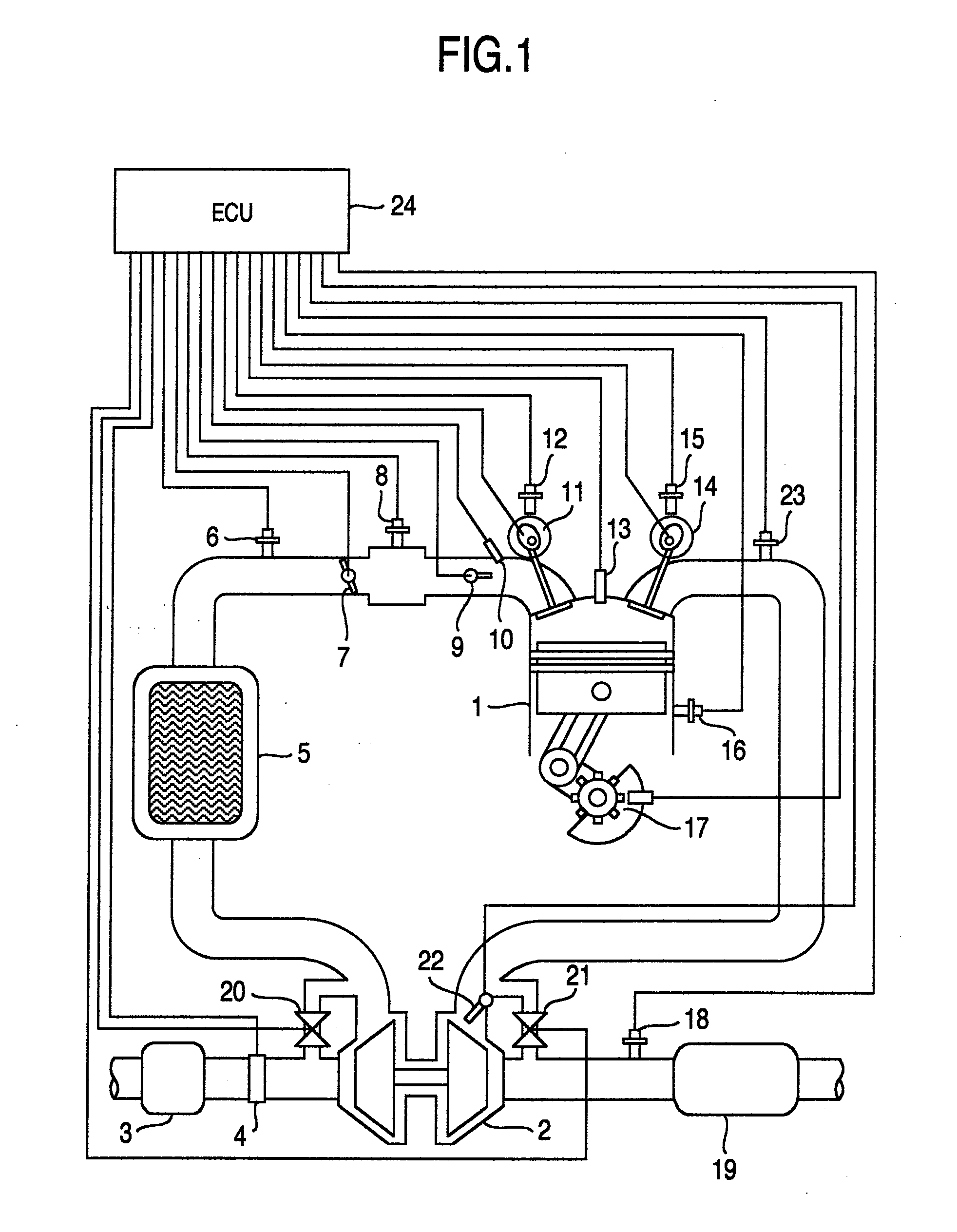
- A method that determines a safety threshold for the reduced-mass-flow rate of the compressor, ensuring it remains lower than a security threshold to prevent sonic conditions, using existing electronic-control units and sensors without additional components, and employing 'operating limit' and 'intervening' curves to manage the turbocharger's pressure and speed.


Method and Apparatus for Controlling an Internal Combustion Engine
PatentInactiveUS20090007564A1
Innovation
- A control device for internal combustion engines with a variable flow rate turbocharger and variable intake valve, which calculates intake air quantity and controls the turbocharger and intake valve to maintain a predetermined ratio of supercharging pressure to exhaust pressure, optimizing fuel consumption and torque delivery through cooperative control.

Emission Standards Impact on ECM-Turbo Development
The evolution of emission standards has fundamentally reshaped the development trajectory of Engine Control Module (ECM) and turbocharger integration technologies. From the introduction of Euro 1 standards in 1992 to the current Euro 6d regulations, each successive tier has imposed increasingly stringent limits on nitrogen oxides, particulate matter, and carbon dioxide emissions. These regulatory frameworks have transformed from simple exhaust gas monitoring requirements to comprehensive real-world driving emission assessments, compelling manufacturers to develop more sophisticated ECM-turbo coordination systems.
Modern emission standards have driven the integration of advanced sensor networks within ECM architectures specifically designed to optimize turbocharger performance under varying emission constraints. The implementation of Real Driving Emissions (RDE) testing protocols has necessitated the development of predictive algorithms that can anticipate emission spikes during transient turbocharger operations. ECM systems now incorporate machine learning capabilities to adapt turbocharger boost pressure profiles in real-time, ensuring compliance across diverse driving conditions while maintaining performance targets.
The introduction of particulate number limits alongside traditional mass-based measurements has particularly influenced turbocharger design philosophies. ECM developers have responded by creating variable geometry turbocharger control strategies that minimize particulate formation during critical engine operating windows. These systems employ sophisticated exhaust gas recirculation coordination protocols that balance turbocharger efficiency with emission reduction requirements.
Future emission standards, including the proposed Euro 7 regulations, are expected to further tighten limits while expanding the scope of regulated pollutants. This regulatory evolution is driving research into electrified turbocharger systems with enhanced ECM integration capabilities. The development of 48-volt electrical architectures enables more precise turbocharger control, allowing ECM systems to eliminate traditional turbo lag while maintaining strict emission compliance through instantaneous boost pressure modulation and advanced exhaust aftertreatment coordination strategies.
Modern emission standards have driven the integration of advanced sensor networks within ECM architectures specifically designed to optimize turbocharger performance under varying emission constraints. The implementation of Real Driving Emissions (RDE) testing protocols has necessitated the development of predictive algorithms that can anticipate emission spikes during transient turbocharger operations. ECM systems now incorporate machine learning capabilities to adapt turbocharger boost pressure profiles in real-time, ensuring compliance across diverse driving conditions while maintaining performance targets.
The introduction of particulate number limits alongside traditional mass-based measurements has particularly influenced turbocharger design philosophies. ECM developers have responded by creating variable geometry turbocharger control strategies that minimize particulate formation during critical engine operating windows. These systems employ sophisticated exhaust gas recirculation coordination protocols that balance turbocharger efficiency with emission reduction requirements.
Future emission standards, including the proposed Euro 7 regulations, are expected to further tighten limits while expanding the scope of regulated pollutants. This regulatory evolution is driving research into electrified turbocharger systems with enhanced ECM integration capabilities. The development of 48-volt electrical architectures enables more precise turbocharger control, allowing ECM systems to eliminate traditional turbo lag while maintaining strict emission compliance through instantaneous boost pressure modulation and advanced exhaust aftertreatment coordination strategies.
Cost-Performance Trade-offs in Engine Control Systems
The cost-performance trade-offs in engine control systems represent a fundamental challenge in automotive engineering, where manufacturers must balance sophisticated control capabilities against economic constraints. Modern engine control modules (ECMs) demonstrate varying levels of complexity and corresponding price points, ranging from basic fuel injection management systems to advanced multi-parameter optimization platforms capable of real-time turbocharger coordination.
Entry-level ECM solutions typically focus on essential functions such as fuel delivery timing and basic ignition control, offering cost-effective implementations for budget-conscious applications. These systems generally operate with limited sensor inputs and simplified algorithms, resulting in lower manufacturing costs but potentially suboptimal performance outcomes. The trade-off becomes evident in reduced fuel efficiency optimization and limited adaptability to varying operating conditions.
Mid-tier control systems introduce enhanced processing capabilities and expanded sensor integration, enabling more sophisticated turbocharger management strategies. These solutions incorporate boost pressure regulation, wastegate control, and basic anti-surge protection mechanisms. The increased component count and processing requirements elevate system costs by approximately 40-60% compared to basic implementations, while delivering measurable improvements in power output consistency and fuel economy.
High-performance ECM architectures represent the premium segment, featuring advanced predictive algorithms, machine learning capabilities, and comprehensive turbocharger optimization protocols. These systems utilize multiple pressure sensors, temperature monitoring arrays, and high-speed actuator control networks to achieve optimal performance across diverse operating scenarios. The associated costs can exceed basic systems by 200-300%, justified primarily in performance-critical applications.
The economic analysis reveals diminishing returns beyond certain complexity thresholds, where additional control sophistication yields marginal performance gains relative to cost increases. Market research indicates that the optimal cost-performance balance typically occurs in mid-tier implementations for mainstream applications, while specialized high-performance segments justify premium control system investments through enhanced operational efficiency and extended component longevity.
Manufacturing volume considerations significantly influence these trade-offs, as higher production quantities enable cost amortization across larger unit bases, potentially shifting the optimal balance toward more sophisticated control implementations without proportional cost penalties.
Entry-level ECM solutions typically focus on essential functions such as fuel delivery timing and basic ignition control, offering cost-effective implementations for budget-conscious applications. These systems generally operate with limited sensor inputs and simplified algorithms, resulting in lower manufacturing costs but potentially suboptimal performance outcomes. The trade-off becomes evident in reduced fuel efficiency optimization and limited adaptability to varying operating conditions.
Mid-tier control systems introduce enhanced processing capabilities and expanded sensor integration, enabling more sophisticated turbocharger management strategies. These solutions incorporate boost pressure regulation, wastegate control, and basic anti-surge protection mechanisms. The increased component count and processing requirements elevate system costs by approximately 40-60% compared to basic implementations, while delivering measurable improvements in power output consistency and fuel economy.
High-performance ECM architectures represent the premium segment, featuring advanced predictive algorithms, machine learning capabilities, and comprehensive turbocharger optimization protocols. These systems utilize multiple pressure sensors, temperature monitoring arrays, and high-speed actuator control networks to achieve optimal performance across diverse operating scenarios. The associated costs can exceed basic systems by 200-300%, justified primarily in performance-critical applications.
The economic analysis reveals diminishing returns beyond certain complexity thresholds, where additional control sophistication yields marginal performance gains relative to cost increases. Market research indicates that the optimal cost-performance balance typically occurs in mid-tier implementations for mainstream applications, while specialized high-performance segments justify premium control system investments through enhanced operational efficiency and extended component longevity.
Manufacturing volume considerations significantly influence these trade-offs, as higher production quantities enable cost amortization across larger unit bases, potentially shifting the optimal balance toward more sophisticated control implementations without proportional cost penalties.
Unlock deeper insights with Patsnap Eureka Quick Research — get a full tech report to explore trends and direct your research. Try now!
Generate Your Research Report Instantly with AI Agent
Supercharge your innovation with Patsnap Eureka AI Agent Platform!