
Engine Control Module vs Catalyst: Efficiency Gains Comparison
MAR 27, 20269 MIN READ
Generate Your Research Report Instantly with AI Agent
Patsnap Eureka helps you evaluate technical feasibility & market potential.
Engine Control and Catalyst Technology Background and Objectives
Engine control modules (ECMs) and catalytic converters represent two fundamental pillars of modern automotive emission control and efficiency optimization systems. The ECM, serving as the central nervous system of the engine, has evolved from simple mechanical governors to sophisticated electronic control units capable of real-time parameter adjustment across multiple engine subsystems. This evolution began in the 1970s with basic fuel injection control and has progressed to today's advanced systems managing ignition timing, fuel delivery, turbocharger operation, and exhaust gas recirculation with millisecond precision.
Catalytic converter technology emerged concurrently as a passive emission reduction solution, utilizing precious metal catalysts to facilitate chemical reactions that convert harmful exhaust gases into less toxic compounds. The three-way catalyst, introduced in the 1980s, revolutionized automotive emissions by simultaneously reducing nitrogen oxides, carbon monoxide, and unburned hydrocarbons. Modern catalyst systems have expanded to include selective catalytic reduction for diesel applications and advanced materials science approaches for improved durability and efficiency.
The convergence of these technologies has created unprecedented opportunities for synergistic efficiency gains. ECMs now incorporate sophisticated catalyst monitoring algorithms, utilizing upstream and downstream oxygen sensors to optimize air-fuel ratios for maximum catalytic efficiency. This integration enables dynamic adjustment of engine parameters to maintain optimal catalyst operating temperatures while minimizing fuel consumption and emissions production.
Current technological objectives focus on achieving maximum thermodynamic efficiency while meeting increasingly stringent emission standards. The primary goal involves developing integrated control strategies that leverage real-time catalyst performance data to optimize engine operation across varying load conditions, ambient temperatures, and fuel qualities. Advanced ECM algorithms now incorporate predictive modeling to anticipate catalyst thermal states and adjust engine parameters proactively.
The pursuit of efficiency gains through ECM-catalyst integration addresses multiple performance dimensions simultaneously. Fuel economy improvements of 5-15% are achievable through optimized combustion timing and air-fuel ratio control, while emission reductions can exceed regulatory requirements by 20-30% through coordinated system operation. These objectives align with global automotive industry trends toward electrification and carbon neutrality, where internal combustion engines must achieve maximum efficiency during their operational lifespan.
Future development objectives emphasize machine learning integration within ECM systems to enable adaptive optimization based on individual vehicle usage patterns and catalyst aging characteristics. This approach promises to unlock additional efficiency gains while extending catalyst service life through intelligent thermal management and chemical loading optimization strategies.
Catalytic converter technology emerged concurrently as a passive emission reduction solution, utilizing precious metal catalysts to facilitate chemical reactions that convert harmful exhaust gases into less toxic compounds. The three-way catalyst, introduced in the 1980s, revolutionized automotive emissions by simultaneously reducing nitrogen oxides, carbon monoxide, and unburned hydrocarbons. Modern catalyst systems have expanded to include selective catalytic reduction for diesel applications and advanced materials science approaches for improved durability and efficiency.
The convergence of these technologies has created unprecedented opportunities for synergistic efficiency gains. ECMs now incorporate sophisticated catalyst monitoring algorithms, utilizing upstream and downstream oxygen sensors to optimize air-fuel ratios for maximum catalytic efficiency. This integration enables dynamic adjustment of engine parameters to maintain optimal catalyst operating temperatures while minimizing fuel consumption and emissions production.
Current technological objectives focus on achieving maximum thermodynamic efficiency while meeting increasingly stringent emission standards. The primary goal involves developing integrated control strategies that leverage real-time catalyst performance data to optimize engine operation across varying load conditions, ambient temperatures, and fuel qualities. Advanced ECM algorithms now incorporate predictive modeling to anticipate catalyst thermal states and adjust engine parameters proactively.
The pursuit of efficiency gains through ECM-catalyst integration addresses multiple performance dimensions simultaneously. Fuel economy improvements of 5-15% are achievable through optimized combustion timing and air-fuel ratio control, while emission reductions can exceed regulatory requirements by 20-30% through coordinated system operation. These objectives align with global automotive industry trends toward electrification and carbon neutrality, where internal combustion engines must achieve maximum efficiency during their operational lifespan.
Future development objectives emphasize machine learning integration within ECM systems to enable adaptive optimization based on individual vehicle usage patterns and catalyst aging characteristics. This approach promises to unlock additional efficiency gains while extending catalyst service life through intelligent thermal management and chemical loading optimization strategies.
Market Demand for Advanced Engine Efficiency Solutions
The automotive industry is experiencing unprecedented demand for advanced engine efficiency solutions, driven by increasingly stringent environmental regulations and evolving consumer preferences. Global emission standards such as Euro 7, China VI, and Tier 3 regulations are compelling manufacturers to achieve substantial reductions in nitrogen oxides, particulate matter, and carbon dioxide emissions. These regulatory pressures create a robust market foundation for both engine control module enhancements and advanced catalyst technologies.
Consumer awareness regarding fuel economy and environmental impact has reached critical mass, particularly in developed markets where fuel costs represent significant operational expenses. Fleet operators and individual consumers alike prioritize vehicles demonstrating superior fuel efficiency metrics, creating sustained demand for technologies that optimize combustion processes and exhaust treatment systems. This consumer-driven demand extends beyond traditional passenger vehicles to encompass commercial transportation, marine applications, and stationary power generation sectors.
The electrification trend paradoxically strengthens rather than diminishes the market for engine efficiency solutions. Hybrid powertrains require exceptionally efficient internal combustion engines to maximize overall system performance, while range extenders in electric vehicles demand compact, highly optimized combustion systems. This creates specialized market segments where advanced engine control modules and catalyst systems command premium valuations due to their critical performance contributions.
Industrial applications represent substantial growth opportunities, particularly in sectors where electrification remains impractical. Heavy-duty transportation, construction equipment, agricultural machinery, and marine vessels require increasingly sophisticated engine management systems to meet operational efficiency targets while complying with emission regulations. These applications often justify higher technology investments due to extended operational lifecycles and fuel cost sensitivities.
Emerging markets present significant expansion potential as local emission standards progressively align with international benchmarks. Countries implementing stricter environmental policies create immediate demand for proven efficiency technologies, while established automotive manufacturers seek cost-effective solutions to maintain competitiveness across diverse regulatory environments. This geographic expansion of regulatory requirements ensures sustained market growth for advanced engine efficiency solutions across multiple technology categories.
Consumer awareness regarding fuel economy and environmental impact has reached critical mass, particularly in developed markets where fuel costs represent significant operational expenses. Fleet operators and individual consumers alike prioritize vehicles demonstrating superior fuel efficiency metrics, creating sustained demand for technologies that optimize combustion processes and exhaust treatment systems. This consumer-driven demand extends beyond traditional passenger vehicles to encompass commercial transportation, marine applications, and stationary power generation sectors.
The electrification trend paradoxically strengthens rather than diminishes the market for engine efficiency solutions. Hybrid powertrains require exceptionally efficient internal combustion engines to maximize overall system performance, while range extenders in electric vehicles demand compact, highly optimized combustion systems. This creates specialized market segments where advanced engine control modules and catalyst systems command premium valuations due to their critical performance contributions.
Industrial applications represent substantial growth opportunities, particularly in sectors where electrification remains impractical. Heavy-duty transportation, construction equipment, agricultural machinery, and marine vessels require increasingly sophisticated engine management systems to meet operational efficiency targets while complying with emission regulations. These applications often justify higher technology investments due to extended operational lifecycles and fuel cost sensitivities.
Emerging markets present significant expansion potential as local emission standards progressively align with international benchmarks. Countries implementing stricter environmental policies create immediate demand for proven efficiency technologies, while established automotive manufacturers seek cost-effective solutions to maintain competitiveness across diverse regulatory environments. This geographic expansion of regulatory requirements ensures sustained market growth for advanced engine efficiency solutions across multiple technology categories.
Current ECM and Catalyst Technology Status and Challenges
Engine Control Modules represent the central nervous system of modern automotive powertrains, utilizing advanced microprocessors and sophisticated algorithms to optimize fuel injection timing, ignition control, and air-fuel mixture ratios. Current ECM technology has evolved to incorporate machine learning capabilities and real-time adaptive control systems, enabling dynamic adjustments based on driving conditions, environmental factors, and engine wear patterns. Leading manufacturers like Bosch, Continental, and Delphi have developed ECMs capable of processing over 100 million calculations per second, managing up to 200 different engine parameters simultaneously.
Contemporary catalyst technology has reached significant maturity in three-way catalytic converters, achieving conversion efficiencies exceeding 95% for nitrogen oxides, carbon monoxide, and unburned hydrocarbons under optimal operating conditions. Advanced catalyst formulations now incorporate precious metal loadings optimized through nanotechnology, with palladium and rhodium ratios fine-tuned for enhanced durability and performance. Selective catalytic reduction systems for diesel applications have demonstrated NOx reduction capabilities of up to 90% when properly integrated with diesel exhaust fluid injection systems.
Despite these technological advances, both ECM and catalyst systems face substantial challenges in meeting increasingly stringent emission regulations while maintaining fuel economy targets. ECMs struggle with cold-start optimization, where traditional control algorithms prove inadequate during the critical first 30 seconds of engine operation when catalyst light-off has not yet occurred. The integration complexity between ECM control strategies and catalyst performance characteristics creates optimization conflicts, particularly in transient operating conditions where rapid load changes demand conflicting fuel mixture requirements.
Catalyst technology confronts thermal management challenges, as optimal conversion efficiency requires precise temperature windows between 400-800°C, while modern engines operate across increasingly wide temperature ranges. Catalyst poisoning from sulfur compounds and thermal degradation from high-temperature excursions continue to limit catalyst lifespan and effectiveness. Additionally, the growing prevalence of gasoline direct injection engines creates particulate matter challenges that traditional three-way catalysts cannot adequately address.
The geographical distribution of advanced ECM and catalyst technology development remains concentrated in established automotive regions, with Germany, Japan, and the United States leading innovation efforts. However, emerging markets in China and India are rapidly developing indigenous capabilities, creating competitive pressure on traditional technology leaders while simultaneously driving down costs through manufacturing scale advantages.
Contemporary catalyst technology has reached significant maturity in three-way catalytic converters, achieving conversion efficiencies exceeding 95% for nitrogen oxides, carbon monoxide, and unburned hydrocarbons under optimal operating conditions. Advanced catalyst formulations now incorporate precious metal loadings optimized through nanotechnology, with palladium and rhodium ratios fine-tuned for enhanced durability and performance. Selective catalytic reduction systems for diesel applications have demonstrated NOx reduction capabilities of up to 90% when properly integrated with diesel exhaust fluid injection systems.
Despite these technological advances, both ECM and catalyst systems face substantial challenges in meeting increasingly stringent emission regulations while maintaining fuel economy targets. ECMs struggle with cold-start optimization, where traditional control algorithms prove inadequate during the critical first 30 seconds of engine operation when catalyst light-off has not yet occurred. The integration complexity between ECM control strategies and catalyst performance characteristics creates optimization conflicts, particularly in transient operating conditions where rapid load changes demand conflicting fuel mixture requirements.
Catalyst technology confronts thermal management challenges, as optimal conversion efficiency requires precise temperature windows between 400-800°C, while modern engines operate across increasingly wide temperature ranges. Catalyst poisoning from sulfur compounds and thermal degradation from high-temperature excursions continue to limit catalyst lifespan and effectiveness. Additionally, the growing prevalence of gasoline direct injection engines creates particulate matter challenges that traditional three-way catalysts cannot adequately address.
The geographical distribution of advanced ECM and catalyst technology development remains concentrated in established automotive regions, with Germany, Japan, and the United States leading innovation efforts. However, emerging markets in China and India are rapidly developing indigenous capabilities, creating competitive pressure on traditional technology leaders while simultaneously driving down costs through manufacturing scale advantages.
Current ECM vs Catalyst Efficiency Enhancement Solutions
01 Catalyst efficiency monitoring and diagnosis systems
Engine control modules incorporate monitoring systems that continuously assess catalyst performance through various sensors and diagnostic algorithms. These systems evaluate the conversion efficiency of catalytic converters by analyzing exhaust gas composition before and after the catalyst. The control module processes sensor data to detect catalyst degradation, poisoning, or failure, and can trigger warning indicators when efficiency falls below threshold values. Advanced diagnostic routines may include periodic testing procedures and adaptive learning algorithms to account for catalyst aging.- Catalyst efficiency monitoring and diagnosis systems: Engine control modules incorporate monitoring systems that continuously assess catalyst performance through various sensors and diagnostic algorithms. These systems detect catalyst degradation by analyzing exhaust gas composition, temperature differentials, and oxygen sensor signals before and after the catalyst. The control module processes this data to determine when catalyst efficiency falls below acceptable thresholds and triggers warning indicators or adjusts engine parameters accordingly.
- Adaptive engine control strategies for catalyst protection: Control modules implement adaptive strategies that modify engine operating parameters to protect and optimize catalyst function. These strategies include adjusting air-fuel ratios, ignition timing, and exhaust gas recirculation rates based on catalyst temperature and efficiency measurements. The system dynamically responds to driving conditions to maintain optimal catalyst operating temperatures while preventing thermal damage from excessive heat.
- Catalyst warm-up and light-off optimization: Engine control systems employ specific strategies to accelerate catalyst heating during cold starts to reach light-off temperature quickly. These methods include retarded ignition timing, secondary air injection, and enriched fuel mixtures that generate additional heat in the exhaust system. The control module monitors catalyst temperature and adjusts these parameters to minimize the time before the catalyst becomes fully effective.
- Multi-catalyst system coordination and management: Advanced engine control modules manage multiple catalytic converters in series or parallel configurations to maximize overall emission reduction efficiency. The system coordinates the operation of pre-catalysts, main catalysts, and selective catalytic reduction units by monitoring individual component performance and distributing exhaust flow appropriately. Control algorithms optimize the regeneration cycles and operating conditions for each catalyst component based on their specific characteristics and current state.
- Catalyst efficiency enhancement through fuel injection control: Engine control modules utilize precise fuel injection timing and quantity control to maintain optimal exhaust gas composition for catalyst efficiency. The system adjusts injection parameters including direct injection timing, multiple injection events, and fuel pressure to ensure proper air-fuel mixture that maximizes catalytic conversion rates. Advanced control algorithms account for catalyst aging and adjust fuel delivery strategies to compensate for reduced efficiency over time.
02 Oxygen sensor feedback control for catalyst optimization
The engine control module utilizes oxygen sensor signals positioned upstream and downstream of the catalyst to optimize air-fuel ratio and maximize catalytic conversion efficiency. By comparing the sensor readings, the control system can determine catalyst oxygen storage capacity and adjust fuel injection timing and quantity accordingly. This closed-loop control strategy ensures the catalyst operates within its optimal temperature and chemical environment range, maintaining high conversion rates for harmful emissions while preventing catalyst damage from excessive temperatures or rich/lean conditions.Expand Specific Solutions03 Catalyst temperature management and heating strategies
Control modules implement various strategies to manage catalyst temperature for optimal efficiency, including cold-start heating procedures and thermal protection mechanisms. During engine startup, the system may adjust ignition timing, increase idle speed, or activate secondary air injection to rapidly bring the catalyst to its light-off temperature. Temperature sensors and models help prevent catalyst overheating during high-load conditions while ensuring sufficient heat for efficient operation. Some systems incorporate electrically heated catalysts or burners controlled by the engine management system.Expand Specific Solutions04 Adaptive control algorithms for catalyst aging compensation
Engine control modules employ adaptive algorithms that adjust control parameters to compensate for catalyst deterioration over time. These systems track catalyst performance characteristics throughout the vehicle's lifetime and modify fuel delivery, ignition timing, and exhaust gas recirculation rates to maintain emissions compliance despite reduced catalyst efficiency. The control strategy may include learning routines that update calibration values based on observed catalyst behavior, predictive models for remaining catalyst life, and preemptive adjustments to extend catalyst durability.Expand Specific Solutions05 Multi-catalyst system coordination and control
Modern engine control modules manage complex exhaust systems with multiple catalytic converters, including close-coupled catalysts, underfloor catalysts, and selective catalytic reduction systems. The control strategy coordinates the operation of these components to maximize overall system efficiency, directing exhaust flow, managing individual catalyst temperatures, and optimizing the chemical reactions in each stage. The module balances the performance of different catalyst types, such as three-way catalysts and oxidation catalysts, while monitoring the health of each component independently and adjusting engine parameters to protect the entire catalyst system.Expand Specific Solutions
Major Players in ECM and Catalyst Technology Industry
The engine control module versus catalyst efficiency comparison represents a mature automotive technology sector experiencing significant transformation driven by electrification and emissions regulations. Major established players including Toyota Motor Corp., Ford Motor Co., GM Global Technology Operations LLC, Honda Motor Co., Nissan Motor Co., and Hyundai Motor Co. dominate this substantial multi-billion dollar market alongside specialized component manufacturers like Robert Bosch GmbH and Cummins Inc. Technology maturity varies significantly across the competitive landscape, with traditional automakers leveraging decades of internal combustion engine optimization experience while simultaneously investing heavily in hybrid and electric powertrains. Emerging players such as China Hydrogen Yuanan Technology and Great Wall Motor are accelerating innovation in alternative propulsion systems, creating competitive pressure on established manufacturers to advance both conventional engine efficiency technologies and next-generation clean energy solutions for sustainable mobility.
Toyota Motor Corp.
Technical Solution: Toyota's approach combines their Hybrid Synergy Drive technology with advanced ECM systems that optimize engine operation in conjunction with catalytic converters. Their Variable Valve Timing-intelligent (VVT-i) system, controlled by sophisticated ECMs, adjusts valve timing dynamically to optimize combustion efficiency, reducing the workload on catalytic converters by up to 20%. The system employs predictive algorithms that anticipate driving conditions and pre-adjust engine parameters, resulting in improved overall powertrain efficiency while extending catalyst life through reduced thermal stress and chemical loading.
Strengths: Proven hybrid technology integration, excellent fuel economy achievements, strong reliability record. Weaknesses: Higher initial costs, complex system architecture, limited applicability to non-hybrid vehicles.
Ford Global Technologies LLC
Technical Solution: Ford has developed EcoBoost engine technology with advanced ECM systems that utilize turbocharging and direct injection control algorithms to maximize combustion efficiency. Their ECM strategy focuses on precise fuel delivery timing and boost pressure management, achieving up to 12% better fuel economy compared to naturally aspirated engines with conventional catalyst systems. The system incorporates adaptive learning capabilities that optimize engine performance based on driving patterns, reducing emissions at the source and decreasing catalyst dependency while maintaining performance standards across various operating conditions.
Strengths: Strong turbocharging expertise, adaptive learning algorithms, cost-effective implementation. Weaknesses: Turbo lag issues, complexity in extreme weather conditions, higher maintenance requirements for turbocharged systems.
Core Technologies in ECM and Catalyst Optimization
Fuel/air ratio feedback control with catalyst gain estimation for an internal combustion engine
PatentInactiveUS7000379B2
Innovation
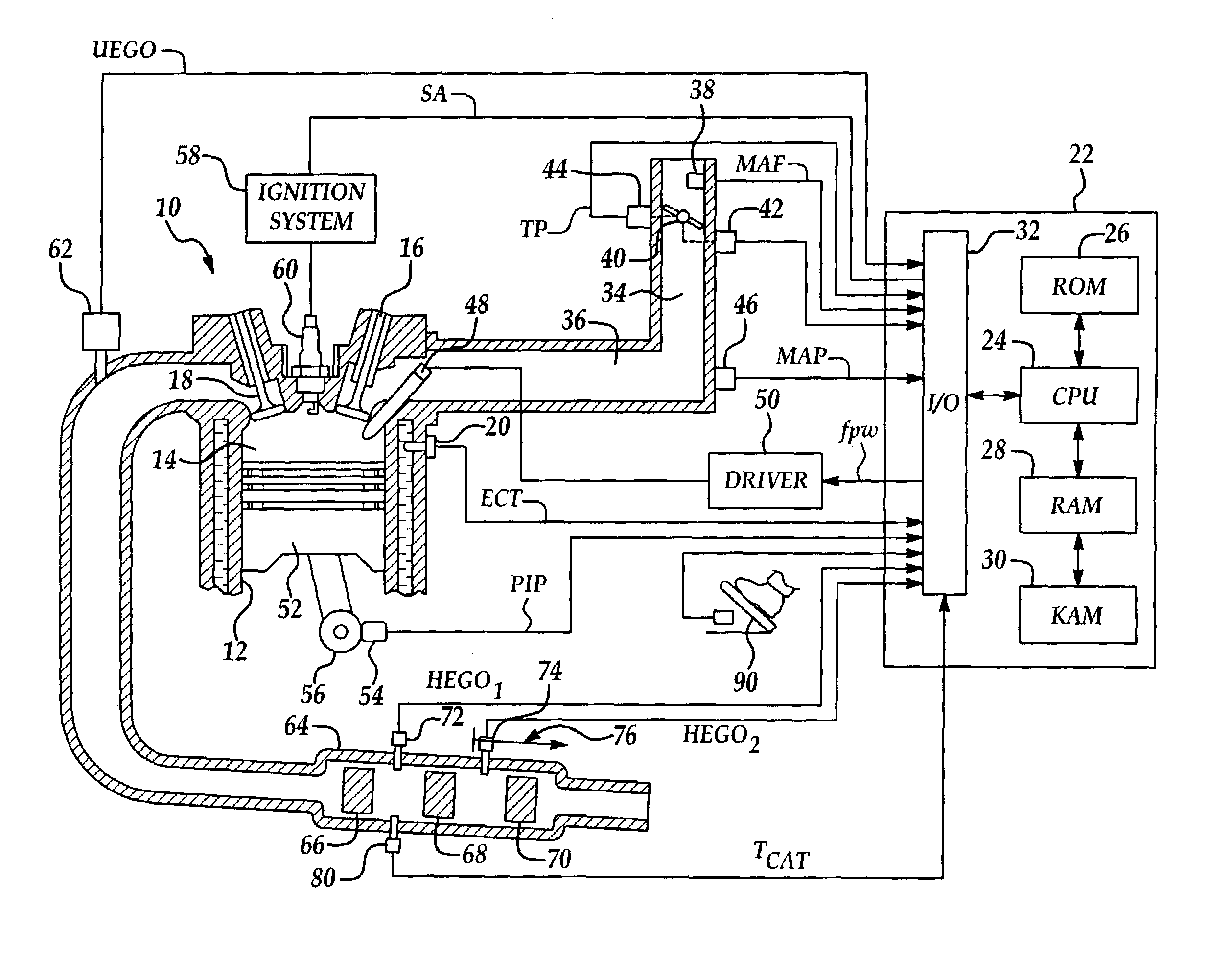
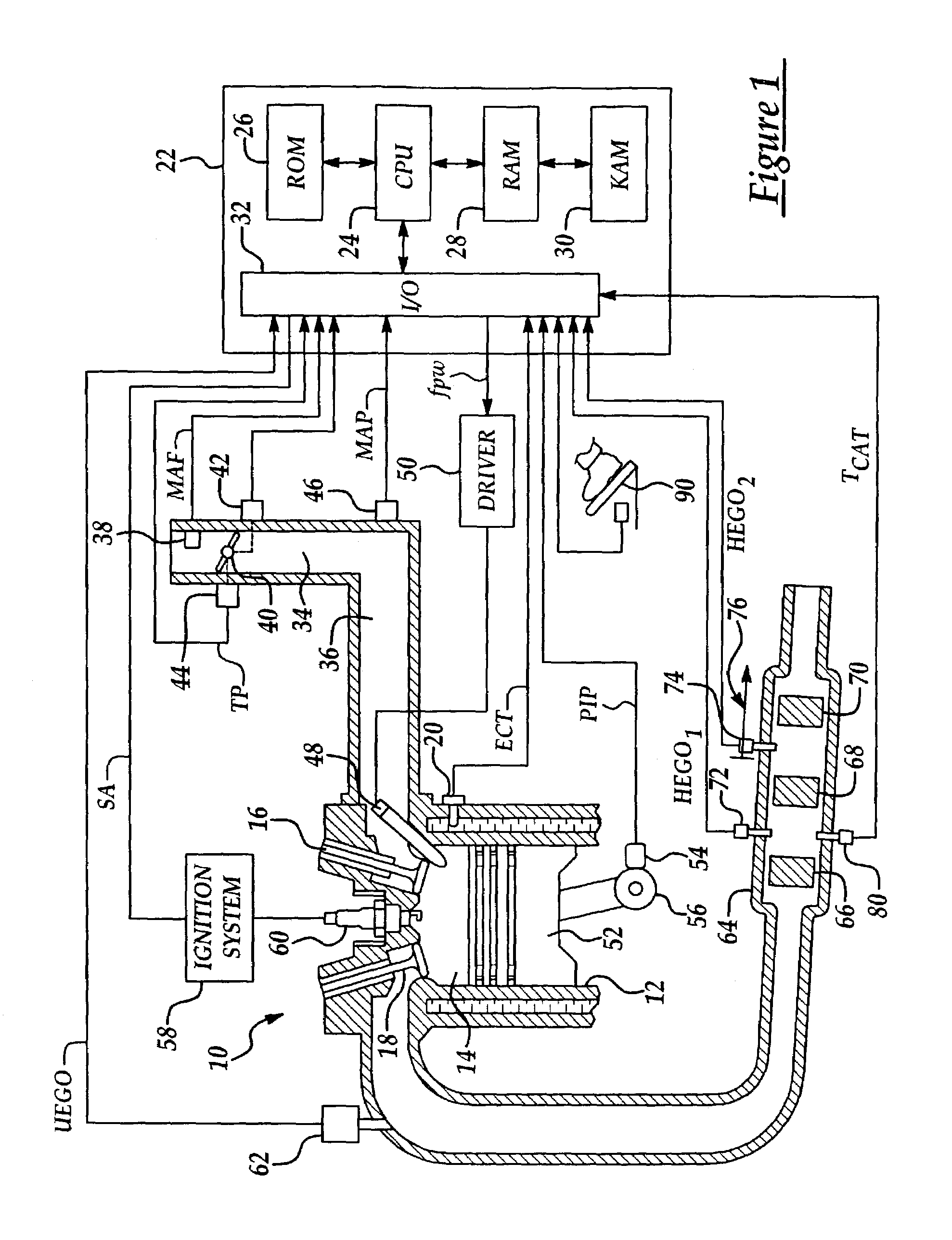
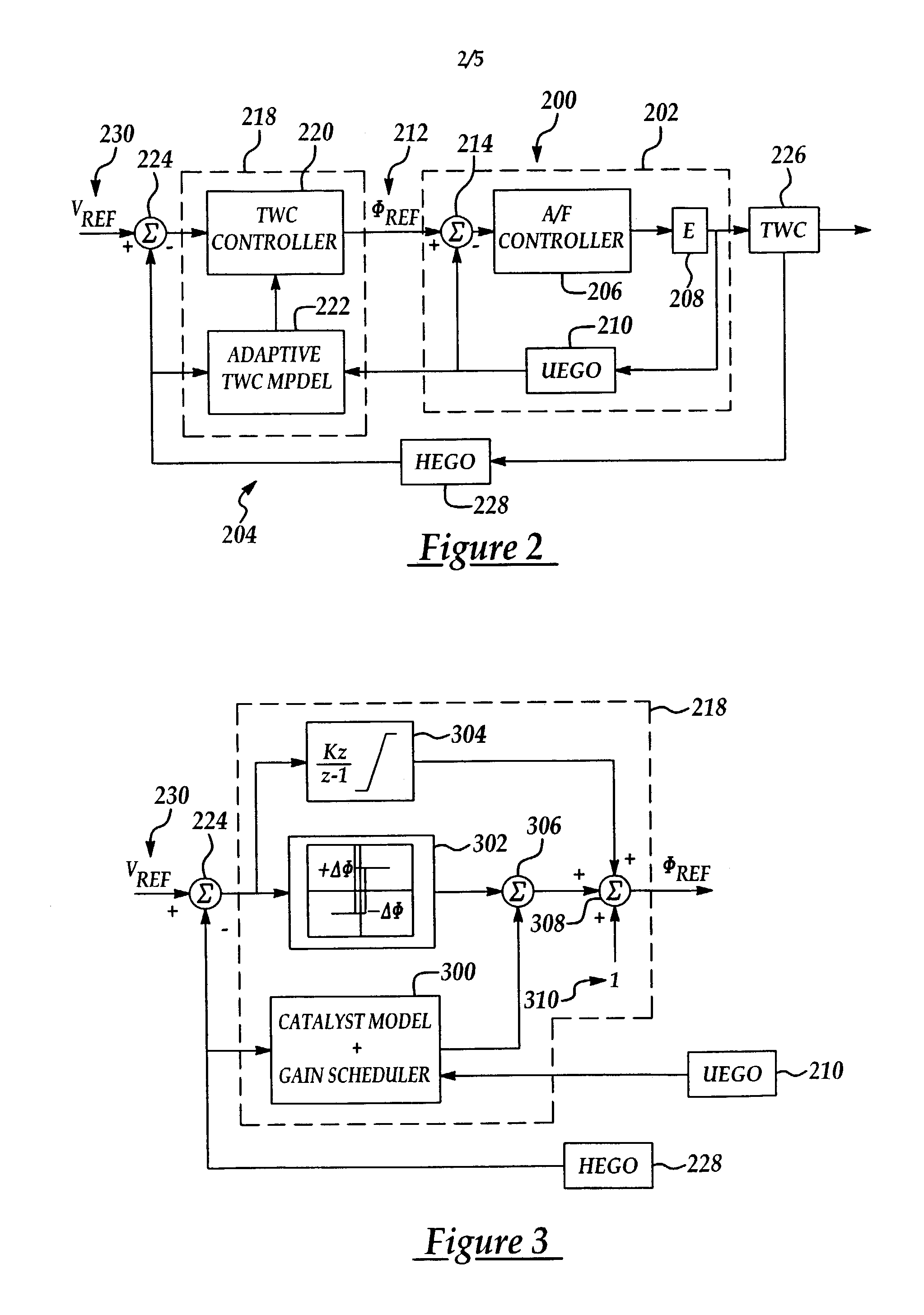
- A system and method that incorporate an inner feedback control loop with an outer feedback control loop to adapt the fuel/air ratio based on feedback from upstream and downstream exhaust gas sensors, modeling the catalyst as a nonlinear integrator with an unknown adaptive gain, allowing real-time estimation and adjustment of the catalyst gain to manage oxygen storage capacity and maintain optimal catalyst performance.

Engine control and catalyst monitoring with downstream exhaust gas sensors
PatentInactiveUS20040244364A1
Innovation
- A system and method that employs an inner feedback control loop for fuel/air ratio control using upstream exhaust gas sensors and an outer feedback control loop that adapts the fuel/air ratio reference based on signals from multiple downstream sensors, estimating catalyst gain to compensate for changing conditions and maintain efficient catalyst operation.


Emission Regulations and Compliance Requirements
The automotive industry operates under increasingly stringent emission regulations that directly impact the design and optimization of both Engine Control Modules (ECMs) and catalytic converter systems. The European Union's Euro 7 standards, scheduled for implementation in 2025, mandate significant reductions in nitrogen oxides (NOx), particulate matter (PM), and carbon monoxide (CO) emissions. These regulations establish maximum permissible emission levels that require sophisticated coordination between ECM algorithms and catalyst performance parameters.
In the United States, the Environmental Protection Agency (EPA) Tier 3 standards impose strict fleet-average NOx limits of 30 mg/mile for light-duty vehicles, while California's Advanced Clean Cars II program extends these requirements through 2035. These regulatory frameworks necessitate real-time emission monitoring and adaptive control strategies that optimize the interaction between engine management systems and after-treatment technologies.
Compliance requirements extend beyond static emission limits to include on-board diagnostics (OBD) protocols that continuously monitor system performance. ECMs must demonstrate the ability to detect catalyst efficiency degradation within specified thresholds, typically requiring catalyst conversion efficiency to remain above 95% for NOx reduction and 90% for hydrocarbon oxidation throughout the vehicle's useful life.
The Real Driving Emissions (RDE) testing protocols introduced globally require emission control systems to maintain compliance under diverse operating conditions, including cold starts, highway driving, and urban stop-and-go scenarios. This regulatory evolution demands enhanced integration between ECM predictive algorithms and catalyst thermal management systems to ensure optimal performance across all driving conditions.
Future regulatory trends indicate movement toward lifecycle emission assessments and carbon neutrality requirements by 2050 in major markets. These emerging standards will likely mandate comprehensive efficiency optimization strategies that leverage both ECM computational capabilities and advanced catalyst formulations to achieve unprecedented emission reduction targets while maintaining fuel economy performance.
In the United States, the Environmental Protection Agency (EPA) Tier 3 standards impose strict fleet-average NOx limits of 30 mg/mile for light-duty vehicles, while California's Advanced Clean Cars II program extends these requirements through 2035. These regulatory frameworks necessitate real-time emission monitoring and adaptive control strategies that optimize the interaction between engine management systems and after-treatment technologies.
Compliance requirements extend beyond static emission limits to include on-board diagnostics (OBD) protocols that continuously monitor system performance. ECMs must demonstrate the ability to detect catalyst efficiency degradation within specified thresholds, typically requiring catalyst conversion efficiency to remain above 95% for NOx reduction and 90% for hydrocarbon oxidation throughout the vehicle's useful life.
The Real Driving Emissions (RDE) testing protocols introduced globally require emission control systems to maintain compliance under diverse operating conditions, including cold starts, highway driving, and urban stop-and-go scenarios. This regulatory evolution demands enhanced integration between ECM predictive algorithms and catalyst thermal management systems to ensure optimal performance across all driving conditions.
Future regulatory trends indicate movement toward lifecycle emission assessments and carbon neutrality requirements by 2050 in major markets. These emerging standards will likely mandate comprehensive efficiency optimization strategies that leverage both ECM computational capabilities and advanced catalyst formulations to achieve unprecedented emission reduction targets while maintaining fuel economy performance.
Cost-Benefit Analysis of ECM vs Catalyst Upgrades
The economic evaluation of Engine Control Module (ECM) versus catalyst upgrades reveals distinct investment profiles and return characteristics. ECM upgrades typically require initial investments ranging from $800 to $2,500 per vehicle, depending on the sophistication of the control algorithms and hardware modifications. These systems offer immediate returns through optimized fuel injection timing, air-fuel ratio management, and combustion efficiency improvements, typically yielding 8-15% fuel economy gains within the first operational year.
Catalyst upgrade investments present a different economic proposition, with initial costs spanning $1,200 to $4,000 per unit for advanced three-way catalytic converters or selective catalytic reduction systems. While the upfront investment is generally higher, catalyst upgrades provide sustained performance benefits over extended operational periods, often maintaining efficiency gains for 150,000 to 200,000 miles under normal operating conditions.
The operational cost implications differ significantly between these technologies. ECM upgrades generate ongoing savings through reduced fuel consumption, with typical payback periods of 18-36 months for commercial fleet applications. Additionally, optimized engine control reduces wear on mechanical components, extending maintenance intervals and decreasing long-term operational expenses. However, ECM systems may require periodic software updates and calibration adjustments, adding modest recurring costs.
Catalyst upgrades demonstrate their economic value through enhanced emission control efficiency and regulatory compliance benefits. Modern catalyst systems can achieve 95-98% conversion efficiency for targeted pollutants, potentially avoiding costly emission penalties and ensuring compliance with increasingly stringent environmental regulations. The durability advantage of catalyst upgrades translates to lower replacement frequency costs compared to conventional emission control systems.
Risk assessment reveals that ECM investments carry technology obsolescence risks, as rapid advances in engine management systems may require more frequent upgrades. Conversely, catalyst technology presents material cost volatility risks, particularly for systems utilizing precious metals like platinum, palladium, and rhodium, which can significantly impact replacement costs.
The total cost of ownership analysis over a 10-year operational period shows that ECM upgrades typically provide superior return on investment for high-mileage applications, while catalyst upgrades offer better long-term value for moderate-use scenarios where regulatory compliance and emission performance are primary concerns.
Catalyst upgrade investments present a different economic proposition, with initial costs spanning $1,200 to $4,000 per unit for advanced three-way catalytic converters or selective catalytic reduction systems. While the upfront investment is generally higher, catalyst upgrades provide sustained performance benefits over extended operational periods, often maintaining efficiency gains for 150,000 to 200,000 miles under normal operating conditions.
The operational cost implications differ significantly between these technologies. ECM upgrades generate ongoing savings through reduced fuel consumption, with typical payback periods of 18-36 months for commercial fleet applications. Additionally, optimized engine control reduces wear on mechanical components, extending maintenance intervals and decreasing long-term operational expenses. However, ECM systems may require periodic software updates and calibration adjustments, adding modest recurring costs.
Catalyst upgrades demonstrate their economic value through enhanced emission control efficiency and regulatory compliance benefits. Modern catalyst systems can achieve 95-98% conversion efficiency for targeted pollutants, potentially avoiding costly emission penalties and ensuring compliance with increasingly stringent environmental regulations. The durability advantage of catalyst upgrades translates to lower replacement frequency costs compared to conventional emission control systems.
Risk assessment reveals that ECM investments carry technology obsolescence risks, as rapid advances in engine management systems may require more frequent upgrades. Conversely, catalyst technology presents material cost volatility risks, particularly for systems utilizing precious metals like platinum, palladium, and rhodium, which can significantly impact replacement costs.
The total cost of ownership analysis over a 10-year operational period shows that ECM upgrades typically provide superior return on investment for high-mileage applications, while catalyst upgrades offer better long-term value for moderate-use scenarios where regulatory compliance and emission performance are primary concerns.
Unlock deeper insights with Patsnap Eureka Quick Research — get a full tech report to explore trends and direct your research. Try now!
Generate Your Research Report Instantly with AI Agent
Supercharge your innovation with Patsnap Eureka AI Agent Platform!