Engine Control Module vs Glow Plug: Cold Start Reliability
MAR 27, 20269 MIN READ
Generate Your Research Report Instantly with AI Agent
PatSnap Eureka helps you evaluate technical feasibility & market potential.
Diesel Engine Cold Start Technology Background and Objectives
Diesel engine cold start technology has evolved significantly since the introduction of compression ignition engines in the late 19th century. Rudolf Diesel's original design faced immediate challenges in cold weather conditions, where reduced ambient temperatures dramatically affected fuel atomization, combustion efficiency, and engine cranking performance. Early diesel engines required manual preheating methods, including torch heating and hot bulb ignition systems, which were labor-intensive and posed safety risks.
The development trajectory of cold start solutions has progressed through several distinct phases. Initial mechanical approaches gave way to electrical heating systems in the 1930s, with glow plugs emerging as the primary solution for passenger vehicles. The introduction of electronic engine control modules in the 1980s revolutionized cold start management by enabling precise timing control, fuel injection optimization, and coordinated heating strategies.
Modern diesel cold start technology addresses multiple interconnected challenges. Low ambient temperatures increase fuel viscosity, reduce battery capacity, and slow chemical reaction rates within the combustion chamber. These factors collectively impair fuel atomization, delay ignition timing, and reduce combustion completeness, resulting in extended cranking periods, increased emissions, and potential engine damage from incomplete combustion cycles.
Contemporary cold start systems integrate sophisticated engine control modules with advanced glow plug technologies to achieve reliable ignition under extreme conditions. Engine control modules utilize multiple sensor inputs including ambient temperature, coolant temperature, and fuel temperature to calculate optimal heating duration and fuel injection parameters. Meanwhile, modern glow plugs incorporate rapid heating elements capable of reaching operational temperatures within seconds.
The primary technical objectives driving current research focus on reducing cold start duration while minimizing energy consumption and emissions output. Target specifications include achieving reliable ignition at temperatures as low as -30°C within 15 seconds of initial cranking, while maintaining NOx and particulate emissions within regulatory limits. Additionally, system durability requirements demand operational reliability over 200,000 engine cycles without component degradation.
Future development goals emphasize integration of predictive algorithms, advanced materials, and alternative heating technologies. These innovations aim to achieve instantaneous cold start capability regardless of ambient conditions, while supporting increasingly stringent emissions regulations and fuel economy standards in next-generation diesel powertrains.
The development trajectory of cold start solutions has progressed through several distinct phases. Initial mechanical approaches gave way to electrical heating systems in the 1930s, with glow plugs emerging as the primary solution for passenger vehicles. The introduction of electronic engine control modules in the 1980s revolutionized cold start management by enabling precise timing control, fuel injection optimization, and coordinated heating strategies.
Modern diesel cold start technology addresses multiple interconnected challenges. Low ambient temperatures increase fuel viscosity, reduce battery capacity, and slow chemical reaction rates within the combustion chamber. These factors collectively impair fuel atomization, delay ignition timing, and reduce combustion completeness, resulting in extended cranking periods, increased emissions, and potential engine damage from incomplete combustion cycles.
Contemporary cold start systems integrate sophisticated engine control modules with advanced glow plug technologies to achieve reliable ignition under extreme conditions. Engine control modules utilize multiple sensor inputs including ambient temperature, coolant temperature, and fuel temperature to calculate optimal heating duration and fuel injection parameters. Meanwhile, modern glow plugs incorporate rapid heating elements capable of reaching operational temperatures within seconds.
The primary technical objectives driving current research focus on reducing cold start duration while minimizing energy consumption and emissions output. Target specifications include achieving reliable ignition at temperatures as low as -30°C within 15 seconds of initial cranking, while maintaining NOx and particulate emissions within regulatory limits. Additionally, system durability requirements demand operational reliability over 200,000 engine cycles without component degradation.
Future development goals emphasize integration of predictive algorithms, advanced materials, and alternative heating technologies. These innovations aim to achieve instantaneous cold start capability regardless of ambient conditions, while supporting increasingly stringent emissions regulations and fuel economy standards in next-generation diesel powertrains.
Market Demand for Reliable Cold Start Systems
The automotive industry faces mounting pressure to deliver reliable cold start performance across diverse operating conditions, driven by stringent emissions regulations and evolving consumer expectations. Modern diesel engines must achieve consistent ignition in temperatures ranging from moderate climates to extreme arctic conditions, where ambient temperatures can drop below negative forty degrees Celsius. This operational requirement has created substantial market demand for advanced cold start technologies that can ensure reliable engine performance regardless of environmental challenges.
Fleet operators represent a significant market segment driving demand for enhanced cold start reliability. Commercial transportation companies, construction equipment operators, and agricultural machinery users require guaranteed engine performance to maintain operational schedules and minimize downtime costs. These sectors particularly value systems that can reduce cold start duration while maintaining long-term durability, as equipment failure in remote locations or during critical operations can result in substantial economic losses.
The passenger vehicle market demonstrates increasing sophistication in cold start expectations, with consumers demanding immediate engine response and reduced warm-up periods. Modern drivers expect seamless operation regardless of weather conditions, creating market pressure for manufacturers to implement more advanced cold start management systems. This consumer behavior has intensified competition among automotive manufacturers to develop superior cold start technologies that differentiate their products in competitive markets.
Regulatory frameworks worldwide continue to tighten emissions standards during cold start phases, creating mandatory market drivers for improved systems. European Union regulations, North American standards, and emerging market requirements all emphasize reduced emissions during the critical first minutes of engine operation. These regulatory pressures have transformed cold start reliability from a convenience feature into a compliance necessity, expanding the addressable market for advanced engine control and glow plug technologies.
Emerging markets in regions with extreme climate variations present substantial growth opportunities for reliable cold start systems. Countries with significant temperature fluctuations between seasons require robust solutions that can adapt to varying environmental conditions. The expansion of diesel engine applications in these markets, combined with increasing quality expectations, has created new demand segments for sophisticated cold start management technologies that can operate effectively across broad temperature ranges.
Fleet operators represent a significant market segment driving demand for enhanced cold start reliability. Commercial transportation companies, construction equipment operators, and agricultural machinery users require guaranteed engine performance to maintain operational schedules and minimize downtime costs. These sectors particularly value systems that can reduce cold start duration while maintaining long-term durability, as equipment failure in remote locations or during critical operations can result in substantial economic losses.
The passenger vehicle market demonstrates increasing sophistication in cold start expectations, with consumers demanding immediate engine response and reduced warm-up periods. Modern drivers expect seamless operation regardless of weather conditions, creating market pressure for manufacturers to implement more advanced cold start management systems. This consumer behavior has intensified competition among automotive manufacturers to develop superior cold start technologies that differentiate their products in competitive markets.
Regulatory frameworks worldwide continue to tighten emissions standards during cold start phases, creating mandatory market drivers for improved systems. European Union regulations, North American standards, and emerging market requirements all emphasize reduced emissions during the critical first minutes of engine operation. These regulatory pressures have transformed cold start reliability from a convenience feature into a compliance necessity, expanding the addressable market for advanced engine control and glow plug technologies.
Emerging markets in regions with extreme climate variations present substantial growth opportunities for reliable cold start systems. Countries with significant temperature fluctuations between seasons require robust solutions that can adapt to varying environmental conditions. The expansion of diesel engine applications in these markets, combined with increasing quality expectations, has created new demand segments for sophisticated cold start management technologies that can operate effectively across broad temperature ranges.
Current ECM and Glow Plug Integration Challenges
The integration of Engine Control Modules (ECM) and glow plug systems presents several critical challenges that directly impact cold start reliability in diesel engines. These challenges stem from the complex interplay between electronic control systems and thermal management requirements during engine startup phases.
Communication protocol mismatches represent a fundamental integration challenge. Modern ECMs utilize sophisticated CAN bus networks and proprietary communication standards, while glow plug controllers often operate on different timing protocols. This disconnect creates latency issues where ECM commands may not synchronize properly with glow plug activation sequences, resulting in suboptimal preheating cycles that compromise cold start performance.
Thermal management coordination poses another significant obstacle. ECMs must balance multiple engine parameters including fuel injection timing, air intake management, and exhaust gas recirculation while simultaneously coordinating with glow plug heating cycles. The challenge lies in achieving precise temperature control across varying ambient conditions, as inadequate coordination can lead to either insufficient preheating or excessive energy consumption that drains battery systems.
Power distribution conflicts frequently emerge during cold start scenarios when both ECM operations and glow plug systems compete for limited electrical resources. High-current glow plug demands can cause voltage drops that affect ECM sensor readings and computational accuracy, creating feedback loops that further degrade system performance. This electrical interference is particularly problematic in extreme cold conditions where battery capacity is already compromised.
Diagnostic integration represents an ongoing challenge where ECM fault detection systems struggle to accurately interpret glow plug system status. Traditional diagnostic protocols may not adequately capture the nuanced performance characteristics of modern ceramic glow plugs, leading to false error codes or missed failure modes that could prevent successful cold starts.
Software compatibility issues arise from the evolutionary mismatch between ECM firmware updates and glow plug controller programming. Legacy glow plug systems may not respond appropriately to newer ECM control strategies, while updated ECM software might not account for the operational characteristics of existing glow plug hardware, creating integration gaps that affect overall system reliability.
Communication protocol mismatches represent a fundamental integration challenge. Modern ECMs utilize sophisticated CAN bus networks and proprietary communication standards, while glow plug controllers often operate on different timing protocols. This disconnect creates latency issues where ECM commands may not synchronize properly with glow plug activation sequences, resulting in suboptimal preheating cycles that compromise cold start performance.
Thermal management coordination poses another significant obstacle. ECMs must balance multiple engine parameters including fuel injection timing, air intake management, and exhaust gas recirculation while simultaneously coordinating with glow plug heating cycles. The challenge lies in achieving precise temperature control across varying ambient conditions, as inadequate coordination can lead to either insufficient preheating or excessive energy consumption that drains battery systems.
Power distribution conflicts frequently emerge during cold start scenarios when both ECM operations and glow plug systems compete for limited electrical resources. High-current glow plug demands can cause voltage drops that affect ECM sensor readings and computational accuracy, creating feedback loops that further degrade system performance. This electrical interference is particularly problematic in extreme cold conditions where battery capacity is already compromised.
Diagnostic integration represents an ongoing challenge where ECM fault detection systems struggle to accurately interpret glow plug system status. Traditional diagnostic protocols may not adequately capture the nuanced performance characteristics of modern ceramic glow plugs, leading to false error codes or missed failure modes that could prevent successful cold starts.
Software compatibility issues arise from the evolutionary mismatch between ECM firmware updates and glow plug controller programming. Legacy glow plug systems may not respond appropriately to newer ECM control strategies, while updated ECM software might not account for the operational characteristics of existing glow plug hardware, creating integration gaps that affect overall system reliability.
Current ECM-Glow Plug Control Solutions
01 Glow plug control timing and duration optimization
Control systems that optimize the timing and duration of glow plug activation based on engine temperature and environmental conditions to improve cold start reliability. These systems monitor various parameters and adjust the preheating period to ensure optimal combustion chamber temperature before engine cranking, reducing wear and improving starting performance in cold conditions.- Glow plug control timing and duration optimization: Control systems that optimize the timing and duration of glow plug activation based on engine temperature and environmental conditions to improve cold start reliability. These systems monitor various parameters such as coolant temperature, ambient temperature, and engine cranking speed to determine the optimal preheating period. Advanced algorithms adjust the glow plug energization time to ensure sufficient heating while preventing excessive power consumption or component damage.
- Glow plug power supply and voltage regulation: Systems for regulating and controlling the electrical power supplied to glow plugs during cold start conditions. These include voltage regulation circuits, pulse-width modulation techniques, and current limiting mechanisms to ensure consistent and reliable glow plug operation across varying battery conditions. The control modules manage power distribution to prevent voltage drops and ensure adequate heating performance even under low battery charge conditions.
- Temperature sensing and feedback control: Integration of temperature sensors and feedback mechanisms in engine control modules to monitor glow plug and engine temperatures in real-time. These systems use sensor data to dynamically adjust glow plug operation, ensuring optimal preheating without overheating. The feedback control loops enable adaptive control strategies that respond to actual thermal conditions rather than relying solely on predetermined timing sequences.
- Multi-phase glow plug control strategies: Advanced control strategies that implement multiple phases of glow plug operation including pre-glow, starting, and post-glow phases. These systems coordinate different heating intensities and durations for each phase to optimize cold start performance and reduce emissions. The multi-phase approach ensures adequate cylinder temperature during cranking while extending controlled heating into the initial running period to stabilize combustion.
- Diagnostic and fault detection systems: Engine control modules equipped with diagnostic capabilities to detect glow plug failures, circuit malfunctions, and performance degradation. These systems monitor electrical parameters such as resistance, current draw, and voltage levels to identify faulty glow plugs or wiring issues. Fault detection enables timely maintenance and prevents cold start failures by alerting operators to component problems before they affect engine starting reliability.
02 Temperature-based glow plug power management
Engine control modules that regulate glow plug power supply based on temperature sensors to prevent overheating while ensuring adequate preheating. The system adjusts voltage and current supplied to glow plugs according to coolant temperature, ambient temperature, and glow plug resistance changes, extending component life and improving cold start efficiency.Expand Specific Solutions03 Multi-phase glow plug heating strategies
Control strategies implementing multiple heating phases including pre-glow, starting glow, and post-glow periods with different power levels. These phased approaches provide initial rapid heating followed by sustained temperature maintenance during cranking and post-start warm-up, ensuring reliable ignition and reduced emissions during cold starts.Expand Specific Solutions04 Glow plug circuit fault detection and diagnosis
Diagnostic systems integrated into engine control modules that monitor glow plug circuit integrity by detecting open circuits, short circuits, and resistance abnormalities. These systems provide fault codes and warnings to operators while implementing backup strategies to maintain cold start capability even with partial glow plug system failure.Expand Specific Solutions05 Individual glow plug control and monitoring
Advanced control modules featuring independent control and monitoring of each glow plug cylinder, allowing customized heating profiles and real-time performance assessment. This approach enables compensation for variations between cylinders, identification of specific failed components, and optimized energy distribution for improved overall cold start reliability.Expand Specific Solutions
Key Players in ECM and Glow Plug Systems
The engine control module versus glow plug cold start reliability technology represents a mature automotive sector experiencing steady growth driven by stringent emission regulations and cold climate performance demands. The market demonstrates significant scale with established global players spanning multiple tiers of the supply chain. Technology maturity varies considerably across market participants, with Tier 1 suppliers like Robert Bosch GmbH, DENSO Corp., and BorgWarner Ludwigsburg GmbH leading advanced ECM integration and smart glow plug systems. Traditional OEMs including Toyota Motor Corp., GM Global Technology Operations LLC, and AUDI AG focus on system optimization and integration. Chinese manufacturers such as Weichai Power, BYD Co. Ltd., and Great Wall Motor Co. Ltd. are rapidly advancing their capabilities, while specialized component manufacturers like Niterra Co. Ltd. concentrate on precision glow plug technology. The competitive landscape reflects a transition toward intelligent thermal management systems integrating both ECM control algorithms and advanced glow plug materials.
Robert Bosch GmbH
Technical Solution: Bosch has developed advanced Engine Control Module (ECM) systems that integrate sophisticated glow plug control algorithms for diesel engines. Their ECM technology features adaptive heating strategies that monitor engine temperature, ambient conditions, and fuel quality to optimize glow plug operation timing and duration. The system employs predictive algorithms that can pre-heat glow plugs based on environmental sensors and historical data patterns. Bosch's latest ECM solutions include fail-safe mechanisms that can detect glow plug malfunctions and adjust heating patterns accordingly to maintain cold start reliability even with partially failed glow plug systems.
Strengths: Market-leading ECM technology with comprehensive diagnostic capabilities and robust fail-safe mechanisms. Weaknesses: Higher cost compared to basic systems and complexity may require specialized maintenance expertise.
DENSO Corp.
Technical Solution: DENSO has developed integrated cold start systems that combine advanced ECM technology with high-performance ceramic glow plugs. Their ECM features rapid heating algorithms that can achieve optimal combustion chamber temperatures within 2-3 seconds in extreme cold conditions. The system utilizes multi-zone temperature monitoring and adaptive control strategies that adjust glow plug power delivery based on real-time engine conditions. DENSO's technology includes predictive maintenance features that monitor glow plug resistance and performance degradation over time, enabling proactive replacement scheduling to maintain consistent cold start reliability.
Strengths: Fast heating technology with excellent temperature control precision and predictive maintenance capabilities. Weaknesses: Limited compatibility with non-DENSO glow plug systems and requires specific calibration for different engine configurations.
Core Patents in Cold Start Control Systems
Diesel engine control device and control method
PatentWO2013137320A1
Innovation
- A control device and method that estimates the temperature near the glow plug and adjusts supercharging pressure to minimize engine rotation fluctuations by maintaining a minimal intake air amount during cold start, preventing glow plug cooling and stabilizing combustion.


Energization control apparatus and method for glow plug during the period from preglow to afterglow steps
PatentInactiveUS20070240663A1
Innovation
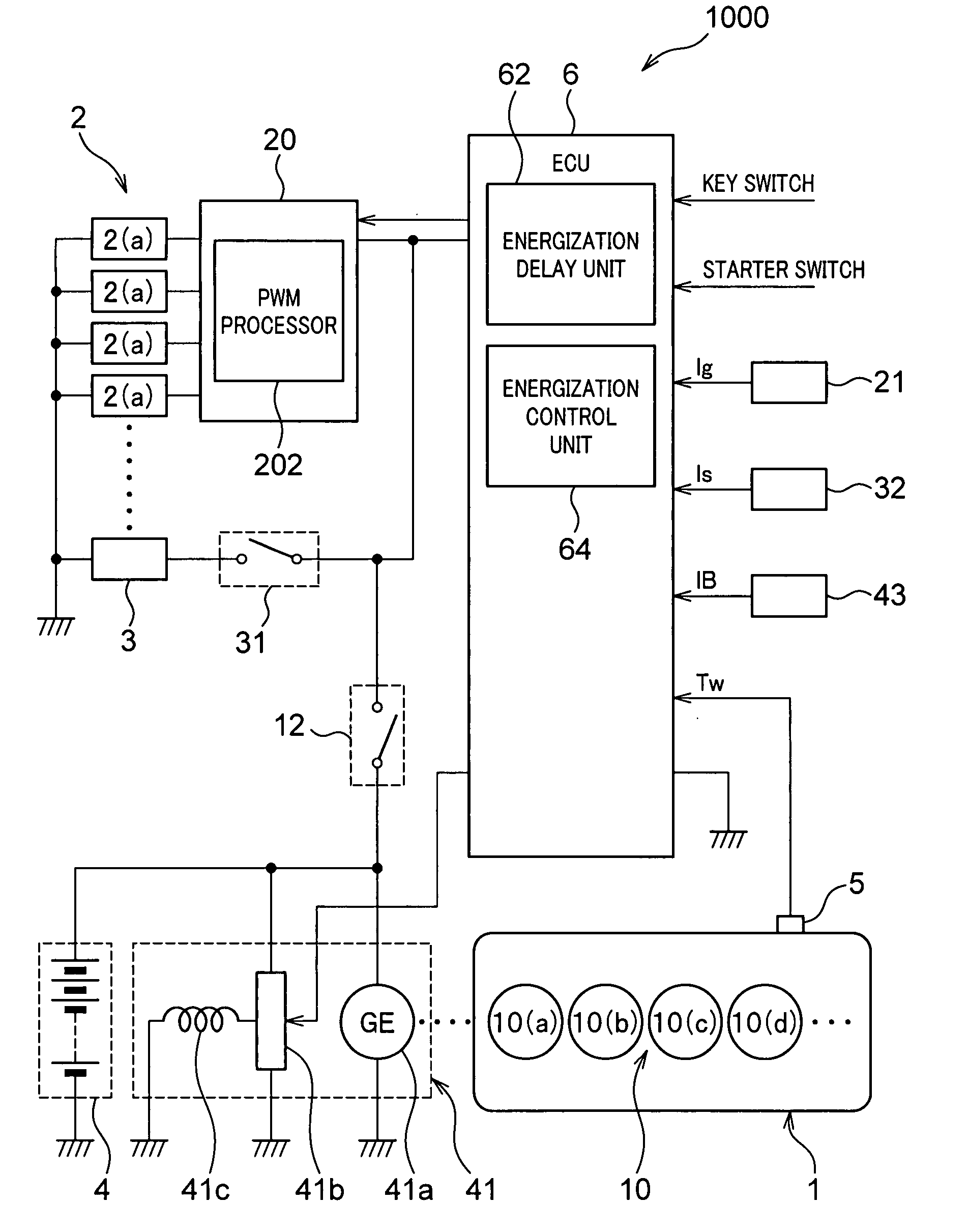
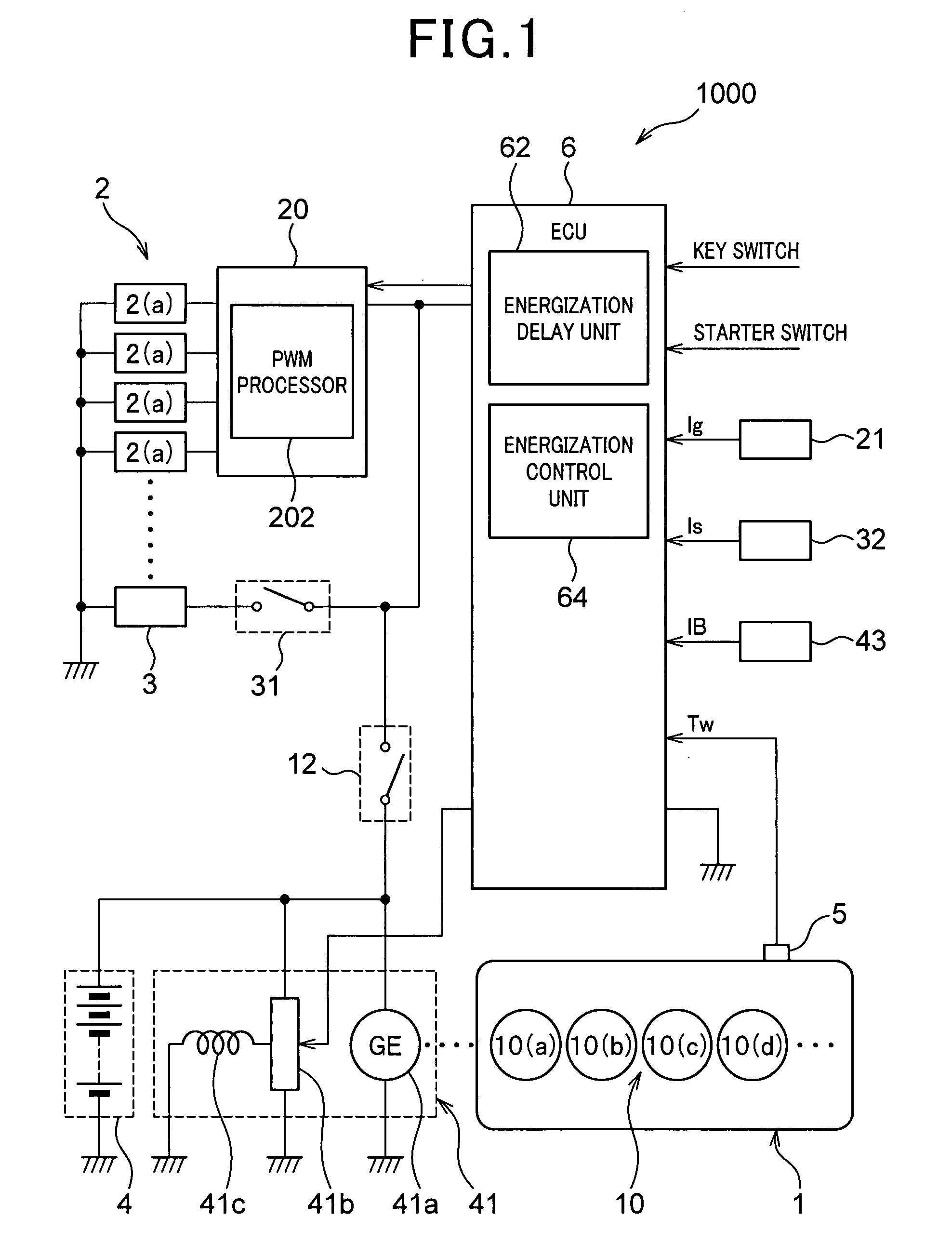
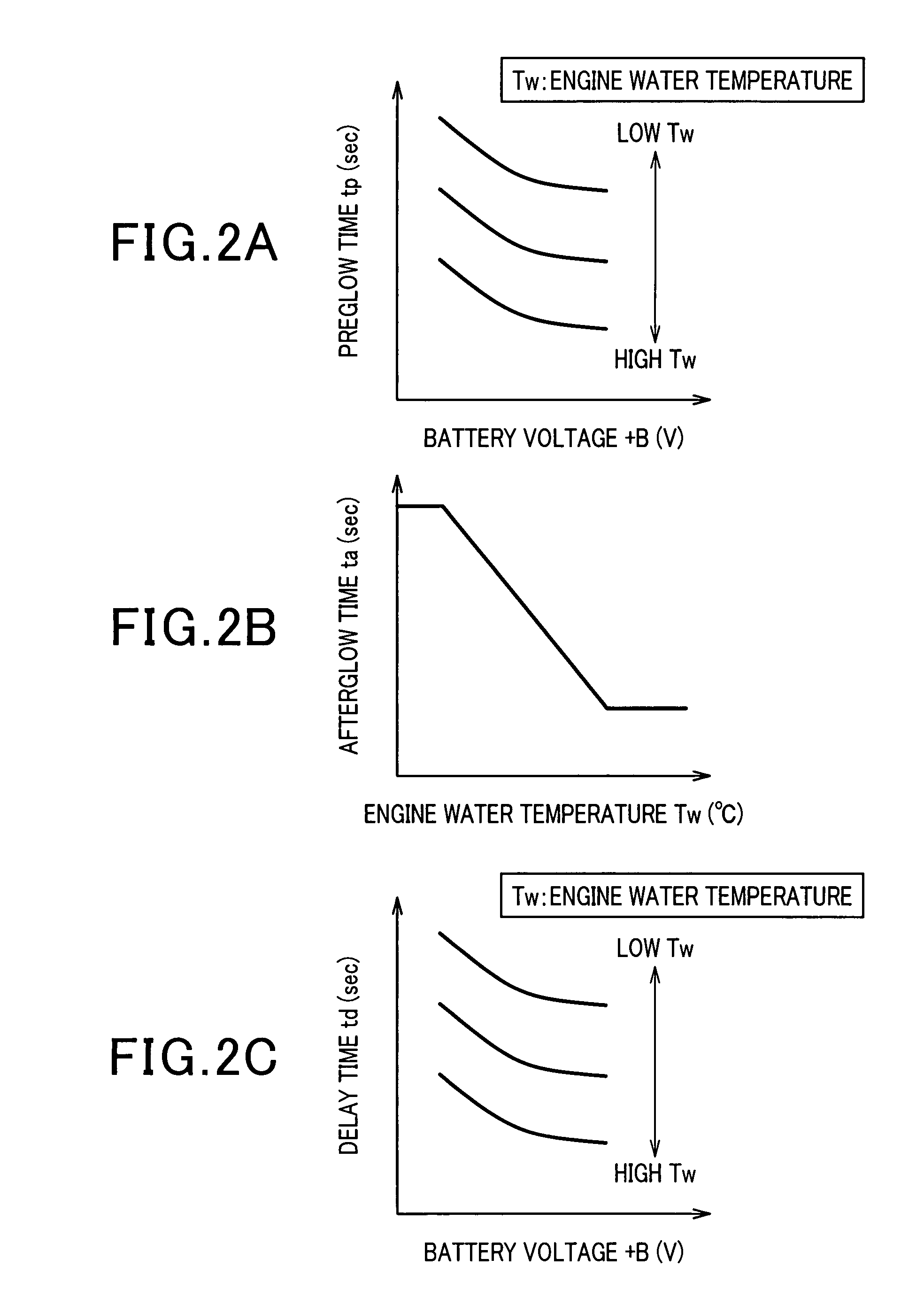
- A glow plug control apparatus that delays the supply of electric power to the glow plug relative to the starter switch activation, using a calculating circuit to determine pre-glow, after-glow, and delay times based on engine state and battery voltage, optimizing power distribution to prevent battery overload and ensure efficient heating.

Emission Standards Impact on Cold Start Systems
The implementation of increasingly stringent emission standards worldwide has fundamentally transformed the design and operation of cold start systems in diesel engines. Regulatory frameworks such as Euro VI, EPA Tier 4, and China VI have established progressively lower limits for nitrogen oxides, particulate matter, and hydrocarbon emissions during cold start conditions, forcing manufacturers to develop more sophisticated control strategies that balance emission compliance with reliable engine starting performance.
Modern emission standards have particularly impacted the integration between Engine Control Modules and glow plug systems. The ECM must now execute complex algorithms that optimize glow plug heating patterns not only for combustion reliability but also for minimizing cold start emissions. This dual requirement has led to the development of advanced pre-heating strategies that extend glow plug operation times and implement multi-phase heating cycles to ensure complete fuel combustion from the initial engine cycles.
The introduction of Real Driving Emissions testing protocols has further intensified the focus on cold start performance, as these conditions represent a significant portion of total vehicle emissions in real-world driving scenarios. Consequently, manufacturers have invested heavily in developing predictive heating systems that utilize ambient temperature sensors, fuel quality detection, and engine thermal state monitoring to optimize cold start procedures while maintaining emission compliance.
Particulate matter regulations have driven the adoption of coordinated systems where glow plug operation is synchronized with diesel particulate filter regeneration strategies. This integration requires sophisticated ECM programming to manage the thermal dynamics of both cold start assistance and exhaust aftertreatment systems, ensuring that emission control devices reach optimal operating temperatures rapidly without compromising engine reliability.
The regulatory emphasis on durability and emission performance over extended vehicle lifespans has also influenced cold start system design. Modern systems must maintain emission compliance and starting reliability across hundreds of thousands of operating cycles, leading to the development of more robust glow plug materials and advanced ECM diagnostic capabilities that can adapt control strategies based on component aging and performance degradation patterns.
Modern emission standards have particularly impacted the integration between Engine Control Modules and glow plug systems. The ECM must now execute complex algorithms that optimize glow plug heating patterns not only for combustion reliability but also for minimizing cold start emissions. This dual requirement has led to the development of advanced pre-heating strategies that extend glow plug operation times and implement multi-phase heating cycles to ensure complete fuel combustion from the initial engine cycles.
The introduction of Real Driving Emissions testing protocols has further intensified the focus on cold start performance, as these conditions represent a significant portion of total vehicle emissions in real-world driving scenarios. Consequently, manufacturers have invested heavily in developing predictive heating systems that utilize ambient temperature sensors, fuel quality detection, and engine thermal state monitoring to optimize cold start procedures while maintaining emission compliance.
Particulate matter regulations have driven the adoption of coordinated systems where glow plug operation is synchronized with diesel particulate filter regeneration strategies. This integration requires sophisticated ECM programming to manage the thermal dynamics of both cold start assistance and exhaust aftertreatment systems, ensuring that emission control devices reach optimal operating temperatures rapidly without compromising engine reliability.
The regulatory emphasis on durability and emission performance over extended vehicle lifespans has also influenced cold start system design. Modern systems must maintain emission compliance and starting reliability across hundreds of thousands of operating cycles, leading to the development of more robust glow plug materials and advanced ECM diagnostic capabilities that can adapt control strategies based on component aging and performance degradation patterns.
Thermal Management Strategies for Cold Weather Performance
Effective thermal management represents a critical engineering challenge for diesel engines operating in cold weather conditions, particularly when addressing the reliability trade-offs between engine control modules and glow plug systems during cold starts. The fundamental approach involves creating integrated heating strategies that maintain optimal operating temperatures across all engine components while minimizing energy consumption and startup delays.
Pre-heating strategies form the cornerstone of cold weather thermal management, encompassing both active and passive heating methods. Block heaters provide continuous thermal conditioning of the engine coolant and oil systems, maintaining base temperatures that reduce the thermal shock during initial startup. Coolant circulation heaters work in conjunction with oil pan heaters to create uniform temperature distribution, preventing localized cold spots that could compromise component reliability.
Advanced thermal insulation technologies play a pivotal role in heat retention and management efficiency. Multi-layer insulation systems surrounding critical engine components help maintain residual heat during extended shutdown periods. Thermal barriers integrated into engine bay design create microenvironments that protect sensitive electronic components, including engine control modules, from extreme temperature fluctuations that could affect their operational reliability.
Battery thermal management systems directly impact both glow plug performance and engine control module functionality. Heated battery enclosures maintain optimal electrolyte temperatures, ensuring consistent power delivery to glow plugs while preventing voltage drops that could trigger engine control module fault conditions. Smart battery management systems monitor temperature gradients and adjust charging profiles to optimize cold weather performance.
Coolant circuit optimization involves sophisticated flow management strategies that prioritize critical component heating during startup sequences. Bypass valves and thermostatic controls direct heated coolant to engine control modules and glow plug circuits before full engine warming occurs. Variable-speed electric water pumps enable precise thermal control, reducing startup times while maintaining component protection.
Integrated sensor networks provide real-time thermal monitoring across engine systems, enabling predictive thermal management that anticipates cold start requirements. Temperature sensors positioned throughout the engine bay, intake manifold, and electronic component housings feed data to thermal management controllers that optimize heating sequences and prevent thermal stress conditions that could compromise long-term reliability.
Pre-heating strategies form the cornerstone of cold weather thermal management, encompassing both active and passive heating methods. Block heaters provide continuous thermal conditioning of the engine coolant and oil systems, maintaining base temperatures that reduce the thermal shock during initial startup. Coolant circulation heaters work in conjunction with oil pan heaters to create uniform temperature distribution, preventing localized cold spots that could compromise component reliability.
Advanced thermal insulation technologies play a pivotal role in heat retention and management efficiency. Multi-layer insulation systems surrounding critical engine components help maintain residual heat during extended shutdown periods. Thermal barriers integrated into engine bay design create microenvironments that protect sensitive electronic components, including engine control modules, from extreme temperature fluctuations that could affect their operational reliability.
Battery thermal management systems directly impact both glow plug performance and engine control module functionality. Heated battery enclosures maintain optimal electrolyte temperatures, ensuring consistent power delivery to glow plugs while preventing voltage drops that could trigger engine control module fault conditions. Smart battery management systems monitor temperature gradients and adjust charging profiles to optimize cold weather performance.
Coolant circuit optimization involves sophisticated flow management strategies that prioritize critical component heating during startup sequences. Bypass valves and thermostatic controls direct heated coolant to engine control modules and glow plug circuits before full engine warming occurs. Variable-speed electric water pumps enable precise thermal control, reducing startup times while maintaining component protection.
Integrated sensor networks provide real-time thermal monitoring across engine systems, enabling predictive thermal management that anticipates cold start requirements. Temperature sensors positioned throughout the engine bay, intake manifold, and electronic component housings feed data to thermal management controllers that optimize heating sequences and prevent thermal stress conditions that could compromise long-term reliability.
Unlock deeper insights with PatSnap Eureka Quick Research — get a full tech report to explore trends and direct your research. Try now!
Generate Your Research Report Instantly with AI Agent
Supercharge your innovation with PatSnap Eureka AI Agent Platform!