

Enhancing Cost Efficiency in Tangential Flow Filtration Operations
MAR 16, 20269 MIN READ
Generate Your Research Report Instantly with AI Agent
PatSnap Eureka helps you evaluate technical feasibility & market potential.
TFF Cost Efficiency Background and Objectives
Tangential Flow Filtration has emerged as a critical separation technology in biotechnology and pharmaceutical industries since its introduction in the 1960s. Originally developed for water treatment applications, TFF technology has evolved to become an indispensable tool for protein purification, cell harvesting, and buffer exchange processes. The technology's ability to maintain high product recovery rates while providing gentle processing conditions has made it particularly valuable for sensitive biological products.
The evolution of TFF systems has been driven by increasing demands for higher productivity, improved product quality, and reduced manufacturing costs. Early TFF implementations focused primarily on technical performance, with limited attention to operational economics. However, as biopharmaceutical manufacturing has matured and competition has intensified, cost efficiency has become a paramount concern for industry stakeholders.
Current market pressures have intensified the focus on cost optimization across all manufacturing processes. Regulatory agencies increasingly emphasize process efficiency and waste reduction, while healthcare systems worldwide demand more affordable therapeutic products. These factors have created an urgent need to enhance the economic viability of TFF operations without compromising product quality or regulatory compliance.
The primary objective of enhancing TFF cost efficiency centers on optimizing the total cost of ownership throughout the filtration lifecycle. This encompasses reducing membrane costs through improved utilization and extended operational life, minimizing buffer consumption through optimized process design, and decreasing labor requirements through automation and process standardization.
Energy consumption represents another critical target area, as TFF systems require significant pumping power and temperature control. Advanced process control strategies aim to minimize energy usage while maintaining optimal separation performance. Additionally, reducing cleaning and sanitization frequencies through improved fouling management can substantially decrease both chemical costs and downtime.
The overarching goal extends beyond immediate cost reduction to establish sustainable, scalable TFF operations that can adapt to varying production demands. This includes developing predictive maintenance strategies, implementing real-time process monitoring, and creating flexible system configurations that can accommodate different product types without extensive reconfiguration costs.
Success in achieving these objectives requires a holistic approach that balances initial capital investments with long-term operational savings, ensuring that cost efficiency improvements do not compromise product quality, regulatory compliance, or operational reliability.
The evolution of TFF systems has been driven by increasing demands for higher productivity, improved product quality, and reduced manufacturing costs. Early TFF implementations focused primarily on technical performance, with limited attention to operational economics. However, as biopharmaceutical manufacturing has matured and competition has intensified, cost efficiency has become a paramount concern for industry stakeholders.
Current market pressures have intensified the focus on cost optimization across all manufacturing processes. Regulatory agencies increasingly emphasize process efficiency and waste reduction, while healthcare systems worldwide demand more affordable therapeutic products. These factors have created an urgent need to enhance the economic viability of TFF operations without compromising product quality or regulatory compliance.
The primary objective of enhancing TFF cost efficiency centers on optimizing the total cost of ownership throughout the filtration lifecycle. This encompasses reducing membrane costs through improved utilization and extended operational life, minimizing buffer consumption through optimized process design, and decreasing labor requirements through automation and process standardization.
Energy consumption represents another critical target area, as TFF systems require significant pumping power and temperature control. Advanced process control strategies aim to minimize energy usage while maintaining optimal separation performance. Additionally, reducing cleaning and sanitization frequencies through improved fouling management can substantially decrease both chemical costs and downtime.
The overarching goal extends beyond immediate cost reduction to establish sustainable, scalable TFF operations that can adapt to varying production demands. This includes developing predictive maintenance strategies, implementing real-time process monitoring, and creating flexible system configurations that can accommodate different product types without extensive reconfiguration costs.
Success in achieving these objectives requires a holistic approach that balances initial capital investments with long-term operational savings, ensuring that cost efficiency improvements do not compromise product quality, regulatory compliance, or operational reliability.
Market Demand for Cost-Effective TFF Solutions
The biopharmaceutical industry's rapid expansion has created substantial demand for cost-effective tangential flow filtration solutions. As biologics manufacturing scales increase and production volumes grow, companies face mounting pressure to optimize operational expenses while maintaining product quality and regulatory compliance. The shift toward continuous manufacturing processes and single-use technologies has further intensified the need for economically viable TFF systems that can deliver consistent performance across diverse applications.
Market drivers for cost-efficient TFF solutions stem from multiple industry pressures. Generic biosimilar manufacturers require affordable filtration technologies to compete effectively with originator products. Contract manufacturing organizations seek versatile, cost-optimized systems to serve diverse client portfolios while maintaining competitive pricing structures. Additionally, emerging markets demand accessible filtration technologies that balance performance requirements with budget constraints, creating opportunities for innovative cost-reduction approaches.
The vaccine manufacturing sector represents a particularly dynamic market segment driving TFF cost efficiency demands. Recent global health events have highlighted the need for scalable, economical production capabilities that can respond rapidly to public health requirements. Vaccine manufacturers increasingly prioritize filtration systems offering reduced operational complexity, lower consumable costs, and enhanced process reliability to support large-scale production initiatives.
Downstream processing applications constitute another significant demand driver, where TFF systems must handle increasingly complex product streams while minimizing operational expenses. The growing prevalence of multi-product facilities requires flexible filtration solutions that can adapt to varying process requirements without substantial reconfiguration costs. This trend has accelerated interest in modular TFF designs and automated systems that reduce labor-intensive operations.
Small and medium-sized biotechnology companies represent an expanding market segment seeking cost-effective TFF solutions. These organizations often operate with limited capital budgets but require sophisticated filtration capabilities to advance product development and early-stage manufacturing. The demand from this sector has stimulated development of compact, affordable TFF systems that deliver enterprise-level performance at reduced investment levels.
Process intensification initiatives across the biopharmaceutical industry have created additional market demand for cost-efficient TFF technologies. Companies pursuing continuous manufacturing strategies require filtration systems that integrate seamlessly with upstream and downstream operations while minimizing overall process economics. This integration focus has driven interest in TFF solutions offering reduced footprint, lower utility consumption, and simplified maintenance requirements.
Market drivers for cost-efficient TFF solutions stem from multiple industry pressures. Generic biosimilar manufacturers require affordable filtration technologies to compete effectively with originator products. Contract manufacturing organizations seek versatile, cost-optimized systems to serve diverse client portfolios while maintaining competitive pricing structures. Additionally, emerging markets demand accessible filtration technologies that balance performance requirements with budget constraints, creating opportunities for innovative cost-reduction approaches.
The vaccine manufacturing sector represents a particularly dynamic market segment driving TFF cost efficiency demands. Recent global health events have highlighted the need for scalable, economical production capabilities that can respond rapidly to public health requirements. Vaccine manufacturers increasingly prioritize filtration systems offering reduced operational complexity, lower consumable costs, and enhanced process reliability to support large-scale production initiatives.
Downstream processing applications constitute another significant demand driver, where TFF systems must handle increasingly complex product streams while minimizing operational expenses. The growing prevalence of multi-product facilities requires flexible filtration solutions that can adapt to varying process requirements without substantial reconfiguration costs. This trend has accelerated interest in modular TFF designs and automated systems that reduce labor-intensive operations.
Small and medium-sized biotechnology companies represent an expanding market segment seeking cost-effective TFF solutions. These organizations often operate with limited capital budgets but require sophisticated filtration capabilities to advance product development and early-stage manufacturing. The demand from this sector has stimulated development of compact, affordable TFF systems that deliver enterprise-level performance at reduced investment levels.
Process intensification initiatives across the biopharmaceutical industry have created additional market demand for cost-efficient TFF technologies. Companies pursuing continuous manufacturing strategies require filtration systems that integrate seamlessly with upstream and downstream operations while minimizing overall process economics. This integration focus has driven interest in TFF solutions offering reduced footprint, lower utility consumption, and simplified maintenance requirements.
Current TFF Cost Challenges and Limitations
Tangential Flow Filtration operations face significant cost pressures across multiple operational dimensions, creating substantial barriers to widespread adoption and scalability. The primary cost driver stems from membrane replacement and maintenance requirements, which can account for 30-40% of total operational expenses in industrial-scale applications. Membrane fouling remains the most critical limitation, necessitating frequent cleaning cycles and premature replacement, particularly when processing complex biological matrices or high-concentration feed streams.
Energy consumption represents another major cost challenge, as TFF systems require continuous pumping to maintain adequate crossflow velocities. The energy intensity becomes particularly pronounced in large-scale operations where maintaining optimal transmembrane pressure and crossflow rates demands substantial power input. This challenge is exacerbated by the need for extended processing times when dealing with viscous solutions or achieving high concentration factors.
Buffer consumption and waste generation create additional economic burdens that significantly impact overall process economics. TFF operations typically require substantial volumes of cleaning and equilibration buffers, with some processes consuming 10-20 times the product volume in auxiliary solutions. The associated waste treatment and disposal costs further compound these expenses, particularly in regulated pharmaceutical manufacturing environments.
Process development and optimization costs present substantial upfront investments that many organizations struggle to justify. The complexity of TFF parameter optimization, including membrane selection, operating conditions, and process design, requires extensive experimentation and specialized expertise. This development phase can extend project timelines and increase capital requirements before achieving commercial viability.
Scale-up limitations impose additional cost constraints by restricting the economic benefits typically associated with larger production volumes. Unlike many unit operations that benefit from economies of scale, TFF systems often experience diminishing returns due to increased complexity in maintaining uniform flow distribution and managing concentration polarization effects across larger membrane areas.
Equipment capital costs and facility requirements create significant barriers to entry, particularly for smaller organizations or emerging applications. The need for specialized pumps, pressure monitoring systems, and automated control infrastructure represents substantial initial investments that must be amortized across production campaigns.
Energy consumption represents another major cost challenge, as TFF systems require continuous pumping to maintain adequate crossflow velocities. The energy intensity becomes particularly pronounced in large-scale operations where maintaining optimal transmembrane pressure and crossflow rates demands substantial power input. This challenge is exacerbated by the need for extended processing times when dealing with viscous solutions or achieving high concentration factors.
Buffer consumption and waste generation create additional economic burdens that significantly impact overall process economics. TFF operations typically require substantial volumes of cleaning and equilibration buffers, with some processes consuming 10-20 times the product volume in auxiliary solutions. The associated waste treatment and disposal costs further compound these expenses, particularly in regulated pharmaceutical manufacturing environments.
Process development and optimization costs present substantial upfront investments that many organizations struggle to justify. The complexity of TFF parameter optimization, including membrane selection, operating conditions, and process design, requires extensive experimentation and specialized expertise. This development phase can extend project timelines and increase capital requirements before achieving commercial viability.
Scale-up limitations impose additional cost constraints by restricting the economic benefits typically associated with larger production volumes. Unlike many unit operations that benefit from economies of scale, TFF systems often experience diminishing returns due to increased complexity in maintaining uniform flow distribution and managing concentration polarization effects across larger membrane areas.
Equipment capital costs and facility requirements create significant barriers to entry, particularly for smaller organizations or emerging applications. The need for specialized pumps, pressure monitoring systems, and automated control infrastructure represents substantial initial investments that must be amortized across production campaigns.
Existing TFF Cost Reduction Solutions
01 Optimized membrane configuration and design
Tangential flow filtration systems can achieve improved cost efficiency through optimized membrane configurations, including cassette designs, hollow fiber arrangements, and multi-layer membrane structures. These configurations maximize surface area utilization while minimizing footprint and material costs. Advanced membrane geometries enable higher flux rates and reduced processing times, leading to lower operational costs per unit volume processed.- Optimized membrane configuration and design: Tangential flow filtration systems can achieve improved cost efficiency through optimized membrane configurations, including cassette designs, hollow fiber arrangements, and multi-layer membrane structures. These configurations maximize surface area utilization while minimizing footprint and material costs. Advanced membrane geometries enable higher flux rates and reduced processing times, leading to lower operational costs per unit volume processed.
- Process parameter optimization and automation: Cost efficiency in tangential flow filtration can be enhanced through automated control systems that optimize critical process parameters such as transmembrane pressure, crossflow velocity, and temperature. Real-time monitoring and feedback control mechanisms reduce product loss, minimize membrane fouling, and extend membrane lifetime. Automated systems also reduce labor costs and improve process reproducibility.
- Membrane cleaning and regeneration strategies: Economic benefits can be realized through effective membrane cleaning protocols and regeneration methods that extend membrane service life. Chemical cleaning formulations, backflushing techniques, and optimized cleaning-in-place procedures reduce membrane replacement frequency and associated costs. Proper maintenance strategies can significantly lower the total cost of ownership for tangential flow filtration systems.
- Scale-up and modular system design: Cost-effective tangential flow filtration can be achieved through modular system designs that facilitate easy scale-up from laboratory to production scale. Standardized components and scalable architectures reduce capital investment and validation costs. Modular approaches allow for flexible capacity adjustments and efficient resource utilization across different production volumes.
- Single-use and disposable filtration systems: Single-use tangential flow filtration systems offer cost advantages by eliminating cleaning validation, reducing water and chemical consumption, and minimizing cross-contamination risks. Disposable membrane cassettes and flow paths reduce turnaround time between batches and lower facility requirements. These systems are particularly cost-effective for small to medium batch sizes and multi-product facilities.
02 Process parameter optimization and automation
Cost efficiency in tangential flow filtration can be enhanced through systematic optimization of process parameters such as transmembrane pressure, crossflow velocity, and temperature control. Automated monitoring and control systems enable real-time adjustments to maintain optimal operating conditions, reducing membrane fouling and extending membrane lifetime. This approach minimizes downtime, reduces labor costs, and improves overall process economics.Expand Specific Solutions03 Single-use and disposable filtration systems
Implementation of single-use tangential flow filtration systems eliminates cleaning validation requirements and reduces turnaround time between batches. Disposable systems minimize cross-contamination risks and eliminate costs associated with cleaning agents, validation protocols, and equipment sanitization. These systems are particularly cost-effective for small to medium scale operations and multi-product facilities.Expand Specific Solutions04 Membrane fouling reduction strategies
Cost efficiency improvements can be achieved through strategies that minimize membrane fouling, including pre-filtration steps, feed stream conditioning, and surface modification techniques. Reduced fouling extends membrane operational lifetime, decreases frequency of membrane replacement, and maintains consistent filtration performance. These approaches lower both capital and operational expenditures over the system lifecycle.Expand Specific Solutions05 Scale-up and modular system design
Modular tangential flow filtration systems enable cost-effective scaling from laboratory to production scale through standardized components and predictable performance characteristics. Modular designs allow for flexible capacity adjustments and reduced capital investment by adding or removing filtration units as needed. This approach optimizes resource utilization and provides economic advantages for varying production volumes.Expand Specific Solutions
Key Players in TFF Equipment and Services Market
The tangential flow filtration (TFF) cost efficiency enhancement sector represents a mature but rapidly evolving market within the broader bioprocessing industry. The market is experiencing significant growth driven by increasing biopharmaceutical manufacturing demands and the need for more economical filtration solutions. Key players demonstrate varying levels of technological maturity, with established leaders like EMD Millipore Corp., Repligen Corp., and Sartorius Stedim Biotech GmbH offering comprehensive TFF systems and advanced alternating tangential flow technologies. These companies have achieved high technical sophistication through decades of R&D investment. Mid-tier players including Hangzhou Cobetter Filtration Equipment and emerging specialists like Chengqi Intelligent Manufacturing are developing innovative cost-reduction approaches, particularly in membrane technology and automated pressure control systems. The competitive landscape shows a clear technology maturation gradient, from research-focused entities like pharmaceutical companies (Eli Lilly, AstraZeneca) exploring process optimization to specialized filtration manufacturers delivering commercial solutions, indicating a healthy innovation ecosystem across the entire value chain.
EMD Millipore Corp.
Technical Solution: EMD Millipore has developed advanced tangential flow filtration systems featuring proprietary membrane technologies and automated control systems. Their Pellicon cassette systems utilize optimized membrane materials that reduce fouling by up to 40% compared to traditional membranes, significantly extending operational cycles and reducing cleaning frequency. The company's integrated process monitoring solutions include real-time flux monitoring and automated backwashing protocols that maintain consistent performance while minimizing membrane replacement costs. Their modular cassette design allows for scalable operations from laboratory to production scale, with standardized components that reduce inventory costs and simplify maintenance procedures.
Strengths: Industry-leading membrane technology with proven fouling resistance, comprehensive automation reducing labor costs. Weaknesses: Higher initial capital investment, proprietary systems may limit flexibility in membrane sourcing.
Repligen Corp.
Technical Solution: Repligen focuses on single-use tangential flow filtration systems that eliminate cleaning validation costs and reduce turnaround times between batches. Their TangenX technology platform incorporates hollow fiber membranes with optimized flow dynamics that achieve up to 30% higher flux rates while maintaining product quality. The company's cost-efficiency approach centers on disposable cassettes that eliminate CIP/SIP cycles, reducing water consumption by approximately 60% and eliminating cleaning chemical costs. Their integrated sensors provide real-time monitoring of transmembrane pressure and flow rates, enabling predictive maintenance and preventing costly membrane failures through automated process adjustments.
Strengths: Eliminates cleaning validation costs, reduces water and chemical consumption, faster batch turnaround times. Weaknesses: Higher per-use costs for disposable components, environmental concerns with single-use materials.
Core Innovations in TFF Process Optimization
Single pass tangential flow filtration hybrid configurations for enhancing concentration of macromolecule solutions
PatentPendingUS20210253633A1
Innovation
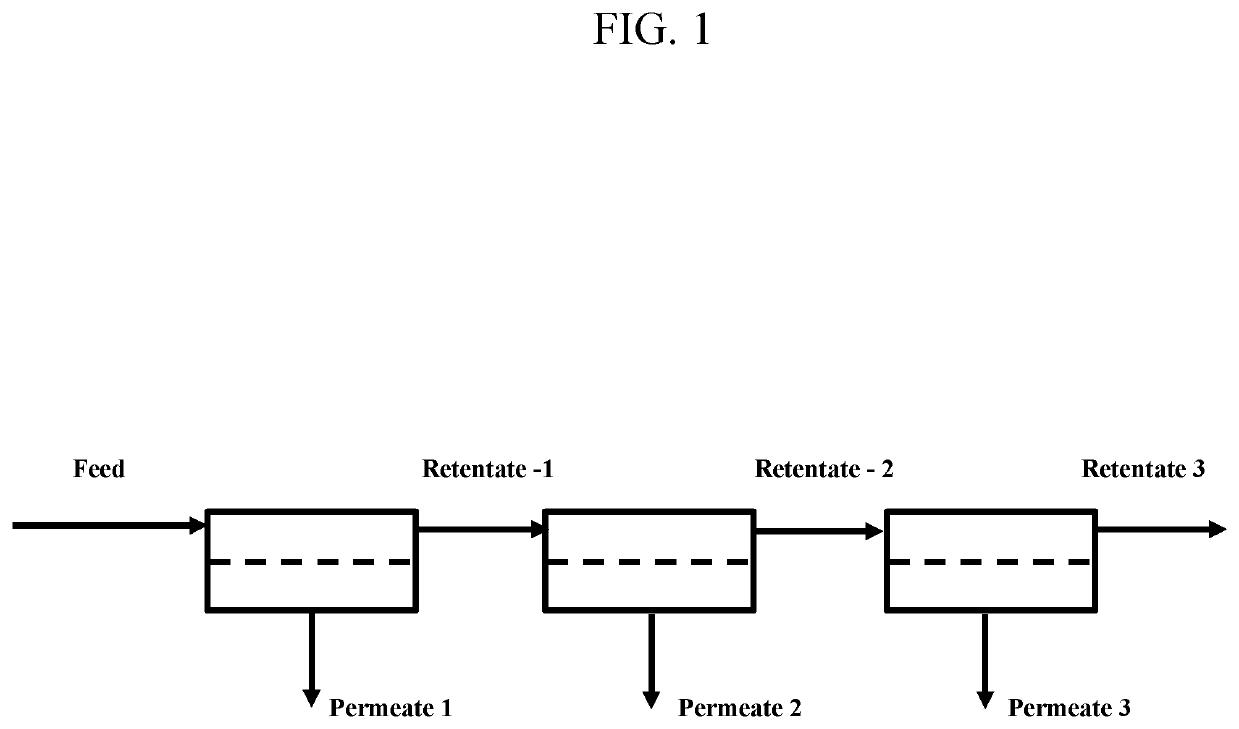
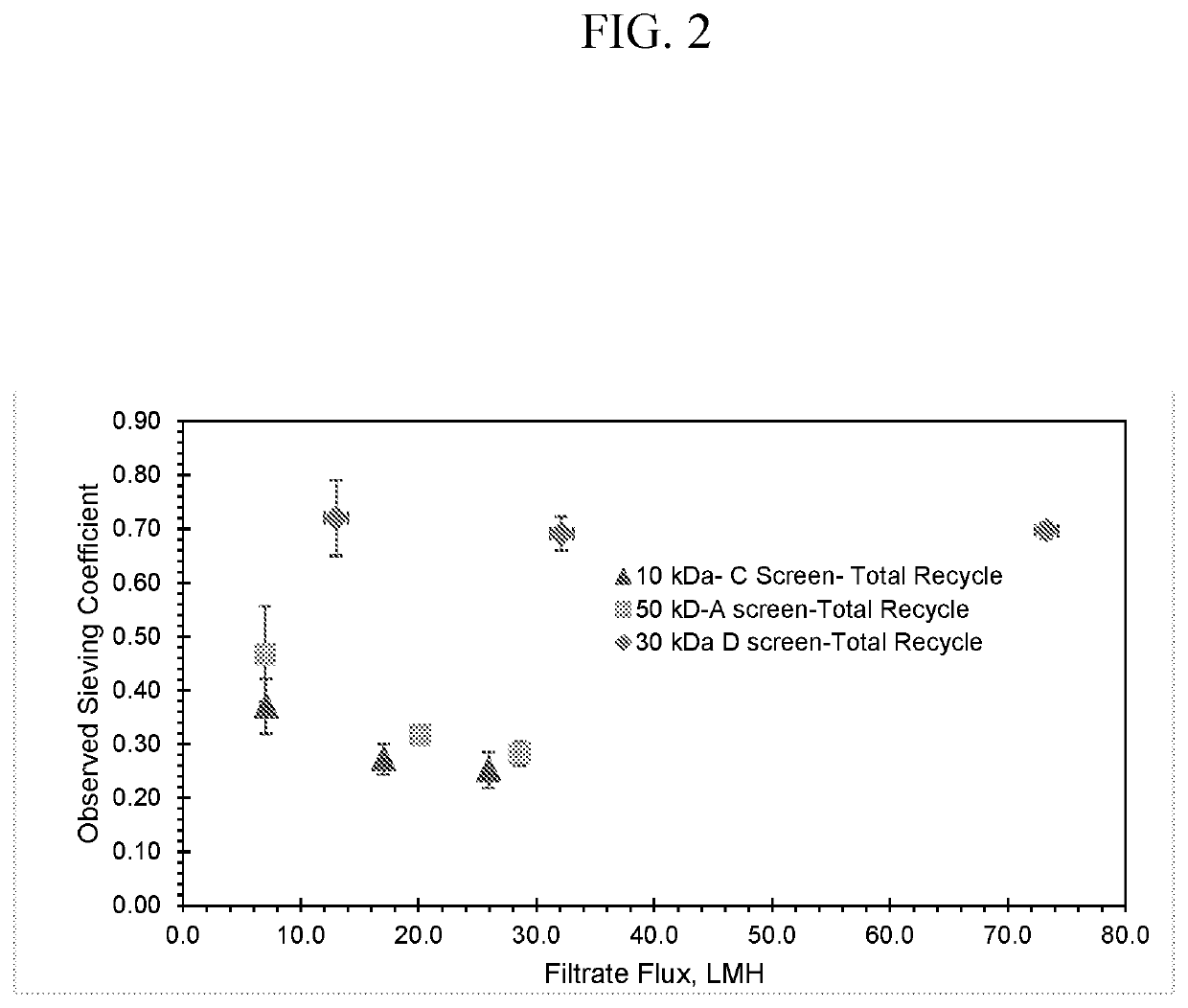
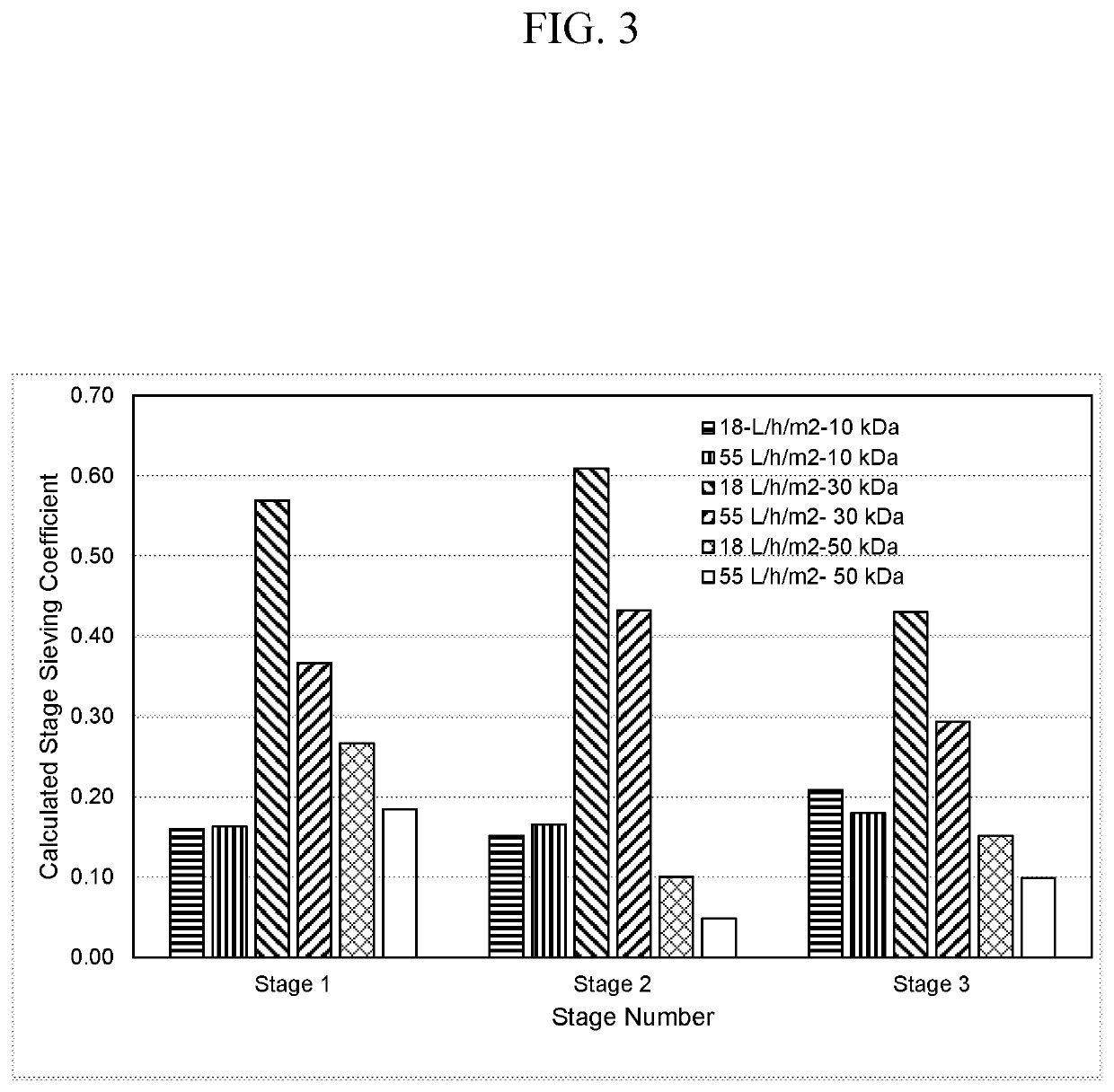
- A hybrid configuration of semi-permeable ultrafiltration membranes with different molecular weight cutoffs (MWCOs) staged in series in a SPTFF apparatus, where the final membrane has a larger MWCO than the preceding membranes, allowing for higher concentration factors and flow rates.

Automated fluid filtration system for conducting separation processes, and for acquiring and recording data thereabout
PatentInactiveEP1436068B1
Innovation
- A fully-automated small-volume membrane tangential flow filtration system with a modular design, incorporating a reservoir with a low recirculation volume, electronic data processing, and sensors, capable of handling minimal sample volumes and providing automated data acquisition, allowing for efficient and scalable processing from milliliters to thousands of liters.


Process Automation in TFF Operations
Process automation represents a transformative approach to enhancing cost efficiency in tangential flow filtration operations by minimizing manual intervention, reducing human error, and optimizing resource utilization. The integration of automated systems in TFF processes addresses critical cost drivers including labor expenses, process variability, and operational inefficiencies that traditionally plague manual filtration operations.
Modern TFF automation encompasses multiple operational layers, from basic parameter monitoring to advanced process control algorithms. Automated pressure regulation systems maintain optimal transmembrane pressure throughout filtration cycles, preventing membrane fouling and extending membrane lifespan. Flow rate controllers ensure consistent permeate flux while minimizing energy consumption through dynamic pump speed adjustment based on real-time feedback from process sensors.
Advanced automation platforms incorporate predictive analytics and machine learning algorithms to optimize filtration parameters continuously. These systems analyze historical performance data, membrane characteristics, and feed solution properties to determine optimal operating conditions that maximize throughput while minimizing operational costs. Real-time monitoring of key performance indicators enables proactive adjustments before efficiency degradation occurs.
Automated cleaning-in-place protocols significantly reduce downtime and cleaning chemical consumption through precisely controlled cleaning cycles. These systems optimize cleaning solution concentration, temperature, and flow rates based on fouling patterns detected through automated membrane performance monitoring, resulting in substantial cost savings compared to standardized manual cleaning procedures.
Integration of automated buffer preparation and solution handling systems eliminates manual preparation errors and reduces buffer waste through precise volume control and automated pH adjustment. Automated sampling and analysis systems provide continuous quality monitoring without requiring dedicated operator attention, reducing labor costs while ensuring consistent product quality.
The implementation of centralized automation platforms enables remote monitoring and control capabilities, allowing single operators to manage multiple TFF units simultaneously. This operational efficiency translates directly into reduced labor costs and improved process consistency across parallel filtration operations, particularly beneficial for large-scale manufacturing environments.
Modern TFF automation encompasses multiple operational layers, from basic parameter monitoring to advanced process control algorithms. Automated pressure regulation systems maintain optimal transmembrane pressure throughout filtration cycles, preventing membrane fouling and extending membrane lifespan. Flow rate controllers ensure consistent permeate flux while minimizing energy consumption through dynamic pump speed adjustment based on real-time feedback from process sensors.
Advanced automation platforms incorporate predictive analytics and machine learning algorithms to optimize filtration parameters continuously. These systems analyze historical performance data, membrane characteristics, and feed solution properties to determine optimal operating conditions that maximize throughput while minimizing operational costs. Real-time monitoring of key performance indicators enables proactive adjustments before efficiency degradation occurs.
Automated cleaning-in-place protocols significantly reduce downtime and cleaning chemical consumption through precisely controlled cleaning cycles. These systems optimize cleaning solution concentration, temperature, and flow rates based on fouling patterns detected through automated membrane performance monitoring, resulting in substantial cost savings compared to standardized manual cleaning procedures.
Integration of automated buffer preparation and solution handling systems eliminates manual preparation errors and reduces buffer waste through precise volume control and automated pH adjustment. Automated sampling and analysis systems provide continuous quality monitoring without requiring dedicated operator attention, reducing labor costs while ensuring consistent product quality.
The implementation of centralized automation platforms enables remote monitoring and control capabilities, allowing single operators to manage multiple TFF units simultaneously. This operational efficiency translates directly into reduced labor costs and improved process consistency across parallel filtration operations, particularly beneficial for large-scale manufacturing environments.
Membrane Technology Advances for TFF Cost Reduction
Membrane technology has undergone significant evolution in recent decades, with particular emphasis on developing solutions that address the cost challenges inherent in tangential flow filtration operations. The advancement trajectory has been driven by the need to balance filtration performance with economic viability, leading to breakthrough innovations in membrane materials, surface modifications, and manufacturing processes.
Recent developments in membrane chemistry have introduced novel polymeric compositions that demonstrate enhanced permeability while maintaining selectivity characteristics. These advanced materials, including modified polyethersulfone and polyvinylidene fluoride variants, exhibit improved resistance to fouling mechanisms that traditionally necessitate frequent cleaning cycles and membrane replacements. The integration of hydrophilic surface modifications has proven particularly effective in reducing protein adsorption, thereby extending operational lifespans and reducing overall system maintenance costs.
Nanotechnology integration represents a paradigm shift in membrane design philosophy. The incorporation of engineered nanoparticles and nanostructured surfaces has enabled the creation of membranes with tailored pore architectures and enhanced mass transfer properties. These innovations facilitate higher flux rates at lower transmembrane pressures, directly translating to reduced energy consumption and improved process economics.
Manufacturing process innovations have simultaneously addressed cost reduction from a production perspective. Advanced spinning techniques and controlled phase separation methods have enabled more consistent pore size distributions and reduced manufacturing variability. These improvements result in more predictable filtration performance and reduced batch-to-batch variations, contributing to overall process reliability and cost predictability.
Surface engineering approaches, including plasma treatment and chemical grafting techniques, have emerged as cost-effective methods for enhancing membrane performance without requiring complete material reformulation. These modifications can be applied to existing membrane platforms, providing retrofit opportunities for existing TFF systems while delivering measurable improvements in operational efficiency and longevity.
The convergence of these technological advances positions membrane innovation as a critical enabler for achieving substantial cost reductions in tangential flow filtration operations across pharmaceutical, biotechnology, and industrial processing applications.
Recent developments in membrane chemistry have introduced novel polymeric compositions that demonstrate enhanced permeability while maintaining selectivity characteristics. These advanced materials, including modified polyethersulfone and polyvinylidene fluoride variants, exhibit improved resistance to fouling mechanisms that traditionally necessitate frequent cleaning cycles and membrane replacements. The integration of hydrophilic surface modifications has proven particularly effective in reducing protein adsorption, thereby extending operational lifespans and reducing overall system maintenance costs.
Nanotechnology integration represents a paradigm shift in membrane design philosophy. The incorporation of engineered nanoparticles and nanostructured surfaces has enabled the creation of membranes with tailored pore architectures and enhanced mass transfer properties. These innovations facilitate higher flux rates at lower transmembrane pressures, directly translating to reduced energy consumption and improved process economics.
Manufacturing process innovations have simultaneously addressed cost reduction from a production perspective. Advanced spinning techniques and controlled phase separation methods have enabled more consistent pore size distributions and reduced manufacturing variability. These improvements result in more predictable filtration performance and reduced batch-to-batch variations, contributing to overall process reliability and cost predictability.
Surface engineering approaches, including plasma treatment and chemical grafting techniques, have emerged as cost-effective methods for enhancing membrane performance without requiring complete material reformulation. These modifications can be applied to existing membrane platforms, providing retrofit opportunities for existing TFF systems while delivering measurable improvements in operational efficiency and longevity.
The convergence of these technological advances positions membrane innovation as a critical enabler for achieving substantial cost reductions in tangential flow filtration operations across pharmaceutical, biotechnology, and industrial processing applications.
Unlock deeper insights with PatSnap Eureka Quick Research — get a full tech report to explore trends and direct your research. Try now!
Generate Your Research Report Instantly with AI Agent
Supercharge your innovation with PatSnap Eureka AI Agent Platform!