Enhancing Durability Post Laser Debonding on Composite Materials
APR 7, 202610 MIN READ
Generate Your Research Report Instantly with AI Agent
Patsnap Eureka helps you evaluate technical feasibility & market potential.
Laser Debonding Technology Background and Objectives
Laser debonding technology has emerged as a critical process in modern manufacturing, particularly in the electronics and aerospace industries where precise separation of bonded materials is essential. This technology utilizes focused laser energy to selectively heat and weaken adhesive bonds, enabling controlled separation of components without mechanical stress or chemical solvents. The fundamental principle relies on thermal energy absorption by the adhesive layer, causing localized heating that reduces bond strength and facilitates clean separation.
The evolution of laser debonding can be traced back to the early 1990s when semiconductor manufacturers first explored laser-assisted processes for device rework and component recovery. Initial applications focused on removing surface-mounted components from printed circuit boards, where traditional mechanical methods often resulted in substrate damage or component destruction. As laser technology advanced, the precision and control capabilities improved significantly, expanding applications to more complex assemblies and diverse material combinations.
Composite materials present unique challenges in laser debonding applications due to their heterogeneous structure and varying thermal properties. Unlike homogeneous materials, composites consist of reinforcing fibers embedded in a matrix material, creating complex thermal gradients during laser processing. The fiber-matrix interface becomes particularly vulnerable to thermal damage, potentially compromising the structural integrity of the remaining composite structure after debonding operations.
Current technological objectives center on developing laser debonding processes that maintain the mechanical properties and structural integrity of composite materials post-separation. This involves optimizing laser parameters such as wavelength, pulse duration, power density, and beam scanning patterns to achieve selective heating of adhesive layers while minimizing thermal impact on the composite substrate. Advanced beam shaping techniques and real-time temperature monitoring systems are being integrated to enhance process control and repeatability.
The primary technical goal is to establish processing windows that enable complete adhesive removal while preserving the composite's original strength, stiffness, and fatigue resistance characteristics. This requires understanding the thermal response of different composite systems, including carbon fiber reinforced polymers, glass fiber composites, and hybrid material combinations. Temperature-sensitive matrix materials, such as thermoplastic composites, demand particularly precise thermal management to prevent matrix degradation or fiber-matrix debonding.
Future development targets include achieving sub-micron precision in thermal affected zones, implementing adaptive process control based on real-time material response feedback, and extending the technology to thick-section composites and complex geometries. The ultimate objective is establishing laser debonding as a reliable, repeatable process for composite material applications while ensuring long-term durability and performance retention of the processed components.
The evolution of laser debonding can be traced back to the early 1990s when semiconductor manufacturers first explored laser-assisted processes for device rework and component recovery. Initial applications focused on removing surface-mounted components from printed circuit boards, where traditional mechanical methods often resulted in substrate damage or component destruction. As laser technology advanced, the precision and control capabilities improved significantly, expanding applications to more complex assemblies and diverse material combinations.
Composite materials present unique challenges in laser debonding applications due to their heterogeneous structure and varying thermal properties. Unlike homogeneous materials, composites consist of reinforcing fibers embedded in a matrix material, creating complex thermal gradients during laser processing. The fiber-matrix interface becomes particularly vulnerable to thermal damage, potentially compromising the structural integrity of the remaining composite structure after debonding operations.
Current technological objectives center on developing laser debonding processes that maintain the mechanical properties and structural integrity of composite materials post-separation. This involves optimizing laser parameters such as wavelength, pulse duration, power density, and beam scanning patterns to achieve selective heating of adhesive layers while minimizing thermal impact on the composite substrate. Advanced beam shaping techniques and real-time temperature monitoring systems are being integrated to enhance process control and repeatability.
The primary technical goal is to establish processing windows that enable complete adhesive removal while preserving the composite's original strength, stiffness, and fatigue resistance characteristics. This requires understanding the thermal response of different composite systems, including carbon fiber reinforced polymers, glass fiber composites, and hybrid material combinations. Temperature-sensitive matrix materials, such as thermoplastic composites, demand particularly precise thermal management to prevent matrix degradation or fiber-matrix debonding.
Future development targets include achieving sub-micron precision in thermal affected zones, implementing adaptive process control based on real-time material response feedback, and extending the technology to thick-section composites and complex geometries. The ultimate objective is establishing laser debonding as a reliable, repeatable process for composite material applications while ensuring long-term durability and performance retention of the processed components.
Market Demand for Enhanced Composite Material Durability
The global composite materials market has experienced substantial growth driven by increasing demand across aerospace, automotive, renewable energy, and electronics sectors. This expansion has intensified focus on post-processing durability, particularly following laser debonding procedures used in manufacturing and repair applications. Industries utilizing composite materials face mounting pressure to maintain structural integrity and performance characteristics after laser-based separation processes.
Aerospace manufacturers represent the largest consumer segment for enhanced post-debonding durability solutions. Aircraft components frequently undergo laser debonding during maintenance, repair, and overhaul operations, where preserving material properties is critical for flight safety and regulatory compliance. The commercial aviation sector's recovery and expansion of fleet sizes has amplified demand for reliable post-processing techniques that maintain composite performance standards.
The automotive industry's transition toward lightweight materials for electric vehicle production has created significant market opportunities. Battery housing, structural panels, and body components made from composite materials often require laser debonding during recycling or repair processes. Manufacturers seek solutions that preserve material strength and thermal properties to enable component reuse and support circular economy initiatives.
Renewable energy applications, particularly wind turbine blade manufacturing and maintenance, present substantial market potential. Wind energy installations worldwide continue expanding, creating demand for composite materials that maintain durability after laser-based repair procedures. Blade manufacturers and service providers require techniques that ensure long-term structural performance in harsh environmental conditions.
Electronics and telecommunications sectors drive demand through applications in circuit board manufacturing and component separation processes. The miniaturization trend and increasing complexity of electronic devices necessitate precise laser debonding techniques that preserve substrate integrity for subsequent processing steps.
Market growth is further supported by regulatory requirements emphasizing material sustainability and recyclability. Environmental regulations increasingly mandate composite material reuse and recycling, creating demand for post-debonding durability enhancement technologies that enable multiple lifecycle applications while maintaining safety and performance standards.
Aerospace manufacturers represent the largest consumer segment for enhanced post-debonding durability solutions. Aircraft components frequently undergo laser debonding during maintenance, repair, and overhaul operations, where preserving material properties is critical for flight safety and regulatory compliance. The commercial aviation sector's recovery and expansion of fleet sizes has amplified demand for reliable post-processing techniques that maintain composite performance standards.
The automotive industry's transition toward lightweight materials for electric vehicle production has created significant market opportunities. Battery housing, structural panels, and body components made from composite materials often require laser debonding during recycling or repair processes. Manufacturers seek solutions that preserve material strength and thermal properties to enable component reuse and support circular economy initiatives.
Renewable energy applications, particularly wind turbine blade manufacturing and maintenance, present substantial market potential. Wind energy installations worldwide continue expanding, creating demand for composite materials that maintain durability after laser-based repair procedures. Blade manufacturers and service providers require techniques that ensure long-term structural performance in harsh environmental conditions.
Electronics and telecommunications sectors drive demand through applications in circuit board manufacturing and component separation processes. The miniaturization trend and increasing complexity of electronic devices necessitate precise laser debonding techniques that preserve substrate integrity for subsequent processing steps.
Market growth is further supported by regulatory requirements emphasizing material sustainability and recyclability. Environmental regulations increasingly mandate composite material reuse and recycling, creating demand for post-debonding durability enhancement technologies that enable multiple lifecycle applications while maintaining safety and performance standards.
Current Challenges in Post-Debonding Composite Integrity
Laser debonding processes, while offering precise separation capabilities for composite materials, introduce significant challenges to the structural integrity of the remaining composite components. The primary concern lies in the thermal damage inflicted during the laser ablation process, which creates localized heating zones that can exceed the glass transition temperature of polymer matrices. This thermal exposure leads to matrix degradation, fiber-matrix interface weakening, and the formation of micro-cracks that propagate through the composite structure.
The heat-affected zone represents a critical vulnerability in post-debonding composite integrity. During laser processing, temperature gradients create thermal stresses that induce delamination between composite layers. These delaminations often extend beyond the visible processing area, creating hidden structural weaknesses that compromise long-term durability. The extent of thermal damage varies significantly based on laser parameters, composite thickness, and material composition, making damage prediction and control particularly challenging.
Surface contamination and chemical alteration present additional obstacles to maintaining composite integrity. Laser debonding generates carbonaceous residues and oxidized surface layers that alter the surface chemistry of exposed composite areas. These contaminated surfaces exhibit reduced adhesion properties, limiting the effectiveness of subsequent repair or bonding operations. The presence of char layers and thermally degraded polymer fragments creates barriers to proper surface preparation and treatment.
Fiber exposure and damage constitute another major challenge in post-debonding scenarios. High-energy laser processing can cause direct fiber damage through thermal degradation, particularly in carbon fiber composites where fibers may undergo oxidation at elevated temperatures. Glass fibers are susceptible to thermal shock and surface etching, while aramid fibers can experience chain scission and strength reduction. The selective removal of matrix material often leaves fibers partially embedded or loosely attached, creating stress concentration points.
Residual stress redistribution following debonding operations significantly impacts composite structural performance. The removal of bonded components alters the original stress distribution patterns, potentially overloading remaining structural elements. Edge effects become pronounced at debonding boundaries, where stress concentrations can initiate crack propagation under operational loads. The geometric discontinuities created by debonding processes serve as potential failure initiation sites.
Quality assessment and damage quantification present ongoing challenges for post-debonding composite evaluation. Traditional non-destructive testing methods may not adequately detect subsurface thermal damage or micro-structural changes induced by laser processing. The development of specialized inspection techniques capable of identifying heat-affected zones and predicting remaining service life remains a critical need for ensuring safe continued operation of laser-processed composite structures.
The heat-affected zone represents a critical vulnerability in post-debonding composite integrity. During laser processing, temperature gradients create thermal stresses that induce delamination between composite layers. These delaminations often extend beyond the visible processing area, creating hidden structural weaknesses that compromise long-term durability. The extent of thermal damage varies significantly based on laser parameters, composite thickness, and material composition, making damage prediction and control particularly challenging.
Surface contamination and chemical alteration present additional obstacles to maintaining composite integrity. Laser debonding generates carbonaceous residues and oxidized surface layers that alter the surface chemistry of exposed composite areas. These contaminated surfaces exhibit reduced adhesion properties, limiting the effectiveness of subsequent repair or bonding operations. The presence of char layers and thermally degraded polymer fragments creates barriers to proper surface preparation and treatment.
Fiber exposure and damage constitute another major challenge in post-debonding scenarios. High-energy laser processing can cause direct fiber damage through thermal degradation, particularly in carbon fiber composites where fibers may undergo oxidation at elevated temperatures. Glass fibers are susceptible to thermal shock and surface etching, while aramid fibers can experience chain scission and strength reduction. The selective removal of matrix material often leaves fibers partially embedded or loosely attached, creating stress concentration points.
Residual stress redistribution following debonding operations significantly impacts composite structural performance. The removal of bonded components alters the original stress distribution patterns, potentially overloading remaining structural elements. Edge effects become pronounced at debonding boundaries, where stress concentrations can initiate crack propagation under operational loads. The geometric discontinuities created by debonding processes serve as potential failure initiation sites.
Quality assessment and damage quantification present ongoing challenges for post-debonding composite evaluation. Traditional non-destructive testing methods may not adequately detect subsurface thermal damage or micro-structural changes induced by laser processing. The development of specialized inspection techniques capable of identifying heat-affected zones and predicting remaining service life remains a critical need for ensuring safe continued operation of laser-processed composite structures.
Current Solutions for Post-Debonding Durability Enhancement
01 Fiber reinforcement and matrix composition optimization
Composite materials durability can be enhanced through careful selection and optimization of fiber reinforcement types and matrix compositions. The use of specific fiber materials combined with optimized resin systems improves the mechanical properties and long-term performance of composites. Advanced fiber-matrix interface treatments and bonding agents contribute to better load transfer and resistance to environmental degradation. The selection of appropriate fiber orientations and layup sequences also plays a crucial role in achieving desired durability characteristics.- Fiber reinforcement and matrix composition optimization: Enhancing composite material durability through the selection and optimization of fiber reinforcements combined with advanced matrix materials. This approach focuses on improving the interfacial bonding between fibers and matrix, utilizing high-performance fibers such as carbon, glass, or aramid fibers with specially formulated resin systems. The optimization of fiber orientation, volume fraction, and distribution patterns contributes to enhanced mechanical properties and long-term durability under various loading conditions.
- Surface treatment and coating technologies: Application of protective surface treatments and coatings to improve the environmental resistance and durability of composite materials. These treatments include barrier coatings, anti-corrosion layers, and UV-resistant finishes that protect the composite structure from moisture ingress, chemical attack, and weathering effects. Surface modification techniques enhance the material's resistance to degradation while maintaining structural integrity over extended service life.
- Hybrid composite systems with multi-material integration: Development of hybrid composite structures that combine different material types to achieve superior durability characteristics. This includes the integration of metallic components, ceramic particles, or nanomaterials within the composite matrix to enhance specific properties such as impact resistance, thermal stability, and fatigue life. The synergistic effect of multiple materials provides improved performance under complex environmental and mechanical stresses.
- Manufacturing process control and quality assurance: Implementation of advanced manufacturing techniques and quality control measures to ensure consistent durability in composite materials. This encompasses precise control of curing parameters, void content reduction, and defect detection methods during fabrication. Process optimization includes temperature and pressure control, resin infusion techniques, and post-cure treatments that directly influence the final material's durability and reliability.
- Environmental degradation resistance and life prediction: Strategies for improving composite material resistance to environmental degradation factors and developing predictive models for service life assessment. This includes formulation modifications to resist moisture absorption, thermal cycling, chemical exposure, and biological degradation. Advanced testing methodologies and accelerated aging protocols enable accurate prediction of long-term durability performance under real-world operating conditions.
02 Surface treatment and protective coating technologies
Application of protective coatings and surface treatments significantly improves the durability of composite materials against environmental factors. These treatments provide barriers against moisture ingress, UV radiation, and chemical exposure. Surface modification techniques enhance the resistance to weathering and extend the service life of composite structures. Various coating formulations and application methods are employed to achieve optimal protection while maintaining the mechanical properties of the base composite material.Expand Specific Solutions03 Moisture resistance and environmental stability enhancement
Improving moisture resistance is critical for composite materials durability in various environmental conditions. Specialized formulations and manufacturing processes reduce water absorption and prevent degradation caused by hydrolysis. The incorporation of hydrophobic additives and barrier layers minimizes moisture-related damage. Enhanced environmental stability ensures consistent performance across different temperature and humidity conditions, preventing delamination and loss of mechanical properties over time.Expand Specific Solutions04 Thermal stability and high-temperature performance
Thermal stability is essential for composite materials used in high-temperature applications. Advanced resin systems and heat-resistant additives maintain structural integrity under elevated temperatures. The development of thermally stable matrix materials prevents degradation and maintains mechanical properties during thermal cycling. Improved thermal management through material design enhances the long-term durability of composites in demanding thermal environments.Expand Specific Solutions05 Impact resistance and damage tolerance improvement
Enhanced impact resistance and damage tolerance are key factors in composite materials durability. The incorporation of toughening agents and energy-absorbing mechanisms improves resistance to impact damage. Advanced manufacturing techniques create structures with better damage tolerance and crack propagation resistance. These improvements ensure that composite materials maintain their structural integrity even after experiencing impact events or mechanical stress, extending their operational lifetime.Expand Specific Solutions
Key Players in Laser Processing and Composite Industries
The laser debonding technology for composite materials is experiencing significant growth driven by increasing demand from aerospace and automotive sectors. The market demonstrates a mature competitive landscape with established players spanning multiple industries and regions. Technology maturity varies considerably across participants, with aerospace giants like Boeing and automotive leaders such as Nissan representing advanced implementation stages, while semiconductor companies including Taiwan Semiconductor Manufacturing and AIXTRON SE contribute specialized precision technologies. Research institutions like Fraunhofer-Gesellschaft, Wuhan University, and Nanchang Hangkong University drive fundamental innovation, while materials specialists including BASF Corp., Corning Inc., and NGK Insulators provide essential substrate and processing solutions. The competitive environment reflects a convergence of traditional manufacturing expertise with cutting-edge laser processing capabilities, indicating the technology's transition from experimental to commercial viability across diverse industrial applications.
The Boeing Co.
Technical Solution: Boeing has developed advanced composite repair techniques focusing on post-laser debonding surface treatment and durability enhancement. Their approach involves multi-step surface preparation including plasma treatment, chemical etching, and application of specialized primer systems to restore bonding strength after laser debonding operations. The company utilizes thermoplastic composite patches with controlled heating cycles to achieve optimal adhesion while maintaining structural integrity. Boeing's methodology incorporates real-time monitoring systems during the repair process to ensure consistent quality and long-term durability of the restored composite structures in aerospace applications.
Strengths: Extensive aerospace experience with stringent durability requirements, proven track record in composite repair technologies. Weaknesses: Solutions may be over-engineered for non-aerospace applications, potentially higher cost implementation.
Taiwan Semiconductor Manufacturing Co., Ltd.
Technical Solution: TSMC has developed precision laser debonding processes for semiconductor packaging applications with focus on maintaining substrate integrity and enabling reliable rebonding. Their technology involves ultra-short pulse laser systems with precise energy control to minimize thermal effects on composite substrates. The company utilizes advanced surface cleaning protocols including plasma treatment and chemical conditioning to remove residual adhesive and restore surface energy for subsequent bonding operations. TSMC's approach incorporates real-time process monitoring and feedback control to ensure consistent debonding quality and surface preparation. Their solutions are optimized for high-volume manufacturing with emphasis on process repeatability and long-term reliability of rebonded structures.
Strengths: High-precision manufacturing capabilities, extensive experience with advanced materials processing, robust quality control systems. Weaknesses: Technology primarily designed for semiconductor applications, may require adaptation for other composite systems.
Core Innovations in Laser-Composite Interface Engineering
Multi-layer system from thin layers for temporary bonding
PatentWO2023232264A1
Innovation
- A multilayer system with optimized layer thicknesses for maximum absorption of specific laser radiation wavelengths is used, allowing for efficient and non-destructive bonding and debonding without additional adhesive or anti-reflection layers, utilizing interference effects to enhance absorption and reduce energy input.


Using laser shock loads to debond structures
PatentActiveUS7507312B2
Innovation
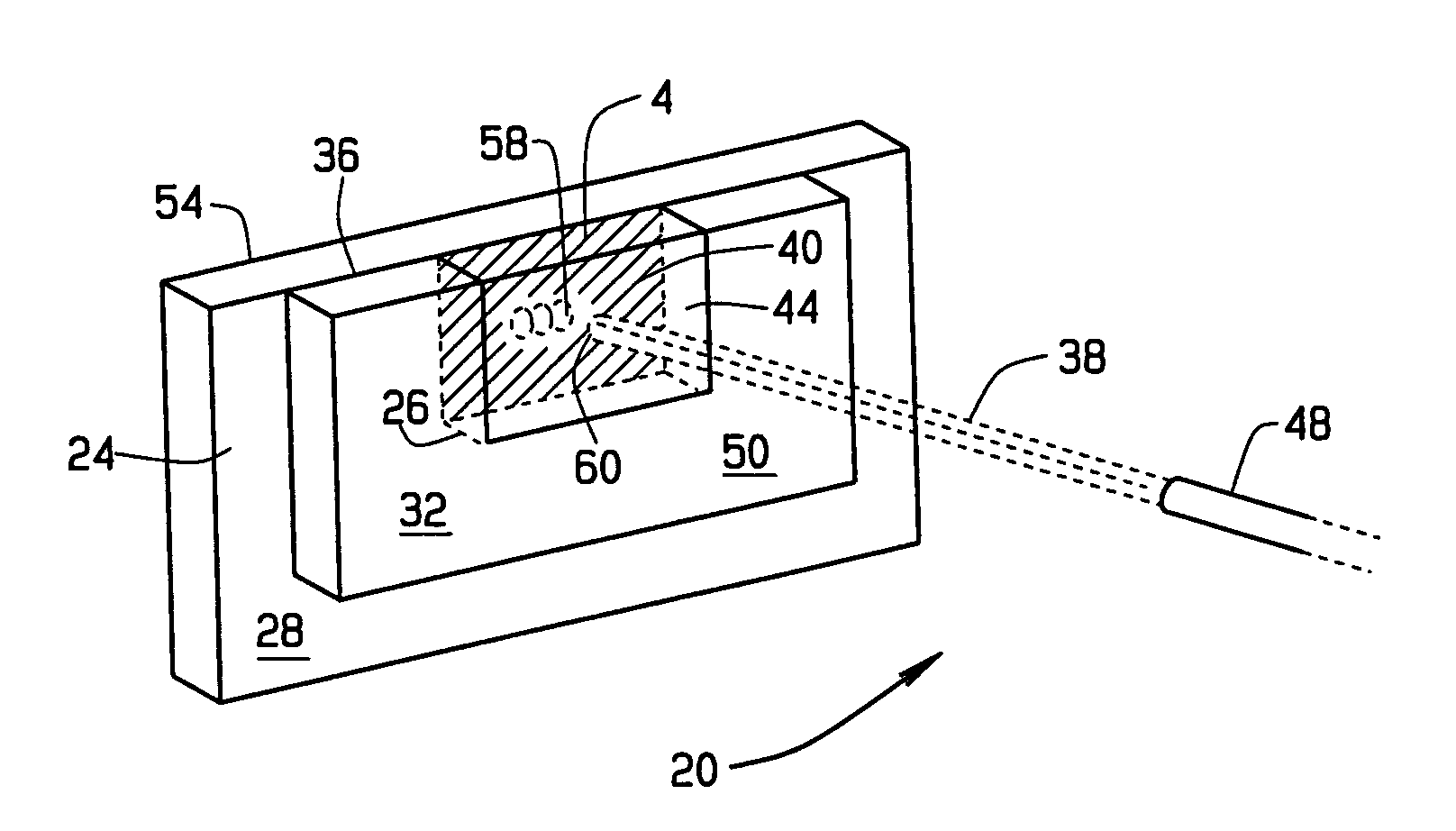
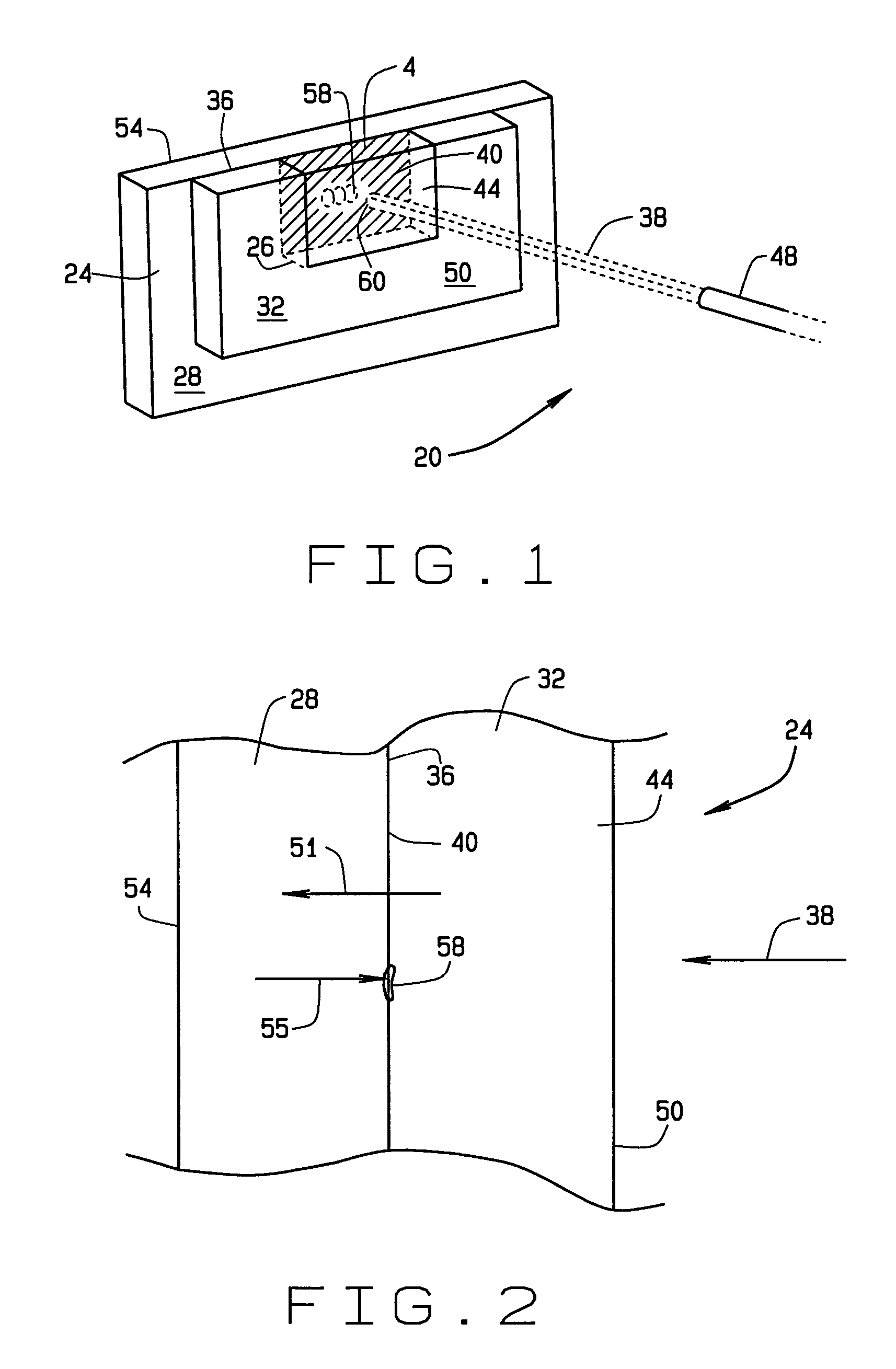
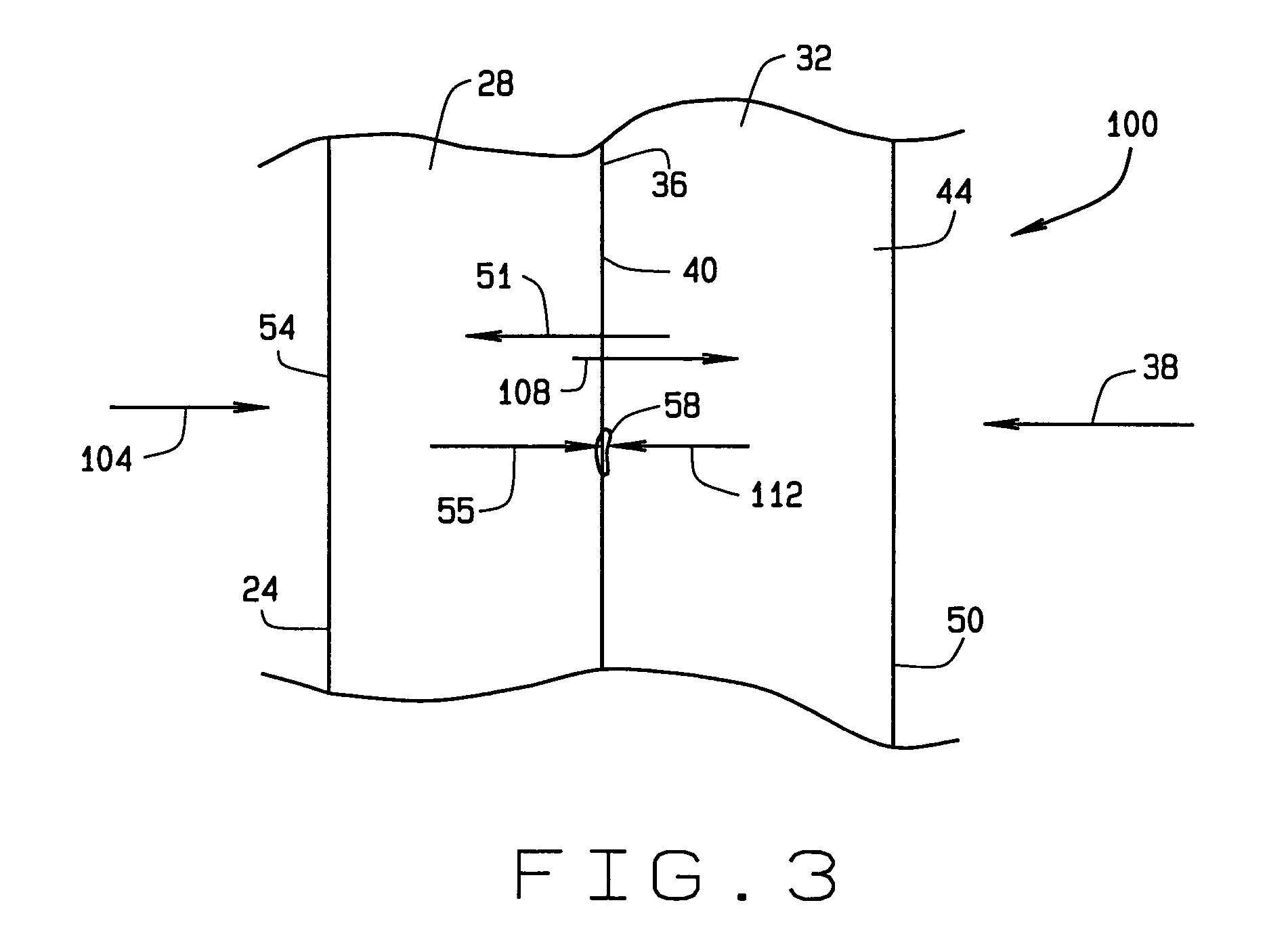
- A method using a laser to selectively apply a shock load by adjusting beam diameter, pulse width, and power level to produce peak tensile stress at a subsurface depth, facilitating debonding and allowing for the removal of damaged portions without the need for extensive mechanical removal.
Environmental Impact Assessment of Laser Debonding
The environmental implications of laser debonding technology in composite material processing represent a critical consideration for sustainable manufacturing practices. Unlike traditional mechanical separation methods that generate significant particulate waste and require extensive chemical solvents, laser debonding offers a more environmentally conscious approach to composite disassembly and recycling.
Energy consumption patterns in laser debonding systems demonstrate favorable environmental profiles compared to conventional thermal processing methods. Modern fiber laser systems typically operate at 20-30% electrical efficiency, consuming approximately 0.5-2.0 kWh per square meter of processed composite surface. This energy requirement remains substantially lower than furnace-based pyrolysis methods, which demand 3-5 kWh per square meter while producing harmful emissions.
Atmospheric emissions from laser debonding processes are minimal when proper ventilation systems are implemented. The controlled thermal decomposition generates primarily water vapor and carbon dioxide, with trace amounts of organic compounds depending on the matrix material composition. Epoxy-based composites produce negligible volatile organic compounds (VOCs) during laser processing, while thermoplastic matrices generate even cleaner decomposition products that can be captured and recycled.
Waste stream analysis reveals significant advantages in material recovery rates. Laser debonding achieves 85-95% fiber recovery with minimal contamination, enabling direct reuse in secondary composite applications. The precision of laser processing eliminates the need for harsh chemical treatments typically required in solvent-based debonding methods, reducing hazardous waste generation by approximately 70-80%.
Water consumption and contamination risks are virtually eliminated in laser debonding operations, contrasting sharply with wet chemical processes that require extensive wastewater treatment. The dry processing nature of laser technology eliminates liquid waste streams and associated environmental remediation costs.
Life cycle assessment studies indicate that laser debonding systems demonstrate carbon footprint reductions of 40-60% compared to traditional disposal methods when considering the entire composite end-of-life management cycle. The technology's contribution to circular economy principles through enhanced material recovery significantly outweighs the initial energy investment required for laser processing equipment.
Energy consumption patterns in laser debonding systems demonstrate favorable environmental profiles compared to conventional thermal processing methods. Modern fiber laser systems typically operate at 20-30% electrical efficiency, consuming approximately 0.5-2.0 kWh per square meter of processed composite surface. This energy requirement remains substantially lower than furnace-based pyrolysis methods, which demand 3-5 kWh per square meter while producing harmful emissions.
Atmospheric emissions from laser debonding processes are minimal when proper ventilation systems are implemented. The controlled thermal decomposition generates primarily water vapor and carbon dioxide, with trace amounts of organic compounds depending on the matrix material composition. Epoxy-based composites produce negligible volatile organic compounds (VOCs) during laser processing, while thermoplastic matrices generate even cleaner decomposition products that can be captured and recycled.
Waste stream analysis reveals significant advantages in material recovery rates. Laser debonding achieves 85-95% fiber recovery with minimal contamination, enabling direct reuse in secondary composite applications. The precision of laser processing eliminates the need for harsh chemical treatments typically required in solvent-based debonding methods, reducing hazardous waste generation by approximately 70-80%.
Water consumption and contamination risks are virtually eliminated in laser debonding operations, contrasting sharply with wet chemical processes that require extensive wastewater treatment. The dry processing nature of laser technology eliminates liquid waste streams and associated environmental remediation costs.
Life cycle assessment studies indicate that laser debonding systems demonstrate carbon footprint reductions of 40-60% compared to traditional disposal methods when considering the entire composite end-of-life management cycle. The technology's contribution to circular economy principles through enhanced material recovery significantly outweighs the initial energy investment required for laser processing equipment.
Quality Standards for Debonded Composite Materials
The establishment of comprehensive quality standards for debonded composite materials represents a critical framework for ensuring the reliability and performance of components following laser debonding processes. These standards must address the unique characteristics and potential vulnerabilities that emerge when composite materials undergo controlled separation procedures, particularly focusing on surface integrity, structural soundness, and long-term performance metrics.
Surface quality assessment forms the foundation of debonded composite evaluation standards. Key parameters include surface roughness measurements, typically requiring Ra values below 3.2 μm to ensure adequate adhesion for subsequent bonding operations. Contamination levels must be quantified through standardized testing protocols, with particular attention to residual adhesive content, which should not exceed 2% by weight on debonded surfaces. Visual inspection criteria must define acceptable limits for micro-cracking, delamination, and fiber exposure, establishing clear rejection thresholds for components exhibiting surface defects exceeding 0.5mm in any dimension.
Mechanical property retention standards are essential for validating the structural integrity of debonded composites. Tensile strength measurements should demonstrate retention of at least 95% of original values, while flexural properties must maintain 90% of baseline performance. Interlaminar shear strength testing becomes particularly critical, as laser debonding processes can potentially compromise fiber-matrix interfaces. Standards should mandate ILSS values no less than 85% of virgin material properties, with statistical sampling requirements ensuring representative quality assessment across production batches.
Thermal stability criteria must address the potential thermal degradation effects from laser exposure during debonding operations. Glass transition temperature measurements should show minimal deviation from original composite specifications, typically within ±5°C tolerance ranges. Thermal expansion coefficients must remain within established material property windows to prevent dimensional instability in service applications. Additionally, thermal cycling tests should validate performance stability across operational temperature ranges.
Chemical resistance standards become increasingly important for debonded composites intended for reuse applications. Standardized exposure testing to common industrial solvents, fuels, and environmental contaminants must demonstrate maintained barrier properties and chemical inertness. Moisture absorption characteristics should align with original material specifications, ensuring that debonding processes do not compromise the composite's environmental resistance capabilities.
Non-destructive evaluation protocols form an integral component of quality standards, providing comprehensive assessment capabilities without compromising material integrity. Ultrasonic inspection standards must define acceptable void content levels, typically below 2% by volume, while establishing detection sensitivity requirements for internal defects. Thermographic inspection criteria should identify subsurface anomalies and delamination zones that may compromise structural performance.
Documentation and traceability requirements ensure comprehensive quality control throughout the debonded composite lifecycle. Standards must mandate detailed recording of debonding parameters, post-process inspection results, and material property verification data. Certification protocols should establish clear acceptance criteria and provide standardized reporting formats for quality assurance documentation, enabling effective material tracking and performance validation across diverse application environments.
Surface quality assessment forms the foundation of debonded composite evaluation standards. Key parameters include surface roughness measurements, typically requiring Ra values below 3.2 μm to ensure adequate adhesion for subsequent bonding operations. Contamination levels must be quantified through standardized testing protocols, with particular attention to residual adhesive content, which should not exceed 2% by weight on debonded surfaces. Visual inspection criteria must define acceptable limits for micro-cracking, delamination, and fiber exposure, establishing clear rejection thresholds for components exhibiting surface defects exceeding 0.5mm in any dimension.
Mechanical property retention standards are essential for validating the structural integrity of debonded composites. Tensile strength measurements should demonstrate retention of at least 95% of original values, while flexural properties must maintain 90% of baseline performance. Interlaminar shear strength testing becomes particularly critical, as laser debonding processes can potentially compromise fiber-matrix interfaces. Standards should mandate ILSS values no less than 85% of virgin material properties, with statistical sampling requirements ensuring representative quality assessment across production batches.
Thermal stability criteria must address the potential thermal degradation effects from laser exposure during debonding operations. Glass transition temperature measurements should show minimal deviation from original composite specifications, typically within ±5°C tolerance ranges. Thermal expansion coefficients must remain within established material property windows to prevent dimensional instability in service applications. Additionally, thermal cycling tests should validate performance stability across operational temperature ranges.
Chemical resistance standards become increasingly important for debonded composites intended for reuse applications. Standardized exposure testing to common industrial solvents, fuels, and environmental contaminants must demonstrate maintained barrier properties and chemical inertness. Moisture absorption characteristics should align with original material specifications, ensuring that debonding processes do not compromise the composite's environmental resistance capabilities.
Non-destructive evaluation protocols form an integral component of quality standards, providing comprehensive assessment capabilities without compromising material integrity. Ultrasonic inspection standards must define acceptable void content levels, typically below 2% by volume, while establishing detection sensitivity requirements for internal defects. Thermographic inspection criteria should identify subsurface anomalies and delamination zones that may compromise structural performance.
Documentation and traceability requirements ensure comprehensive quality control throughout the debonded composite lifecycle. Standards must mandate detailed recording of debonding parameters, post-process inspection results, and material property verification data. Certification protocols should establish clear acceptance criteria and provide standardized reporting formats for quality assurance documentation, enabling effective material tracking and performance validation across diverse application environments.
Unlock deeper insights with Patsnap Eureka Quick Research — get a full tech report to explore trends and direct your research. Try now!
Generate Your Research Report Instantly with AI Agent
Supercharge your innovation with Patsnap Eureka AI Agent Platform!