

Enhancing Safety Protocols for Industrial Laser Debonding
APR 7, 20269 MIN READ
Generate Your Research Report Instantly with AI Agent
PatSnap Eureka helps you evaluate technical feasibility & market potential.
Industrial Laser Debonding Safety Background and Objectives
Industrial laser debonding has emerged as a critical technology in modern manufacturing processes, particularly in semiconductor packaging, electronic component recycling, and precision assembly applications. This technology utilizes focused laser energy to selectively weaken or eliminate adhesive bonds between materials without causing thermal or mechanical damage to the underlying components. The evolution of laser debonding can be traced back to the early 1990s when semiconductor manufacturers began exploring non-destructive methods for component removal and rework processes.
The development trajectory of laser debonding technology has been driven by the increasing miniaturization of electronic components and the growing demand for sustainable manufacturing practices. Early implementations focused primarily on basic adhesive removal, but technological advances have expanded applications to include complex multi-layer assemblies, flexible electronics, and high-value component recovery operations. The integration of precision beam control systems, real-time monitoring capabilities, and automated positioning mechanisms has transformed laser debonding from a laboratory technique into a viable industrial process.
Current technological trends indicate a shift toward higher precision, increased automation, and enhanced process control. Advanced laser systems now incorporate wavelength tunability, pulse duration optimization, and beam shaping capabilities to address diverse material combinations and bonding configurations. The integration of artificial intelligence and machine learning algorithms has enabled predictive process control and adaptive parameter adjustment, significantly improving process reliability and repeatability.
The primary technical objectives for enhancing safety protocols in industrial laser debonding encompass multiple critical areas. Operator safety remains paramount, requiring comprehensive protection against laser radiation exposure, toxic fume inhalation, and thermal hazards. Equipment safety objectives focus on preventing laser system malfunctions, controlling beam containment, and ensuring proper interlocking mechanisms. Process safety targets include maintaining consistent debonding quality while minimizing the risk of component damage or contamination.
Environmental safety considerations have gained prominence as regulatory requirements become more stringent. Objectives include effective capture and filtration of process emissions, proper disposal of debonded materials, and minimization of energy consumption. The development of closed-loop safety systems that can automatically detect and respond to hazardous conditions represents a key technological goal.
Long-term strategic objectives emphasize the establishment of industry-wide safety standards, development of standardized training protocols, and creation of comprehensive risk assessment methodologies. These objectives aim to facilitate broader adoption of laser debonding technology while maintaining the highest safety standards across diverse industrial applications and operational environments.
The development trajectory of laser debonding technology has been driven by the increasing miniaturization of electronic components and the growing demand for sustainable manufacturing practices. Early implementations focused primarily on basic adhesive removal, but technological advances have expanded applications to include complex multi-layer assemblies, flexible electronics, and high-value component recovery operations. The integration of precision beam control systems, real-time monitoring capabilities, and automated positioning mechanisms has transformed laser debonding from a laboratory technique into a viable industrial process.
Current technological trends indicate a shift toward higher precision, increased automation, and enhanced process control. Advanced laser systems now incorporate wavelength tunability, pulse duration optimization, and beam shaping capabilities to address diverse material combinations and bonding configurations. The integration of artificial intelligence and machine learning algorithms has enabled predictive process control and adaptive parameter adjustment, significantly improving process reliability and repeatability.
The primary technical objectives for enhancing safety protocols in industrial laser debonding encompass multiple critical areas. Operator safety remains paramount, requiring comprehensive protection against laser radiation exposure, toxic fume inhalation, and thermal hazards. Equipment safety objectives focus on preventing laser system malfunctions, controlling beam containment, and ensuring proper interlocking mechanisms. Process safety targets include maintaining consistent debonding quality while minimizing the risk of component damage or contamination.
Environmental safety considerations have gained prominence as regulatory requirements become more stringent. Objectives include effective capture and filtration of process emissions, proper disposal of debonded materials, and minimization of energy consumption. The development of closed-loop safety systems that can automatically detect and respond to hazardous conditions represents a key technological goal.
Long-term strategic objectives emphasize the establishment of industry-wide safety standards, development of standardized training protocols, and creation of comprehensive risk assessment methodologies. These objectives aim to facilitate broader adoption of laser debonding technology while maintaining the highest safety standards across diverse industrial applications and operational environments.
Market Demand for Safe Laser Debonding Solutions
The global semiconductor industry's rapid expansion has created unprecedented demand for safe and reliable laser debonding solutions. As electronic devices become increasingly miniaturized and complex, manufacturers require precise disassembly processes that minimize component damage while ensuring operator safety. The market for industrial laser debonding systems has experienced substantial growth, driven by the need to recover valuable components from defective assemblies and support sustainable manufacturing practices.
Consumer electronics manufacturers represent the largest segment of demand, particularly companies producing smartphones, tablets, and wearable devices. These manufacturers face mounting pressure to reduce production costs while maintaining quality standards, making safe laser debonding an attractive alternative to traditional mechanical separation methods. The automotive electronics sector has emerged as another significant market driver, as electric vehicle production scales up and requires sophisticated component recovery processes.
The increasing complexity of multi-layered electronic assemblies has intensified the need for enhanced safety protocols. Traditional debonding methods often involve hazardous chemicals or excessive heat, creating workplace safety concerns and environmental compliance challenges. Laser debonding offers a cleaner alternative, but current safety protocols remain inadequate for widespread industrial adoption, creating a substantial market opportunity for improved solutions.
Regulatory pressures across major manufacturing regions have accelerated demand for safer debonding technologies. Environmental regulations restricting the use of certain solvents and adhesive removal chemicals have pushed manufacturers to seek laser-based alternatives. Occupational safety standards have become more stringent, requiring enhanced protection measures that current laser debonding systems struggle to provide comprehensively.
The market demand extends beyond equipment manufacturers to include safety system integrators and protocol development specialists. Companies are actively seeking comprehensive solutions that combine advanced laser technology with robust safety frameworks, including real-time monitoring systems, automated safety shutoffs, and operator protection protocols. This holistic approach to safety has created opportunities for specialized service providers and technology developers.
Emerging applications in medical device manufacturing and aerospace components have further expanded market potential. These sectors demand exceptionally high safety standards and precise control, driving requirements for next-generation laser debonding systems with enhanced safety capabilities. The convergence of these market forces has established a clear commercial imperative for developing comprehensive safety protocols that can support widespread industrial adoption of laser debonding technology.
Consumer electronics manufacturers represent the largest segment of demand, particularly companies producing smartphones, tablets, and wearable devices. These manufacturers face mounting pressure to reduce production costs while maintaining quality standards, making safe laser debonding an attractive alternative to traditional mechanical separation methods. The automotive electronics sector has emerged as another significant market driver, as electric vehicle production scales up and requires sophisticated component recovery processes.
The increasing complexity of multi-layered electronic assemblies has intensified the need for enhanced safety protocols. Traditional debonding methods often involve hazardous chemicals or excessive heat, creating workplace safety concerns and environmental compliance challenges. Laser debonding offers a cleaner alternative, but current safety protocols remain inadequate for widespread industrial adoption, creating a substantial market opportunity for improved solutions.
Regulatory pressures across major manufacturing regions have accelerated demand for safer debonding technologies. Environmental regulations restricting the use of certain solvents and adhesive removal chemicals have pushed manufacturers to seek laser-based alternatives. Occupational safety standards have become more stringent, requiring enhanced protection measures that current laser debonding systems struggle to provide comprehensively.
The market demand extends beyond equipment manufacturers to include safety system integrators and protocol development specialists. Companies are actively seeking comprehensive solutions that combine advanced laser technology with robust safety frameworks, including real-time monitoring systems, automated safety shutoffs, and operator protection protocols. This holistic approach to safety has created opportunities for specialized service providers and technology developers.
Emerging applications in medical device manufacturing and aerospace components have further expanded market potential. These sectors demand exceptionally high safety standards and precise control, driving requirements for next-generation laser debonding systems with enhanced safety capabilities. The convergence of these market forces has established a clear commercial imperative for developing comprehensive safety protocols that can support widespread industrial adoption of laser debonding technology.
Current Safety Challenges in Industrial Laser Debonding
Industrial laser debonding processes face significant safety challenges that stem from the inherent properties of high-power laser systems and the complex nature of material separation operations. The primary safety concerns revolve around laser radiation exposure, which poses severe risks to operators and nearby personnel. Class 4 industrial lasers used in debonding applications can cause immediate and permanent eye damage, skin burns, and potential fire hazards when proper containment measures are inadequate.
Thermal hazards represent another critical challenge in laser debonding operations. The process generates substantial heat that can lead to unexpected material behavior, including rapid thermal expansion, outgassing of toxic substances, and potential ignition of flammable materials. These thermal effects are particularly problematic when debonding composite materials or adhesives containing volatile organic compounds, creating both immediate safety risks and long-term health concerns for workers.
Fume and particle generation during laser debonding poses significant respiratory and environmental hazards. The laser ablation process produces microscopic particles and chemical vapors that can be carcinogenic or toxic, depending on the materials being processed. Current ventilation systems often struggle to effectively capture and filter these contaminants, especially when dealing with varying material compositions and processing parameters.
Electrical safety challenges arise from the high-voltage power supplies required for industrial laser systems. These systems operate at dangerous voltage levels that can cause electrocution, while electromagnetic interference can affect nearby sensitive equipment and potentially compromise safety monitoring systems. The integration of multiple high-power electrical components increases the complexity of maintaining safe operating conditions.
Process control and monitoring limitations present ongoing safety challenges in laser debonding applications. Current sensor technologies often fail to provide real-time feedback on critical safety parameters such as beam alignment, power density distribution, and material temperature profiles. This lack of comprehensive monitoring can lead to unexpected process deviations that compromise both operator safety and equipment integrity.
Human factors and training deficiencies contribute significantly to safety incidents in laser debonding operations. The complexity of modern laser systems requires extensive operator knowledge, yet standardized training protocols and certification programs remain inconsistent across the industry. Inadequate understanding of laser safety principles, emergency procedures, and proper use of personal protective equipment continues to be a major contributing factor to workplace accidents in industrial laser debonding facilities.
Thermal hazards represent another critical challenge in laser debonding operations. The process generates substantial heat that can lead to unexpected material behavior, including rapid thermal expansion, outgassing of toxic substances, and potential ignition of flammable materials. These thermal effects are particularly problematic when debonding composite materials or adhesives containing volatile organic compounds, creating both immediate safety risks and long-term health concerns for workers.
Fume and particle generation during laser debonding poses significant respiratory and environmental hazards. The laser ablation process produces microscopic particles and chemical vapors that can be carcinogenic or toxic, depending on the materials being processed. Current ventilation systems often struggle to effectively capture and filter these contaminants, especially when dealing with varying material compositions and processing parameters.
Electrical safety challenges arise from the high-voltage power supplies required for industrial laser systems. These systems operate at dangerous voltage levels that can cause electrocution, while electromagnetic interference can affect nearby sensitive equipment and potentially compromise safety monitoring systems. The integration of multiple high-power electrical components increases the complexity of maintaining safe operating conditions.
Process control and monitoring limitations present ongoing safety challenges in laser debonding applications. Current sensor technologies often fail to provide real-time feedback on critical safety parameters such as beam alignment, power density distribution, and material temperature profiles. This lack of comprehensive monitoring can lead to unexpected process deviations that compromise both operator safety and equipment integrity.
Human factors and training deficiencies contribute significantly to safety incidents in laser debonding operations. The complexity of modern laser systems requires extensive operator knowledge, yet standardized training protocols and certification programs remain inconsistent across the industry. Inadequate understanding of laser safety principles, emergency procedures, and proper use of personal protective equipment continues to be a major contributing factor to workplace accidents in industrial laser debonding facilities.
Existing Safety Protocol Solutions for Laser Debonding
01 Laser safety enclosure and shielding systems
Industrial laser debonding processes require proper enclosure systems to contain laser radiation and prevent exposure to operators. Safety protocols include the use of protective housings, interlocked enclosures, and shielding barriers that block or absorb laser energy. These systems incorporate safety sensors and automatic shutdown mechanisms when enclosure integrity is compromised, ensuring that laser operations only occur within controlled environments.- Laser safety enclosure and shielding systems: Industrial laser debonding processes require proper enclosure systems to contain laser radiation and prevent exposure to operators. Safety protocols include the use of protective housings, interlocked enclosures, and shielding barriers that block or absorb laser energy. These systems incorporate safety sensors and automatic shutdown mechanisms when enclosure integrity is compromised, ensuring that laser operations only occur within controlled environments.
- Laser parameter monitoring and control systems: Safety protocols involve continuous monitoring of laser operating parameters including power output, beam intensity, and exposure duration. Advanced control systems automatically adjust or terminate laser operations when parameters exceed safe thresholds. These systems include real-time feedback mechanisms, power regulation circuits, and fail-safe controls that prevent accidental overexposure or equipment malfunction during debonding processes.
- Operator protection equipment and training protocols: Comprehensive safety measures include mandatory use of laser safety eyewear, protective clothing, and personal protective equipment specific to the laser wavelength and power levels used. Protocols establish training requirements for operators, including hazard recognition, emergency procedures, and proper equipment handling. Safety procedures also define restricted access zones and implement administrative controls to limit personnel exposure.
- Fume extraction and ventilation systems: Laser debonding processes generate hazardous fumes, particles, and vapors that require proper extraction and filtration. Safety protocols mandate the installation of local exhaust ventilation systems, air filtration units, and environmental monitoring equipment. These systems remove airborne contaminants at the source, maintain air quality standards, and protect operators from inhalation hazards associated with material decomposition during laser processing.
- Emergency shutdown and interlock mechanisms: Critical safety features include emergency stop systems, interlock circuits, and automatic shutdown mechanisms that immediately terminate laser operations in hazardous situations. These protocols incorporate multiple redundant safety switches, beam shutters, and power disconnection systems activated by door openings, sensor triggers, or manual emergency controls. The systems ensure rapid response to prevent injury or equipment damage during abnormal operating conditions.
02 Laser parameter monitoring and control systems
Safety protocols involve continuous monitoring of laser operating parameters including power output, beam alignment, and exposure duration. Advanced control systems automatically adjust or terminate laser operations when parameters deviate from safe ranges. These systems include real-time feedback mechanisms, temperature monitoring, and power regulation to prevent overexposure or equipment malfunction during debonding processes.Expand Specific Solutions03 Personal protective equipment and operator safety measures
Comprehensive safety protocols mandate the use of appropriate personal protective equipment for operators working with laser debonding systems. This includes laser safety eyewear with proper optical density ratings, protective clothing, and training requirements. Protocols establish safe working distances, define restricted access zones, and implement administrative controls to minimize human exposure to laser radiation during industrial debonding operations.Expand Specific Solutions04 Fume extraction and ventilation systems
Laser debonding processes generate hazardous fumes, particulates, and vapors that require proper extraction and ventilation. Safety protocols include the installation of local exhaust ventilation systems, air filtration units, and environmental monitoring equipment. These systems capture and remove airborne contaminants at the source, maintaining air quality standards and protecting operators from inhalation hazards associated with material decomposition during laser debonding.Expand Specific Solutions05 Emergency response and fail-safe mechanisms
Industrial laser debonding safety protocols incorporate multiple fail-safe mechanisms and emergency response procedures. These include emergency stop buttons, beam shutters, redundant safety interlocks, and automatic power cutoff systems. Protocols define procedures for equipment malfunction, fire suppression, and incident response. Regular safety audits, maintenance schedules, and operator training ensure that emergency systems remain functional and personnel are prepared to respond to hazardous situations.Expand Specific Solutions
Key Players in Industrial Laser Safety Equipment
The industrial laser debonding sector represents an emerging technology field within the broader semiconductor and advanced manufacturing landscape, currently in its early-to-mid development stage with significant growth potential driven by increasing demand for precision manufacturing and device miniaturization. The market demonstrates moderate fragmentation with established technology giants like IBM, Tokyo Electron Ltd., and Taiwan Semiconductor Manufacturing Co. leveraging their extensive R&D capabilities alongside specialized players such as Laserssel Co. Ltd. and DISCO Corp. who focus specifically on laser processing technologies. Technology maturity varies considerably across market participants, with semiconductor equipment leaders like Siemens AG and Corning Inc. offering mature platform integration capabilities, while companies like Brewer Science Inc. and National Center for Advanced Packaging Co. Ltd. are advancing specialized materials and processes. The competitive landscape shows strong geographic distribution across Asia-Pacific, North America, and Europe, indicating global market development with companies like LG Chem Ltd. and Merck Patent GmbH contributing materials expertise essential for safe laser debonding applications.
Tokyo Electron Ltd.
Technical Solution: Tokyo Electron has implemented enhanced safety protocols for laser debonding through their advanced process control systems that include continuous monitoring of laser parameters, automated safety interlocks, and real-time detection of process anomalies. Their approach integrates machine learning algorithms to predict potential safety hazards and automatically adjust processing conditions to maintain safe operation. The company's laser debonding systems feature enclosed processing environments with advanced filtration systems, emergency shutdown protocols, and comprehensive operator training programs to ensure safe handling of laser equipment and processed materials.
Strengths: Advanced process control and predictive safety systems with strong automation capabilities. Weaknesses: Limited to semiconductor applications and requires specialized operator training.
Siemens AG
Technical Solution: Siemens has developed industrial automation solutions for laser debonding processes that emphasize safety through integrated control systems, safety PLCs (Programmable Logic Controllers), and comprehensive risk assessment protocols. Their approach includes safety-rated sensors for monitoring laser operation, emergency stop systems, and automated safety validation procedures. The company's solutions feature advanced human-machine interfaces that provide real-time safety status monitoring, predictive maintenance capabilities to prevent safety-critical failures, and integration with industrial safety standards such as ISO 13849 for machinery safety and IEC 60825 for laser safety.
Strengths: Comprehensive industrial automation expertise and strong safety standards compliance. Weaknesses: Less specialized focus on laser debonding compared to general industrial automation applications.
Core Safety Innovations in Laser Debonding Systems
Method and apparatus for laser safety
PatentInactiveUS5999549A
Innovation
- A laser fault counter is introduced to count consecutive fault conditions, generating a disable signal only after two consecutive faults are detected, and resetting if a safe optical power condition is maintained within a predetermined time period, thereby preventing unnecessary laser shutdowns.


Laser safety system
PatentActiveUS20080044178A1
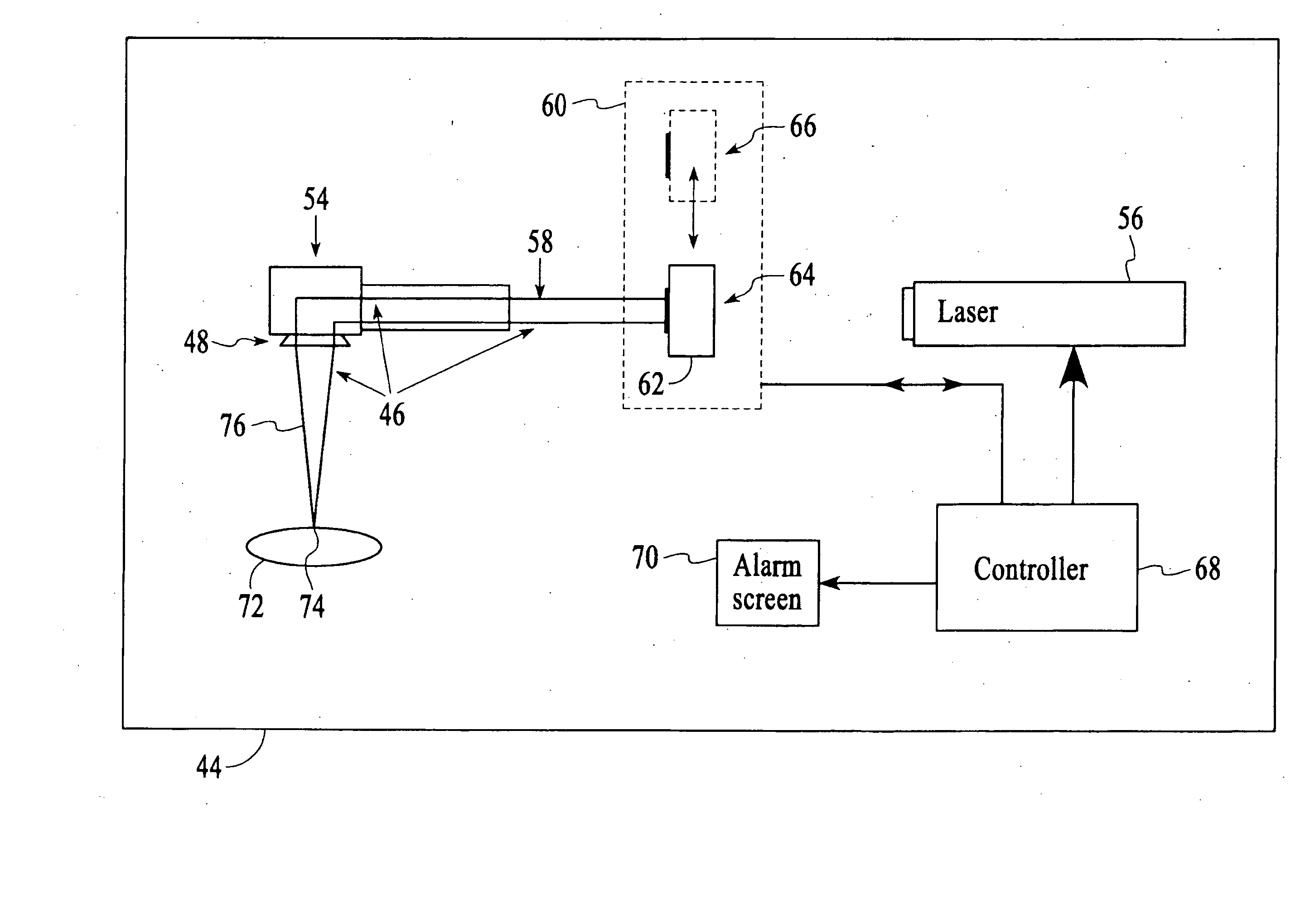
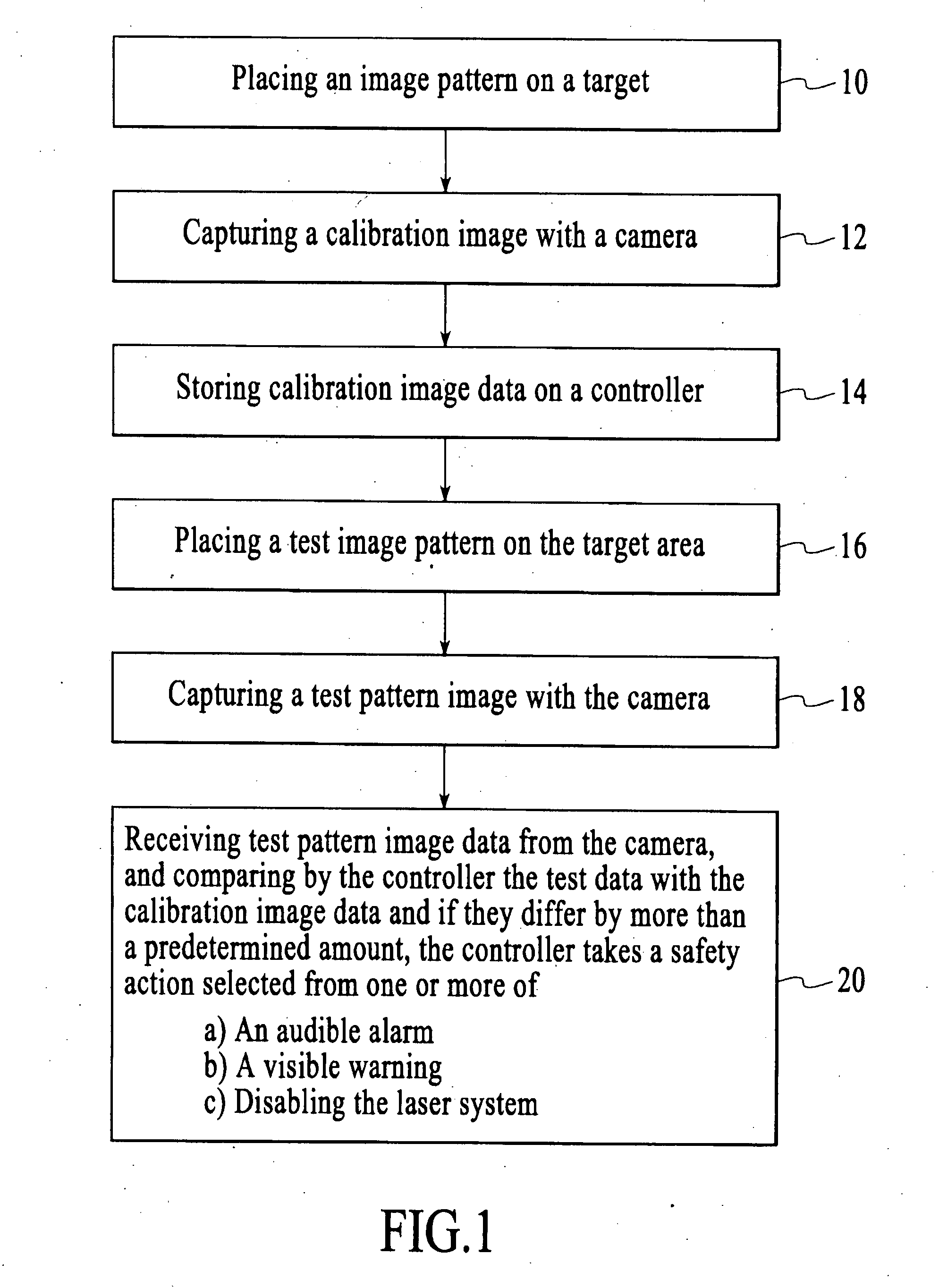
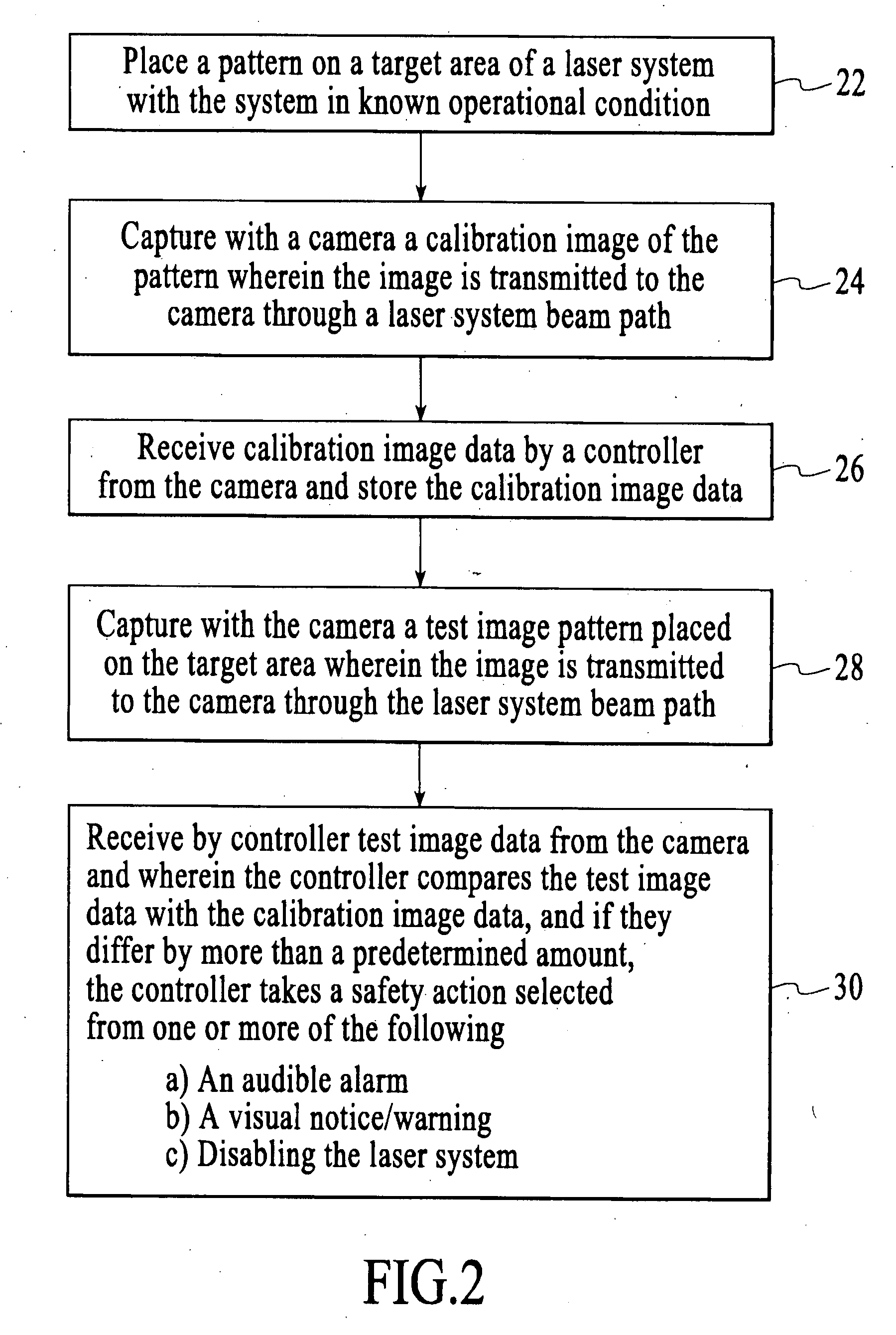
Innovation
- A laser safety system that includes light signal emitters and detectors to check beam alignment and a camera to verify focus, with a controller disabling the laser if misalignment or focus errors exceed predetermined limits, ensuring the laser is directed at a designated target and the focusing lens is operational.

Laser Safety Regulatory Standards and Compliance
Industrial laser debonding operations are subject to comprehensive regulatory frameworks that establish mandatory safety standards across multiple jurisdictions. The International Electrotechnical Commission (IEC) 60825 series serves as the foundational global standard for laser safety, defining classification systems, exposure limits, and protective measures specifically applicable to industrial laser applications. This standard categorizes lasers based on their potential hazard levels and prescribes corresponding safety protocols for each class.
In the United States, the Occupational Safety and Health Administration (OSHA) enforces laser safety regulations under 29 CFR 1926.54, while the Food and Drug Administration (FDA) maintains oversight through the Center for Devices and Radiological Health (CDRH) regulations. These federal requirements mandate specific safety measures including administrative controls, engineering safeguards, and personal protective equipment standards for laser debonding operations.
European Union directives, particularly the Machinery Directive 2006/42/EC and the Optical Radiation Directive 2006/25/EC, establish comprehensive compliance requirements for laser equipment manufacturers and operators. These regulations emphasize risk assessment methodologies, exposure limit values, and mandatory safety training protocols. The European Committee for Standardization (CEN) has developed complementary standards such as EN 12254 for laser processing machines, which directly impact industrial debonding applications.
National regulatory bodies across major industrial markets have implemented jurisdiction-specific requirements that often exceed international baseline standards. Germany's DGUV regulation 203-004 provides detailed technical specifications for laser workplace safety, while Japan's Industrial Safety and Health Act incorporates laser-specific provisions under ministerial ordinances. These national frameworks typically require formal safety officer certification, periodic equipment inspections, and documented safety management systems.
Compliance verification involves multi-tiered assessment processes including pre-installation safety evaluations, operational safety audits, and continuous monitoring protocols. Regulatory authorities mandate specific documentation requirements, including laser safety programs, hazard analysis reports, and incident reporting procedures. Non-compliance penalties range from operational suspensions to significant financial sanctions, making adherence to these standards critical for industrial laser debonding operations.
The evolving regulatory landscape reflects advancing laser technologies and emerging safety research, with recent updates focusing on automated safety systems, remote monitoring capabilities, and enhanced protective equipment standards for high-power industrial applications.
In the United States, the Occupational Safety and Health Administration (OSHA) enforces laser safety regulations under 29 CFR 1926.54, while the Food and Drug Administration (FDA) maintains oversight through the Center for Devices and Radiological Health (CDRH) regulations. These federal requirements mandate specific safety measures including administrative controls, engineering safeguards, and personal protective equipment standards for laser debonding operations.
European Union directives, particularly the Machinery Directive 2006/42/EC and the Optical Radiation Directive 2006/25/EC, establish comprehensive compliance requirements for laser equipment manufacturers and operators. These regulations emphasize risk assessment methodologies, exposure limit values, and mandatory safety training protocols. The European Committee for Standardization (CEN) has developed complementary standards such as EN 12254 for laser processing machines, which directly impact industrial debonding applications.
National regulatory bodies across major industrial markets have implemented jurisdiction-specific requirements that often exceed international baseline standards. Germany's DGUV regulation 203-004 provides detailed technical specifications for laser workplace safety, while Japan's Industrial Safety and Health Act incorporates laser-specific provisions under ministerial ordinances. These national frameworks typically require formal safety officer certification, periodic equipment inspections, and documented safety management systems.
Compliance verification involves multi-tiered assessment processes including pre-installation safety evaluations, operational safety audits, and continuous monitoring protocols. Regulatory authorities mandate specific documentation requirements, including laser safety programs, hazard analysis reports, and incident reporting procedures. Non-compliance penalties range from operational suspensions to significant financial sanctions, making adherence to these standards critical for industrial laser debonding operations.
The evolving regulatory landscape reflects advancing laser technologies and emerging safety research, with recent updates focusing on automated safety systems, remote monitoring capabilities, and enhanced protective equipment standards for high-power industrial applications.
Risk Assessment Framework for Industrial Laser Operations
Industrial laser debonding operations present multifaceted safety challenges that require systematic risk evaluation methodologies. A comprehensive risk assessment framework serves as the foundation for identifying, quantifying, and mitigating potential hazards inherent in laser-based material separation processes. This framework encompasses both immediate operational risks and long-term exposure considerations that could impact personnel, equipment, and facility integrity.
The primary risk categories in industrial laser debonding include optical radiation hazards, thermal exposure risks, chemical emission dangers, and mechanical safety concerns. Optical radiation poses the most significant immediate threat, with potential for severe eye and skin damage from direct or reflected laser beams. Class 4 industrial lasers commonly used in debonding applications can cause permanent retinal damage within microseconds of exposure, necessitating rigorous beam containment and personal protective equipment protocols.
Thermal hazards emerge from both the laser source and heated target materials during debonding processes. Surface temperatures can exceed 1000°C instantaneously, creating risks of severe burns and fire ignition. Additionally, rapid thermal expansion of bonded materials may generate explosive separation forces, requiring protective barriers and controlled processing environments.
Chemical emission assessment forms a critical component of the risk framework, as laser debonding often releases toxic vapors, particulates, and decomposition products. Materials such as adhesives, polymers, and composite matrices can generate carcinogenic compounds including formaldehyde, benzene derivatives, and metal oxides when subjected to high-energy laser exposure. Proper ventilation systems and air quality monitoring become essential safety measures.
The risk assessment methodology incorporates quantitative probability analysis combined with consequence severity matrices. This approach enables prioritization of safety interventions based on calculated risk indices. Factors including laser power density, exposure duration, material composition, and environmental conditions are weighted to determine overall risk levels for specific debonding scenarios.
Implementation of this framework requires continuous monitoring systems that track real-time safety parameters including laser output stability, ambient air quality, temperature gradients, and personnel positioning relative to hazard zones. Automated safety interlocks integrated with the assessment system can provide immediate response to elevated risk conditions, ensuring rapid mitigation of dangerous situations before personnel exposure occurs.
The primary risk categories in industrial laser debonding include optical radiation hazards, thermal exposure risks, chemical emission dangers, and mechanical safety concerns. Optical radiation poses the most significant immediate threat, with potential for severe eye and skin damage from direct or reflected laser beams. Class 4 industrial lasers commonly used in debonding applications can cause permanent retinal damage within microseconds of exposure, necessitating rigorous beam containment and personal protective equipment protocols.
Thermal hazards emerge from both the laser source and heated target materials during debonding processes. Surface temperatures can exceed 1000°C instantaneously, creating risks of severe burns and fire ignition. Additionally, rapid thermal expansion of bonded materials may generate explosive separation forces, requiring protective barriers and controlled processing environments.
Chemical emission assessment forms a critical component of the risk framework, as laser debonding often releases toxic vapors, particulates, and decomposition products. Materials such as adhesives, polymers, and composite matrices can generate carcinogenic compounds including formaldehyde, benzene derivatives, and metal oxides when subjected to high-energy laser exposure. Proper ventilation systems and air quality monitoring become essential safety measures.
The risk assessment methodology incorporates quantitative probability analysis combined with consequence severity matrices. This approach enables prioritization of safety interventions based on calculated risk indices. Factors including laser power density, exposure duration, material composition, and environmental conditions are weighted to determine overall risk levels for specific debonding scenarios.
Implementation of this framework requires continuous monitoring systems that track real-time safety parameters including laser output stability, ambient air quality, temperature gradients, and personnel positioning relative to hazard zones. Automated safety interlocks integrated with the assessment system can provide immediate response to elevated risk conditions, ensuring rapid mitigation of dangerous situations before personnel exposure occurs.
Unlock deeper insights with PatSnap Eureka Quick Research — get a full tech report to explore trends and direct your research. Try now!
Generate Your Research Report Instantly with AI Agent
Supercharge your innovation with PatSnap Eureka AI Agent Platform!