

Environmental Impact Reduction via Diffusion Policy Optimization
APR 14, 20269 MIN READ
Generate Your Research Report Instantly with AI Agent
PatSnap Eureka helps you evaluate technical feasibility & market potential.
Diffusion Policy Environmental Impact Background and Objectives
The intersection of artificial intelligence and environmental sustainability has emerged as one of the most critical technological frontiers of the 21st century. As global climate challenges intensify and regulatory frameworks become increasingly stringent, organizations across industries are compelled to seek innovative solutions that can simultaneously optimize operational efficiency and minimize ecological footprint. Traditional environmental management approaches often rely on static policies and reactive measures, which prove inadequate in addressing the dynamic and complex nature of environmental systems.
Diffusion policy optimization represents a paradigm shift in environmental decision-making, leveraging advanced machine learning techniques to model and predict the cascading effects of policy interventions across interconnected environmental systems. This approach recognizes that environmental impacts rarely occur in isolation but rather propagate through complex networks of cause-and-effect relationships, much like diffusion processes in physical systems.
The technological evolution in this domain has been driven by several converging factors. The exponential growth in environmental data collection through IoT sensors, satellite monitoring, and digital tracking systems has created unprecedented opportunities for data-driven environmental management. Simultaneously, advances in computational power and algorithmic sophistication have enabled the processing and analysis of these massive datasets in real-time.
The primary objective of diffusion policy optimization in environmental contexts is to develop adaptive, predictive frameworks that can anticipate the multi-dimensional impacts of policy decisions before implementation. This involves creating mathematical models that simulate how environmental interventions diffuse through various systems, affecting air quality, water resources, biodiversity, and carbon emissions across different temporal and spatial scales.
Key technological goals include achieving real-time optimization of resource allocation, enabling predictive environmental impact assessment, and facilitating automated policy adjustment based on continuous feedback loops. The ultimate vision encompasses creating self-learning environmental management systems that can autonomously optimize policies to minimize negative environmental impacts while maintaining operational objectives and economic viability across diverse industrial and governmental applications.
Diffusion policy optimization represents a paradigm shift in environmental decision-making, leveraging advanced machine learning techniques to model and predict the cascading effects of policy interventions across interconnected environmental systems. This approach recognizes that environmental impacts rarely occur in isolation but rather propagate through complex networks of cause-and-effect relationships, much like diffusion processes in physical systems.
The technological evolution in this domain has been driven by several converging factors. The exponential growth in environmental data collection through IoT sensors, satellite monitoring, and digital tracking systems has created unprecedented opportunities for data-driven environmental management. Simultaneously, advances in computational power and algorithmic sophistication have enabled the processing and analysis of these massive datasets in real-time.
The primary objective of diffusion policy optimization in environmental contexts is to develop adaptive, predictive frameworks that can anticipate the multi-dimensional impacts of policy decisions before implementation. This involves creating mathematical models that simulate how environmental interventions diffuse through various systems, affecting air quality, water resources, biodiversity, and carbon emissions across different temporal and spatial scales.
Key technological goals include achieving real-time optimization of resource allocation, enabling predictive environmental impact assessment, and facilitating automated policy adjustment based on continuous feedback loops. The ultimate vision encompasses creating self-learning environmental management systems that can autonomously optimize policies to minimize negative environmental impacts while maintaining operational objectives and economic viability across diverse industrial and governmental applications.
Market Demand for Green AI and Sustainable Computing
The global market for green AI and sustainable computing solutions is experiencing unprecedented growth driven by mounting environmental concerns and regulatory pressures. Organizations across industries are increasingly recognizing the substantial carbon footprint of their computational operations, particularly in data centers and machine learning workloads. This awareness has created a compelling business case for technologies that can optimize environmental impact while maintaining operational efficiency.
Corporate sustainability mandates are becoming standard practice, with major technology companies committing to carbon neutrality goals within the next decade. These commitments are driving significant investment in energy-efficient computing solutions and algorithmic optimization techniques. The demand extends beyond mere compliance, as organizations seek competitive advantages through reduced operational costs and enhanced brand reputation associated with environmental responsibility.
The financial services sector represents a particularly strong market segment, where high-frequency trading algorithms and risk modeling systems consume enormous computational resources. Banks and investment firms are actively seeking solutions that can maintain performance while reducing energy consumption. Similarly, the healthcare industry's growing reliance on AI for diagnostic imaging and drug discovery has created substantial demand for sustainable computing approaches.
Cloud service providers are experiencing intense pressure from enterprise customers to demonstrate environmental accountability. This has led to increased procurement preferences for vendors offering verifiable sustainability metrics and optimization capabilities. The shift toward green procurement policies is creating measurable market premiums for environmentally optimized solutions.
Regulatory frameworks across major markets are establishing mandatory reporting requirements for computational carbon emissions. The European Union's proposed AI Act includes provisions for environmental impact assessment, while similar regulations are emerging in other jurisdictions. These regulatory developments are transforming sustainability from an optional consideration to a fundamental business requirement.
The market opportunity extends to emerging applications in autonomous systems, smart city infrastructure, and industrial automation, where continuous operation amplifies the importance of energy efficiency. Organizations deploying these technologies are increasingly evaluating solutions based on total environmental cost rather than purely computational performance metrics.
Corporate sustainability mandates are becoming standard practice, with major technology companies committing to carbon neutrality goals within the next decade. These commitments are driving significant investment in energy-efficient computing solutions and algorithmic optimization techniques. The demand extends beyond mere compliance, as organizations seek competitive advantages through reduced operational costs and enhanced brand reputation associated with environmental responsibility.
The financial services sector represents a particularly strong market segment, where high-frequency trading algorithms and risk modeling systems consume enormous computational resources. Banks and investment firms are actively seeking solutions that can maintain performance while reducing energy consumption. Similarly, the healthcare industry's growing reliance on AI for diagnostic imaging and drug discovery has created substantial demand for sustainable computing approaches.
Cloud service providers are experiencing intense pressure from enterprise customers to demonstrate environmental accountability. This has led to increased procurement preferences for vendors offering verifiable sustainability metrics and optimization capabilities. The shift toward green procurement policies is creating measurable market premiums for environmentally optimized solutions.
Regulatory frameworks across major markets are establishing mandatory reporting requirements for computational carbon emissions. The European Union's proposed AI Act includes provisions for environmental impact assessment, while similar regulations are emerging in other jurisdictions. These regulatory developments are transforming sustainability from an optional consideration to a fundamental business requirement.
The market opportunity extends to emerging applications in autonomous systems, smart city infrastructure, and industrial automation, where continuous operation amplifies the importance of energy efficiency. Organizations deploying these technologies are increasingly evaluating solutions based on total environmental cost rather than purely computational performance metrics.
Current Environmental Challenges in Diffusion Model Deployment
The deployment of diffusion models in production environments presents significant environmental challenges that demand immediate attention from both industry and research communities. These sophisticated generative AI systems, while delivering unprecedented capabilities in image synthesis, natural language processing, and scientific modeling, consume substantial computational resources that translate directly into environmental costs.
Energy consumption represents the most pressing environmental challenge in diffusion model deployment. Training large-scale diffusion models requires extensive computational power, often involving thousands of GPU hours across distributed computing clusters. A single training run for state-of-the-art diffusion models can consume energy equivalent to several households' annual electricity usage. The iterative nature of diffusion processes, requiring multiple denoising steps during both training and inference, amplifies this energy demand significantly compared to traditional machine learning approaches.
Carbon emissions constitute another critical environmental concern. The electricity powering data centers and high-performance computing facilities often originates from fossil fuel sources, resulting in substantial carbon footprints. Geographic distribution of computational resources affects emission levels, as regions with coal-heavy energy grids produce higher carbon intensities per computational unit. The global nature of AI development means diffusion model training often occurs in locations where renewable energy adoption remains limited.
Hardware manufacturing and lifecycle impacts compound the environmental challenges. The specialized GPUs and TPUs required for efficient diffusion model training demand rare earth elements and energy-intensive manufacturing processes. Rapid hardware obsolescence driven by increasing model complexity creates additional electronic waste streams. The cooling infrastructure necessary to maintain optimal operating temperatures in data centers further increases energy consumption and environmental impact.
Inference-time environmental costs present ongoing challenges beyond initial training phases. Real-time applications requiring diffusion model inference, such as interactive content generation or autonomous systems, maintain continuous energy demands. The multi-step sampling process inherent to diffusion models results in higher inference costs compared to single-forward-pass alternatives, creating persistent environmental burdens throughout deployment lifecycles.
Resource inefficiency in current deployment practices exacerbates environmental impacts. Many organizations maintain dedicated computing infrastructure with low utilization rates, leading to wasteful energy consumption. Lack of standardized efficiency metrics and environmental impact assessment frameworks prevents systematic optimization efforts across the industry.
Energy consumption represents the most pressing environmental challenge in diffusion model deployment. Training large-scale diffusion models requires extensive computational power, often involving thousands of GPU hours across distributed computing clusters. A single training run for state-of-the-art diffusion models can consume energy equivalent to several households' annual electricity usage. The iterative nature of diffusion processes, requiring multiple denoising steps during both training and inference, amplifies this energy demand significantly compared to traditional machine learning approaches.
Carbon emissions constitute another critical environmental concern. The electricity powering data centers and high-performance computing facilities often originates from fossil fuel sources, resulting in substantial carbon footprints. Geographic distribution of computational resources affects emission levels, as regions with coal-heavy energy grids produce higher carbon intensities per computational unit. The global nature of AI development means diffusion model training often occurs in locations where renewable energy adoption remains limited.
Hardware manufacturing and lifecycle impacts compound the environmental challenges. The specialized GPUs and TPUs required for efficient diffusion model training demand rare earth elements and energy-intensive manufacturing processes. Rapid hardware obsolescence driven by increasing model complexity creates additional electronic waste streams. The cooling infrastructure necessary to maintain optimal operating temperatures in data centers further increases energy consumption and environmental impact.
Inference-time environmental costs present ongoing challenges beyond initial training phases. Real-time applications requiring diffusion model inference, such as interactive content generation or autonomous systems, maintain continuous energy demands. The multi-step sampling process inherent to diffusion models results in higher inference costs compared to single-forward-pass alternatives, creating persistent environmental burdens throughout deployment lifecycles.
Resource inefficiency in current deployment practices exacerbates environmental impacts. Many organizations maintain dedicated computing infrastructure with low utilization rates, leading to wasteful energy consumption. Lack of standardized efficiency metrics and environmental impact assessment frameworks prevents systematic optimization efforts across the industry.
Existing Solutions for Diffusion Model Energy Optimization
01 Machine learning-based policy optimization for environmental systems
Advanced machine learning algorithms and reinforcement learning techniques are employed to optimize policies for environmental management. These methods utilize neural networks and deep learning models to analyze complex environmental data and generate optimal decision-making strategies. The optimization process considers multiple environmental parameters and constraints to improve overall system performance while minimizing negative environmental impacts.- Machine learning-based policy optimization for environmental systems: Advanced machine learning algorithms and reinforcement learning techniques are applied to optimize environmental policies through iterative learning processes. These methods enable dynamic adjustment of policy parameters based on real-time environmental data and feedback, improving decision-making for environmental management. The optimization framework incorporates neural networks and deep learning models to predict environmental outcomes and refine policy strategies accordingly.
- Diffusion modeling for pollution control and emission reduction: Diffusion models are utilized to simulate and predict the spread of pollutants in various environmental media including air, water, and soil. These models help in understanding pollutant transport mechanisms and designing effective control strategies. The technology enables accurate forecasting of pollution dispersion patterns, supporting the development of targeted mitigation measures and regulatory frameworks for emission management.
- Energy efficiency optimization in industrial processes: Optimization techniques are employed to reduce energy consumption and minimize environmental footprint in industrial operations. These methods involve analyzing process parameters, identifying inefficiencies, and implementing control strategies to achieve optimal resource utilization. The approach integrates real-time monitoring systems with predictive algorithms to continuously improve energy performance while maintaining production quality and reducing greenhouse gas emissions.
- Climate impact assessment and carbon footprint reduction strategies: Comprehensive frameworks are developed to assess the environmental impact of various policies and operations, with particular focus on carbon emissions and climate change mitigation. These systems incorporate life cycle analysis, carbon accounting methodologies, and scenario modeling to evaluate the effectiveness of different intervention strategies. The technology supports decision-makers in selecting optimal approaches for achieving sustainability goals and meeting regulatory requirements.
- Smart grid and renewable energy integration optimization: Advanced optimization algorithms are applied to enhance the integration of renewable energy sources into power grids while minimizing environmental impact. These solutions address challenges related to energy storage, load balancing, and grid stability through intelligent control systems. The technology enables efficient management of distributed energy resources, reduces reliance on fossil fuels, and supports the transition to sustainable energy systems through optimized dispatch and scheduling strategies.
02 Diffusion modeling for environmental impact assessment
Diffusion models are utilized to simulate and predict the spread and distribution of pollutants or environmental factors across different mediums. These models incorporate spatial and temporal dynamics to assess environmental impact scenarios. The technology enables accurate prediction of contamination patterns and helps in developing mitigation strategies by analyzing diffusion processes in air, water, or soil environments.Expand Specific Solutions03 Optimization algorithms for emission reduction and resource management
Computational optimization techniques are applied to minimize emissions and improve resource utilization efficiency. These algorithms process real-time environmental data to adjust operational parameters dynamically. The methods focus on balancing economic objectives with environmental sustainability goals through multi-objective optimization frameworks that consider energy consumption, waste generation, and carbon footprint reduction.Expand Specific Solutions04 Policy decision support systems for environmental compliance
Integrated decision support systems provide frameworks for evaluating and implementing environmental policies. These systems combine data analytics, simulation models, and regulatory compliance tools to assist policymakers in making informed decisions. The technology incorporates scenario analysis capabilities and impact forecasting to ensure policies meet environmental standards while maintaining operational feasibility.Expand Specific Solutions05 Adaptive control systems for environmental process optimization
Adaptive control mechanisms continuously monitor and adjust environmental processes to maintain optimal performance under varying conditions. These systems employ feedback loops and predictive analytics to respond to environmental changes in real-time. The technology integrates sensor networks and automated control algorithms to minimize environmental impact while maximizing operational efficiency across industrial and ecological applications.Expand Specific Solutions
Key Players in Sustainable AI and Green Computing Industry
The environmental impact reduction via diffusion policy optimization field represents an emerging intersection of artificial intelligence and sustainability, currently in its early development stage with significant growth potential. The market is experiencing rapid expansion as organizations increasingly prioritize environmental compliance and carbon footprint reduction, driven by regulatory pressures and corporate sustainability commitments. Technology maturity varies considerably across different applications, with established players like General Motors, Siemens Healthineers, and Mitsubishi Heavy Industries leveraging their industrial expertise to integrate optimization algorithms into existing systems. Meanwhile, research institutions including Zhejiang University, Tianjin University, and Southeast University are advancing foundational algorithms and methodologies. Technology giants such as Google and Sony are exploring AI-driven environmental solutions, while specialized firms like BASF and Robert Bosch are developing sector-specific applications. The competitive landscape shows a convergence of traditional industrial companies, academic research centers, and technology innovators, indicating the field's interdisciplinary nature and broad commercial applicability across manufacturing, energy, and environmental management sectors.
Mitsubishi Heavy Industries, Ltd.
Technical Solution: Mitsubishi Heavy Industries has developed diffusion policy optimization systems for large-scale industrial applications, particularly in power generation and heavy machinery operations. Their approach integrates environmental impact metrics directly into operational decision-making processes through advanced diffusion models that predict long-term environmental consequences. The system optimizes equipment operation schedules, maintenance cycles, and resource allocation to minimize carbon emissions and environmental degradation. Their technology is particularly focused on optimizing thermal power plants and industrial facilities to reduce environmental impact while maintaining productivity and safety standards.
Strengths: Extensive experience in heavy industry and power generation provides deep domain knowledge for environmental optimization. Weaknesses: Focus primarily on large-scale industrial applications limits applicability to smaller environmental initiatives.
Zhejiang University
Technical Solution: Zhejiang University has conducted extensive research on diffusion policy optimization for environmental applications, developing novel algorithms that combine diffusion models with environmental science principles. Their research focuses on urban planning optimization, air quality management, and sustainable resource allocation using advanced machine learning techniques. The university's approach integrates multi-scale environmental data with policy simulation models to predict and optimize environmental outcomes. Their work includes developing diffusion-based frameworks for smart city applications, where policy decisions are optimized to reduce pollution, improve energy efficiency, and enhance overall environmental sustainability through data-driven decision making.
Strengths: Strong academic research foundation and interdisciplinary approach combining environmental science with advanced AI techniques. Weaknesses: Academic focus may limit immediate commercial application and real-world implementation capabilities.
Core Innovations in Low-Carbon Diffusion Policy Design
Environmental impact assessment method based on atmospheric diffusion model and linear programming
PatentActiveCN109409666A
Innovation
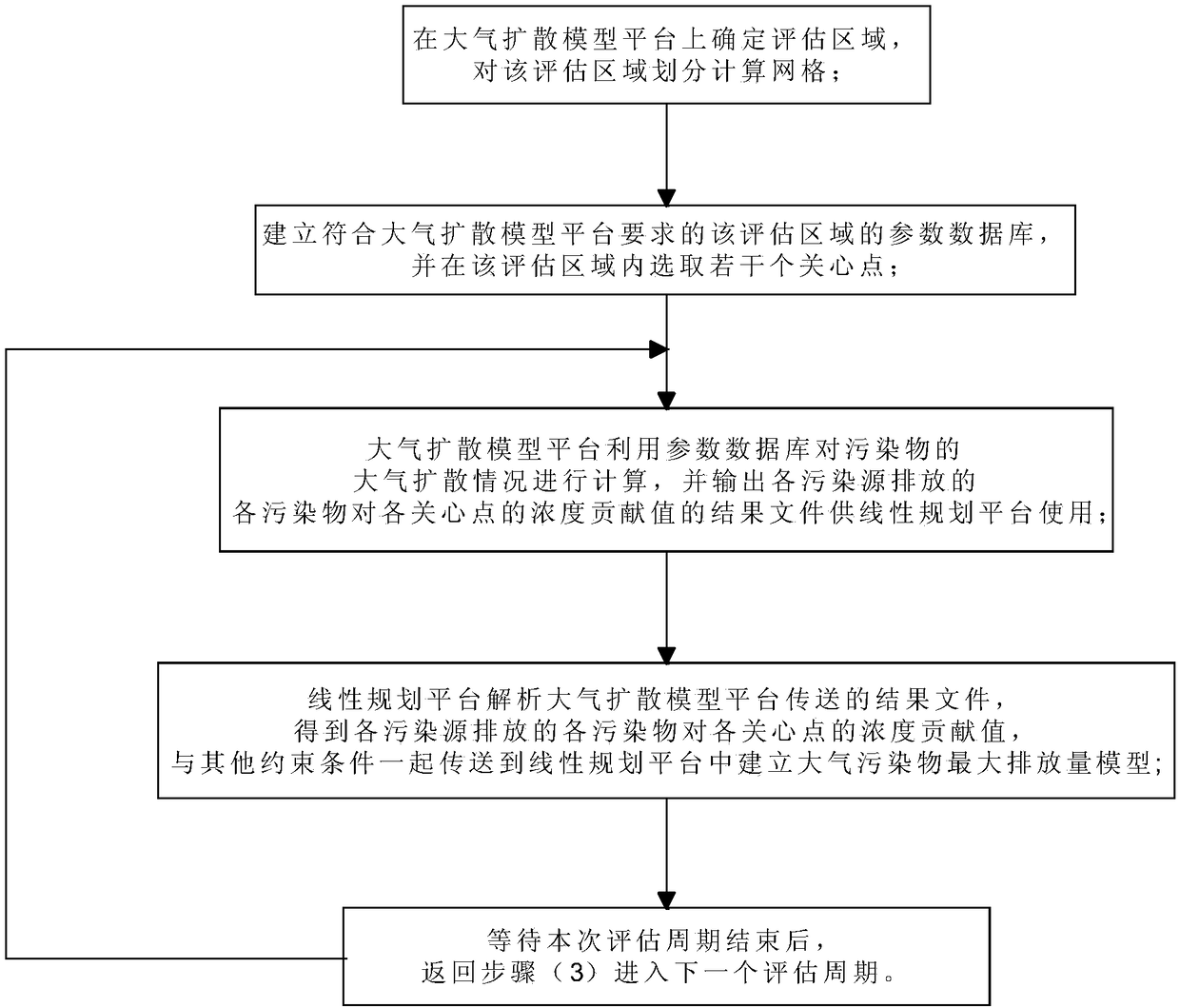
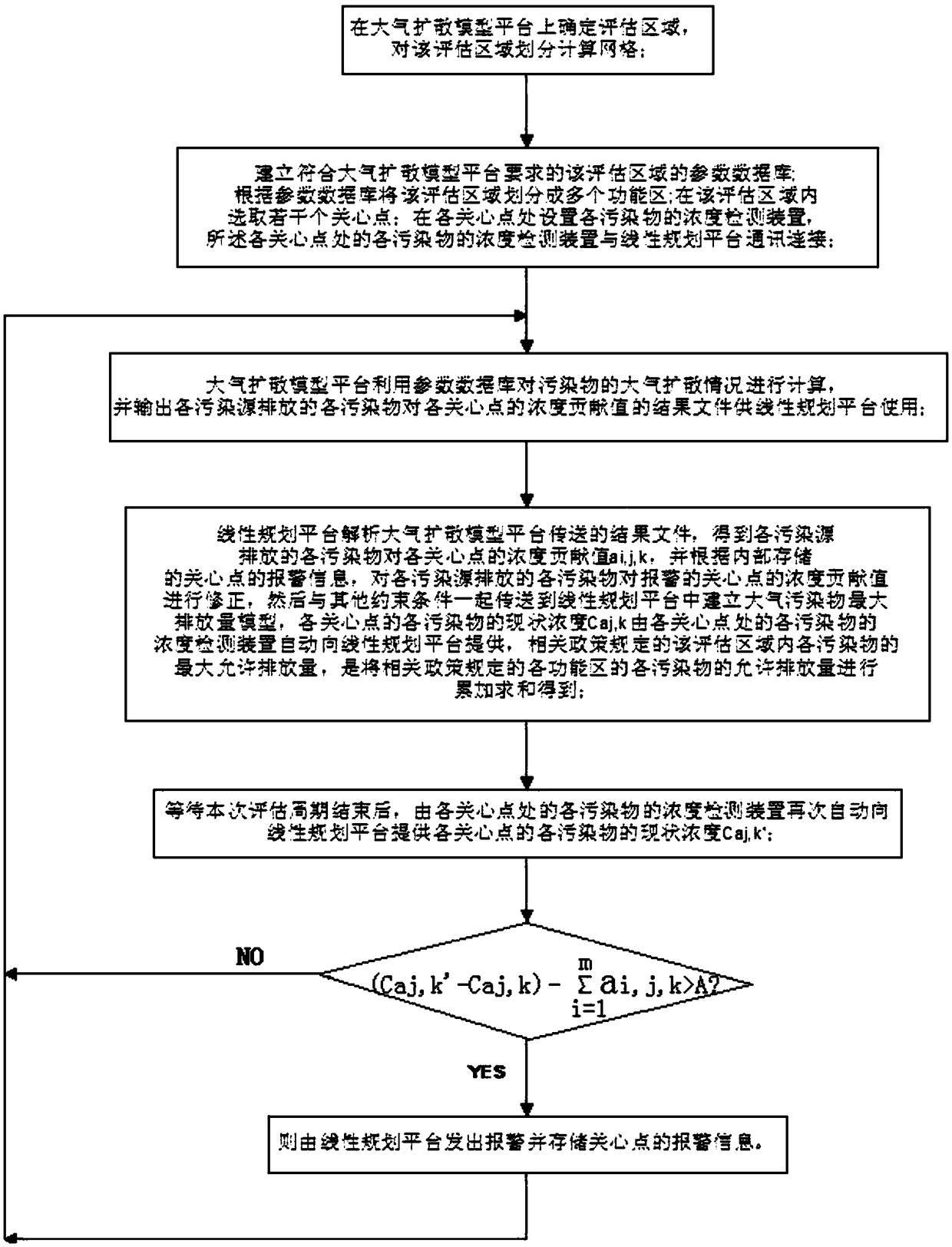
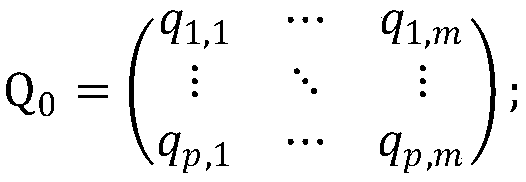
- Combining the real-time dynamic data of the atmospheric dispersion model platform as the constraints and indicators of the linear programming platform, by determining the evaluation area on the atmospheric dispersion model platform, establishing a parameter database, calculating the concentration contribution value of pollutants, and outputting it to the linear programming platform , establish a maximum emission model of air pollutants, and optimize it using objective functions and constraints to improve the accuracy and real-time performance of the assessment results.

Collaborative environmental impact optimization of manufacturing processes
PatentPendingUS20250139714A1
Innovation
- A computer-implemented method and apparatus that utilize normalized environmental impact calculation models to optimize manufacturing processes by connecting input data from chemical products to describe functional relationships between environmental impact metrics and product properties, enabling collaborative optimization without revealing proprietary data.


Carbon Footprint Assessment Methods for AI Systems
Carbon footprint assessment for AI systems has emerged as a critical evaluation framework for measuring the environmental impact of artificial intelligence technologies, particularly in the context of diffusion policy optimization applications. Traditional assessment methodologies primarily focus on direct energy consumption during model training and inference phases, but comprehensive evaluation requires a broader lifecycle perspective that encompasses hardware manufacturing, data center operations, and end-of-life disposal impacts.
The most widely adopted assessment approach is the cradle-to-grave lifecycle analysis (LCA), which quantifies carbon emissions across three distinct phases: embodied carbon from hardware production, operational carbon from computational processes, and disposal-related emissions. This methodology provides a holistic view of AI system environmental impact, enabling more accurate comparison between different diffusion policy optimization implementations and their respective carbon intensities.
Operational carbon assessment represents the most mature measurement category, utilizing established metrics such as Power Usage Effectiveness (PUE) and carbon intensity factors specific to regional electricity grids. Advanced assessment frameworks incorporate real-time grid carbon intensity data, allowing for dynamic optimization of computational workloads based on renewable energy availability. This temporal dimension proves particularly relevant for diffusion policy optimization systems that can leverage flexible scheduling to minimize carbon footprint.
Emerging assessment methodologies integrate marginal carbon accounting principles, which consider the additional grid emissions caused by increased computational demand rather than average grid emissions. This approach provides more accurate attribution of environmental impact, especially for large-scale diffusion policy optimization deployments that significantly influence regional energy consumption patterns.
Standardization efforts have produced several assessment frameworks, including the Machine Learning Emissions Calculator and the AI Carbon Tracker, which provide standardized metrics for comparing carbon efficiency across different AI implementations. These tools incorporate hardware-specific power consumption models, regional carbon intensity databases, and algorithmic efficiency metrics to generate comprehensive carbon footprint assessments for diffusion policy optimization systems.
The most widely adopted assessment approach is the cradle-to-grave lifecycle analysis (LCA), which quantifies carbon emissions across three distinct phases: embodied carbon from hardware production, operational carbon from computational processes, and disposal-related emissions. This methodology provides a holistic view of AI system environmental impact, enabling more accurate comparison between different diffusion policy optimization implementations and their respective carbon intensities.
Operational carbon assessment represents the most mature measurement category, utilizing established metrics such as Power Usage Effectiveness (PUE) and carbon intensity factors specific to regional electricity grids. Advanced assessment frameworks incorporate real-time grid carbon intensity data, allowing for dynamic optimization of computational workloads based on renewable energy availability. This temporal dimension proves particularly relevant for diffusion policy optimization systems that can leverage flexible scheduling to minimize carbon footprint.
Emerging assessment methodologies integrate marginal carbon accounting principles, which consider the additional grid emissions caused by increased computational demand rather than average grid emissions. This approach provides more accurate attribution of environmental impact, especially for large-scale diffusion policy optimization deployments that significantly influence regional energy consumption patterns.
Standardization efforts have produced several assessment frameworks, including the Machine Learning Emissions Calculator and the AI Carbon Tracker, which provide standardized metrics for comparing carbon efficiency across different AI implementations. These tools incorporate hardware-specific power consumption models, regional carbon intensity databases, and algorithmic efficiency metrics to generate comprehensive carbon footprint assessments for diffusion policy optimization systems.
Environmental Regulations and Standards for AI Computing
The regulatory landscape for AI computing in environmental applications is rapidly evolving as governments worldwide recognize the dual nature of artificial intelligence technologies. While AI systems like diffusion policy optimization can significantly reduce environmental impacts through improved resource allocation and decision-making, the computational infrastructure required for these systems presents its own environmental challenges that require careful regulatory oversight.
Current environmental regulations for AI computing primarily focus on energy efficiency standards and carbon footprint disclosure requirements. The European Union's Digital Services Act and the proposed AI Act include provisions for environmental impact assessments of large-scale AI systems. These regulations mandate that AI operators report energy consumption metrics and implement energy-efficient computing practices. Similar frameworks are emerging in California through the California Consumer Privacy Act amendments and federal initiatives under the Infrastructure Investment and Jobs Act.
Data center regulations form a critical component of AI computing standards, as these facilities consume substantial energy resources. The EPA's ENERGY STAR program has established benchmarks for data center efficiency, while the EU's Energy Efficiency Directive requires large data centers to report energy usage and waste heat recovery measures. These standards directly impact diffusion policy optimization implementations, as the computational demands of such systems must comply with power usage effectiveness requirements and renewable energy sourcing mandates.
Emerging standards specifically target machine learning workloads and their environmental implications. The ISO/IEC 23053 standard for AI system lifecycle processes includes environmental considerations, while the IEEE 2857 standard addresses privacy engineering for AI systems with environmental monitoring components. These frameworks establish requirements for algorithmic efficiency, model compression techniques, and sustainable training practices that directly influence how diffusion policy optimization systems are developed and deployed.
International coordination efforts are establishing harmonized approaches to AI environmental regulation. The Global Partnership on AI has developed principles for sustainable AI development, while the OECD AI Policy Observatory provides frameworks for measuring and reporting AI environmental impacts. These initiatives create standardized metrics for evaluating the environmental performance of AI systems, including carbon intensity per inference and energy efficiency ratios for training processes.
Compliance requirements for organizations implementing environmental AI solutions include mandatory environmental impact assessments, regular auditing of computational resources, and adherence to green computing certification programs. Companies must demonstrate that their diffusion policy optimization systems achieve net positive environmental benefits while minimizing their own computational footprint through efficient algorithm design and sustainable infrastructure practices.
Current environmental regulations for AI computing primarily focus on energy efficiency standards and carbon footprint disclosure requirements. The European Union's Digital Services Act and the proposed AI Act include provisions for environmental impact assessments of large-scale AI systems. These regulations mandate that AI operators report energy consumption metrics and implement energy-efficient computing practices. Similar frameworks are emerging in California through the California Consumer Privacy Act amendments and federal initiatives under the Infrastructure Investment and Jobs Act.
Data center regulations form a critical component of AI computing standards, as these facilities consume substantial energy resources. The EPA's ENERGY STAR program has established benchmarks for data center efficiency, while the EU's Energy Efficiency Directive requires large data centers to report energy usage and waste heat recovery measures. These standards directly impact diffusion policy optimization implementations, as the computational demands of such systems must comply with power usage effectiveness requirements and renewable energy sourcing mandates.
Emerging standards specifically target machine learning workloads and their environmental implications. The ISO/IEC 23053 standard for AI system lifecycle processes includes environmental considerations, while the IEEE 2857 standard addresses privacy engineering for AI systems with environmental monitoring components. These frameworks establish requirements for algorithmic efficiency, model compression techniques, and sustainable training practices that directly influence how diffusion policy optimization systems are developed and deployed.
International coordination efforts are establishing harmonized approaches to AI environmental regulation. The Global Partnership on AI has developed principles for sustainable AI development, while the OECD AI Policy Observatory provides frameworks for measuring and reporting AI environmental impacts. These initiatives create standardized metrics for evaluating the environmental performance of AI systems, including carbon intensity per inference and energy efficiency ratios for training processes.
Compliance requirements for organizations implementing environmental AI solutions include mandatory environmental impact assessments, regular auditing of computational resources, and adherence to green computing certification programs. Companies must demonstrate that their diffusion policy optimization systems achieve net positive environmental benefits while minimizing their own computational footprint through efficient algorithm design and sustainable infrastructure practices.
Unlock deeper insights with PatSnap Eureka Quick Research — get a full tech report to explore trends and direct your research. Try now!
Generate Your Research Report Instantly with AI Agent
Supercharge your innovation with PatSnap Eureka AI Agent Platform!