
Evaluate Efficiency Parameters in MOSFET-based Inverters
APR 1, 20269 MIN READ
Generate Your Research Report Instantly with AI Agent
Patsnap Eureka helps you evaluate technical feasibility & market potential.
MOSFET Inverter Technology Background and Efficiency Goals
MOSFET-based inverters have emerged as fundamental components in modern power electronics, tracing their origins to the development of metal-oxide-semiconductor field-effect transistors in the 1960s. The evolution from bipolar junction transistors to MOSFETs marked a significant paradigm shift, offering superior switching characteristics, reduced gate drive requirements, and enhanced thermal performance. This technological progression has been driven by the increasing demand for efficient power conversion systems across automotive, renewable energy, and industrial applications.
The historical development of MOSFET inverter technology can be categorized into distinct phases. Early implementations in the 1980s focused on basic switching functionality with limited efficiency considerations. The 1990s witnessed substantial improvements in device physics and manufacturing processes, leading to reduced on-resistance and faster switching speeds. The 2000s introduced advanced gate drive techniques and sophisticated control algorithms, while the current decade emphasizes wide-bandgap semiconductors and intelligent power modules.
Contemporary market demands have intensified the focus on efficiency optimization in MOSFET inverters. Electric vehicle propulsion systems require inverters with efficiency levels exceeding 95% to maximize battery range and minimize thermal management complexity. Similarly, grid-tied photovoltaic systems mandate high-efficiency conversion to meet regulatory standards and economic viability requirements. Industrial motor drives increasingly demand precise efficiency control to reduce operational costs and environmental impact.
The primary efficiency goals for modern MOSFET-based inverters encompass multiple performance metrics. Peak efficiency targets typically range from 96% to 98% for automotive applications, while maintaining efficiency above 90% across the entire operating range. Switching losses must be minimized through optimized gate drive timing and advanced modulation techniques. Conduction losses require careful consideration of device selection and thermal management strategies.
Emerging efficiency objectives extend beyond traditional power loss metrics to include dynamic performance parameters. Transient efficiency during load variations, efficiency maintenance across temperature ranges, and long-term efficiency degradation have become critical evaluation criteria. These comprehensive efficiency goals drive continuous innovation in MOSFET device technology, circuit topologies, and control methodologies, establishing the foundation for next-generation power conversion systems.
The historical development of MOSFET inverter technology can be categorized into distinct phases. Early implementations in the 1980s focused on basic switching functionality with limited efficiency considerations. The 1990s witnessed substantial improvements in device physics and manufacturing processes, leading to reduced on-resistance and faster switching speeds. The 2000s introduced advanced gate drive techniques and sophisticated control algorithms, while the current decade emphasizes wide-bandgap semiconductors and intelligent power modules.
Contemporary market demands have intensified the focus on efficiency optimization in MOSFET inverters. Electric vehicle propulsion systems require inverters with efficiency levels exceeding 95% to maximize battery range and minimize thermal management complexity. Similarly, grid-tied photovoltaic systems mandate high-efficiency conversion to meet regulatory standards and economic viability requirements. Industrial motor drives increasingly demand precise efficiency control to reduce operational costs and environmental impact.
The primary efficiency goals for modern MOSFET-based inverters encompass multiple performance metrics. Peak efficiency targets typically range from 96% to 98% for automotive applications, while maintaining efficiency above 90% across the entire operating range. Switching losses must be minimized through optimized gate drive timing and advanced modulation techniques. Conduction losses require careful consideration of device selection and thermal management strategies.
Emerging efficiency objectives extend beyond traditional power loss metrics to include dynamic performance parameters. Transient efficiency during load variations, efficiency maintenance across temperature ranges, and long-term efficiency degradation have become critical evaluation criteria. These comprehensive efficiency goals drive continuous innovation in MOSFET device technology, circuit topologies, and control methodologies, establishing the foundation for next-generation power conversion systems.
Market Demand for High-Efficiency MOSFET Inverter Systems
The global power electronics market is experiencing unprecedented growth driven by the increasing demand for energy-efficient solutions across multiple sectors. High-efficiency MOSFET-based inverter systems have emerged as critical components in this transformation, addressing the urgent need for improved power conversion efficiency and reduced energy losses in various applications.
The renewable energy sector represents one of the most significant demand drivers for high-efficiency MOSFET inverters. Solar photovoltaic installations worldwide require sophisticated inverter systems to convert DC power to AC power with minimal losses. Grid-tied solar inverters utilizing advanced MOSFET technology are essential for maximizing energy harvest and ensuring compliance with stringent grid codes. Wind energy systems similarly depend on high-performance inverters for optimal power conversion from variable-speed generators.
Electric vehicle adoption is creating substantial market demand for efficient MOSFET inverter systems. Automotive manufacturers are prioritizing inverter efficiency to extend driving range and reduce battery requirements. Traction inverters in electric vehicles must deliver high power density while maintaining excellent thermal management, making advanced MOSFET technologies indispensable for competitive electric vehicle platforms.
Industrial automation and motor drive applications constitute another major market segment demanding high-efficiency inverters. Variable frequency drives utilizing MOSFET-based inverters enable precise motor control while significantly reducing energy consumption in manufacturing processes. Industries are increasingly adopting these systems to meet sustainability targets and reduce operational costs through improved energy efficiency.
The data center industry presents growing opportunities for high-efficiency MOSFET inverters in uninterruptible power supply systems and power distribution units. As data centers expand globally, the demand for efficient power conversion solutions that minimize heat generation and maximize reliability continues to intensify.
Consumer electronics and home appliances are incorporating MOSFET-based inverters to achieve higher energy efficiency ratings. Air conditioning systems, refrigerators, and washing machines utilize inverter technology to optimize power consumption and meet increasingly stringent energy efficiency standards imposed by regulatory bodies worldwide.
Market growth is further accelerated by government initiatives promoting energy efficiency and carbon emission reduction. Regulatory frameworks mandating higher efficiency standards for power electronic systems are driving adoption of advanced MOSFET inverter technologies across all application segments.
The renewable energy sector represents one of the most significant demand drivers for high-efficiency MOSFET inverters. Solar photovoltaic installations worldwide require sophisticated inverter systems to convert DC power to AC power with minimal losses. Grid-tied solar inverters utilizing advanced MOSFET technology are essential for maximizing energy harvest and ensuring compliance with stringent grid codes. Wind energy systems similarly depend on high-performance inverters for optimal power conversion from variable-speed generators.
Electric vehicle adoption is creating substantial market demand for efficient MOSFET inverter systems. Automotive manufacturers are prioritizing inverter efficiency to extend driving range and reduce battery requirements. Traction inverters in electric vehicles must deliver high power density while maintaining excellent thermal management, making advanced MOSFET technologies indispensable for competitive electric vehicle platforms.
Industrial automation and motor drive applications constitute another major market segment demanding high-efficiency inverters. Variable frequency drives utilizing MOSFET-based inverters enable precise motor control while significantly reducing energy consumption in manufacturing processes. Industries are increasingly adopting these systems to meet sustainability targets and reduce operational costs through improved energy efficiency.
The data center industry presents growing opportunities for high-efficiency MOSFET inverters in uninterruptible power supply systems and power distribution units. As data centers expand globally, the demand for efficient power conversion solutions that minimize heat generation and maximize reliability continues to intensify.
Consumer electronics and home appliances are incorporating MOSFET-based inverters to achieve higher energy efficiency ratings. Air conditioning systems, refrigerators, and washing machines utilize inverter technology to optimize power consumption and meet increasingly stringent energy efficiency standards imposed by regulatory bodies worldwide.
Market growth is further accelerated by government initiatives promoting energy efficiency and carbon emission reduction. Regulatory frameworks mandating higher efficiency standards for power electronic systems are driving adoption of advanced MOSFET inverter technologies across all application segments.
Current MOSFET Inverter Efficiency Challenges and Limitations
MOSFET-based inverters face significant efficiency challenges that stem from fundamental semiconductor physics and circuit design limitations. The primary constraint lies in switching losses, which occur during the transition periods when MOSFETs change states between on and off conditions. During these transitions, both voltage and current are present simultaneously across the device, resulting in power dissipation that directly reduces overall system efficiency.
Conduction losses represent another critical limitation, particularly in high-current applications. Even when fully conducting, MOSFETs exhibit finite on-resistance (RDS(on)), which varies with temperature, gate voltage, and device characteristics. This resistance creates I²R losses that become increasingly problematic as current demands rise, especially in high-power inverter applications where efficiency degradation can reach several percentage points.
Thermal management constraints significantly impact MOSFET inverter performance, as elevated temperatures increase on-resistance and reduce switching speeds. The thermal coupling between multiple devices in three-phase configurations creates hotspots that limit power density and force conservative operating parameters. Traditional cooling solutions add system complexity and cost while consuming additional power, further reducing net efficiency.
Gate drive losses present an often-overlooked efficiency limitation, particularly in high-frequency switching applications. The energy required to charge and discharge MOSFET gate capacitances scales with switching frequency, creating a fundamental trade-off between switching speed and drive power consumption. This becomes especially problematic in wide-bandgap devices where higher gate voltages are required.
Dead-time optimization challenges create additional efficiency barriers in complementary switching configurations. Insufficient dead-time leads to shoot-through currents and device stress, while excessive dead-time causes body diode conduction losses and increased total harmonic distortion. The optimal dead-time varies with load conditions, temperature, and device characteristics, making static optimization inadequate for dynamic applications.
Parasitic inductances and capacitances in practical implementations introduce ringing, voltage overshoots, and electromagnetic interference that necessitate snubber circuits and conservative switching parameters. These parasitics become increasingly problematic at higher switching frequencies, limiting the efficiency benefits that could otherwise be achieved through reduced magnetic component sizes.
Conduction losses represent another critical limitation, particularly in high-current applications. Even when fully conducting, MOSFETs exhibit finite on-resistance (RDS(on)), which varies with temperature, gate voltage, and device characteristics. This resistance creates I²R losses that become increasingly problematic as current demands rise, especially in high-power inverter applications where efficiency degradation can reach several percentage points.
Thermal management constraints significantly impact MOSFET inverter performance, as elevated temperatures increase on-resistance and reduce switching speeds. The thermal coupling between multiple devices in three-phase configurations creates hotspots that limit power density and force conservative operating parameters. Traditional cooling solutions add system complexity and cost while consuming additional power, further reducing net efficiency.
Gate drive losses present an often-overlooked efficiency limitation, particularly in high-frequency switching applications. The energy required to charge and discharge MOSFET gate capacitances scales with switching frequency, creating a fundamental trade-off between switching speed and drive power consumption. This becomes especially problematic in wide-bandgap devices where higher gate voltages are required.
Dead-time optimization challenges create additional efficiency barriers in complementary switching configurations. Insufficient dead-time leads to shoot-through currents and device stress, while excessive dead-time causes body diode conduction losses and increased total harmonic distortion. The optimal dead-time varies with load conditions, temperature, and device characteristics, making static optimization inadequate for dynamic applications.
Parasitic inductances and capacitances in practical implementations introduce ringing, voltage overshoots, and electromagnetic interference that necessitate snubber circuits and conservative switching parameters. These parasitics become increasingly problematic at higher switching frequencies, limiting the efficiency benefits that could otherwise be achieved through reduced magnetic component sizes.
Current MOSFET Inverter Efficiency Optimization Solutions
01 Advanced MOSFET switching control techniques for efficiency optimization
Implementation of sophisticated switching control methods to minimize switching losses and improve overall inverter efficiency. These techniques include optimized gate drive timing, adaptive dead-time control, and synchronized switching patterns that reduce transition losses. Advanced control algorithms monitor operating conditions and dynamically adjust switching parameters to maintain peak efficiency across varying load conditions.- Advanced MOSFET switching control techniques for efficiency optimization: Implementation of sophisticated switching control methods to minimize switching losses and improve overall inverter efficiency. These techniques include optimized gate drive timing, adaptive dead-time control, and synchronized switching patterns that reduce power dissipation during transistor transitions. Advanced control algorithms monitor operating conditions and dynamically adjust switching parameters to maintain peak efficiency across varying load conditions.
- Thermal management and heat dissipation optimization: Design strategies focused on effective thermal management to maintain MOSFET operating temperatures within optimal ranges, thereby improving efficiency and reliability. This includes innovative heat sink designs, thermal interface materials, and cooling system configurations that minimize thermal resistance. Proper thermal management prevents efficiency degradation due to increased on-resistance at elevated temperatures and extends component lifespan.
- Power loss reduction through optimized MOSFET selection and parallel configuration: Methods for selecting MOSFETs with optimal electrical characteristics and configuring them in parallel arrangements to reduce conduction losses and improve current handling capability. This approach focuses on minimizing on-resistance, reducing parasitic capacitances, and balancing current distribution among parallel devices. Proper device selection considers voltage ratings, switching speeds, and thermal characteristics to maximize inverter efficiency.
- Resonant and soft-switching topologies for loss minimization: Implementation of resonant circuit techniques and soft-switching topologies that enable zero-voltage switching or zero-current switching conditions, significantly reducing switching losses in MOSFET-based inverters. These topologies utilize resonant tanks, auxiliary circuits, or modified switching sequences to create favorable switching conditions. The reduction in switching losses directly translates to improved efficiency, especially at higher switching frequencies.
- Real-time efficiency monitoring and adaptive control systems: Integration of monitoring systems and adaptive control algorithms that continuously measure efficiency parameters and adjust operating conditions in real-time. These systems track key performance indicators such as input/output power, switching losses, and conduction losses to optimize inverter operation. Feedback mechanisms enable dynamic adjustment of modulation strategies, switching frequencies, and operating modes to maintain maximum efficiency under varying load and environmental conditions.
02 Thermal management and heat dissipation optimization
Design strategies focused on effective thermal management to maintain MOSFET junction temperatures within optimal ranges, thereby improving efficiency and reliability. This includes innovative heat sink designs, thermal interface materials, and cooling system configurations that minimize thermal resistance. Proper thermal management prevents efficiency degradation due to increased on-resistance at elevated temperatures and extends component lifespan.Expand Specific Solutions03 Parallel MOSFET configuration and current balancing
Utilization of multiple MOSFETs in parallel arrangements with current balancing techniques to reduce conduction losses and improve power handling capability. This approach distributes current evenly among devices, minimizing individual device stress and reducing overall resistance. Proper layout design and gate drive synchronization ensure uniform current sharing and prevent thermal runaway in parallel configurations.Expand Specific Solutions04 Resonant and soft-switching topologies
Implementation of resonant circuit techniques and soft-switching methods such as zero-voltage switching or zero-current switching to minimize switching losses during MOSFET transitions. These topologies utilize inductors and capacitors to create resonant conditions that allow MOSFETs to switch when voltage or current is near zero, significantly reducing switching losses and electromagnetic interference. This approach is particularly effective in high-frequency applications.Expand Specific Solutions05 Gate drive optimization and power supply design
Optimization of gate drive circuits and power supply architectures to ensure rapid and efficient MOSFET switching while minimizing gate drive losses. This includes selection of appropriate gate resistances, drive voltage levels, and power supply topologies that provide sufficient current for fast switching transitions. Efficient gate drive design reduces both switching time and the energy consumed in charging and discharging gate capacitance.Expand Specific Solutions
Key Players in MOSFET Inverter and Power Electronics Industry
The MOSFET-based inverter efficiency evaluation field represents a mature technology sector experiencing steady growth driven by renewable energy adoption and electric vehicle proliferation. The market demonstrates significant scale with established players spanning semiconductor manufacturers, industrial automation companies, and research institutions. Technology maturity varies across different application domains, with companies like Infineon Technologies AG and Renesas Electronics Corp. leading in advanced semiconductor solutions, while SolarEdge Technologies and SMA Solar Technology AG excel in renewable energy applications. Industrial giants such as Siemens AG, General Electric Company, and Schneider Toshiba Inverter Europe SAS provide comprehensive power management systems. The competitive landscape includes automotive leaders like BMW AG and Volkswagen AG integrating inverter technologies for electric vehicles, alongside research institutions like Zhejiang University and Harbin Institute of Technology advancing fundamental efficiency optimization techniques. This diverse ecosystem reflects the technology's broad applicability and continued innovation potential across multiple industrial sectors.
Renesas Electronics Corp.
Technical Solution: Renesas offers comprehensive MOSFET-based inverter solutions combining their power MOSFETs with integrated gate drivers and control ICs. Their approach focuses on system-level efficiency optimization through intelligent switching algorithms and adaptive dead-time control. The company's RAA22xxxx series gate drivers provide precise timing control with propagation delays under 50ns, while their power MOSFETs achieve figure-of-merit (FOM) values below 100mΩ·nC. Their solutions typically achieve inverter efficiency levels of 97-98% across wide load ranges through optimized switching frequency modulation and loss minimization techniques.
Strengths: Integrated system approach with optimized component matching and comprehensive software support. Weaknesses: Limited high-voltage options and dependency on proprietary ecosystem.
SolarEdge Technologies, Inc.
Technical Solution: SolarEdge specializes in power optimizer technology for MOSFET-based inverters with focus on maximum power point tracking (MPPT) efficiency. Their inverters utilize advanced MOSFET switching topologies with efficiency ratings up to 99.2% and incorporate proprietary algorithms for loss minimization. The company implements multi-level switching techniques and optimized gate drive circuits that reduce switching losses by up to 30% compared to conventional designs. Their solutions feature real-time efficiency monitoring and adaptive control systems that maintain optimal performance across varying environmental conditions and load profiles.
Strengths: Exceptional efficiency ratings and advanced monitoring capabilities with proven solar application expertise. Weaknesses: Primarily focused on solar applications with limited general-purpose inverter solutions.
Core MOSFET Switching and Conduction Loss Analysis Patents
High Efficiency DC-to-DC Converter with Adaptive Output Stage
PatentActiveUS20160336855A1
Innovation
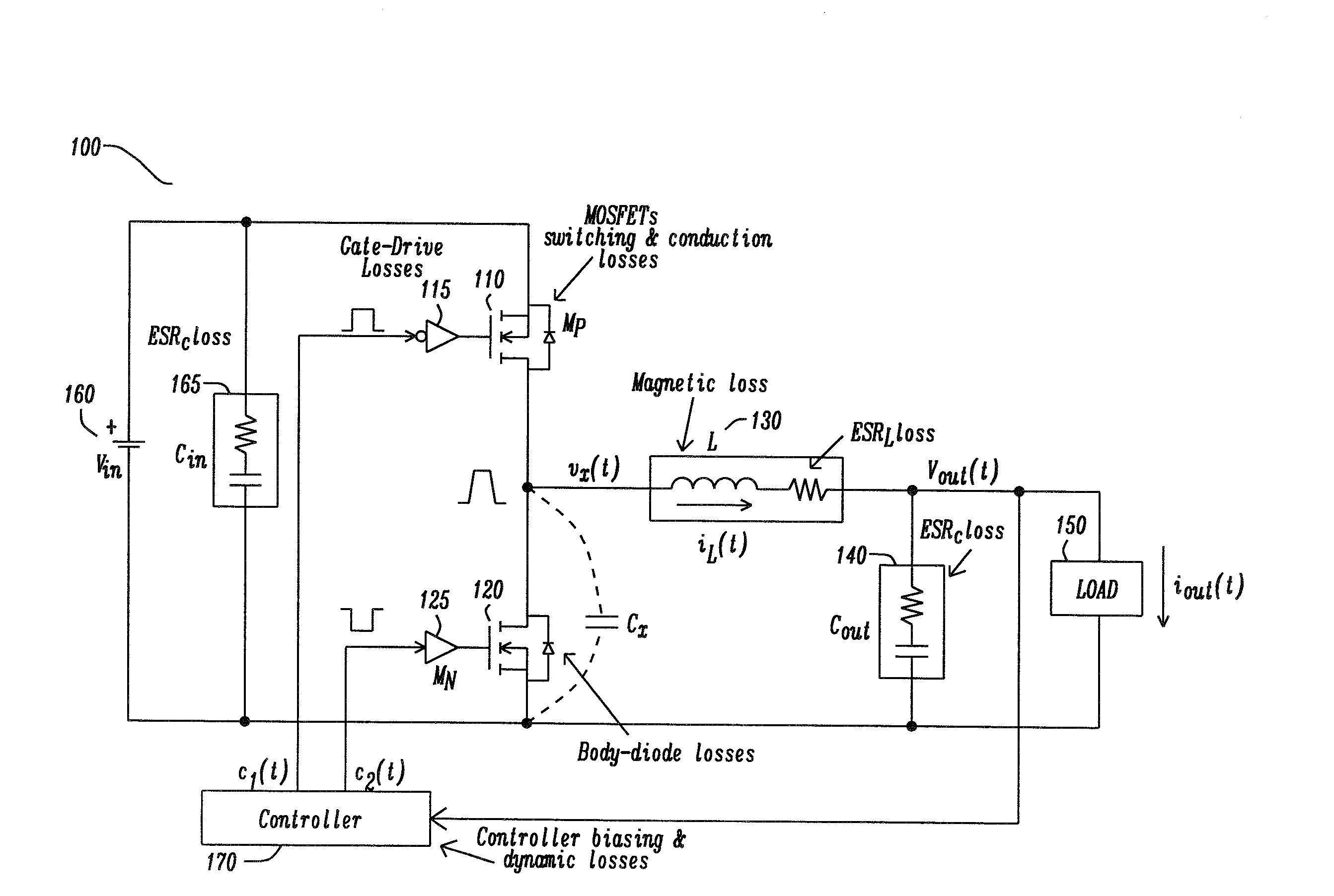
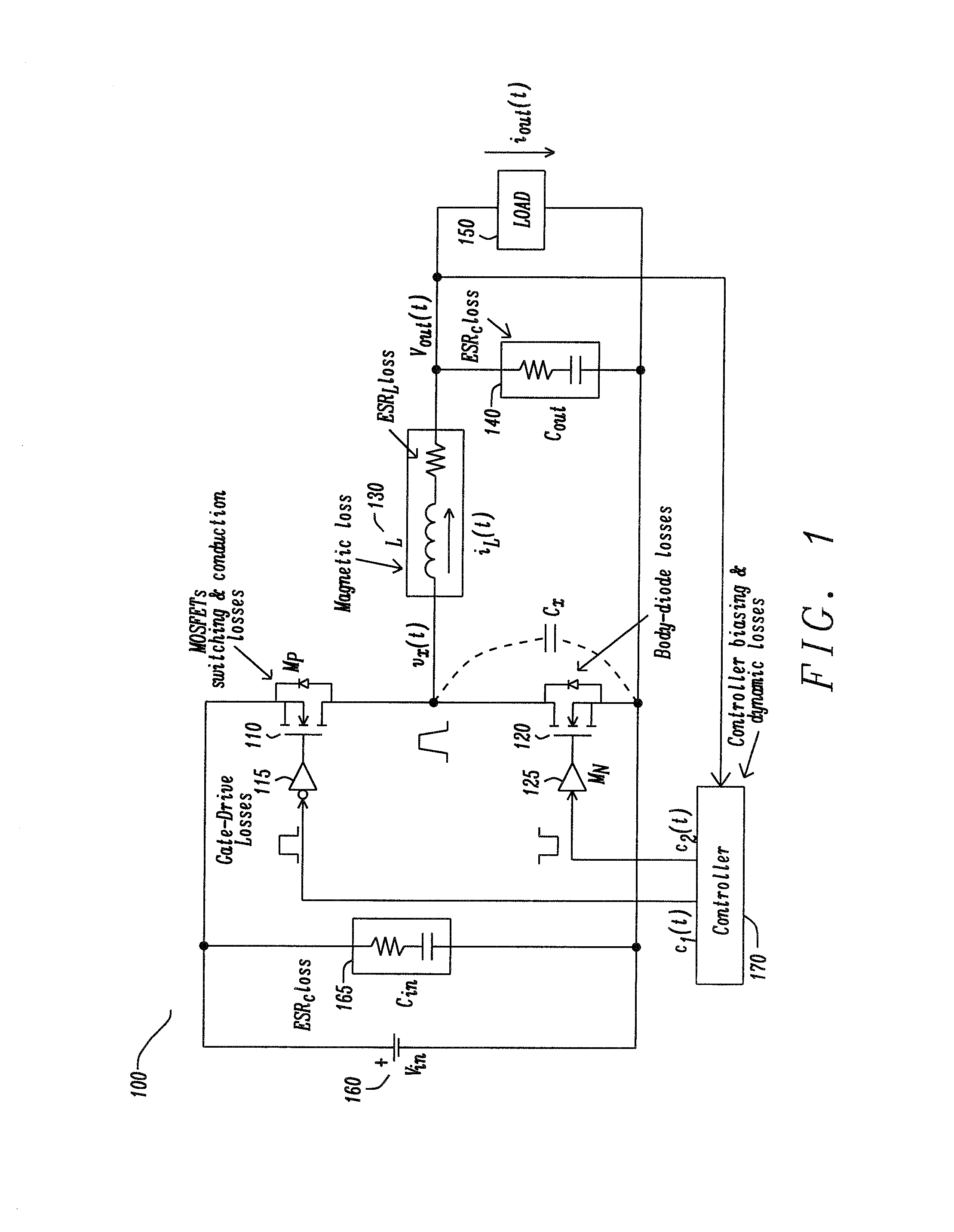
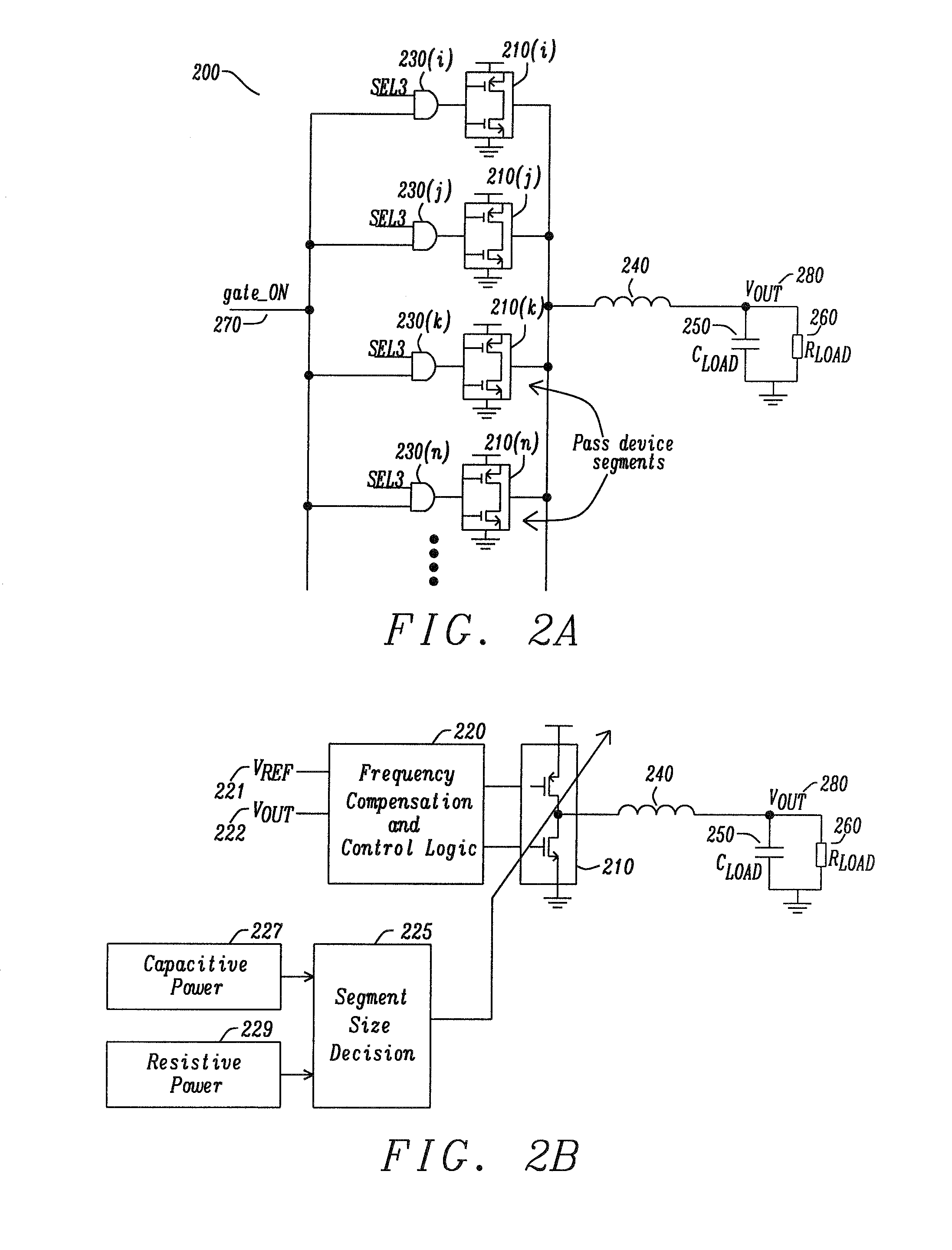
- An adaptive output stage size selection technique that compares capacitive and resistive power losses, taking into account input supply voltage, operating frequency, gate capacitance, and actual switch resistance, to optimize efficiency by dynamically adjusting the number of active segments based on load current, thereby compensating for device variations.

Asymmetric common source inductances to reduce turn-off overvoltage in mosfets
PatentPendingUS20250323639A1
Innovation
- Implement an asymmetric common source inductance (Lcs) scheme by using inductors with different values in the gate-source loop during turn-on and turn-off states, incorporating a switch to alternate between these inductances and a current-limiting element to manage gate loop currents.


Energy Efficiency Standards for Power Electronic Devices
Energy efficiency standards for power electronic devices have become increasingly stringent as global initiatives push toward carbon neutrality and sustainable energy systems. These standards establish minimum performance thresholds that MOSFET-based inverters must meet to qualify for commercial deployment across various applications, from renewable energy systems to electric vehicle powertrains.
The International Electrotechnical Commission (IEC) has developed comprehensive frameworks such as IEC 61800-9-2, which defines efficiency classes for power drive systems. These classifications range from IE2 to IE5, with each tier representing progressively higher efficiency requirements. For MOSFET-based inverters, achieving IE4 or IE5 ratings typically requires efficiency levels exceeding 96% at rated load conditions, with maintained performance across variable operating points.
Regional regulatory bodies have implemented specific mandates that directly impact inverter design requirements. The European Union's Ecodesign Directive 2009/125/EC establishes mandatory efficiency thresholds for power conversion equipment, while the United States Department of Energy has introduced similar regulations under the Energy Policy Act. These standards typically specify minimum efficiency values at 25%, 50%, 75%, and 100% load conditions, recognizing that real-world applications rarely operate at constant full load.
Emerging standards are incorporating dynamic efficiency metrics that better reflect actual operating conditions. The California Energy Commission's Title 20 regulations now require weighted efficiency calculations that account for typical load profiles in solar inverter applications. This approach has influenced global standard development, with organizations like IEEE working on updated frameworks that emphasize real-world performance over laboratory conditions.
Compliance verification procedures have evolved to include comprehensive testing protocols that evaluate thermal performance, electromagnetic compatibility, and long-term reliability alongside efficiency measurements. These holistic approaches ensure that efficiency gains are not achieved at the expense of other critical performance parameters, driving innovation in MOSFET selection, gate driver optimization, and thermal management strategies.
The International Electrotechnical Commission (IEC) has developed comprehensive frameworks such as IEC 61800-9-2, which defines efficiency classes for power drive systems. These classifications range from IE2 to IE5, with each tier representing progressively higher efficiency requirements. For MOSFET-based inverters, achieving IE4 or IE5 ratings typically requires efficiency levels exceeding 96% at rated load conditions, with maintained performance across variable operating points.
Regional regulatory bodies have implemented specific mandates that directly impact inverter design requirements. The European Union's Ecodesign Directive 2009/125/EC establishes mandatory efficiency thresholds for power conversion equipment, while the United States Department of Energy has introduced similar regulations under the Energy Policy Act. These standards typically specify minimum efficiency values at 25%, 50%, 75%, and 100% load conditions, recognizing that real-world applications rarely operate at constant full load.
Emerging standards are incorporating dynamic efficiency metrics that better reflect actual operating conditions. The California Energy Commission's Title 20 regulations now require weighted efficiency calculations that account for typical load profiles in solar inverter applications. This approach has influenced global standard development, with organizations like IEEE working on updated frameworks that emphasize real-world performance over laboratory conditions.
Compliance verification procedures have evolved to include comprehensive testing protocols that evaluate thermal performance, electromagnetic compatibility, and long-term reliability alongside efficiency measurements. These holistic approaches ensure that efficiency gains are not achieved at the expense of other critical performance parameters, driving innovation in MOSFET selection, gate driver optimization, and thermal management strategies.
Thermal Management Strategies for MOSFET Inverter Systems
Effective thermal management represents a critical design consideration for MOSFET-based inverter systems, directly impacting device reliability, efficiency parameters, and operational lifespan. As power densities continue to increase in modern inverter applications, the ability to dissipate heat generated during switching operations becomes paramount to maintaining optimal performance characteristics.
The primary heat generation mechanisms in MOSFET inverters stem from conduction losses during on-state operation and switching losses during transition periods. These thermal effects create localized hot spots that can significantly degrade device performance, increase leakage currents, and potentially lead to thermal runaway conditions if not properly managed.
Passive thermal management approaches form the foundation of most inverter cooling strategies. Heat sink design optimization involves careful consideration of fin geometry, material selection, and surface area maximization to enhance natural convection. Advanced materials such as copper-based heat spreaders and thermal interface materials with high conductivity coefficients enable efficient heat transfer from semiconductor junctions to ambient environments.
Active cooling solutions provide enhanced thermal control for high-power applications. Forced air convection systems utilize strategically positioned fans to increase heat transfer coefficients, while liquid cooling implementations offer superior thermal capacity through direct contact or cold plate configurations. These systems enable operation at higher power densities while maintaining junction temperatures within acceptable limits.
Thermal interface optimization plays a crucial role in overall system performance. Advanced thermal compounds, phase-change materials, and direct bonding techniques minimize thermal resistance between MOSFET packages and heat dissipation structures. Proper application methods and material selection can reduce interface thermal resistance by up to 50% compared to conventional approaches.
System-level thermal design considerations encompass component placement strategies, airflow optimization, and thermal isolation techniques. Strategic positioning of heat-generating components, implementation of thermal barriers, and consideration of ambient temperature variations ensure balanced thermal distribution across the entire inverter assembly, preventing localized overheating and maintaining consistent efficiency parameters throughout operational cycles.
The primary heat generation mechanisms in MOSFET inverters stem from conduction losses during on-state operation and switching losses during transition periods. These thermal effects create localized hot spots that can significantly degrade device performance, increase leakage currents, and potentially lead to thermal runaway conditions if not properly managed.
Passive thermal management approaches form the foundation of most inverter cooling strategies. Heat sink design optimization involves careful consideration of fin geometry, material selection, and surface area maximization to enhance natural convection. Advanced materials such as copper-based heat spreaders and thermal interface materials with high conductivity coefficients enable efficient heat transfer from semiconductor junctions to ambient environments.
Active cooling solutions provide enhanced thermal control for high-power applications. Forced air convection systems utilize strategically positioned fans to increase heat transfer coefficients, while liquid cooling implementations offer superior thermal capacity through direct contact or cold plate configurations. These systems enable operation at higher power densities while maintaining junction temperatures within acceptable limits.
Thermal interface optimization plays a crucial role in overall system performance. Advanced thermal compounds, phase-change materials, and direct bonding techniques minimize thermal resistance between MOSFET packages and heat dissipation structures. Proper application methods and material selection can reduce interface thermal resistance by up to 50% compared to conventional approaches.
System-level thermal design considerations encompass component placement strategies, airflow optimization, and thermal isolation techniques. Strategic positioning of heat-generating components, implementation of thermal barriers, and consideration of ambient temperature variations ensure balanced thermal distribution across the entire inverter assembly, preventing localized overheating and maintaining consistent efficiency parameters throughout operational cycles.
Unlock deeper insights with Patsnap Eureka Quick Research — get a full tech report to explore trends and direct your research. Try now!
Generate Your Research Report Instantly with AI Agent
Supercharge your innovation with Patsnap Eureka AI Agent Platform!