

Evaluate Electromagnetic Emissions from Composite Current Source
MAR 19, 20269 MIN READ
Generate Your Research Report Instantly with AI Agent
PatSnap Eureka helps you evaluate technical feasibility & market potential.
Composite Current Source EMI Background and Objectives
Composite current sources have emerged as critical components in modern electronic systems, particularly in power electronics, renewable energy systems, and electric vehicle applications. These devices combine multiple current generation mechanisms or integrate various control strategies to achieve enhanced performance characteristics such as improved efficiency, reduced ripple, and better dynamic response. However, the complexity inherent in composite designs introduces significant electromagnetic interference (EMI) challenges that require comprehensive evaluation and mitigation strategies.
The evolution of composite current sources stems from the limitations of traditional single-stage current sources in meeting increasingly stringent performance requirements. As electronic systems operate at higher frequencies and power densities, the electromagnetic emissions from these sources have become a primary concern for system designers. The composite nature of these sources, involving multiple switching elements, control circuits, and passive components, creates complex electromagnetic field interactions that can result in unpredictable emission patterns.
Current regulatory frameworks, including CISPR standards and FCC regulations, impose strict limits on electromagnetic emissions across various frequency ranges. Composite current sources must comply with these standards while maintaining optimal performance characteristics. The challenge lies in the fact that traditional EMI prediction models, developed for simpler circuit topologies, often fail to accurately predict the emission behavior of composite systems due to their inherent complexity and multi-domain interactions.
The primary objective of evaluating electromagnetic emissions from composite current sources is to develop comprehensive methodologies that can accurately characterize, predict, and mitigate EMI in these complex systems. This involves establishing measurement protocols that capture the full spectrum of electromagnetic phenomena, from conducted emissions through power lines to radiated emissions in both near-field and far-field regions.
Furthermore, the evaluation aims to identify the dominant emission mechanisms specific to composite architectures, including common-mode and differential-mode currents, parasitic coupling effects, and resonant behaviors arising from component interactions. Understanding these mechanisms is crucial for developing targeted mitigation strategies that do not compromise the fundamental performance advantages of composite designs.
The ultimate goal extends beyond mere compliance with regulatory standards to achieve electromagnetic compatibility that enables reliable operation in complex electromagnetic environments while maintaining the superior performance characteristics that justify the adoption of composite current source architectures.
The evolution of composite current sources stems from the limitations of traditional single-stage current sources in meeting increasingly stringent performance requirements. As electronic systems operate at higher frequencies and power densities, the electromagnetic emissions from these sources have become a primary concern for system designers. The composite nature of these sources, involving multiple switching elements, control circuits, and passive components, creates complex electromagnetic field interactions that can result in unpredictable emission patterns.
Current regulatory frameworks, including CISPR standards and FCC regulations, impose strict limits on electromagnetic emissions across various frequency ranges. Composite current sources must comply with these standards while maintaining optimal performance characteristics. The challenge lies in the fact that traditional EMI prediction models, developed for simpler circuit topologies, often fail to accurately predict the emission behavior of composite systems due to their inherent complexity and multi-domain interactions.
The primary objective of evaluating electromagnetic emissions from composite current sources is to develop comprehensive methodologies that can accurately characterize, predict, and mitigate EMI in these complex systems. This involves establishing measurement protocols that capture the full spectrum of electromagnetic phenomena, from conducted emissions through power lines to radiated emissions in both near-field and far-field regions.
Furthermore, the evaluation aims to identify the dominant emission mechanisms specific to composite architectures, including common-mode and differential-mode currents, parasitic coupling effects, and resonant behaviors arising from component interactions. Understanding these mechanisms is crucial for developing targeted mitigation strategies that do not compromise the fundamental performance advantages of composite designs.
The ultimate goal extends beyond mere compliance with regulatory standards to achieve electromagnetic compatibility that enables reliable operation in complex electromagnetic environments while maintaining the superior performance characteristics that justify the adoption of composite current source architectures.
Market Demand for Low-EMI Composite Current Sources
The market demand for low-EMI composite current sources is experiencing significant growth driven by increasingly stringent electromagnetic compatibility regulations across multiple industries. Regulatory bodies worldwide have implemented more rigorous EMI standards, compelling manufacturers to seek advanced current source solutions that minimize electromagnetic emissions while maintaining operational efficiency.
The automotive sector represents one of the most substantial demand drivers, particularly with the rapid expansion of electric vehicles and advanced driver assistance systems. Modern vehicles incorporate numerous electronic control units, sensors, and communication modules that require precise current sources with minimal electromagnetic interference. The transition toward autonomous driving technologies further amplifies this demand, as these systems rely on sensitive radar, lidar, and communication equipment that cannot tolerate EMI disruption.
Industrial automation and manufacturing sectors demonstrate robust demand patterns for low-EMI current sources. Factory automation systems, robotics, and precision manufacturing equipment require current sources that operate without interfering with nearby sensitive instrumentation or communication networks. The Industry 4.0 transformation has intensified this requirement, as interconnected manufacturing systems demand higher electromagnetic compatibility standards.
The telecommunications and data center markets present substantial growth opportunities, driven by 5G network deployment and edge computing infrastructure expansion. These applications require current sources that maintain signal integrity while operating in electromagnetically dense environments. The increasing density of electronic equipment in data centers necessitates current sources with superior EMI performance to prevent cross-interference between systems.
Medical device applications constitute a critical market segment where EMI performance directly impacts patient safety and device reliability. Diagnostic equipment, patient monitoring systems, and implantable devices require current sources with exceptional electromagnetic compatibility to ensure accurate operation and regulatory compliance.
The aerospace and defense sectors maintain consistent demand for low-EMI current sources, driven by mission-critical applications where electromagnetic interference can compromise system performance or safety. These markets typically accept premium pricing for solutions that meet stringent military and aerospace EMI specifications.
Market growth is further supported by the proliferation of Internet of Things devices and wireless communication systems, which create increasingly complex electromagnetic environments requiring sophisticated current source solutions with minimal emission profiles.
The automotive sector represents one of the most substantial demand drivers, particularly with the rapid expansion of electric vehicles and advanced driver assistance systems. Modern vehicles incorporate numerous electronic control units, sensors, and communication modules that require precise current sources with minimal electromagnetic interference. The transition toward autonomous driving technologies further amplifies this demand, as these systems rely on sensitive radar, lidar, and communication equipment that cannot tolerate EMI disruption.
Industrial automation and manufacturing sectors demonstrate robust demand patterns for low-EMI current sources. Factory automation systems, robotics, and precision manufacturing equipment require current sources that operate without interfering with nearby sensitive instrumentation or communication networks. The Industry 4.0 transformation has intensified this requirement, as interconnected manufacturing systems demand higher electromagnetic compatibility standards.
The telecommunications and data center markets present substantial growth opportunities, driven by 5G network deployment and edge computing infrastructure expansion. These applications require current sources that maintain signal integrity while operating in electromagnetically dense environments. The increasing density of electronic equipment in data centers necessitates current sources with superior EMI performance to prevent cross-interference between systems.
Medical device applications constitute a critical market segment where EMI performance directly impacts patient safety and device reliability. Diagnostic equipment, patient monitoring systems, and implantable devices require current sources with exceptional electromagnetic compatibility to ensure accurate operation and regulatory compliance.
The aerospace and defense sectors maintain consistent demand for low-EMI current sources, driven by mission-critical applications where electromagnetic interference can compromise system performance or safety. These markets typically accept premium pricing for solutions that meet stringent military and aerospace EMI specifications.
Market growth is further supported by the proliferation of Internet of Things devices and wireless communication systems, which create increasingly complex electromagnetic environments requiring sophisticated current source solutions with minimal emission profiles.
Current EMI Challenges in Composite Current Source Design
Composite current sources face significant electromagnetic interference (EMI) challenges that stem from their inherent design complexity and operational characteristics. These systems typically integrate multiple switching elements, control circuits, and passive components within compact configurations, creating numerous potential emission sources that can interfere with surrounding electronic systems and violate regulatory compliance standards.
The primary EMI challenge originates from high-frequency switching operations within composite current sources. Modern designs often employ pulse-width modulation (PWM) and other switching techniques that generate sharp current and voltage transitions. These rapid changes create broadband electromagnetic emissions spanning from kilohertz to gigahertz frequencies, with harmonics extending well beyond the fundamental switching frequency.
Parasitic elements within composite structures significantly amplify EMI concerns. Stray inductances, capacitances, and resistances formed by component layouts, interconnections, and substrate materials create unintended coupling paths and resonant circuits. These parasitic networks can transform intended current paths into efficient radiating antennas, particularly problematic in multi-layer designs where ground planes and power distribution networks interact unpredictably.
Thermal management requirements in composite current sources introduce additional EMI complications. Heat dissipation demands often necessitate metal heat sinks, thermal vias, and cooling structures that can act as unintentional radiating elements. The proximity of high-power switching components to these thermal management features creates complex electromagnetic coupling scenarios that are difficult to predict and control during design phases.
Ground loop formation represents another critical challenge in composite architectures. Multiple current return paths, shared ground connections between different functional blocks, and varying ground potentials across the system create conditions for common-mode emissions. These ground-related issues become particularly severe when composite sources interface with external systems or operate in electrically noisy environments.
Component integration density in modern composite designs exacerbates crosstalk and mutual coupling effects. Close proximity between switching circuits, control logic, and sensing elements creates opportunities for electromagnetic interference between different functional blocks. This internal EMI can degrade system performance while simultaneously contributing to external emissions that violate regulatory limits and compromise system reliability in sensitive applications.
The primary EMI challenge originates from high-frequency switching operations within composite current sources. Modern designs often employ pulse-width modulation (PWM) and other switching techniques that generate sharp current and voltage transitions. These rapid changes create broadband electromagnetic emissions spanning from kilohertz to gigahertz frequencies, with harmonics extending well beyond the fundamental switching frequency.
Parasitic elements within composite structures significantly amplify EMI concerns. Stray inductances, capacitances, and resistances formed by component layouts, interconnections, and substrate materials create unintended coupling paths and resonant circuits. These parasitic networks can transform intended current paths into efficient radiating antennas, particularly problematic in multi-layer designs where ground planes and power distribution networks interact unpredictably.
Thermal management requirements in composite current sources introduce additional EMI complications. Heat dissipation demands often necessitate metal heat sinks, thermal vias, and cooling structures that can act as unintentional radiating elements. The proximity of high-power switching components to these thermal management features creates complex electromagnetic coupling scenarios that are difficult to predict and control during design phases.
Ground loop formation represents another critical challenge in composite architectures. Multiple current return paths, shared ground connections between different functional blocks, and varying ground potentials across the system create conditions for common-mode emissions. These ground-related issues become particularly severe when composite sources interface with external systems or operate in electrically noisy environments.
Component integration density in modern composite designs exacerbates crosstalk and mutual coupling effects. Close proximity between switching circuits, control logic, and sensing elements creates opportunities for electromagnetic interference between different functional blocks. This internal EMI can degrade system performance while simultaneously contributing to external emissions that violate regulatory limits and compromise system reliability in sensitive applications.
Existing EMI Evaluation Methods for Composite Sources
01 Electromagnetic shielding and emission reduction techniques
Various techniques are employed to reduce electromagnetic emissions from composite current sources, including the use of shielding materials, filtering circuits, and grounding methods. These approaches help minimize electromagnetic interference (EMI) by containing or redirecting electromagnetic fields generated by current sources. Proper shielding design can significantly reduce radiated emissions while maintaining system performance.- Electromagnetic shielding and emission reduction techniques: Various techniques are employed to reduce electromagnetic emissions from composite current sources, including the use of shielding materials, filtering circuits, and grounding methods. These approaches help minimize electromagnetic interference (EMI) by containing or redirecting electromagnetic fields generated by current sources. Proper shielding design can significantly reduce radiated emissions while maintaining system performance.
- Current source circuit topology optimization: Optimized circuit topologies for composite current sources can inherently reduce electromagnetic emissions. This includes the design of multi-phase current sources, balanced current distribution networks, and symmetrical circuit layouts that minimize differential-mode and common-mode emissions. Advanced topologies incorporate feedback mechanisms and compensation circuits to maintain stable operation while reducing EMI generation.
- Frequency spectrum management and modulation techniques: Managing the frequency spectrum of composite current sources through various modulation and switching techniques helps control electromagnetic emissions. Spread spectrum techniques, frequency dithering, and optimized pulse-width modulation strategies can distribute energy across wider frequency ranges, reducing peak emissions at specific frequencies. These methods are particularly effective in meeting electromagnetic compatibility standards.
- Composite material integration for EMI suppression: Integration of composite materials with electromagnetic absorption or shielding properties directly into current source assemblies provides effective emission control. These materials may include ferrite composites, conductive polymers, or metamaterials that absorb or reflect electromagnetic energy. The strategic placement of such materials in proximity to emission sources offers localized suppression without significantly impacting system size or weight.
- Measurement and characterization methods for electromagnetic emissions: Specialized measurement techniques and characterization methods are essential for evaluating electromagnetic emissions from composite current sources. These include near-field and far-field measurement setups, time-domain and frequency-domain analysis, and standardized testing procedures. Advanced diagnostic tools enable identification of emission sources and validation of mitigation strategies, ensuring compliance with regulatory requirements.
02 Current source circuit topology optimization
Optimized circuit topologies for composite current sources can inherently reduce electromagnetic emissions. This includes the use of balanced current paths, differential signaling, and symmetrical layouts that minimize loop areas and reduce common-mode currents. Advanced circuit designs incorporate compensation techniques and feedback mechanisms to control current flow patterns and reduce emission levels.Expand Specific Solutions03 Filtering and suppression components integration
Integration of filtering components such as capacitors, inductors, and ferrite beads in composite current source designs helps suppress high-frequency electromagnetic emissions. These passive components are strategically placed to attenuate conducted and radiated emissions at their source. Multi-stage filtering approaches provide broadband suppression across different frequency ranges to meet electromagnetic compatibility requirements.Expand Specific Solutions04 Composite material and substrate selection
The selection of appropriate composite materials and substrates plays a crucial role in controlling electromagnetic emissions from current sources. Materials with specific electromagnetic properties, including controlled permittivity and permeability, can be used to manage field distributions. Layered composite structures and specialized PCB materials help contain electromagnetic energy and reduce emission levels.Expand Specific Solutions05 Measurement and characterization methods
Specialized measurement techniques and characterization methods are used to assess electromagnetic emissions from composite current sources. These include near-field scanning, radiated emission testing, and conducted emission measurements. Advanced diagnostic tools enable identification of emission sources and validation of mitigation strategies, ensuring compliance with electromagnetic compatibility standards.Expand Specific Solutions
Key Players in EMI-Compliant Current Source Industry
The electromagnetic emissions evaluation from composite current sources represents a specialized niche within the broader electromagnetic compatibility (EMC) and power electronics industry, currently in an early-to-mature development stage. The market demonstrates moderate growth driven by increasing demand for EMC compliance across automotive, aerospace, and consumer electronics sectors, with estimated market values reaching several billion dollars globally. Technology maturity varies significantly among key players, with established electronics giants like Hitachi Ltd., TDK Corp., Panasonic Holdings Corp., and QUALCOMM Inc. leading in advanced EMC solutions and component integration. Academic institutions including Beihang University, Xi'an Jiaotong University, and University of Washington contribute fundamental research, while specialized firms like Nokomis Inc. and Reactive NanoTechnologies focus on niche electromagnetic detection and materials applications. The competitive landscape shows a clear division between mature multinational corporations with comprehensive EMC portfolios and emerging specialized companies developing innovative measurement and mitigation technologies for next-generation composite current source applications.
Hitachi Ltd.
Technical Solution: Hitachi has developed comprehensive electromagnetic compatibility (EMC) solutions for composite current source evaluation, incorporating advanced shielding technologies and multi-layered filtering systems. Their approach utilizes proprietary measurement techniques combining near-field and far-field analysis to assess electromagnetic emissions from complex current sources. The company's solutions include specialized EMC chambers with enhanced sensitivity for detecting low-level emissions and automated testing protocols that can handle various composite current configurations. Their technology integrates real-time spectrum analysis with predictive modeling to identify potential emission hotspots before they become compliance issues.
Strengths: Established EMC testing infrastructure and decades of experience in electromagnetic analysis. Weaknesses: Solutions may be costly for smaller applications and require specialized expertise to operate effectively.
TDK Corp.
Technical Solution: TDK specializes in electromagnetic interference (EMI) suppression components and measurement solutions for composite current sources. Their technology portfolio includes ferrite cores, common mode chokes, and advanced filtering components specifically designed to mitigate electromagnetic emissions. The company has developed proprietary measurement methodologies using high-frequency current transformers and specialized probes to evaluate emission characteristics of composite current sources. Their solutions incorporate machine learning algorithms to predict emission patterns and optimize component placement for minimal electromagnetic interference. TDK's approach combines material science expertise with advanced measurement techniques to provide comprehensive emission evaluation capabilities.
Strengths: Deep expertise in magnetic materials and EMI suppression components with strong R&D capabilities. Weaknesses: Focus primarily on component-level solutions rather than system-level evaluation platforms.
Core EMI Assessment Techniques for Composite Structures
Method and device for measuring intensity of electromagnetic field, method and device for measuring current-voltage distribution, and method for judging quality of electronic device, and electronic device therefor
PatentInactiveUS20060033510A1
Innovation
- A method involving a conductor that undergoes both electric and magnetic coupling with the device under test (DUT), where composite currents from these couplings are measured in different directions to calculate the electric and magnetic field components, allowing for precise measurement without shielding, enabling miniaturization and improved resolution.
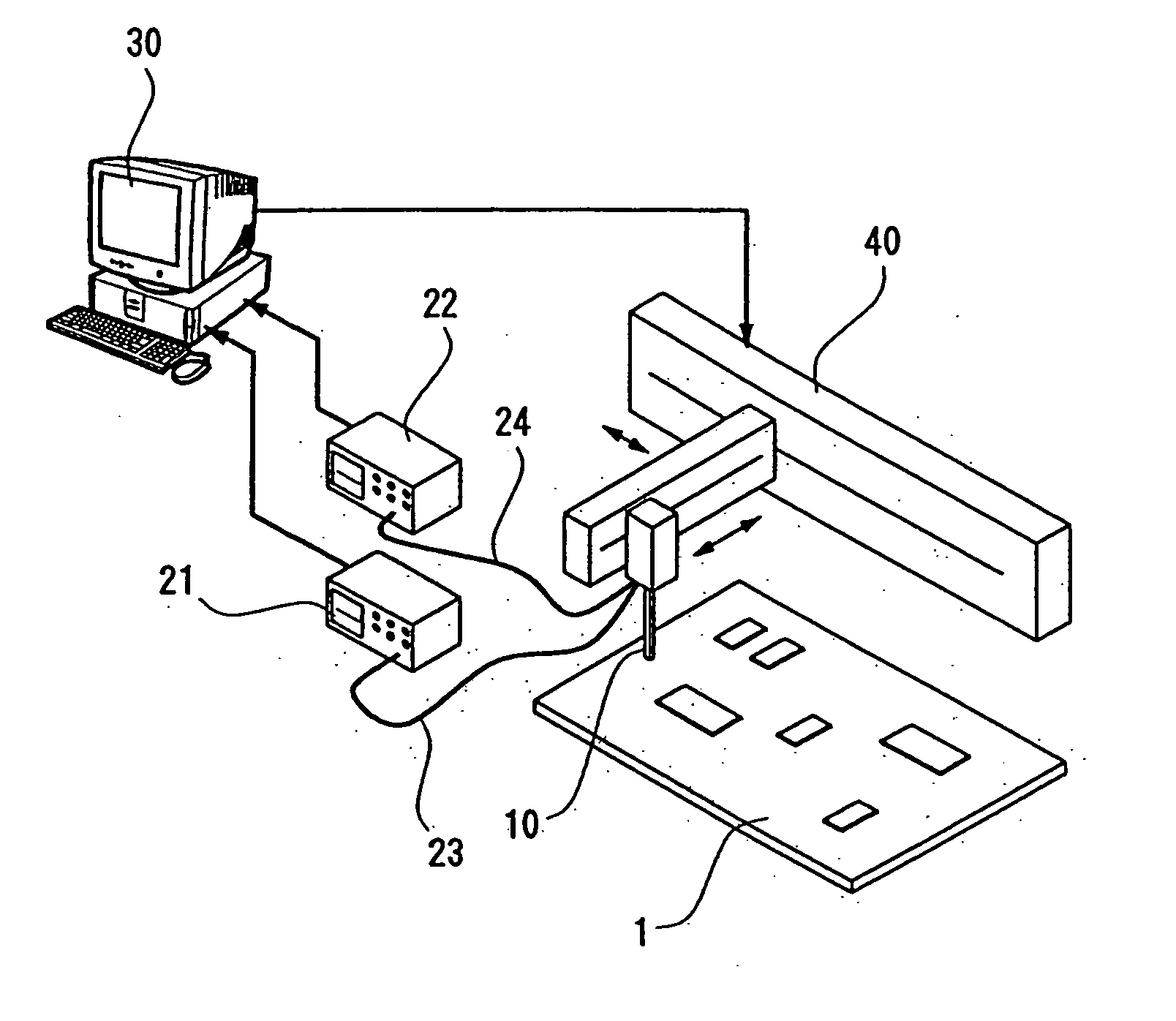


Method of measuring electromagnetic field intensity and device therefor,method of measuring electromagnetic field intensity distribution and device thereof, method of measuring current/voltage distribution and divice thereof
PatentInactiveEP1477819A1
Innovation
- A method involving a conductor within the electromagnetic field to measure output currents in different directions, calculating electric and magnetic field component currents based on magnitude and phase differences, allowing for precise measurement of electromagnetic field intensities and distributions.


EMC Standards and Regulations for Current Sources
The electromagnetic compatibility (EMC) regulatory landscape for current sources encompasses a comprehensive framework of international, regional, and national standards designed to ensure proper electromagnetic emission control and immunity performance. The primary governing standards include IEC 61000 series, CISPR publications, and regional implementations such as EN standards in Europe and FCC regulations in the United States.
IEC 61000-6-3 and IEC 61000-6-4 establish fundamental emission requirements for equipment intended for residential and industrial environments respectively. These standards define specific limits for conducted emissions on power supply ports, typically measured from 150 kHz to 30 MHz, and radiated emissions from 30 MHz to 1 GHz. For composite current sources, particular attention must be paid to CISPR 11, which addresses industrial, scientific, and medical equipment emissions, as many current source applications fall within this category.
The European EMC Directive 2014/30/EU mandates compliance with harmonized standards before market placement, requiring comprehensive testing and documentation. Similarly, FCC Part 15 in the United States establishes emission limits for unintentional radiators, with Class A and Class B distinctions based on intended operating environment. These regulations directly impact composite current source design, particularly regarding switching frequency selection, filtering requirements, and shielding considerations.
Specific technical requirements vary significantly based on application context. Laboratory-grade current sources must comply with more stringent Class B limits due to potential residential proximity, while industrial current sources may operate under relaxed Class A requirements. The composite nature of modern current sources, incorporating digital control systems and high-frequency switching elements, introduces additional compliance challenges related to broadband emissions and harmonic content.
Recent regulatory developments emphasize extended frequency ranges, with some standards now addressing emissions up to 6 GHz to accommodate modern digital communication systems. This expansion particularly affects composite current sources utilizing advanced control algorithms and high-speed digital interfaces, necessitating enhanced design considerations for emission suppression across broader frequency spectrums.
Compliance verification requires accredited testing facilities and standardized measurement procedures, with specific antenna configurations, measurement distances, and environmental conditions precisely defined. The regulatory framework also addresses immunity requirements, ensuring current sources maintain proper operation under specified electromagnetic disturbance conditions, which is crucial for maintaining output accuracy and stability in composite architectures.
IEC 61000-6-3 and IEC 61000-6-4 establish fundamental emission requirements for equipment intended for residential and industrial environments respectively. These standards define specific limits for conducted emissions on power supply ports, typically measured from 150 kHz to 30 MHz, and radiated emissions from 30 MHz to 1 GHz. For composite current sources, particular attention must be paid to CISPR 11, which addresses industrial, scientific, and medical equipment emissions, as many current source applications fall within this category.
The European EMC Directive 2014/30/EU mandates compliance with harmonized standards before market placement, requiring comprehensive testing and documentation. Similarly, FCC Part 15 in the United States establishes emission limits for unintentional radiators, with Class A and Class B distinctions based on intended operating environment. These regulations directly impact composite current source design, particularly regarding switching frequency selection, filtering requirements, and shielding considerations.
Specific technical requirements vary significantly based on application context. Laboratory-grade current sources must comply with more stringent Class B limits due to potential residential proximity, while industrial current sources may operate under relaxed Class A requirements. The composite nature of modern current sources, incorporating digital control systems and high-frequency switching elements, introduces additional compliance challenges related to broadband emissions and harmonic content.
Recent regulatory developments emphasize extended frequency ranges, with some standards now addressing emissions up to 6 GHz to accommodate modern digital communication systems. This expansion particularly affects composite current sources utilizing advanced control algorithms and high-speed digital interfaces, necessitating enhanced design considerations for emission suppression across broader frequency spectrums.
Compliance verification requires accredited testing facilities and standardized measurement procedures, with specific antenna configurations, measurement distances, and environmental conditions precisely defined. The regulatory framework also addresses immunity requirements, ensuring current sources maintain proper operation under specified electromagnetic disturbance conditions, which is crucial for maintaining output accuracy and stability in composite architectures.
Environmental Impact of EMI in Composite Electronics
The proliferation of composite electronics in modern technological applications has introduced significant environmental concerns related to electromagnetic interference (EMI). As composite current sources become increasingly prevalent in power systems, renewable energy installations, and electronic devices, their electromagnetic emissions pose multifaceted environmental challenges that extend beyond traditional regulatory compliance considerations.
Composite electronics generate electromagnetic emissions that can interfere with natural biological processes and ecosystem functions. Research indicates that EMI from composite current sources can disrupt migratory patterns of birds and marine animals that rely on Earth's magnetic field for navigation. The continuous emission of electromagnetic radiation from large-scale composite electronic installations, particularly in wind farms and solar power systems, creates electromagnetic pollution that affects wildlife behavior and habitat utilization patterns.
The environmental impact extends to agricultural systems where composite electronics are deployed in precision farming applications. EMI from composite current sources can interfere with pollinator navigation systems, particularly affecting bee colonies that depend on electromagnetic sensitivity for foraging and hive location. This interference potentially contributes to colony collapse disorders and reduced agricultural productivity in areas with high concentrations of composite electronic systems.
Urban environments face compounded EMI challenges as composite electronics proliferate in smart city infrastructure. The cumulative electromagnetic emissions from multiple composite current sources create urban electromagnetic smog that affects both human health and urban wildlife. Studies suggest correlations between high EMI exposure areas and disrupted sleep patterns in urban bird populations, altered plant growth rates, and interference with natural electromagnetic communication systems among various species.
Climate change mitigation efforts paradoxically contribute to EMI environmental concerns as renewable energy systems increasingly utilize composite electronics. Large-scale deployment of composite current sources in solar and wind installations creates electromagnetic hotspots that can affect local ecosystems. The environmental trade-offs between clean energy generation and electromagnetic pollution require careful consideration in environmental impact assessments.
Regulatory frameworks are evolving to address these environmental EMI concerns, with emerging standards focusing on cumulative electromagnetic exposure limits rather than individual device compliance. Environmental protection agencies are developing guidelines for EMI impact assessments that consider ecosystem-level effects and long-term environmental sustainability in composite electronics deployment strategies.
Composite electronics generate electromagnetic emissions that can interfere with natural biological processes and ecosystem functions. Research indicates that EMI from composite current sources can disrupt migratory patterns of birds and marine animals that rely on Earth's magnetic field for navigation. The continuous emission of electromagnetic radiation from large-scale composite electronic installations, particularly in wind farms and solar power systems, creates electromagnetic pollution that affects wildlife behavior and habitat utilization patterns.
The environmental impact extends to agricultural systems where composite electronics are deployed in precision farming applications. EMI from composite current sources can interfere with pollinator navigation systems, particularly affecting bee colonies that depend on electromagnetic sensitivity for foraging and hive location. This interference potentially contributes to colony collapse disorders and reduced agricultural productivity in areas with high concentrations of composite electronic systems.
Urban environments face compounded EMI challenges as composite electronics proliferate in smart city infrastructure. The cumulative electromagnetic emissions from multiple composite current sources create urban electromagnetic smog that affects both human health and urban wildlife. Studies suggest correlations between high EMI exposure areas and disrupted sleep patterns in urban bird populations, altered plant growth rates, and interference with natural electromagnetic communication systems among various species.
Climate change mitigation efforts paradoxically contribute to EMI environmental concerns as renewable energy systems increasingly utilize composite electronics. Large-scale deployment of composite current sources in solar and wind installations creates electromagnetic hotspots that can affect local ecosystems. The environmental trade-offs between clean energy generation and electromagnetic pollution require careful consideration in environmental impact assessments.
Regulatory frameworks are evolving to address these environmental EMI concerns, with emerging standards focusing on cumulative electromagnetic exposure limits rather than individual device compliance. Environmental protection agencies are developing guidelines for EMI impact assessments that consider ecosystem-level effects and long-term environmental sustainability in composite electronics deployment strategies.
Unlock deeper insights with PatSnap Eureka Quick Research — get a full tech report to explore trends and direct your research. Try now!
Generate Your Research Report Instantly with AI Agent
Supercharge your innovation with PatSnap Eureka AI Agent Platform!