

Evaluate Lithium Battery Performance in High Altitude Environments
FEB 12, 20269 MIN READ
Generate Your Research Report Instantly with AI Agent
PatSnap Eureka helps you evaluate technical feasibility & market potential.
Lithium Battery High Altitude Tech Background and Goals
Lithium-ion batteries have become the dominant energy storage solution across diverse applications, from consumer electronics to electric vehicles and renewable energy systems. However, their deployment in high-altitude environments presents unique technical challenges that have gained increasing attention as applications expand into aerospace, high-altitude drones, mountain telecommunications infrastructure, and plateau-based renewable energy installations. The reduced atmospheric pressure, lower temperatures, and increased radiation exposure at elevations above 3,000 meters create operating conditions that significantly deviate from standard testing parameters.
The fundamental challenge stems from the complex interplay between altitude-related environmental factors and electrochemical processes within lithium batteries. Low atmospheric pressure affects electrolyte vapor pressure equilibrium and gas evolution dynamics, potentially leading to cell swelling and electrolyte leakage. Simultaneously, the temperature variations common at high altitudes impact ionic conductivity, charge transfer kinetics, and solid electrolyte interphase stability. These factors collectively influence battery capacity retention, power output capability, cycle life, and safety characteristics.
Historical development of lithium battery technology has primarily focused on sea-level performance optimization, with high-altitude considerations emerging as a specialized research domain only in recent years. Early studies identified capacity degradation and increased internal resistance as primary concerns, but comprehensive understanding of failure mechanisms and degradation pathways remains incomplete. The aviation industry's transition toward electric propulsion and the expansion of telecommunications networks into mountainous regions have accelerated research interest in this area.
The primary technical goal is to establish comprehensive evaluation methodologies that accurately characterize lithium battery performance across the full spectrum of high-altitude conditions. This encompasses developing standardized testing protocols that simulate realistic altitude profiles, identifying critical performance metrics beyond conventional capacity and power measurements, and understanding degradation mechanisms specific to low-pressure environments. Secondary objectives include establishing design guidelines for altitude-optimized battery systems, developing predictive models for performance estimation, and creating safety assessment frameworks that account for altitude-specific failure modes.
Achieving these goals requires interdisciplinary approaches combining electrochemistry, materials science, thermal management, and environmental engineering. The ultimate objective is enabling reliable battery operation in high-altitude applications while maintaining acceptable performance, safety margins, and operational lifespans comparable to sea-level deployments.
The fundamental challenge stems from the complex interplay between altitude-related environmental factors and electrochemical processes within lithium batteries. Low atmospheric pressure affects electrolyte vapor pressure equilibrium and gas evolution dynamics, potentially leading to cell swelling and electrolyte leakage. Simultaneously, the temperature variations common at high altitudes impact ionic conductivity, charge transfer kinetics, and solid electrolyte interphase stability. These factors collectively influence battery capacity retention, power output capability, cycle life, and safety characteristics.
Historical development of lithium battery technology has primarily focused on sea-level performance optimization, with high-altitude considerations emerging as a specialized research domain only in recent years. Early studies identified capacity degradation and increased internal resistance as primary concerns, but comprehensive understanding of failure mechanisms and degradation pathways remains incomplete. The aviation industry's transition toward electric propulsion and the expansion of telecommunications networks into mountainous regions have accelerated research interest in this area.
The primary technical goal is to establish comprehensive evaluation methodologies that accurately characterize lithium battery performance across the full spectrum of high-altitude conditions. This encompasses developing standardized testing protocols that simulate realistic altitude profiles, identifying critical performance metrics beyond conventional capacity and power measurements, and understanding degradation mechanisms specific to low-pressure environments. Secondary objectives include establishing design guidelines for altitude-optimized battery systems, developing predictive models for performance estimation, and creating safety assessment frameworks that account for altitude-specific failure modes.
Achieving these goals requires interdisciplinary approaches combining electrochemistry, materials science, thermal management, and environmental engineering. The ultimate objective is enabling reliable battery operation in high-altitude applications while maintaining acceptable performance, safety margins, and operational lifespans comparable to sea-level deployments.
Market Demand for High Altitude Battery Applications
The demand for lithium batteries capable of operating reliably in high altitude environments has experienced substantial growth across multiple sectors in recent years. Aviation applications represent a primary driver, particularly with the expansion of electric vertical takeoff and landing aircraft, high-altitude pseudo-satellites, and unmanned aerial vehicles designed for stratospheric operations. These platforms require energy storage solutions that maintain consistent performance despite reduced atmospheric pressure, extreme temperature fluctuations, and lower oxygen concentrations characteristic of high altitude conditions.
The telecommunications industry has emerged as another significant market segment, driven by the deployment of high-altitude communication platforms and remote infrastructure in mountainous regions. Network equipment installations at elevations exceeding three thousand meters require battery systems that can withstand harsh environmental conditions while delivering reliable backup power. The proliferation of 5G infrastructure in geographically challenging terrains has further intensified this demand, as operators seek energy storage solutions that minimize maintenance requirements and maximize operational lifespan.
Military and defense applications constitute a critical market vertical, with increasing requirements for portable power systems, surveillance equipment, and communication devices operating in high-altitude theaters. The strategic importance of maintaining operational capabilities in mountainous border regions and elevated combat zones has driven investment in battery technologies specifically engineered for altitude resilience. This sector prioritizes not only performance stability but also safety characteristics under extreme conditions.
The scientific research community represents an additional demand source, particularly for meteorological stations, environmental monitoring equipment, and astronomical observation facilities situated at high elevations. These installations require long-duration energy storage systems capable of operating autonomously in remote locations where temperature extremes and atmospheric pressure variations pose significant technical challenges. The expansion of climate research initiatives and space observation programs continues to fuel requirements for specialized battery solutions.
Consumer electronics and outdoor recreation markets are also contributing to demand growth, particularly for high-performance devices used in mountaineering, skiing, and adventure tourism. As recreational activities in high-altitude environments become more technology-dependent, the need for reliable portable power sources has intensified, creating opportunities for battery innovations tailored to altitude-specific performance requirements.
The telecommunications industry has emerged as another significant market segment, driven by the deployment of high-altitude communication platforms and remote infrastructure in mountainous regions. Network equipment installations at elevations exceeding three thousand meters require battery systems that can withstand harsh environmental conditions while delivering reliable backup power. The proliferation of 5G infrastructure in geographically challenging terrains has further intensified this demand, as operators seek energy storage solutions that minimize maintenance requirements and maximize operational lifespan.
Military and defense applications constitute a critical market vertical, with increasing requirements for portable power systems, surveillance equipment, and communication devices operating in high-altitude theaters. The strategic importance of maintaining operational capabilities in mountainous border regions and elevated combat zones has driven investment in battery technologies specifically engineered for altitude resilience. This sector prioritizes not only performance stability but also safety characteristics under extreme conditions.
The scientific research community represents an additional demand source, particularly for meteorological stations, environmental monitoring equipment, and astronomical observation facilities situated at high elevations. These installations require long-duration energy storage systems capable of operating autonomously in remote locations where temperature extremes and atmospheric pressure variations pose significant technical challenges. The expansion of climate research initiatives and space observation programs continues to fuel requirements for specialized battery solutions.
Consumer electronics and outdoor recreation markets are also contributing to demand growth, particularly for high-performance devices used in mountaineering, skiing, and adventure tourism. As recreational activities in high-altitude environments become more technology-dependent, the need for reliable portable power sources has intensified, creating opportunities for battery innovations tailored to altitude-specific performance requirements.
Current Challenges in High Altitude Battery Performance
Lithium battery performance in high altitude environments faces multiple interconnected challenges that significantly impact operational reliability and efficiency. The primary constraint stems from reduced atmospheric pressure, which fundamentally alters the electrochemical behavior within battery cells. At elevations above 3000 meters, atmospheric pressure drops to approximately 70% of sea level values, creating pressure differentials that affect electrolyte stability and gas management systems within sealed battery compartments.
Temperature extremes present another critical challenge in high altitude deployments. Alpine and plateau regions experience dramatic diurnal temperature variations, often ranging from -40°C to +60°C within 24-hour cycles. These thermal fluctuations accelerate electrolyte degradation, increase internal resistance, and compromise the structural integrity of separator materials. Cold temperatures particularly impair lithium-ion mobility, reducing discharge capacity by 20-40% compared to standard operating conditions.
Reduced oxygen concentration at high altitudes complicates thermal management strategies. The thinner atmosphere provides diminished convective cooling efficiency, making heat dissipation approximately 30% less effective than at sea level. This limitation becomes especially problematic during high-rate charging and discharging operations, where inadequate cooling can trigger thermal runaway risks or accelerate capacity fade through accelerated aging mechanisms.
Moisture and humidity variations pose additional complications. High altitude environments typically exhibit lower absolute humidity but higher relative humidity fluctuations, creating condensation risks during temperature transitions. This moisture ingress threatens battery management system electronics and can catalyze corrosion processes at terminal connections and current collectors.
The combined effect of these environmental stressors creates synergistic degradation patterns not observed in controlled laboratory conditions. Current battery technologies designed for sea-level applications demonstrate 15-25% capacity reduction and 30-50% cycle life decrease when deployed above 4000 meters. These performance gaps represent fundamental barriers requiring innovative solutions in materials science, thermal engineering, and battery management algorithms to enable reliable energy storage in extreme altitude applications.
Temperature extremes present another critical challenge in high altitude deployments. Alpine and plateau regions experience dramatic diurnal temperature variations, often ranging from -40°C to +60°C within 24-hour cycles. These thermal fluctuations accelerate electrolyte degradation, increase internal resistance, and compromise the structural integrity of separator materials. Cold temperatures particularly impair lithium-ion mobility, reducing discharge capacity by 20-40% compared to standard operating conditions.
Reduced oxygen concentration at high altitudes complicates thermal management strategies. The thinner atmosphere provides diminished convective cooling efficiency, making heat dissipation approximately 30% less effective than at sea level. This limitation becomes especially problematic during high-rate charging and discharging operations, where inadequate cooling can trigger thermal runaway risks or accelerate capacity fade through accelerated aging mechanisms.
Moisture and humidity variations pose additional complications. High altitude environments typically exhibit lower absolute humidity but higher relative humidity fluctuations, creating condensation risks during temperature transitions. This moisture ingress threatens battery management system electronics and can catalyze corrosion processes at terminal connections and current collectors.
The combined effect of these environmental stressors creates synergistic degradation patterns not observed in controlled laboratory conditions. Current battery technologies designed for sea-level applications demonstrate 15-25% capacity reduction and 30-50% cycle life decrease when deployed above 4000 meters. These performance gaps represent fundamental barriers requiring innovative solutions in materials science, thermal engineering, and battery management algorithms to enable reliable energy storage in extreme altitude applications.
Existing High Altitude Battery Performance Solutions
01 Electrode material composition and structure optimization
Improving lithium battery performance through the development and optimization of electrode materials, including cathode and anode compositions. This involves using novel materials, coatings, or structural modifications to enhance energy density, charge-discharge rates, and cycle life. Advanced materials such as silicon-based anodes, high-nickel cathodes, or composite materials can significantly improve battery capacity and stability.- Electrode material composition and structure optimization: Improving lithium battery performance through the development and optimization of electrode materials, including cathode and anode compositions. This involves using novel materials, coatings, or structural modifications to enhance energy density, charge-discharge rates, and cycle life. Advanced materials such as silicon-based anodes, high-nickel cathodes, or composite materials can significantly improve battery capacity and stability.
- Electrolyte formulation and additives: Enhancing battery performance through optimized electrolyte compositions and functional additives. This includes developing electrolyte systems with improved ionic conductivity, thermal stability, and electrochemical stability window. Additives can help form stable solid electrolyte interphase layers, prevent dendrite formation, and extend battery lifespan while maintaining high performance across various operating conditions.
- Battery management and monitoring systems: Implementing advanced battery management systems to optimize performance, safety, and longevity. These systems monitor key parameters such as voltage, current, temperature, and state of charge to ensure optimal operation. Smart algorithms can predict battery health, prevent overcharging or deep discharge, and balance cell performance in multi-cell configurations to maximize overall battery pack efficiency.
- Thermal management and safety features: Developing thermal management solutions and safety mechanisms to maintain optimal operating temperatures and prevent thermal runaway. This includes cooling systems, heat dissipation structures, and safety devices that protect against overheating, short circuits, and mechanical damage. Proper thermal management ensures consistent performance and extends battery life while maintaining safety standards.
- Manufacturing processes and quality control: Optimizing manufacturing techniques and implementing stringent quality control measures to ensure consistent battery performance. This encompasses electrode coating methods, cell assembly processes, formation protocols, and testing procedures. Advanced manufacturing approaches can reduce defects, improve uniformity, and enhance overall battery reliability and performance characteristics.
02 Electrolyte formulation and additives
Enhancement of battery performance through optimized electrolyte compositions and functional additives. This includes the development of electrolyte systems with improved ionic conductivity, thermal stability, and electrochemical stability window. Additives can help form stable solid electrolyte interphase layers, prevent dendrite formation, and extend battery lifespan while maintaining high performance across various operating conditions.Expand Specific Solutions03 Battery management and control systems
Implementation of advanced battery management systems to optimize performance, safety, and longevity. These systems monitor and control various parameters such as voltage, current, temperature, and state of charge. Intelligent algorithms can balance cell performance, predict battery health, prevent overcharging or over-discharging, and optimize charging protocols to maximize battery efficiency and lifespan.Expand Specific Solutions04 Separator technology and safety features
Development of advanced separator materials and safety mechanisms to improve battery performance and prevent thermal runaway. This includes separators with enhanced mechanical strength, thermal stability, and shutdown functionality. Improved separator technology can prevent internal short circuits, enhance ion transport, and provide better safety characteristics while maintaining high power output and energy efficiency.Expand Specific Solutions05 Manufacturing processes and cell design
Optimization of battery manufacturing techniques and cell architecture to enhance overall performance. This encompasses innovations in electrode coating methods, cell assembly processes, and structural designs that improve energy density, reduce internal resistance, and enhance heat dissipation. Advanced manufacturing approaches can lead to more uniform electrode layers, better contact between components, and improved scalability for mass production.Expand Specific Solutions
Key Players in High Altitude Battery Solutions
The lithium battery performance evaluation in high-altitude environments represents an emerging technical frontier within a maturing industry experiencing rapid expansion driven by electric vehicle adoption and renewable energy storage demands. The market demonstrates significant scale with established players like LG Energy Solution, Samsung Electronics, Panasonic Energy, and Ningde Amperex Technology leading commercial production, while research institutions including California Institute of Technology and Centre National de la Recherche Scientifique advance fundamental understanding. Technology maturity varies considerably across applications: automotive batteries from companies like GS Yuasa and Vehicle Energy Japan show advanced development, whereas high-altitude specific applications involving aerospace entities such as Rolls-Royce, HAPSMobile, and Joby Aero remain in earlier developmental stages. The competitive landscape reflects convergence between traditional battery manufacturers, automotive suppliers like Robert Bosch and Magna Steyr, and specialized aerospace innovators addressing unique challenges of reduced atmospheric pressure, extreme temperatures, and operational reliability at altitude.
LG Energy Solution Ltd.
Technical Solution: LG Energy Solution has developed advanced battery management systems (BMS) specifically designed for high-altitude applications, incorporating thermal management technologies that maintain optimal operating temperatures in low-pressure environments. Their lithium-ion battery cells feature enhanced electrolyte formulations that reduce vapor pressure and prevent electrolyte evaporation at reduced atmospheric pressures. The company implements sophisticated altitude compensation algorithms in their BMS to adjust charging parameters based on ambient pressure and temperature variations. Their battery packs include pressure equalization systems and reinforced sealing mechanisms to prevent cell swelling and maintain structural integrity during altitude changes. LG Energy Solution conducts extensive testing in hypobaric chambers simulating altitudes up to 5,000 meters to validate performance characteristics including capacity retention, power output, and cycle life under low-pressure conditions.
Strengths: Industry-leading thermal management systems, extensive high-altitude testing protocols, robust BMS with altitude compensation. Weaknesses: Higher cost compared to standard battery solutions, complex system integration requirements for specialized applications.
Robert Bosch GmbH
Technical Solution: Robert Bosch has developed comprehensive battery testing and evaluation methodologies for high-altitude environments, providing both testing equipment and battery management solutions. Their approach includes hypobaric chamber testing protocols that simulate altitude conditions up to 6,000 meters, evaluating parameters such as internal resistance changes, capacity degradation, and thermal behavior under reduced atmospheric pressure. Bosch's battery management systems incorporate environmental sensors and adaptive algorithms that modify charging strategies, power output limits, and thermal management based on real-time altitude detection. The company offers diagnostic tools that assess battery health specifically considering high-altitude operational stress factors. Their research has identified critical performance indicators including electrolyte stability, gas generation rates, and cell swelling tendencies at various altitude levels. Bosch provides integrated solutions combining battery cells, management electronics, and thermal systems optimized for applications ranging from automotive to industrial energy storage in high-altitude locations.
Strengths: Comprehensive testing infrastructure and methodologies, system-level integration expertise across multiple industries, strong diagnostic and monitoring capabilities. Weaknesses: Less focus on cell-level chemistry optimization compared to pure battery manufacturers, solutions may require significant customization for specific applications.
Core Tech in Altitude-Resistant Battery Design
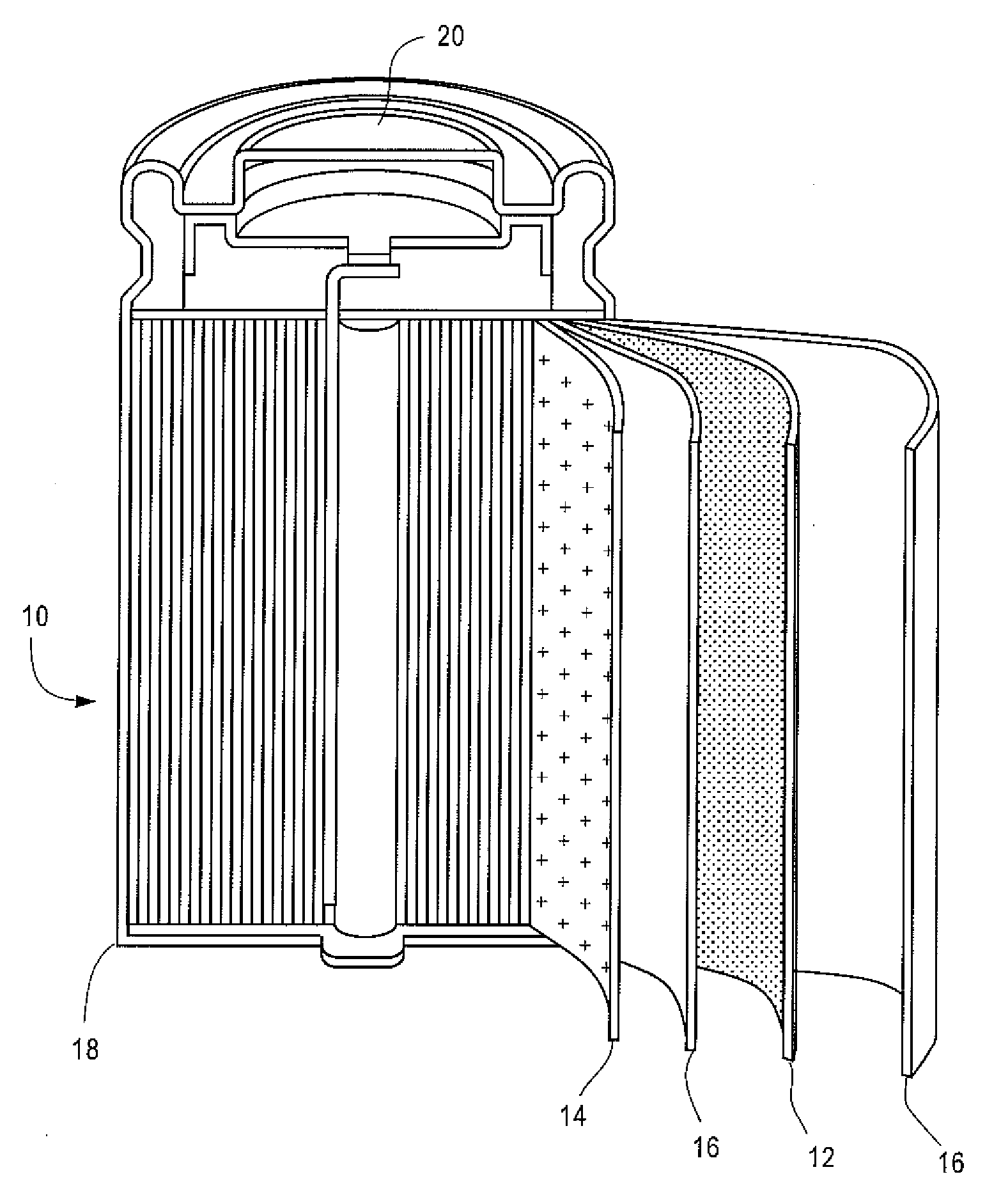
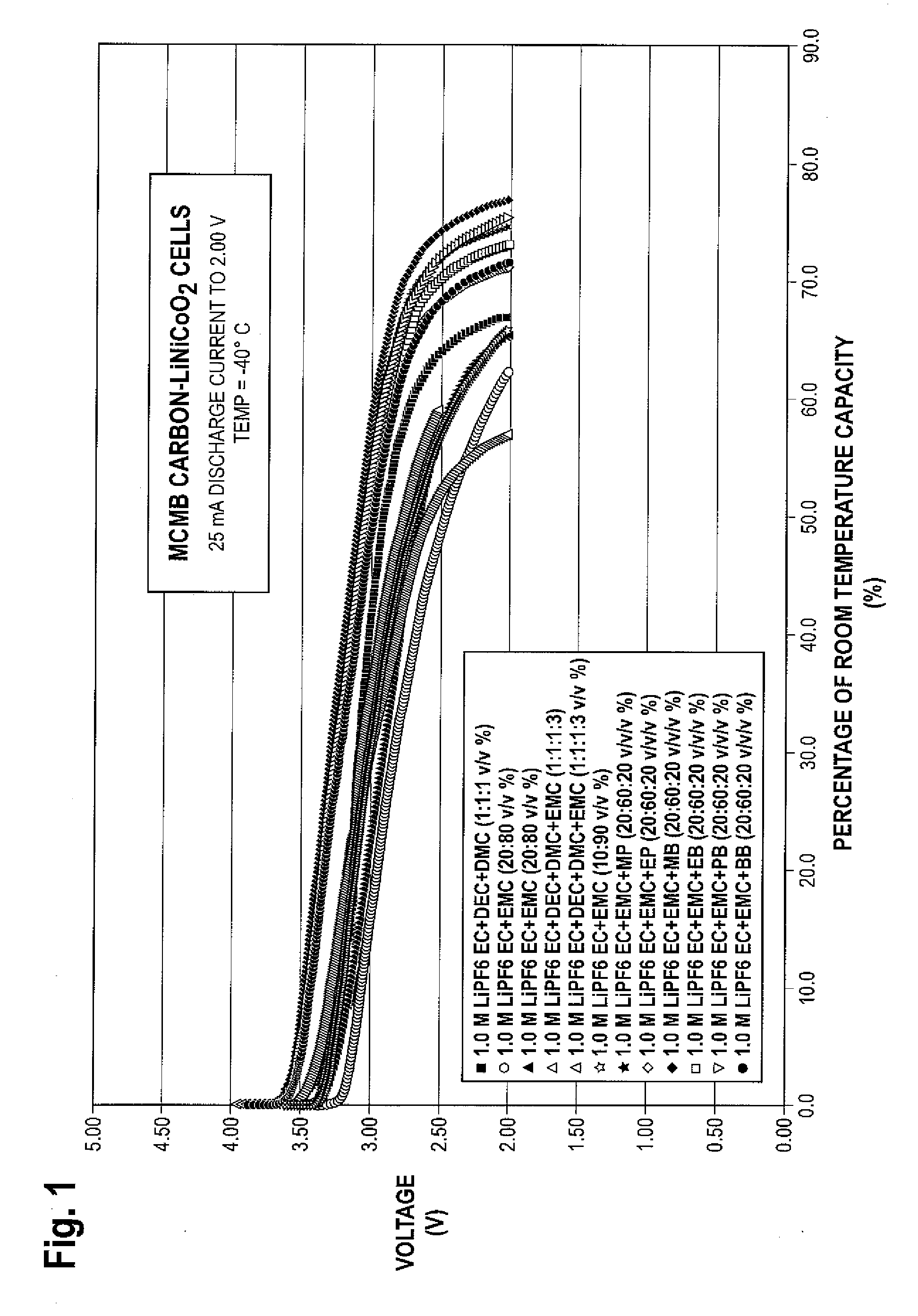
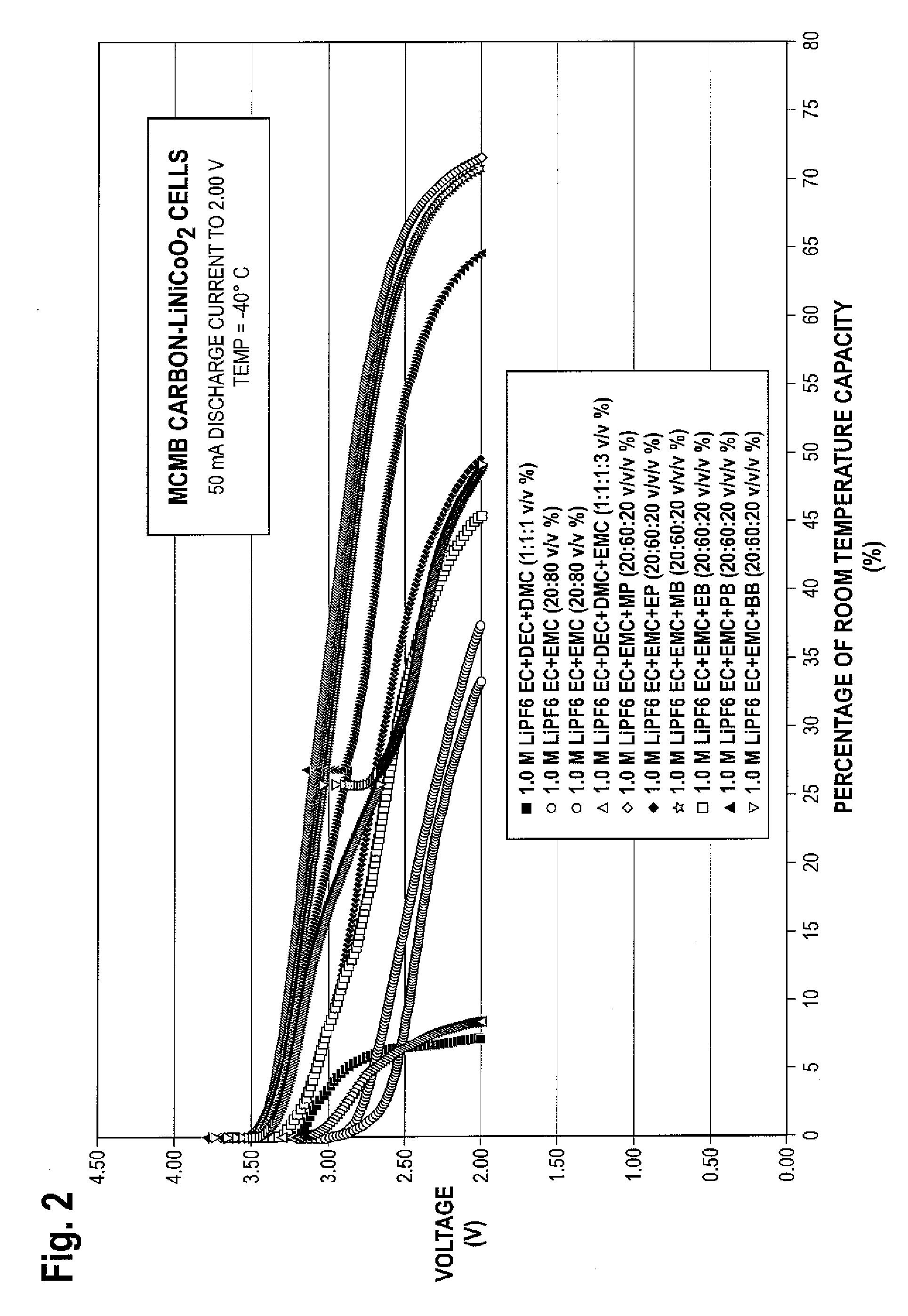
Lithium ion electrolytes and lithium ion cells with good low temperature performance
PatentActiveUS20090253046A1
Innovation
- Development of lithium ion electrolytes comprising a mixture of ethylene carbonate, ethyl methyl carbonate, and high molecular weight ester cosolvents like methyl propionate, ethyl propionate, and ethyl butyrate, which improve ionic conductivity and stability across a wide temperature range from -60°C to 60°C.

Battery thermal regulating unit
PatentActiveUS11936018B2
Innovation
- A thermal regulating unit with internal cooling channels and a flexible outer covering that presses against the battery for temperature regulation, mechanical support, and pressure management, integrated into a battery module with a non-combustible jacket and flame-retardant foam for containment, along with a coolant circuit for temperature control and pressure management.


Safety Standards for High Altitude Battery Systems
Safety standards for high altitude battery systems represent a critical framework addressing the unique operational challenges encountered when lithium batteries function in reduced atmospheric pressure and extreme temperature conditions. These standards encompass comprehensive requirements for thermal management, pressure equalization, gas venting mechanisms, and structural integrity to prevent catastrophic failures such as thermal runaway, electrolyte leakage, or cell rupture. International organizations including the International Electrotechnical Commission and the Society of Automotive Engineers have established baseline protocols, yet specific high altitude applications often require supplementary certification procedures that account for altitude-induced stress factors.
The regulatory landscape distinguishes between aviation-grade standards, such as those mandated by the Federal Aviation Administration and the European Union Aviation Safety Agency, and terrestrial high altitude applications like mountain telecommunications infrastructure or plateau transportation systems. Aviation standards impose stringent testing protocols including rapid decompression simulation, low-pressure discharge cycling, and altitude chamber validation up to 40,000 feet equivalent. These requirements ensure battery systems maintain operational stability and safety margins throughout ascent, cruise, and descent phases while preventing pressure differential damage to cell enclosures.
Emerging safety frameworks specifically address lithium battery deployment in unmanned aerial vehicles, high altitude pseudo-satellites, and electric vertical takeoff and landing aircraft operating above 10,000 feet. These standards mandate multi-layered protection systems incorporating pressure-compensated enclosures, advanced battery management systems with altitude-aware algorithms, and fail-safe mechanisms that trigger controlled shutdown sequences when environmental parameters exceed safe operating envelopes. Compliance verification requires extensive environmental testing combining altitude simulation with thermal cycling and vibration exposure to replicate real-world operational stresses.
Future standardization efforts focus on harmonizing regional requirements and establishing performance-based criteria rather than prescriptive design specifications. This evolution enables innovative solutions while maintaining safety integrity, particularly as battery chemistries advance and high altitude applications proliferate across commercial, military, and scientific domains. Certification bodies increasingly emphasize predictive safety assessment methodologies utilizing computational modeling and accelerated life testing to validate long-term reliability under sustained high altitude exposure.
The regulatory landscape distinguishes between aviation-grade standards, such as those mandated by the Federal Aviation Administration and the European Union Aviation Safety Agency, and terrestrial high altitude applications like mountain telecommunications infrastructure or plateau transportation systems. Aviation standards impose stringent testing protocols including rapid decompression simulation, low-pressure discharge cycling, and altitude chamber validation up to 40,000 feet equivalent. These requirements ensure battery systems maintain operational stability and safety margins throughout ascent, cruise, and descent phases while preventing pressure differential damage to cell enclosures.
Emerging safety frameworks specifically address lithium battery deployment in unmanned aerial vehicles, high altitude pseudo-satellites, and electric vertical takeoff and landing aircraft operating above 10,000 feet. These standards mandate multi-layered protection systems incorporating pressure-compensated enclosures, advanced battery management systems with altitude-aware algorithms, and fail-safe mechanisms that trigger controlled shutdown sequences when environmental parameters exceed safe operating envelopes. Compliance verification requires extensive environmental testing combining altitude simulation with thermal cycling and vibration exposure to replicate real-world operational stresses.
Future standardization efforts focus on harmonizing regional requirements and establishing performance-based criteria rather than prescriptive design specifications. This evolution enables innovative solutions while maintaining safety integrity, particularly as battery chemistries advance and high altitude applications proliferate across commercial, military, and scientific domains. Certification bodies increasingly emphasize predictive safety assessment methodologies utilizing computational modeling and accelerated life testing to validate long-term reliability under sustained high altitude exposure.
Thermal Management in Low Pressure Environments
Thermal management of lithium batteries in high-altitude environments presents unique challenges due to reduced atmospheric pressure, which fundamentally alters heat dissipation mechanisms. At elevations above 3,000 meters, atmospheric pressure drops significantly, diminishing convective heat transfer efficiency by 30-50% compared to sea level conditions. This reduction directly impacts the battery's ability to dissipate heat generated during charge-discharge cycles, potentially leading to accelerated thermal runaway risks and performance degradation.
The low-pressure environment creates a dual thermal challenge. First, the decreased air density reduces the effectiveness of traditional air-cooling systems, as fewer air molecules are available to absorb and transfer heat away from battery cells. Second, the lower boiling point of coolants at reduced pressure complicates liquid cooling strategies, requiring specialized thermal management fluids with modified phase-change characteristics. These factors necessitate innovative approaches beyond conventional thermal control methods designed for sea-level operations.
Current thermal management strategies for high-altitude applications focus on three primary approaches: enhanced conduction pathways using advanced thermal interface materials, sealed liquid cooling systems with pressure compensation, and hybrid solutions combining passive and active cooling elements. Phase-change materials with tailored transition temperatures show promise in buffering temperature fluctuations, while vapor chamber technologies adapted for low-pressure conditions demonstrate improved heat spreading capabilities.
The integration of predictive thermal modeling becomes critical in these environments, as traditional thermal management algorithms may fail to accurately predict temperature distributions under reduced pressure conditions. Advanced battery management systems must incorporate altitude-specific parameters and real-time pressure sensing to dynamically adjust cooling strategies, ensuring optimal thermal performance across varying elevation profiles while maintaining energy efficiency and system reliability.
The low-pressure environment creates a dual thermal challenge. First, the decreased air density reduces the effectiveness of traditional air-cooling systems, as fewer air molecules are available to absorb and transfer heat away from battery cells. Second, the lower boiling point of coolants at reduced pressure complicates liquid cooling strategies, requiring specialized thermal management fluids with modified phase-change characteristics. These factors necessitate innovative approaches beyond conventional thermal control methods designed for sea-level operations.
Current thermal management strategies for high-altitude applications focus on three primary approaches: enhanced conduction pathways using advanced thermal interface materials, sealed liquid cooling systems with pressure compensation, and hybrid solutions combining passive and active cooling elements. Phase-change materials with tailored transition temperatures show promise in buffering temperature fluctuations, while vapor chamber technologies adapted for low-pressure conditions demonstrate improved heat spreading capabilities.
The integration of predictive thermal modeling becomes critical in these environments, as traditional thermal management algorithms may fail to accurately predict temperature distributions under reduced pressure conditions. Advanced battery management systems must incorporate altitude-specific parameters and real-time pressure sensing to dynamically adjust cooling strategies, ensuring optimal thermal performance across varying elevation profiles while maintaining energy efficiency and system reliability.
Unlock deeper insights with PatSnap Eureka Quick Research — get a full tech report to explore trends and direct your research. Try now!
Generate Your Research Report Instantly with AI Agent
Supercharge your innovation with PatSnap Eureka AI Agent Platform!