

Evaluate Rotary Engine Upgrades: Cost vs Benefit
FEB 25, 20269 MIN READ
Generate Your Research Report Instantly with AI Agent
PatSnap Eureka helps you evaluate technical feasibility & market potential.
Rotary Engine Evolution and Upgrade Objectives
The rotary engine, also known as the Wankel engine, represents a unique approach to internal combustion engine design that has undergone significant evolution since its inception in the 1950s. Originally developed by Felix Wankel, this technology emerged as an alternative to conventional reciprocating piston engines, offering distinct advantages in terms of power-to-weight ratio, smoothness of operation, and mechanical simplicity. The fundamental principle relies on a triangular rotor moving in an epitrochoidal motion within an oval-shaped chamber, creating three separate combustion chambers that operate continuously.
The historical development trajectory of rotary engines has been marked by periods of intense innovation and commercial application, particularly during the 1970s and 1980s when manufacturers like Mazda invested heavily in refining the technology. Early implementations faced significant challenges including fuel efficiency concerns, emissions control difficulties, and seal durability issues. However, these challenges drove continuous technological advancement, leading to improved apex seal materials, better combustion chamber designs, and enhanced fuel injection systems.
Contemporary rotary engine development has shifted focus toward addressing traditional weaknesses while leveraging inherent strengths. Modern upgrade objectives center on improving fuel economy through advanced combustion strategies, reducing emissions via sophisticated exhaust gas treatment systems, and enhancing durability through materials science innovations. The integration of direct injection technology, variable intake systems, and electronic engine management has opened new possibilities for optimization.
Current upgrade initiatives target several key performance parameters including thermal efficiency improvements, reduced oil consumption, and extended maintenance intervals. Advanced coating technologies for rotor housings, improved apex seal designs utilizing ceramic and composite materials, and optimized port timing represent primary areas of technological focus. Additionally, hybrid integration strategies are being explored to complement rotary engines' high power density characteristics with electric motor assistance for improved overall efficiency.
The strategic objectives for rotary engine upgrades encompass both performance enhancement and cost-effectiveness considerations. Manufacturers are pursuing modular upgrade approaches that allow existing engines to benefit from new technologies without complete redesign. This includes retrofittable fuel injection systems, upgraded ignition technologies, and improved lubrication systems that can extend engine life while reducing operational costs.
Future development goals emphasize achieving competitive fuel efficiency levels while maintaining the rotary engine's inherent advantages of compact size, high power output, and smooth operation. The integration of alternative fuels, including hydrogen and synthetic fuels, represents an emerging objective that could position rotary engines advantageously in future automotive and aerospace applications where their unique characteristics provide distinct benefits over conventional engine architectures.
The historical development trajectory of rotary engines has been marked by periods of intense innovation and commercial application, particularly during the 1970s and 1980s when manufacturers like Mazda invested heavily in refining the technology. Early implementations faced significant challenges including fuel efficiency concerns, emissions control difficulties, and seal durability issues. However, these challenges drove continuous technological advancement, leading to improved apex seal materials, better combustion chamber designs, and enhanced fuel injection systems.
Contemporary rotary engine development has shifted focus toward addressing traditional weaknesses while leveraging inherent strengths. Modern upgrade objectives center on improving fuel economy through advanced combustion strategies, reducing emissions via sophisticated exhaust gas treatment systems, and enhancing durability through materials science innovations. The integration of direct injection technology, variable intake systems, and electronic engine management has opened new possibilities for optimization.
Current upgrade initiatives target several key performance parameters including thermal efficiency improvements, reduced oil consumption, and extended maintenance intervals. Advanced coating technologies for rotor housings, improved apex seal designs utilizing ceramic and composite materials, and optimized port timing represent primary areas of technological focus. Additionally, hybrid integration strategies are being explored to complement rotary engines' high power density characteristics with electric motor assistance for improved overall efficiency.
The strategic objectives for rotary engine upgrades encompass both performance enhancement and cost-effectiveness considerations. Manufacturers are pursuing modular upgrade approaches that allow existing engines to benefit from new technologies without complete redesign. This includes retrofittable fuel injection systems, upgraded ignition technologies, and improved lubrication systems that can extend engine life while reducing operational costs.
Future development goals emphasize achieving competitive fuel efficiency levels while maintaining the rotary engine's inherent advantages of compact size, high power output, and smooth operation. The integration of alternative fuels, including hydrogen and synthetic fuels, represents an emerging objective that could position rotary engines advantageously in future automotive and aerospace applications where their unique characteristics provide distinct benefits over conventional engine architectures.
Market Demand for Advanced Rotary Engine Solutions
The global rotary engine market is experiencing renewed interest driven by evolving automotive industry requirements and emerging applications beyond traditional passenger vehicles. Current market dynamics indicate growing demand for compact, high-power-density propulsion systems, particularly in specialized sectors where conventional piston engines face limitations.
Aviation applications represent a significant growth segment, with unmanned aerial vehicles and light aircraft manufacturers seeking lightweight, reliable powerplants. The rotary engine's superior power-to-weight ratio makes it particularly attractive for drone applications, where payload capacity and flight duration are critical performance metrics. Military and commercial drone operators increasingly prioritize engines that deliver consistent performance across varied operational conditions.
Automotive market demand shows distinct regional variations, with Japanese manufacturers maintaining stronger interest in rotary technology compared to European and American counterparts. Range extender applications in hybrid electric vehicles present emerging opportunities, where rotary engines can operate at optimal efficiency points while providing supplementary power generation. This application leverages the engine's compact design while mitigating traditional fuel consumption concerns.
Marine propulsion markets demonstrate steady demand for rotary solutions, particularly in recreational watercraft and specialized vessels requiring compact installation packages. The marine environment's tolerance for higher fuel consumption, combined with requirements for reliable operation and reduced maintenance complexity, aligns well with modern rotary engine capabilities.
Industrial and generator applications show increasing interest in rotary technology for portable power generation, where weight and vibration characteristics provide competitive advantages over conventional alternatives. Emergency power systems and mobile generator applications benefit from the rotary engine's smooth operation and compact footprint.
Market research indicates that potential customers prioritize reliability improvements and fuel efficiency enhancements as primary purchasing criteria. Cost considerations remain significant, with buyers seeking clear value propositions that justify premium pricing compared to established piston engine alternatives. Service network availability and technician training requirements influence adoption decisions, particularly in commercial applications where downtime costs are substantial.
The overall market trajectory suggests moderate but sustained growth potential, contingent upon successful resolution of historical reliability and efficiency challenges through advanced engineering solutions.
Aviation applications represent a significant growth segment, with unmanned aerial vehicles and light aircraft manufacturers seeking lightweight, reliable powerplants. The rotary engine's superior power-to-weight ratio makes it particularly attractive for drone applications, where payload capacity and flight duration are critical performance metrics. Military and commercial drone operators increasingly prioritize engines that deliver consistent performance across varied operational conditions.
Automotive market demand shows distinct regional variations, with Japanese manufacturers maintaining stronger interest in rotary technology compared to European and American counterparts. Range extender applications in hybrid electric vehicles present emerging opportunities, where rotary engines can operate at optimal efficiency points while providing supplementary power generation. This application leverages the engine's compact design while mitigating traditional fuel consumption concerns.
Marine propulsion markets demonstrate steady demand for rotary solutions, particularly in recreational watercraft and specialized vessels requiring compact installation packages. The marine environment's tolerance for higher fuel consumption, combined with requirements for reliable operation and reduced maintenance complexity, aligns well with modern rotary engine capabilities.
Industrial and generator applications show increasing interest in rotary technology for portable power generation, where weight and vibration characteristics provide competitive advantages over conventional alternatives. Emergency power systems and mobile generator applications benefit from the rotary engine's smooth operation and compact footprint.
Market research indicates that potential customers prioritize reliability improvements and fuel efficiency enhancements as primary purchasing criteria. Cost considerations remain significant, with buyers seeking clear value propositions that justify premium pricing compared to established piston engine alternatives. Service network availability and technician training requirements influence adoption decisions, particularly in commercial applications where downtime costs are substantial.
The overall market trajectory suggests moderate but sustained growth potential, contingent upon successful resolution of historical reliability and efficiency challenges through advanced engineering solutions.
Current Rotary Engine Limitations and Technical Challenges
Rotary engines face significant sealing challenges that fundamentally impact their performance and reliability. The apex seals, which maintain compression between combustion chambers, experience extreme thermal and mechanical stress due to their continuous contact with the rotor housing. These seals must withstand temperatures exceeding 800°C while maintaining precise contact pressure across varying operating conditions. Traditional carbon-based apex seals suffer from rapid wear, leading to compression loss and increased oil consumption within 60,000-80,000 miles of operation.
Combustion efficiency represents another critical limitation affecting rotary engine viability. The elongated combustion chamber shape creates suboptimal flame propagation patterns, resulting in incomplete fuel burning and higher hydrocarbon emissions. The surface-to-volume ratio of the combustion chamber is approximately 50% higher than conventional piston engines, leading to increased heat loss during the combustion process. This thermal inefficiency directly translates to fuel consumption rates that are 15-20% higher than equivalent displacement piston engines.
Thermal management poses substantial engineering challenges due to the rotary engine's unique heat distribution characteristics. The stationary housing experiences uneven thermal loading, with the combustion zone reaching peak temperatures while intake areas remain relatively cool. This thermal gradient creates material stress and dimensional instability, requiring specialized cooling strategies and heat-resistant materials that significantly increase manufacturing complexity and costs.
Oil consumption issues stem from the engine's inherent design requirements. Unlike piston engines with dedicated lubrication systems, rotary engines must inject oil directly into the combustion chamber to lubricate apex seals. This metered oil injection system typically consumes 0.5-1.0 liters per 1,000 kilometers, creating environmental concerns and requiring frequent maintenance intervals. The oil burning process also contributes to carbon deposit formation on internal surfaces.
Manufacturing precision requirements present significant cost barriers for rotary engine production. The rotor housing demands extremely tight tolerances, with surface finish specifications below 0.1 micrometers to ensure proper seal function. The epitrochoidal chamber profile requires specialized machining equipment and quality control processes that are substantially more expensive than conventional engine manufacturing. These precision requirements limit production scalability and increase per-unit manufacturing costs by approximately 40-60% compared to equivalent piston engines.
Emissions compliance challenges have become increasingly problematic as environmental regulations tighten globally. The rotary engine's combustion characteristics inherently produce higher levels of unburned hydrocarbons and nitrogen oxides, requiring sophisticated aftertreatment systems. Current emission control technologies add significant weight, complexity, and cost while still struggling to meet stringent standards like Euro 7 and EPA Tier 3 requirements.
Combustion efficiency represents another critical limitation affecting rotary engine viability. The elongated combustion chamber shape creates suboptimal flame propagation patterns, resulting in incomplete fuel burning and higher hydrocarbon emissions. The surface-to-volume ratio of the combustion chamber is approximately 50% higher than conventional piston engines, leading to increased heat loss during the combustion process. This thermal inefficiency directly translates to fuel consumption rates that are 15-20% higher than equivalent displacement piston engines.
Thermal management poses substantial engineering challenges due to the rotary engine's unique heat distribution characteristics. The stationary housing experiences uneven thermal loading, with the combustion zone reaching peak temperatures while intake areas remain relatively cool. This thermal gradient creates material stress and dimensional instability, requiring specialized cooling strategies and heat-resistant materials that significantly increase manufacturing complexity and costs.
Oil consumption issues stem from the engine's inherent design requirements. Unlike piston engines with dedicated lubrication systems, rotary engines must inject oil directly into the combustion chamber to lubricate apex seals. This metered oil injection system typically consumes 0.5-1.0 liters per 1,000 kilometers, creating environmental concerns and requiring frequent maintenance intervals. The oil burning process also contributes to carbon deposit formation on internal surfaces.
Manufacturing precision requirements present significant cost barriers for rotary engine production. The rotor housing demands extremely tight tolerances, with surface finish specifications below 0.1 micrometers to ensure proper seal function. The epitrochoidal chamber profile requires specialized machining equipment and quality control processes that are substantially more expensive than conventional engine manufacturing. These precision requirements limit production scalability and increase per-unit manufacturing costs by approximately 40-60% compared to equivalent piston engines.
Emissions compliance challenges have become increasingly problematic as environmental regulations tighten globally. The rotary engine's combustion characteristics inherently produce higher levels of unburned hydrocarbons and nitrogen oxides, requiring sophisticated aftertreatment systems. Current emission control technologies add significant weight, complexity, and cost while still struggling to meet stringent standards like Euro 7 and EPA Tier 3 requirements.
Contemporary Rotary Engine Upgrade Solutions
01 Rotary engine design improvements for enhanced efficiency
Various design modifications to rotary engines focus on improving combustion efficiency, reducing friction losses, and optimizing the rotor and housing geometry. These improvements aim to enhance power output while maintaining compact size and reducing fuel consumption. Advanced sealing mechanisms and cooling systems are incorporated to address traditional weaknesses of rotary engines, making them more competitive with conventional piston engines in terms of operational efficiency and longevity.- Rotary engine design improvements for enhanced efficiency: Various design modifications to rotary engines focus on improving combustion efficiency, reducing friction losses, and optimizing the rotor and housing geometry. These improvements aim to enhance power output while maintaining compact size and reducing fuel consumption. Advanced sealing mechanisms and cooling systems are incorporated to address traditional weaknesses of rotary engines, making them more competitive with conventional piston engines in terms of operational efficiency and longevity.
- Manufacturing cost reduction through simplified construction: Innovations in rotary engine manufacturing focus on reducing production costs through simplified component designs and fewer moving parts compared to traditional engines. The use of advanced materials and manufacturing processes enables cost-effective production while maintaining structural integrity. Modular design approaches allow for easier assembly and maintenance, reducing both initial manufacturing costs and long-term operational expenses.
- Hybrid and electric integration with rotary engines: Integration of rotary engines with hybrid and electric powertrains provides benefits in terms of compact packaging and weight reduction. The rotary engine serves as a range extender or auxiliary power unit in hybrid configurations, offering advantages in power density and smooth operation. This integration approach balances the cost-effectiveness of rotary engines with the environmental benefits of electrification, creating a viable solution for various applications.
- Fuel flexibility and alternative fuel adaptation: Rotary engines demonstrate advantages in adapting to alternative fuels including hydrogen, natural gas, and biofuels due to their combustion chamber design. This fuel flexibility provides cost benefits through the ability to utilize cheaper or more readily available fuel sources. The engine's tolerance for different fuel types reduces dependency on specific fuel infrastructure and offers operational cost advantages in diverse markets and applications.
- Application-specific optimization for aerospace and automotive uses: Rotary engines are optimized for specific applications where their high power-to-weight ratio and compact size provide distinct advantages. In aerospace applications, the reduced weight and vibration characteristics justify higher initial costs through improved performance. For automotive and portable power generation, the balance between manufacturing costs, maintenance requirements, and operational benefits determines economic viability in different market segments.
02 Manufacturing cost reduction through simplified construction
Innovations in rotary engine manufacturing focus on reducing production costs through simplified component designs and fewer moving parts compared to traditional engines. The use of advanced materials and manufacturing processes enables cost-effective production while maintaining structural integrity. Modular design approaches allow for easier assembly and maintenance, reducing both initial manufacturing costs and long-term operational expenses.Expand Specific Solutions03 Hybrid and electric integration with rotary engines
Integration of rotary engines with hybrid and electric powertrains provides benefits in terms of compact packaging and weight reduction. The rotary engine serves as a range extender or auxiliary power unit in hybrid configurations, offering advantages in power density and smooth operation. This integration approach balances the cost-effectiveness of rotary engines with the environmental benefits of electrification, creating a viable solution for various applications.Expand Specific Solutions04 Fuel flexibility and alternative fuel adaptation
Rotary engines demonstrate advantages in adapting to alternative fuels including hydrogen, natural gas, and biofuels due to their combustion chamber design. This fuel flexibility provides cost benefits through the ability to utilize cheaper or more readily available fuel sources. The engine's tolerance for different fuel types reduces dependency on specific fuel infrastructure and offers operational cost advantages in diverse markets and applications.Expand Specific Solutions05 Application-specific optimization for aerospace and automotive uses
Rotary engines are optimized for specific applications where their unique characteristics provide cost-benefit advantages, particularly in aerospace, unmanned vehicles, and specialized automotive applications. The high power-to-weight ratio and compact form factor justify the investment in applications where space and weight are critical factors. Performance optimization for specific duty cycles and operational requirements maximizes the return on investment for targeted use cases.Expand Specific Solutions
Major Rotary Engine Manufacturers and Market Players
The rotary engine upgrade market represents an emerging niche within the broader internal combustion engine industry, currently in early development stages with limited commercial penetration. Market size remains modest compared to conventional engines, driven primarily by specialized applications in aerospace, automotive, and power generation sectors. Technology maturity varies significantly across key players, with LiquidPiston leading innovation through their patented HEHC thermodynamic cycle, while established manufacturers like Caterpillar and Ford Global Technologies explore integration opportunities. Chinese entities including Shaanxi New Year Power Technology Group and research institutions like Northwestern Polytechnical University are advancing structural innovations to address traditional rotary engine limitations. Cost-benefit evaluations favor applications requiring high power-to-weight ratios, though widespread adoption faces challenges from manufacturing scalability and infrastructure requirements.
LiquidPiston, Inc.
Technical Solution: LiquidPiston has developed the X-Engine, a revolutionary rotary engine design that addresses traditional Wankel engine limitations through their High Efficiency Hybrid Cycle (HEHC). The X-Engine features a unique thermodynamic cycle combining Otto, Diesel, and Atkinson cycles, achieving up to 75% reduction in size and weight compared to conventional piston engines while delivering 3x power density improvement. Their patented apex seal technology eliminates traditional sealing issues, and the engine operates with significantly reduced vibration and noise. The modular design allows for easy scaling from 3HP to 1000HP applications, with fuel efficiency improvements of 30% over comparable engines. Cost analysis shows 50% reduction in manufacturing complexity due to fewer moving parts (only 2 rotating parts vs 40+ in piston engines).
Strengths: Revolutionary thermodynamic cycle, superior power-to-weight ratio, reduced manufacturing complexity, improved fuel efficiency. Weaknesses: Still in development phase, limited real-world testing data, requires specialized manufacturing processes.
Quest Engines LLC
Technical Solution: Quest Engines has developed advanced rotary engine solutions focusing on aerospace and unmanned vehicle applications. Their proprietary design incorporates liquid cooling systems and precision-manufactured rotor housings to address traditional thermal management issues. The company's engines feature improved apex seal designs using advanced composite materials, achieving 500+ hour operational life compared to 100-200 hours in conventional Wankel engines. Quest's cost analysis demonstrates 25% manufacturing cost reduction through simplified assembly processes and reduced part count. Their engines deliver 2.5x power-to-weight ratio improvements over piston engines, making them attractive for weight-critical applications. The modular architecture allows for easy maintenance and field serviceability, with major overhauls requiring 60% less time than comparable piston engines.
Strengths: Aerospace-grade reliability, superior power-to-weight ratio, modular maintenance design, specialized application focus. Weaknesses: Limited production scale, higher per-unit costs, narrow market focus, fuel consumption still higher than piston engines.
Key Patents in Rotary Engine Enhancement Technologies
Extreme efficiency rotary engine
PatentInactiveUS20100275876A1
Innovation
- The improved Extreme Efficiency Rotary Engine design reduces friction and moving parts, eliminates the need for a cooling system and crank-case oil, and adapts to burn natural gas, featuring a single rotating assembly with an adjustable supercharger and optimized combustion within the exhaust channel, reducing size, weight, and emissions.


A rotary engine
PatentInactiveIN201621035262A
Innovation
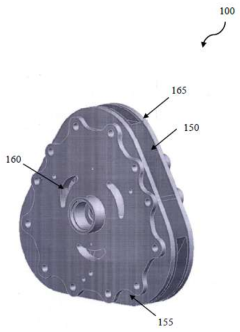
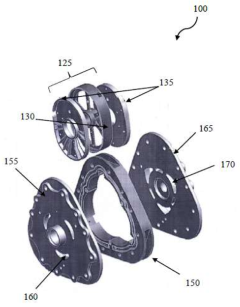
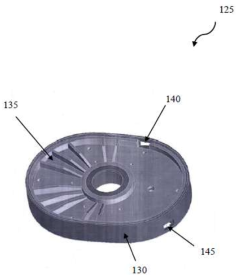
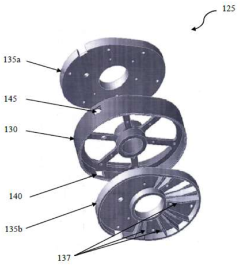
- A rotary engine design featuring a two or three lobed cycloidal profile with a shell-core structure, strengthened cores, and apex seals with leaf springs, along with a cam-type guiding mechanism and ceramic combustion chamber liners, to reduce thermal expansion, enhance sealing, and maintain continuous contact, thereby improving efficiency and reliability.
Environmental Regulations Impact on Rotary Engines
Environmental regulations have emerged as a critical driving force shaping the future viability and development trajectory of rotary engines across global markets. The increasingly stringent emission standards, particularly in major automotive markets including the European Union, United States, and Asia-Pacific regions, present both significant challenges and opportunities for rotary engine technology advancement.
The European Union's Euro 7 emission standards, expected to be implemented by 2025, impose unprecedented restrictions on nitrogen oxides, particulate matter, and carbon dioxide emissions. These regulations directly impact rotary engines due to their inherent combustion characteristics, which traditionally produce higher hydrocarbon and nitrogen oxide emissions compared to conventional piston engines. The elongated combustion chamber shape and lower compression ratios typical of rotary designs contribute to incomplete fuel combustion, making compliance with modern emission standards particularly challenging.
In the United States, the Corporate Average Fuel Economy standards and California Air Resources Board regulations continue to tighten, requiring manufacturers to achieve fleet-wide fuel efficiency improvements of approximately 5% annually through 2026. These mandates significantly influence the cost-benefit analysis of rotary engine upgrades, as manufacturers must invest substantially in emission control technologies, advanced fuel injection systems, and combustion optimization to meet regulatory requirements.
The regulatory landscape also presents opportunities for innovation-driven rotary engine development. Recent regulatory frameworks increasingly favor alternative fuel compatibility, where rotary engines demonstrate inherent advantages. Their ability to operate efficiently on hydrogen, synthetic fuels, and various biofuel blends positions them favorably under emerging renewable fuel mandates. The Japanese government's hydrogen society initiative and similar programs in South Korea and Germany create regulatory incentives that could offset traditional emission compliance costs.
Carbon pricing mechanisms and emission trading systems across multiple jurisdictions add another layer of regulatory complexity. The European Emission Trading System and similar carbon markets in California and Quebec create direct financial implications for rotary engine deployment, where higher emission profiles translate to increased operational costs through carbon credit purchases.
Regulatory compliance costs for rotary engines typically range from 15-25% of total development budgets, significantly higher than conventional engines due to the need for specialized emission control technologies. However, emerging regulations focusing on lifecycle carbon assessments and renewable fuel integration may fundamentally alter this cost-benefit equation, potentially favoring rotary engines' multi-fuel capabilities and simplified manufacturing processes in future regulatory environments.
The European Union's Euro 7 emission standards, expected to be implemented by 2025, impose unprecedented restrictions on nitrogen oxides, particulate matter, and carbon dioxide emissions. These regulations directly impact rotary engines due to their inherent combustion characteristics, which traditionally produce higher hydrocarbon and nitrogen oxide emissions compared to conventional piston engines. The elongated combustion chamber shape and lower compression ratios typical of rotary designs contribute to incomplete fuel combustion, making compliance with modern emission standards particularly challenging.
In the United States, the Corporate Average Fuel Economy standards and California Air Resources Board regulations continue to tighten, requiring manufacturers to achieve fleet-wide fuel efficiency improvements of approximately 5% annually through 2026. These mandates significantly influence the cost-benefit analysis of rotary engine upgrades, as manufacturers must invest substantially in emission control technologies, advanced fuel injection systems, and combustion optimization to meet regulatory requirements.
The regulatory landscape also presents opportunities for innovation-driven rotary engine development. Recent regulatory frameworks increasingly favor alternative fuel compatibility, where rotary engines demonstrate inherent advantages. Their ability to operate efficiently on hydrogen, synthetic fuels, and various biofuel blends positions them favorably under emerging renewable fuel mandates. The Japanese government's hydrogen society initiative and similar programs in South Korea and Germany create regulatory incentives that could offset traditional emission compliance costs.
Carbon pricing mechanisms and emission trading systems across multiple jurisdictions add another layer of regulatory complexity. The European Emission Trading System and similar carbon markets in California and Quebec create direct financial implications for rotary engine deployment, where higher emission profiles translate to increased operational costs through carbon credit purchases.
Regulatory compliance costs for rotary engines typically range from 15-25% of total development budgets, significantly higher than conventional engines due to the need for specialized emission control technologies. However, emerging regulations focusing on lifecycle carbon assessments and renewable fuel integration may fundamentally alter this cost-benefit equation, potentially favoring rotary engines' multi-fuel capabilities and simplified manufacturing processes in future regulatory environments.
Cost-Benefit Analysis Framework for Engine Upgrades
A comprehensive cost-benefit analysis framework for rotary engine upgrades requires a systematic approach that evaluates both quantitative and qualitative factors across multiple dimensions. This framework establishes standardized methodologies for assessing upgrade investments while considering the unique characteristics of rotary engine technology and its operational requirements.
The financial evaluation component forms the foundation of the framework, incorporating direct costs such as component procurement, manufacturing modifications, and installation expenses. Indirect costs including downtime, training requirements, and potential system integration challenges must be quantified alongside opportunity costs associated with alternative upgrade paths. Revenue impact assessment examines performance improvements, fuel efficiency gains, and extended operational lifespan to establish clear financial benefits.
Technical performance metrics constitute another critical dimension, focusing on measurable improvements in power output, torque characteristics, thermal efficiency, and emissions reduction. The framework incorporates standardized testing protocols to ensure consistent evaluation across different upgrade scenarios, enabling objective comparison of competing solutions and their respective performance enhancements.
Risk assessment methodology addresses both technical and commercial uncertainties inherent in rotary engine upgrade projects. This includes evaluation of implementation risks, technology maturity levels, supplier reliability, and potential obsolescence concerns. Market acceptance factors and regulatory compliance requirements are integrated to provide comprehensive risk profiling for each upgrade option.
The framework establishes decision matrices that weight various factors according to organizational priorities and operational requirements. Sensitivity analysis capabilities allow for scenario modeling under different market conditions, fuel price fluctuations, and regulatory changes. This enables stakeholders to understand how external variables might impact the cost-benefit equation over the upgrade lifecycle.
Implementation guidelines within the framework provide structured approaches for pilot testing, phased rollouts, and performance monitoring. Key performance indicators are defined to track actual versus projected benefits, enabling continuous refinement of the evaluation methodology and supporting data-driven decision making for future upgrade investments.
The financial evaluation component forms the foundation of the framework, incorporating direct costs such as component procurement, manufacturing modifications, and installation expenses. Indirect costs including downtime, training requirements, and potential system integration challenges must be quantified alongside opportunity costs associated with alternative upgrade paths. Revenue impact assessment examines performance improvements, fuel efficiency gains, and extended operational lifespan to establish clear financial benefits.
Technical performance metrics constitute another critical dimension, focusing on measurable improvements in power output, torque characteristics, thermal efficiency, and emissions reduction. The framework incorporates standardized testing protocols to ensure consistent evaluation across different upgrade scenarios, enabling objective comparison of competing solutions and their respective performance enhancements.
Risk assessment methodology addresses both technical and commercial uncertainties inherent in rotary engine upgrade projects. This includes evaluation of implementation risks, technology maturity levels, supplier reliability, and potential obsolescence concerns. Market acceptance factors and regulatory compliance requirements are integrated to provide comprehensive risk profiling for each upgrade option.
The framework establishes decision matrices that weight various factors according to organizational priorities and operational requirements. Sensitivity analysis capabilities allow for scenario modeling under different market conditions, fuel price fluctuations, and regulatory changes. This enables stakeholders to understand how external variables might impact the cost-benefit equation over the upgrade lifecycle.
Implementation guidelines within the framework provide structured approaches for pilot testing, phased rollouts, and performance monitoring. Key performance indicators are defined to track actual versus projected benefits, enabling continuous refinement of the evaluation methodology and supporting data-driven decision making for future upgrade investments.
Unlock deeper insights with PatSnap Eureka Quick Research — get a full tech report to explore trends and direct your research. Try now!
Generate Your Research Report Instantly with AI Agent
Supercharge your innovation with PatSnap Eureka AI Agent Platform!