

How to Optimize Rotary Engine Performance
FEB 25, 20269 MIN READ
Generate Your Research Report Instantly with AI Agent
PatSnap Eureka helps you evaluate technical feasibility & market potential.
Rotary Engine Development Background and Performance Goals
The rotary engine, also known as the Wankel engine, emerged in the 1950s as a revolutionary alternative to conventional reciprocating piston engines. Invented by German engineer Felix Wankel, this unique powerplant featured a triangular rotor spinning within an epitrochoidal chamber, promising smoother operation, higher power-to-weight ratios, and fewer moving parts compared to traditional engines. The technology gained significant momentum in the 1960s and 1970s when major automotive manufacturers, particularly Mazda, invested heavily in its development and commercialization.
Throughout its evolution, the rotary engine has demonstrated remarkable potential in specific applications, particularly in aviation and high-performance automotive sectors. The engine's inherently balanced design eliminates the reciprocating motion found in piston engines, resulting in exceptionally smooth power delivery and compact packaging. These characteristics made it particularly attractive for applications requiring high power density and minimal vibration, such as aircraft propulsion and sports car applications.
However, the technology's development trajectory has been marked by persistent challenges that have limited widespread adoption. Fuel efficiency concerns, emissions compliance difficulties, and apex seal durability issues have constrained the engine's market penetration despite its performance advantages. The unique combustion chamber geometry creates challenges in achieving complete fuel burn, leading to higher hydrocarbon emissions and reduced fuel economy compared to modern piston engines.
Current performance optimization goals center on addressing these fundamental limitations while preserving the engine's inherent advantages. Primary objectives include improving fuel efficiency through advanced combustion chamber designs, reducing emissions via enhanced sealing technologies and combustion optimization, and extending engine longevity through improved materials and manufacturing processes. Additionally, modern development efforts focus on integrating rotary engines with hybrid powertrains and alternative fuels to leverage their smooth operation characteristics while mitigating traditional weaknesses.
The resurgence of interest in rotary engine technology is driven by evolving automotive requirements, including the need for range extenders in electric vehicles, lightweight powerplants for unmanned aerial vehicles, and high-performance applications where the engine's unique characteristics provide distinct advantages over conventional alternatives.
Throughout its evolution, the rotary engine has demonstrated remarkable potential in specific applications, particularly in aviation and high-performance automotive sectors. The engine's inherently balanced design eliminates the reciprocating motion found in piston engines, resulting in exceptionally smooth power delivery and compact packaging. These characteristics made it particularly attractive for applications requiring high power density and minimal vibration, such as aircraft propulsion and sports car applications.
However, the technology's development trajectory has been marked by persistent challenges that have limited widespread adoption. Fuel efficiency concerns, emissions compliance difficulties, and apex seal durability issues have constrained the engine's market penetration despite its performance advantages. The unique combustion chamber geometry creates challenges in achieving complete fuel burn, leading to higher hydrocarbon emissions and reduced fuel economy compared to modern piston engines.
Current performance optimization goals center on addressing these fundamental limitations while preserving the engine's inherent advantages. Primary objectives include improving fuel efficiency through advanced combustion chamber designs, reducing emissions via enhanced sealing technologies and combustion optimization, and extending engine longevity through improved materials and manufacturing processes. Additionally, modern development efforts focus on integrating rotary engines with hybrid powertrains and alternative fuels to leverage their smooth operation characteristics while mitigating traditional weaknesses.
The resurgence of interest in rotary engine technology is driven by evolving automotive requirements, including the need for range extenders in electric vehicles, lightweight powerplants for unmanned aerial vehicles, and high-performance applications where the engine's unique characteristics provide distinct advantages over conventional alternatives.
Market Demand for High-Performance Rotary Engines
The global automotive industry is experiencing a significant shift toward high-performance powertrains, driven by increasing consumer demand for vehicles that deliver exceptional power-to-weight ratios and unique driving experiences. Rotary engines, with their inherently compact design and smooth power delivery characteristics, are positioned to capture a specialized but growing segment of this market. The demand is particularly pronounced in sports car applications, where manufacturers seek lightweight alternatives to traditional piston engines without compromising performance output.
Racing and motorsport applications represent another substantial market driver for high-performance rotary engines. Professional racing series and amateur motorsport enthusiasts value the rotary engine's ability to achieve high RPM operation and maintain consistent power output under extreme conditions. This segment demands continuous performance optimization to meet increasingly stringent competition requirements and regulatory standards.
The aerospace sector presents emerging opportunities for optimized rotary engines, particularly in unmanned aerial vehicles and light aircraft applications. The aviation industry's focus on reducing weight while maintaining reliability creates demand for rotary engines that can deliver superior power density compared to conventional alternatives. Performance optimization in this context emphasizes fuel efficiency, altitude performance, and operational reliability.
Industrial and marine applications are driving demand for rotary engines optimized for specific operational profiles. These markets require engines capable of sustained high-output operation with minimal maintenance requirements. The compact footprint of rotary engines makes them attractive for space-constrained installations where traditional engines cannot be accommodated effectively.
Market analysis indicates growing interest from electric vehicle manufacturers exploring range-extender applications. These companies seek rotary engines optimized for consistent, efficient operation at fixed RPM ranges to generate electricity for battery charging. This application requires different optimization priorities compared to traditional automotive uses, focusing on fuel efficiency and emissions reduction rather than peak power output.
The aftermarket performance modification sector continues to expand, with enthusiasts seeking enhanced rotary engine components and tuning solutions. This market segment drives demand for optimization technologies that can be retrofitted to existing engines, creating opportunities for specialized performance enhancement products and services.
Racing and motorsport applications represent another substantial market driver for high-performance rotary engines. Professional racing series and amateur motorsport enthusiasts value the rotary engine's ability to achieve high RPM operation and maintain consistent power output under extreme conditions. This segment demands continuous performance optimization to meet increasingly stringent competition requirements and regulatory standards.
The aerospace sector presents emerging opportunities for optimized rotary engines, particularly in unmanned aerial vehicles and light aircraft applications. The aviation industry's focus on reducing weight while maintaining reliability creates demand for rotary engines that can deliver superior power density compared to conventional alternatives. Performance optimization in this context emphasizes fuel efficiency, altitude performance, and operational reliability.
Industrial and marine applications are driving demand for rotary engines optimized for specific operational profiles. These markets require engines capable of sustained high-output operation with minimal maintenance requirements. The compact footprint of rotary engines makes them attractive for space-constrained installations where traditional engines cannot be accommodated effectively.
Market analysis indicates growing interest from electric vehicle manufacturers exploring range-extender applications. These companies seek rotary engines optimized for consistent, efficient operation at fixed RPM ranges to generate electricity for battery charging. This application requires different optimization priorities compared to traditional automotive uses, focusing on fuel efficiency and emissions reduction rather than peak power output.
The aftermarket performance modification sector continues to expand, with enthusiasts seeking enhanced rotary engine components and tuning solutions. This market segment drives demand for optimization technologies that can be retrofitted to existing engines, creating opportunities for specialized performance enhancement products and services.
Current Rotary Engine Limitations and Technical Challenges
Rotary engines face several fundamental limitations that have hindered their widespread adoption despite their unique advantages. The most critical challenge lies in the sealing system, where apex seals must maintain contact with the rotor housing throughout the combustion cycle. These seals experience extreme thermal and mechanical stress, leading to accelerated wear and compromised compression ratios. The complex geometry of the combustion chamber creates uneven pressure distribution, causing seal flutter and reduced sealing effectiveness at high RPMs.
Fuel consumption remains a persistent issue due to the engine's inherent design characteristics. The elongated combustion chamber shape results in incomplete fuel burning, particularly in the trailing regions where flame propagation is slower. This inefficient combustion process not only increases fuel consumption but also contributes to higher hydrocarbon emissions. The large surface-to-volume ratio of the combustion chamber promotes heat loss, further reducing thermal efficiency compared to conventional piston engines.
Emissions control presents significant technical challenges for rotary engines. The unique combustion process produces elevated levels of unburned hydrocarbons and carbon monoxide, making it difficult to meet stringent environmental regulations. The engine's tendency to burn oil due to the lubrication system design adds to emission concerns. Traditional catalytic converter technologies are less effective due to the specific exhaust gas composition and temperature characteristics of rotary engines.
Durability concerns center around the rotor housing and eccentric shaft bearing systems. The continuous sliding motion between rotors and housing creates wear patterns that are difficult to predict and control. Carbon buildup in the combustion chamber is more problematic than in piston engines due to the chamber geometry and oil injection requirements. The eccentric shaft experiences complex loading patterns that can lead to bearing failures under high-stress conditions.
Manufacturing complexity and associated costs represent additional barriers to rotary engine optimization. The precision required for rotor housing machining and the specialized materials needed for sealing systems increase production expenses. Quality control becomes more challenging due to the tight tolerances required for proper sealing and the complex assembly procedures. These factors have limited investment in rotary engine development and restricted the technology's commercial viability in mainstream automotive applications.
Fuel consumption remains a persistent issue due to the engine's inherent design characteristics. The elongated combustion chamber shape results in incomplete fuel burning, particularly in the trailing regions where flame propagation is slower. This inefficient combustion process not only increases fuel consumption but also contributes to higher hydrocarbon emissions. The large surface-to-volume ratio of the combustion chamber promotes heat loss, further reducing thermal efficiency compared to conventional piston engines.
Emissions control presents significant technical challenges for rotary engines. The unique combustion process produces elevated levels of unburned hydrocarbons and carbon monoxide, making it difficult to meet stringent environmental regulations. The engine's tendency to burn oil due to the lubrication system design adds to emission concerns. Traditional catalytic converter technologies are less effective due to the specific exhaust gas composition and temperature characteristics of rotary engines.
Durability concerns center around the rotor housing and eccentric shaft bearing systems. The continuous sliding motion between rotors and housing creates wear patterns that are difficult to predict and control. Carbon buildup in the combustion chamber is more problematic than in piston engines due to the chamber geometry and oil injection requirements. The eccentric shaft experiences complex loading patterns that can lead to bearing failures under high-stress conditions.
Manufacturing complexity and associated costs represent additional barriers to rotary engine optimization. The precision required for rotor housing machining and the specialized materials needed for sealing systems increase production expenses. Quality control becomes more challenging due to the tight tolerances required for proper sealing and the complex assembly procedures. These factors have limited investment in rotary engine development and restricted the technology's commercial viability in mainstream automotive applications.
Current Solutions for Rotary Engine Performance Enhancement
01 Rotor design and geometry optimization
Improvements in rotary engine performance can be achieved through optimized rotor design and geometry. This includes modifications to rotor shape, apex seal configuration, and rotor housing profiles to enhance combustion efficiency, reduce friction losses, and improve sealing characteristics. Advanced rotor geometries can minimize gas leakage and maximize power output while reducing fuel consumption.- Rotor design and geometry optimization: Improvements in rotary engine performance can be achieved through optimized rotor design and geometry. This includes modifications to rotor shape, apex seal configuration, and rotor housing profiles to enhance combustion efficiency, reduce friction losses, and improve sealing characteristics. Advanced rotor geometries can minimize gas leakage and maximize power output while reducing fuel consumption.
- Sealing system enhancements: Enhanced sealing systems are critical for improving rotary engine performance by reducing blow-by and maintaining compression. Innovations include advanced apex seal materials, improved side seal designs, and optimized seal spring configurations. These improvements help maintain consistent compression ratios, reduce oil consumption, and extend engine life while improving thermal efficiency.
- Cooling and thermal management systems: Effective thermal management is essential for rotary engine performance optimization. Advanced cooling systems include improved coolant flow paths, enhanced heat dissipation structures, and temperature control mechanisms. These systems help maintain optimal operating temperatures, prevent overheating, reduce thermal stress on components, and improve overall engine efficiency and reliability.
- Fuel injection and combustion optimization: Performance improvements can be achieved through advanced fuel injection strategies and combustion chamber optimization. This includes direct injection systems, stratified charge combustion, and optimized ignition timing. These technologies enhance fuel atomization, improve air-fuel mixing, increase combustion efficiency, and reduce emissions while maximizing power output.
- Lubrication system improvements: Advanced lubrication systems contribute significantly to rotary engine performance by reducing friction and wear. Innovations include optimized oil delivery methods, improved lubricant formulations, and enhanced oil metering systems. These improvements ensure adequate lubrication of critical components, reduce mechanical losses, extend component life, and maintain consistent performance over extended operating periods.
02 Sealing system enhancements
Enhanced sealing systems are critical for improving rotary engine performance. Innovations in apex seals, side seals, and oil seals help maintain compression, reduce blow-by, and minimize oil consumption. Advanced materials and seal designs can withstand higher temperatures and pressures, leading to improved durability and efficiency. Proper sealing also contributes to reduced emissions and better fuel economy.Expand Specific Solutions03 Cooling and thermal management systems
Effective cooling and thermal management are essential for maintaining optimal rotary engine performance. Advanced cooling systems help control operating temperatures, prevent overheating, and ensure consistent performance across various operating conditions. Improved thermal management includes enhanced coolant circulation, optimized cooling jacket design, and heat dissipation strategies that protect engine components and maintain efficiency.Expand Specific Solutions04 Fuel injection and combustion optimization
Optimizing fuel injection systems and combustion processes significantly enhances rotary engine performance. Direct injection technologies, precise fuel metering, and advanced ignition timing strategies improve combustion efficiency, increase power output, and reduce emissions. Innovations in fuel delivery systems enable better fuel atomization and mixture formation, resulting in more complete combustion and improved thermal efficiency.Expand Specific Solutions05 Lubrication system improvements
Advanced lubrication systems play a vital role in enhancing rotary engine performance and longevity. Improved oil delivery mechanisms, specialized lubricant formulations, and optimized oil injection systems reduce friction, minimize wear, and extend engine life. Effective lubrication ensures proper sealing, reduces heat generation, and maintains consistent performance under various operating conditions while minimizing oil consumption.Expand Specific Solutions
Major Players in Rotary Engine Development Industry
The rotary engine optimization field represents a niche but strategically important market segment currently in the early development stage, with limited commercial penetration despite decades of research. The market remains relatively small compared to conventional piston engines, primarily due to technical challenges including sealing issues, fuel efficiency, and emissions control that have historically hindered widespread adoption. Technology maturity varies significantly across players, with established aerospace companies like Airbus Helicopters and SNECMA SA leveraging advanced engineering capabilities for specialized applications, while emerging companies such as Shaanxi New Year Power Technology Group focus on breakthrough innovations to address traditional rotary engine limitations. Academic institutions including Beihang University, Xi'an Jiaotong University, and Beijing University of Technology contribute fundamental research, particularly in combustion optimization and mechanical design improvements. The competitive landscape suggests the technology is transitioning from research-focused to application-driven development, with potential for significant advancement as manufacturers like LG Electronics and FANUC Corp bring precision manufacturing expertise to component production and system integration challenges.
Airbus Helicopters, Inc.
Technical Solution: Airbus Helicopters has invested in rotary engine technology for lightweight aircraft applications, developing optimized combustion chamber geometries and advanced ignition systems. Their approach focuses on weight reduction while maintaining high power-to-weight ratios essential for aviation applications. The company has developed proprietary engine management systems that optimize fuel delivery and ignition timing based on real-time operating conditions. Their rotary engine designs incorporate advanced vibration damping systems and precision balancing techniques to ensure smooth operation. Airbus Helicopters also emphasizes modular design approaches that allow for easier maintenance and component replacement, addressing one of the traditional challenges associated with rotary engines.
Strengths: Strong aerospace engineering capabilities, focus on lightweight high-performance applications, extensive flight testing experience. Weaknesses: Limited ground vehicle applications, high-cost solutions primarily suited for specialized applications.
SNECMA SA
Technical Solution: SNECMA SA has developed innovative approaches to rotary engine optimization through their expertise in turbomachinery and advanced propulsion systems. Their rotary engine solutions incorporate precision-engineered rotor profiles and advanced sealing technologies derived from their jet engine experience. The company focuses on multi-stage compression optimization and thermal barrier coatings to improve engine durability and performance. Their approach includes sophisticated fuel injection systems that enable precise control of the combustion process, reducing fuel consumption and emissions. SNECMA's rotary engine designs feature advanced materials including ceramic matrix composites and superalloys that can withstand the high thermal and mechanical stresses inherent in rotary engine operation.
Strengths: Extensive experience in high-performance propulsion systems, advanced materials expertise, proven track record in aerospace applications. Weaknesses: High development costs, complex manufacturing requirements, limited focus on mass-market applications.
Core Technologies in Advanced Rotary Engine Design
Intake/outlet pipe optimization method for rotary engine
PatentActiveUS10598087B2
Innovation
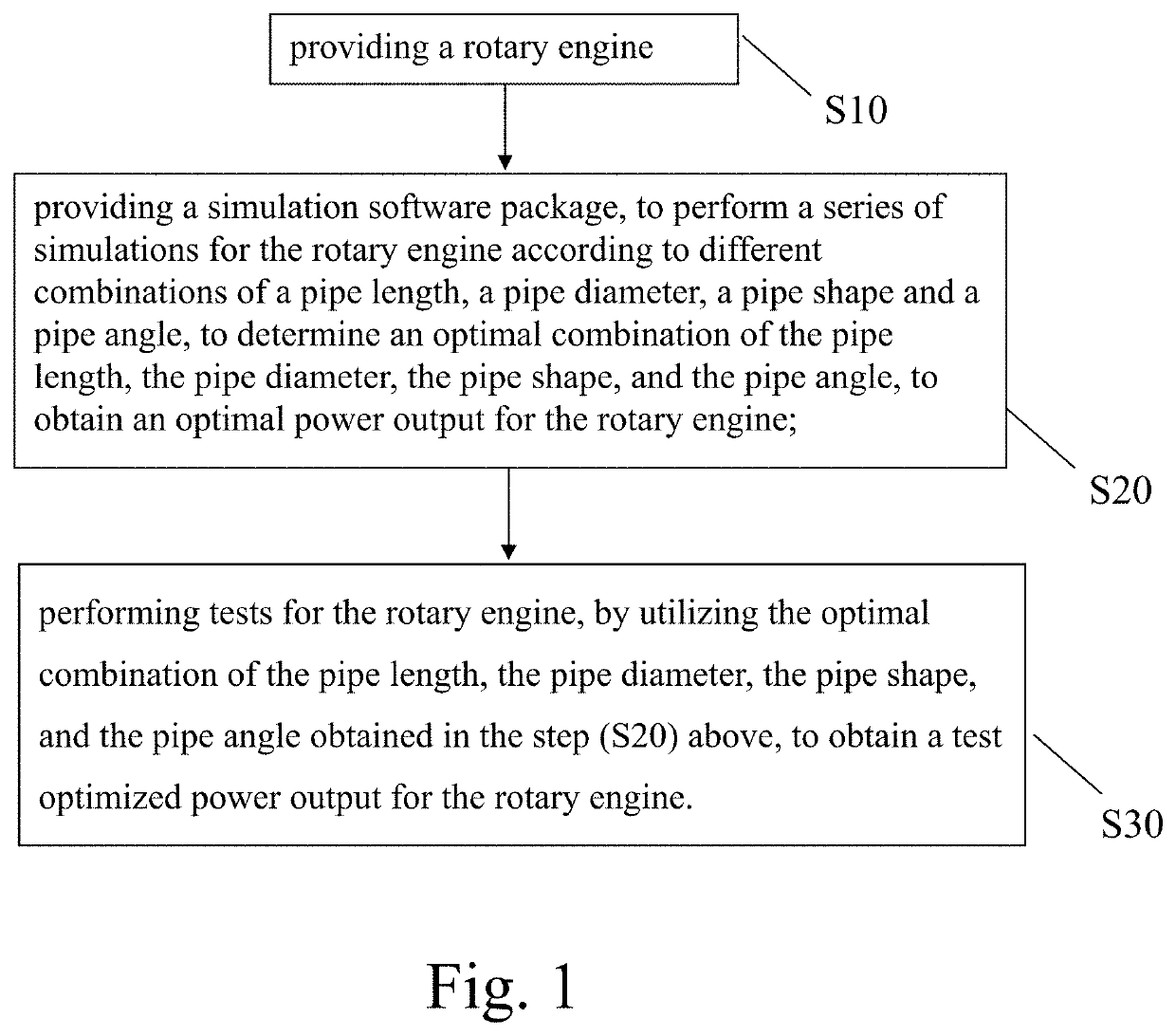
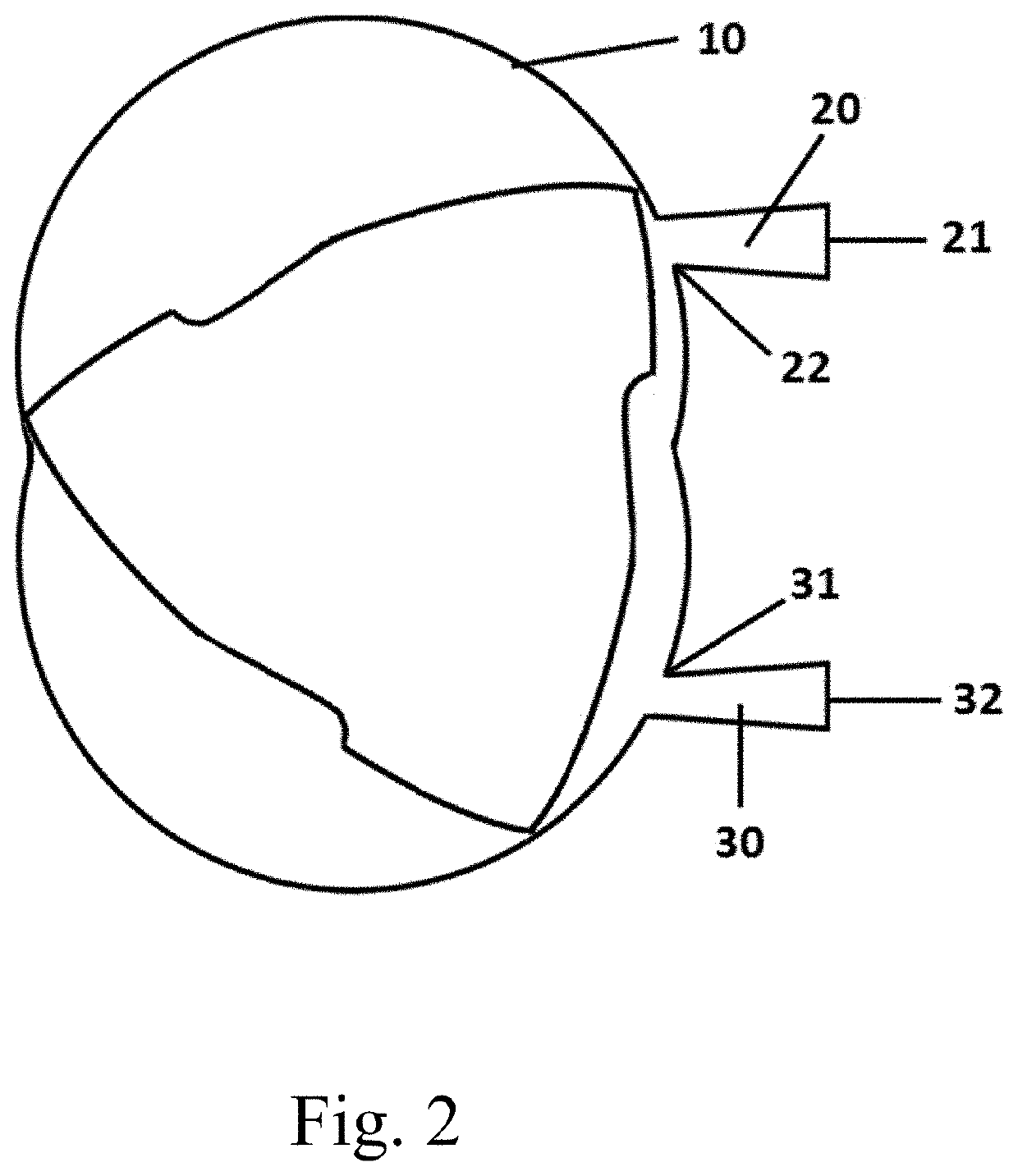
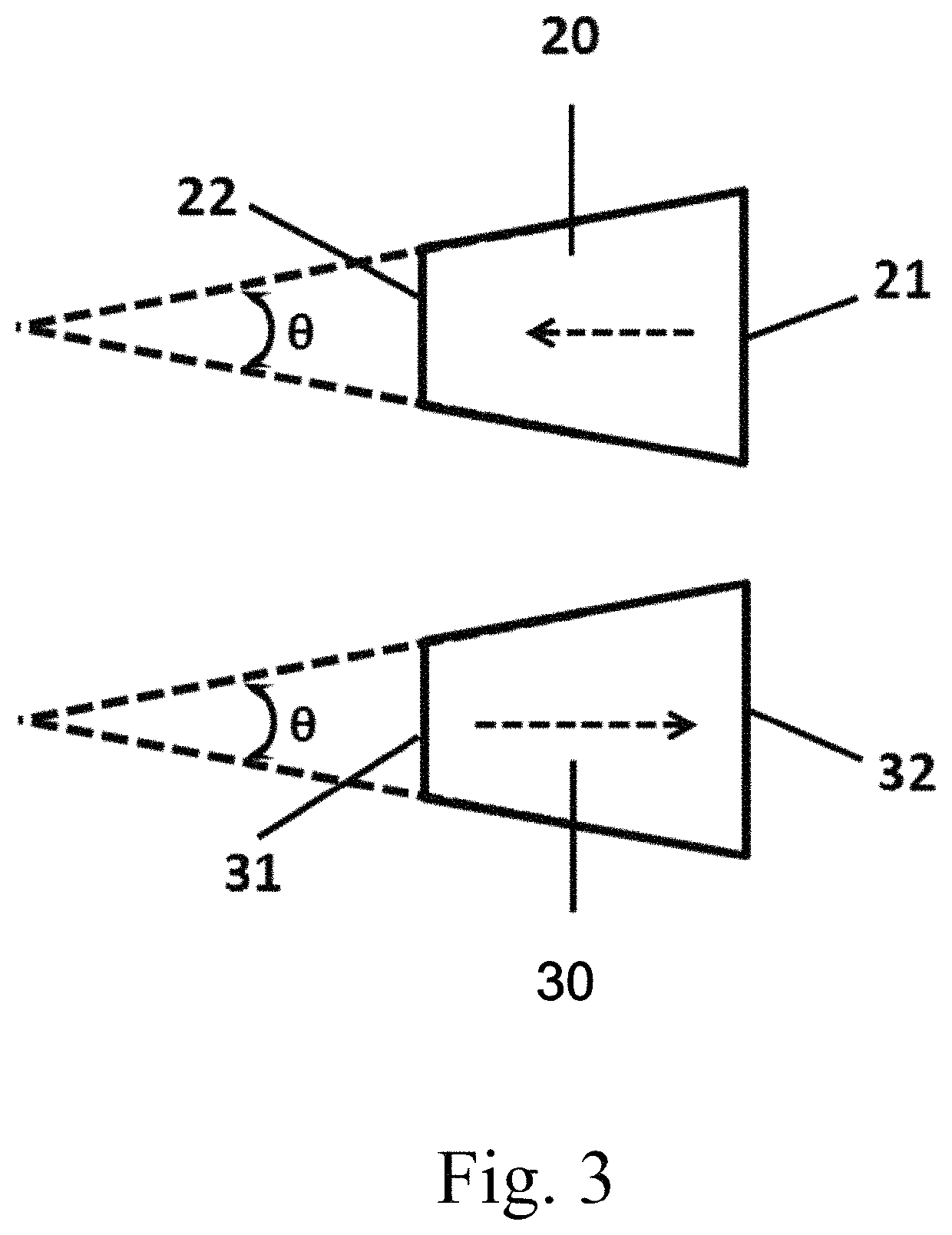
- An intake/outlet pipe optimization method using a simulation software package to determine optimal combinations of pipe length, diameter, shape, and angle, adjusting pressure waves to improve air intake and exhaust efficiency, implemented through tapered conical pipes with adjustable taper angles and lengths.

Volumetric efficiency in a charge cooled or air cooled wankel rotary engine
PatentInactiveUS20080056924A1
Innovation
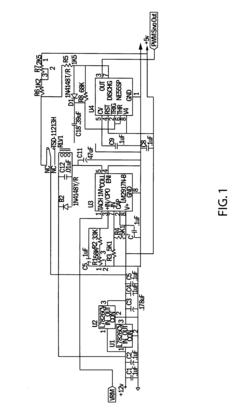
- A one-piece side sealing system with improved manufacturing technology that reduces machining time, eliminates seal sticking, and enhances consistency, along with a custom electronic circuit for controlling the peripheral port and simplified rotor housing grinding and apex seal manufacturing processes.
Environmental Regulations Impact on Rotary Engine Development
Environmental regulations have emerged as one of the most significant external forces shaping rotary engine development trajectories over the past three decades. The unique combustion characteristics of Wankel engines, while offering distinct performance advantages, present specific challenges in meeting increasingly stringent emission standards worldwide. These regulatory pressures have fundamentally altered research priorities and investment patterns within the rotary engine sector.
The European Union's Euro emission standards have particularly influenced rotary engine development since the 1990s. The progression from Euro 1 to Euro 6 standards has demanded substantial reductions in nitrogen oxides, particulate matter, and hydrocarbon emissions. Rotary engines' inherently higher hydrocarbon emissions due to their combustion chamber geometry have necessitated innovative approaches to catalytic converter design and exhaust gas recirculation systems. Manufacturers have been compelled to invest heavily in advanced fuel injection technologies and combustion optimization strategies to achieve compliance.
California's Air Resources Board regulations have set even more stringent benchmarks, effectively serving as global standards for many automotive manufacturers. The Zero Emission Vehicle mandate and Low Emission Vehicle standards have pushed rotary engine developers toward hybrid configurations and alternative fuel applications. These regulations have accelerated research into hydrogen-fueled rotary engines, where the technology's tolerance for different fuel types provides competitive advantages over conventional piston engines.
Corporate Average Fuel Economy standards in the United States have created additional pressure for efficiency improvements. While rotary engines traditionally lagged in fuel economy compared to reciprocating engines, regulatory requirements have spurred innovations in direct injection, variable compression ratios, and advanced engine management systems. These developments have gradually narrowed the efficiency gap while maintaining rotary engines' inherent smoothness and power density advantages.
The regulatory landscape has also influenced manufacturing strategies and market positioning. Stricter emissions testing procedures, including real-world driving emissions tests, have required more sophisticated calibration approaches and robust emission control systems. This regulatory complexity has favored larger manufacturers with extensive R&D capabilities while creating barriers for smaller rotary engine developers.
Recent carbon dioxide emission regulations targeting climate change have introduced new dimensions to rotary engine development. The focus on lifecycle emissions and renewable fuel compatibility has opened opportunities for rotary engines in specialized applications where their multi-fuel capability and compact design provide regulatory compliance advantages over traditional powertrains.
The European Union's Euro emission standards have particularly influenced rotary engine development since the 1990s. The progression from Euro 1 to Euro 6 standards has demanded substantial reductions in nitrogen oxides, particulate matter, and hydrocarbon emissions. Rotary engines' inherently higher hydrocarbon emissions due to their combustion chamber geometry have necessitated innovative approaches to catalytic converter design and exhaust gas recirculation systems. Manufacturers have been compelled to invest heavily in advanced fuel injection technologies and combustion optimization strategies to achieve compliance.
California's Air Resources Board regulations have set even more stringent benchmarks, effectively serving as global standards for many automotive manufacturers. The Zero Emission Vehicle mandate and Low Emission Vehicle standards have pushed rotary engine developers toward hybrid configurations and alternative fuel applications. These regulations have accelerated research into hydrogen-fueled rotary engines, where the technology's tolerance for different fuel types provides competitive advantages over conventional piston engines.
Corporate Average Fuel Economy standards in the United States have created additional pressure for efficiency improvements. While rotary engines traditionally lagged in fuel economy compared to reciprocating engines, regulatory requirements have spurred innovations in direct injection, variable compression ratios, and advanced engine management systems. These developments have gradually narrowed the efficiency gap while maintaining rotary engines' inherent smoothness and power density advantages.
The regulatory landscape has also influenced manufacturing strategies and market positioning. Stricter emissions testing procedures, including real-world driving emissions tests, have required more sophisticated calibration approaches and robust emission control systems. This regulatory complexity has favored larger manufacturers with extensive R&D capabilities while creating barriers for smaller rotary engine developers.
Recent carbon dioxide emission regulations targeting climate change have introduced new dimensions to rotary engine development. The focus on lifecycle emissions and renewable fuel compatibility has opened opportunities for rotary engines in specialized applications where their multi-fuel capability and compact design provide regulatory compliance advantages over traditional powertrains.
Alternative Fuel Integration in Rotary Engine Systems
The integration of alternative fuels in rotary engine systems represents a critical pathway for enhancing performance while addressing environmental sustainability concerns. Rotary engines possess unique combustion characteristics that make them particularly suitable for alternative fuel applications, including their ability to operate efficiently across a wide range of fuel types due to their continuous combustion process and relatively simple fuel delivery requirements.
Hydrogen emerges as one of the most promising alternative fuels for rotary engines, offering exceptional combustion properties that align well with the Wankel design. The high flame speed of hydrogen complements the rotary engine's combustion chamber geometry, potentially reducing combustion duration and improving thermal efficiency. However, hydrogen integration requires specialized fuel injection systems and modified sealing technologies to prevent leakage through the apex seals, which represents a significant engineering challenge.
Biofuels, including ethanol blends and biodiesel derivatives, present more immediate integration opportunities. These fuels can often be utilized with minimal engine modifications, though optimization requires careful consideration of fuel properties such as octane rating, energy density, and combustion characteristics. Ethanol's higher octane rating allows for increased compression ratios, potentially improving power output, while its lower energy density necessitates fuel system adjustments to maintain performance levels.
Synthetic fuels and e-fuels offer another avenue for alternative fuel integration, providing the advantage of tailored fuel properties that can be optimized specifically for rotary engine characteristics. These fuels can be engineered to match the combustion requirements of rotary engines while maintaining compatibility with existing fuel infrastructure, though production costs remain a significant barrier to widespread adoption.
The integration process requires comprehensive fuel system modifications, including upgraded fuel pumps, injectors, and control systems capable of managing different fuel properties. Additionally, combustion chamber optimization through modified port timing and ignition systems becomes essential to maximize the benefits of alternative fuels while maintaining engine reliability and longevity.
Hydrogen emerges as one of the most promising alternative fuels for rotary engines, offering exceptional combustion properties that align well with the Wankel design. The high flame speed of hydrogen complements the rotary engine's combustion chamber geometry, potentially reducing combustion duration and improving thermal efficiency. However, hydrogen integration requires specialized fuel injection systems and modified sealing technologies to prevent leakage through the apex seals, which represents a significant engineering challenge.
Biofuels, including ethanol blends and biodiesel derivatives, present more immediate integration opportunities. These fuels can often be utilized with minimal engine modifications, though optimization requires careful consideration of fuel properties such as octane rating, energy density, and combustion characteristics. Ethanol's higher octane rating allows for increased compression ratios, potentially improving power output, while its lower energy density necessitates fuel system adjustments to maintain performance levels.
Synthetic fuels and e-fuels offer another avenue for alternative fuel integration, providing the advantage of tailored fuel properties that can be optimized specifically for rotary engine characteristics. These fuels can be engineered to match the combustion requirements of rotary engines while maintaining compatibility with existing fuel infrastructure, though production costs remain a significant barrier to widespread adoption.
The integration process requires comprehensive fuel system modifications, including upgraded fuel pumps, injectors, and control systems capable of managing different fuel properties. Additionally, combustion chamber optimization through modified port timing and ignition systems becomes essential to maximize the benefits of alternative fuels while maintaining engine reliability and longevity.
Unlock deeper insights with PatSnap Eureka Quick Research — get a full tech report to explore trends and direct your research. Try now!
Generate Your Research Report Instantly with AI Agent
Supercharge your innovation with PatSnap Eureka AI Agent Platform!