Compare Rotary vs PEMFC: Longevity
FEB 14, 20269 MIN READ
Generate Your Research Report Instantly with AI Agent
PatSnap Eureka helps you evaluate technical feasibility & market potential.
Rotary vs PEMFC Technology Background and Longevity Goals
The evolution of energy conversion technologies has been driven by the persistent quest for efficient, reliable, and durable power generation systems. Two distinct technological paradigms have emerged as significant contenders in this landscape: rotary engines and Proton Exchange Membrane Fuel Cells (PEMFC). While these technologies operate on fundamentally different principles, both have garnered substantial attention for their potential to address modern energy challenges.
Rotary engines, exemplified by the Wankel design, represent a mechanical approach to energy conversion that has undergone continuous refinement since the 1950s. These engines utilize a triangular rotor within an epitrochoidal chamber to convert fuel combustion directly into rotational motion, eliminating the reciprocating components found in conventional piston engines. The technology has demonstrated particular advantages in applications requiring high power-to-weight ratios and compact form factors.
PEMFC technology represents an electrochemical pathway for energy conversion, where hydrogen and oxygen react across a polymer electrolyte membrane to generate electricity, water, and heat. This technology has experienced accelerated development since the 1990s, driven by advances in membrane materials, catalyst efficiency, and system integration. PEMFCs offer the promise of zero-emission operation when powered by clean hydrogen sources.
The longevity characteristics of these technologies have become increasingly critical as industries seek sustainable, long-term energy solutions. For rotary engines, durability concerns have historically centered around apex seal wear, thermal management, and combustion chamber integrity. Modern developments focus on advanced materials, improved sealing systems, and optimized combustion strategies to extend operational lifespans beyond traditional limitations.
PEMFC longevity challenges primarily involve membrane degradation, catalyst poisoning, and system component durability under varying operational conditions. Current research emphasizes membrane chemistry improvements, catalyst optimization, and system-level strategies to mitigate degradation mechanisms. The target operational lifespans for automotive applications typically exceed 5,000 hours, while stationary applications demand 40,000+ hours of reliable operation.
The comparative longevity analysis between these technologies requires examination of distinct failure modes, maintenance requirements, and operational envelope constraints. Understanding these fundamental differences provides the foundation for evaluating their respective suitability across various application domains and operational scenarios.
Rotary engines, exemplified by the Wankel design, represent a mechanical approach to energy conversion that has undergone continuous refinement since the 1950s. These engines utilize a triangular rotor within an epitrochoidal chamber to convert fuel combustion directly into rotational motion, eliminating the reciprocating components found in conventional piston engines. The technology has demonstrated particular advantages in applications requiring high power-to-weight ratios and compact form factors.
PEMFC technology represents an electrochemical pathway for energy conversion, where hydrogen and oxygen react across a polymer electrolyte membrane to generate electricity, water, and heat. This technology has experienced accelerated development since the 1990s, driven by advances in membrane materials, catalyst efficiency, and system integration. PEMFCs offer the promise of zero-emission operation when powered by clean hydrogen sources.
The longevity characteristics of these technologies have become increasingly critical as industries seek sustainable, long-term energy solutions. For rotary engines, durability concerns have historically centered around apex seal wear, thermal management, and combustion chamber integrity. Modern developments focus on advanced materials, improved sealing systems, and optimized combustion strategies to extend operational lifespans beyond traditional limitations.
PEMFC longevity challenges primarily involve membrane degradation, catalyst poisoning, and system component durability under varying operational conditions. Current research emphasizes membrane chemistry improvements, catalyst optimization, and system-level strategies to mitigate degradation mechanisms. The target operational lifespans for automotive applications typically exceed 5,000 hours, while stationary applications demand 40,000+ hours of reliable operation.
The comparative longevity analysis between these technologies requires examination of distinct failure modes, maintenance requirements, and operational envelope constraints. Understanding these fundamental differences provides the foundation for evaluating their respective suitability across various application domains and operational scenarios.
Market Demand for Long-Lasting Fuel Cell Solutions
The global fuel cell market is experiencing unprecedented growth driven by the urgent need for sustainable energy solutions and the increasing emphasis on decarbonization across multiple industries. Transportation sectors, particularly automotive and heavy-duty applications, are demanding fuel cell systems with extended operational lifespans to justify significant capital investments and ensure competitive total cost of ownership compared to traditional internal combustion engines.
Industrial applications represent another critical demand driver, where continuous operation requirements make longevity a paramount concern. Manufacturing facilities, data centers, and critical infrastructure operators seek fuel cell solutions that can provide reliable power for extended periods without frequent maintenance or replacement cycles. The economic viability of these installations heavily depends on achieving operational lifespans exceeding ten years with minimal performance degradation.
Stationary power generation markets are increasingly prioritizing durability as utilities and independent power producers evaluate fuel cells for grid-scale applications. The integration of renewable energy sources creates demand for reliable backup power systems that can operate efficiently over decades. Long-lasting fuel cell solutions enable better return on investment calculations and reduce the levelized cost of electricity, making them more competitive against conventional power generation technologies.
The maritime and aerospace sectors present emerging opportunities where longevity requirements are particularly stringent due to operational constraints and safety considerations. These applications demand fuel cell systems capable of maintaining performance throughout extended missions or voyages, where replacement or major maintenance is impractical or impossible.
Government policies and regulatory frameworks worldwide are accelerating adoption by establishing performance standards and providing incentives for durable clean energy technologies. Carbon reduction mandates and emissions regulations create sustained demand for fuel cell solutions that can deliver consistent environmental benefits throughout their operational lifetime.
Market research indicates that longevity concerns significantly influence purchasing decisions, with end-users willing to pay premium prices for systems demonstrating superior durability. This trend is driving technological competition between different fuel cell architectures, including rotary and PEMFC technologies, as manufacturers strive to develop solutions that meet increasingly demanding longevity requirements while maintaining cost-effectiveness and performance standards.
Industrial applications represent another critical demand driver, where continuous operation requirements make longevity a paramount concern. Manufacturing facilities, data centers, and critical infrastructure operators seek fuel cell solutions that can provide reliable power for extended periods without frequent maintenance or replacement cycles. The economic viability of these installations heavily depends on achieving operational lifespans exceeding ten years with minimal performance degradation.
Stationary power generation markets are increasingly prioritizing durability as utilities and independent power producers evaluate fuel cells for grid-scale applications. The integration of renewable energy sources creates demand for reliable backup power systems that can operate efficiently over decades. Long-lasting fuel cell solutions enable better return on investment calculations and reduce the levelized cost of electricity, making them more competitive against conventional power generation technologies.
The maritime and aerospace sectors present emerging opportunities where longevity requirements are particularly stringent due to operational constraints and safety considerations. These applications demand fuel cell systems capable of maintaining performance throughout extended missions or voyages, where replacement or major maintenance is impractical or impossible.
Government policies and regulatory frameworks worldwide are accelerating adoption by establishing performance standards and providing incentives for durable clean energy technologies. Carbon reduction mandates and emissions regulations create sustained demand for fuel cell solutions that can deliver consistent environmental benefits throughout their operational lifetime.
Market research indicates that longevity concerns significantly influence purchasing decisions, with end-users willing to pay premium prices for systems demonstrating superior durability. This trend is driving technological competition between different fuel cell architectures, including rotary and PEMFC technologies, as manufacturers strive to develop solutions that meet increasingly demanding longevity requirements while maintaining cost-effectiveness and performance standards.
Current Longevity Status and Challenges in Rotary vs PEMFC
Rotary engines currently demonstrate exceptional longevity characteristics, with operational lifespans extending beyond 100,000 hours under optimal maintenance conditions. The Wankel rotary design's inherent simplicity, featuring fewer moving parts compared to conventional reciprocating engines, contributes significantly to its durability. Modern rotary engines achieve mean time between failures (MTBF) of approximately 8,000-12,000 hours, with apex seal wear being the primary limiting factor for extended operation.
PEMFC technology faces more complex longevity challenges, with current commercial systems typically achieving 5,000-8,000 hours of operational life under automotive conditions. Stationary PEMFC applications demonstrate improved durability, reaching 40,000-60,000 hours due to more controlled operating environments. The technology has progressed substantially from early systems that barely achieved 1,000 hours, representing a significant advancement in membrane electrode assembly design and catalyst optimization.
The fundamental degradation mechanisms differ substantially between these technologies. Rotary engines primarily experience mechanical wear, particularly in apex seals, side seals, and rotor housing surfaces. Carbon buildup and thermal cycling represent secondary degradation factors that can be managed through proper maintenance protocols and fuel quality control.
PEMFC systems encounter multiple simultaneous degradation pathways that create complex interdependencies. Membrane degradation occurs through chemical attack, mechanical stress, and thermal cycling, leading to increased hydrogen crossover and reduced ionic conductivity. Catalyst layer degradation involves platinum dissolution, sintering, and carbon support corrosion, resulting in decreased electrochemical activity and mass transport limitations.
Operating condition sensitivity varies significantly between the technologies. Rotary engines demonstrate robust performance across wide temperature ranges and can tolerate fuel quality variations, though optimal longevity requires consistent maintenance intervals and proper lubrication systems. Load cycling impacts are generally manageable through appropriate operational procedures.
PEMFC longevity shows high sensitivity to operating parameters including temperature, humidity, fuel purity, and load cycling patterns. Hydrogen fuel quality requirements are stringent, with carbon monoxide concentrations above 10 ppm causing rapid catalyst poisoning. Freeze-thaw cycling in automotive applications introduces additional degradation mechanisms that current systems struggle to mitigate effectively.
Recent technological developments have improved PEMFC durability through advanced membrane materials, optimized catalyst formulations, and enhanced system control strategies. However, achieving rotary engine-level longevity remains a significant challenge requiring continued innovation in materials science and system integration approaches.
PEMFC technology faces more complex longevity challenges, with current commercial systems typically achieving 5,000-8,000 hours of operational life under automotive conditions. Stationary PEMFC applications demonstrate improved durability, reaching 40,000-60,000 hours due to more controlled operating environments. The technology has progressed substantially from early systems that barely achieved 1,000 hours, representing a significant advancement in membrane electrode assembly design and catalyst optimization.
The fundamental degradation mechanisms differ substantially between these technologies. Rotary engines primarily experience mechanical wear, particularly in apex seals, side seals, and rotor housing surfaces. Carbon buildup and thermal cycling represent secondary degradation factors that can be managed through proper maintenance protocols and fuel quality control.
PEMFC systems encounter multiple simultaneous degradation pathways that create complex interdependencies. Membrane degradation occurs through chemical attack, mechanical stress, and thermal cycling, leading to increased hydrogen crossover and reduced ionic conductivity. Catalyst layer degradation involves platinum dissolution, sintering, and carbon support corrosion, resulting in decreased electrochemical activity and mass transport limitations.
Operating condition sensitivity varies significantly between the technologies. Rotary engines demonstrate robust performance across wide temperature ranges and can tolerate fuel quality variations, though optimal longevity requires consistent maintenance intervals and proper lubrication systems. Load cycling impacts are generally manageable through appropriate operational procedures.
PEMFC longevity shows high sensitivity to operating parameters including temperature, humidity, fuel purity, and load cycling patterns. Hydrogen fuel quality requirements are stringent, with carbon monoxide concentrations above 10 ppm causing rapid catalyst poisoning. Freeze-thaw cycling in automotive applications introduces additional degradation mechanisms that current systems struggle to mitigate effectively.
Recent technological developments have improved PEMFC durability through advanced membrane materials, optimized catalyst formulations, and enhanced system control strategies. However, achieving rotary engine-level longevity remains a significant challenge requiring continued innovation in materials science and system integration approaches.
Current Longevity Enhancement Solutions for Both Technologies
01 Membrane durability enhancement in PEMFCs
Proton exchange membrane fuel cells face challenges related to membrane degradation over time. Various approaches focus on improving membrane materials, incorporating reinforcement layers, and optimizing operating conditions to extend membrane lifespan. Enhanced membrane compositions with improved chemical stability and mechanical strength can significantly increase the operational longevity of PEMFCs by reducing degradation from chemical attack and mechanical stress.- Membrane durability enhancement in PEMFCs: Proton exchange membrane fuel cells (PEMFCs) face challenges related to membrane degradation over time. Various approaches focus on improving membrane materials, incorporating reinforcement layers, and optimizing membrane thickness to extend operational lifetime. Advanced polymer compositions and protective coatings help resist chemical and mechanical degradation, thereby enhancing the longevity of PEMFC systems.
- Catalyst layer optimization for extended fuel cell life: The catalyst layer in fuel cells is critical for electrochemical reactions but is susceptible to degradation through poisoning, sintering, and corrosion. Innovations include using novel catalyst support materials, optimizing catalyst loading, and developing protective strategies to minimize degradation. These improvements contribute significantly to extending the operational lifespan of fuel cell systems.
- Water management systems for longevity improvement: Effective water management is essential for maintaining fuel cell performance and preventing degradation. Technologies focus on optimizing humidification levels, preventing flooding and drying, and implementing advanced water transport mechanisms. Proper water balance helps maintain membrane conductivity and prevents mechanical stress, contributing to enhanced durability.
- Bipolar plate and flow field design for durability: Bipolar plates and flow field configurations significantly impact fuel cell longevity through their influence on reactant distribution, water removal, and thermal management. Innovations include corrosion-resistant materials, optimized channel geometries, and surface treatments that reduce contact resistance. These design improvements help maintain consistent performance over extended operational periods.
- Operating condition control and degradation mitigation: Controlling operating parameters such as temperature, pressure, humidity, and load cycling is crucial for extending fuel cell lifespan. Advanced control strategies include start-stop protocols, load management systems, and real-time monitoring to detect and mitigate degradation mechanisms. These operational approaches help minimize stress on components and maintain stable performance throughout the fuel cell lifetime.
02 Catalyst layer optimization for extended fuel cell life
The catalyst layers in fuel cells are critical components that can degrade through various mechanisms including platinum dissolution and carbon support corrosion. Innovations in catalyst layer design include the use of alternative support materials, protective coatings, and optimized catalyst compositions that resist degradation. These improvements help maintain electrochemical performance over extended operating periods and reduce the rate of performance decay.Expand Specific Solutions03 Rotary engine sealing and wear reduction technologies
Rotary engines face longevity challenges primarily related to apex seal wear and housing surface degradation. Advanced sealing materials, improved lubrication systems, and specialized surface treatments for the rotor housing can significantly extend engine life. Innovations include ceramic coatings, advanced seal geometries, and materials with enhanced wear resistance that maintain compression and reduce friction over extended operating periods.Expand Specific Solutions04 Thermal management systems for longevity improvement
Both rotary engines and PEMFCs require effective thermal management to prevent degradation from temperature extremes and thermal cycling. Advanced cooling systems, heat exchangers, and thermal control strategies help maintain optimal operating temperatures. Proper thermal management reduces thermal stress on components, prevents hot spots that accelerate degradation, and ensures uniform temperature distribution throughout the system.Expand Specific Solutions05 Contamination prevention and purification systems
Long-term operation of fuel cells can be compromised by contaminants in fuel streams or air supply that poison catalysts and degrade performance. Filtration systems, purification technologies, and contamination-resistant materials help maintain system purity. These approaches include advanced filters, getters for specific contaminants, and self-cleaning mechanisms that remove accumulated impurities, thereby preserving catalytic activity and extending operational lifetime.Expand Specific Solutions
Key Players in Rotary Engine and PEMFC Industry
The rotary vs PEMFC longevity comparison reveals a competitive landscape in the emerging fuel cell technology sector. The industry is in its growth phase, with significant market expansion driven by automotive applications and clean energy initiatives. Major automotive manufacturers like Toyota Motor Corp., Hyundai Motor Co., and Dongfeng Motor Group are advancing PEMFC technology for vehicle applications, while technology giants Samsung Electronics and Toshiba Corp. contribute through component development. The market shows substantial potential, particularly in transportation and stationary power sectors. Technology maturity varies significantly between players - established companies like W. L. Gore & Associates and DuPont de Nemours provide critical membrane materials, while specialized firms like Celadyne Technologies focus on advanced proton exchange membranes. Research institutions including Dalian Institute of Chemical Physics and various universities drive fundamental research. The competitive dynamics suggest PEMFC technology is more mature with broader industrial backing, while rotary fuel cells remain largely in research phases, indicating different commercialization timelines and longevity prospects.
Hyundai Motor Co., Ltd.
Technical Solution: Hyundai has invested heavily in PEMFC longevity through their NEXO fuel cell vehicle program, achieving stack durability targets of 160,000 km with less than 20% power degradation. Their technology focuses on membrane durability enhancement using reinforced polymer electrolyte membranes and optimized operating conditions to minimize chemical and mechanical degradation. The company has developed advanced humidification strategies and temperature management systems that maintain optimal operating conditions across varying load cycles. Hyundai's fuel cell systems incorporate predictive maintenance algorithms and real-time monitoring to optimize performance and extend operational life through adaptive control strategies.
Strengths: Proven commercial deployment with warranty coverage, integrated vehicle-level optimization for durability. Weaknesses: Limited refueling infrastructure dependency, high initial system costs impacting widespread adoption.
Samsung Electronics Co., Ltd.
Technical Solution: Samsung has developed rotary engine technology with enhanced sealing systems and advanced materials to address traditional longevity challenges. Their approach focuses on improved apex seal designs using ceramic-matrix composites and advanced surface treatments that reduce wear rates by approximately 40% compared to conventional rotary engines. The company has implemented oil injection systems with precise metering to maintain optimal lubrication of rotor seals and housing surfaces. Samsung's rotary engines incorporate advanced cooling systems and combustion chamber geometries that minimize thermal stress and carbon buildup, extending operational life to over 200,000 kilometers in testing scenarios.
Strengths: Compact design with high power-to-weight ratio, reduced mechanical complexity compared to piston engines. Weaknesses: Higher fuel consumption and emissions, seal wear remains a long-term durability concern despite improvements.
Core Patents in Rotary and PEMFC Durability Innovations
Method for increasing the lifespan of a fuel cell with a proton exchange membrane
PatentWO2013107841A1
Innovation
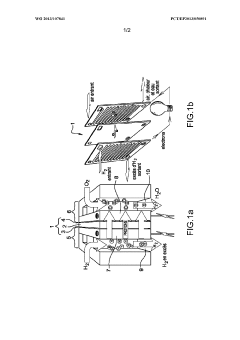
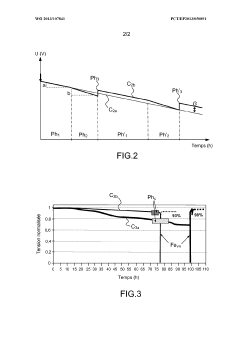
- A method involving three phases: an initial phase with pure hydrogen to establish a baseline voltage slope, a second phase with hydrogen and sulfur-based impurities to poison the catalytic electrode, and a third phase of regeneration with reduced hydrogen flow to oxidize and eliminate the impurities, thereby controlling the oxidation potential and reducing degradation.
Method and Apparatus for Extending the Service Life of Proton Exchange Membrane Fuel Cells
PatentInactiveJP2012533147A
Innovation
- Reversing the function of the anode and cathode electrodes in PEMFCs by exchanging their roles, either physically or by reversing the gas supply, to protect the degraded cathode and utilize the pristine anode as the new cathode, thereby suppressing the 'proton pump' effect and reducing hydrogen depletion.


Environmental Impact Assessment of Long-Term Operation
The environmental implications of long-term operation differ significantly between rotary engines and Proton Exchange Membrane Fuel Cells (PEMFCs), with each technology presenting distinct sustainability profiles over extended operational periods. These differences become particularly pronounced when evaluating lifecycle environmental impacts, resource consumption patterns, and end-of-life disposal considerations.
Rotary engines demonstrate relatively stable environmental performance throughout their operational lifespan, primarily generating emissions through combustion processes. The environmental impact remains consistent over time, with gradual increases in pollutant emissions as engine components wear and combustion efficiency decreases. Carbon dioxide, nitrogen oxides, and hydrocarbon emissions typically increase by 15-25% over a 10-year operational period due to seal degradation and reduced compression ratios.
PEMFC systems exhibit more complex environmental impact evolution during long-term operation. Initial environmental benefits from zero direct emissions gradually diminish as system efficiency decreases and maintenance requirements increase. Catalyst degradation necessitates periodic replacement of platinum-based components, introducing significant environmental costs associated with precious metal mining and processing. The carbon footprint of catalyst replacement can account for 20-30% of the total lifecycle environmental impact.
Water management presents contrasting environmental challenges for both technologies. Rotary engines consume water indirectly through fuel production and refining processes, while PEMFCs require high-purity water for operation and generate water as a byproduct. Long-term PEMFC operation may lead to water contamination issues requiring specialized treatment systems, particularly in stationary applications where water accumulation becomes problematic.
Material degradation patterns significantly influence environmental impact trajectories. Rotary engines experience gradual wear of metallic components, which are generally recyclable through established automotive recycling networks. PEMFC degradation involves complex membrane and catalyst layer deterioration, creating specialized waste streams requiring dedicated recycling processes that are currently limited in availability and effectiveness.
The manufacturing intensity required for component replacement differs substantially between technologies. Rotary engines typically require replacement of conventional mechanical parts with established supply chains and manufacturing processes. PEMFC maintenance involves sophisticated membrane electrode assemblies and balance-of-plant components with higher embodied energy and more complex manufacturing requirements, amplifying the environmental impact of long-term operation.
Energy recovery potential at end-of-life varies considerably between the two technologies. Rotary engine components maintain significant material value through conventional metal recycling processes, achieving recovery rates of 85-90% for primary materials. PEMFC systems present recycling challenges due to material complexity and contamination, with current recovery rates for critical materials like platinum reaching only 60-70% in optimal scenarios.
Rotary engines demonstrate relatively stable environmental performance throughout their operational lifespan, primarily generating emissions through combustion processes. The environmental impact remains consistent over time, with gradual increases in pollutant emissions as engine components wear and combustion efficiency decreases. Carbon dioxide, nitrogen oxides, and hydrocarbon emissions typically increase by 15-25% over a 10-year operational period due to seal degradation and reduced compression ratios.
PEMFC systems exhibit more complex environmental impact evolution during long-term operation. Initial environmental benefits from zero direct emissions gradually diminish as system efficiency decreases and maintenance requirements increase. Catalyst degradation necessitates periodic replacement of platinum-based components, introducing significant environmental costs associated with precious metal mining and processing. The carbon footprint of catalyst replacement can account for 20-30% of the total lifecycle environmental impact.
Water management presents contrasting environmental challenges for both technologies. Rotary engines consume water indirectly through fuel production and refining processes, while PEMFCs require high-purity water for operation and generate water as a byproduct. Long-term PEMFC operation may lead to water contamination issues requiring specialized treatment systems, particularly in stationary applications where water accumulation becomes problematic.
Material degradation patterns significantly influence environmental impact trajectories. Rotary engines experience gradual wear of metallic components, which are generally recyclable through established automotive recycling networks. PEMFC degradation involves complex membrane and catalyst layer deterioration, creating specialized waste streams requiring dedicated recycling processes that are currently limited in availability and effectiveness.
The manufacturing intensity required for component replacement differs substantially between technologies. Rotary engines typically require replacement of conventional mechanical parts with established supply chains and manufacturing processes. PEMFC maintenance involves sophisticated membrane electrode assemblies and balance-of-plant components with higher embodied energy and more complex manufacturing requirements, amplifying the environmental impact of long-term operation.
Energy recovery potential at end-of-life varies considerably between the two technologies. Rotary engine components maintain significant material value through conventional metal recycling processes, achieving recovery rates of 85-90% for primary materials. PEMFC systems present recycling challenges due to material complexity and contamination, with current recovery rates for critical materials like platinum reaching only 60-70% in optimal scenarios.
Cost-Benefit Analysis of Longevity Improvements
The economic evaluation of longevity improvements in rotary and PEMFC fuel cell technologies reveals distinct cost-benefit profiles that significantly influence investment decisions and market adoption strategies. Initial capital expenditure analysis demonstrates that while rotary fuel cells typically require lower upfront investment due to simpler manufacturing processes, PEMFC systems command premium pricing reflecting their advanced materials and precision engineering requirements.
Operational cost structures present contrasting patterns over extended service periods. Rotary systems exhibit predictable maintenance schedules with standardized component replacement intervals, enabling accurate lifecycle cost modeling. The mechanical nature of rotary designs allows for modular repairs and refurbishment, distributing maintenance expenses across operational years. Conversely, PEMFC systems demonstrate higher operational efficiency translating to reduced fuel consumption costs, though membrane degradation necessitates more frequent and expensive component replacements.
Longevity enhancement investments yield different returns across both technologies. For rotary systems, durability improvements through advanced materials and precision manufacturing typically require moderate capital increases while delivering substantial operational cost reductions through extended service intervals. The mechanical robustness inherent in rotary designs amplifies the value proposition of longevity investments, as enhanced durability directly correlates with reduced downtime and maintenance frequency.
PEMFC longevity improvements present more complex cost-benefit calculations. Advanced membrane technologies, improved catalyst formulations, and enhanced system integration require significant research and development investments. However, these improvements address fundamental degradation mechanisms, potentially extending operational life from current industry standards of 5,000-8,000 hours to target specifications exceeding 40,000 hours for stationary applications.
The total cost of ownership analysis reveals that longevity improvements in both technologies generate positive returns, though through different mechanisms. Rotary systems benefit from reduced maintenance labor costs and extended replacement cycles, while PEMFC improvements primarily deliver value through enhanced fuel efficiency and reduced system replacement frequency. Market conditions, application requirements, and operational environments significantly influence the optimal investment strategy for longevity enhancement in each technology platform.
Operational cost structures present contrasting patterns over extended service periods. Rotary systems exhibit predictable maintenance schedules with standardized component replacement intervals, enabling accurate lifecycle cost modeling. The mechanical nature of rotary designs allows for modular repairs and refurbishment, distributing maintenance expenses across operational years. Conversely, PEMFC systems demonstrate higher operational efficiency translating to reduced fuel consumption costs, though membrane degradation necessitates more frequent and expensive component replacements.
Longevity enhancement investments yield different returns across both technologies. For rotary systems, durability improvements through advanced materials and precision manufacturing typically require moderate capital increases while delivering substantial operational cost reductions through extended service intervals. The mechanical robustness inherent in rotary designs amplifies the value proposition of longevity investments, as enhanced durability directly correlates with reduced downtime and maintenance frequency.
PEMFC longevity improvements present more complex cost-benefit calculations. Advanced membrane technologies, improved catalyst formulations, and enhanced system integration require significant research and development investments. However, these improvements address fundamental degradation mechanisms, potentially extending operational life from current industry standards of 5,000-8,000 hours to target specifications exceeding 40,000 hours for stationary applications.
The total cost of ownership analysis reveals that longevity improvements in both technologies generate positive returns, though through different mechanisms. Rotary systems benefit from reduced maintenance labor costs and extended replacement cycles, while PEMFC improvements primarily deliver value through enhanced fuel efficiency and reduced system replacement frequency. Market conditions, application requirements, and operational environments significantly influence the optimal investment strategy for longevity enhancement in each technology platform.
Unlock deeper insights with PatSnap Eureka Quick Research — get a full tech report to explore trends and direct your research. Try now!
Generate Your Research Report Instantly with AI Agent
Supercharge your innovation with PatSnap Eureka AI Agent Platform!