

Evaluating Adhesive Flexibility in Variable Temperatures
MAR 12, 20269 MIN READ
Generate Your Research Report Instantly with AI Agent
PatSnap Eureka helps you evaluate technical feasibility & market potential.
Adhesive Temperature Performance Background and Objectives
Adhesive materials have undergone significant evolution since their early development in the mid-20th century, transitioning from simple mechanical bonding solutions to sophisticated chemical formulations capable of withstanding extreme environmental conditions. The historical progression of adhesive technology reveals a consistent challenge: maintaining optimal bonding performance across varying temperature ranges while preserving material flexibility.
Traditional adhesive formulations often exhibited brittle failure modes at low temperatures or excessive softening at elevated temperatures, creating reliability concerns in critical applications. The aerospace industry's demanding requirements in the 1960s catalyzed initial research into temperature-resistant adhesives, followed by automotive sector needs for materials capable of withstanding engine compartment heat cycles and winter cold exposure.
Contemporary adhesive applications span diverse temperature environments, from cryogenic storage facilities operating below -40°C to industrial processes exceeding 200°C. Electronic device manufacturing requires adhesives that maintain flexibility during thermal cycling, while construction applications demand materials that perform consistently across seasonal temperature variations. The growing renewable energy sector, particularly solar panel installations, has intensified requirements for adhesives that retain flexibility under prolonged UV exposure and temperature fluctuations.
Current market demands emphasize the development of adhesive systems that demonstrate predictable mechanical properties across temperature ranges while maintaining long-term durability. The challenge extends beyond simple temperature resistance to encompass dynamic flexibility requirements, where materials must accommodate thermal expansion and contraction without compromising bond integrity.
The primary objective of evaluating adhesive flexibility in variable temperatures centers on establishing comprehensive testing methodologies that accurately predict real-world performance. This involves developing standardized protocols for measuring flexibility retention across temperature cycles, quantifying the relationship between temperature exposure and mechanical property degradation, and identifying optimal formulation strategies for specific application requirements.
Secondary objectives include creating predictive models for adhesive behavior under thermal stress, establishing performance benchmarks for different adhesive chemistries, and developing accelerated testing procedures that correlate with long-term field performance. These efforts aim to reduce product development cycles while ensuring reliable performance in temperature-sensitive applications.
Traditional adhesive formulations often exhibited brittle failure modes at low temperatures or excessive softening at elevated temperatures, creating reliability concerns in critical applications. The aerospace industry's demanding requirements in the 1960s catalyzed initial research into temperature-resistant adhesives, followed by automotive sector needs for materials capable of withstanding engine compartment heat cycles and winter cold exposure.
Contemporary adhesive applications span diverse temperature environments, from cryogenic storage facilities operating below -40°C to industrial processes exceeding 200°C. Electronic device manufacturing requires adhesives that maintain flexibility during thermal cycling, while construction applications demand materials that perform consistently across seasonal temperature variations. The growing renewable energy sector, particularly solar panel installations, has intensified requirements for adhesives that retain flexibility under prolonged UV exposure and temperature fluctuations.
Current market demands emphasize the development of adhesive systems that demonstrate predictable mechanical properties across temperature ranges while maintaining long-term durability. The challenge extends beyond simple temperature resistance to encompass dynamic flexibility requirements, where materials must accommodate thermal expansion and contraction without compromising bond integrity.
The primary objective of evaluating adhesive flexibility in variable temperatures centers on establishing comprehensive testing methodologies that accurately predict real-world performance. This involves developing standardized protocols for measuring flexibility retention across temperature cycles, quantifying the relationship between temperature exposure and mechanical property degradation, and identifying optimal formulation strategies for specific application requirements.
Secondary objectives include creating predictive models for adhesive behavior under thermal stress, establishing performance benchmarks for different adhesive chemistries, and developing accelerated testing procedures that correlate with long-term field performance. These efforts aim to reduce product development cycles while ensuring reliable performance in temperature-sensitive applications.
Market Demand for Temperature-Resistant Adhesive Solutions
The global adhesive market is experiencing unprecedented demand for temperature-resistant solutions across multiple industrial sectors. Automotive manufacturers require adhesives that maintain structural integrity across extreme temperature ranges, from arctic cold starts to engine compartment heat exposure. These applications demand materials that preserve flexibility and bonding strength throughout thermal cycling without compromising safety or performance standards.
Aerospace and defense industries represent another critical demand driver, where adhesives must function reliably in environments ranging from sub-zero stratospheric conditions to high-temperature propulsion systems. The increasing adoption of lightweight composite materials in aircraft construction has intensified the need for flexible bonding solutions that can accommodate thermal expansion differentials between dissimilar materials.
Electronics manufacturing sectors are witnessing growing requirements for temperature-flexible adhesives due to miniaturization trends and increased power densities in modern devices. Consumer electronics, automotive electronics, and industrial control systems all require adhesive solutions that maintain electrical insulation properties while accommodating thermal stress from operational heating and environmental temperature variations.
Construction and infrastructure markets are driving demand for weather-resistant adhesive systems capable of withstanding seasonal temperature fluctuations while maintaining structural bonds. Green building initiatives and energy-efficient construction methods have created specific needs for adhesives that perform consistently across building envelope applications where thermal bridging and expansion joint management are critical.
The renewable energy sector, particularly solar panel manufacturing and wind turbine assembly, requires adhesives that endure decades of thermal cycling while maintaining optical clarity and structural integrity. These applications demand solutions that resist degradation from ultraviolet exposure combined with temperature variations.
Industrial manufacturing processes increasingly rely on automated assembly lines where temperature-resistant adhesives enable faster production cycles and improved quality control. The trend toward just-in-time manufacturing has created demand for adhesive systems that cure reliably across varying ambient conditions without requiring extensive environmental controls.
Market growth is further accelerated by regulatory requirements for safer, more durable products across industries. Environmental regulations promoting longer product lifecycles and reduced maintenance requirements have elevated the importance of temperature-stable adhesive performance in product design specifications.
Aerospace and defense industries represent another critical demand driver, where adhesives must function reliably in environments ranging from sub-zero stratospheric conditions to high-temperature propulsion systems. The increasing adoption of lightweight composite materials in aircraft construction has intensified the need for flexible bonding solutions that can accommodate thermal expansion differentials between dissimilar materials.
Electronics manufacturing sectors are witnessing growing requirements for temperature-flexible adhesives due to miniaturization trends and increased power densities in modern devices. Consumer electronics, automotive electronics, and industrial control systems all require adhesive solutions that maintain electrical insulation properties while accommodating thermal stress from operational heating and environmental temperature variations.
Construction and infrastructure markets are driving demand for weather-resistant adhesive systems capable of withstanding seasonal temperature fluctuations while maintaining structural bonds. Green building initiatives and energy-efficient construction methods have created specific needs for adhesives that perform consistently across building envelope applications where thermal bridging and expansion joint management are critical.
The renewable energy sector, particularly solar panel manufacturing and wind turbine assembly, requires adhesives that endure decades of thermal cycling while maintaining optical clarity and structural integrity. These applications demand solutions that resist degradation from ultraviolet exposure combined with temperature variations.
Industrial manufacturing processes increasingly rely on automated assembly lines where temperature-resistant adhesives enable faster production cycles and improved quality control. The trend toward just-in-time manufacturing has created demand for adhesive systems that cure reliably across varying ambient conditions without requiring extensive environmental controls.
Market growth is further accelerated by regulatory requirements for safer, more durable products across industries. Environmental regulations promoting longer product lifecycles and reduced maintenance requirements have elevated the importance of temperature-stable adhesive performance in product design specifications.
Current State and Challenges of Adhesive Flexibility Testing
The current landscape of adhesive flexibility testing under variable temperature conditions presents a complex array of methodologies and standards, yet significant gaps remain in achieving comprehensive evaluation protocols. Traditional testing approaches primarily rely on standardized methods such as ASTM D1002 for lap shear strength and ASTM D903 for peel strength, but these standards were originally developed for ambient temperature conditions and lack specific provisions for dynamic temperature cycling scenarios.
Existing testing infrastructure predominantly utilizes environmental chambers coupled with mechanical testing equipment to simulate temperature variations. However, the majority of current setups focus on static temperature points rather than continuous temperature transitions, which fails to capture the real-world performance of adhesives subjected to thermal cycling. This limitation creates a disconnect between laboratory results and actual application performance.
The measurement of flexibility parameters presents substantial technical challenges, particularly in defining and quantifying flexibility metrics that remain consistent across temperature ranges. Current approaches often rely on modulus measurements, elongation at break, and peel strength variations, but these parameters may not fully capture the complex viscoelastic behavior of adhesives under thermal stress. The lack of standardized flexibility metrics specific to temperature-variable conditions hampers comparative analysis across different adhesive formulations.
Temperature control precision emerges as a critical constraint in existing testing methodologies. Many conventional environmental chambers exhibit temperature gradients and response delays that introduce variability in test results. The challenge intensifies when attempting to replicate rapid temperature transitions or maintain precise temperature profiles during mechanical loading, as thermal equilibrium requirements often conflict with testing timeline constraints.
Sample preparation and conditioning protocols represent another significant challenge area. Current practices vary widely regarding pre-conditioning times, temperature ramp rates, and humidity control during thermal cycling. The absence of standardized conditioning procedures leads to inconsistent baseline conditions and compromises result reproducibility across different testing facilities.
Data interpretation complexity increases substantially when analyzing flexibility performance across temperature ranges. Traditional pass/fail criteria become inadequate when dealing with continuous performance curves, requiring more sophisticated analytical approaches to establish acceptance criteria and performance thresholds. The integration of multiple temperature-dependent parameters into meaningful performance indicators remains an ongoing challenge for the industry.
Existing testing infrastructure predominantly utilizes environmental chambers coupled with mechanical testing equipment to simulate temperature variations. However, the majority of current setups focus on static temperature points rather than continuous temperature transitions, which fails to capture the real-world performance of adhesives subjected to thermal cycling. This limitation creates a disconnect between laboratory results and actual application performance.
The measurement of flexibility parameters presents substantial technical challenges, particularly in defining and quantifying flexibility metrics that remain consistent across temperature ranges. Current approaches often rely on modulus measurements, elongation at break, and peel strength variations, but these parameters may not fully capture the complex viscoelastic behavior of adhesives under thermal stress. The lack of standardized flexibility metrics specific to temperature-variable conditions hampers comparative analysis across different adhesive formulations.
Temperature control precision emerges as a critical constraint in existing testing methodologies. Many conventional environmental chambers exhibit temperature gradients and response delays that introduce variability in test results. The challenge intensifies when attempting to replicate rapid temperature transitions or maintain precise temperature profiles during mechanical loading, as thermal equilibrium requirements often conflict with testing timeline constraints.
Sample preparation and conditioning protocols represent another significant challenge area. Current practices vary widely regarding pre-conditioning times, temperature ramp rates, and humidity control during thermal cycling. The absence of standardized conditioning procedures leads to inconsistent baseline conditions and compromises result reproducibility across different testing facilities.
Data interpretation complexity increases substantially when analyzing flexibility performance across temperature ranges. Traditional pass/fail criteria become inadequate when dealing with continuous performance curves, requiring more sophisticated analytical approaches to establish acceptance criteria and performance thresholds. The integration of multiple temperature-dependent parameters into meaningful performance indicators remains an ongoing challenge for the industry.
Existing Methods for Adhesive Temperature Flexibility Assessment
01 Use of flexible polymer resins in adhesive formulations
Incorporating flexible polymer resins such as polyurethanes, acrylics, or silicone-based polymers into adhesive compositions can significantly enhance flexibility. These polymers provide elastic properties that allow the adhesive to withstand bending, stretching, and movement without cracking or delaminating. The molecular structure of these resins enables them to maintain adhesion while accommodating substrate deformation.- Use of flexible polymer resins in adhesive formulations: Incorporating flexible polymer resins such as polyurethanes, acrylics, or silicone-based polymers into adhesive compositions can significantly enhance flexibility. These polymers provide elastic properties that allow the adhesive to withstand bending, stretching, and movement without cracking or delaminating. The molecular structure of these resins enables them to maintain bonding strength while accommodating substrate deformation.
- Addition of plasticizers to improve adhesive flexibility: Plasticizers are commonly added to adhesive formulations to increase flexibility and reduce brittleness. These additives work by reducing intermolecular forces between polymer chains, allowing greater molecular mobility. Common plasticizers include phthalates, adipates, and bio-based alternatives that can be tailored to specific flexibility requirements while maintaining adhesive performance.
- Incorporation of elastomeric modifiers and rubber components: Adding elastomeric modifiers or rubber-based components to adhesive systems enhances flexibility and impact resistance. These materials provide elastic recovery properties and improve the adhesive's ability to absorb stress and strain. The elastomeric phase can be distributed throughout the adhesive matrix to create a more flexible bonding system suitable for dynamic applications.
- Optimization of crosslinking density and curing conditions: Controlling the crosslinking density and curing parameters of adhesives is crucial for achieving desired flexibility. Lower crosslink density generally results in more flexible adhesives, while maintaining adequate cohesive strength. Adjusting curing temperature, time, and catalyst concentration allows for fine-tuning of the balance between flexibility and mechanical properties.
- Use of flexible substrate-compatible adhesive systems: Developing adhesive systems specifically designed for flexible substrates involves selecting compatible base polymers and additives that match the mechanical properties of the bonding surfaces. These formulations often include tackifiers, softening agents, and specific resin blends that maintain adhesion during substrate flexing, bending, or elongation while preventing stress concentration at the bond line.
02 Addition of plasticizers to improve adhesive flexibility
Plasticizers are commonly added to adhesive formulations to increase flexibility and reduce brittleness. These additives work by reducing intermolecular forces between polymer chains, allowing greater molecular mobility. Common plasticizers include phthalates, adipates, and bio-based alternatives that can be tailored to specific flexibility requirements while maintaining adhesive strength.Expand Specific Solutions03 Incorporation of elastomeric modifiers and rubber components
Adding elastomeric modifiers or rubber-based components to adhesive systems enhances flexibility and impact resistance. These materials provide elastic recovery properties and improve the adhesive's ability to absorb stress and strain. Synthetic rubbers, thermoplastic elastomers, and modified natural rubbers can be blended into adhesive formulations to achieve desired flexibility characteristics.Expand Specific Solutions04 Use of flexible crosslinking agents and curing systems
Selecting appropriate crosslinking agents and curing systems is crucial for achieving adhesive flexibility. Flexible crosslinkers create network structures with longer chain segments between crosslink points, allowing for greater molecular movement. Dynamic curing systems and controlled crosslink density enable the adhesive to maintain flexibility while providing adequate cohesive strength and durability.Expand Specific Solutions05 Optimization of filler and reinforcement materials for flexibility
The selection and modification of fillers and reinforcement materials significantly impact adhesive flexibility. Using nano-scale fillers, flexible fiber reinforcements, or surface-treated particles can enhance flexibility while maintaining mechanical properties. The particle size, shape, and surface chemistry of these additives can be optimized to reduce stiffness and improve the adhesive's ability to flex with bonded substrates.Expand Specific Solutions
Key Players in Adhesive and Testing Equipment Industry
The adhesive flexibility evaluation market in variable temperatures represents a mature yet evolving sector driven by increasing demands across automotive, electronics, and construction industries. The market demonstrates substantial scale with established players like Henkel AG & Co. KGaA, 3M Innovative Properties, and H.B. Fuller leading through comprehensive adhesive portfolios. Technology maturity varies significantly across applications, with companies like Nitto Denko Corp., Bostik Inc., and Sika Technology AG advancing temperature-resistant formulations. Asian manufacturers including Samsung Electronics, Shin-Etsu Chemical, and Toagosei Co. are intensifying competition through specialized electronic and industrial adhesives. The competitive landscape shows consolidation among major players while emerging companies like SSI New Material focus on intelligent device applications, indicating a shift toward high-performance, temperature-adaptive solutions that meet stringent reliability requirements across diverse operating environments.
Henkel AG & Co. KGaA
Technical Solution: Henkel has developed advanced structural adhesives with temperature-adaptive properties, utilizing modified epoxy and polyurethane chemistries that maintain flexibility across temperature ranges from -40°C to +150°C. Their LOCTITE series incorporates thermoplastic modifiers and plasticizers that provide controlled flexibility while maintaining bond strength. The company employs dynamic mechanical analysis (DMA) and differential scanning calorimetry (DSC) for comprehensive temperature performance evaluation, ensuring consistent adhesive performance in automotive and aerospace applications where thermal cycling is critical.
Strengths: Extensive R&D capabilities, proven automotive applications, comprehensive testing protocols. Weaknesses: Higher cost compared to standard adhesives, complex formulation requirements.
Nitto Denko Corp.
Technical Solution: Nitto Denko specializes in pressure-sensitive adhesives with temperature-responsive flexibility through their advanced polymer blending technology. Their adhesives incorporate thermoplastic elastomers and tackifying resins that maintain optimal peel and shear strength across temperature variations from -20°C to +120°C. The company employs sophisticated rheological testing and temperature sweep analysis to characterize adhesive flexibility, ensuring consistent performance in electronic device applications where thermal management is crucial. Their solutions feature controlled glass transition temperatures that optimize flexibility at operating conditions.
Strengths: Strong electronics market presence, advanced polymer technology, precise temperature control. Weaknesses: Limited structural adhesive portfolio, focus primarily on tape applications.
Core Innovations in Temperature-Adaptive Adhesive Formulations
Method to improve high temperature cohesive strength with adhesive having multi-phase system
PatentInactiveUS7160946B2
Innovation
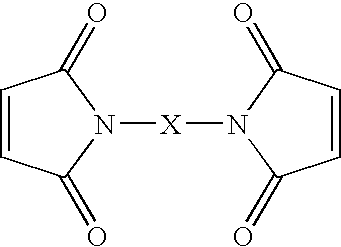
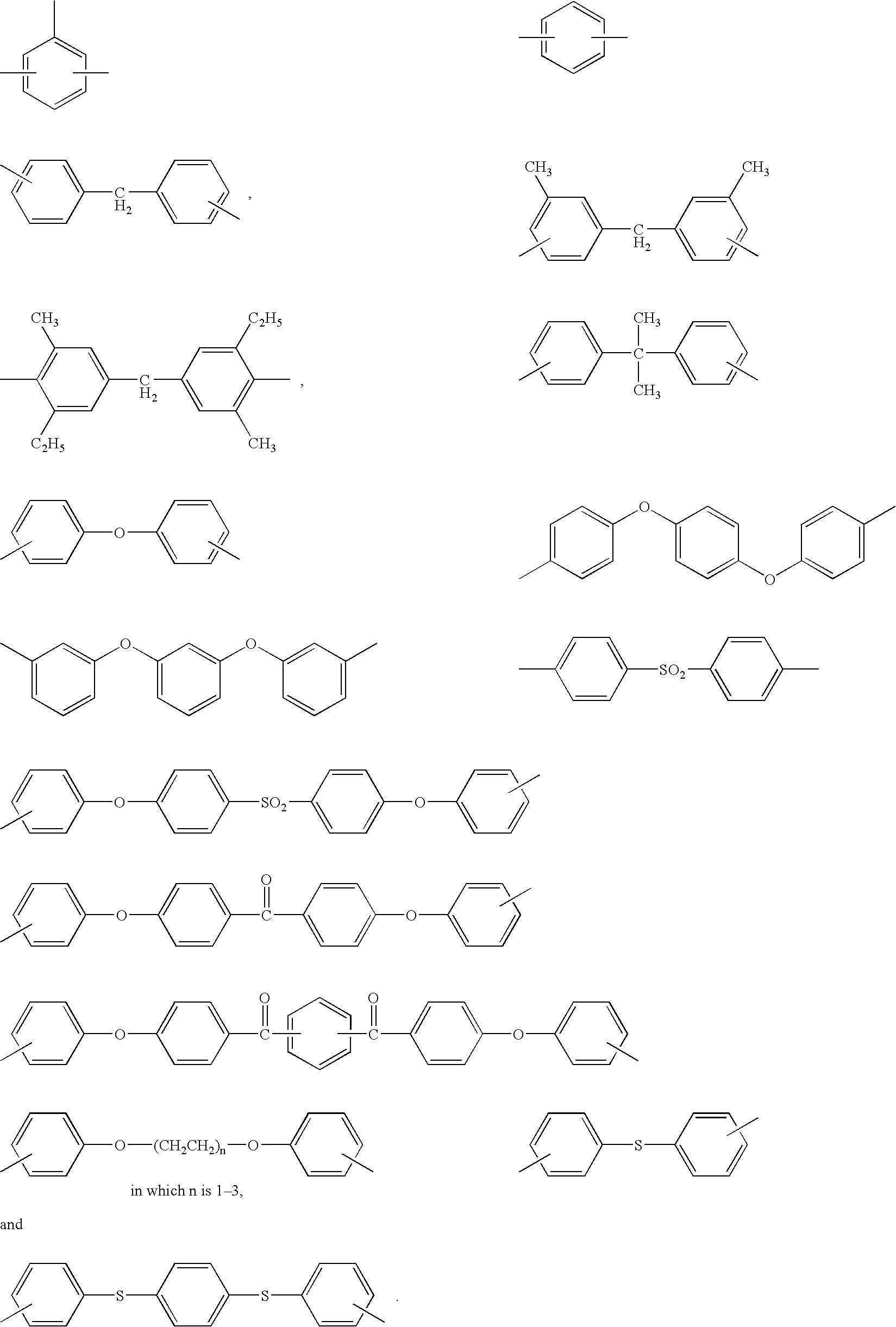
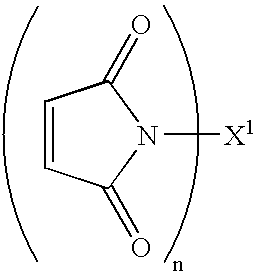
- Incorporating a solid aromatic bismaleimide (BMI) resin powder into a die attach formulation with a curable resin and filler, which maintains a multi-phase system before and after curing, enhancing cohesive strength at high temperatures without significant loss of room temperature flexibility.

Semiconductor device, semiconductor chip mounting substrate, methods of manufacturing the device and substrate, adhesive, and adhesive double coated film
PatentInactiveEP0959498B1
Innovation
- A semiconductor device using an adhesive with a storage elastic modulus of 10 to 2,000 MPa at 25°C and 3 to 50 MPa at 260°C, composed of epoxy resin, epoxy-group-containing acrylic copolymer, and a curing accelerator, applied as a film to ensure reliable bonding and thermal stress relaxation, along with a double-sided adhesive film structure for improved handling and thermal performance.


Environmental Standards for Adhesive Temperature Performance
The establishment of comprehensive environmental standards for adhesive temperature performance has become increasingly critical as industries demand reliable bonding solutions across diverse thermal conditions. Current international standards primarily focus on static temperature testing, but emerging requirements emphasize dynamic temperature cycling and real-world environmental simulation to better reflect actual service conditions.
ASTM D1002 and ISO 4587 represent foundational standards for adhesive shear strength testing at elevated temperatures, typically ranging from -40°C to 200°C depending on application requirements. These standards establish baseline performance metrics but often fall short of addressing the complex thermal cycling scenarios encountered in automotive, aerospace, and electronics applications.
The European EN 15870 standard specifically addresses structural adhesives under variable temperature conditions, requiring testing protocols that simulate seasonal temperature variations and thermal shock scenarios. This standard mandates minimum flexibility retention of 80% after 1000 thermal cycles between specified temperature extremes, providing a more realistic assessment framework for long-term performance evaluation.
Recent developments in environmental testing standards have introduced accelerated aging protocols that combine temperature cycling with humidity exposure and UV radiation. The ASTM D5868 standard now incorporates multi-factor environmental exposure testing, recognizing that adhesive flexibility degradation rarely occurs under isolated temperature stress alone.
Industry-specific standards have emerged to address unique thermal performance requirements. The automotive sector follows SAE J1553 for interior adhesives and SAE J1559 for under-hood applications, with temperature ranges extending from -40°C to 150°C. Aerospace applications adhere to ASTM D5363, which demands performance validation across extreme temperature ranges of -65°C to 260°C.
Emerging standards development focuses on establishing standardized flexibility measurement techniques across temperature ranges. The proposed ISO 19095 standard aims to harmonize global testing methodologies for adhesive flexibility assessment, incorporating dynamic mechanical analysis and peel strength evaluation under controlled thermal conditions to ensure consistent performance benchmarking across different testing laboratories and geographical regions.
ASTM D1002 and ISO 4587 represent foundational standards for adhesive shear strength testing at elevated temperatures, typically ranging from -40°C to 200°C depending on application requirements. These standards establish baseline performance metrics but often fall short of addressing the complex thermal cycling scenarios encountered in automotive, aerospace, and electronics applications.
The European EN 15870 standard specifically addresses structural adhesives under variable temperature conditions, requiring testing protocols that simulate seasonal temperature variations and thermal shock scenarios. This standard mandates minimum flexibility retention of 80% after 1000 thermal cycles between specified temperature extremes, providing a more realistic assessment framework for long-term performance evaluation.
Recent developments in environmental testing standards have introduced accelerated aging protocols that combine temperature cycling with humidity exposure and UV radiation. The ASTM D5868 standard now incorporates multi-factor environmental exposure testing, recognizing that adhesive flexibility degradation rarely occurs under isolated temperature stress alone.
Industry-specific standards have emerged to address unique thermal performance requirements. The automotive sector follows SAE J1553 for interior adhesives and SAE J1559 for under-hood applications, with temperature ranges extending from -40°C to 150°C. Aerospace applications adhere to ASTM D5363, which demands performance validation across extreme temperature ranges of -65°C to 260°C.
Emerging standards development focuses on establishing standardized flexibility measurement techniques across temperature ranges. The proposed ISO 19095 standard aims to harmonize global testing methodologies for adhesive flexibility assessment, incorporating dynamic mechanical analysis and peel strength evaluation under controlled thermal conditions to ensure consistent performance benchmarking across different testing laboratories and geographical regions.
Quality Assurance Protocols for Temperature-Cycled Adhesives
Quality assurance protocols for temperature-cycled adhesives represent a critical framework for ensuring consistent performance and reliability across diverse thermal environments. These protocols establish systematic procedures for validating adhesive behavior under controlled temperature variations, providing manufacturers and end-users with confidence in product performance. The implementation of robust quality assurance measures becomes particularly essential when adhesives are subjected to repeated thermal cycling, where material properties can degrade over time due to thermal stress and fatigue.
The foundation of effective quality assurance lies in establishing standardized testing procedures that accurately simulate real-world temperature exposure conditions. These procedures must account for factors such as heating and cooling rates, dwell times at extreme temperatures, and the number of thermal cycles required to demonstrate long-term reliability. Industry standards such as ASTM D1002 and ISO 4587 provide baseline methodologies, but specific applications often require customized protocols that reflect actual service conditions.
Documentation and traceability form essential components of comprehensive quality assurance systems. Each batch of temperature-cycled adhesive must be accompanied by detailed test records, including baseline performance measurements, thermal cycling parameters, and post-cycle evaluation results. This documentation enables trend analysis and facilitates rapid identification of performance deviations that could indicate manufacturing inconsistencies or material degradation.
Statistical process control methods play a vital role in maintaining consistent quality standards. Control charts and capability studies help identify process variations before they result in product failures, while acceptance sampling plans ensure that only adhesives meeting specified performance criteria reach end-users. These statistical tools become particularly valuable when dealing with the inherent variability associated with thermal cycling effects.
Calibration and maintenance of testing equipment represent fundamental requirements for reliable quality assurance outcomes. Temperature chambers, mechanical testing apparatus, and measurement instruments must undergo regular calibration to ensure accuracy and repeatability. Environmental conditions within testing facilities must also be controlled to minimize external influences on test results.
Continuous improvement processes should be integrated into quality assurance protocols to incorporate lessons learned from field performance data and emerging industry best practices. Regular review and updating of testing procedures ensure that quality standards evolve alongside technological advances and changing application requirements, maintaining the relevance and effectiveness of quality assurance measures.
The foundation of effective quality assurance lies in establishing standardized testing procedures that accurately simulate real-world temperature exposure conditions. These procedures must account for factors such as heating and cooling rates, dwell times at extreme temperatures, and the number of thermal cycles required to demonstrate long-term reliability. Industry standards such as ASTM D1002 and ISO 4587 provide baseline methodologies, but specific applications often require customized protocols that reflect actual service conditions.
Documentation and traceability form essential components of comprehensive quality assurance systems. Each batch of temperature-cycled adhesive must be accompanied by detailed test records, including baseline performance measurements, thermal cycling parameters, and post-cycle evaluation results. This documentation enables trend analysis and facilitates rapid identification of performance deviations that could indicate manufacturing inconsistencies or material degradation.
Statistical process control methods play a vital role in maintaining consistent quality standards. Control charts and capability studies help identify process variations before they result in product failures, while acceptance sampling plans ensure that only adhesives meeting specified performance criteria reach end-users. These statistical tools become particularly valuable when dealing with the inherent variability associated with thermal cycling effects.
Calibration and maintenance of testing equipment represent fundamental requirements for reliable quality assurance outcomes. Temperature chambers, mechanical testing apparatus, and measurement instruments must undergo regular calibration to ensure accuracy and repeatability. Environmental conditions within testing facilities must also be controlled to minimize external influences on test results.
Continuous improvement processes should be integrated into quality assurance protocols to incorporate lessons learned from field performance data and emerging industry best practices. Regular review and updating of testing procedures ensure that quality standards evolve alongside technological advances and changing application requirements, maintaining the relevance and effectiveness of quality assurance measures.
Unlock deeper insights with PatSnap Eureka Quick Research — get a full tech report to explore trends and direct your research. Try now!
Generate Your Research Report Instantly with AI Agent
Supercharge your innovation with PatSnap Eureka AI Agent Platform!