
Evaluating Optical Circuit Switches: Key Performance Metrics
APR 21, 20269 MIN READ
Generate Your Research Report Instantly with AI Agent
Patsnap Eureka helps you evaluate technical feasibility & market potential.
Optical Circuit Switch Technology Background and Objectives
Optical circuit switching technology emerged in the 1990s as a revolutionary approach to address the growing bandwidth demands of telecommunications networks. Unlike traditional electronic switching, optical circuit switches (OCS) enable direct manipulation of optical signals without optical-to-electrical conversion, fundamentally transforming how data centers and telecommunications infrastructure handle high-volume traffic routing.
The evolution of OCS technology has been driven by the exponential growth in data consumption, cloud computing adoption, and the proliferation of bandwidth-intensive applications. Early implementations focused primarily on long-haul telecommunications networks, where the technology demonstrated significant advantages in reducing power consumption and latency compared to electronic alternatives.
Modern optical circuit switches have expanded beyond traditional telecommunications into data center interconnects, high-performance computing clusters, and emerging applications in artificial intelligence and machine learning infrastructures. The technology has evolved from simple 2D MEMS-based systems to sophisticated 3D switching architectures capable of handling hundreds of fiber connections simultaneously.
The fundamental principle underlying OCS technology involves redirecting optical beams through micro-electromechanical systems (MEMS), liquid crystal arrays, or other optical manipulation techniques. This approach eliminates the need for optical-electrical-optical conversion, resulting in protocol-agnostic switching capabilities that can handle various data formats and transmission speeds without modification.
Current technological objectives center on achieving sub-millisecond switching times while maintaining exceptional optical performance characteristics. Industry leaders are pursuing switching speeds approaching 100 microseconds, representing a significant improvement over current commercial systems that typically operate in the 10-20 millisecond range.
Scalability remains a primary objective, with research focusing on developing switches capable of handling 1000+ port configurations while maintaining low insertion loss and high isolation ratios. Advanced manufacturing techniques and novel optical designs are being explored to achieve these ambitious scaling targets.
Integration with software-defined networking (SDN) architectures represents another critical objective, enabling dynamic network reconfiguration and intelligent traffic management. This integration aims to create adaptive networks that can automatically optimize routing based on real-time traffic patterns and application requirements.
The technology roadmap emphasizes improving reliability and reducing operational complexity, targeting mean time between failures exceeding 20 years while simplifying installation and maintenance procedures for widespread commercial adoption.
The evolution of OCS technology has been driven by the exponential growth in data consumption, cloud computing adoption, and the proliferation of bandwidth-intensive applications. Early implementations focused primarily on long-haul telecommunications networks, where the technology demonstrated significant advantages in reducing power consumption and latency compared to electronic alternatives.
Modern optical circuit switches have expanded beyond traditional telecommunications into data center interconnects, high-performance computing clusters, and emerging applications in artificial intelligence and machine learning infrastructures. The technology has evolved from simple 2D MEMS-based systems to sophisticated 3D switching architectures capable of handling hundreds of fiber connections simultaneously.
The fundamental principle underlying OCS technology involves redirecting optical beams through micro-electromechanical systems (MEMS), liquid crystal arrays, or other optical manipulation techniques. This approach eliminates the need for optical-electrical-optical conversion, resulting in protocol-agnostic switching capabilities that can handle various data formats and transmission speeds without modification.
Current technological objectives center on achieving sub-millisecond switching times while maintaining exceptional optical performance characteristics. Industry leaders are pursuing switching speeds approaching 100 microseconds, representing a significant improvement over current commercial systems that typically operate in the 10-20 millisecond range.
Scalability remains a primary objective, with research focusing on developing switches capable of handling 1000+ port configurations while maintaining low insertion loss and high isolation ratios. Advanced manufacturing techniques and novel optical designs are being explored to achieve these ambitious scaling targets.
Integration with software-defined networking (SDN) architectures represents another critical objective, enabling dynamic network reconfiguration and intelligent traffic management. This integration aims to create adaptive networks that can automatically optimize routing based on real-time traffic patterns and application requirements.
The technology roadmap emphasizes improving reliability and reducing operational complexity, targeting mean time between failures exceeding 20 years while simplifying installation and maintenance procedures for widespread commercial adoption.
Market Demand Analysis for Optical Circuit Switching Solutions
The global optical circuit switching market is experiencing unprecedented growth driven by the exponential increase in data traffic and the proliferation of cloud-based services. Data centers worldwide are facing mounting pressure to handle massive volumes of information while maintaining ultra-low latency and high reliability. Traditional electronic switching solutions are reaching their physical limitations in terms of power consumption and switching speeds, creating a compelling market opportunity for optical circuit switching technologies.
Telecommunications service providers represent the largest demand segment for optical circuit switching solutions. These organizations require dynamic bandwidth allocation capabilities to efficiently manage network resources and reduce operational costs. The ability to reconfigure optical paths in real-time without electronic conversion has become increasingly valuable as network traffic patterns become more unpredictable and bursty in nature.
Enterprise data centers constitute another significant market segment, particularly those supporting high-performance computing applications and artificial intelligence workloads. These environments demand ultra-low latency connections between servers and storage systems, where even microsecond delays can impact performance. Optical circuit switches offer the potential to create direct optical paths between computing resources, eliminating multiple electronic hops and associated latency penalties.
The financial services industry has emerged as an early adopter of optical circuit switching technology, driven by algorithmic trading applications where nanosecond-level latency advantages can translate into substantial competitive benefits. Investment in high-speed optical switching infrastructure has become a strategic priority for major trading firms and exchanges seeking to maintain market position.
Cloud service providers are increasingly evaluating optical circuit switching solutions to optimize inter-datacenter connectivity and improve resource utilization efficiency. The ability to dynamically establish high-bandwidth optical connections between geographically distributed facilities enables more flexible workload distribution and enhanced disaster recovery capabilities.
Market demand is further amplified by the growing adoption of bandwidth-intensive applications including virtual reality, augmented reality, and ultra-high-definition video streaming services. These applications require guaranteed bandwidth and consistent performance characteristics that optical circuit switching can provide more effectively than traditional packet-switched networks.
The emergence of edge computing architectures is creating additional demand for optical switching solutions capable of supporting distributed processing environments with stringent latency requirements and dynamic connectivity needs.
Telecommunications service providers represent the largest demand segment for optical circuit switching solutions. These organizations require dynamic bandwidth allocation capabilities to efficiently manage network resources and reduce operational costs. The ability to reconfigure optical paths in real-time without electronic conversion has become increasingly valuable as network traffic patterns become more unpredictable and bursty in nature.
Enterprise data centers constitute another significant market segment, particularly those supporting high-performance computing applications and artificial intelligence workloads. These environments demand ultra-low latency connections between servers and storage systems, where even microsecond delays can impact performance. Optical circuit switches offer the potential to create direct optical paths between computing resources, eliminating multiple electronic hops and associated latency penalties.
The financial services industry has emerged as an early adopter of optical circuit switching technology, driven by algorithmic trading applications where nanosecond-level latency advantages can translate into substantial competitive benefits. Investment in high-speed optical switching infrastructure has become a strategic priority for major trading firms and exchanges seeking to maintain market position.
Cloud service providers are increasingly evaluating optical circuit switching solutions to optimize inter-datacenter connectivity and improve resource utilization efficiency. The ability to dynamically establish high-bandwidth optical connections between geographically distributed facilities enables more flexible workload distribution and enhanced disaster recovery capabilities.
Market demand is further amplified by the growing adoption of bandwidth-intensive applications including virtual reality, augmented reality, and ultra-high-definition video streaming services. These applications require guaranteed bandwidth and consistent performance characteristics that optical circuit switching can provide more effectively than traditional packet-switched networks.
The emergence of edge computing architectures is creating additional demand for optical switching solutions capable of supporting distributed processing environments with stringent latency requirements and dynamic connectivity needs.
Current Status and Challenges in OCS Performance Evaluation
The evaluation of Optical Circuit Switches (OCS) performance currently faces significant standardization challenges across the telecommunications industry. While various performance metrics have been established, there remains a lack of unified measurement protocols and benchmarking standards that can be consistently applied across different OCS architectures and deployment scenarios. This fragmentation has led to inconsistent performance reporting and difficulty in making meaningful comparisons between different OCS solutions.
Measurement accuracy represents another critical challenge in OCS performance evaluation. Traditional optical measurement equipment often lacks the precision required to accurately assess key metrics such as insertion loss variations, crosstalk levels, and switching speed under real-world operating conditions. The dynamic nature of optical signals and the sensitivity of OCS components to environmental factors further complicate accurate performance assessment, particularly for metrics like polarization-dependent loss and wavelength-dependent characteristics.
The complexity of modern OCS architectures, including MEMS-based, liquid crystal, and wavelength-selective switches, presents unique evaluation challenges for each technology type. Each architecture exhibits distinct performance characteristics and failure modes, requiring specialized testing methodologies and equipment. Current evaluation frameworks often fail to adequately address the specific performance nuances of different OCS technologies, leading to incomplete or misleading performance assessments.
Scalability testing remains a significant bottleneck in OCS performance evaluation. Most current testing methodologies are designed for small-scale laboratory environments and cannot effectively simulate the performance characteristics of large-scale OCS deployments with hundreds or thousands of ports. This limitation makes it difficult to predict real-world performance in data center and telecommunications network applications where OCS systems must handle massive traffic volumes.
Real-time performance monitoring and evaluation present additional challenges due to the lack of integrated diagnostic capabilities in many OCS systems. Current solutions often require external monitoring equipment and manual intervention, making continuous performance assessment impractical for operational networks. The absence of standardized APIs and monitoring protocols further complicates the integration of performance evaluation tools with existing network management systems.
Environmental sensitivity testing represents an emerging challenge as OCS deployments expand into diverse operating environments. Current evaluation methodologies inadequately address performance variations under different temperature, humidity, and vibration conditions, which are critical factors affecting long-term reliability and performance stability in practical deployments.
Measurement accuracy represents another critical challenge in OCS performance evaluation. Traditional optical measurement equipment often lacks the precision required to accurately assess key metrics such as insertion loss variations, crosstalk levels, and switching speed under real-world operating conditions. The dynamic nature of optical signals and the sensitivity of OCS components to environmental factors further complicate accurate performance assessment, particularly for metrics like polarization-dependent loss and wavelength-dependent characteristics.
The complexity of modern OCS architectures, including MEMS-based, liquid crystal, and wavelength-selective switches, presents unique evaluation challenges for each technology type. Each architecture exhibits distinct performance characteristics and failure modes, requiring specialized testing methodologies and equipment. Current evaluation frameworks often fail to adequately address the specific performance nuances of different OCS technologies, leading to incomplete or misleading performance assessments.
Scalability testing remains a significant bottleneck in OCS performance evaluation. Most current testing methodologies are designed for small-scale laboratory environments and cannot effectively simulate the performance characteristics of large-scale OCS deployments with hundreds or thousands of ports. This limitation makes it difficult to predict real-world performance in data center and telecommunications network applications where OCS systems must handle massive traffic volumes.
Real-time performance monitoring and evaluation present additional challenges due to the lack of integrated diagnostic capabilities in many OCS systems. Current solutions often require external monitoring equipment and manual intervention, making continuous performance assessment impractical for operational networks. The absence of standardized APIs and monitoring protocols further complicates the integration of performance evaluation tools with existing network management systems.
Environmental sensitivity testing represents an emerging challenge as OCS deployments expand into diverse operating environments. Current evaluation methodologies inadequately address performance variations under different temperature, humidity, and vibration conditions, which are critical factors affecting long-term reliability and performance stability in practical deployments.
Current Performance Evaluation Methods for OCS
01 Switching time and latency measurement
Performance metrics for optical circuit switches include measuring the switching time, which is the duration required to reconfigure the optical path from one state to another. Latency measurements assess the delay introduced by the switch in the optical signal path. These metrics are critical for evaluating switch responsiveness and suitability for high-speed optical networks. Advanced measurement techniques involve monitoring the transition time between different switching states and quantifying the propagation delay through the switching fabric.- Switching time and latency measurement: Performance metrics for optical circuit switches include measuring the switching time, which is the duration required to reconfigure the optical path from one state to another. Latency measurements assess the delay introduced by the switch in the optical signal path. These metrics are critical for evaluating switch responsiveness and suitability for high-speed optical networks. Advanced measurement techniques involve monitoring the transition time between different switching states and quantifying the propagation delay through the switching fabric.
- Insertion loss and optical power metrics: Key performance indicators include insertion loss, which measures the optical power reduction as signals pass through the switch, and optical return loss. These metrics determine the efficiency of optical power transmission through the switching matrix. Characterization involves measuring the attenuation of optical signals across different wavelengths and switch configurations. Power budget analysis ensures that the switch maintains acceptable signal strength for downstream components in the optical network.
- Crosstalk and signal isolation measurements: Crosstalk performance metrics evaluate the unwanted coupling of optical signals between different channels or ports in the switch. Signal isolation measurements quantify the degree of separation between independent optical paths. These metrics are essential for maintaining signal integrity in multi-channel optical systems. Testing methodologies include measuring inter-channel interference levels and assessing the switch's ability to prevent signal leakage between non-connected ports.
- Reliability and lifetime performance indicators: Long-term performance metrics assess the reliability and operational lifetime of optical circuit switches. These include measuring the number of switching cycles before degradation, environmental stability under varying temperature and humidity conditions, and failure rate analysis. Accelerated aging tests and continuous operation monitoring provide data on switch durability. Performance tracking over extended periods helps predict maintenance requirements and overall system reliability in deployed networks.
- Scalability and port count performance: Performance metrics related to switch scalability evaluate how effectively the switch maintains its performance characteristics as the number of ports increases. This includes assessing the uniformity of performance across all ports, measuring the impact of switch size on key metrics, and evaluating the architecture's ability to support large-scale optical networks. Benchmarking involves comparing performance parameters between different port configurations and analyzing the trade-offs between switch complexity and performance degradation.
02 Insertion loss and optical power metrics
Key performance indicators include insertion loss, which measures the optical power reduction as signals pass through the switch, and power handling capabilities. These metrics determine the efficiency of optical signal transmission and the maximum power levels the switch can handle without degradation. Measurement methodologies involve analyzing the ratio of output to input optical power across different wavelengths and monitoring power distribution uniformity across multiple output ports.Expand Specific Solutions03 Crosstalk and signal isolation characteristics
Crosstalk performance metrics evaluate the unwanted signal leakage between different optical channels or ports in the switch. Signal isolation measurements quantify the degree of separation between independent optical paths. These parameters are essential for maintaining signal integrity in dense wavelength division multiplexing systems. Testing involves measuring the power levels of interfering signals relative to the primary signal and assessing the extinction ratio between active and inactive states.Expand Specific Solutions04 Reliability and lifetime testing metrics
Performance evaluation includes reliability metrics such as mean time between failures, cycle life testing, and environmental stability assessments. These measurements determine the operational longevity and robustness of optical switches under various conditions including temperature variations, mechanical stress, and repeated switching cycles. Testing protocols involve accelerated aging tests, endurance cycling, and monitoring performance degradation over extended operational periods.Expand Specific Solutions05 Scalability and port count performance
Metrics related to switch scalability assess performance characteristics as the number of input and output ports increases. This includes evaluating how switching speed, power consumption, and signal quality scale with network size. Performance testing examines the relationship between port count and key parameters such as blocking probability, throughput capacity, and control complexity. These metrics are crucial for designing large-scale optical switching networks and data center interconnects.Expand Specific Solutions
Major Players in Optical Circuit Switch Industry
The optical circuit switches market represents a rapidly evolving sector within the telecommunications infrastructure industry, currently in its growth phase as data centers and 5G networks drive increasing demand for high-speed, low-latency switching solutions. The market demonstrates significant expansion potential, valued in billions globally, with substantial investments flowing into research and development. Technology maturity varies considerably across market participants, with established telecommunications giants like Huawei, NTT, NEC, and Fujitsu leading in commercial deployment and system integration capabilities. Meanwhile, specialized photonics companies such as Rockley Photonics and Telescent focus on innovative switching architectures and automation solutions. Semiconductor leaders including Intel, pSemi, and Infineon contribute critical component technologies, while research institutions like NICT and AIST advance fundamental optical switching principles. The competitive landscape reflects a mix of mature commercial solutions and emerging breakthrough technologies, indicating a market transitioning from early adoption to mainstream deployment across telecommunications and data center applications.
Fujitsu Ltd.
Technical Solution: Fujitsu develops MEMS-based optical circuit switches utilizing micro-electro-mechanical systems technology for data center and telecommunications applications. Their switches achieve insertion loss below 1.0dB and crosstalk suppression better than -60dB across C-band wavelengths. The MEMS mirror arrays enable scalable switching matrices supporting 32x32 to 320x320 port configurations. Performance metrics include switching times of 10-50 milliseconds, polarization dependent loss less than 0.2dB, and operating wavelength range from 1260nm to 1650nm. The switches incorporate advanced control algorithms for path optimization and fault tolerance, supporting both circuit and packet switching modes with integrated monitoring capabilities.
Strengths: Scalable architecture, low insertion loss, broad wavelength support, integrated monitoring. Weaknesses: Slower switching speeds compared to all-optical solutions, sensitivity to vibration and temperature variations.
Huawei Technologies Co., Ltd.
Technical Solution: Huawei develops liquid crystal on silicon (LCoS) based optical circuit switches for data center interconnect and optical transport networks. Their switches utilize electrically controlled birefringence in liquid crystal cells to achieve beam steering and switching functions. Key performance metrics include insertion loss of 3-5dB, switching times of 1-10 milliseconds, and support for polarization diversity switching. The LCoS technology enables wavelength-independent switching with port counts ranging from 1x4 to 1x16 configurations. Advanced features include integrated optical power monitoring, automatic gain control, and software-defined reconfiguration capabilities. The switches support both space and wavelength switching modes with comprehensive fault detection and protection switching mechanisms for carrier-grade reliability requirements.
Strengths: Wavelength independence, polarization handling, software reconfiguration, carrier-grade reliability features. Weaknesses: Moderate switching speeds, polarization-dependent losses, limited scalability for very large port counts.
Core Metrics and Standards for OCS Performance Assessment
High extinction ratio and low crosstalk compact optical switches
PatentInactiveUS8014067B2
Innovation
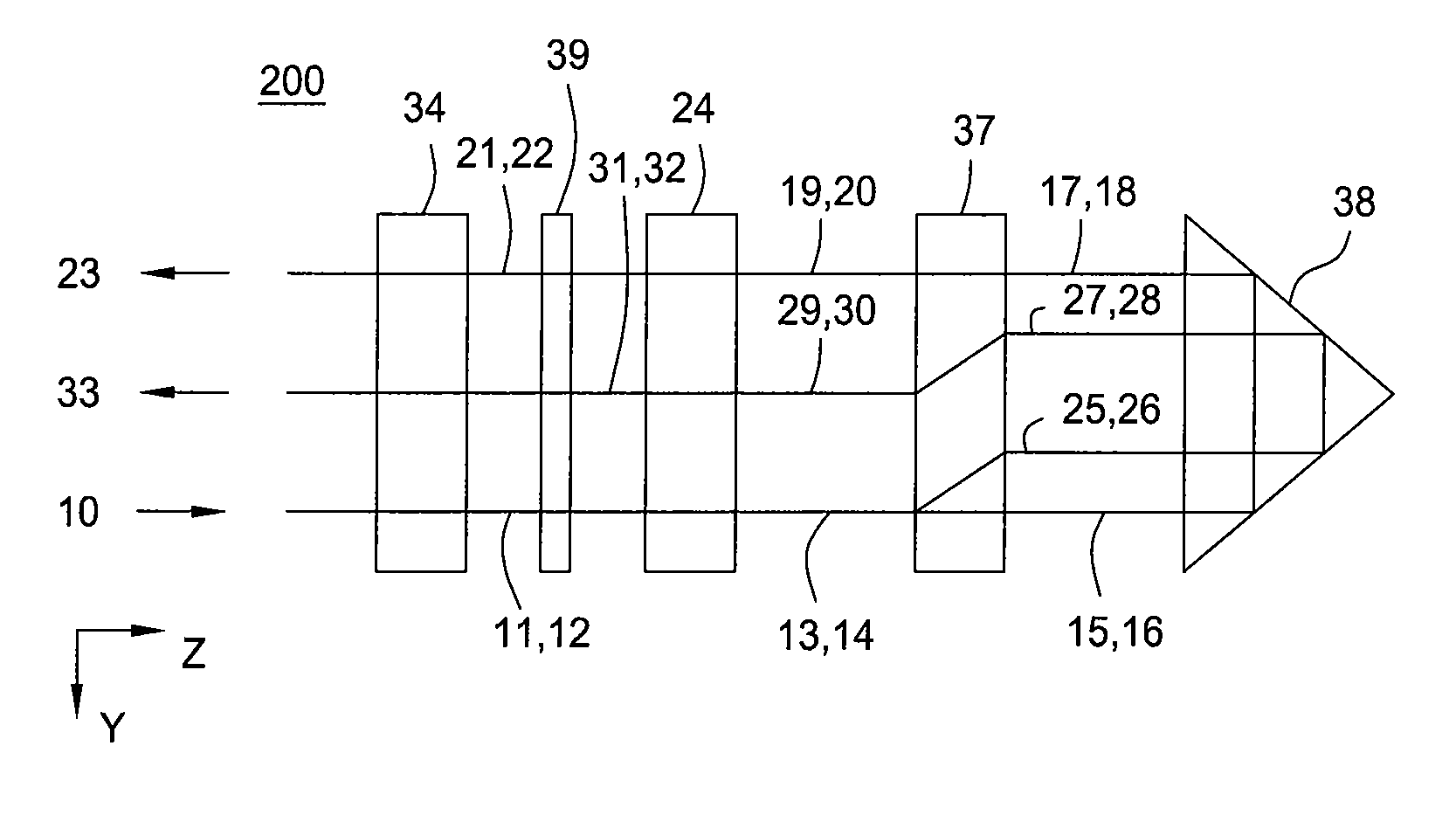
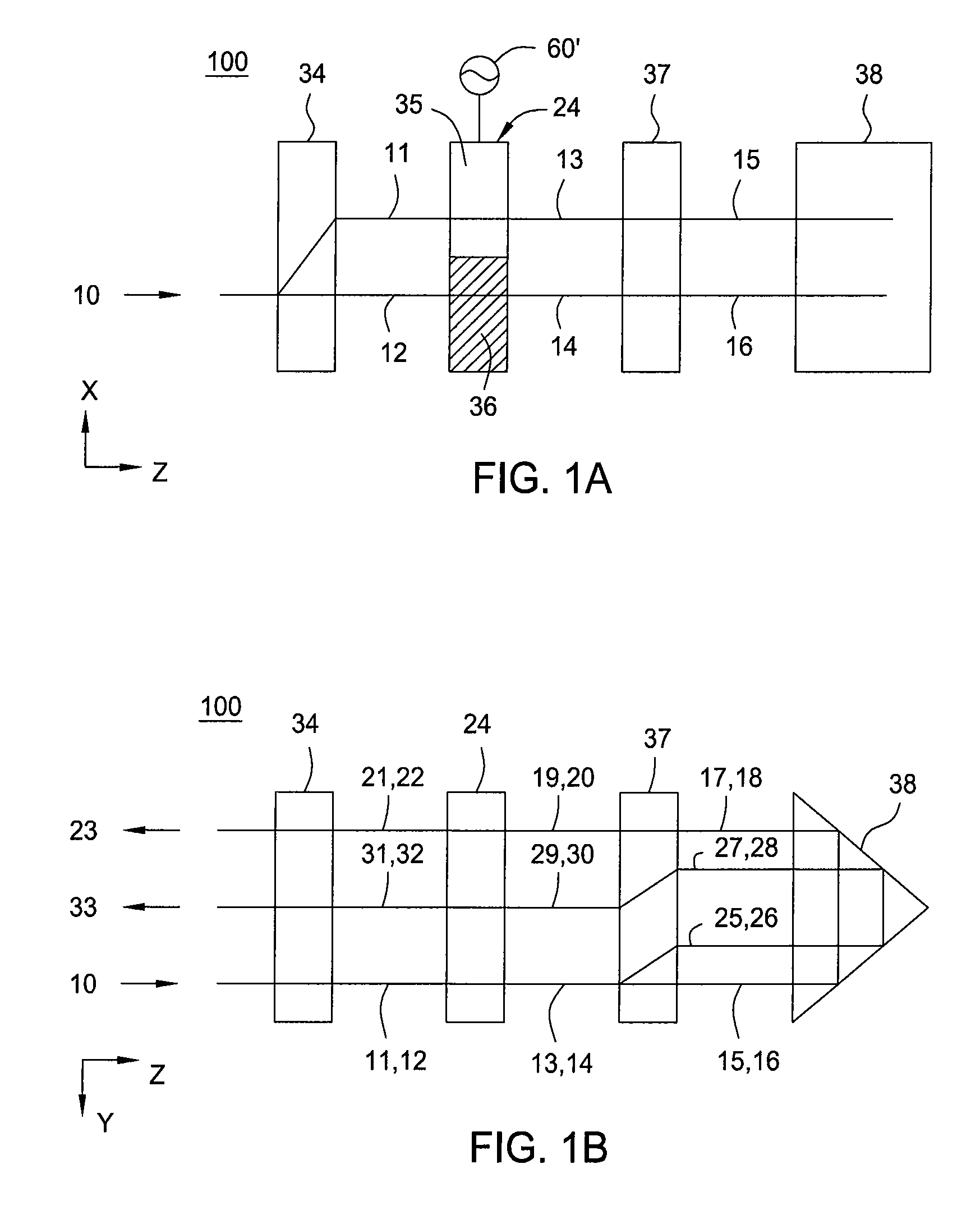
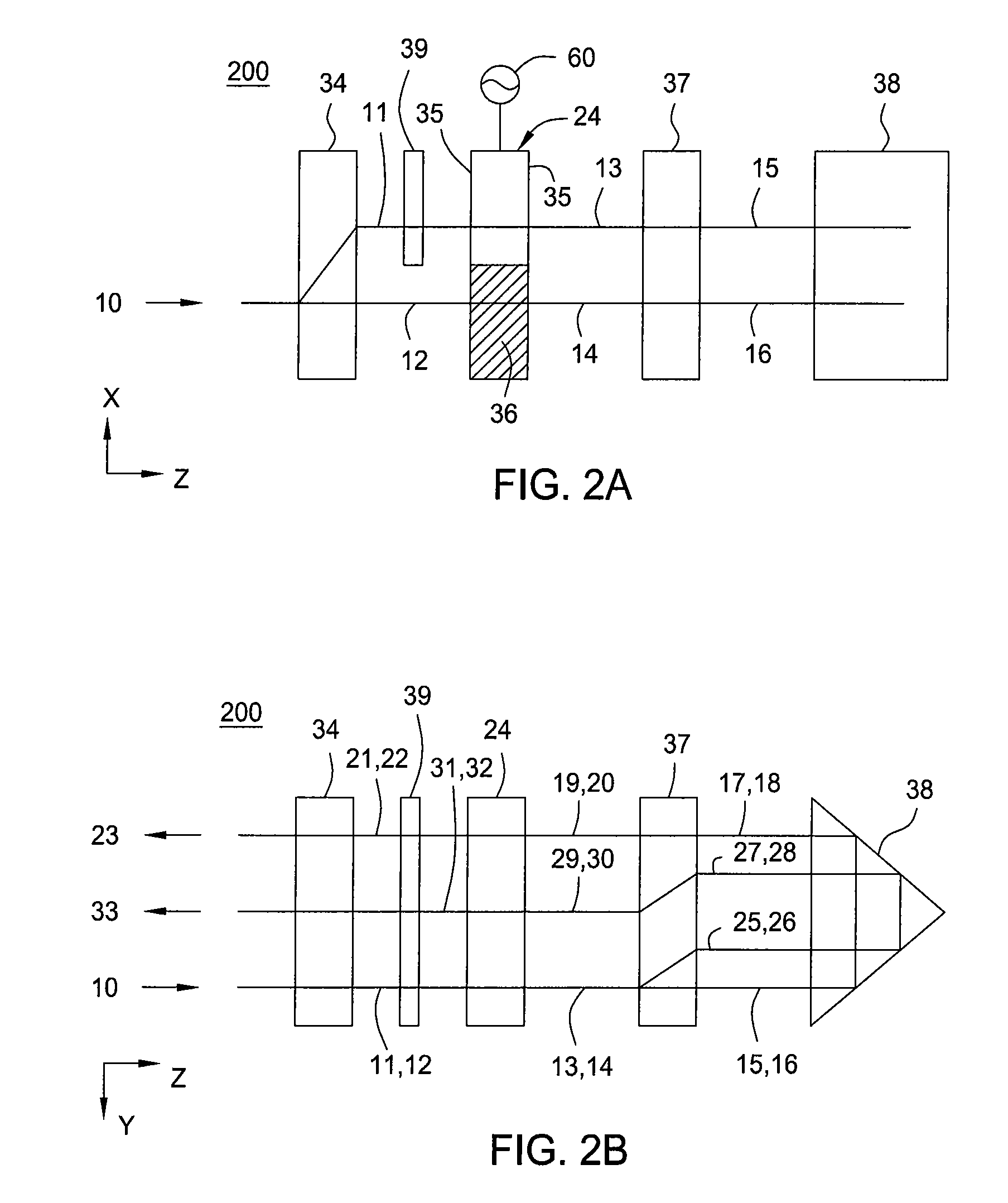
- An optical switch design that utilizes a single polarization modulator with beam components traversing it twice, doubling the extinction ratio without adding additional optical components, thereby reducing costs and improving stability and compactness.

Optical switch with liquid-air-liquid switch assembly
PatentInactiveUS6687429B2
Innovation
- An optical switch design featuring a T-shaped configuration with a piezoelectric element controlling movable liquid sections and an air section between them, allowing for fast switching between two output ports with minimal insertion loss by adjusting the refractive indices of the liquids and air to redirect light efficiently.


Standardization Landscape for Optical Switching Metrics
The standardization landscape for optical switching metrics represents a complex ecosystem involving multiple international organizations, industry consortiums, and regulatory bodies working to establish unified measurement frameworks. The International Telecommunication Union (ITU-T) serves as the primary global standardization body, with Study Group 15 specifically addressing optical transport networks and switching systems. Their recommendations, particularly the G-series standards, provide fundamental guidelines for optical switching performance evaluation, including insertion loss, crosstalk, and switching time specifications.
The Institute of Electrical and Electronics Engineers (IEEE) contributes significantly through its 802.3 Ethernet working group and photonics society standards committees. These organizations focus on defining metrics for optical switching in data center and enterprise networking applications, emphasizing parameters such as port density, power consumption per port, and thermal management requirements. The IEEE standards particularly address the integration challenges between optical switching systems and existing electronic infrastructure.
Industry-driven standardization efforts play an equally crucial role in shaping the metrics landscape. The Optical Internetworking Forum (OIF) has developed implementation agreements that translate theoretical standards into practical deployment guidelines. Their work on optical switching metrics emphasizes real-world performance indicators, including mean time between failures, environmental operating ranges, and interoperability testing procedures. Similarly, the European Telecommunications Standards Institute (ETSI) provides regional perspectives on optical switching metrics, particularly focusing on network function virtualization and software-defined networking integration.
Regional standardization bodies contribute unique perspectives based on local market requirements and technological priorities. The Telecommunications Industry Association (TIA) in North America focuses on fiber optic switching standards that align with existing telecommunications infrastructure. Meanwhile, the China Communications Standards Association (CCSA) emphasizes metrics relevant to large-scale deployment scenarios and cost-effectiveness measures.
The standardization process faces ongoing challenges in balancing innovation speed with comprehensive metric definition. Emerging technologies such as silicon photonics and coherent optical switching require new measurement frameworks that traditional standards may not adequately address. This dynamic environment necessitates continuous collaboration between standards bodies to ensure metric definitions remain relevant and technically sound while supporting industry-wide interoperability and performance benchmarking requirements.
The Institute of Electrical and Electronics Engineers (IEEE) contributes significantly through its 802.3 Ethernet working group and photonics society standards committees. These organizations focus on defining metrics for optical switching in data center and enterprise networking applications, emphasizing parameters such as port density, power consumption per port, and thermal management requirements. The IEEE standards particularly address the integration challenges between optical switching systems and existing electronic infrastructure.
Industry-driven standardization efforts play an equally crucial role in shaping the metrics landscape. The Optical Internetworking Forum (OIF) has developed implementation agreements that translate theoretical standards into practical deployment guidelines. Their work on optical switching metrics emphasizes real-world performance indicators, including mean time between failures, environmental operating ranges, and interoperability testing procedures. Similarly, the European Telecommunications Standards Institute (ETSI) provides regional perspectives on optical switching metrics, particularly focusing on network function virtualization and software-defined networking integration.
Regional standardization bodies contribute unique perspectives based on local market requirements and technological priorities. The Telecommunications Industry Association (TIA) in North America focuses on fiber optic switching standards that align with existing telecommunications infrastructure. Meanwhile, the China Communications Standards Association (CCSA) emphasizes metrics relevant to large-scale deployment scenarios and cost-effectiveness measures.
The standardization process faces ongoing challenges in balancing innovation speed with comprehensive metric definition. Emerging technologies such as silicon photonics and coherent optical switching require new measurement frameworks that traditional standards may not adequately address. This dynamic environment necessitates continuous collaboration between standards bodies to ensure metric definitions remain relevant and technically sound while supporting industry-wide interoperability and performance benchmarking requirements.
Integration Challenges in Data Center OCS Deployment
The deployment of Optical Circuit Switches in data center environments presents multifaceted integration challenges that significantly impact their practical implementation and operational effectiveness. These challenges span across physical infrastructure requirements, network architecture compatibility, and operational management complexities.
Physical infrastructure integration represents one of the most immediate challenges in OCS deployment. Data centers must accommodate the substantial footprint requirements of OCS equipment, which often exceeds traditional electronic switching infrastructure. The mechanical switching components within OCS systems demand precise environmental controls, including vibration isolation and temperature stability, necessitating specialized rack configurations and enhanced cooling systems. Power distribution requirements also differ significantly from conventional switches, requiring careful planning of electrical infrastructure to support the unique power profiles of optical switching mechanisms.
Network architecture compatibility poses another critical integration hurdle. Existing data center networks are predominantly designed around electronic packet switching paradigms, requiring substantial modifications to accommodate circuit-switched optical paths. The integration process demands careful consideration of hybrid architectures that can seamlessly bridge optical circuit switching with existing electronic switching infrastructure. Protocol stack adaptations become necessary to manage the fundamental differences between packet-switched and circuit-switched communication models.
Control plane integration presents complex challenges in managing OCS systems within existing data center orchestration frameworks. Traditional network management systems require significant modifications to handle the unique characteristics of optical circuit switching, including longer switching times and different failure modes. The integration of OCS control systems with existing Software-Defined Networking controllers demands sophisticated coordination mechanisms to ensure optimal resource allocation and traffic management.
Operational challenges emerge from the distinct maintenance requirements and failure characteristics of OCS systems. The mechanical nature of many OCS implementations introduces different reliability patterns compared to electronic switches, requiring specialized monitoring and maintenance protocols. Staff training becomes crucial as operational teams must develop expertise in optical system troubleshooting and maintenance procedures that differ substantially from traditional electronic networking equipment.
Timing and synchronization challenges arise from the inherent switching latencies in OCS systems, which can range from microseconds to milliseconds depending on the switching technology employed. This temporal characteristic requires careful coordination with application workloads and traffic patterns to minimize performance impacts during switching operations.
Physical infrastructure integration represents one of the most immediate challenges in OCS deployment. Data centers must accommodate the substantial footprint requirements of OCS equipment, which often exceeds traditional electronic switching infrastructure. The mechanical switching components within OCS systems demand precise environmental controls, including vibration isolation and temperature stability, necessitating specialized rack configurations and enhanced cooling systems. Power distribution requirements also differ significantly from conventional switches, requiring careful planning of electrical infrastructure to support the unique power profiles of optical switching mechanisms.
Network architecture compatibility poses another critical integration hurdle. Existing data center networks are predominantly designed around electronic packet switching paradigms, requiring substantial modifications to accommodate circuit-switched optical paths. The integration process demands careful consideration of hybrid architectures that can seamlessly bridge optical circuit switching with existing electronic switching infrastructure. Protocol stack adaptations become necessary to manage the fundamental differences between packet-switched and circuit-switched communication models.
Control plane integration presents complex challenges in managing OCS systems within existing data center orchestration frameworks. Traditional network management systems require significant modifications to handle the unique characteristics of optical circuit switching, including longer switching times and different failure modes. The integration of OCS control systems with existing Software-Defined Networking controllers demands sophisticated coordination mechanisms to ensure optimal resource allocation and traffic management.
Operational challenges emerge from the distinct maintenance requirements and failure characteristics of OCS systems. The mechanical nature of many OCS implementations introduces different reliability patterns compared to electronic switches, requiring specialized monitoring and maintenance protocols. Staff training becomes crucial as operational teams must develop expertise in optical system troubleshooting and maintenance procedures that differ substantially from traditional electronic networking equipment.
Timing and synchronization challenges arise from the inherent switching latencies in OCS systems, which can range from microseconds to milliseconds depending on the switching technology employed. This temporal characteristic requires careful coordination with application workloads and traffic patterns to minimize performance impacts during switching operations.
Unlock deeper insights with Patsnap Eureka Quick Research — get a full tech report to explore trends and direct your research. Try now!
Generate Your Research Report Instantly with AI Agent
Supercharge your innovation with Patsnap Eureka AI Agent Platform!