Evaluating Surface Bonding Strength in Spray-Coated Solid Lubricants
MAY 12, 202610 MIN READ
Generate Your Research Report Instantly with AI Agent
PatSnap Eureka helps you evaluate technical feasibility & market potential.
Spray-Coated Solid Lubricant Bonding Background and Objectives
Spray-coated solid lubricants have emerged as critical components in modern industrial applications where traditional liquid lubricants fail to meet operational requirements. These specialized coatings provide lubrication in extreme environments characterized by high temperatures, vacuum conditions, radiation exposure, or chemical incompatibility with conventional lubricants. The technology has evolved from simple graphite-based coatings to sophisticated multi-component systems incorporating molybdenum disulfide, tungsten disulfide, and advanced polymer binders.
The historical development of spray-coated solid lubricants traces back to aerospace applications in the 1960s, where the need for reliable lubrication in space environments drove initial research. Early formulations primarily utilized graphite and molybdenum disulfide suspended in organic binders. However, these primitive coatings suffered from poor adhesion and limited durability, leading to premature failure in critical applications.
Technological advancement accelerated through the 1980s and 1990s as manufacturing industries recognized the potential for solid lubricant coatings in high-performance applications. The introduction of thermally cured resin systems and improved spray application techniques significantly enhanced coating performance. Concurrent developments in surface preparation methods and primer systems addressed fundamental adhesion challenges that had previously limited widespread adoption.
Contemporary spray-coated solid lubricant technology encompasses sophisticated multi-layer systems designed for specific operational parameters. Modern formulations integrate nanoscale lubricant particles with engineered binder matrices to optimize both tribological performance and substrate adhesion. The evolution toward environmentally compliant formulations has driven innovation in water-based systems and solvent-free applications, expanding the technology's applicability across diverse industrial sectors.
Current technological objectives focus on achieving predictable and measurable bonding strength between solid lubricant coatings and substrate materials. The primary goal involves developing standardized evaluation methodologies that accurately assess coating adhesion under operational conditions. This includes establishing correlation between laboratory test results and real-world performance, enabling reliable prediction of coating service life and failure modes.
Secondary objectives encompass optimization of coating formulations to enhance substrate compatibility across diverse material systems including metals, ceramics, and composites. The development of surface treatment protocols that maximize interfacial bonding strength while maintaining coating integrity represents a critical technical target. Additionally, advancing spray application parameters to achieve consistent coating thickness and uniform distribution addresses fundamental quality control requirements essential for industrial implementation.
The historical development of spray-coated solid lubricants traces back to aerospace applications in the 1960s, where the need for reliable lubrication in space environments drove initial research. Early formulations primarily utilized graphite and molybdenum disulfide suspended in organic binders. However, these primitive coatings suffered from poor adhesion and limited durability, leading to premature failure in critical applications.
Technological advancement accelerated through the 1980s and 1990s as manufacturing industries recognized the potential for solid lubricant coatings in high-performance applications. The introduction of thermally cured resin systems and improved spray application techniques significantly enhanced coating performance. Concurrent developments in surface preparation methods and primer systems addressed fundamental adhesion challenges that had previously limited widespread adoption.
Contemporary spray-coated solid lubricant technology encompasses sophisticated multi-layer systems designed for specific operational parameters. Modern formulations integrate nanoscale lubricant particles with engineered binder matrices to optimize both tribological performance and substrate adhesion. The evolution toward environmentally compliant formulations has driven innovation in water-based systems and solvent-free applications, expanding the technology's applicability across diverse industrial sectors.
Current technological objectives focus on achieving predictable and measurable bonding strength between solid lubricant coatings and substrate materials. The primary goal involves developing standardized evaluation methodologies that accurately assess coating adhesion under operational conditions. This includes establishing correlation between laboratory test results and real-world performance, enabling reliable prediction of coating service life and failure modes.
Secondary objectives encompass optimization of coating formulations to enhance substrate compatibility across diverse material systems including metals, ceramics, and composites. The development of surface treatment protocols that maximize interfacial bonding strength while maintaining coating integrity represents a critical technical target. Additionally, advancing spray application parameters to achieve consistent coating thickness and uniform distribution addresses fundamental quality control requirements essential for industrial implementation.
Market Demand for Enhanced Surface Bonding in Industrial Applications
The industrial demand for enhanced surface bonding in spray-coated solid lubricants has experienced substantial growth across multiple sectors, driven by the increasing need for reliable, long-lasting lubrication solutions in extreme operating conditions. Manufacturing industries, particularly automotive, aerospace, and heavy machinery sectors, are actively seeking advanced solid lubricant technologies that can withstand high temperatures, corrosive environments, and mechanical stress while maintaining consistent performance over extended periods.
Aerospace applications represent one of the most demanding market segments, where components must operate in extreme temperature variations, vacuum conditions, and high-stress environments. The industry requires solid lubricants with exceptional bonding strength to prevent delamination during thermal cycling and mechanical loading. Space exploration missions and commercial aviation maintenance programs are increasingly adopting spray-coated solid lubricants for critical components such as actuators, bearings, and sliding mechanisms.
The automotive industry has emerged as a significant driver of market demand, particularly with the shift toward electric vehicles and advanced powertrain technologies. Electric motor components, battery cooling systems, and precision mechanical assemblies require solid lubricants that can maintain their integrity under varying thermal conditions and electrical environments. Traditional liquid lubricants often fail in these applications due to contamination risks and temperature limitations.
Industrial manufacturing processes, including steel production, chemical processing, and mining operations, present harsh environments where conventional lubrication methods prove inadequate. These sectors demand spray-coated solid lubricants with superior bonding characteristics to ensure continuous operation of critical equipment such as conveyor systems, processing machinery, and material handling equipment.
The renewable energy sector has created new market opportunities, particularly in wind turbine applications where components must operate reliably for decades with minimal maintenance. Pitch bearings, yaw systems, and blade adjustment mechanisms require solid lubricants that can withstand environmental exposure while maintaining strong surface adhesion.
Market growth is further accelerated by stringent environmental regulations that favor solid lubricants over traditional oil-based systems. Industries are increasingly adopting dry lubrication solutions to reduce environmental impact, eliminate contamination risks, and comply with regulatory requirements in food processing, pharmaceutical manufacturing, and clean room applications.
The demand for enhanced bonding strength evaluation methods has intensified as industries recognize that coating failure often originates from inadequate surface adhesion rather than lubricant material properties. This recognition has created a specialized market for advanced testing equipment, standardized evaluation protocols, and quality assurance systems specifically designed for spray-coated solid lubricant applications.
Aerospace applications represent one of the most demanding market segments, where components must operate in extreme temperature variations, vacuum conditions, and high-stress environments. The industry requires solid lubricants with exceptional bonding strength to prevent delamination during thermal cycling and mechanical loading. Space exploration missions and commercial aviation maintenance programs are increasingly adopting spray-coated solid lubricants for critical components such as actuators, bearings, and sliding mechanisms.
The automotive industry has emerged as a significant driver of market demand, particularly with the shift toward electric vehicles and advanced powertrain technologies. Electric motor components, battery cooling systems, and precision mechanical assemblies require solid lubricants that can maintain their integrity under varying thermal conditions and electrical environments. Traditional liquid lubricants often fail in these applications due to contamination risks and temperature limitations.
Industrial manufacturing processes, including steel production, chemical processing, and mining operations, present harsh environments where conventional lubrication methods prove inadequate. These sectors demand spray-coated solid lubricants with superior bonding characteristics to ensure continuous operation of critical equipment such as conveyor systems, processing machinery, and material handling equipment.
The renewable energy sector has created new market opportunities, particularly in wind turbine applications where components must operate reliably for decades with minimal maintenance. Pitch bearings, yaw systems, and blade adjustment mechanisms require solid lubricants that can withstand environmental exposure while maintaining strong surface adhesion.
Market growth is further accelerated by stringent environmental regulations that favor solid lubricants over traditional oil-based systems. Industries are increasingly adopting dry lubrication solutions to reduce environmental impact, eliminate contamination risks, and comply with regulatory requirements in food processing, pharmaceutical manufacturing, and clean room applications.
The demand for enhanced bonding strength evaluation methods has intensified as industries recognize that coating failure often originates from inadequate surface adhesion rather than lubricant material properties. This recognition has created a specialized market for advanced testing equipment, standardized evaluation protocols, and quality assurance systems specifically designed for spray-coated solid lubricant applications.
Current Bonding Strength Evaluation Challenges and Limitations
The evaluation of bonding strength in spray-coated solid lubricants faces significant methodological challenges that limit the reliability and comparability of test results across different applications and research contexts. Traditional adhesion testing methods, originally developed for paint and coating industries, often prove inadequate for the unique characteristics of solid lubricant films, which typically exhibit much thinner profiles and different mechanical properties compared to conventional protective coatings.
One of the primary limitations stems from the lack of standardized testing protocols specifically designed for solid lubricant coatings. Current industry practices rely heavily on adapted versions of ASTM standards such as pull-off tests, scratch tests, and cross-cut adhesion tests. However, these methods were not originally conceived for evaluating the complex tribological interfaces that solid lubricants create with substrate materials, leading to inconsistent and sometimes misleading results.
The thickness variability inherent in spray-coating processes presents another significant challenge. Solid lubricant films typically range from sub-micron to several microns in thickness, making it difficult to achieve uniform test conditions. This thickness variation directly impacts bonding strength measurements, as thinner regions may exhibit different failure modes compared to thicker areas, complicating the interpretation of overall coating performance.
Substrate surface preparation and characterization represent critical factors that are often inadequately controlled in current evaluation methods. The bonding strength of spray-coated solid lubricants is highly sensitive to surface roughness, cleanliness, and chemical composition of the substrate. However, existing testing standards provide limited guidance on how to account for these variables, resulting in poor reproducibility between different testing facilities and research groups.
Temperature and environmental sensitivity of solid lubricant coatings pose additional evaluation challenges. Many solid lubricants are designed to operate under extreme conditions, yet most bonding strength tests are conducted at ambient conditions. This disconnect between testing conditions and actual service environments limits the practical relevance of measured bonding strength values for real-world applications.
The interpretation of failure modes during bonding strength testing remains problematic due to the complex multilayer structure of many solid lubricant systems. Distinguishing between cohesive failure within the lubricant film, adhesive failure at the substrate interface, and mixed-mode failures requires sophisticated analytical techniques that are not routinely available in standard testing protocols, leading to oversimplified assessments of coating performance.
One of the primary limitations stems from the lack of standardized testing protocols specifically designed for solid lubricant coatings. Current industry practices rely heavily on adapted versions of ASTM standards such as pull-off tests, scratch tests, and cross-cut adhesion tests. However, these methods were not originally conceived for evaluating the complex tribological interfaces that solid lubricants create with substrate materials, leading to inconsistent and sometimes misleading results.
The thickness variability inherent in spray-coating processes presents another significant challenge. Solid lubricant films typically range from sub-micron to several microns in thickness, making it difficult to achieve uniform test conditions. This thickness variation directly impacts bonding strength measurements, as thinner regions may exhibit different failure modes compared to thicker areas, complicating the interpretation of overall coating performance.
Substrate surface preparation and characterization represent critical factors that are often inadequately controlled in current evaluation methods. The bonding strength of spray-coated solid lubricants is highly sensitive to surface roughness, cleanliness, and chemical composition of the substrate. However, existing testing standards provide limited guidance on how to account for these variables, resulting in poor reproducibility between different testing facilities and research groups.
Temperature and environmental sensitivity of solid lubricant coatings pose additional evaluation challenges. Many solid lubricants are designed to operate under extreme conditions, yet most bonding strength tests are conducted at ambient conditions. This disconnect between testing conditions and actual service environments limits the practical relevance of measured bonding strength values for real-world applications.
The interpretation of failure modes during bonding strength testing remains problematic due to the complex multilayer structure of many solid lubricant systems. Distinguishing between cohesive failure within the lubricant film, adhesive failure at the substrate interface, and mixed-mode failures requires sophisticated analytical techniques that are not routinely available in standard testing protocols, leading to oversimplified assessments of coating performance.
Existing Methods for Measuring Coating Adhesion Strength
01 Surface preparation and treatment methods for enhanced bonding
Various surface preparation techniques are employed to improve the adhesion of spray-coated solid lubricants to substrates. These methods include mechanical roughening, chemical etching, plasma treatment, and primer application to create optimal surface conditions for bonding. The preparation process removes contaminants and creates micro-textures that promote mechanical interlocking between the lubricant coating and the substrate surface.- Surface preparation and treatment methods for enhanced bonding: Various surface preparation techniques are employed to improve the adhesion of spray-coated solid lubricants to substrates. These methods include mechanical roughening, chemical etching, plasma treatment, and primer application to create optimal surface conditions for lubricant bonding. The preparation process removes contaminants and creates micro-textures that promote mechanical interlocking and chemical adhesion between the lubricant coating and the substrate surface.
- Spray coating process parameters optimization: The spray coating process parameters significantly influence the bonding strength of solid lubricants. Key parameters include spray pressure, nozzle distance, substrate temperature, coating thickness, and application speed. Optimization of these parameters ensures uniform coating distribution, proper particle impaction energy, and adequate thermal conditions for strong adhesive bonds. Multiple coating passes and controlled cooling rates also contribute to enhanced bonding performance.
- Lubricant composition and binder systems: The formulation of solid lubricant compositions plays a crucial role in achieving strong surface bonding. Various binder systems including organic resins, inorganic matrices, and hybrid binders are used to hold lubricant particles together and promote adhesion to substrates. The selection of appropriate lubricant materials such as molybdenum disulfide, graphite, or PTFE, combined with compatible binders, determines the final bonding characteristics and performance of the coating.
- Thermal treatment and curing processes: Post-application thermal treatments are essential for developing maximum bonding strength in spray-coated solid lubricants. Controlled heating cycles promote binder cross-linking, solvent evaporation, and stress relief within the coating. The curing temperature, heating rate, and atmosphere conditions must be carefully controlled to achieve optimal mechanical properties and adhesion without causing thermal degradation of the lubricant or substrate materials.
- Testing and evaluation methods for bonding strength: Various standardized testing methods are employed to evaluate the bonding strength of spray-coated solid lubricants. These include adhesion pull-off tests, scratch tests, cross-cut adhesion tests, and shear strength measurements. Advanced characterization techniques such as microscopy and surface analysis help understand the failure mechanisms and optimize coating formulations. The testing protocols ensure quality control and performance validation of the lubricant coatings under different operating conditions.
02 Spray coating process parameters optimization
The spray coating process parameters significantly influence the bonding strength of solid lubricants. Key factors include spray pressure, nozzle distance, substrate temperature, coating thickness, and deposition rate. Optimizing these parameters ensures uniform coating distribution, proper particle impaction energy, and adequate thermal conditions for strong adhesion formation during the coating process.Expand Specific Solutions03 Solid lubricant composition and binder systems
The formulation of solid lubricant coatings involves selecting appropriate lubricating materials and binder systems that provide both lubrication properties and strong substrate adhesion. The composition typically includes solid lubricants combined with organic or inorganic binders, adhesion promoters, and additives that enhance the mechanical properties and bonding characteristics of the final coating.Expand Specific Solutions04 Thermal treatment and curing processes
Post-coating thermal treatments and curing processes are critical for developing maximum bonding strength in spray-coated solid lubricants. These processes involve controlled heating cycles that promote chemical bonding, remove solvents, densify the coating structure, and enhance the interfacial adhesion between the coating and substrate through diffusion and reaction mechanisms.Expand Specific Solutions05 Testing and evaluation methods for bonding strength
Various standardized testing methods are employed to evaluate and quantify the bonding strength of spray-coated solid lubricants. These include adhesion pull-off tests, scratch tests, cross-cut adhesion tests, and shear strength measurements. The testing protocols help determine coating performance, optimize process parameters, and ensure quality control in industrial applications.Expand Specific Solutions
Key Players in Solid Lubricant and Surface Coating Industry
The spray-coated solid lubricants industry is in a mature development stage, driven by increasing demand from aerospace, automotive, and industrial applications. The market demonstrates significant scale with established players spanning materials science, manufacturing, and specialized coatings sectors. Technology maturity varies considerably across participants, with advanced aerospace companies like Boeing, Safran Aircraft Engines, and Sikorsky leading in high-performance applications, while automotive manufacturers including Toyota, Scania, and Dongfeng focus on commercial-grade solutions. Materials specialists such as DuPont, Höganäs, and Proterial contribute advanced chemical formulations and powder metallurgy expertise. Research institutions like Lanzhou Institute of Chemical Physics and Shanghai University drive innovation in bonding mechanisms and evaluation methodologies. The competitive landscape reflects a well-established ecosystem where traditional lubricant companies like Chevron Oronite and Idemitsu Kosan compete alongside specialized bearing manufacturers and coating technology providers, indicating robust market penetration across multiple industrial verticals.
Lanzhou Institute of Chemical Physics
Technical Solution: The institute specializes in developing nano-structured solid lubricant coatings applied through spray techniques. Their research focuses on graphene-enhanced and carbon nanotube-reinforced lubricant systems that provide superior surface bonding through van der Waals forces and mechanical interlocking. They employ advanced characterization techniques including atomic force microscopy and nanoindentation to evaluate bonding strength at the nanoscale. Their spray-coating process incorporates plasma treatment for surface activation, resulting in improved adhesion values exceeding 20 MPa for steel substrates.
Strengths: Cutting-edge research capabilities and innovative nanomaterial integration. Weaknesses: Limited commercial scalability and higher production complexity.
Chevron Oronite Co. LLC
Technical Solution: Chevron Oronite has developed spray-applied solid lubricant systems primarily for automotive and industrial applications. Their technology focuses on organometallic compounds and synthetic polymer matrices that enhance surface adhesion through chemical bonding mechanisms. The evaluation process includes thermal cycling tests and mechanical stress analysis to assess long-term bonding durability. Their formulations incorporate anti-wear additives and corrosion inhibitors that maintain bonding integrity under harsh operating conditions, with typical adhesion strengths ranging from 12-18 MPa.
Strengths: Strong automotive industry partnerships and proven field performance. Weaknesses: Limited applicability in extreme temperature environments and dependency on petroleum-based components.
Core Innovations in Bonding Strength Evaluation Techniques
Testing device and method of bonding strength of thermal spraying coating on metal surface
PatentActiveCN104007065A
Innovation
- A metal surface thermal spray coating bonding strength testing device is designed, which uses a combined structure of a base conical pin and a support block. The coating is prepared on its end surface through thermal spray equipment, and a universal tensile testing machine is used to measure the maximum tensile force. Combined with the microscope to measure the frustum area, the coating bonding strength is calculated to avoid the bonding strength limitation of epoxy resin glue.
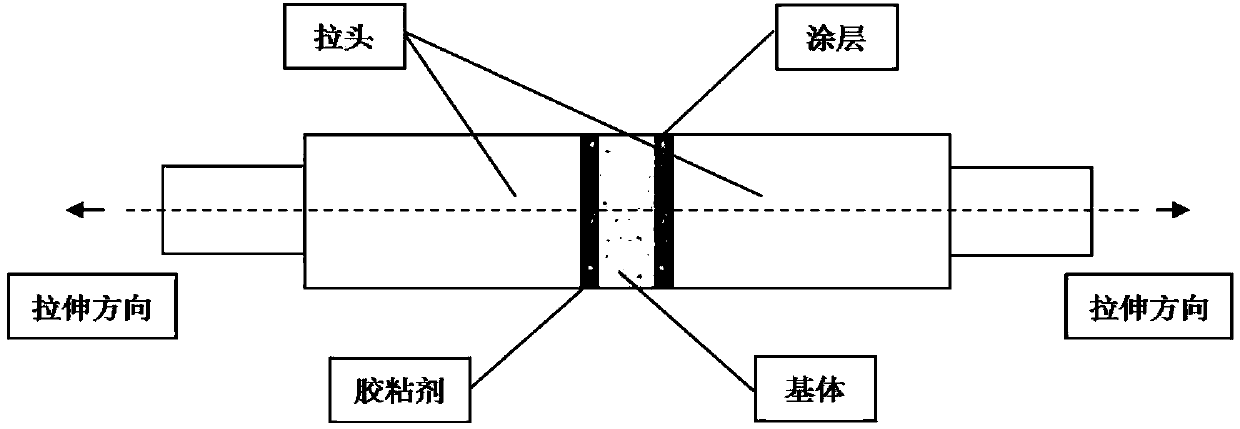
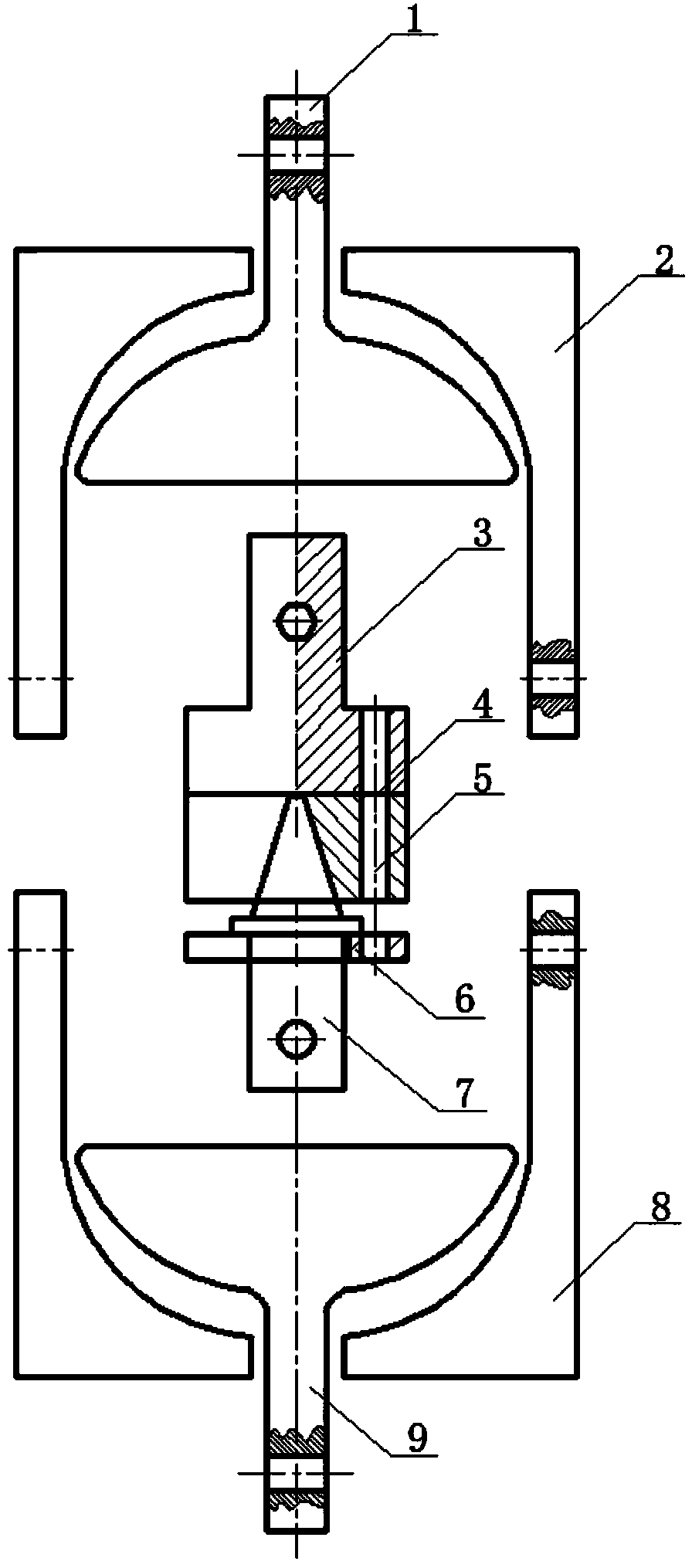
Coating bond test method and method of making a specimen for testing bond strength of a coating
PatentWO2016061477A1
Innovation
- A coating bond test method involving a pull-off bar attached to a coating on a substrate with a reduced interface area between the substrate and coating, ensuring failure occurs at the coating-substrate interface by applying a load normal to the planar surface, allowing for precise measurement of bond strength.


Environmental Impact and Sustainability of Coating Processes
The environmental implications of spray-coated solid lubricant application processes have become increasingly critical as industries face mounting pressure to adopt sustainable manufacturing practices. Traditional coating methods often involve volatile organic compounds (VOCs) and hazardous air pollutants that contribute to atmospheric contamination and pose health risks to workers. The spray coating process itself generates overspray waste, typically ranging from 20-40% of the applied material, creating disposal challenges and resource inefficiency.
Solvent-based solid lubricant formulations present significant environmental concerns due to their reliance on petroleum-derived carriers and organic solvents. These systems release substantial quantities of VOCs during application and curing phases, contributing to ground-level ozone formation and air quality degradation. The disposal of contaminated solvents and cleaning agents further compounds environmental impact through potential soil and groundwater contamination.
Water-based coating systems have emerged as environmentally preferable alternatives, reducing VOC emissions by up to 90% compared to solvent-based counterparts. These formulations utilize water as the primary carrier medium, significantly minimizing atmospheric pollution and improving workplace air quality. However, water-based systems may require additional energy for moisture removal during curing, potentially offsetting some environmental benefits through increased energy consumption.
Powder coating technologies represent the most sustainable approach for solid lubricant application, achieving near-zero VOC emissions and enabling material recovery rates exceeding 95%. Overspray powder can be reclaimed and reused through electrostatic recovery systems, dramatically reducing waste generation and material costs. The absence of liquid carriers eliminates solvent disposal requirements and associated environmental hazards.
Energy consumption patterns vary significantly across coating technologies, with thermal spray processes requiring substantial energy input for material heating and substrate preparation. Plasma spray systems, while offering superior coating properties, consume considerable electrical energy and may generate nitrogen oxides during operation. Cold spray technologies present lower energy alternatives while maintaining coating performance characteristics.
Lifecycle assessment considerations encompass raw material extraction, manufacturing processes, application methods, service life, and end-of-life disposal. Sustainable coating development increasingly focuses on bio-based lubricant materials and recyclable substrate compatibility. Advanced application techniques, including robotic spray systems and precision targeting, minimize material waste while optimizing coating uniformity and performance.
Regulatory frameworks continue evolving to address environmental concerns, with stricter emission limits and waste reduction mandates driving technological innovation toward cleaner coating processes and sustainable material formulations.
Solvent-based solid lubricant formulations present significant environmental concerns due to their reliance on petroleum-derived carriers and organic solvents. These systems release substantial quantities of VOCs during application and curing phases, contributing to ground-level ozone formation and air quality degradation. The disposal of contaminated solvents and cleaning agents further compounds environmental impact through potential soil and groundwater contamination.
Water-based coating systems have emerged as environmentally preferable alternatives, reducing VOC emissions by up to 90% compared to solvent-based counterparts. These formulations utilize water as the primary carrier medium, significantly minimizing atmospheric pollution and improving workplace air quality. However, water-based systems may require additional energy for moisture removal during curing, potentially offsetting some environmental benefits through increased energy consumption.
Powder coating technologies represent the most sustainable approach for solid lubricant application, achieving near-zero VOC emissions and enabling material recovery rates exceeding 95%. Overspray powder can be reclaimed and reused through electrostatic recovery systems, dramatically reducing waste generation and material costs. The absence of liquid carriers eliminates solvent disposal requirements and associated environmental hazards.
Energy consumption patterns vary significantly across coating technologies, with thermal spray processes requiring substantial energy input for material heating and substrate preparation. Plasma spray systems, while offering superior coating properties, consume considerable electrical energy and may generate nitrogen oxides during operation. Cold spray technologies present lower energy alternatives while maintaining coating performance characteristics.
Lifecycle assessment considerations encompass raw material extraction, manufacturing processes, application methods, service life, and end-of-life disposal. Sustainable coating development increasingly focuses on bio-based lubricant materials and recyclable substrate compatibility. Advanced application techniques, including robotic spray systems and precision targeting, minimize material waste while optimizing coating uniformity and performance.
Regulatory frameworks continue evolving to address environmental concerns, with stricter emission limits and waste reduction mandates driving technological innovation toward cleaner coating processes and sustainable material formulations.
Quality Standards and Testing Protocols for Industrial Coatings
The establishment of comprehensive quality standards for evaluating surface bonding strength in spray-coated solid lubricants requires adherence to internationally recognized testing frameworks. ASTM D4541 serves as the primary standard for pull-off adhesion testing, providing standardized procedures for measuring the perpendicular force required to detach a coating from its substrate. This standard defines critical parameters including surface preparation requirements, test fixture specifications, and environmental conditioning protocols that directly impact measurement reliability.
ISO 4624 complements ASTM standards by offering alternative methodologies for adhesion strength evaluation, particularly relevant for industrial coating applications where substrate materials vary significantly. The standard emphasizes the importance of surface roughness control, typically requiring Ra values between 25-100 micrometers for optimal coating adhesion. Additionally, ISO 16276 series provides comprehensive guidance for corrosion protection assessment, which becomes crucial when evaluating long-term bonding performance of solid lubricant coatings in industrial environments.
Testing protocol development must incorporate specific considerations for solid lubricant formulations, including molybdenum disulfide, graphite, and PTFE-based systems. Sample preparation protocols require controlled spray application parameters, including nozzle distance (typically 150-200mm), spray pressure (2-4 bar), and substrate temperature (20-80°C depending on coating type). Cross-hatch adhesion testing according to ASTM D3359 provides complementary qualitative assessment, particularly valuable for identifying coating cohesion failures versus adhesive failures at the substrate interface.
Environmental testing protocols must address thermal cycling, humidity exposure, and chemical resistance specific to industrial lubricant applications. ASTM B117 salt spray testing, modified with extended exposure periods up to 1000 hours, evaluates coating durability under corrosive conditions. Temperature cycling between -40°C and +150°C, following ASTM D6944 guidelines, simulates operational stress conditions that affect bonding integrity over time.
Quality control implementation requires statistical process control methods with acceptance criteria based on coating thickness uniformity (±10% variation), adhesion strength minimums (typically 2-5 MPa for industrial applications), and surface defect density limits. Documentation protocols must include traceability requirements for batch identification, environmental conditions during application, and post-application curing parameters to ensure reproducible bonding performance across production cycles.
ISO 4624 complements ASTM standards by offering alternative methodologies for adhesion strength evaluation, particularly relevant for industrial coating applications where substrate materials vary significantly. The standard emphasizes the importance of surface roughness control, typically requiring Ra values between 25-100 micrometers for optimal coating adhesion. Additionally, ISO 16276 series provides comprehensive guidance for corrosion protection assessment, which becomes crucial when evaluating long-term bonding performance of solid lubricant coatings in industrial environments.
Testing protocol development must incorporate specific considerations for solid lubricant formulations, including molybdenum disulfide, graphite, and PTFE-based systems. Sample preparation protocols require controlled spray application parameters, including nozzle distance (typically 150-200mm), spray pressure (2-4 bar), and substrate temperature (20-80°C depending on coating type). Cross-hatch adhesion testing according to ASTM D3359 provides complementary qualitative assessment, particularly valuable for identifying coating cohesion failures versus adhesive failures at the substrate interface.
Environmental testing protocols must address thermal cycling, humidity exposure, and chemical resistance specific to industrial lubricant applications. ASTM B117 salt spray testing, modified with extended exposure periods up to 1000 hours, evaluates coating durability under corrosive conditions. Temperature cycling between -40°C and +150°C, following ASTM D6944 guidelines, simulates operational stress conditions that affect bonding integrity over time.
Quality control implementation requires statistical process control methods with acceptance criteria based on coating thickness uniformity (±10% variation), adhesion strength minimums (typically 2-5 MPa for industrial applications), and surface defect density limits. Documentation protocols must include traceability requirements for batch identification, environmental conditions during application, and post-application curing parameters to ensure reproducible bonding performance across production cycles.
Unlock deeper insights with PatSnap Eureka Quick Research — get a full tech report to explore trends and direct your research. Try now!
Generate Your Research Report Instantly with AI Agent
Supercharge your innovation with PatSnap Eureka AI Agent Platform!