

Nano-Sized Solid Lubricants: Friction and Particle Embedment Tests
MAY 12, 20269 MIN READ
Generate Your Research Report Instantly with AI Agent
PatSnap Eureka helps you evaluate technical feasibility & market potential.
Nano-Solid Lubricant Technology Background and Objectives
Nano-sized solid lubricants represent a revolutionary advancement in tribological engineering, emerging from the convergence of nanotechnology and materials science over the past three decades. The development trajectory began in the 1990s when researchers first recognized that reducing particle size to nanoscale dimensions could dramatically alter the fundamental tribological properties of traditional solid lubricants such as molybdenum disulfide, graphite, and tungsten disulfide.
The evolution of this technology stems from the inherent limitations of conventional liquid lubricants in extreme operating conditions, including high temperatures, vacuum environments, radiation exposure, and chemically aggressive atmospheres. Traditional solid lubricants, while offering superior environmental stability, often suffered from poor dispersion characteristics and limited effectiveness in reducing friction coefficients to desired levels.
The nanoscale revolution introduced unprecedented opportunities to engineer lubricant particles with enhanced surface-to-volume ratios, improved dispersion stability, and superior penetration capabilities into microscopic surface asperities. Research has demonstrated that nano-sized particles exhibit fundamentally different tribological behaviors compared to their micro-sized counterparts, including reduced agglomeration tendencies and enhanced film-forming capabilities.
Current technological objectives focus on achieving optimal particle size distributions typically ranging from 10 to 100 nanometers, where the balance between surface reactivity and mechanical stability reaches its peak effectiveness. The primary technical goals encompass developing comprehensive understanding of particle embedment mechanisms, quantifying friction reduction capabilities across diverse material interfaces, and establishing predictive models for long-term performance sustainability.
Advanced characterization techniques including atomic force microscopy, transmission electron microscopy, and tribological testing protocols have become essential tools for evaluating nano-lubricant performance. The integration of computational modeling with experimental validation has enabled researchers to predict optimal particle geometries and surface functionalization strategies.
The ultimate technological vision aims to create adaptive nano-lubricant systems capable of self-replenishment, real-time performance monitoring, and autonomous adjustment to varying operational conditions, representing the next frontier in intelligent tribological solutions.
The evolution of this technology stems from the inherent limitations of conventional liquid lubricants in extreme operating conditions, including high temperatures, vacuum environments, radiation exposure, and chemically aggressive atmospheres. Traditional solid lubricants, while offering superior environmental stability, often suffered from poor dispersion characteristics and limited effectiveness in reducing friction coefficients to desired levels.
The nanoscale revolution introduced unprecedented opportunities to engineer lubricant particles with enhanced surface-to-volume ratios, improved dispersion stability, and superior penetration capabilities into microscopic surface asperities. Research has demonstrated that nano-sized particles exhibit fundamentally different tribological behaviors compared to their micro-sized counterparts, including reduced agglomeration tendencies and enhanced film-forming capabilities.
Current technological objectives focus on achieving optimal particle size distributions typically ranging from 10 to 100 nanometers, where the balance between surface reactivity and mechanical stability reaches its peak effectiveness. The primary technical goals encompass developing comprehensive understanding of particle embedment mechanisms, quantifying friction reduction capabilities across diverse material interfaces, and establishing predictive models for long-term performance sustainability.
Advanced characterization techniques including atomic force microscopy, transmission electron microscopy, and tribological testing protocols have become essential tools for evaluating nano-lubricant performance. The integration of computational modeling with experimental validation has enabled researchers to predict optimal particle geometries and surface functionalization strategies.
The ultimate technological vision aims to create adaptive nano-lubricant systems capable of self-replenishment, real-time performance monitoring, and autonomous adjustment to varying operational conditions, representing the next frontier in intelligent tribological solutions.
Market Demand for Advanced Nano-Lubrication Solutions
The global demand for advanced nano-lubrication solutions is experiencing unprecedented growth, driven by the increasing need for high-performance materials in extreme operating conditions. Industries such as aerospace, automotive, precision manufacturing, and renewable energy are actively seeking lubrication technologies that can withstand harsh environments while maintaining superior tribological performance. The miniaturization trend in mechanical systems has created specific requirements for lubricants that can function effectively at micro and nano scales.
Manufacturing sectors are particularly focused on nano-sized solid lubricants due to their ability to reduce friction coefficients significantly compared to conventional lubricants. The automotive industry's shift toward electric vehicles has intensified demand for advanced lubrication solutions that can handle the unique operational characteristics of electric drivetrains, including higher rotational speeds and temperature variations. Similarly, the aerospace sector requires lubricants capable of performing in vacuum conditions and extreme temperature ranges where traditional liquid lubricants fail.
The semiconductor and electronics manufacturing industries represent emerging high-growth markets for nano-lubrication technologies. These sectors demand ultra-clean, particle-free lubrication solutions that can operate in controlled environments without contaminating sensitive production processes. The precision required in these applications has created substantial market opportunities for nano-sized solid lubricants that can be precisely controlled and embedded within mechanical interfaces.
Energy sector applications, particularly in wind turbines and solar tracking systems, are driving demand for long-lasting lubrication solutions that can reduce maintenance requirements and operational costs. The harsh environmental conditions these systems face, including temperature fluctuations, moisture exposure, and continuous operation cycles, necessitate advanced nano-lubrication technologies that can maintain performance over extended periods.
Research institutions and testing laboratories are increasingly investing in friction and particle embedment testing capabilities to validate nano-lubrication performance. This trend reflects the growing recognition that traditional lubrication testing methods are insufficient for evaluating nano-scale materials. The market demand extends beyond the lubricants themselves to include specialized testing equipment and methodologies capable of characterizing nano-particle behavior under various loading and environmental conditions.
The push toward sustainable manufacturing practices has further amplified market interest in solid nano-lubricants, as they often provide longer service life and reduced environmental impact compared to conventional liquid lubricants that require frequent replacement and disposal.
Manufacturing sectors are particularly focused on nano-sized solid lubricants due to their ability to reduce friction coefficients significantly compared to conventional lubricants. The automotive industry's shift toward electric vehicles has intensified demand for advanced lubrication solutions that can handle the unique operational characteristics of electric drivetrains, including higher rotational speeds and temperature variations. Similarly, the aerospace sector requires lubricants capable of performing in vacuum conditions and extreme temperature ranges where traditional liquid lubricants fail.
The semiconductor and electronics manufacturing industries represent emerging high-growth markets for nano-lubrication technologies. These sectors demand ultra-clean, particle-free lubrication solutions that can operate in controlled environments without contaminating sensitive production processes. The precision required in these applications has created substantial market opportunities for nano-sized solid lubricants that can be precisely controlled and embedded within mechanical interfaces.
Energy sector applications, particularly in wind turbines and solar tracking systems, are driving demand for long-lasting lubrication solutions that can reduce maintenance requirements and operational costs. The harsh environmental conditions these systems face, including temperature fluctuations, moisture exposure, and continuous operation cycles, necessitate advanced nano-lubrication technologies that can maintain performance over extended periods.
Research institutions and testing laboratories are increasingly investing in friction and particle embedment testing capabilities to validate nano-lubrication performance. This trend reflects the growing recognition that traditional lubrication testing methods are insufficient for evaluating nano-scale materials. The market demand extends beyond the lubricants themselves to include specialized testing equipment and methodologies capable of characterizing nano-particle behavior under various loading and environmental conditions.
The push toward sustainable manufacturing practices has further amplified market interest in solid nano-lubricants, as they often provide longer service life and reduced environmental impact compared to conventional liquid lubricants that require frequent replacement and disposal.
Current Status of Nano-Solid Lubricant Friction Testing
The current landscape of nano-solid lubricant friction testing represents a rapidly evolving field driven by the increasing demand for high-performance lubrication solutions in advanced manufacturing and precision engineering applications. Traditional macroscale friction testing methods have proven inadequate for characterizing the unique tribological behaviors exhibited by nanoscale solid lubricants, necessitating the development of specialized testing protocols and instrumentation.
Contemporary friction testing methodologies for nano-solid lubricants primarily rely on atomic force microscopy (AFM) based tribometers, which enable precise control of normal loads in the nanonewton range while providing real-time friction force measurements. These instruments have become the gold standard for fundamental research, allowing researchers to investigate single-particle interactions and understand the mechanisms governing friction at the nanoscale. However, the limited contact areas and extremely low loads in AFM testing often fail to replicate real-world operating conditions.
Nanoindentation-based tribological testing has emerged as a complementary approach, offering the ability to apply higher loads while maintaining nanoscale precision. Modern nanoindentation systems equipped with lateral force measurement capabilities can perform scratch tests and reciprocating sliding experiments on nano-solid lubricant films. This methodology bridges the gap between fundamental AFM studies and macroscale tribological testing, providing insights into the mechanical properties and friction characteristics under more realistic loading conditions.
Pin-on-disk and ball-on-disk configurations have been adapted for nano-solid lubricant evaluation, incorporating advanced load cells and displacement sensors capable of detecting minute changes in friction coefficients. These setups enable long-duration testing under controlled environmental conditions, essential for assessing the durability and performance stability of nano-solid lubricants over extended operational periods.
Recent developments in in-situ characterization techniques have revolutionized friction testing capabilities. Environmental scanning electron microscopy (ESEM) and transmission electron microscopy (TEM) holders equipped with mechanical testing stages allow real-time observation of nano-solid lubricant behavior during friction tests. These advanced characterization tools provide unprecedented insights into particle deformation, embedment mechanisms, and surface interactions at the nanoscale.
The integration of machine learning algorithms and automated data analysis systems has enhanced the efficiency and accuracy of friction testing protocols. Modern testing platforms can automatically adjust testing parameters based on real-time feedback, ensuring consistent and reproducible results while minimizing human error and experimental variability.
Contemporary friction testing methodologies for nano-solid lubricants primarily rely on atomic force microscopy (AFM) based tribometers, which enable precise control of normal loads in the nanonewton range while providing real-time friction force measurements. These instruments have become the gold standard for fundamental research, allowing researchers to investigate single-particle interactions and understand the mechanisms governing friction at the nanoscale. However, the limited contact areas and extremely low loads in AFM testing often fail to replicate real-world operating conditions.
Nanoindentation-based tribological testing has emerged as a complementary approach, offering the ability to apply higher loads while maintaining nanoscale precision. Modern nanoindentation systems equipped with lateral force measurement capabilities can perform scratch tests and reciprocating sliding experiments on nano-solid lubricant films. This methodology bridges the gap between fundamental AFM studies and macroscale tribological testing, providing insights into the mechanical properties and friction characteristics under more realistic loading conditions.
Pin-on-disk and ball-on-disk configurations have been adapted for nano-solid lubricant evaluation, incorporating advanced load cells and displacement sensors capable of detecting minute changes in friction coefficients. These setups enable long-duration testing under controlled environmental conditions, essential for assessing the durability and performance stability of nano-solid lubricants over extended operational periods.
Recent developments in in-situ characterization techniques have revolutionized friction testing capabilities. Environmental scanning electron microscopy (ESEM) and transmission electron microscopy (TEM) holders equipped with mechanical testing stages allow real-time observation of nano-solid lubricant behavior during friction tests. These advanced characterization tools provide unprecedented insights into particle deformation, embedment mechanisms, and surface interactions at the nanoscale.
The integration of machine learning algorithms and automated data analysis systems has enhanced the efficiency and accuracy of friction testing protocols. Modern testing platforms can automatically adjust testing parameters based on real-time feedback, ensuring consistent and reproducible results while minimizing human error and experimental variability.
Current Testing Solutions for Nano-Solid Lubricants
01 Nano-sized solid lubricant compositions and formulations
Development of nano-sized solid lubricant compositions that incorporate various nanomaterials to reduce friction and wear. These formulations typically involve the dispersion of nano-particles in base materials to create effective lubrication systems with enhanced performance characteristics compared to conventional lubricants.- Nano-sized solid lubricant compositions and formulations: Development of nano-scale solid lubricant materials with specific particle size distributions and compositions to enhance friction reduction properties. These formulations focus on optimizing the physical and chemical characteristics of solid lubricants at the nanometer scale to achieve superior performance in various applications.
- Surface modification and coating technologies for nano lubricants: Methods for modifying surfaces and applying nano-sized solid lubricant coatings to reduce friction and wear. These technologies involve various deposition techniques and surface treatment processes to create thin films or coatings that provide effective lubrication at the nanoscale level.
- Tribological performance enhancement mechanisms: Investigation and optimization of the fundamental mechanisms by which nano-sized solid lubricants reduce friction and improve wear resistance. This includes understanding the interaction between lubricant particles and contact surfaces, as well as the role of particle morphology and distribution in tribological performance.
- Composite nano-lubricant systems and additives: Development of composite systems that combine nano-sized solid lubricants with other materials or additives to create synergistic effects for enhanced friction reduction. These systems may include hybrid formulations, multi-component mixtures, and specialized additive packages designed to optimize lubrication performance.
- Application-specific nano-lubricant solutions: Tailored nano-sized solid lubricant solutions designed for specific industrial applications and operating conditions. These solutions address particular requirements such as temperature resistance, chemical compatibility, and performance under extreme conditions in various mechanical systems and components.
02 Carbon-based nano-lubricants and graphene applications
Utilization of carbon-based nanomaterials including graphene, carbon nanotubes, and fullerenes as solid lubricants. These materials exhibit exceptional tribological properties due to their unique layered structure and low shear strength, making them highly effective for friction reduction in various mechanical applications.Expand Specific Solutions03 Metal oxide and ceramic nano-lubricants
Application of metal oxide and ceramic nanoparticles as solid lubricants, including materials such as titanium dioxide, aluminum oxide, and other ceramic compounds. These materials provide excellent thermal stability and wear resistance while maintaining low friction coefficients under various operating conditions.Expand Specific Solutions04 Hybrid nano-lubricant systems and surface modifications
Development of hybrid lubrication systems that combine multiple types of nano-sized solid lubricants or integrate them with surface modification techniques. These approaches aim to optimize tribological performance by leveraging synergistic effects between different nanomaterials and surface treatments.Expand Specific Solutions05 Manufacturing processes and dispersion techniques for nano-lubricants
Methods and techniques for producing and dispersing nano-sized solid lubricants, including synthesis processes, particle size control, and uniform distribution methods. These processes are crucial for ensuring consistent performance and stability of nano-lubricant systems in practical applications.Expand Specific Solutions
Key Players in Nano-Lubricant and Tribology Industry
The nano-sized solid lubricants market represents an emerging technology sector in the early commercialization stage, with significant growth potential driven by increasing demand for advanced tribological solutions across automotive, aerospace, and industrial applications. The market remains relatively nascent but shows promising expansion as industries seek enhanced friction reduction and wear protection technologies. Technology maturity varies considerably among key players, with established chemical companies like BASF Corp., Henkel AG & Co. KGaA, and Evonik Operations GmbH leveraging their materials science expertise to develop sophisticated nanoparticle formulations, while automotive manufacturers such as Nissan Motor Co. and BorgWarner Inc. focus on application-specific integration. Research institutions including Northwestern University, Jilin University, and Lanzhou Institute of Chemical Physics contribute fundamental research, while specialized companies like nFluids Inc. and Global Graphene Group drive innovation in nanoparticle manufacturing and graphene-based solutions, creating a competitive landscape characterized by both technological advancement and market fragmentation.
Afton Chemical Corp.
Technical Solution: Afton Chemical has developed advanced nano-sized solid lubricant formulations incorporating molybdenum disulfide (MoS2) and tungsten disulfide (WS2) nanoparticles for automotive applications. Their proprietary technology focuses on optimizing particle size distribution between 10-50 nanometers to achieve optimal friction reduction while minimizing particle embedment issues. The company has conducted extensive tribological testing showing friction coefficient reductions of up to 35% compared to conventional lubricants. Their nano-lubricant additives are specifically designed for engine oils and transmission fluids, with enhanced thermal stability up to 200°C and improved wear protection through formation of protective tribofilms on metal surfaces.
Strengths: Strong automotive industry expertise and established market presence. Weaknesses: Limited diversification beyond automotive applications and potential cost constraints for mass production.
BorgWarner, Inc.
Technical Solution: BorgWarner has integrated nano-sized solid lubricants into their turbocharger and transmission systems, focusing on graphene and carbon nanotube-based formulations. Their research emphasizes particle embedment resistance through surface engineering techniques and controlled particle morphology. The company has developed specialized coating technologies that incorporate nano-lubricants directly into component surfaces, achieving friction reductions of 20-30% in high-temperature applications up to 300°C. Their testing protocols include comprehensive particle embedment analysis using advanced microscopy techniques to evaluate long-term performance and surface integrity. The technology is particularly effective in reducing wear in high-speed rotating components where traditional lubricants may fail.
Strengths: Advanced manufacturing capabilities and strong R&D infrastructure for automotive powertrain applications. Weaknesses: High development costs and complex integration requirements for existing systems.
Core Innovations in Friction and Embedment Analysis
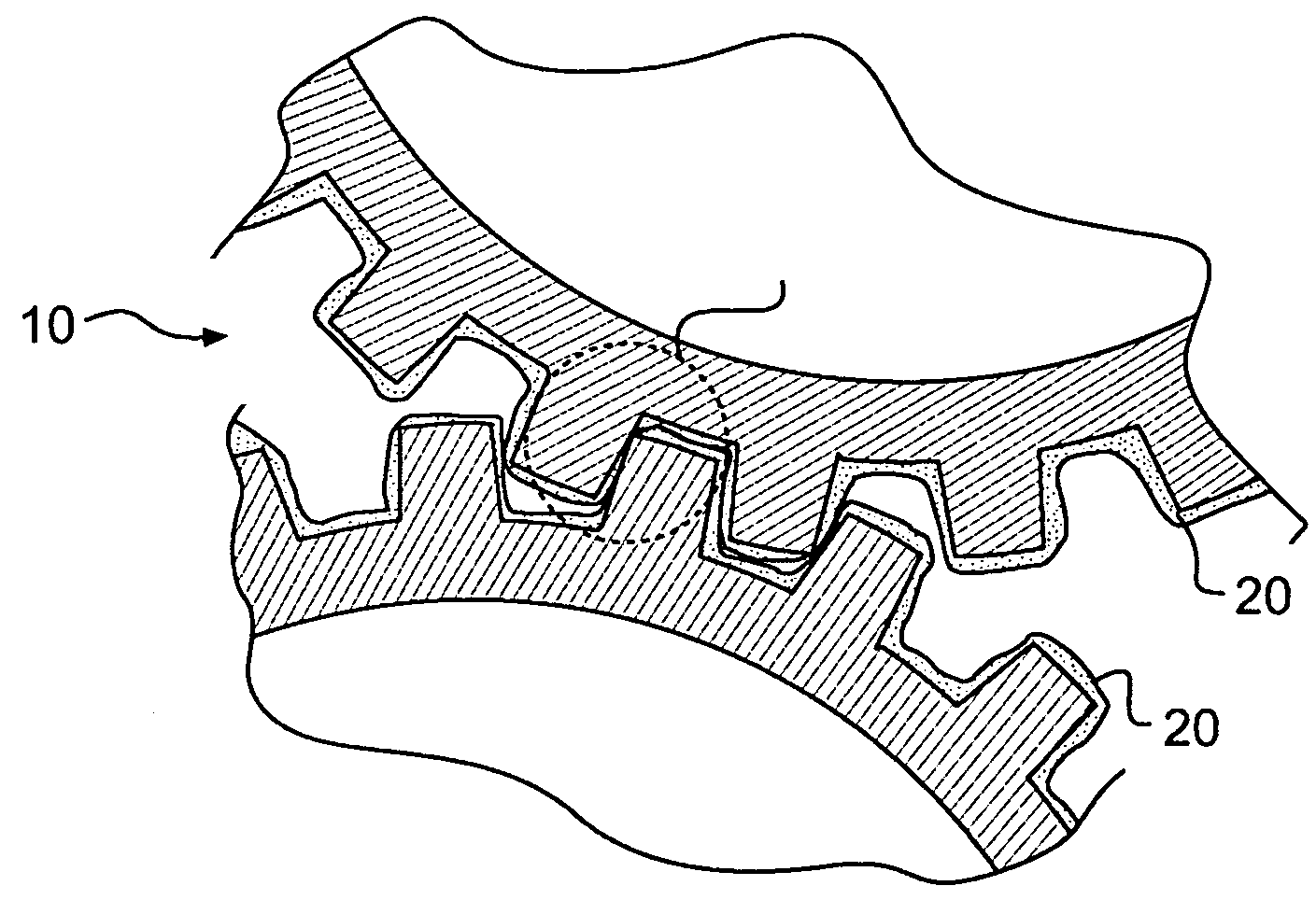
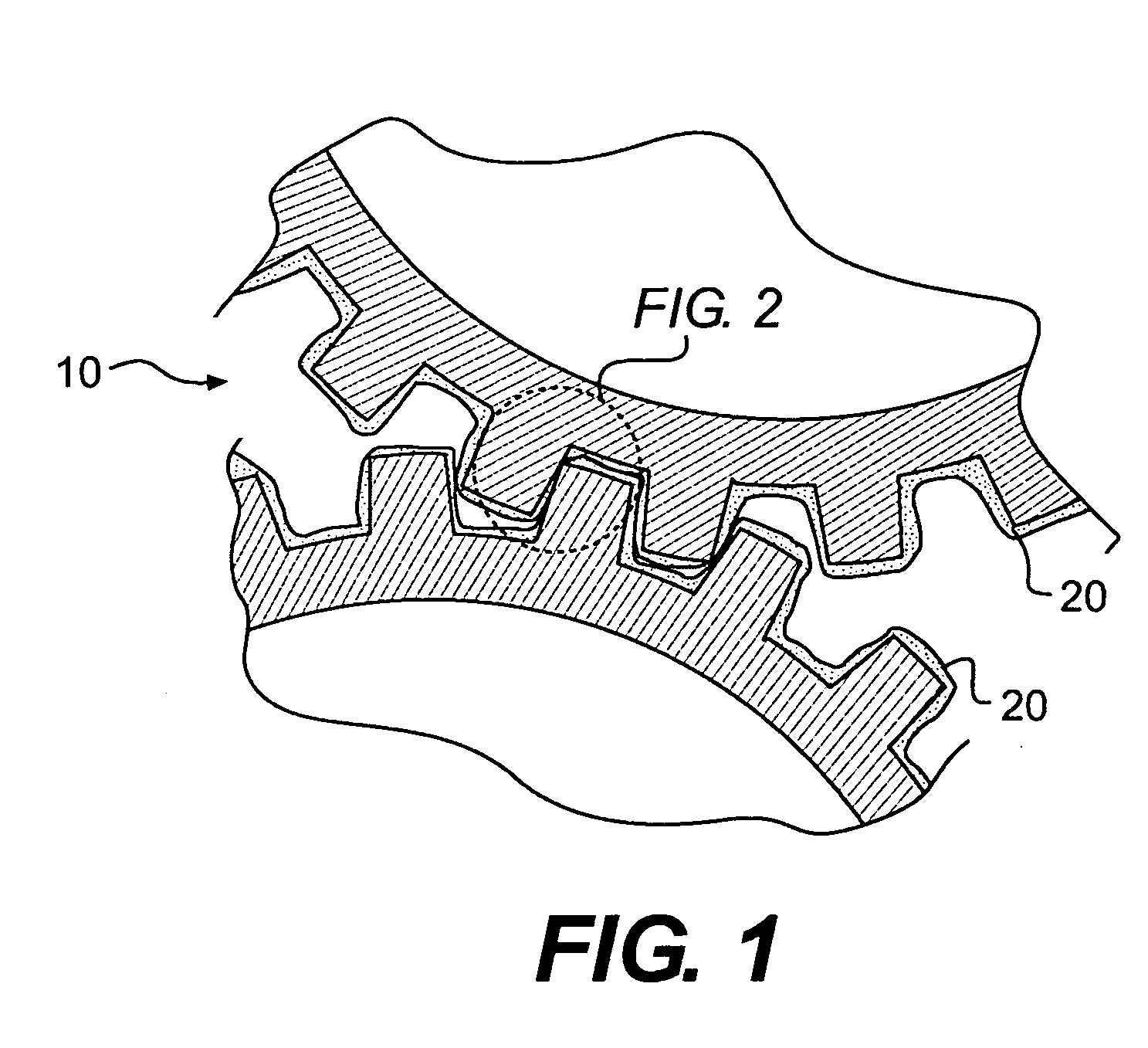
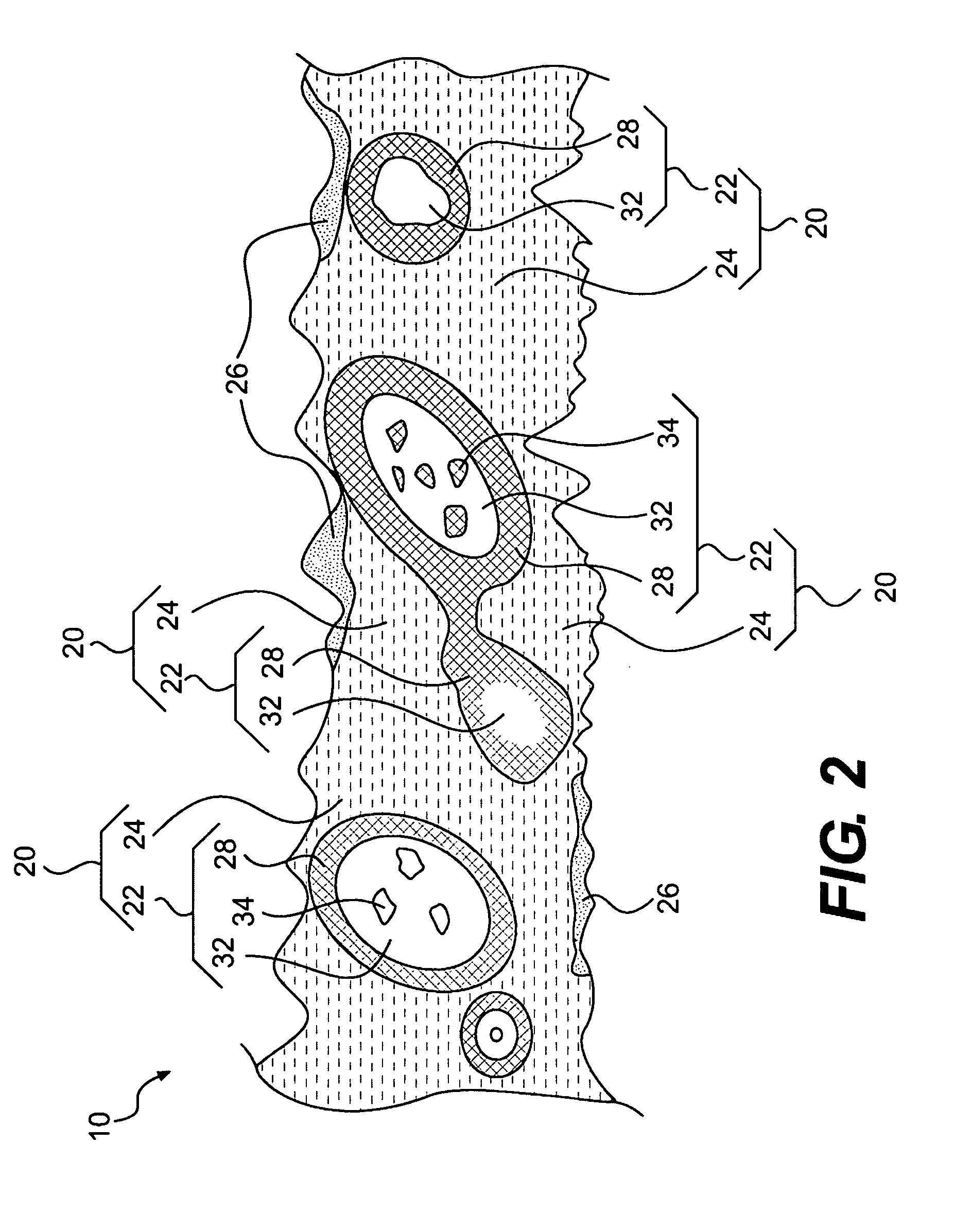
Nanoparticulate based lubricants
PatentInactiveUS20080234149A1
Innovation
- A method involving mechanical grinding and chemical treatment to create composite nanoparticles with a solid lubricant core and a stabilizing shell, reducing agglomeration and enabling bulk production.

Nano solid lubricant with hollow cage-shape structure and preparation method thereof
PatentInactiveCN100582205C
Innovation
- The ultrasonic-chemical precipitation method is used to prepare spherical MoO3 or WO3 nanoparticles, and through surface coating and chemical reaction of sulfur or selenium, nano solid lubricants such as IF-MoS2, IF-MoSe2 or IF-WS2 are obtained, which is suitable for low-cost and large quantities. and high purity preparation.
Environmental Impact Assessment of Nano-Lubricants
The environmental implications of nano-sized solid lubricants represent a critical consideration in their development and deployment across industrial applications. Unlike conventional lubricants that primarily pose concerns through chemical contamination, nano-lubricants introduce unique environmental challenges related to particle size, surface reactivity, and potential bioaccumulation pathways.
Aquatic ecosystems face particular vulnerability to nano-lubricant contamination due to the enhanced mobility and persistence of nanoparticles in water systems. Studies indicate that nano-sized molybdenum disulfide and graphene-based lubricants can remain suspended in aquatic environments for extended periods, potentially affecting phytoplankton and disrupting marine food chains. The high surface-to-volume ratio of these particles increases their reactivity with biological membranes, raising concerns about cellular uptake and toxicity in aquatic organisms.
Atmospheric release during manufacturing and application processes presents another significant environmental pathway. Nano-lubricant particles can become airborne through mechanical processes, potentially contributing to air quality degradation and respiratory health risks. The persistence of these particles in atmospheric systems depends heavily on their chemical composition and surface modifications, with some formulations showing greater stability and longer residence times.
Soil contamination represents a long-term environmental concern, particularly in industrial areas where nano-lubricants are extensively used. The interaction between nano-particles and soil microorganisms remains poorly understood, though preliminary research suggests potential impacts on microbial diversity and soil fertility. The mobility of these particles through soil layers could affect groundwater quality and agricultural productivity.
Lifecycle assessment studies reveal that while nano-lubricants often demonstrate superior performance characteristics leading to reduced material consumption, their environmental footprint during production phases can be substantially higher than conventional alternatives. The energy-intensive synthesis processes and specialized disposal requirements contribute to increased carbon emissions and waste generation.
Regulatory frameworks for nano-lubricant environmental assessment remain fragmented across different jurisdictions, creating challenges for comprehensive impact evaluation. Current testing protocols often inadequately address the unique properties of nanomaterials, necessitating development of specialized assessment methodologies that account for particle behavior, transformation, and long-term environmental fate.
Aquatic ecosystems face particular vulnerability to nano-lubricant contamination due to the enhanced mobility and persistence of nanoparticles in water systems. Studies indicate that nano-sized molybdenum disulfide and graphene-based lubricants can remain suspended in aquatic environments for extended periods, potentially affecting phytoplankton and disrupting marine food chains. The high surface-to-volume ratio of these particles increases their reactivity with biological membranes, raising concerns about cellular uptake and toxicity in aquatic organisms.
Atmospheric release during manufacturing and application processes presents another significant environmental pathway. Nano-lubricant particles can become airborne through mechanical processes, potentially contributing to air quality degradation and respiratory health risks. The persistence of these particles in atmospheric systems depends heavily on their chemical composition and surface modifications, with some formulations showing greater stability and longer residence times.
Soil contamination represents a long-term environmental concern, particularly in industrial areas where nano-lubricants are extensively used. The interaction between nano-particles and soil microorganisms remains poorly understood, though preliminary research suggests potential impacts on microbial diversity and soil fertility. The mobility of these particles through soil layers could affect groundwater quality and agricultural productivity.
Lifecycle assessment studies reveal that while nano-lubricants often demonstrate superior performance characteristics leading to reduced material consumption, their environmental footprint during production phases can be substantially higher than conventional alternatives. The energy-intensive synthesis processes and specialized disposal requirements contribute to increased carbon emissions and waste generation.
Regulatory frameworks for nano-lubricant environmental assessment remain fragmented across different jurisdictions, creating challenges for comprehensive impact evaluation. Current testing protocols often inadequately address the unique properties of nanomaterials, necessitating development of specialized assessment methodologies that account for particle behavior, transformation, and long-term environmental fate.
Safety Standards for Nano-Material Testing Protocols
The development of comprehensive safety standards for nano-material testing protocols has become increasingly critical as nano-sized solid lubricants gain widespread industrial adoption. Current regulatory frameworks primarily focus on conventional material testing methodologies, creating significant gaps in addressing the unique hazards associated with nanoscale particles during friction and embedment testing procedures.
Existing safety protocols inadequately address the potential for nanoparticle inhalation during sample preparation and testing phases. Traditional ventilation systems may not effectively capture particles smaller than 100 nanometers, necessitating specialized containment measures. The International Organization for Standardization has initiated preliminary discussions on ISO/TS 12901 series extensions specifically targeting nanomaterial handling, though implementation remains fragmented across different testing laboratories.
Personal protective equipment standards require substantial revision to accommodate nano-lubricant testing environments. Conventional respirators demonstrate limited effectiveness against ultrafine particles, while standard laboratory gloves may allow nanoparticle penetration through microscopic pores. Enhanced filtration systems with HEPA-grade capabilities and specialized barrier materials are becoming mandatory requirements for testing facilities.
Environmental containment protocols must address the unique dispersion characteristics of nano-sized solid lubricants. Unlike bulk materials, nanoparticles exhibit enhanced mobility and can remain airborne for extended periods. Testing chambers require negative pressure maintenance with specialized filtration systems capable of capturing particles down to 10 nanometers. Waste disposal procedures must also account for the persistent nature of nanomaterials in environmental systems.
Exposure monitoring standards are evolving to incorporate real-time particle counting and size distribution analysis. Traditional gravimetric sampling methods prove insufficient for detecting nano-scale contamination levels. Advanced monitoring equipment including condensation particle counters and scanning mobility particle sizers are becoming standard requirements for compliant testing facilities.
Documentation and traceability requirements have expanded to include detailed particle characterization data, exposure assessment records, and long-term health monitoring protocols for personnel involved in nano-lubricant testing. These comprehensive safety frameworks ensure responsible development while maintaining scientific rigor in friction and embedment testing procedures.
Existing safety protocols inadequately address the potential for nanoparticle inhalation during sample preparation and testing phases. Traditional ventilation systems may not effectively capture particles smaller than 100 nanometers, necessitating specialized containment measures. The International Organization for Standardization has initiated preliminary discussions on ISO/TS 12901 series extensions specifically targeting nanomaterial handling, though implementation remains fragmented across different testing laboratories.
Personal protective equipment standards require substantial revision to accommodate nano-lubricant testing environments. Conventional respirators demonstrate limited effectiveness against ultrafine particles, while standard laboratory gloves may allow nanoparticle penetration through microscopic pores. Enhanced filtration systems with HEPA-grade capabilities and specialized barrier materials are becoming mandatory requirements for testing facilities.
Environmental containment protocols must address the unique dispersion characteristics of nano-sized solid lubricants. Unlike bulk materials, nanoparticles exhibit enhanced mobility and can remain airborne for extended periods. Testing chambers require negative pressure maintenance with specialized filtration systems capable of capturing particles down to 10 nanometers. Waste disposal procedures must also account for the persistent nature of nanomaterials in environmental systems.
Exposure monitoring standards are evolving to incorporate real-time particle counting and size distribution analysis. Traditional gravimetric sampling methods prove insufficient for detecting nano-scale contamination levels. Advanced monitoring equipment including condensation particle counters and scanning mobility particle sizers are becoming standard requirements for compliant testing facilities.
Documentation and traceability requirements have expanded to include detailed particle characterization data, exposure assessment records, and long-term health monitoring protocols for personnel involved in nano-lubricant testing. These comprehensive safety frameworks ensure responsible development while maintaining scientific rigor in friction and embedment testing procedures.
Unlock deeper insights with PatSnap Eureka Quick Research — get a full tech report to explore trends and direct your research. Try now!
Generate Your Research Report Instantly with AI Agent
Supercharge your innovation with PatSnap Eureka AI Agent Platform!