

Experimental Protocols: Fuel Cell Car Aerodynamics
MAR 27, 20269 MIN READ
Generate Your Research Report Instantly with AI Agent
PatSnap Eureka helps you evaluate technical feasibility & market potential.
Fuel Cell Vehicle Aerodynamics Background and Objectives
Fuel cell vehicles represent a pivotal advancement in sustainable transportation technology, emerging as a promising alternative to conventional internal combustion engines and battery electric vehicles. The integration of hydrogen fuel cell powertrains with optimized aerodynamic design has become increasingly critical as automotive manufacturers strive to maximize vehicle efficiency, extend driving range, and reduce environmental impact. The unique characteristics of fuel cell systems, including their specific packaging requirements, thermal management needs, and weight distribution patterns, present distinct aerodynamic challenges that differ significantly from traditional vehicle architectures.
The evolution of fuel cell vehicle aerodynamics has been shaped by decades of research in both hydrogen propulsion technology and computational fluid dynamics. Early fuel cell prototypes in the 1990s primarily focused on proving the viability of hydrogen powertrains, with limited attention to aerodynamic optimization. However, as the technology matured through the 2000s and 2010s, researchers recognized that aerodynamic efficiency directly correlates with fuel cell system performance and overall vehicle range. This realization sparked intensive research into specialized aerodynamic solutions tailored for fuel cell vehicle configurations.
Contemporary fuel cell vehicles face unique aerodynamic considerations due to their distinctive architecture. The integration of hydrogen storage tanks, fuel cell stacks, and cooling systems creates specific airflow management requirements that traditional vehicle designs do not encounter. The positioning of these components affects vehicle center of gravity, weight distribution, and external airflow patterns, necessitating innovative approaches to body design, underbody aerodynamics, and thermal management integration.
The primary objective of fuel cell vehicle aerodynamics research centers on achieving optimal energy efficiency through reduced drag coefficients while maintaining adequate cooling performance for fuel cell systems. This involves developing experimental protocols that can accurately measure and analyze the complex interactions between external aerodynamic forces and internal thermal management requirements. Secondary objectives include minimizing wind noise, ensuring vehicle stability across various operating conditions, and optimizing the integration of hydrogen refueling systems without compromising aerodynamic performance.
Advanced computational fluid dynamics modeling, combined with wind tunnel testing and real-world validation, forms the foundation of modern fuel cell vehicle aerodynamic development. These methodologies aim to establish comprehensive design guidelines that enable manufacturers to create vehicles capable of achieving maximum hydrogen efficiency while meeting safety, performance, and consumer expectations in the rapidly evolving sustainable transportation market.
The evolution of fuel cell vehicle aerodynamics has been shaped by decades of research in both hydrogen propulsion technology and computational fluid dynamics. Early fuel cell prototypes in the 1990s primarily focused on proving the viability of hydrogen powertrains, with limited attention to aerodynamic optimization. However, as the technology matured through the 2000s and 2010s, researchers recognized that aerodynamic efficiency directly correlates with fuel cell system performance and overall vehicle range. This realization sparked intensive research into specialized aerodynamic solutions tailored for fuel cell vehicle configurations.
Contemporary fuel cell vehicles face unique aerodynamic considerations due to their distinctive architecture. The integration of hydrogen storage tanks, fuel cell stacks, and cooling systems creates specific airflow management requirements that traditional vehicle designs do not encounter. The positioning of these components affects vehicle center of gravity, weight distribution, and external airflow patterns, necessitating innovative approaches to body design, underbody aerodynamics, and thermal management integration.
The primary objective of fuel cell vehicle aerodynamics research centers on achieving optimal energy efficiency through reduced drag coefficients while maintaining adequate cooling performance for fuel cell systems. This involves developing experimental protocols that can accurately measure and analyze the complex interactions between external aerodynamic forces and internal thermal management requirements. Secondary objectives include minimizing wind noise, ensuring vehicle stability across various operating conditions, and optimizing the integration of hydrogen refueling systems without compromising aerodynamic performance.
Advanced computational fluid dynamics modeling, combined with wind tunnel testing and real-world validation, forms the foundation of modern fuel cell vehicle aerodynamic development. These methodologies aim to establish comprehensive design guidelines that enable manufacturers to create vehicles capable of achieving maximum hydrogen efficiency while meeting safety, performance, and consumer expectations in the rapidly evolving sustainable transportation market.
Market Demand for Efficient Fuel Cell Vehicle Design
The global automotive industry is experiencing a fundamental shift toward sustainable transportation solutions, with fuel cell vehicles emerging as a critical component of the zero-emission mobility ecosystem. This transformation is driven by increasingly stringent environmental regulations, government mandates for carbon neutrality, and growing consumer awareness of climate change impacts. Major automotive markets including Europe, Japan, South Korea, and California have established clear timelines for phasing out internal combustion engines, creating substantial regulatory pressure for alternative propulsion technologies.
Fuel cell vehicles offer distinct advantages over battery electric vehicles in specific market segments, particularly for long-distance transportation, commercial fleets, and heavy-duty applications. The technology provides extended driving range, rapid refueling capabilities, and consistent performance across varying temperature conditions. These characteristics address key consumer concerns about electric vehicle adoption, including range anxiety and charging infrastructure limitations.
The commercial vehicle sector represents the most immediate and substantial market opportunity for fuel cell technology. Fleet operators prioritize operational efficiency, total cost of ownership, and minimal downtime. Aerodynamic optimization becomes particularly crucial in this context, as commercial vehicles typically operate at highway speeds for extended periods, where aerodynamic drag significantly impacts fuel consumption and operational costs. Improved aerodynamic design can reduce hydrogen consumption by substantial margins, directly translating to lower operating expenses and enhanced vehicle competitiveness.
Consumer acceptance of fuel cell vehicles increasingly depends on performance parity with conventional vehicles while maintaining environmental benefits. Aerodynamic efficiency directly influences vehicle range, a primary purchasing consideration for consumers transitioning from gasoline vehicles. Enhanced aerodynamic design enables manufacturers to achieve competitive range specifications with smaller, more cost-effective fuel cell systems, potentially accelerating market adoption.
The logistics and transportation industry faces mounting pressure to reduce emissions while maintaining operational efficiency. E-commerce growth has intensified demand for last-mile delivery solutions, while international shipping companies seek alternatives to diesel-powered vehicles. Aerodynamically optimized fuel cell vehicles can address these requirements by providing clean operation with minimal performance compromises.
Government procurement programs worldwide increasingly favor zero-emission vehicles for public transportation, municipal fleets, and government operations. These programs often specify performance requirements that necessitate advanced aerodynamic design to achieve mandated range and efficiency targets while operating within budget constraints.
Fuel cell vehicles offer distinct advantages over battery electric vehicles in specific market segments, particularly for long-distance transportation, commercial fleets, and heavy-duty applications. The technology provides extended driving range, rapid refueling capabilities, and consistent performance across varying temperature conditions. These characteristics address key consumer concerns about electric vehicle adoption, including range anxiety and charging infrastructure limitations.
The commercial vehicle sector represents the most immediate and substantial market opportunity for fuel cell technology. Fleet operators prioritize operational efficiency, total cost of ownership, and minimal downtime. Aerodynamic optimization becomes particularly crucial in this context, as commercial vehicles typically operate at highway speeds for extended periods, where aerodynamic drag significantly impacts fuel consumption and operational costs. Improved aerodynamic design can reduce hydrogen consumption by substantial margins, directly translating to lower operating expenses and enhanced vehicle competitiveness.
Consumer acceptance of fuel cell vehicles increasingly depends on performance parity with conventional vehicles while maintaining environmental benefits. Aerodynamic efficiency directly influences vehicle range, a primary purchasing consideration for consumers transitioning from gasoline vehicles. Enhanced aerodynamic design enables manufacturers to achieve competitive range specifications with smaller, more cost-effective fuel cell systems, potentially accelerating market adoption.
The logistics and transportation industry faces mounting pressure to reduce emissions while maintaining operational efficiency. E-commerce growth has intensified demand for last-mile delivery solutions, while international shipping companies seek alternatives to diesel-powered vehicles. Aerodynamically optimized fuel cell vehicles can address these requirements by providing clean operation with minimal performance compromises.
Government procurement programs worldwide increasingly favor zero-emission vehicles for public transportation, municipal fleets, and government operations. These programs often specify performance requirements that necessitate advanced aerodynamic design to achieve mandated range and efficiency targets while operating within budget constraints.
Current Aerodynamic Challenges in Fuel Cell Cars
Fuel cell vehicles face significant aerodynamic challenges that directly impact their efficiency and performance characteristics. Unlike conventional internal combustion engine vehicles, fuel cell cars require specialized cooling systems for both the fuel cell stack and power electronics, necessitating larger air intake areas and more complex airflow management. These additional cooling requirements create substantial drag penalties that must be carefully balanced against thermal management needs.
The integration of hydrogen storage systems presents unique aerodynamic obstacles. High-pressure hydrogen tanks, typically cylindrical in shape, disrupt optimal vehicle packaging and create packaging constraints that compromise streamlined body designs. The placement of these tanks often forces designers to accept suboptimal aerodynamic profiles, particularly in the rear section of vehicles where smooth airflow separation is critical for minimizing wake turbulence.
Fuel cell vehicles exhibit distinct weight distribution patterns compared to battery electric vehicles, with hydrogen tanks and fuel cell stacks creating different center-of-gravity positions. This altered weight distribution affects vehicle stability at higher speeds and influences the effectiveness of aerodynamic features such as spoilers and diffusers. The challenge becomes more pronounced when considering the need to maintain consistent aerodynamic performance as hydrogen is consumed and vehicle weight decreases during operation.
Thermal management systems in fuel cell vehicles require significantly more airflow than conventional vehicles, creating conflicts between aerodynamic efficiency and cooling effectiveness. The fuel cell stack operates at relatively low temperatures but generates substantial waste heat, requiring large radiator surfaces and cooling air volumes. Additionally, power electronics cooling systems demand separate airflow paths, further complicating the vehicle's aerodynamic design.
Ground clearance requirements for hydrogen tank protection create additional aerodynamic challenges. Safety regulations often mandate specific clearances and protective structures around hydrogen storage systems, limiting the designer's ability to optimize underbody airflow. This constraint particularly affects the implementation of effective underbody panels and diffuser systems that are crucial for reducing aerodynamic drag.
The current aerodynamic solutions for fuel cell vehicles often represent compromises rather than optimal designs, highlighting the need for innovative approaches that can simultaneously address efficiency, safety, and performance requirements while maintaining the unique operational characteristics of hydrogen-powered transportation systems.
The integration of hydrogen storage systems presents unique aerodynamic obstacles. High-pressure hydrogen tanks, typically cylindrical in shape, disrupt optimal vehicle packaging and create packaging constraints that compromise streamlined body designs. The placement of these tanks often forces designers to accept suboptimal aerodynamic profiles, particularly in the rear section of vehicles where smooth airflow separation is critical for minimizing wake turbulence.
Fuel cell vehicles exhibit distinct weight distribution patterns compared to battery electric vehicles, with hydrogen tanks and fuel cell stacks creating different center-of-gravity positions. This altered weight distribution affects vehicle stability at higher speeds and influences the effectiveness of aerodynamic features such as spoilers and diffusers. The challenge becomes more pronounced when considering the need to maintain consistent aerodynamic performance as hydrogen is consumed and vehicle weight decreases during operation.
Thermal management systems in fuel cell vehicles require significantly more airflow than conventional vehicles, creating conflicts between aerodynamic efficiency and cooling effectiveness. The fuel cell stack operates at relatively low temperatures but generates substantial waste heat, requiring large radiator surfaces and cooling air volumes. Additionally, power electronics cooling systems demand separate airflow paths, further complicating the vehicle's aerodynamic design.
Ground clearance requirements for hydrogen tank protection create additional aerodynamic challenges. Safety regulations often mandate specific clearances and protective structures around hydrogen storage systems, limiting the designer's ability to optimize underbody airflow. This constraint particularly affects the implementation of effective underbody panels and diffuser systems that are crucial for reducing aerodynamic drag.
The current aerodynamic solutions for fuel cell vehicles often represent compromises rather than optimal designs, highlighting the need for innovative approaches that can simultaneously address efficiency, safety, and performance requirements while maintaining the unique operational characteristics of hydrogen-powered transportation systems.
Existing Aerodynamic Testing Protocols for FCVs
01 Aerodynamic body design for fuel cell vehicles
Fuel cell vehicles can be designed with optimized aerodynamic body shapes to reduce drag coefficient and improve overall vehicle efficiency. This includes streamlined exterior surfaces, optimized front and rear profiles, and integrated aerodynamic features that minimize air resistance. The aerodynamic design considerations are particularly important for fuel cell vehicles to maximize their range and energy efficiency.- Aerodynamic body design for fuel cell vehicles: Fuel cell vehicles incorporate specialized aerodynamic body designs to reduce drag coefficient and improve overall vehicle efficiency. These designs include streamlined body shapes, optimized front and rear profiles, and integrated aerodynamic features that minimize air resistance while maintaining structural integrity and safety requirements. The aerodynamic improvements contribute to extended driving range and enhanced energy efficiency of the fuel cell system.
- Underbody aerodynamic optimization: The underbody structure of fuel cell vehicles is designed with aerodynamic considerations to manage airflow beneath the vehicle. This includes smooth underbody panels, diffusers, and air management systems that reduce turbulence and drag. Special attention is given to accommodating fuel cell components while maintaining optimal aerodynamic performance through strategic placement and shielding of components.
- Active aerodynamic control systems: Advanced fuel cell vehicles employ active aerodynamic elements that adjust based on driving conditions. These systems include adjustable spoilers, grille shutters, and air intake controls that optimize aerodynamic performance and cooling requirements dynamically. The active systems balance the need for thermal management of fuel cell components with aerodynamic efficiency across different speed ranges and operating conditions.
- Cooling air management for fuel cell systems: Specialized aerodynamic designs manage cooling airflow for fuel cell stacks and auxiliary systems. These designs incorporate optimized air intake positions, ducting systems, and exhaust outlets that provide adequate cooling while minimizing aerodynamic penalties. The integration considers both the thermal requirements of the fuel cell system and the overall vehicle aerodynamic performance.
- Aerodynamic accessories and exterior components: Fuel cell vehicles feature aerodynamically optimized exterior components including mirrors, door handles, wheels, and trim elements. These components are designed to minimize drag and reduce wind noise while maintaining functionality. Special consideration is given to the integration of hydrogen storage systems and fuel cell components without compromising the vehicle's aerodynamic profile.
02 Underbody aerodynamic optimization
The underbody structure of fuel cell vehicles can be specifically designed to improve airflow management beneath the vehicle. This includes smooth underbody panels, integrated diffusers, and strategic placement of fuel cell components to minimize turbulence and drag. Proper underbody aerodynamics contributes significantly to overall vehicle performance and stability.Expand Specific Solutions03 Active aerodynamic control systems
Advanced fuel cell vehicles can incorporate active aerodynamic elements that adjust based on driving conditions. These systems may include adjustable spoilers, active grille shutters, and deployable aerodynamic devices that optimize airflow at different speeds. Such active systems help balance aerodynamic efficiency with cooling requirements for fuel cell systems.Expand Specific Solutions04 Integration of fuel cell cooling with aerodynamic design
The cooling requirements of fuel cell systems can be integrated with aerodynamic design strategies to achieve optimal thermal management while maintaining low drag. This involves strategic air intake positioning, efficient heat exchanger placement, and coordinated airflow paths that serve both cooling and aerodynamic purposes without compromising either function.Expand Specific Solutions05 Computational fluid dynamics optimization for fuel cell vehicles
Advanced simulation and computational methods can be employed to optimize the aerodynamic performance of fuel cell vehicles. These techniques allow for detailed analysis of airflow patterns, pressure distributions, and drag characteristics, enabling designers to refine vehicle shapes and component placement for maximum aerodynamic efficiency while accommodating fuel cell system requirements.Expand Specific Solutions
Key Players in Fuel Cell Vehicle Development
The fuel cell car aerodynamics field represents a rapidly evolving sector within the broader automotive industry, currently in its growth phase as manufacturers transition from experimental prototypes to commercial deployment. The market demonstrates significant expansion potential, driven by increasing environmental regulations and hydrogen infrastructure development. Technology maturity varies considerably across key players, with established automotive giants like Toyota, Hyundai, and Honda leading commercial fuel cell vehicle production, while Mercedes-Benz and Nissan advance their hydrogen programs. Specialized fuel cell companies such as Plug Power and Intelligent Energy provide critical component technologies, while suppliers like Bosch and DENSO contribute essential systems integration. Chinese manufacturers including Changan New Energy and Yutong Bus are rapidly developing capabilities, particularly in commercial vehicle applications. The competitive landscape shows a convergence of traditional automotive expertise with emerging fuel cell technologies, creating opportunities for aerodynamic optimization to enhance vehicle efficiency and performance.
Hyundai Motor Co., Ltd.
Technical Solution: Hyundai's aerodynamic testing protocols for the NEXO fuel cell SUV incorporate advanced pressure-sensitive paint technology and particle image velocimetry to analyze airflow patterns around the vehicle body. Their experimental methodology includes systematic evaluation of front air dam configurations, wheel well aerodynamics, and rear spoiler optimization to achieve a drag coefficient of 0.32. The company utilizes both physical wind tunnel testing at Reynolds numbers matching real driving conditions and high-fidelity CFD simulations to validate aerodynamic modifications that enhance fuel cell system cooling efficiency and overall vehicle range.
Strengths: Strong integration of aerodynamics with fuel cell thermal management systems and comprehensive SUV-specific testing protocols. Weaknesses: Higher drag coefficients compared to sedan configurations limit maximum efficiency gains.
Toyota Motor Corp.
Technical Solution: Toyota has developed comprehensive aerodynamic optimization protocols for their Mirai fuel cell vehicle, focusing on reducing drag coefficient to 0.27 through advanced wind tunnel testing and computational fluid dynamics (CFD) simulations. Their experimental approach includes systematic evaluation of body panel modifications, active grille shutters, and underbody airflow management systems. The company employs multi-phase testing protocols combining 1:1 scale wind tunnel experiments with real-world driving conditions to validate aerodynamic improvements that directly impact fuel cell efficiency and hydrogen consumption rates.
Strengths: Market-leading fuel cell vehicle experience with proven aerodynamic solutions and extensive testing infrastructure. Weaknesses: Conservative approach may limit breakthrough innovations in radical aerodynamic designs.
Core Innovations in FCV Aerodynamic Design
Method for testing a fuel cell system for a motor vehicle and test stand
PatentInactiveDE102013020436A1
Innovation
- A method and test stand that simulate a real vehicle environment using a combination of hardware and software components, including a simulation unit with a vehicle interface module, load profile module, and state machine module, to realistically test and develop fuel cell systems under various conditions.


Accelerated Testing Protocols For Solid Oxide Fuel Cell Cathode Materials
PatentInactiveUS20170363689A1
Innovation
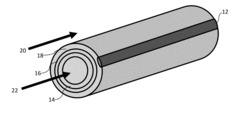
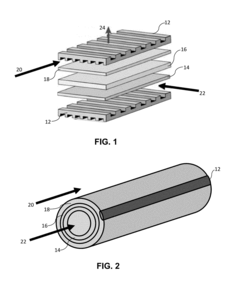
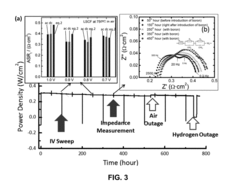
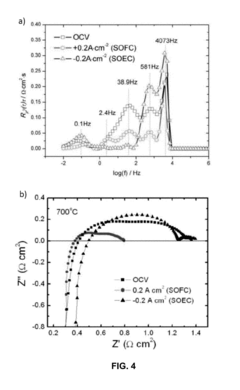
- Developed accelerated testing protocols for SOFC cathode materials involve cycling the cells between open circuit voltage and operating potential at high current densities and frequencies, simulating long-term operation in a shorter timeframe to assess durability and reliability.
Environmental Standards for Automotive Testing
Environmental standards for automotive testing represent a critical framework that governs the validation and certification of fuel cell vehicles, particularly regarding their aerodynamic performance characteristics. These standards establish mandatory protocols that ensure consistent, reliable, and comparable testing conditions across different laboratories and manufacturers worldwide.
The International Organization for Standardization (ISO) has developed comprehensive guidelines under ISO 14040 and ISO 14044 series, which specifically address life cycle assessment methodologies for automotive applications. These standards mandate controlled environmental conditions including ambient temperature ranges of 20±2°C, relative humidity between 45-75%, and atmospheric pressure variations not exceeding ±5% from standard conditions during aerodynamic testing procedures.
Regulatory bodies such as the Environmental Protection Agency (EPA) and European Environment Agency (EEA) have established stringent emission testing protocols that directly impact fuel cell vehicle aerodynamic assessments. The EPA's Federal Test Procedure (FTP-75) requires specific wind tunnel configurations and environmental chamber specifications that maintain consistent air density and viscosity parameters throughout testing cycles.
Temperature stability protocols demand continuous monitoring systems with accuracy levels of ±0.1°C, ensuring that thermal effects on air properties remain constant during drag coefficient measurements. Humidity control systems must maintain moisture content within prescribed limits to prevent variations in air density that could compromise aerodynamic data accuracy.
Contamination control standards require HEPA filtration systems capable of removing particles larger than 0.3 micrometers, preventing interference with sensitive pressure measurement equipment and flow visualization techniques. Air quality monitoring must demonstrate compliance with ISO 8573 compressed air quality standards throughout testing procedures.
Calibration requirements mandate annual verification of all environmental monitoring equipment against NIST-traceable standards, with quarterly interim checks to ensure measurement accuracy. Documentation protocols require comprehensive logging of all environmental parameters at minimum 10-second intervals during active testing phases.
These environmental standards ensure that fuel cell vehicle aerodynamic testing produces reproducible results that accurately reflect real-world performance characteristics while maintaining scientific rigor and regulatory compliance across international markets.
The International Organization for Standardization (ISO) has developed comprehensive guidelines under ISO 14040 and ISO 14044 series, which specifically address life cycle assessment methodologies for automotive applications. These standards mandate controlled environmental conditions including ambient temperature ranges of 20±2°C, relative humidity between 45-75%, and atmospheric pressure variations not exceeding ±5% from standard conditions during aerodynamic testing procedures.
Regulatory bodies such as the Environmental Protection Agency (EPA) and European Environment Agency (EEA) have established stringent emission testing protocols that directly impact fuel cell vehicle aerodynamic assessments. The EPA's Federal Test Procedure (FTP-75) requires specific wind tunnel configurations and environmental chamber specifications that maintain consistent air density and viscosity parameters throughout testing cycles.
Temperature stability protocols demand continuous monitoring systems with accuracy levels of ±0.1°C, ensuring that thermal effects on air properties remain constant during drag coefficient measurements. Humidity control systems must maintain moisture content within prescribed limits to prevent variations in air density that could compromise aerodynamic data accuracy.
Contamination control standards require HEPA filtration systems capable of removing particles larger than 0.3 micrometers, preventing interference with sensitive pressure measurement equipment and flow visualization techniques. Air quality monitoring must demonstrate compliance with ISO 8573 compressed air quality standards throughout testing procedures.
Calibration requirements mandate annual verification of all environmental monitoring equipment against NIST-traceable standards, with quarterly interim checks to ensure measurement accuracy. Documentation protocols require comprehensive logging of all environmental parameters at minimum 10-second intervals during active testing phases.
These environmental standards ensure that fuel cell vehicle aerodynamic testing produces reproducible results that accurately reflect real-world performance characteristics while maintaining scientific rigor and regulatory compliance across international markets.
Safety Protocols in Fuel Cell Vehicle Testing
Safety protocols in fuel cell vehicle testing represent a critical framework that governs experimental procedures while ensuring personnel protection and equipment integrity during aerodynamic research. These protocols establish comprehensive guidelines that address the unique hazards associated with hydrogen fuel systems, high-voltage electrical components, and dynamic testing environments encountered in automotive aerodynamic studies.
The fundamental safety architecture encompasses multiple protection layers, beginning with personnel training requirements that mandate specialized certification for handling fuel cell systems. All testing personnel must demonstrate proficiency in hydrogen safety procedures, emergency response protocols, and proper use of detection equipment before participating in aerodynamic experiments. This training extends to understanding the specific risks associated with combining fuel cell operations with wind tunnel testing or on-road aerodynamic validation procedures.
Facility safety measures form the cornerstone of secure testing environments, requiring specialized ventilation systems capable of managing hydrogen dispersion in enclosed spaces. Testing facilities must maintain hydrogen concentration levels below 25% of the lower explosive limit through continuous monitoring and automated ventilation activation. Emergency shutdown systems must be strategically positioned and capable of isolating fuel cell systems within predetermined timeframes during aerodynamic testing scenarios.
Equipment safety protocols mandate rigorous inspection procedures for all fuel cell components before aerodynamic testing commences. Pressure vessels, fuel lines, and electrical connections undergo systematic verification to ensure integrity under dynamic loading conditions typical of aerodynamic experiments. Specialized leak detection equipment must remain active throughout testing procedures, with automatic system isolation capabilities triggered by predetermined threshold violations.
Emergency response procedures establish clear protocols for various incident scenarios, including hydrogen leaks, electrical faults, and mechanical failures during aerodynamic testing. Response teams must maintain immediate access to specialized firefighting equipment designed for hydrogen fires, while evacuation procedures account for the unique characteristics of hydrogen dispersion patterns in testing environments.
Documentation requirements ensure comprehensive recording of all safety-related activities, creating traceable records that support continuous improvement of safety protocols and regulatory compliance verification throughout the experimental process.
The fundamental safety architecture encompasses multiple protection layers, beginning with personnel training requirements that mandate specialized certification for handling fuel cell systems. All testing personnel must demonstrate proficiency in hydrogen safety procedures, emergency response protocols, and proper use of detection equipment before participating in aerodynamic experiments. This training extends to understanding the specific risks associated with combining fuel cell operations with wind tunnel testing or on-road aerodynamic validation procedures.
Facility safety measures form the cornerstone of secure testing environments, requiring specialized ventilation systems capable of managing hydrogen dispersion in enclosed spaces. Testing facilities must maintain hydrogen concentration levels below 25% of the lower explosive limit through continuous monitoring and automated ventilation activation. Emergency shutdown systems must be strategically positioned and capable of isolating fuel cell systems within predetermined timeframes during aerodynamic testing scenarios.
Equipment safety protocols mandate rigorous inspection procedures for all fuel cell components before aerodynamic testing commences. Pressure vessels, fuel lines, and electrical connections undergo systematic verification to ensure integrity under dynamic loading conditions typical of aerodynamic experiments. Specialized leak detection equipment must remain active throughout testing procedures, with automatic system isolation capabilities triggered by predetermined threshold violations.
Emergency response procedures establish clear protocols for various incident scenarios, including hydrogen leaks, electrical faults, and mechanical failures during aerodynamic testing. Response teams must maintain immediate access to specialized firefighting equipment designed for hydrogen fires, while evacuation procedures account for the unique characteristics of hydrogen dispersion patterns in testing environments.
Documentation requirements ensure comprehensive recording of all safety-related activities, creating traceable records that support continuous improvement of safety protocols and regulatory compliance verification throughout the experimental process.
Unlock deeper insights with PatSnap Eureka Quick Research — get a full tech report to explore trends and direct your research. Try now!
Generate Your Research Report Instantly with AI Agent
Supercharge your innovation with PatSnap Eureka AI Agent Platform!