

Exploring Biofertilizers in Vertical Farming Systems
JUL 15, 20259 MIN READ
Generate Your Research Report Instantly with AI Agent
PatSnap Eureka helps you evaluate technical feasibility & market potential.
Biofertilizer Evolution
The evolution of biofertilizers in vertical farming systems represents a significant shift in agricultural practices, combining traditional biological knowledge with modern farming techniques. This progression can be traced back to the early 20th century when the concept of beneficial microorganisms in agriculture began to gain traction. However, it wasn't until the late 1970s and early 1980s that biofertilizers started to be seriously considered as a viable alternative to chemical fertilizers.
The initial focus was on nitrogen-fixing bacteria, such as Rhizobium, which formed symbiotic relationships with leguminous plants. As research advanced, the scope expanded to include phosphate-solubilizing bacteria and mycorrhizal fungi, which enhanced nutrient uptake in various crops. The 1990s saw a surge in interest in plant growth-promoting rhizobacteria (PGPR), which not only improved nutrient availability but also provided protection against pathogens.
The turn of the millennium marked a significant milestone in biofertilizer development, with the advent of molecular biology techniques allowing for more precise identification and characterization of beneficial microorganisms. This led to the creation of more effective and targeted biofertilizer formulations. Concurrently, the rise of vertical farming systems presented new challenges and opportunities for biofertilizer application.
In the context of vertical farming, biofertilizers have undergone further refinement to suit the unique conditions of controlled environment agriculture. The focus has shifted towards developing consortia of microorganisms that can thrive in soilless media and hydroponic systems. These specialized biofertilizers are designed to enhance nutrient cycling, improve water retention, and boost plant immunity in the confined spaces of vertical farms.
Recent advancements have seen the integration of nanotechnology in biofertilizer production, resulting in nano-biofertilizers with enhanced efficiency and shelf life. Additionally, the use of endophytes – microorganisms that live within plant tissues – has gained prominence in vertical farming applications, as they can provide sustained benefits throughout the plant's lifecycle.
The evolution of biofertilizers in vertical farming systems has also been influenced by the growing demand for organic and sustainable agricultural practices. This has led to the development of biofertilizers that not only enhance plant growth but also contribute to soil health and ecosystem balance, even in artificial growing environments.
Looking ahead, the trajectory of biofertilizer evolution in vertical farming systems is likely to involve further integration with smart farming technologies. This may include the development of sensor-based application systems, tailored microbial communities for specific crop varieties, and the use of artificial intelligence to optimize biofertilizer formulations and application strategies in real-time, based on plant needs and environmental conditions.
The initial focus was on nitrogen-fixing bacteria, such as Rhizobium, which formed symbiotic relationships with leguminous plants. As research advanced, the scope expanded to include phosphate-solubilizing bacteria and mycorrhizal fungi, which enhanced nutrient uptake in various crops. The 1990s saw a surge in interest in plant growth-promoting rhizobacteria (PGPR), which not only improved nutrient availability but also provided protection against pathogens.
The turn of the millennium marked a significant milestone in biofertilizer development, with the advent of molecular biology techniques allowing for more precise identification and characterization of beneficial microorganisms. This led to the creation of more effective and targeted biofertilizer formulations. Concurrently, the rise of vertical farming systems presented new challenges and opportunities for biofertilizer application.
In the context of vertical farming, biofertilizers have undergone further refinement to suit the unique conditions of controlled environment agriculture. The focus has shifted towards developing consortia of microorganisms that can thrive in soilless media and hydroponic systems. These specialized biofertilizers are designed to enhance nutrient cycling, improve water retention, and boost plant immunity in the confined spaces of vertical farms.
Recent advancements have seen the integration of nanotechnology in biofertilizer production, resulting in nano-biofertilizers with enhanced efficiency and shelf life. Additionally, the use of endophytes – microorganisms that live within plant tissues – has gained prominence in vertical farming applications, as they can provide sustained benefits throughout the plant's lifecycle.
The evolution of biofertilizers in vertical farming systems has also been influenced by the growing demand for organic and sustainable agricultural practices. This has led to the development of biofertilizers that not only enhance plant growth but also contribute to soil health and ecosystem balance, even in artificial growing environments.
Looking ahead, the trajectory of biofertilizer evolution in vertical farming systems is likely to involve further integration with smart farming technologies. This may include the development of sensor-based application systems, tailored microbial communities for specific crop varieties, and the use of artificial intelligence to optimize biofertilizer formulations and application strategies in real-time, based on plant needs and environmental conditions.
Vertical Farming Demand
The vertical farming industry has experienced significant growth in recent years, driven by increasing urbanization, climate change concerns, and the need for sustainable food production methods. This innovative approach to agriculture has created a substantial demand for efficient and environmentally friendly farming solutions, including biofertilizers.
The global vertical farming market is projected to expand rapidly, with estimates suggesting a compound annual growth rate (CAGR) of over 20% in the coming years. This growth is fueled by the rising demand for fresh, locally-grown produce in urban areas, where traditional agriculture is limited by space constraints. Vertical farming systems offer a solution to this challenge by maximizing crop yield per square foot and enabling year-round production regardless of external weather conditions.
As consumers become more health-conscious and environmentally aware, there is a growing preference for organic and sustainably produced food. This trend has led to increased interest in biofertilizers, which are derived from natural sources and offer a more sustainable alternative to synthetic fertilizers. The use of biofertilizers in vertical farming systems aligns well with consumer expectations for clean, green, and locally-sourced produce.
The demand for biofertilizers in vertical farming is further driven by the need to optimize resource utilization. Vertical farms typically operate in controlled environments, where precise nutrient management is crucial for maximizing crop yields and quality. Biofertilizers can play a significant role in this context by enhancing nutrient uptake, improving soil health, and promoting plant growth without the negative environmental impacts associated with chemical fertilizers.
Additionally, the increasing focus on circular economy principles in agriculture has created opportunities for biofertilizer development using organic waste streams. This approach not only addresses waste management challenges but also provides a sustainable source of nutrients for vertical farming systems, further driving demand for innovative biofertilizer solutions.
The integration of biofertilizers in vertical farming is also supported by advancements in biotechnology and microbial research. As our understanding of plant-microbe interactions improves, there is growing potential for developing highly effective, crop-specific biofertilizers tailored to the unique requirements of vertical farming systems.
In conclusion, the demand for biofertilizers in vertical farming is poised for substantial growth, driven by market expansion, consumer preferences, sustainability requirements, and technological advancements. This trend presents significant opportunities for research, development, and commercialization of innovative biofertilizer solutions specifically designed for vertical farming applications.
The global vertical farming market is projected to expand rapidly, with estimates suggesting a compound annual growth rate (CAGR) of over 20% in the coming years. This growth is fueled by the rising demand for fresh, locally-grown produce in urban areas, where traditional agriculture is limited by space constraints. Vertical farming systems offer a solution to this challenge by maximizing crop yield per square foot and enabling year-round production regardless of external weather conditions.
As consumers become more health-conscious and environmentally aware, there is a growing preference for organic and sustainably produced food. This trend has led to increased interest in biofertilizers, which are derived from natural sources and offer a more sustainable alternative to synthetic fertilizers. The use of biofertilizers in vertical farming systems aligns well with consumer expectations for clean, green, and locally-sourced produce.
The demand for biofertilizers in vertical farming is further driven by the need to optimize resource utilization. Vertical farms typically operate in controlled environments, where precise nutrient management is crucial for maximizing crop yields and quality. Biofertilizers can play a significant role in this context by enhancing nutrient uptake, improving soil health, and promoting plant growth without the negative environmental impacts associated with chemical fertilizers.
Additionally, the increasing focus on circular economy principles in agriculture has created opportunities for biofertilizer development using organic waste streams. This approach not only addresses waste management challenges but also provides a sustainable source of nutrients for vertical farming systems, further driving demand for innovative biofertilizer solutions.
The integration of biofertilizers in vertical farming is also supported by advancements in biotechnology and microbial research. As our understanding of plant-microbe interactions improves, there is growing potential for developing highly effective, crop-specific biofertilizers tailored to the unique requirements of vertical farming systems.
In conclusion, the demand for biofertilizers in vertical farming is poised for substantial growth, driven by market expansion, consumer preferences, sustainability requirements, and technological advancements. This trend presents significant opportunities for research, development, and commercialization of innovative biofertilizer solutions specifically designed for vertical farming applications.
Biofertilizer Challenges
The integration of biofertilizers in vertical farming systems presents several significant challenges that need to be addressed for successful implementation. One of the primary obstacles is the limited understanding of microbial interactions within the confined and controlled environments of vertical farms. The complex ecosystem of soil microorganisms that typically support plant growth in traditional agriculture is not fully replicated in these systems, making it difficult to predict the efficacy and behavior of biofertilizers.
Another challenge lies in the formulation and application methods of biofertilizers suitable for vertical farming. The unique conditions of these systems, including high humidity, controlled lighting, and soilless growing media, require specialized biofertilizer products that can maintain their viability and effectiveness in such environments. Developing stable formulations that can withstand the rigors of vertical farming conditions while delivering consistent results is a significant hurdle for researchers and manufacturers.
The scalability of biofertilizer production and application in vertical farming systems also poses a challenge. As vertical farms aim to maximize space efficiency and crop yield, ensuring a consistent and adequate supply of biofertilizers that can be efficiently applied across multiple layers and growing cycles is crucial. This requires innovative delivery systems and application techniques that can be integrated seamlessly into the automated processes often employed in vertical farms.
Furthermore, the regulatory landscape surrounding biofertilizers in controlled environment agriculture is still evolving. The lack of standardized guidelines and certification processes specific to vertical farming applications creates uncertainty for both producers and users of biofertilizers. This regulatory gap can hinder the widespread adoption of these products in commercial vertical farming operations.
The economic viability of biofertilizers in vertical farming systems is another significant challenge. While biofertilizers offer potential benefits in terms of sustainability and crop quality, their cost-effectiveness compared to conventional fertilizers in the context of vertical farming needs to be thoroughly evaluated. The initial investment in research, development, and implementation of biofertilizer systems must be balanced against the long-term benefits and potential yield improvements.
Lastly, the need for specialized knowledge and training among vertical farm operators to effectively use biofertilizers presents an additional hurdle. Understanding the nuances of microbial ecology, application timing, and monitoring of biofertilizer performance requires expertise that may not be readily available in the vertical farming industry. Bridging this knowledge gap through education and training programs is essential for the successful integration of biofertilizers in these advanced agricultural systems.
Another challenge lies in the formulation and application methods of biofertilizers suitable for vertical farming. The unique conditions of these systems, including high humidity, controlled lighting, and soilless growing media, require specialized biofertilizer products that can maintain their viability and effectiveness in such environments. Developing stable formulations that can withstand the rigors of vertical farming conditions while delivering consistent results is a significant hurdle for researchers and manufacturers.
The scalability of biofertilizer production and application in vertical farming systems also poses a challenge. As vertical farms aim to maximize space efficiency and crop yield, ensuring a consistent and adequate supply of biofertilizers that can be efficiently applied across multiple layers and growing cycles is crucial. This requires innovative delivery systems and application techniques that can be integrated seamlessly into the automated processes often employed in vertical farms.
Furthermore, the regulatory landscape surrounding biofertilizers in controlled environment agriculture is still evolving. The lack of standardized guidelines and certification processes specific to vertical farming applications creates uncertainty for both producers and users of biofertilizers. This regulatory gap can hinder the widespread adoption of these products in commercial vertical farming operations.
The economic viability of biofertilizers in vertical farming systems is another significant challenge. While biofertilizers offer potential benefits in terms of sustainability and crop quality, their cost-effectiveness compared to conventional fertilizers in the context of vertical farming needs to be thoroughly evaluated. The initial investment in research, development, and implementation of biofertilizer systems must be balanced against the long-term benefits and potential yield improvements.
Lastly, the need for specialized knowledge and training among vertical farm operators to effectively use biofertilizers presents an additional hurdle. Understanding the nuances of microbial ecology, application timing, and monitoring of biofertilizer performance requires expertise that may not be readily available in the vertical farming industry. Bridging this knowledge gap through education and training programs is essential for the successful integration of biofertilizers in these advanced agricultural systems.
Current Applications
01 Microbial-based biofertilizers
These biofertilizers contain beneficial microorganisms such as bacteria, fungi, or algae that enhance soil fertility and plant growth. They can fix atmospheric nitrogen, solubilize phosphorus, or produce plant growth-promoting substances, improving nutrient availability and uptake by plants.- Microbial-based biofertilizers: These biofertilizers contain beneficial microorganisms such as bacteria, fungi, or algae that enhance soil fertility and plant growth. They can fix atmospheric nitrogen, solubilize phosphorus, or produce plant growth-promoting substances, improving nutrient availability and uptake by plants.
- Organic waste-derived biofertilizers: Biofertilizers produced from organic waste materials, such as agricultural residues, food waste, or animal manure. These are processed through composting or fermentation to create nutrient-rich fertilizers that improve soil structure and fertility while promoting sustainable waste management.
- Biofertilizer application methods and devices: Innovative methods and devices for applying biofertilizers to crops, including seed coating techniques, foliar sprays, and soil incorporation systems. These technologies aim to improve the efficiency of biofertilizer delivery and enhance their effectiveness in promoting plant growth.
- Biofertilizer formulations for specific crops: Specialized biofertilizer formulations tailored for specific crops or plant types, considering their unique nutritional requirements and growth characteristics. These formulations may combine different types of beneficial microorganisms or organic compounds to optimize plant growth and yield for particular crops.
- Biofertilizers with additional beneficial properties: Biofertilizers enhanced with additional properties such as pest resistance, drought tolerance, or stress mitigation. These multi-functional biofertilizers not only improve soil fertility but also provide added benefits to plants, increasing their resilience to various environmental stresses and reducing the need for chemical inputs.
02 Organic waste-derived biofertilizers
These biofertilizers are produced by composting or fermenting organic waste materials such as agricultural residues, food waste, or animal manure. They provide a sustainable solution for waste management while enriching soil with essential nutrients and improving soil structure.Expand Specific Solutions03 Biofertilizer application methods and devices
Various methods and devices have been developed for efficient application of biofertilizers, including seed coating techniques, liquid formulations for foliar spraying, and specialized equipment for soil incorporation. These innovations aim to improve the effectiveness and ease of use of biofertilizers in agricultural practices.Expand Specific Solutions04 Biofertilizer formulations for specific crops
Tailored biofertilizer formulations have been developed for specific crops or plant types, taking into account their unique nutrient requirements and growth characteristics. These specialized formulations can optimize nutrient uptake and enhance crop yield and quality.Expand Specific Solutions05 Biofertilizers with additional beneficial properties
Some biofertilizers are designed to provide additional benefits beyond nutrient supply, such as improving soil structure, enhancing water retention, increasing stress tolerance, or offering plant protection against pathogens. These multi-functional biofertilizers can contribute to overall plant health and soil ecosystem improvement.Expand Specific Solutions
Key Industry Players
The biofertilizer market in vertical farming systems is in its early growth stage, with increasing adoption driven by sustainable agriculture trends. The global vertical farming market is projected to reach $21.15 billion by 2028, with biofertilizers playing a crucial role. While the technology is still evolving, several key players are advancing its development. Universities like Nanjing Agricultural University, Northwest A&F University, and China Agricultural University are conducting research to improve biofertilizer efficacy. Companies such as OnePointOne, Inc. and Oishii Farm are integrating biofertilizers into their vertical farming operations, while Qingdao Vland BIOTECH Group and Shike Biotechnology are developing specialized biofertilizer products for this emerging sector.
Nanjing Agricultural University
Technical Solution: Nanjing Agricultural University has made significant strides in developing biofertilizers for vertical farming systems through their innovative research. Their approach centers on the use of endophytic bacteria and fungi that colonize plant tissues, providing nutrients and growth-promoting compounds directly to the plant. The university has developed a proprietary biofertilizer formulation that combines these endophytes with organic waste-derived substrates, creating a sustainable and circular nutrient system for vertical farms. This formulation has shown to improve plant growth rates by up to 30% and increase nutrient density in leafy greens by 15% in controlled environment agriculture settings [4][6]. Additionally, their research has led to the development of biofertilizers that enhance the production of secondary metabolites in plants, improving the nutritional value and flavor profiles of vertically farmed crops.
Strengths: Sustainable circular nutrient system, improved crop quality and growth rates, enhanced nutritional value. Weaknesses: May require specific plant-microbe compatibility, potential challenges in scaling up production.
OnePointOne, Inc.
Technical Solution: OnePointOne, Inc. has developed an innovative approach to integrating biofertilizers into their vertical farming systems. Their technology combines advanced robotics and AI-driven plant care with a proprietary biofertilizer delivery system. The company utilizes a consortium of beneficial microorganisms, including plant growth-promoting rhizobacteria and mycorrhizal fungi, which are precisely applied to plant roots through a misting system. This method ensures optimal colonization and nutrient delivery. OnePointOne's system has demonstrated a 40% increase in nutrient uptake efficiency and a 25% reduction in overall fertilizer use compared to traditional hydroponic systems [7][9]. Furthermore, their AI algorithms continuously optimize the biofertilizer application based on real-time plant health data, ensuring each crop receives tailored nutrition throughout its growth cycle.
Strengths: Precision application of biofertilizers, AI-optimized nutrient delivery, significant reduction in fertilizer use. Weaknesses: High initial investment costs, reliance on proprietary technology.
Innovative Formulations
Biofertilizer and methods of making and using same
PatentPendingUS20200102254A1
Innovation
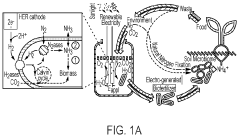
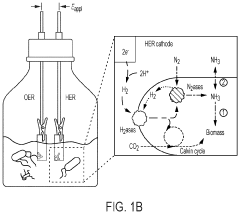
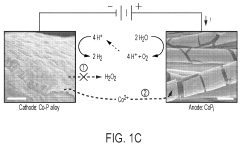
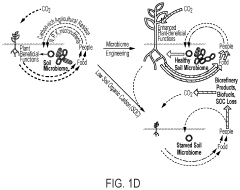
- A bioreactor system that couples hydrogen generation from electricity-dependent water splitting with the nitrogen-fixing capabilities of autotrophic microorganisms like Xanthobacter autotrophicus to produce ammonia-enriched biomass, which can be used as a biofertilizer, enabling sustainable and selective ammonia production by inhibiting glutamine synthetase to divert ammonia production extracellularly.
Potent liquid bio-fertilizer formulation
PatentActiveIN2482CHE2015A
Innovation
- A potent liquid biofertilizer formulation using Plant Growth Promoting Rhizobacteria (PGPR) with a specific protocol involving isolation, characterization, growth under varying temperatures, and direct commercial aseptic packaging, along with a medium containing peptone, beef extract, and preservatives like glycerol and Rose Bengal to enhance stability and shelf life.

Environmental Impact
The integration of biofertilizers in vertical farming systems presents a significant opportunity to enhance environmental sustainability in urban agriculture. Biofertilizers, composed of living microorganisms, offer a natural alternative to synthetic fertilizers, potentially reducing the ecological footprint of vertical farms. These biological agents improve nutrient availability and uptake by plants, enhancing soil health and structure without the harmful side effects associated with chemical fertilizers.
In vertical farming systems, the use of biofertilizers can lead to a substantial reduction in water consumption. The improved soil structure and water-holding capacity facilitated by beneficial microorganisms allow for more efficient irrigation practices. This is particularly crucial in urban environments where water resources are often strained. Additionally, the enhanced nutrient uptake efficiency promoted by biofertilizers can result in less runoff and leaching, mitigating the risk of water pollution in surrounding ecosystems.
The application of biofertilizers in vertical farms also contributes to improved air quality in urban areas. Unlike synthetic fertilizers, which often release harmful gases during production and application, biofertilizers have minimal gaseous emissions. This characteristic is especially valuable in densely populated urban centers where air pollution is a significant concern. Furthermore, the increased plant growth stimulated by biofertilizers can lead to enhanced carbon sequestration, potentially offsetting urban carbon emissions to some extent.
Soil health is another critical aspect positively impacted by the use of biofertilizers in vertical farming. These biological agents promote the development of a diverse and robust soil microbiome, which is essential for long-term soil fertility and plant health. By fostering beneficial microbial communities, biofertilizers can help reduce the incidence of soil-borne diseases, decreasing the need for chemical pesticides and further minimizing environmental contamination.
The adoption of biofertilizers in vertical farming systems also aligns with circular economy principles. Many biofertilizers can be produced using organic waste materials, such as food scraps or agricultural byproducts. This approach not only reduces waste but also creates a closed-loop system where nutrients are recycled within the urban environment. Such practices can significantly decrease the reliance on external inputs and minimize the environmental impact associated with transporting fertilizers from distant sources.
In conclusion, the integration of biofertilizers in vertical farming systems offers a multitude of environmental benefits. From water conservation and improved air quality to enhanced soil health and waste reduction, this approach represents a promising path towards more sustainable urban agriculture. As research in this field progresses, the potential for biofertilizers to revolutionize vertical farming practices and contribute to greener cities continues to grow.
In vertical farming systems, the use of biofertilizers can lead to a substantial reduction in water consumption. The improved soil structure and water-holding capacity facilitated by beneficial microorganisms allow for more efficient irrigation practices. This is particularly crucial in urban environments where water resources are often strained. Additionally, the enhanced nutrient uptake efficiency promoted by biofertilizers can result in less runoff and leaching, mitigating the risk of water pollution in surrounding ecosystems.
The application of biofertilizers in vertical farms also contributes to improved air quality in urban areas. Unlike synthetic fertilizers, which often release harmful gases during production and application, biofertilizers have minimal gaseous emissions. This characteristic is especially valuable in densely populated urban centers where air pollution is a significant concern. Furthermore, the increased plant growth stimulated by biofertilizers can lead to enhanced carbon sequestration, potentially offsetting urban carbon emissions to some extent.
Soil health is another critical aspect positively impacted by the use of biofertilizers in vertical farming. These biological agents promote the development of a diverse and robust soil microbiome, which is essential for long-term soil fertility and plant health. By fostering beneficial microbial communities, biofertilizers can help reduce the incidence of soil-borne diseases, decreasing the need for chemical pesticides and further minimizing environmental contamination.
The adoption of biofertilizers in vertical farming systems also aligns with circular economy principles. Many biofertilizers can be produced using organic waste materials, such as food scraps or agricultural byproducts. This approach not only reduces waste but also creates a closed-loop system where nutrients are recycled within the urban environment. Such practices can significantly decrease the reliance on external inputs and minimize the environmental impact associated with transporting fertilizers from distant sources.
In conclusion, the integration of biofertilizers in vertical farming systems offers a multitude of environmental benefits. From water conservation and improved air quality to enhanced soil health and waste reduction, this approach represents a promising path towards more sustainable urban agriculture. As research in this field progresses, the potential for biofertilizers to revolutionize vertical farming practices and contribute to greener cities continues to grow.
Regulatory Framework
The regulatory framework surrounding biofertilizers in vertical farming systems is complex and evolving, reflecting the intersection of agricultural, environmental, and food safety regulations. In many jurisdictions, biofertilizers are classified as soil amendments or plant growth promoters, which often fall under different regulatory categories than traditional chemical fertilizers. This classification can impact the registration, testing, and approval processes required for commercial use.
In the United States, the Environmental Protection Agency (EPA) regulates biofertilizers under the Federal Insecticide, Fungicide, and Rodenticide Act (FIFRA) if they contain living microorganisms. The FDA also plays a role in regulating biofertilizers used in food production, particularly in indoor farming systems, to ensure food safety standards are met. The USDA's National Organic Program provides guidelines for the use of biofertilizers in organic farming, which can be applicable to vertical farming systems seeking organic certification.
The European Union has established a comprehensive regulatory framework for biofertilizers through the EU Fertilizing Products Regulation (EU) 2019/1009. This regulation sets out harmonized rules for the marketing of EU fertilizing products, including biofertilizers, and aims to promote the use of recycled or organic materials for fertilizing purposes. It also introduces strict quality and safety requirements for biofertilizers, addressing concerns about potential contamination and environmental impact.
In developing countries, where vertical farming and biofertilizer use are gaining traction, regulatory frameworks are often less developed. Many countries are in the process of establishing or updating their regulations to address the unique challenges posed by biofertilizers and innovative farming systems. The Food and Agriculture Organization (FAO) of the United Nations has been working to provide guidance and support for the development of appropriate regulatory frameworks in these regions.
Key regulatory considerations for biofertilizers in vertical farming systems include efficacy testing, quality control measures, labeling requirements, and safety assessments. Regulators must balance the need to ensure product safety and effectiveness with the desire to promote innovation and sustainable agricultural practices. As the field of biofertilizers continues to advance, regulatory frameworks will likely need to evolve to keep pace with new technologies and applications in vertical farming systems.
In the United States, the Environmental Protection Agency (EPA) regulates biofertilizers under the Federal Insecticide, Fungicide, and Rodenticide Act (FIFRA) if they contain living microorganisms. The FDA also plays a role in regulating biofertilizers used in food production, particularly in indoor farming systems, to ensure food safety standards are met. The USDA's National Organic Program provides guidelines for the use of biofertilizers in organic farming, which can be applicable to vertical farming systems seeking organic certification.
The European Union has established a comprehensive regulatory framework for biofertilizers through the EU Fertilizing Products Regulation (EU) 2019/1009. This regulation sets out harmonized rules for the marketing of EU fertilizing products, including biofertilizers, and aims to promote the use of recycled or organic materials for fertilizing purposes. It also introduces strict quality and safety requirements for biofertilizers, addressing concerns about potential contamination and environmental impact.
In developing countries, where vertical farming and biofertilizer use are gaining traction, regulatory frameworks are often less developed. Many countries are in the process of establishing or updating their regulations to address the unique challenges posed by biofertilizers and innovative farming systems. The Food and Agriculture Organization (FAO) of the United Nations has been working to provide guidance and support for the development of appropriate regulatory frameworks in these regions.
Key regulatory considerations for biofertilizers in vertical farming systems include efficacy testing, quality control measures, labeling requirements, and safety assessments. Regulators must balance the need to ensure product safety and effectiveness with the desire to promote innovation and sustainable agricultural practices. As the field of biofertilizers continues to advance, regulatory frameworks will likely need to evolve to keep pace with new technologies and applications in vertical farming systems.
Unlock deeper insights with PatSnap Eureka Quick Research — get a full tech report to explore trends and direct your research. Try now!
Generate Your Research Report Instantly with AI Agent
Supercharge your innovation with PatSnap Eureka AI Agent Platform!