
Exploring New Solvent Alternatives for Acetylation
MAR 27, 20269 MIN READ
Generate Your Research Report Instantly with AI Agent
Patsnap Eureka helps you evaluate technical feasibility & market potential.
Green Solvent Development Background and Acetylation Goals
The development of green solvents has emerged as a critical priority in chemical manufacturing, driven by increasingly stringent environmental regulations and growing corporate sustainability commitments. Traditional acetylation processes have historically relied on chlorinated solvents and petroleum-derived compounds that pose significant environmental and health risks. The mounting pressure from regulatory bodies worldwide, coupled with consumer demand for environmentally responsible products, has catalyzed intensive research into sustainable solvent alternatives.
Acetylation reactions represent one of the most fundamental transformations in organic chemistry, serving as cornerstone processes in pharmaceutical, agrochemical, and specialty chemical manufacturing. These reactions typically require solvents that can effectively dissolve reactants, facilitate mass transfer, and maintain reaction selectivity while ensuring product purity. The challenge lies in identifying green alternatives that can match or exceed the performance characteristics of conventional solvents without compromising reaction efficiency or economic viability.
The evolution of green chemistry principles has fundamentally reshaped solvent selection criteria, emphasizing renewable feedstock utilization, biodegradability, and reduced toxicity profiles. Bio-based solvents derived from agricultural waste, ionic liquids with tunable properties, and deep eutectic solvents have emerged as promising candidates for acetylation applications. These alternatives offer potential advantages including lower vapor pressure, enhanced thermal stability, and improved recyclability compared to traditional organic solvents.
Current research objectives focus on developing solvent systems that can achieve multiple performance targets simultaneously. Primary goals include maintaining high reaction yields and selectivity while reducing environmental impact through decreased volatile organic compound emissions and improved waste stream management. Additionally, the economic feasibility of green solvent implementation requires consideration of factors such as solvent recovery efficiency, catalyst compatibility, and process scalability.
The integration of computational chemistry and machine learning approaches has accelerated the identification and optimization of green solvent candidates. These tools enable rapid screening of molecular properties, prediction of solvent-solute interactions, and optimization of reaction conditions before experimental validation. This systematic approach significantly reduces development timelines and resource requirements while increasing the probability of identifying commercially viable solutions.
Successful implementation of green solvent alternatives in acetylation processes requires comprehensive evaluation of their impact on reaction kinetics, product quality, and downstream processing requirements. The ultimate objective is establishing robust, environmentally sustainable acetylation methodologies that can serve as industry standards while maintaining the high performance expectations of modern chemical manufacturing.
Acetylation reactions represent one of the most fundamental transformations in organic chemistry, serving as cornerstone processes in pharmaceutical, agrochemical, and specialty chemical manufacturing. These reactions typically require solvents that can effectively dissolve reactants, facilitate mass transfer, and maintain reaction selectivity while ensuring product purity. The challenge lies in identifying green alternatives that can match or exceed the performance characteristics of conventional solvents without compromising reaction efficiency or economic viability.
The evolution of green chemistry principles has fundamentally reshaped solvent selection criteria, emphasizing renewable feedstock utilization, biodegradability, and reduced toxicity profiles. Bio-based solvents derived from agricultural waste, ionic liquids with tunable properties, and deep eutectic solvents have emerged as promising candidates for acetylation applications. These alternatives offer potential advantages including lower vapor pressure, enhanced thermal stability, and improved recyclability compared to traditional organic solvents.
Current research objectives focus on developing solvent systems that can achieve multiple performance targets simultaneously. Primary goals include maintaining high reaction yields and selectivity while reducing environmental impact through decreased volatile organic compound emissions and improved waste stream management. Additionally, the economic feasibility of green solvent implementation requires consideration of factors such as solvent recovery efficiency, catalyst compatibility, and process scalability.
The integration of computational chemistry and machine learning approaches has accelerated the identification and optimization of green solvent candidates. These tools enable rapid screening of molecular properties, prediction of solvent-solute interactions, and optimization of reaction conditions before experimental validation. This systematic approach significantly reduces development timelines and resource requirements while increasing the probability of identifying commercially viable solutions.
Successful implementation of green solvent alternatives in acetylation processes requires comprehensive evaluation of their impact on reaction kinetics, product quality, and downstream processing requirements. The ultimate objective is establishing robust, environmentally sustainable acetylation methodologies that can serve as industry standards while maintaining the high performance expectations of modern chemical manufacturing.
Market Demand for Sustainable Acetylation Processes
The global acetylation market is experiencing unprecedented pressure to adopt sustainable practices, driven by increasingly stringent environmental regulations and corporate sustainability commitments. Traditional acetylation processes, which rely heavily on volatile organic compounds and chlorinated solvents, face mounting scrutiny from regulatory bodies worldwide. The European Union's REACH regulation and similar frameworks in North America and Asia-Pacific regions are progressively restricting the use of hazardous solvents, creating an urgent need for environmentally benign alternatives.
Pharmaceutical and fine chemical manufacturers represent the largest demand segment for sustainable acetylation solutions, as these industries face dual pressures from regulatory compliance and consumer expectations for green manufacturing. The pharmaceutical sector, in particular, is witnessing growing demand from contract manufacturing organizations seeking to differentiate themselves through sustainable process capabilities. Major pharmaceutical companies are increasingly incorporating green chemistry principles into their supplier qualification criteria, making sustainable acetylation processes a competitive necessity rather than merely an environmental consideration.
The agrochemical industry constitutes another significant demand driver, where acetylation reactions are fundamental to producing various pesticides and herbicides. With agricultural sustainability becoming a global priority, agrochemical manufacturers are actively seeking solvent alternatives that reduce environmental impact while maintaining product efficacy. This sector's demand is particularly focused on water-based and bio-derived solvent systems that align with sustainable agriculture initiatives.
Industrial acetylation applications, including the production of cellulose acetate, synthetic fibers, and specialty polymers, are experiencing growing market pressure for sustainable processes. The textile industry's shift toward circular economy principles has intensified demand for acetylation processes using renewable solvents and generating minimal waste streams. Consumer goods manufacturers are increasingly requiring their chemical suppliers to demonstrate environmental stewardship through sustainable manufacturing processes.
Emerging markets in Asia-Pacific and Latin America are driving additional demand growth, as these regions implement stricter environmental standards while expanding their chemical manufacturing capabilities. Local manufacturers in these markets are proactively seeking sustainable acetylation technologies to meet both domestic regulations and export market requirements, particularly for products destined for environmentally conscious markets in Europe and North America.
The market demand is further amplified by economic incentives, including carbon pricing mechanisms and green financing options that favor sustainable manufacturing processes. Companies adopting environmentally friendly acetylation alternatives often benefit from reduced waste disposal costs, lower regulatory compliance expenses, and improved access to sustainability-focused investment capital.
Pharmaceutical and fine chemical manufacturers represent the largest demand segment for sustainable acetylation solutions, as these industries face dual pressures from regulatory compliance and consumer expectations for green manufacturing. The pharmaceutical sector, in particular, is witnessing growing demand from contract manufacturing organizations seeking to differentiate themselves through sustainable process capabilities. Major pharmaceutical companies are increasingly incorporating green chemistry principles into their supplier qualification criteria, making sustainable acetylation processes a competitive necessity rather than merely an environmental consideration.
The agrochemical industry constitutes another significant demand driver, where acetylation reactions are fundamental to producing various pesticides and herbicides. With agricultural sustainability becoming a global priority, agrochemical manufacturers are actively seeking solvent alternatives that reduce environmental impact while maintaining product efficacy. This sector's demand is particularly focused on water-based and bio-derived solvent systems that align with sustainable agriculture initiatives.
Industrial acetylation applications, including the production of cellulose acetate, synthetic fibers, and specialty polymers, are experiencing growing market pressure for sustainable processes. The textile industry's shift toward circular economy principles has intensified demand for acetylation processes using renewable solvents and generating minimal waste streams. Consumer goods manufacturers are increasingly requiring their chemical suppliers to demonstrate environmental stewardship through sustainable manufacturing processes.
Emerging markets in Asia-Pacific and Latin America are driving additional demand growth, as these regions implement stricter environmental standards while expanding their chemical manufacturing capabilities. Local manufacturers in these markets are proactively seeking sustainable acetylation technologies to meet both domestic regulations and export market requirements, particularly for products destined for environmentally conscious markets in Europe and North America.
The market demand is further amplified by economic incentives, including carbon pricing mechanisms and green financing options that favor sustainable manufacturing processes. Companies adopting environmentally friendly acetylation alternatives often benefit from reduced waste disposal costs, lower regulatory compliance expenses, and improved access to sustainability-focused investment capital.
Current Solvent Limitations and Environmental Challenges
Traditional acetylation reactions predominantly rely on conventional organic solvents such as dichloromethane, chloroform, pyridine, and acetic anhydride as both reagent and solvent. These solvents present significant limitations that increasingly constrain their industrial application. Dichloromethane and chloroform, while offering excellent solvation properties and reaction compatibility, pose severe health risks including carcinogenicity and acute toxicity. Their high volatility contributes to substantial atmospheric emissions, creating workplace safety concerns and requiring expensive containment systems.
Pyridine, commonly used as both solvent and catalyst in acetylation processes, exhibits notable toxicity profiles affecting the nervous system and reproductive health. Its strong odor and persistence in the environment compound disposal challenges. Additionally, pyridine's basic nature can interfere with acid-sensitive substrates, limiting reaction scope and requiring careful pH management throughout the process.
Environmental regulations have intensified scrutiny of these traditional solvents. The Montreal Protocol and subsequent amendments have restricted chlorinated solvents due to ozone depletion potential. European REACH regulations and similar frameworks globally mandate extensive safety documentation and exposure monitoring, significantly increasing operational costs. Many jurisdictions now classify these solvents as substances of very high concern, triggering authorization requirements and potential phase-out timelines.
Waste management presents another critical limitation. Conventional acetylation solvents generate substantial hazardous waste streams requiring specialized treatment and disposal. Recovery and recycling processes are energy-intensive and often economically unfavorable, particularly for smaller-scale operations. Cross-contamination during solvent recovery can compromise product quality, necessitating fresh solvent usage and exacerbating waste generation.
Process efficiency constraints further limit traditional solvent applications. Many conventional solvents require anhydrous conditions, demanding expensive drying procedures and moisture-sensitive handling protocols. Temperature limitations of certain solvents restrict reaction optimization, while poor substrate solubility can necessitate large solvent volumes, reducing process atom economy and increasing environmental burden.
The pharmaceutical and fine chemical industries face particular challenges as regulatory agencies increasingly scrutinize residual solvent levels in final products. ICH guidelines classify many traditional acetylation solvents in higher toxicity categories, requiring stringent residual limits and extensive analytical validation. This regulatory pressure drives the urgent need for safer, more sustainable solvent alternatives that maintain reaction efficiency while addressing environmental and health concerns.
Pyridine, commonly used as both solvent and catalyst in acetylation processes, exhibits notable toxicity profiles affecting the nervous system and reproductive health. Its strong odor and persistence in the environment compound disposal challenges. Additionally, pyridine's basic nature can interfere with acid-sensitive substrates, limiting reaction scope and requiring careful pH management throughout the process.
Environmental regulations have intensified scrutiny of these traditional solvents. The Montreal Protocol and subsequent amendments have restricted chlorinated solvents due to ozone depletion potential. European REACH regulations and similar frameworks globally mandate extensive safety documentation and exposure monitoring, significantly increasing operational costs. Many jurisdictions now classify these solvents as substances of very high concern, triggering authorization requirements and potential phase-out timelines.
Waste management presents another critical limitation. Conventional acetylation solvents generate substantial hazardous waste streams requiring specialized treatment and disposal. Recovery and recycling processes are energy-intensive and often economically unfavorable, particularly for smaller-scale operations. Cross-contamination during solvent recovery can compromise product quality, necessitating fresh solvent usage and exacerbating waste generation.
Process efficiency constraints further limit traditional solvent applications. Many conventional solvents require anhydrous conditions, demanding expensive drying procedures and moisture-sensitive handling protocols. Temperature limitations of certain solvents restrict reaction optimization, while poor substrate solubility can necessitate large solvent volumes, reducing process atom economy and increasing environmental burden.
The pharmaceutical and fine chemical industries face particular challenges as regulatory agencies increasingly scrutinize residual solvent levels in final products. ICH guidelines classify many traditional acetylation solvents in higher toxicity categories, requiring stringent residual limits and extensive analytical validation. This regulatory pressure drives the urgent need for safer, more sustainable solvent alternatives that maintain reaction efficiency while addressing environmental and health concerns.
Existing Green Solvent Solutions for Acetylation
01 Organic solvents for formulation stability
Organic solvents play a crucial role in maintaining the stability and homogeneity of tanning product formulations. These solvents help dissolve active ingredients and ensure uniform distribution throughout the product. Common organic solvents include alcohols, glycols, and esters that are compatible with both hydrophilic and lipophilic components. The selection of appropriate solvents can enhance product texture, improve skin penetration of active ingredients, and extend shelf life.- Organic solvents for formulation stability: Organic solvents play a crucial role in maintaining the stability and homogeneity of tanning product formulations. These solvents help dissolve active ingredients and ensure uniform distribution throughout the product. Common organic solvents include alcohols, glycols, and esters that are compatible with both hydrophilic and lipophilic components. The selection of appropriate solvents can enhance product texture, improve skin penetration of active ingredients, and extend shelf life.
- Water-based solvent systems: Water-based solvent systems provide a foundation for many tanning formulations, offering advantages in terms of safety, cost-effectiveness, and consumer acceptance. These systems typically combine water with co-solvents to achieve desired viscosity and solubility characteristics. The aqueous phase can be optimized to support emulsion stability and facilitate the incorporation of water-soluble UV filters and tanning agents. Proper balance of water content with other solvents ensures optimal product performance and skin compatibility.
- Solvent selection for active ingredient delivery: The choice of solvent significantly impacts the delivery and efficacy of active ingredients in tanning products. Solvents must be selected based on their ability to solubilize sunscreen agents, self-tanning compounds, and other functional ingredients while maintaining product stability. The solvent system affects the penetration rate of actives into the skin and their photostability. Careful consideration of solvent polarity, volatility, and skin compatibility is essential for optimizing sun protection factor enhancement.
- Non-volatile solvent components: Non-volatile solvents serve as carriers that remain on the skin after application, providing prolonged contact time for active ingredients. These solvents include various oils, silicones, and high molecular weight glycols that contribute to product feel and moisturization properties. They help maintain the integrity of the protective film on skin surface and can enhance water resistance of sunscreen formulations. The use of non-volatile solvents is particularly important for long-lasting sun protection in tanning products.
- Solvent systems for emulsion formulations: Emulsion-based tanning products require carefully balanced solvent systems to maintain phase stability and product aesthetics. The solvent composition affects emulsion type, droplet size, and rheological properties. Both the aqueous and oil phases must contain appropriate solvents to ensure compatibility with emulsifiers and active ingredients. Advanced solvent selection can improve emulsion stability during storage and use, while enhancing the sensory properties and sun protection performance of the final product.
02 Water-based solvent systems
Water-based solvent systems provide a foundation for cosmetic formulations, offering advantages in terms of safety and skin compatibility. These systems typically combine water with co-solvents to achieve optimal solubility for various active ingredients. The use of water as a primary solvent allows for the creation of lighter formulations that are easily absorbed by the skin while maintaining product efficacy and reducing potential irritation.Expand Specific Solutions03 Solvent selection for UV filter compatibility
The choice of solvents is critical for ensuring compatibility with UV filters and sunscreen agents in tanning products. Specific solvents can enhance the solubility and stability of UV-absorbing compounds, preventing crystallization and maintaining consistent sun protection factor. The solvent system must be carefully balanced to support both the tanning agents and protective ingredients without compromising their individual effectiveness.Expand Specific Solutions04 Volatile solvent components for application properties
Volatile solvents are incorporated to improve application characteristics and sensory properties of tanning products. These solvents evaporate quickly after application, leaving behind the active ingredients on the skin surface. The volatility rate can be adjusted to control drying time, reduce stickiness, and enhance user experience while ensuring that the functional components remain effective on the skin.Expand Specific Solutions05 Solvent systems for enhanced ingredient delivery
Advanced solvent systems are designed to facilitate the penetration and delivery of active ingredients into the skin layers. These systems may include penetration enhancers and carrier solvents that work synergistically to improve bioavailability of tanning agents and protective compounds. The formulation of such solvent systems considers factors like molecular weight, polarity, and skin barrier interactions to optimize ingredient efficacy.Expand Specific Solutions
Key Players in Green Solvent and Acetylation Industry
The acetylation solvent alternatives market represents an emerging technological landscape driven by increasing environmental regulations and sustainability demands. The industry is transitioning from traditional solvent systems toward greener alternatives, with market growth accelerated by pharmaceutical and chemical manufacturing needs. Technology maturity varies significantly across players, with established chemical giants like Daicel Corp., FUJIFILM Corp., and Eastman Chemical Co. leading commercial-scale implementations, while pharmaceutical companies such as Novo Nordisk A/S and GlaxoSmithKline LLC drive application-specific innovations. Academic institutions including Columbia University and Shandong University contribute fundamental research breakthroughs. Specialty chemical companies like Adeka Corp. and Nippon Kayaku Co. focus on niche formulations, while emerging players such as GlycoSurf LLC pioneer bio-based solutions, indicating a competitive landscape spanning from mature industrial applications to cutting-edge sustainable technologies.
Daicel Corp.
Technical Solution: Daicel Corporation has developed innovative acetylation processes using renewable solvent alternatives, particularly focusing on bio-based esters and recycled solvent systems for cellulose acetate production. Their technology employs a combination of acetic acid recovery systems and alternative co-solvents derived from biomass, reducing dependence on petroleum-based solvents by up to 70%. The company has pioneered a closed-loop solvent system that integrates acetylation with simultaneous solvent purification, achieving solvent recycling rates of 98% or higher. Daicel's approach also includes the use of ionic liquid catalysts in combination with green solvents, which can operate at ambient pressure and reduced temperatures, lowering energy consumption by 25-35%. Their proprietary membrane separation technology enables efficient separation of products from reaction mixtures without traditional distillation, further reducing energy requirements and improving overall process sustainability.
Strengths: Extensive cellulose acetate manufacturing experience, proven industrial-scale implementation, strong focus on sustainability and circular economy principles. Weaknesses: Technology primarily optimized for cellulose derivatives, may require adaptation for other acetylation applications, higher complexity in process control.
Eastman Chemical Co.
Technical Solution: Eastman Chemical has developed innovative solvent systems for acetylation reactions, focusing on sustainable and efficient alternatives to traditional solvents. Their approach includes the use of bio-based solvents and ionic liquids that can significantly reduce environmental impact while maintaining high reaction efficiency. The company has pioneered the development of cellulose acetate production using alternative solvent systems that eliminate the need for methylene chloride, a traditional but environmentally problematic solvent. Their proprietary solvent recovery and recycling technologies enable up to 99% solvent recovery rates, making the process more economically viable. Additionally, they have developed specialized solvent blends that can operate at lower temperatures, reducing energy consumption by approximately 20-30% compared to conventional acetylation processes.
Strengths: Extensive experience in cellulose acetate production, strong solvent recovery technology, proven industrial scalability. Weaknesses: Limited to specific acetylation applications, higher initial capital investment for new solvent systems.
Core Innovations in Alternative Acetylation Solvents
Green Methods of Carbohydrate Acetylation
PatentPendingUS20230132332A1
Innovation
- The use of a recyclable polymer base material, such as poly-4-vinylpyridine, and bio-derived solvents like 2-methyltetrahydrofuran, in a single reaction vessel, with 4-dimethylaminopyridine and acetic anhydride, to achieve quantitative yields and reduce waste, while being scalable and environmentally friendly.
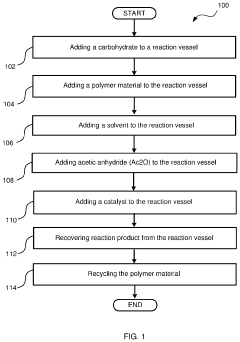
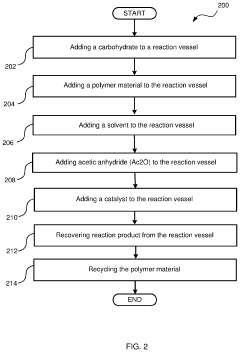
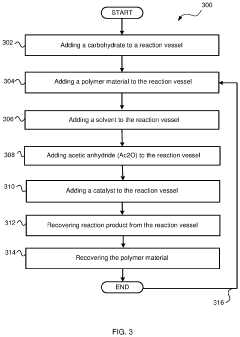
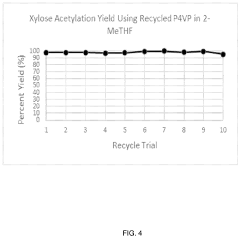
Solution of cellulose acylate dissolved in mixed solvent of ketone and ester
PatentInactiveUS6914139B2
Innovation
- A cellulose acylate solution is developed using a mixture of a ketone and an ester as solvents, with a solubility parameter of 19 to 21, and the addition of a releasing agent to enhance stability and peeling efficiency.

Environmental Regulations for Chemical Solvents
The regulatory landscape for chemical solvents has undergone significant transformation over the past two decades, driven by mounting environmental concerns and public health considerations. Traditional acetylation solvents, particularly chlorinated compounds and volatile organic compounds (VOCs), face increasingly stringent restrictions across major industrial markets. The European Union's REACH regulation has established comprehensive registration, evaluation, and authorization requirements for chemical substances, directly impacting solvent selection in pharmaceutical and chemical manufacturing processes.
In the United States, the Environmental Protection Agency has implemented the Toxic Substances Control Act (TSCA) reforms, which mandate rigorous safety evaluations for new and existing chemical substances. These regulations specifically target solvents with high environmental persistence, bioaccumulation potential, and toxicity profiles. Many conventional acetylation solvents, including dichloromethane and chloroform, now require extensive documentation and risk mitigation strategies for continued use.
The Montreal Protocol's ongoing amendments continue to phase out ozone-depleting substances, while the Stockholm Convention addresses persistent organic pollutants that may accumulate in acetylation processes. These international frameworks create cascading effects on national regulations, forcing manufacturers to reassess their solvent portfolios. Additionally, emerging regulations focus on greenhouse gas emissions and carbon footprint reduction, adding another layer of complexity to solvent selection criteria.
Regional variations in regulatory enforcement create additional challenges for multinational operations. Asian markets, particularly China and Japan, have implemented their own chemical substance control laws that often exceed international standards. The Chinese MEE (Ministry of Ecology and Environment) has established strict VOC emission limits that directly affect solvent recovery and disposal practices in acetylation processes.
Compliance costs associated with traditional solvent use continue to escalate, encompassing waste treatment, emission monitoring, worker safety measures, and regulatory reporting requirements. These economic pressures, combined with potential liability risks, are accelerating the industry's transition toward environmentally benign alternatives. Future regulatory trends indicate even stricter controls on solvent emissions, with proposed legislation targeting previously unregulated substances and establishing more stringent exposure limits for industrial workers.
In the United States, the Environmental Protection Agency has implemented the Toxic Substances Control Act (TSCA) reforms, which mandate rigorous safety evaluations for new and existing chemical substances. These regulations specifically target solvents with high environmental persistence, bioaccumulation potential, and toxicity profiles. Many conventional acetylation solvents, including dichloromethane and chloroform, now require extensive documentation and risk mitigation strategies for continued use.
The Montreal Protocol's ongoing amendments continue to phase out ozone-depleting substances, while the Stockholm Convention addresses persistent organic pollutants that may accumulate in acetylation processes. These international frameworks create cascading effects on national regulations, forcing manufacturers to reassess their solvent portfolios. Additionally, emerging regulations focus on greenhouse gas emissions and carbon footprint reduction, adding another layer of complexity to solvent selection criteria.
Regional variations in regulatory enforcement create additional challenges for multinational operations. Asian markets, particularly China and Japan, have implemented their own chemical substance control laws that often exceed international standards. The Chinese MEE (Ministry of Ecology and Environment) has established strict VOC emission limits that directly affect solvent recovery and disposal practices in acetylation processes.
Compliance costs associated with traditional solvent use continue to escalate, encompassing waste treatment, emission monitoring, worker safety measures, and regulatory reporting requirements. These economic pressures, combined with potential liability risks, are accelerating the industry's transition toward environmentally benign alternatives. Future regulatory trends indicate even stricter controls on solvent emissions, with proposed legislation targeting previously unregulated substances and establishing more stringent exposure limits for industrial workers.
Process Economics of Alternative Acetylation Methods
The economic viability of alternative acetylation methods represents a critical factor in determining their commercial adoption potential. Traditional acetylation processes using acetic anhydride and acetyl chloride have established cost structures that new solvent systems must compete against effectively. Economic analysis reveals that while conventional methods benefit from mature supply chains and optimized production scales, they face increasing pressure from raw material price volatility and environmental compliance costs.
Capital expenditure requirements for alternative acetylation methods vary significantly depending on the chosen solvent system and process configuration. Ionic liquid-based processes typically demand higher initial investments due to specialized equipment requirements for handling these novel solvents and their recovery systems. However, the superior selectivity and recyclability of ionic liquids can offset these costs through reduced waste treatment expenses and improved product yields. Deep eutectic solvents present a more favorable capital cost profile, requiring minimal modifications to existing reactor systems while offering comparable performance benefits.
Operating cost analysis demonstrates that solvent recovery efficiency plays a pivotal role in overall process economics. Alternative solvents with high boiling points or thermal stability enable more effective separation and recycling, reducing fresh solvent consumption. Green solvents derived from renewable feedstocks may command premium pricing initially but offer long-term cost stability compared to petroleum-based alternatives subject to crude oil price fluctuations.
Energy consumption patterns differ markedly between conventional and alternative acetylation methods. While some bio-based solvents require higher reaction temperatures, their enhanced mass transfer properties can reduce reaction times, potentially offsetting increased heating costs. Process intensification opportunities through microreactor technology and continuous flow systems show promise for improving energy efficiency across all solvent categories.
Regulatory compliance costs increasingly favor environmentally benign alternatives. Traditional acetylation solvents face mounting regulatory pressure, with associated costs for emissions control, waste disposal, and worker safety measures. Alternative solvents meeting green chemistry principles can significantly reduce these compliance burdens, improving long-term economic competitiveness despite potentially higher upfront solvent costs.
Capital expenditure requirements for alternative acetylation methods vary significantly depending on the chosen solvent system and process configuration. Ionic liquid-based processes typically demand higher initial investments due to specialized equipment requirements for handling these novel solvents and their recovery systems. However, the superior selectivity and recyclability of ionic liquids can offset these costs through reduced waste treatment expenses and improved product yields. Deep eutectic solvents present a more favorable capital cost profile, requiring minimal modifications to existing reactor systems while offering comparable performance benefits.
Operating cost analysis demonstrates that solvent recovery efficiency plays a pivotal role in overall process economics. Alternative solvents with high boiling points or thermal stability enable more effective separation and recycling, reducing fresh solvent consumption. Green solvents derived from renewable feedstocks may command premium pricing initially but offer long-term cost stability compared to petroleum-based alternatives subject to crude oil price fluctuations.
Energy consumption patterns differ markedly between conventional and alternative acetylation methods. While some bio-based solvents require higher reaction temperatures, their enhanced mass transfer properties can reduce reaction times, potentially offsetting increased heating costs. Process intensification opportunities through microreactor technology and continuous flow systems show promise for improving energy efficiency across all solvent categories.
Regulatory compliance costs increasingly favor environmentally benign alternatives. Traditional acetylation solvents face mounting regulatory pressure, with associated costs for emissions control, waste disposal, and worker safety measures. Alternative solvents meeting green chemistry principles can significantly reduce these compliance burdens, improving long-term economic competitiveness despite potentially higher upfront solvent costs.
Unlock deeper insights with Patsnap Eureka Quick Research — get a full tech report to explore trends and direct your research. Try now!
Generate Your Research Report Instantly with AI Agent
Supercharge your innovation with Patsnap Eureka AI Agent Platform!