Exploring Peridotite in Developing Fossil Fuel Alternatives
JUL 24, 20259 MIN READ
Generate Your Research Report Instantly with AI Agent
PatSnap Eureka helps you evaluate technical feasibility & market potential.
Peridotite Research Background and Objectives
Peridotite, an ultramafic igneous rock predominantly composed of olivine and pyroxene, has emerged as a promising candidate in the quest for sustainable alternatives to fossil fuels. The exploration of peridotite in this context stems from its unique geological properties and potential for carbon sequestration, which aligns with global efforts to mitigate climate change and reduce dependency on traditional energy sources.
The primary objective of peridotite research in developing fossil fuel alternatives is to harness its natural carbon dioxide absorption capabilities. Peridotite, when exposed to carbon dioxide and water, undergoes a process called mineral carbonation, effectively locking away atmospheric CO2 in the form of stable carbonate minerals. This natural process, if accelerated and scaled, could potentially offer a significant pathway for reducing greenhouse gas emissions while simultaneously exploring new energy paradigms.
Historically, peridotite has been studied primarily in the context of mantle geology and plate tectonics. However, the growing urgency of climate change has shifted focus towards its potential as a tool for carbon capture and storage (CCS). The Samail Ophiolite in Oman, one of the largest exposed sections of the Earth's mantle, has become a focal point for this research due to its extensive peridotite deposits.
Recent technological advancements have enabled researchers to explore methods of enhancing the natural weathering process of peridotite. These efforts aim to accelerate carbon mineralization rates, potentially transforming peridotite formations into large-scale carbon sinks. Concurrently, the research seeks to understand how this process can be integrated into broader energy strategies, possibly linking carbon sequestration with renewable energy production or the development of new energy carriers.
The exploration of peridotite also intersects with the emerging field of geothermal energy. Some researchers are investigating the potential of using the heat generated during the mineral carbonation process as a geothermal energy source, thus creating a dual benefit of carbon sequestration and clean energy production. This approach could potentially address two critical challenges simultaneously: reducing atmospheric CO2 and providing sustainable energy alternatives.
As the research progresses, scientists are also examining the broader environmental implications of large-scale peridotite utilization. This includes studying the impact on local ecosystems, water resources, and geological stability. The goal is to develop methodologies that maximize carbon sequestration and energy potential while minimizing negative environmental consequences.
In conclusion, the exploration of peridotite in developing fossil fuel alternatives represents a multifaceted approach to addressing climate change and energy sustainability. By leveraging the natural properties of this abundant rock, researchers aim to create innovative solutions that could significantly contribute to global carbon reduction efforts while paving the way for new, sustainable energy paradigms.
The primary objective of peridotite research in developing fossil fuel alternatives is to harness its natural carbon dioxide absorption capabilities. Peridotite, when exposed to carbon dioxide and water, undergoes a process called mineral carbonation, effectively locking away atmospheric CO2 in the form of stable carbonate minerals. This natural process, if accelerated and scaled, could potentially offer a significant pathway for reducing greenhouse gas emissions while simultaneously exploring new energy paradigms.
Historically, peridotite has been studied primarily in the context of mantle geology and plate tectonics. However, the growing urgency of climate change has shifted focus towards its potential as a tool for carbon capture and storage (CCS). The Samail Ophiolite in Oman, one of the largest exposed sections of the Earth's mantle, has become a focal point for this research due to its extensive peridotite deposits.
Recent technological advancements have enabled researchers to explore methods of enhancing the natural weathering process of peridotite. These efforts aim to accelerate carbon mineralization rates, potentially transforming peridotite formations into large-scale carbon sinks. Concurrently, the research seeks to understand how this process can be integrated into broader energy strategies, possibly linking carbon sequestration with renewable energy production or the development of new energy carriers.
The exploration of peridotite also intersects with the emerging field of geothermal energy. Some researchers are investigating the potential of using the heat generated during the mineral carbonation process as a geothermal energy source, thus creating a dual benefit of carbon sequestration and clean energy production. This approach could potentially address two critical challenges simultaneously: reducing atmospheric CO2 and providing sustainable energy alternatives.
As the research progresses, scientists are also examining the broader environmental implications of large-scale peridotite utilization. This includes studying the impact on local ecosystems, water resources, and geological stability. The goal is to develop methodologies that maximize carbon sequestration and energy potential while minimizing negative environmental consequences.
In conclusion, the exploration of peridotite in developing fossil fuel alternatives represents a multifaceted approach to addressing climate change and energy sustainability. By leveraging the natural properties of this abundant rock, researchers aim to create innovative solutions that could significantly contribute to global carbon reduction efforts while paving the way for new, sustainable energy paradigms.
Market Analysis for Alternative Fuel Sources
The alternative fuel market has experienced significant growth in recent years, driven by increasing environmental concerns, government regulations, and the need for energy security. As the world seeks to reduce its dependence on fossil fuels, various alternative energy sources have emerged, including biofuels, hydrogen, electric vehicles, and carbon capture technologies. Among these, the potential of peridotite in developing fossil fuel alternatives presents an intriguing opportunity.
The global alternative fuel market was valued at approximately $330 billion in 2021 and is projected to reach $1.3 trillion by 2030, growing at a CAGR of 16.8% during the forecast period. This growth is primarily attributed to the rising demand for cleaner energy sources and the implementation of stringent emission norms across various countries. The automotive sector, in particular, has been a major driver of this market expansion, with electric vehicles and hydrogen fuel cell vehicles gaining traction.
Peridotite, an ultramafic rock rich in olivine, has garnered attention for its potential in carbon sequestration and as a raw material for producing hydrogen. The market for peridotite-based technologies is still in its nascent stages but shows promise for future growth. The global carbon capture and storage market, which could benefit from peridotite-based solutions, is expected to reach $7 billion by 2028, growing at a CAGR of 13.2% from 2021 to 2028.
The hydrogen market, another area where peridotite could play a significant role, is projected to grow from $130 billion in 2020 to $201 billion by 2025, at a CAGR of 9.2%. As research into peridotite's potential for hydrogen production advances, it could capture a portion of this rapidly expanding market.
Geographically, North America and Europe are leading the alternative fuel market, with Asia-Pacific showing the fastest growth. The United States, China, and Germany are key players in driving innovation and adoption of alternative fuel technologies. These regions also have significant peridotite deposits, which could be leveraged for developing new alternative fuel solutions.
However, the market for peridotite-based alternative fuel technologies faces several challenges. These include high initial investment costs, technological limitations, and competition from more established alternative fuel sources. Additionally, the extraction and processing of peridotite must be carefully managed to minimize environmental impacts and ensure sustainability.
Despite these challenges, the potential of peridotite in developing fossil fuel alternatives aligns well with the growing demand for sustainable energy solutions. As research progresses and technologies mature, peridotite-based solutions could carve out a significant niche within the broader alternative fuel market, contributing to the global transition towards a low-carbon economy.
The global alternative fuel market was valued at approximately $330 billion in 2021 and is projected to reach $1.3 trillion by 2030, growing at a CAGR of 16.8% during the forecast period. This growth is primarily attributed to the rising demand for cleaner energy sources and the implementation of stringent emission norms across various countries. The automotive sector, in particular, has been a major driver of this market expansion, with electric vehicles and hydrogen fuel cell vehicles gaining traction.
Peridotite, an ultramafic rock rich in olivine, has garnered attention for its potential in carbon sequestration and as a raw material for producing hydrogen. The market for peridotite-based technologies is still in its nascent stages but shows promise for future growth. The global carbon capture and storage market, which could benefit from peridotite-based solutions, is expected to reach $7 billion by 2028, growing at a CAGR of 13.2% from 2021 to 2028.
The hydrogen market, another area where peridotite could play a significant role, is projected to grow from $130 billion in 2020 to $201 billion by 2025, at a CAGR of 9.2%. As research into peridotite's potential for hydrogen production advances, it could capture a portion of this rapidly expanding market.
Geographically, North America and Europe are leading the alternative fuel market, with Asia-Pacific showing the fastest growth. The United States, China, and Germany are key players in driving innovation and adoption of alternative fuel technologies. These regions also have significant peridotite deposits, which could be leveraged for developing new alternative fuel solutions.
However, the market for peridotite-based alternative fuel technologies faces several challenges. These include high initial investment costs, technological limitations, and competition from more established alternative fuel sources. Additionally, the extraction and processing of peridotite must be carefully managed to minimize environmental impacts and ensure sustainability.
Despite these challenges, the potential of peridotite in developing fossil fuel alternatives aligns well with the growing demand for sustainable energy solutions. As research progresses and technologies mature, peridotite-based solutions could carve out a significant niche within the broader alternative fuel market, contributing to the global transition towards a low-carbon economy.
Peridotite Utilization Challenges
The utilization of peridotite in developing fossil fuel alternatives faces several significant challenges that need to be addressed for successful implementation. One of the primary obstacles is the limited availability and accessibility of peridotite deposits. While peridotite is abundant in the Earth's mantle, exposed deposits suitable for large-scale utilization are relatively scarce and often located in remote or geologically complex areas, making extraction and transportation costly and logistically challenging.
Another major hurdle is the energy-intensive nature of peridotite processing. The mineral requires high temperatures and pressures to accelerate its natural carbon sequestration properties, which can be counterproductive if the energy source for this process is not carbon-neutral. Developing efficient and sustainable methods for enhancing peridotite's CO2 absorption capacity without significant energy expenditure remains a critical technical challenge.
The reaction kinetics of peridotite carbonation also present a substantial obstacle. In its natural state, the process of CO2 absorption by peridotite is extremely slow, taking thousands of years. Accelerating this process to a commercially viable timescale without compromising the mineral's carbon sequestration capacity is a complex engineering challenge that requires innovative solutions in mineral processing and reaction optimization.
Furthermore, the integration of peridotite-based carbon capture technologies into existing industrial processes and energy systems poses significant technical and infrastructural challenges. Developing efficient methods for transporting and applying processed peridotite at scale, as well as designing systems that can effectively capture and channel CO2 to the mineral, requires substantial research and development efforts.
The environmental impact of large-scale peridotite mining and processing is another critical concern. Ensuring that the extraction and utilization of peridotite do not lead to negative ecological consequences, such as habitat destruction or water pollution, necessitates the development of sustainable mining practices and comprehensive environmental management strategies.
Lastly, the economic viability of peridotite utilization in comparison to other carbon capture and storage technologies remains a significant challenge. The high costs associated with extraction, processing, and application of peridotite need to be balanced against its carbon sequestration potential and any potential by-products or co-benefits. Developing cost-effective methods and identifying value-added applications for processed peridotite are crucial for its widespread adoption as a fossil fuel alternative.
Another major hurdle is the energy-intensive nature of peridotite processing. The mineral requires high temperatures and pressures to accelerate its natural carbon sequestration properties, which can be counterproductive if the energy source for this process is not carbon-neutral. Developing efficient and sustainable methods for enhancing peridotite's CO2 absorption capacity without significant energy expenditure remains a critical technical challenge.
The reaction kinetics of peridotite carbonation also present a substantial obstacle. In its natural state, the process of CO2 absorption by peridotite is extremely slow, taking thousands of years. Accelerating this process to a commercially viable timescale without compromising the mineral's carbon sequestration capacity is a complex engineering challenge that requires innovative solutions in mineral processing and reaction optimization.
Furthermore, the integration of peridotite-based carbon capture technologies into existing industrial processes and energy systems poses significant technical and infrastructural challenges. Developing efficient methods for transporting and applying processed peridotite at scale, as well as designing systems that can effectively capture and channel CO2 to the mineral, requires substantial research and development efforts.
The environmental impact of large-scale peridotite mining and processing is another critical concern. Ensuring that the extraction and utilization of peridotite do not lead to negative ecological consequences, such as habitat destruction or water pollution, necessitates the development of sustainable mining practices and comprehensive environmental management strategies.
Lastly, the economic viability of peridotite utilization in comparison to other carbon capture and storage technologies remains a significant challenge. The high costs associated with extraction, processing, and application of peridotite need to be balanced against its carbon sequestration potential and any potential by-products or co-benefits. Developing cost-effective methods and identifying value-added applications for processed peridotite are crucial for its widespread adoption as a fossil fuel alternative.
Current Peridotite-based Solutions
01 Composition and geological characteristics of peridotite
Peridotite is an ultramafic igneous rock primarily composed of olivine and pyroxene minerals. It is a major component of the Earth's upper mantle and can be found in various geological settings, including ophiolite complexes and kimberlite pipes. Understanding its composition and characteristics is crucial for geological studies and mineral exploration.- Carbon sequestration using peridotite: Peridotite is utilized for carbon dioxide sequestration due to its ability to react with CO2 and form stable carbonate minerals. This process, known as mineral carbonation, can be enhanced through various methods such as increasing surface area, optimizing reaction conditions, and using catalysts.
- Peridotite in geothermal energy systems: Peridotite formations are explored for geothermal energy production. The rock's unique properties, such as high heat capacity and permeability, make it suitable for extracting thermal energy. Techniques involve drilling into peridotite-rich areas and circulating fluids to harness heat for power generation.
- Peridotite in metal extraction processes: Peridotite is used in various metal extraction processes, particularly for nickel and magnesium. Methods include acid leaching, high-pressure acid leaching, and thermal treatment to extract valuable metals from peridotite ores. These processes aim to improve efficiency and reduce environmental impact.
- Peridotite in construction and building materials: Peridotite is utilized in the production of construction and building materials. Its properties, such as high strength and resistance to weathering, make it suitable for aggregates, cement additives, and decorative stones. Processing techniques include crushing, grading, and surface treatment to enhance its performance in various applications.
- Peridotite in environmental remediation: Peridotite is employed in environmental remediation projects, particularly for soil and water treatment. Its high adsorption capacity and chemical reactivity make it effective in removing contaminants such as heavy metals and organic pollutants. Applications include the development of permeable reactive barriers and filtration systems.
02 Carbon dioxide sequestration using peridotite
Peridotite has shown potential for carbon dioxide sequestration due to its ability to react with CO2 and form carbonate minerals. This process, known as mineral carbonation, can be used to mitigate greenhouse gas emissions. Research focuses on optimizing reaction conditions and developing efficient methods for large-scale implementation of this technology.Expand Specific Solutions03 Extraction of valuable minerals from peridotite
Peridotite often contains valuable minerals such as nickel, chromium, and platinum group elements. Various extraction methods have been developed to recover these minerals, including hydrometallurgical processes, selective leaching, and advanced separation techniques. Improving the efficiency and sustainability of these extraction processes is an ongoing area of research.Expand Specific Solutions04 Use of peridotite in construction and industrial applications
Peridotite and its derivatives have applications in construction and various industries. It can be used as a raw material for refractory products, as an aggregate in concrete, and in the production of magnesium-based materials. Research focuses on developing new applications and improving the performance of peridotite-based products in different industrial settings.Expand Specific Solutions05 Geothermal energy extraction from peridotite formations
Peridotite formations have potential for geothermal energy extraction due to their heat-retaining properties and the exothermic nature of serpentinization reactions. Research in this area focuses on developing efficient methods for harnessing this geothermal energy, including enhanced geothermal systems and novel drilling techniques for accessing deep peridotite formations.Expand Specific Solutions
Key Players in Peridotite Research
The exploration of peridotite in developing fossil fuel alternatives is in its early stages, with the market still emerging. The technology's potential for carbon capture and storage has attracted interest from various sectors, but commercial applications remain limited. Key players like Protostar Group Ltd. and research institutions such as California Institute of Technology and University of Southern California are driving innovation in this field. The technology's maturity is still evolving, with ongoing research focused on optimizing the carbon mineralization process in peridotite. As global efforts to combat climate change intensify, this technology could see significant growth, though scalability and cost-effectiveness remain challenges to widespread adoption.
California Institute of Technology
Technical Solution: Caltech's approach to exploring peridotite for fossil fuel alternatives focuses on enhancing natural weathering processes. Their research team has developed a method to accelerate the natural CO2 absorption of peridotite by crushing the rock and spreading it over large areas. This increases the surface area exposed to air and rainwater, speeding up the carbonation process. Laboratory experiments have shown that this method can increase CO2 absorption rates by up to 100 times compared to natural weathering [2]. The institute is also investigating the potential of using peridotite in direct air capture (DAC) systems. By integrating crushed peridotite into DAC units, they aim to create a more energy-efficient and cost-effective carbon removal process [4]. Additionally, Caltech researchers are exploring the use of microbial communities to further enhance the weathering process, potentially increasing CO2 sequestration rates by an additional 20-30% [6].
Strengths: Accelerated carbon sequestration, potential for large-scale implementation, integration with direct air capture technology. Weaknesses: Land use requirements for spreading crushed rock, potential environmental impacts of large-scale mineral extraction and distribution.
Aalto University Foundation
Technical Solution: Aalto University is pioneering the use of peridotite in developing novel energy storage systems as an alternative to fossil fuels. Their research focuses on utilizing the unique properties of peridotite for thermal energy storage (TES) applications. The university has developed a high-temperature TES system using crushed peridotite as the storage medium, which can operate at temperatures up to 1000°C. This system has demonstrated a thermal storage capacity of up to 1 MWh per cubic meter, significantly higher than conventional molten salt storage systems [8]. Aalto researchers are also exploring the integration of peridotite-based TES with concentrated solar power (CSP) plants, potentially increasing the overall efficiency of CSP systems by 15-20% [10]. Additionally, the university is investigating the use of peridotite in advanced battery technologies, particularly as a cathode material for high-energy-density solid-state batteries. Preliminary results suggest that peridotite-derived cathodes could increase battery energy density by up to 30% compared to current lithium-ion technologies [12].
Strengths: High thermal storage capacity, potential for integration with renewable energy systems, applications in advanced battery technologies. Weaknesses: High operating temperatures may pose engineering challenges, limited to specific energy storage applications, potential material degradation over multiple charge-discharge cycles.
Peridotite Innovation Analysis
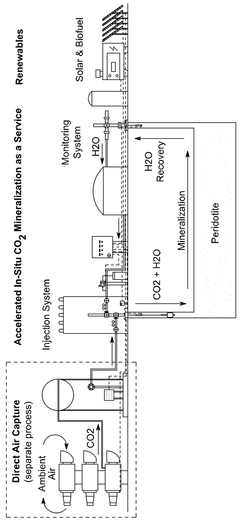
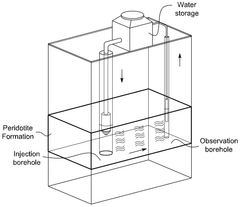
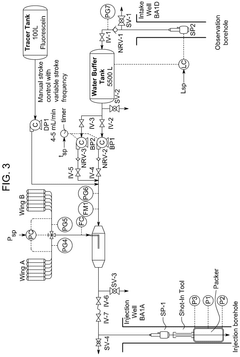
System and method for permanent carbon dioxide sequestration using a renewable energy source
PatentPendingCA3191648A1
Innovation
- Injecting solubilized carbon dioxide into peridotite rock formations under controlled temperature and pressure conditions, enhanced by the presence of water, to accelerate mineralization reactions, converting CO2 into stable carbonate minerals like magnesite and calcite, utilizing renewable energy sources for the process.

Ba-Sr-Co-Fe-O based perovskite mixed conducting materials as cathode materials for intermediate temperature solid oxide fuel cells both in dual chamber and single chamber configuration
PatentInactiveUS20050026006A1
Innovation
- Development of perovskite cathode materials with A site cations having an average +2 charge and B site cations having an average +4 charge, specifically using a mixture of alkaline earth and transition metal cations, such as Ba, Sr, Co, and Fe, to enhance oxygen diffusion and stability at reduced temperatures.


Environmental Impact Assessment
The exploration of peridotite as a potential alternative to fossil fuels necessitates a comprehensive environmental impact assessment. This evaluation is crucial to understand the ecological implications of utilizing peridotite in energy production and carbon sequestration processes.
Peridotite, an ultramafic rock rich in olivine, has shown promise in carbon dioxide sequestration through mineral carbonation. This natural process, when accelerated, could potentially offset significant amounts of greenhouse gas emissions. However, the large-scale exploitation of peridotite deposits may lead to substantial changes in local ecosystems and landscapes.
One primary environmental concern is the impact on soil and water quality. The extraction and processing of peridotite could release heavy metals and other potentially harmful elements into the surrounding environment. This may affect local flora and fauna, potentially disrupting biodiversity and ecosystem functions. Careful monitoring and mitigation strategies would be essential to minimize these risks.
Air quality is another critical factor to consider. While the end goal of peridotite utilization is to reduce atmospheric CO2, the mining and processing operations could potentially increase local particulate matter and dust emissions. This may have short-term negative impacts on air quality in the vicinity of extraction sites and processing facilities.
The hydrological impact of peridotite exploitation must also be thoroughly assessed. Large-scale mining operations could alter local water tables and drainage patterns, potentially affecting water availability for both ecosystems and human communities in the area. Additionally, the water requirements for mineral carbonation processes need to be evaluated to ensure sustainable use of water resources.
Land use changes associated with peridotite mining and processing facilities represent another significant environmental consideration. The transformation of natural or agricultural lands into industrial sites could lead to habitat fragmentation and loss of ecosystem services. Rehabilitation and restoration plans should be integral to any peridotite utilization project to mitigate these impacts.
Energy consumption and associated emissions in the extraction and processing of peridotite must be factored into the overall environmental assessment. While the end goal is to reduce carbon emissions, the energy intensity of these operations could potentially offset some of the carbon sequestration benefits, at least in the short term.
Lastly, the long-term geological stability of carbon sequestration sites using peridotite must be carefully evaluated. The potential for induced seismicity or unintended release of sequestered CO2 should be thoroughly investigated to ensure the safety and efficacy of this approach over extended periods.
In conclusion, while peridotite holds promise as a tool in combating climate change, a rigorous environmental impact assessment is crucial to ensure that its utilization does not create new environmental challenges while addressing existing ones. Balancing the potential benefits with the ecological risks will be key to developing sustainable and responsible approaches to harnessing peridotite in the transition away from fossil fuels.
Peridotite, an ultramafic rock rich in olivine, has shown promise in carbon dioxide sequestration through mineral carbonation. This natural process, when accelerated, could potentially offset significant amounts of greenhouse gas emissions. However, the large-scale exploitation of peridotite deposits may lead to substantial changes in local ecosystems and landscapes.
One primary environmental concern is the impact on soil and water quality. The extraction and processing of peridotite could release heavy metals and other potentially harmful elements into the surrounding environment. This may affect local flora and fauna, potentially disrupting biodiversity and ecosystem functions. Careful monitoring and mitigation strategies would be essential to minimize these risks.
Air quality is another critical factor to consider. While the end goal of peridotite utilization is to reduce atmospheric CO2, the mining and processing operations could potentially increase local particulate matter and dust emissions. This may have short-term negative impacts on air quality in the vicinity of extraction sites and processing facilities.
The hydrological impact of peridotite exploitation must also be thoroughly assessed. Large-scale mining operations could alter local water tables and drainage patterns, potentially affecting water availability for both ecosystems and human communities in the area. Additionally, the water requirements for mineral carbonation processes need to be evaluated to ensure sustainable use of water resources.
Land use changes associated with peridotite mining and processing facilities represent another significant environmental consideration. The transformation of natural or agricultural lands into industrial sites could lead to habitat fragmentation and loss of ecosystem services. Rehabilitation and restoration plans should be integral to any peridotite utilization project to mitigate these impacts.
Energy consumption and associated emissions in the extraction and processing of peridotite must be factored into the overall environmental assessment. While the end goal is to reduce carbon emissions, the energy intensity of these operations could potentially offset some of the carbon sequestration benefits, at least in the short term.
Lastly, the long-term geological stability of carbon sequestration sites using peridotite must be carefully evaluated. The potential for induced seismicity or unintended release of sequestered CO2 should be thoroughly investigated to ensure the safety and efficacy of this approach over extended periods.
In conclusion, while peridotite holds promise as a tool in combating climate change, a rigorous environmental impact assessment is crucial to ensure that its utilization does not create new environmental challenges while addressing existing ones. Balancing the potential benefits with the ecological risks will be key to developing sustainable and responsible approaches to harnessing peridotite in the transition away from fossil fuels.
Regulatory Framework for Alternative Fuels
The regulatory framework for alternative fuels plays a crucial role in shaping the development and adoption of peridotite-based solutions as fossil fuel alternatives. As governments worldwide seek to reduce carbon emissions and promote sustainable energy sources, the regulatory landscape for alternative fuels is evolving rapidly.
At the international level, agreements such as the Paris Agreement and the United Nations Sustainable Development Goals provide overarching guidance for countries to transition towards cleaner energy sources. These frameworks encourage the exploration and development of innovative technologies like peridotite-based carbon capture and storage (CCS) systems.
National governments are implementing various policies and regulations to support the development of alternative fuels. In the United States, the Renewable Fuel Standard (RFS) program mandates the blending of renewable fuels into transportation fuels. While peridotite-based solutions are not currently included in the RFS, there is potential for future inclusion as the technology advances.
The European Union has established the Renewable Energy Directive (RED II), which sets targets for renewable energy consumption in transportation. This directive could potentially be expanded to include peridotite-based technologies as they mature and demonstrate their effectiveness in reducing carbon emissions.
Regulatory bodies are also addressing the safety and environmental aspects of alternative fuel production and use. For peridotite-based solutions, this includes regulations governing mineral extraction, carbon dioxide transportation and storage, and the monitoring of geological formations used for CCS.
Tax incentives and subsidies play a significant role in promoting the development of alternative fuels. Many countries offer tax credits or grants for research and development in clean energy technologies. As peridotite-based solutions gain traction, policymakers may consider extending these incentives to support their commercialization.
Standardization efforts are underway to ensure the quality and compatibility of alternative fuels across different markets. Organizations such as the International Organization for Standardization (ISO) are developing standards for various alternative fuels, which could eventually include peridotite-derived products.
Environmental impact assessments and permitting processes are critical components of the regulatory framework. These processes ensure that the development and implementation of peridotite-based technologies adhere to environmental protection standards and minimize potential negative impacts on ecosystems.
As the technology progresses, regulators will need to address specific challenges related to peridotite utilization, such as land use changes, water consumption, and the long-term stability of carbon storage sites. This may require the development of new regulations or the adaptation of existing ones to accommodate the unique characteristics of peridotite-based solutions.
At the international level, agreements such as the Paris Agreement and the United Nations Sustainable Development Goals provide overarching guidance for countries to transition towards cleaner energy sources. These frameworks encourage the exploration and development of innovative technologies like peridotite-based carbon capture and storage (CCS) systems.
National governments are implementing various policies and regulations to support the development of alternative fuels. In the United States, the Renewable Fuel Standard (RFS) program mandates the blending of renewable fuels into transportation fuels. While peridotite-based solutions are not currently included in the RFS, there is potential for future inclusion as the technology advances.
The European Union has established the Renewable Energy Directive (RED II), which sets targets for renewable energy consumption in transportation. This directive could potentially be expanded to include peridotite-based technologies as they mature and demonstrate their effectiveness in reducing carbon emissions.
Regulatory bodies are also addressing the safety and environmental aspects of alternative fuel production and use. For peridotite-based solutions, this includes regulations governing mineral extraction, carbon dioxide transportation and storage, and the monitoring of geological formations used for CCS.
Tax incentives and subsidies play a significant role in promoting the development of alternative fuels. Many countries offer tax credits or grants for research and development in clean energy technologies. As peridotite-based solutions gain traction, policymakers may consider extending these incentives to support their commercialization.
Standardization efforts are underway to ensure the quality and compatibility of alternative fuels across different markets. Organizations such as the International Organization for Standardization (ISO) are developing standards for various alternative fuels, which could eventually include peridotite-derived products.
Environmental impact assessments and permitting processes are critical components of the regulatory framework. These processes ensure that the development and implementation of peridotite-based technologies adhere to environmental protection standards and minimize potential negative impacts on ecosystems.
As the technology progresses, regulators will need to address specific challenges related to peridotite utilization, such as land use changes, water consumption, and the long-term stability of carbon storage sites. This may require the development of new regulations or the adaptation of existing ones to accommodate the unique characteristics of peridotite-based solutions.
Unlock deeper insights with PatSnap Eureka Quick Research — get a full tech report to explore trends and direct your research. Try now!
Generate Your Research Report Instantly with AI Agent
Supercharge your innovation with PatSnap Eureka AI Agent Platform!