Investigating Electromagnetic Anomalies in Peridotite Exposed Reefs
JUL 24, 20259 MIN READ
Generate Your Research Report Instantly with AI Agent
Patsnap Eureka helps you evaluate technical feasibility & market potential.
Peridotite EM Anomalies
Peridotite, an ultramafic igneous rock predominantly composed of olivine and pyroxene, plays a crucial role in understanding Earth's mantle composition and geodynamic processes. When exposed at the Earth's surface, particularly in reef environments, peridotite formations often exhibit intriguing electromagnetic (EM) anomalies that have captured the attention of geophysicists and geologists alike.
These EM anomalies in peridotite exposed reefs are characterized by unexpected variations in electrical conductivity and magnetic susceptibility. The anomalies can manifest as localized zones of enhanced conductivity or magnetic intensity, often deviating significantly from the surrounding rock matrix. Such phenomena have been observed in various locations worldwide, including ophiolite complexes and oceanic core complexes where mantle rocks are exhumed to the seafloor.
The investigation of these anomalies holds significant importance for several reasons. Firstly, they provide valuable insights into the composition and structure of the upper mantle, offering a window into deep Earth processes. Secondly, the presence of EM anomalies may indicate the occurrence of economically important mineral deposits, such as nickel, chromium, and platinum group elements, which are often associated with peridotite formations.
From a geophysical perspective, the study of EM anomalies in peridotite reefs involves a combination of field measurements, laboratory analyses, and theoretical modeling. Magnetotelluric surveys, marine electromagnetic methods, and high-resolution magnetic surveys are commonly employed to map and characterize these anomalies. Additionally, petrophysical studies on rock samples help correlate the observed EM signatures with mineralogical and textural features of the peridotite.
The origin of these anomalies is a subject of ongoing research and debate. Several hypotheses have been proposed, including the presence of conductive mineral phases, such as magnetite or sulfides, formed during serpentinization processes. Alternatively, the anomalies may result from fluid-rock interactions, where seawater infiltration along fractures and faults alters the electrical properties of the peridotite. The complex interplay between tectonic deformation, metamorphic reactions, and fluid circulation likely contributes to the diverse EM signatures observed in these exposed mantle rocks.
Understanding the nature and distribution of EM anomalies in peridotite reefs has far-reaching implications for various fields of Earth sciences. It aids in refining geophysical exploration techniques for mineral resources, enhances our comprehension of mantle dynamics and oceanic lithosphere evolution, and contributes to the broader understanding of global tectonic processes. As technology advances and more detailed studies are conducted, the investigation of these anomalies continues to unveil new insights into the complex behavior of Earth's deep interior and its manifestation at the surface.
These EM anomalies in peridotite exposed reefs are characterized by unexpected variations in electrical conductivity and magnetic susceptibility. The anomalies can manifest as localized zones of enhanced conductivity or magnetic intensity, often deviating significantly from the surrounding rock matrix. Such phenomena have been observed in various locations worldwide, including ophiolite complexes and oceanic core complexes where mantle rocks are exhumed to the seafloor.
The investigation of these anomalies holds significant importance for several reasons. Firstly, they provide valuable insights into the composition and structure of the upper mantle, offering a window into deep Earth processes. Secondly, the presence of EM anomalies may indicate the occurrence of economically important mineral deposits, such as nickel, chromium, and platinum group elements, which are often associated with peridotite formations.
From a geophysical perspective, the study of EM anomalies in peridotite reefs involves a combination of field measurements, laboratory analyses, and theoretical modeling. Magnetotelluric surveys, marine electromagnetic methods, and high-resolution magnetic surveys are commonly employed to map and characterize these anomalies. Additionally, petrophysical studies on rock samples help correlate the observed EM signatures with mineralogical and textural features of the peridotite.
The origin of these anomalies is a subject of ongoing research and debate. Several hypotheses have been proposed, including the presence of conductive mineral phases, such as magnetite or sulfides, formed during serpentinization processes. Alternatively, the anomalies may result from fluid-rock interactions, where seawater infiltration along fractures and faults alters the electrical properties of the peridotite. The complex interplay between tectonic deformation, metamorphic reactions, and fluid circulation likely contributes to the diverse EM signatures observed in these exposed mantle rocks.
Understanding the nature and distribution of EM anomalies in peridotite reefs has far-reaching implications for various fields of Earth sciences. It aids in refining geophysical exploration techniques for mineral resources, enhances our comprehension of mantle dynamics and oceanic lithosphere evolution, and contributes to the broader understanding of global tectonic processes. As technology advances and more detailed studies are conducted, the investigation of these anomalies continues to unveil new insights into the complex behavior of Earth's deep interior and its manifestation at the surface.
Geophysical Market Demand
The geophysical market demand for investigating electromagnetic anomalies in peridotite exposed reefs has been steadily growing in recent years. This demand is primarily driven by the increasing need for accurate subsurface mapping and characterization in various industries, including mineral exploration, offshore energy development, and environmental monitoring.
In the mineral exploration sector, the ability to detect and analyze electromagnetic anomalies in peridotite exposed reefs has become crucial for identifying potential deposits of valuable minerals such as nickel, copper, and platinum group elements. These minerals are often associated with ultramafic rocks like peridotite, making the detection of electromagnetic anomalies a valuable tool for prospecting and resource assessment.
The offshore energy industry has also shown significant interest in this technology, particularly for the exploration of hydrocarbon reserves in complex geological settings. Peridotite exposed reefs can serve as indicators of potential hydrocarbon traps or reservoirs, and electromagnetic anomalies can provide valuable insights into the subsurface structure and composition.
Environmental monitoring and geological hazard assessment represent another growing market segment for this technology. The ability to detect and map electromagnetic anomalies in peridotite exposed reefs can aid in understanding regional tectonic processes, assessing seismic risks, and monitoring potential submarine landslides or other geological hazards.
The market demand is further fueled by advancements in geophysical survey technologies, including improved electromagnetic sensors, data processing algorithms, and interpretation techniques. These developments have enhanced the resolution and accuracy of electromagnetic anomaly detection, making it a more reliable and cost-effective tool for subsurface investigation.
Geographically, the demand for this technology is particularly strong in regions with significant offshore exploration activities, such as the Gulf of Mexico, the North Sea, and the coast of Brazil. Additionally, areas with known peridotite exposures, such as ophiolite complexes in the Mediterranean region and parts of Southeast Asia, have shown increased interest in electromagnetic anomaly investigations.
The market size for geophysical services related to electromagnetic anomaly detection in peridotite exposed reefs is expected to grow substantially in the coming years. This growth is driven by the increasing complexity of exploration targets, the need for more efficient and environmentally friendly exploration methods, and the push towards digital transformation in the geosciences industry.
In the mineral exploration sector, the ability to detect and analyze electromagnetic anomalies in peridotite exposed reefs has become crucial for identifying potential deposits of valuable minerals such as nickel, copper, and platinum group elements. These minerals are often associated with ultramafic rocks like peridotite, making the detection of electromagnetic anomalies a valuable tool for prospecting and resource assessment.
The offshore energy industry has also shown significant interest in this technology, particularly for the exploration of hydrocarbon reserves in complex geological settings. Peridotite exposed reefs can serve as indicators of potential hydrocarbon traps or reservoirs, and electromagnetic anomalies can provide valuable insights into the subsurface structure and composition.
Environmental monitoring and geological hazard assessment represent another growing market segment for this technology. The ability to detect and map electromagnetic anomalies in peridotite exposed reefs can aid in understanding regional tectonic processes, assessing seismic risks, and monitoring potential submarine landslides or other geological hazards.
The market demand is further fueled by advancements in geophysical survey technologies, including improved electromagnetic sensors, data processing algorithms, and interpretation techniques. These developments have enhanced the resolution and accuracy of electromagnetic anomaly detection, making it a more reliable and cost-effective tool for subsurface investigation.
Geographically, the demand for this technology is particularly strong in regions with significant offshore exploration activities, such as the Gulf of Mexico, the North Sea, and the coast of Brazil. Additionally, areas with known peridotite exposures, such as ophiolite complexes in the Mediterranean region and parts of Southeast Asia, have shown increased interest in electromagnetic anomaly investigations.
The market size for geophysical services related to electromagnetic anomaly detection in peridotite exposed reefs is expected to grow substantially in the coming years. This growth is driven by the increasing complexity of exploration targets, the need for more efficient and environmentally friendly exploration methods, and the push towards digital transformation in the geosciences industry.
EM Challenges in Reefs
Electromagnetic (EM) anomalies in peridotite exposed reefs present unique challenges for geophysical exploration and environmental monitoring. These anomalies arise from the complex interplay between the reef's geological structure, mineral composition, and surrounding seawater. Peridotite, an ultramafic rock rich in iron and magnesium-bearing minerals, exhibits distinct electromagnetic properties that can significantly influence EM measurements.
One of the primary challenges in studying EM anomalies in these reefs is the high conductivity contrast between the seawater and the exposed peridotite. This contrast creates strong boundary effects that can mask subtle EM signatures associated with subsurface structures or mineral deposits. Additionally, the irregular topography of exposed reefs further complicates EM data interpretation, as it introduces geometric distortions in the measured electromagnetic fields.
The presence of serpentinization in peridotite reefs adds another layer of complexity to EM investigations. This process, which involves the hydration of olivine and pyroxene minerals, can dramatically alter the electrical properties of the rock. Serpentinized zones within the reef may create localized conductivity anomalies that are difficult to distinguish from other geological features or potential mineral deposits.
Magnetite formation during serpentinization also contributes to the EM challenges in peridotite reefs. The increased magnetic susceptibility of serpentinized zones can produce strong magnetic anomalies that interfere with EM measurements and complicate data interpretation. These magnetic effects must be carefully accounted for to avoid misinterpretation of EM survey results.
The dynamic nature of the marine environment surrounding exposed reefs further complicates EM investigations. Tidal variations, ocean currents, and wave action can introduce time-varying electromagnetic noise that must be filtered out during data processing. Moreover, the presence of conductive seawater can attenuate EM signals, limiting the depth of investigation and reducing the resolution of subsurface imaging.
Technological limitations also pose challenges in studying EM anomalies in peridotite reefs. Traditional marine EM survey methods may not be well-suited for the shallow water and rugged terrain often associated with exposed reefs. Developing specialized equipment and survey techniques that can operate effectively in these environments is crucial for obtaining high-quality EM data.
Interpreting EM data from peridotite reefs requires sophisticated modeling and inversion techniques to account for the complex 3D geometry and heterogeneous electrical properties of the reef structure. Developing accurate forward models that incorporate the effects of serpentinization, magnetite formation, and seawater interaction is essential for reliable interpretation of EM anomalies in these challenging environments.
One of the primary challenges in studying EM anomalies in these reefs is the high conductivity contrast between the seawater and the exposed peridotite. This contrast creates strong boundary effects that can mask subtle EM signatures associated with subsurface structures or mineral deposits. Additionally, the irregular topography of exposed reefs further complicates EM data interpretation, as it introduces geometric distortions in the measured electromagnetic fields.
The presence of serpentinization in peridotite reefs adds another layer of complexity to EM investigations. This process, which involves the hydration of olivine and pyroxene minerals, can dramatically alter the electrical properties of the rock. Serpentinized zones within the reef may create localized conductivity anomalies that are difficult to distinguish from other geological features or potential mineral deposits.
Magnetite formation during serpentinization also contributes to the EM challenges in peridotite reefs. The increased magnetic susceptibility of serpentinized zones can produce strong magnetic anomalies that interfere with EM measurements and complicate data interpretation. These magnetic effects must be carefully accounted for to avoid misinterpretation of EM survey results.
The dynamic nature of the marine environment surrounding exposed reefs further complicates EM investigations. Tidal variations, ocean currents, and wave action can introduce time-varying electromagnetic noise that must be filtered out during data processing. Moreover, the presence of conductive seawater can attenuate EM signals, limiting the depth of investigation and reducing the resolution of subsurface imaging.
Technological limitations also pose challenges in studying EM anomalies in peridotite reefs. Traditional marine EM survey methods may not be well-suited for the shallow water and rugged terrain often associated with exposed reefs. Developing specialized equipment and survey techniques that can operate effectively in these environments is crucial for obtaining high-quality EM data.
Interpreting EM data from peridotite reefs requires sophisticated modeling and inversion techniques to account for the complex 3D geometry and heterogeneous electrical properties of the reef structure. Developing accurate forward models that incorporate the effects of serpentinization, magnetite formation, and seawater interaction is essential for reliable interpretation of EM anomalies in these challenging environments.
Current EM Solutions
01 Electromagnetic detection of peridotite reefs
Electromagnetic methods are used to detect and characterize peridotite reefs exposed on the seafloor. These techniques can identify electromagnetic anomalies associated with the unique properties of peridotite, helping to map and study these geological formations.- Electromagnetic detection of peridotite reefs: Electromagnetic methods are used to detect and characterize peridotite reefs exposed on the seafloor. These techniques can identify electromagnetic anomalies associated with the unique properties of peridotite, helping to map and study these geological formations.
- Seafloor mapping and exploration techniques: Advanced seafloor mapping and exploration techniques are employed to study peridotite exposed reefs. These methods may include sonar, bathymetry, and other geophysical tools to create detailed maps of the seafloor and identify areas of interest for further electromagnetic investigation.
- Data processing and interpretation for electromagnetic anomalies: Specialized data processing and interpretation techniques are developed to analyze electromagnetic data collected from peridotite reefs. These methods help to distinguish anomalies associated with peridotite from other geological features and improve the accuracy of reef characterization.
- Environmental impact assessment of exposed reefs: Studies are conducted to assess the environmental impact of exposed peridotite reefs and their associated electromagnetic anomalies. This research aims to understand the potential effects on marine ecosystems and develop strategies for sustainable exploration and conservation.
- Integration of electromagnetic data with other geological information: Researchers combine electromagnetic data with other geological and geophysical information to create comprehensive models of peridotite exposed reefs. This integrated approach enhances understanding of reef formation, structure, and associated electromagnetic anomalies.
02 Seafloor mapping and exploration techniques
Advanced seafloor mapping and exploration techniques are employed to study peridotite exposed reefs. These methods may include sonar, remote sensing, and underwater vehicles to gather data on reef structures and associated electromagnetic anomalies.Expand Specific Solutions03 Geochemical analysis of peridotite reefs
Geochemical analysis techniques are used to study the composition and properties of peridotite reefs. These analyses can help explain the electromagnetic anomalies observed and provide insights into the formation and evolution of these geological structures.Expand Specific Solutions04 Environmental impact assessment of exposed reefs
Methods for assessing the environmental impact of exposed peridotite reefs, including their interaction with marine ecosystems and potential effects on local electromagnetic fields. This research aids in understanding the broader ecological implications of these geological formations.Expand Specific Solutions05 Electromagnetic anomaly modeling and interpretation
Advanced modeling and interpretation techniques are developed to analyze electromagnetic anomalies associated with peridotite exposed reefs. These methods help in understanding the underlying geological structures and processes that generate these anomalies.Expand Specific Solutions
Key Geophysical Players
The investigation of electromagnetic anomalies in peridotite exposed reefs represents an emerging field at the intersection of geophysics and marine geology. The competitive landscape is characterized by a mix of academic institutions, national research centers, and energy companies, indicating a nascent industry still heavily reliant on fundamental research. Market size is currently limited, but growing interest from the oil and gas sector suggests potential for expansion. Technologically, the field is in its early stages, with companies like Equinor Energy AS, Schlumberger, and BGP Inc. leveraging their expertise in geophysical surveying to develop specialized tools for reef exploration. Academic institutions such as the Ocean University of China and the Centre National de la Recherche Scientifique are driving fundamental research, while collaborations between industry and academia are accelerating technological advancements in this niche area.
Institute of Geology & Geophysics, Chinese Academy of Sciences
Technical Solution: The Institute has pioneered the use of multi-scale electromagnetic methods for investigating peridotite anomalies in exposed reefs. Their approach combines airborne, ground-based, and borehole EM techniques to provide a comprehensive understanding of the subsurface structure[2]. The institute has developed novel data processing algorithms that can effectively separate the EM responses of peridotite bodies from background noise and other geological features. Additionally, they have integrated EM data with other geophysical and geological datasets to improve the accuracy of peridotite detection and characterization[4].
Strengths: Comprehensive multi-scale approach, advanced data processing techniques, and integration with other geoscience disciplines. Weaknesses: Potential limitations in accessibility for some survey types and higher costs associated with multi-method approaches.
BGP, Inc.
Technical Solution: BGP has developed a specialized electromagnetic survey system for investigating anomalies in peridotite exposed reefs. Their technology utilizes a combination of time-domain electromagnetic (TDEM) and frequency-domain electromagnetic (FDEM) methods to provide high-resolution imaging of subsurface resistivity structures[5]. BGP's system incorporates advanced noise reduction techniques and 3D inversion algorithms to enhance the detection of subtle EM anomalies associated with peridotite bodies. The company has also developed custom survey design software that optimizes electrode and receiver configurations for maximum sensitivity to peridotite structures[6].
Strengths: Specialized EM system for peridotite detection, advanced noise reduction techniques, and optimized survey design capabilities. Weaknesses: Potential limitations in very deep investigations and possible trade-offs between survey speed and data quality.
Peridotite EM Innovations
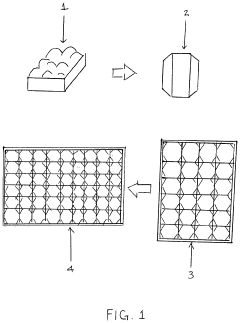
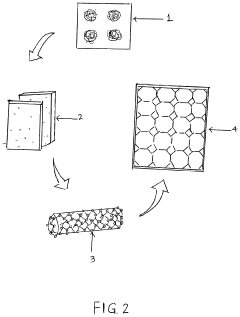
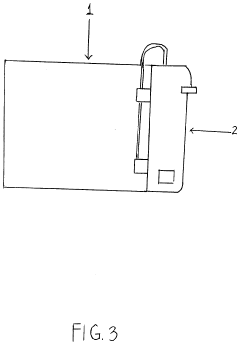
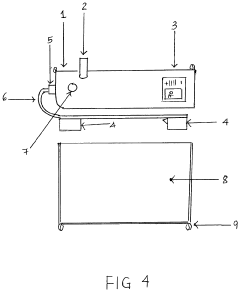
Mantle peridotite based-activated carbon nanosheet:catalyst for cathode oxygen reduction of seawater to generate hydrogen (H) when exposed to sunlight using the photocatalytic water splitting
PatentInactiveUS20220298012A1
Innovation
- Mantle peridotite based-activated carbon nanosheets are used as a catalyst for cathode oxygen reduction in seawater, leveraging their abundant material chemistry electrode properties to split water into hydrogen and oxygen when exposed to sunlight, with a system that includes a cathode tube storage and temperature control for efficient hydrogen collection and storage.
Environmental Impact
The investigation of electromagnetic anomalies in peridotite exposed reefs has significant environmental implications that must be carefully considered. These anomalies, while providing valuable insights into geological processes, can potentially impact the delicate ecosystems surrounding the reefs.
Peridotite reefs are unique geological formations that often host diverse marine life. The presence of electromagnetic anomalies in these areas may affect the behavior and navigation of various marine species. Many organisms, including sea turtles, sharks, and certain fish species, rely on Earth's magnetic field for orientation and migration. Alterations in the local electromagnetic environment could disrupt these natural processes, potentially leading to changes in migration patterns or breeding behaviors.
Furthermore, the methods used to investigate these anomalies may have direct environmental consequences. Electromagnetic surveys often involve the use of specialized equipment that emits electromagnetic signals. While these signals are typically low-power and considered safe, their long-term effects on marine life, particularly on sensitive species, are not fully understood. Careful monitoring and impact assessments are necessary to ensure that research activities do not inadvertently harm the reef ecosystem.
The presence of electromagnetic anomalies may also indicate underlying geological processes that could have broader environmental implications. For instance, these anomalies might be associated with hydrothermal vents or mineral deposits. Any future exploitation of these resources would need to be carefully managed to minimize environmental damage to the reef and surrounding areas.
Additionally, the study of these anomalies could provide valuable data for climate change research. Peridotite reefs are known for their potential to sequester carbon dioxide through natural weathering processes. Understanding the relationship between electromagnetic anomalies and the reef's geological composition could offer insights into carbon sequestration mechanisms, contributing to broader climate mitigation strategies.
It is crucial to adopt a precautionary approach when conducting research in these sensitive environments. This includes using non-invasive survey techniques whenever possible, minimizing the duration and intensity of electromagnetic emissions, and establishing buffer zones to protect particularly vulnerable areas of the reef. Long-term monitoring programs should be implemented to track any potential changes in the reef ecosystem that may be attributed to the presence of electromagnetic anomalies or the research activities themselves.
In conclusion, while the investigation of electromagnetic anomalies in peridotite exposed reefs offers significant scientific value, it is paramount to balance research objectives with environmental conservation. By adopting responsible research practices and conducting thorough environmental impact assessments, scientists can minimize potential negative effects while maximizing the knowledge gained from these unique geological features.
Peridotite reefs are unique geological formations that often host diverse marine life. The presence of electromagnetic anomalies in these areas may affect the behavior and navigation of various marine species. Many organisms, including sea turtles, sharks, and certain fish species, rely on Earth's magnetic field for orientation and migration. Alterations in the local electromagnetic environment could disrupt these natural processes, potentially leading to changes in migration patterns or breeding behaviors.
Furthermore, the methods used to investigate these anomalies may have direct environmental consequences. Electromagnetic surveys often involve the use of specialized equipment that emits electromagnetic signals. While these signals are typically low-power and considered safe, their long-term effects on marine life, particularly on sensitive species, are not fully understood. Careful monitoring and impact assessments are necessary to ensure that research activities do not inadvertently harm the reef ecosystem.
The presence of electromagnetic anomalies may also indicate underlying geological processes that could have broader environmental implications. For instance, these anomalies might be associated with hydrothermal vents or mineral deposits. Any future exploitation of these resources would need to be carefully managed to minimize environmental damage to the reef and surrounding areas.
Additionally, the study of these anomalies could provide valuable data for climate change research. Peridotite reefs are known for their potential to sequester carbon dioxide through natural weathering processes. Understanding the relationship between electromagnetic anomalies and the reef's geological composition could offer insights into carbon sequestration mechanisms, contributing to broader climate mitigation strategies.
It is crucial to adopt a precautionary approach when conducting research in these sensitive environments. This includes using non-invasive survey techniques whenever possible, minimizing the duration and intensity of electromagnetic emissions, and establishing buffer zones to protect particularly vulnerable areas of the reef. Long-term monitoring programs should be implemented to track any potential changes in the reef ecosystem that may be attributed to the presence of electromagnetic anomalies or the research activities themselves.
In conclusion, while the investigation of electromagnetic anomalies in peridotite exposed reefs offers significant scientific value, it is paramount to balance research objectives with environmental conservation. By adopting responsible research practices and conducting thorough environmental impact assessments, scientists can minimize potential negative effects while maximizing the knowledge gained from these unique geological features.
Data Interpretation Tech
Data interpretation techniques play a crucial role in investigating electromagnetic anomalies in peridotite exposed reefs. These techniques involve sophisticated methods for analyzing and extracting meaningful information from complex electromagnetic datasets. One of the primary approaches is the use of advanced signal processing algorithms to filter out noise and enhance the signal-to-noise ratio of the collected data. This step is essential for isolating the electromagnetic signatures associated with peridotite anomalies from background interference.
Inversion modeling is another key technique employed in this field. It involves creating mathematical models that simulate the electromagnetic response of subsurface structures and iteratively adjusting these models to match observed data. This process allows researchers to infer the physical properties and distribution of peridotite within the reef system. Various inversion algorithms, such as Occam's inversion and constrained inversion, are utilized to handle the non-uniqueness of solutions and incorporate prior geological knowledge.
Spectral analysis techniques are also widely applied to identify characteristic frequencies associated with peridotite anomalies. Fourier transforms and wavelet analysis are commonly used to decompose the electromagnetic signals into their frequency components, enabling the detection of subtle spectral signatures that may indicate the presence of peridotite structures. These methods are particularly useful for distinguishing between different types of geological formations and identifying unique electromagnetic properties of peridotite.
Machine learning and artificial intelligence algorithms have recently gained traction in data interpretation for electromagnetic anomalies. These techniques, including neural networks and support vector machines, can be trained on large datasets to recognize patterns and features indicative of peridotite presence. They offer the advantage of automating the interpretation process and potentially uncovering complex relationships in the data that may not be apparent through traditional analysis methods.
Visualization tools and techniques form an integral part of data interpretation in this field. Advanced 3D modeling and rendering software allow researchers to create detailed visual representations of the subsurface structure based on electromagnetic data. These visualizations aid in understanding the spatial distribution of peridotite anomalies and their relationship to other geological features. Interactive visualization platforms enable geologists and geophysicists to explore the data from multiple perspectives, facilitating a more comprehensive interpretation of the electromagnetic anomalies.
Inversion modeling is another key technique employed in this field. It involves creating mathematical models that simulate the electromagnetic response of subsurface structures and iteratively adjusting these models to match observed data. This process allows researchers to infer the physical properties and distribution of peridotite within the reef system. Various inversion algorithms, such as Occam's inversion and constrained inversion, are utilized to handle the non-uniqueness of solutions and incorporate prior geological knowledge.
Spectral analysis techniques are also widely applied to identify characteristic frequencies associated with peridotite anomalies. Fourier transforms and wavelet analysis are commonly used to decompose the electromagnetic signals into their frequency components, enabling the detection of subtle spectral signatures that may indicate the presence of peridotite structures. These methods are particularly useful for distinguishing between different types of geological formations and identifying unique electromagnetic properties of peridotite.
Machine learning and artificial intelligence algorithms have recently gained traction in data interpretation for electromagnetic anomalies. These techniques, including neural networks and support vector machines, can be trained on large datasets to recognize patterns and features indicative of peridotite presence. They offer the advantage of automating the interpretation process and potentially uncovering complex relationships in the data that may not be apparent through traditional analysis methods.
Visualization tools and techniques form an integral part of data interpretation in this field. Advanced 3D modeling and rendering software allow researchers to create detailed visual representations of the subsurface structure based on electromagnetic data. These visualizations aid in understanding the spatial distribution of peridotite anomalies and their relationship to other geological features. Interactive visualization platforms enable geologists and geophysicists to explore the data from multiple perspectives, facilitating a more comprehensive interpretation of the electromagnetic anomalies.
Unlock deeper insights with Patsnap Eureka Quick Research — get a full tech report to explore trends and direct your research. Try now!
Generate Your Research Report Instantly with AI Agent
Supercharge your innovation with Patsnap Eureka AI Agent Platform!