
Flow Measurement For High-Speed Combustion Engine Applications
JUN 25, 20269 MIN READ
Generate Your Research Report Instantly with AI Agent
Patsnap Eureka helps you evaluate technical feasibility & market potential.
High-Speed Engine Flow Measurement Background and Objectives
Flow measurement in high-speed combustion engines represents a critical technological frontier that has evolved significantly since the early development of internal combustion engines in the late 19th century. The fundamental challenge of accurately quantifying air and fuel flow rates in rapidly changing, high-temperature, and high-pressure environments has driven continuous innovation in measurement technologies and methodologies.
The historical progression of engine flow measurement began with simple mechanical devices such as venturi tubes and orifice plates, which provided basic flow rate estimations but lacked the precision and response time required for modern high-performance applications. The advent of electronic fuel injection systems in the 1960s marked a pivotal shift, demanding more sophisticated measurement capabilities to optimize combustion efficiency and reduce emissions.
Contemporary high-speed engines, particularly those used in aerospace, automotive racing, and advanced propulsion systems, operate under extreme conditions that present unprecedented measurement challenges. These engines typically feature combustion cycles occurring at frequencies exceeding 100 Hz, with flow velocities reaching several hundred meters per second and pressure fluctuations spanning multiple orders of magnitude within milliseconds.
The primary technical objective centers on developing measurement systems capable of providing real-time, high-fidelity flow data with temporal resolution sufficient to capture transient phenomena during individual combustion cycles. This requires measurement technologies that can respond within microsecond timeframes while maintaining accuracy across wide dynamic ranges of flow rates, temperatures, and pressures.
Secondary objectives include achieving non-intrusive measurement capabilities that do not disturb the flow field or compromise engine performance, developing robust sensors that can withstand harsh operating environments including extreme temperatures exceeding 1000°C and pressures up to 200 bar, and establishing measurement systems with minimal maintenance requirements for practical implementation.
The technological goals extend beyond mere data acquisition to encompass advanced signal processing capabilities that can extract meaningful flow characteristics from noisy, high-frequency measurement signals. This includes developing algorithms for real-time flow pattern recognition, turbulence quantification, and predictive flow modeling to support adaptive engine control systems.
Modern applications demand measurement systems that can simultaneously capture multiple flow parameters including velocity profiles, mass flow rates, temperature distributions, and species concentrations with spatial resolution sufficient to map three-dimensional flow structures within engine components such as intake manifolds, combustion chambers, and exhaust systems.
The historical progression of engine flow measurement began with simple mechanical devices such as venturi tubes and orifice plates, which provided basic flow rate estimations but lacked the precision and response time required for modern high-performance applications. The advent of electronic fuel injection systems in the 1960s marked a pivotal shift, demanding more sophisticated measurement capabilities to optimize combustion efficiency and reduce emissions.
Contemporary high-speed engines, particularly those used in aerospace, automotive racing, and advanced propulsion systems, operate under extreme conditions that present unprecedented measurement challenges. These engines typically feature combustion cycles occurring at frequencies exceeding 100 Hz, with flow velocities reaching several hundred meters per second and pressure fluctuations spanning multiple orders of magnitude within milliseconds.
The primary technical objective centers on developing measurement systems capable of providing real-time, high-fidelity flow data with temporal resolution sufficient to capture transient phenomena during individual combustion cycles. This requires measurement technologies that can respond within microsecond timeframes while maintaining accuracy across wide dynamic ranges of flow rates, temperatures, and pressures.
Secondary objectives include achieving non-intrusive measurement capabilities that do not disturb the flow field or compromise engine performance, developing robust sensors that can withstand harsh operating environments including extreme temperatures exceeding 1000°C and pressures up to 200 bar, and establishing measurement systems with minimal maintenance requirements for practical implementation.
The technological goals extend beyond mere data acquisition to encompass advanced signal processing capabilities that can extract meaningful flow characteristics from noisy, high-frequency measurement signals. This includes developing algorithms for real-time flow pattern recognition, turbulence quantification, and predictive flow modeling to support adaptive engine control systems.
Modern applications demand measurement systems that can simultaneously capture multiple flow parameters including velocity profiles, mass flow rates, temperature distributions, and species concentrations with spatial resolution sufficient to map three-dimensional flow structures within engine components such as intake manifolds, combustion chambers, and exhaust systems.
Market Demand for Advanced Engine Flow Sensing Solutions
The global automotive industry is experiencing unprecedented transformation driven by stringent emission regulations and the pursuit of enhanced fuel efficiency. Modern high-speed combustion engines require precise flow measurement capabilities to optimize performance, reduce emissions, and meet increasingly demanding regulatory standards. This technological imperative has created substantial market demand for advanced engine flow sensing solutions that can operate reliably under extreme conditions.
Traditional flow measurement technologies face significant limitations when applied to high-speed combustion engine environments. The harsh operating conditions, including extreme temperatures, pressure fluctuations, and vibrations, demand robust sensing solutions capable of maintaining accuracy and reliability. Engine manufacturers are actively seeking next-generation flow sensors that can provide real-time, high-precision measurements to enable advanced engine control strategies and optimize combustion processes.
The automotive sector's shift toward electrification and hybrid powertrains has paradoxically intensified the need for sophisticated flow measurement in remaining internal combustion engines. As manufacturers focus on maximizing the efficiency of conventional engines during the transition period, advanced flow sensing becomes critical for achieving optimal air-fuel ratios, exhaust gas recirculation control, and turbocharger management. This trend has expanded market opportunities for specialized flow measurement technologies.
Aerospace and marine propulsion systems represent additional high-value market segments driving demand for advanced flow sensing solutions. These applications require exceptional reliability and performance under extreme operating conditions, creating opportunities for premium sensing technologies. The growing emphasis on fuel efficiency in commercial aviation and maritime transportation has further amplified the need for precise flow measurement capabilities.
Industrial gas turbine applications constitute another significant market driver, particularly in power generation and oil and gas industries. The increasing focus on operational efficiency and emissions reduction in these sectors has created substantial demand for advanced flow measurement technologies capable of operating in high-temperature, high-pressure environments similar to combustion engine applications.
Emerging markets in developing economies are experiencing rapid growth in automotive and industrial sectors, creating new opportunities for flow sensing technology providers. The expansion of manufacturing capabilities and increasing adoption of advanced engine technologies in these regions represents a significant growth vector for the flow measurement market.
The integration of Internet of Things technologies and predictive maintenance strategies in engine applications has created additional market demand for smart flow sensors with enhanced connectivity and diagnostic capabilities. This trend toward digitalization is reshaping market requirements and creating opportunities for innovative sensing solutions that combine traditional measurement accuracy with advanced data analytics capabilities.
Traditional flow measurement technologies face significant limitations when applied to high-speed combustion engine environments. The harsh operating conditions, including extreme temperatures, pressure fluctuations, and vibrations, demand robust sensing solutions capable of maintaining accuracy and reliability. Engine manufacturers are actively seeking next-generation flow sensors that can provide real-time, high-precision measurements to enable advanced engine control strategies and optimize combustion processes.
The automotive sector's shift toward electrification and hybrid powertrains has paradoxically intensified the need for sophisticated flow measurement in remaining internal combustion engines. As manufacturers focus on maximizing the efficiency of conventional engines during the transition period, advanced flow sensing becomes critical for achieving optimal air-fuel ratios, exhaust gas recirculation control, and turbocharger management. This trend has expanded market opportunities for specialized flow measurement technologies.
Aerospace and marine propulsion systems represent additional high-value market segments driving demand for advanced flow sensing solutions. These applications require exceptional reliability and performance under extreme operating conditions, creating opportunities for premium sensing technologies. The growing emphasis on fuel efficiency in commercial aviation and maritime transportation has further amplified the need for precise flow measurement capabilities.
Industrial gas turbine applications constitute another significant market driver, particularly in power generation and oil and gas industries. The increasing focus on operational efficiency and emissions reduction in these sectors has created substantial demand for advanced flow measurement technologies capable of operating in high-temperature, high-pressure environments similar to combustion engine applications.
Emerging markets in developing economies are experiencing rapid growth in automotive and industrial sectors, creating new opportunities for flow sensing technology providers. The expansion of manufacturing capabilities and increasing adoption of advanced engine technologies in these regions represents a significant growth vector for the flow measurement market.
The integration of Internet of Things technologies and predictive maintenance strategies in engine applications has created additional market demand for smart flow sensors with enhanced connectivity and diagnostic capabilities. This trend toward digitalization is reshaping market requirements and creating opportunities for innovative sensing solutions that combine traditional measurement accuracy with advanced data analytics capabilities.
Current Challenges in High-Speed Combustion Flow Measurement
High-speed combustion engines present unprecedented challenges for accurate flow measurement due to the extreme operating conditions and rapid temporal variations inherent in these systems. The primary obstacle lies in the harsh environment characterized by elevated temperatures exceeding 2000K, pressures reaching several hundred atmospheres, and the presence of chemically reactive species that can interfere with measurement accuracy and sensor longevity.
Temporal resolution requirements pose another significant challenge, as modern high-speed engines operate at frequencies that demand measurement systems capable of capturing flow phenomena occurring within microsecond timeframes. Traditional measurement techniques often lack the necessary response time to accurately characterize transient flow behaviors, leading to incomplete understanding of combustion dynamics and suboptimal engine performance optimization.
Spatial accessibility represents a critical constraint in high-speed combustion flow measurement. The compact geometry of modern engine designs limits the physical space available for sensor installation, while the need for non-intrusive measurement techniques becomes paramount to avoid disrupting the delicate flow patterns that directly impact combustion efficiency. This spatial limitation is further complicated by the requirement to measure multiple flow parameters simultaneously across different engine locations.
The multi-phase nature of combustion flows introduces additional complexity, as measurement systems must accurately distinguish between gas, liquid fuel droplets, and solid particulates while maintaining calibration accuracy across varying mixture compositions. The presence of soot, unburned hydrocarbons, and other combustion byproducts can significantly affect optical measurement techniques, leading to signal attenuation and measurement drift.
Calibration and validation challenges emerge from the difficulty in establishing reference standards under extreme operating conditions. Traditional calibration methods developed for steady-state flows often prove inadequate for the dynamic, high-temperature, high-pressure environment of combustion engines, necessitating the development of specialized calibration protocols and reference measurement techniques.
Signal processing and data interpretation complexities arise from the high noise levels inherent in combustion environments, where electromagnetic interference, mechanical vibrations, and thermal fluctuations can significantly degrade measurement quality. Advanced filtering and signal processing algorithms are required to extract meaningful flow information from noisy data streams while maintaining real-time processing capabilities essential for engine control applications.
Temporal resolution requirements pose another significant challenge, as modern high-speed engines operate at frequencies that demand measurement systems capable of capturing flow phenomena occurring within microsecond timeframes. Traditional measurement techniques often lack the necessary response time to accurately characterize transient flow behaviors, leading to incomplete understanding of combustion dynamics and suboptimal engine performance optimization.
Spatial accessibility represents a critical constraint in high-speed combustion flow measurement. The compact geometry of modern engine designs limits the physical space available for sensor installation, while the need for non-intrusive measurement techniques becomes paramount to avoid disrupting the delicate flow patterns that directly impact combustion efficiency. This spatial limitation is further complicated by the requirement to measure multiple flow parameters simultaneously across different engine locations.
The multi-phase nature of combustion flows introduces additional complexity, as measurement systems must accurately distinguish between gas, liquid fuel droplets, and solid particulates while maintaining calibration accuracy across varying mixture compositions. The presence of soot, unburned hydrocarbons, and other combustion byproducts can significantly affect optical measurement techniques, leading to signal attenuation and measurement drift.
Calibration and validation challenges emerge from the difficulty in establishing reference standards under extreme operating conditions. Traditional calibration methods developed for steady-state flows often prove inadequate for the dynamic, high-temperature, high-pressure environment of combustion engines, necessitating the development of specialized calibration protocols and reference measurement techniques.
Signal processing and data interpretation complexities arise from the high noise levels inherent in combustion environments, where electromagnetic interference, mechanical vibrations, and thermal fluctuations can significantly degrade measurement quality. Advanced filtering and signal processing algorithms are required to extract meaningful flow information from noisy data streams while maintaining real-time processing capabilities essential for engine control applications.
Existing Flow Measurement Solutions for High-Speed Engines
01 Ultrasonic flow measurement techniques
Flow measurement systems utilizing ultrasonic technology to determine fluid velocity and volumetric flow rates. These systems employ ultrasonic transducers that transmit and receive acoustic signals through the flowing medium. The time difference or frequency shift of the ultrasonic signals is analyzed to calculate flow parameters with high accuracy and minimal pressure loss.- Ultrasonic flow measurement techniques: Ultrasonic flow measurement utilizes sound waves to determine fluid velocity and flow rate. This non-intrusive method involves transmitting ultrasonic signals through the fluid medium and analyzing the time-of-flight or frequency shift to calculate flow parameters. The technology offers high accuracy and can be applied to various pipe materials and fluid types without requiring direct contact with the flowing medium.
- Electromagnetic flow measurement systems: Electromagnetic flow meters operate based on Faraday's law of electromagnetic induction to measure the flow of conductive fluids. These systems generate a magnetic field perpendicular to the flow direction and measure the induced voltage, which is proportional to the fluid velocity. This method provides accurate measurements for various conductive liquids and is particularly suitable for applications involving corrosive or abrasive fluids.
- Differential pressure flow measurement: Differential pressure flow measurement relies on creating a pressure drop across a flow restriction element and measuring the resulting pressure difference. Common restriction elements include orifice plates, venturi tubes, and flow nozzles. The flow rate is calculated based on the relationship between the pressure differential and fluid velocity, making this method widely applicable across various industrial processes.
- Thermal flow measurement technology: Thermal flow measurement techniques utilize heat transfer principles to determine flow rates by measuring temperature differences in the flowing medium. This method involves heating elements and temperature sensors that detect changes in thermal conditions caused by fluid movement. The technology is particularly effective for gas flow measurements and applications where other measurement methods may not be suitable.
- Vortex flow measurement principles: Vortex flow meters operate by detecting vortices shed from a bluff body placed in the flow stream. The frequency of vortex shedding is directly proportional to the fluid velocity, allowing for accurate flow rate determination. This measurement principle is suitable for both liquid and gas applications and provides reliable performance across a wide range of flow conditions with minimal maintenance requirements.
02 Electromagnetic flow measurement systems
Flow measurement devices that use electromagnetic principles to measure the flow of conductive fluids. These systems generate a magnetic field perpendicular to the flow direction and measure the induced voltage, which is proportional to the fluid velocity. This technology provides accurate measurements for various conductive liquids without obstructing the flow path.Expand Specific Solutions03 Differential pressure flow measurement
Flow measurement methods based on creating and measuring pressure differences across flow restrictions or obstacles in the pipeline. These systems utilize orifice plates, venturi tubes, or flow nozzles to create controlled pressure drops that correlate with flow rates. The pressure differential is measured using specialized sensors to determine volumetric or mass flow rates.Expand Specific Solutions04 Mass flow measurement technologies
Advanced flow measurement systems designed to directly measure mass flow rates rather than volumetric flow. These technologies often employ thermal dispersion, Coriolis effect, or other physical principles to provide accurate mass flow measurements independent of fluid density variations. They are particularly useful for applications requiring precise mass-based measurements.Expand Specific Solutions05 Digital flow measurement and signal processing
Modern flow measurement systems incorporating digital signal processing, microprocessors, and advanced algorithms for enhanced accuracy and functionality. These systems feature digital communication capabilities, self-diagnostics, and compensation algorithms for temperature, pressure, and other environmental factors that may affect measurement accuracy.Expand Specific Solutions
Key Players in Engine Flow Measurement Technology Industry
The flow measurement technology for high-speed combustion engines represents a mature market in the growth phase, driven by increasing demands for engine efficiency and emissions control. The market demonstrates substantial scale with established automotive giants like Toyota Motor Corp., Robert Bosch GmbH, and Mitsubishi Heavy Industries leading technological development alongside specialized instrumentation companies such as AVL List GmbH and Horiba Europe GmbH. Technology maturity varies significantly across market segments, with traditional automotive applications showing high maturity through companies like Hitachi Ltd. and Astemo Ltd., while emerging applications in aerospace and advanced propulsion systems remain in development phases. Academic institutions including Beihang University and South China University of Technology contribute fundamental research, while industrial players like Scania CV AB and Peugeot SA drive practical implementation. The competitive landscape reflects a convergence of measurement technology specialists, automotive manufacturers, and research institutions, indicating robust technological advancement and market expansion potential.
AVL List GmbH
Technical Solution: AVL List GmbH specializes in advanced flow measurement technologies for high-speed combustion engines, offering comprehensive solutions including hot-film anemometry, laser Doppler velocimetry (LDV), and particle image velocimetry (PIV) systems. Their flow measurement systems are specifically designed to handle the extreme conditions in combustion engines, with sampling rates up to 100 kHz and temperature resistance up to 1000°C. The company's integrated approach combines hardware sensors with sophisticated data acquisition systems and real-time analysis software, enabling precise measurement of turbulent flow patterns, fuel injection dynamics, and air-fuel mixing processes in both gasoline and diesel engines.
Strengths: Industry-leading expertise in automotive testing with over 70 years of experience, comprehensive product portfolio covering entire powertrain development cycle, strong global presence with extensive R&D capabilities. Weaknesses: High cost of implementation, complex system integration requirements, potential limitations in extremely harsh combustion environments.
Robert Bosch GmbH
Technical Solution: Robert Bosch GmbH develops advanced flow measurement solutions integrated into their fuel injection and engine management systems for high-speed combustion applications. Their technology focuses on real-time flow sensing using MEMS-based sensors and pressure differential measurement techniques, capable of operating at frequencies up to 50 kHz with microsecond response times. The system incorporates machine learning algorithms for predictive flow pattern analysis and adaptive control, optimizing fuel delivery precision and combustion efficiency. Bosch's solutions are particularly effective in direct injection systems where precise flow control is critical for emissions reduction and performance optimization in modern high-speed engines.
Strengths: Market leader in automotive components with extensive manufacturing scale, strong integration capabilities with engine control units, proven reliability in mass production applications. Weaknesses: Focus primarily on production applications rather than research-grade precision, limited customization options for specialized research applications.
Core Innovations in High-Speed Combustion Flow Sensing
Method for determining the mass flow in an internal combustion engine
PatentActiveUS20230288240A1
Innovation
- A method using an engine-dynamically adaptive filter that adjusts filter parameters based on current engine status data transmitted by the engine control unit, allowing immediate optimization of filter settings during load or speed changes, and incorporating a filling model that adapts to engine wear and changing characteristics, ensuring optimal control quality and signal stability.
Sensor Structure
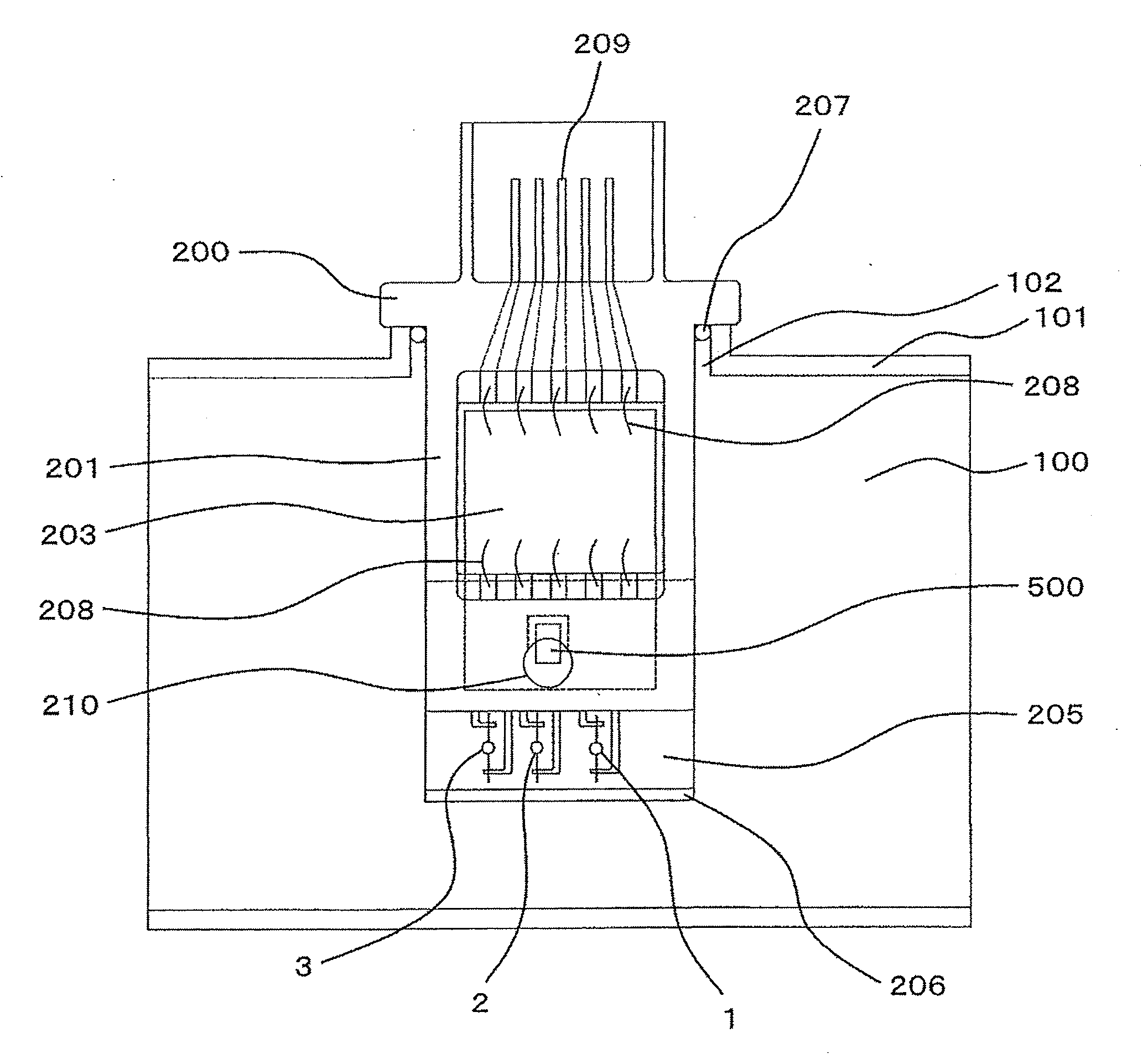
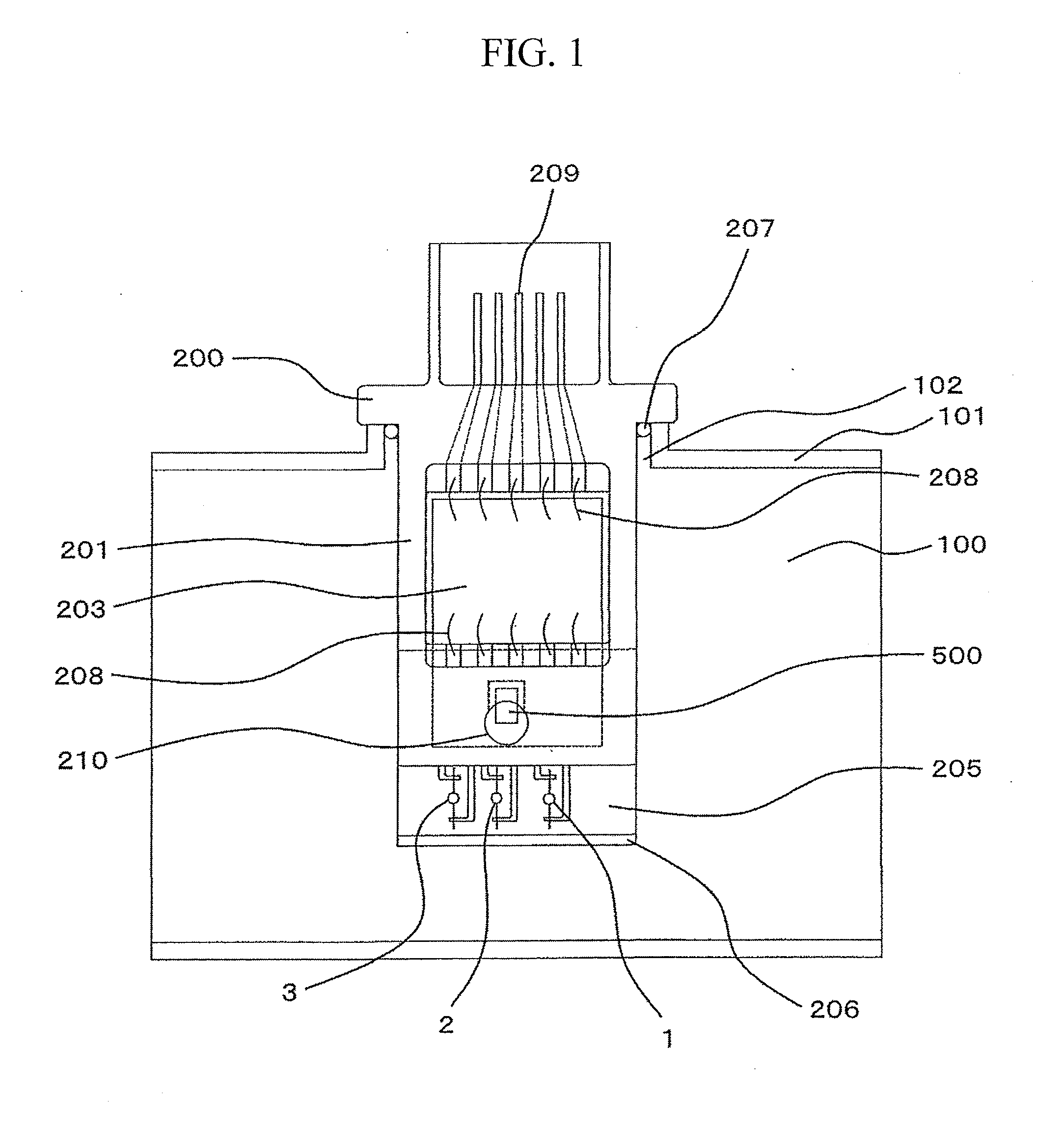
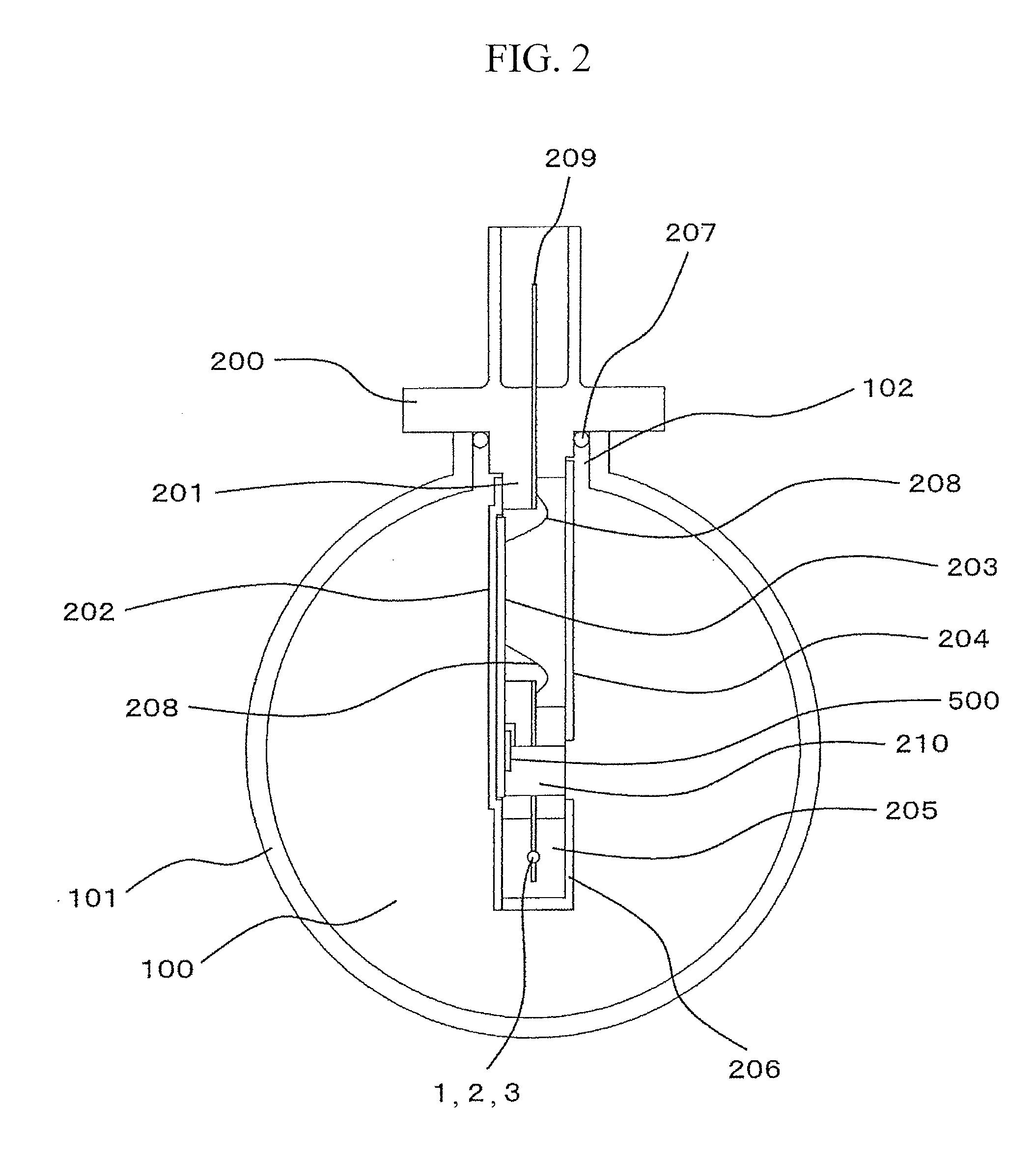
PatentInactiveUS20110072894A1
Innovation
- The integration of a humidity sensing element on an electronic circuit board within the mass air flow measurement device, utilizing a base plate composed of both metal and resin materials, where the metal area handles high heat generation and the resin area enhances heating of the humidity sensing element, allowing for efficient heat radiation and condensation removal without additional heaters, optimizing airflow through bypass channels to manage heat generation and radiation effectively.

Emission Standards and Regulatory Requirements for Engines
The regulatory landscape for engine emissions has evolved significantly over the past decades, driven by growing environmental concerns and public health awareness. Global emission standards have become increasingly stringent, directly impacting the requirements for flow measurement systems in high-speed combustion engines. These regulations establish mandatory limits for pollutants such as nitrogen oxides, particulate matter, carbon monoxide, and hydrocarbons, necessitating precise monitoring and control capabilities.
In the United States, the Environmental Protection Agency enforces Tier 4 standards for non-road engines and increasingly strict on-highway vehicle emission requirements. The European Union has implemented Euro VI standards for heavy-duty vehicles and Stage V regulations for non-road mobile machinery. These frameworks mandate real-time emission monitoring systems that rely heavily on accurate flow measurement technologies to ensure compliance during actual operating conditions.
The California Air Resources Board has pioneered some of the world's most stringent emission standards, often serving as a precursor to federal regulations. Their Low Emission Vehicle program and Advanced Clean Cars Rule establish performance benchmarks that require sophisticated flow measurement capabilities for both certification testing and in-use compliance verification. Similar regulatory approaches have been adopted across various jurisdictions worldwide.
Compliance verification protocols demand exceptional accuracy in flow measurement systems, as regulatory testing procedures specify precise measurement tolerances and calibration requirements. Engine manufacturers must demonstrate compliance through standardized test cycles that simulate real-world operating conditions, requiring flow measurement systems capable of maintaining accuracy across wide dynamic ranges and varying environmental conditions.
The regulatory trend toward Real Driving Emissions testing has fundamentally changed flow measurement requirements, shifting from laboratory-based steady-state measurements to dynamic, on-road monitoring capabilities. This evolution demands portable emission measurement systems with robust flow sensors capable of maintaining calibration stability under harsh operating environments while providing real-time data for regulatory compliance verification.
Future regulatory developments indicate continued tightening of emission limits and expanded monitoring requirements, particularly for greenhouse gas emissions and ultrafine particulate matter. These emerging standards will likely require enhanced flow measurement precision and expanded measurement capabilities to address new pollutant categories and more comprehensive emission characterization requirements.
In the United States, the Environmental Protection Agency enforces Tier 4 standards for non-road engines and increasingly strict on-highway vehicle emission requirements. The European Union has implemented Euro VI standards for heavy-duty vehicles and Stage V regulations for non-road mobile machinery. These frameworks mandate real-time emission monitoring systems that rely heavily on accurate flow measurement technologies to ensure compliance during actual operating conditions.
The California Air Resources Board has pioneered some of the world's most stringent emission standards, often serving as a precursor to federal regulations. Their Low Emission Vehicle program and Advanced Clean Cars Rule establish performance benchmarks that require sophisticated flow measurement capabilities for both certification testing and in-use compliance verification. Similar regulatory approaches have been adopted across various jurisdictions worldwide.
Compliance verification protocols demand exceptional accuracy in flow measurement systems, as regulatory testing procedures specify precise measurement tolerances and calibration requirements. Engine manufacturers must demonstrate compliance through standardized test cycles that simulate real-world operating conditions, requiring flow measurement systems capable of maintaining accuracy across wide dynamic ranges and varying environmental conditions.
The regulatory trend toward Real Driving Emissions testing has fundamentally changed flow measurement requirements, shifting from laboratory-based steady-state measurements to dynamic, on-road monitoring capabilities. This evolution demands portable emission measurement systems with robust flow sensors capable of maintaining calibration stability under harsh operating environments while providing real-time data for regulatory compliance verification.
Future regulatory developments indicate continued tightening of emission limits and expanded monitoring requirements, particularly for greenhouse gas emissions and ultrafine particulate matter. These emerging standards will likely require enhanced flow measurement precision and expanded measurement capabilities to address new pollutant categories and more comprehensive emission characterization requirements.
Thermal Management Considerations in High-Speed Flow Sensing
High-speed flow measurement in combustion engine applications presents significant thermal management challenges that directly impact sensor performance, accuracy, and longevity. The extreme temperature variations encountered in engine environments, ranging from ambient conditions during startup to over 1000°C during peak combustion cycles, create complex thermal stress patterns that can compromise measurement integrity.
Thermal shock represents one of the most critical concerns in high-speed flow sensing applications. Rapid temperature fluctuations cause differential thermal expansion between sensor components, potentially leading to mechanical failure or calibration drift. Advanced ceramic materials and specialized mounting techniques have emerged as primary solutions to mitigate these effects, with silicon carbide and alumina-based sensors demonstrating superior thermal shock resistance compared to traditional metallic alternatives.
Heat dissipation strategies play a crucial role in maintaining sensor functionality within acceptable operating parameters. Passive cooling approaches, including heat sinks and thermal barriers, provide cost-effective solutions for moderate temperature applications. However, extreme conditions may require active cooling systems incorporating forced air circulation or liquid cooling circuits to prevent sensor degradation and maintain measurement precision.
Temperature compensation algorithms have become essential components of modern flow sensing systems. These sophisticated software solutions continuously monitor ambient and operational temperatures, applying real-time corrections to raw sensor data to account for thermal effects on measurement accuracy. Machine learning approaches are increasingly being integrated to predict and compensate for complex thermal behaviors that traditional linear compensation methods cannot adequately address.
Material selection considerations extend beyond basic temperature tolerance to include thermal conductivity, coefficient of thermal expansion, and long-term stability under cyclic thermal loading. Emerging nanomaterials and composite structures offer promising solutions for next-generation thermal management, potentially enabling more compact sensor designs with enhanced thermal performance characteristics.
The integration of thermal management systems with flow measurement electronics requires careful consideration of electromagnetic interference and signal integrity issues that can arise from temperature control components, necessitating sophisticated shielding and filtering strategies to maintain measurement quality.
Thermal shock represents one of the most critical concerns in high-speed flow sensing applications. Rapid temperature fluctuations cause differential thermal expansion between sensor components, potentially leading to mechanical failure or calibration drift. Advanced ceramic materials and specialized mounting techniques have emerged as primary solutions to mitigate these effects, with silicon carbide and alumina-based sensors demonstrating superior thermal shock resistance compared to traditional metallic alternatives.
Heat dissipation strategies play a crucial role in maintaining sensor functionality within acceptable operating parameters. Passive cooling approaches, including heat sinks and thermal barriers, provide cost-effective solutions for moderate temperature applications. However, extreme conditions may require active cooling systems incorporating forced air circulation or liquid cooling circuits to prevent sensor degradation and maintain measurement precision.
Temperature compensation algorithms have become essential components of modern flow sensing systems. These sophisticated software solutions continuously monitor ambient and operational temperatures, applying real-time corrections to raw sensor data to account for thermal effects on measurement accuracy. Machine learning approaches are increasingly being integrated to predict and compensate for complex thermal behaviors that traditional linear compensation methods cannot adequately address.
Material selection considerations extend beyond basic temperature tolerance to include thermal conductivity, coefficient of thermal expansion, and long-term stability under cyclic thermal loading. Emerging nanomaterials and composite structures offer promising solutions for next-generation thermal management, potentially enabling more compact sensor designs with enhanced thermal performance characteristics.
The integration of thermal management systems with flow measurement electronics requires careful consideration of electromagnetic interference and signal integrity issues that can arise from temperature control components, necessitating sophisticated shielding and filtering strategies to maintain measurement quality.
Unlock deeper insights with Patsnap Eureka Quick Research — get a full tech report to explore trends and direct your research. Try now!
Generate Your Research Report Instantly with AI Agent
Supercharge your innovation with Patsnap Eureka AI Agent Platform!