Flywheel vs Supercapacitor: Charge-Discharge Efficiency
MAR 12, 20269 MIN READ
Generate Your Research Report Instantly with AI Agent
PatSnap Eureka helps you evaluate technical feasibility & market potential.
Flywheel and Supercapacitor Technology Background and Objectives
Energy storage technologies have undergone remarkable evolution over the past century, driven by increasing demands for efficient, reliable, and sustainable power solutions. Among the diverse array of storage systems, flywheel energy storage and supercapacitor technologies have emerged as prominent contenders for applications requiring rapid charge-discharge cycles and high power density capabilities.
Flywheel energy storage systems trace their origins to ancient pottery wheels, but modern applications began developing in the 1970s with advances in composite materials and magnetic bearing technologies. These systems store kinetic energy in rotating masses, converting electrical energy to mechanical energy during charging and reversing the process during discharge. The technology has progressed from steel rotors operating at modest speeds to carbon fiber composite wheels spinning at tens of thousands of revolutions per minute in vacuum chambers.
Supercapacitors, also known as ultracapacitors or electrochemical double-layer capacitors, emerged from electrochemical research in the 1950s and gained commercial viability in the 1990s. Unlike conventional batteries that store energy through chemical reactions, supercapacitors store electrical energy electrostatically at the interface between electrode materials and electrolytes. This fundamental difference enables rapid charging and discharging with minimal degradation over millions of cycles.
The evolution of both technologies has been shaped by materials science breakthroughs, manufacturing process improvements, and growing market demands for grid stabilization, renewable energy integration, and electric vehicle applications. Recent developments include hybrid supercapacitor designs incorporating pseudocapacitive materials and flywheel systems with advanced power electronics for improved efficiency.
Current technological objectives focus on maximizing charge-discharge efficiency while maintaining cycle life, power density, and cost-effectiveness. For flywheels, key targets include minimizing bearing losses, reducing aerodynamic drag, and optimizing power conversion systems. Supercapacitor development emphasizes increasing energy density, reducing equivalent series resistance, and developing temperature-stable electrolyte systems.
The comparative analysis of charge-discharge efficiency between these technologies represents a critical evaluation criterion for system selection in various applications, encompassing factors such as round-trip efficiency, response time, and operational lifetime under different duty cycles.
Flywheel energy storage systems trace their origins to ancient pottery wheels, but modern applications began developing in the 1970s with advances in composite materials and magnetic bearing technologies. These systems store kinetic energy in rotating masses, converting electrical energy to mechanical energy during charging and reversing the process during discharge. The technology has progressed from steel rotors operating at modest speeds to carbon fiber composite wheels spinning at tens of thousands of revolutions per minute in vacuum chambers.
Supercapacitors, also known as ultracapacitors or electrochemical double-layer capacitors, emerged from electrochemical research in the 1950s and gained commercial viability in the 1990s. Unlike conventional batteries that store energy through chemical reactions, supercapacitors store electrical energy electrostatically at the interface between electrode materials and electrolytes. This fundamental difference enables rapid charging and discharging with minimal degradation over millions of cycles.
The evolution of both technologies has been shaped by materials science breakthroughs, manufacturing process improvements, and growing market demands for grid stabilization, renewable energy integration, and electric vehicle applications. Recent developments include hybrid supercapacitor designs incorporating pseudocapacitive materials and flywheel systems with advanced power electronics for improved efficiency.
Current technological objectives focus on maximizing charge-discharge efficiency while maintaining cycle life, power density, and cost-effectiveness. For flywheels, key targets include minimizing bearing losses, reducing aerodynamic drag, and optimizing power conversion systems. Supercapacitor development emphasizes increasing energy density, reducing equivalent series resistance, and developing temperature-stable electrolyte systems.
The comparative analysis of charge-discharge efficiency between these technologies represents a critical evaluation criterion for system selection in various applications, encompassing factors such as round-trip efficiency, response time, and operational lifetime under different duty cycles.
Market Demand Analysis for Energy Storage Solutions
The global energy storage market is experiencing unprecedented growth driven by the accelerating transition toward renewable energy sources and the increasing need for grid stability solutions. Wind and solar power generation's inherent intermittency creates substantial demand for efficient energy storage technologies that can rapidly absorb excess energy during peak production periods and discharge it when renewable sources are unavailable. This fundamental challenge positions both flywheel and supercapacitor technologies as critical components in the evolving energy landscape.
Industrial applications represent a significant market segment where charge-discharge efficiency directly impacts operational costs and system reliability. Manufacturing facilities, data centers, and critical infrastructure require uninterruptible power supply systems that can respond within milliseconds to power fluctuations. The superior charge-discharge efficiency of these technologies compared to traditional battery systems makes them particularly attractive for applications requiring frequent cycling and rapid response times.
The electric vehicle sector presents another substantial market opportunity, particularly for supercapacitors in hybrid energy storage configurations. Automotive manufacturers increasingly recognize the value of combining high-efficiency supercapacitors with conventional batteries to optimize regenerative braking systems and provide instantaneous power delivery for acceleration. The efficiency advantages translate directly into extended vehicle range and improved performance characteristics.
Grid-scale energy storage applications demand technologies capable of maintaining high efficiency across thousands of daily charge-discharge cycles. Utility companies are actively seeking solutions that minimize energy losses during storage operations, as even small efficiency improvements can result in significant economic benefits over the system lifetime. Both flywheel and supercapacitor technologies offer compelling efficiency profiles for frequency regulation and grid stabilization services.
Emerging markets in developing countries present unique opportunities where reliable power infrastructure remains limited. Distributed energy storage systems with high charge-discharge efficiency can enable more effective utilization of renewable energy resources in remote locations. The ability to maintain consistent performance across varying environmental conditions makes these technologies particularly suitable for such applications.
The telecommunications industry continues to drive demand for backup power systems that combine high efficiency with minimal maintenance requirements. Cell tower operators and network infrastructure providers require energy storage solutions that can operate reliably for extended periods while maintaining optimal charge-discharge performance throughout their operational lifetime.
Industrial applications represent a significant market segment where charge-discharge efficiency directly impacts operational costs and system reliability. Manufacturing facilities, data centers, and critical infrastructure require uninterruptible power supply systems that can respond within milliseconds to power fluctuations. The superior charge-discharge efficiency of these technologies compared to traditional battery systems makes them particularly attractive for applications requiring frequent cycling and rapid response times.
The electric vehicle sector presents another substantial market opportunity, particularly for supercapacitors in hybrid energy storage configurations. Automotive manufacturers increasingly recognize the value of combining high-efficiency supercapacitors with conventional batteries to optimize regenerative braking systems and provide instantaneous power delivery for acceleration. The efficiency advantages translate directly into extended vehicle range and improved performance characteristics.
Grid-scale energy storage applications demand technologies capable of maintaining high efficiency across thousands of daily charge-discharge cycles. Utility companies are actively seeking solutions that minimize energy losses during storage operations, as even small efficiency improvements can result in significant economic benefits over the system lifetime. Both flywheel and supercapacitor technologies offer compelling efficiency profiles for frequency regulation and grid stabilization services.
Emerging markets in developing countries present unique opportunities where reliable power infrastructure remains limited. Distributed energy storage systems with high charge-discharge efficiency can enable more effective utilization of renewable energy resources in remote locations. The ability to maintain consistent performance across varying environmental conditions makes these technologies particularly suitable for such applications.
The telecommunications industry continues to drive demand for backup power systems that combine high efficiency with minimal maintenance requirements. Cell tower operators and network infrastructure providers require energy storage solutions that can operate reliably for extended periods while maintaining optimal charge-discharge performance throughout their operational lifetime.
Current Status and Challenges in Charge-Discharge Systems
The current landscape of charge-discharge systems presents a complex technological battleground where flywheel energy storage systems and supercapacitors compete for dominance across various applications. Both technologies have achieved significant maturity levels, yet each faces distinct operational and economic challenges that limit their widespread adoption.
Flywheel energy storage systems currently demonstrate charge-discharge efficiencies ranging from 85% to 95%, with advanced magnetic bearing systems achieving the higher end of this spectrum. However, these systems encounter substantial challenges related to mechanical stress management, bearing friction losses, and containment safety requirements. The rotational speeds required for optimal energy density often exceed 50,000 RPM, creating significant engineering challenges in materials science and mechanical design. Standby losses remain a critical issue, with energy dissipation occurring continuously due to aerodynamic drag and bearing friction, even during idle periods.
Supercapacitors exhibit superior charge-discharge efficiencies, typically exceeding 95% and often reaching 98% in optimal conditions. Their primary challenges center around energy density limitations and voltage decay characteristics. Current supercapacitor technology struggles with self-discharge rates that can reach 20-40% per day, significantly impacting long-term energy storage applications. Additionally, the linear voltage discharge profile creates complications for power electronics systems that require stable voltage outputs.
Manufacturing scalability presents divergent challenges for both technologies. Flywheel systems require precision manufacturing of composite rotors and sophisticated magnetic bearing assemblies, leading to high capital costs and complex maintenance requirements. The geographic distribution of flywheel technology development remains concentrated in regions with advanced aerospace and precision manufacturing capabilities, particularly in North America and Northern Europe.
Supercapacitor production faces material supply chain constraints, particularly regarding activated carbon electrodes and specialized electrolytes. The technology's development is more globally distributed, with significant manufacturing capabilities established in Asia, Europe, and North America. However, achieving consistent quality across large-scale production remains challenging due to the sensitivity of electrochemical processes to environmental conditions.
Temperature sensitivity affects both technologies differently but significantly. Flywheel systems experience reduced efficiency at extreme temperatures due to material property changes and increased bearing losses. Supercapacitors face more severe temperature-related challenges, with both capacity and efficiency degrading substantially outside optimal operating ranges, typically between -40°C and +65°C.
The integration challenges for both technologies involve power electronics complexity and grid synchronization requirements. Current power conditioning systems for flywheels must manage variable frequency AC output conversion, while supercapacitor systems require sophisticated voltage regulation to compensate for their inherent voltage variation during discharge cycles.
Flywheel energy storage systems currently demonstrate charge-discharge efficiencies ranging from 85% to 95%, with advanced magnetic bearing systems achieving the higher end of this spectrum. However, these systems encounter substantial challenges related to mechanical stress management, bearing friction losses, and containment safety requirements. The rotational speeds required for optimal energy density often exceed 50,000 RPM, creating significant engineering challenges in materials science and mechanical design. Standby losses remain a critical issue, with energy dissipation occurring continuously due to aerodynamic drag and bearing friction, even during idle periods.
Supercapacitors exhibit superior charge-discharge efficiencies, typically exceeding 95% and often reaching 98% in optimal conditions. Their primary challenges center around energy density limitations and voltage decay characteristics. Current supercapacitor technology struggles with self-discharge rates that can reach 20-40% per day, significantly impacting long-term energy storage applications. Additionally, the linear voltage discharge profile creates complications for power electronics systems that require stable voltage outputs.
Manufacturing scalability presents divergent challenges for both technologies. Flywheel systems require precision manufacturing of composite rotors and sophisticated magnetic bearing assemblies, leading to high capital costs and complex maintenance requirements. The geographic distribution of flywheel technology development remains concentrated in regions with advanced aerospace and precision manufacturing capabilities, particularly in North America and Northern Europe.
Supercapacitor production faces material supply chain constraints, particularly regarding activated carbon electrodes and specialized electrolytes. The technology's development is more globally distributed, with significant manufacturing capabilities established in Asia, Europe, and North America. However, achieving consistent quality across large-scale production remains challenging due to the sensitivity of electrochemical processes to environmental conditions.
Temperature sensitivity affects both technologies differently but significantly. Flywheel systems experience reduced efficiency at extreme temperatures due to material property changes and increased bearing losses. Supercapacitors face more severe temperature-related challenges, with both capacity and efficiency degrading substantially outside optimal operating ranges, typically between -40°C and +65°C.
The integration challenges for both technologies involve power electronics complexity and grid synchronization requirements. Current power conditioning systems for flywheels must manage variable frequency AC output conversion, while supercapacitor systems require sophisticated voltage regulation to compensate for their inherent voltage variation during discharge cycles.
Current Technical Solutions for Charge-Discharge Optimization
01 Hybrid energy storage systems combining flywheel and supercapacitor
Integration of flywheel and supercapacitor technologies in hybrid energy storage systems to optimize charge-discharge efficiency by leveraging the high power density of supercapacitors and the high energy density of flywheels. The hybrid configuration allows for complementary operation where supercapacitors handle rapid charge-discharge cycles while flywheels provide sustained energy storage, improving overall system efficiency and extending component lifespan.- Hybrid energy storage systems combining flywheel and supercapacitor: Integration of flywheel and supercapacitor technologies in hybrid energy storage systems to optimize charge-discharge efficiency by leveraging the high power density of supercapacitors and the high energy density of flywheels. The hybrid configuration allows for complementary operation where supercapacitors handle rapid charge-discharge cycles while flywheels provide sustained energy storage, improving overall system efficiency and extending operational lifespan.
- Power management and control strategies for charge-discharge optimization: Advanced control algorithms and power management systems designed to optimize the charge-discharge cycles of energy storage devices. These strategies include intelligent switching between energy storage components, adaptive charging protocols, and real-time monitoring systems that maximize efficiency by minimizing energy losses during conversion and transfer processes. The control systems dynamically adjust operating parameters based on load conditions and state of charge.
- Supercapacitor electrode materials and configurations for improved efficiency: Development of advanced electrode materials and structural configurations for supercapacitors to enhance charge-discharge efficiency. This includes the use of novel carbon-based materials, nanostructured electrodes, and optimized electrolyte compositions that reduce internal resistance and improve ion transport. These improvements result in higher energy efficiency, faster charging rates, and reduced heat generation during operation.
- Flywheel mechanical and electromagnetic design for efficiency enhancement: Optimization of flywheel mechanical structures and electromagnetic systems to minimize energy losses during rotation and energy conversion. This includes the use of magnetic bearings to reduce friction, vacuum enclosures to eliminate air resistance, and advanced motor-generator designs for efficient bidirectional energy conversion. These design improvements significantly enhance the round-trip efficiency of flywheel energy storage systems.
- Thermal management and energy loss reduction techniques: Implementation of thermal management systems and techniques to reduce energy losses in both flywheel and supercapacitor systems during charge-discharge cycles. These include active cooling systems, heat dissipation structures, and thermal insulation methods that maintain optimal operating temperatures. Effective thermal management prevents efficiency degradation due to temperature-related resistance increases and ensures consistent performance across varying operational conditions.
02 Power management and control strategies for charge-discharge optimization
Advanced control algorithms and power management systems designed to optimize the charge-discharge cycles of energy storage devices. These strategies include intelligent switching between energy storage components, adaptive charging protocols, and real-time monitoring to maximize efficiency during both charging and discharging phases. The control systems dynamically allocate power flow based on load demands and storage capacity to minimize energy losses.Expand Specific Solutions03 Efficiency improvement through material and structural design
Enhancement of charge-discharge efficiency through advanced material selection and structural optimization of energy storage components. This includes the use of high-conductivity materials, improved electrode designs, and optimized geometric configurations to reduce internal resistance and energy losses. Innovations in supercapacitor electrode materials and flywheel bearing systems contribute to higher round-trip efficiency.Expand Specific Solutions04 Thermal management for maintaining charge-discharge efficiency
Implementation of thermal management systems to maintain optimal operating temperatures during charge-discharge cycles, preventing efficiency degradation due to heat generation. These systems include active cooling mechanisms, heat dissipation structures, and temperature monitoring to ensure consistent performance across varying load conditions and ambient temperatures.Expand Specific Solutions05 Energy recovery and regenerative systems
Technologies focused on energy recovery during discharge cycles and regenerative charging mechanisms to improve overall system efficiency. These include regenerative braking systems that capture kinetic energy, bidirectional power converters that minimize conversion losses, and intelligent energy recuperation strategies that maximize the utilization of stored energy during discharge operations.Expand Specific Solutions
Major Players in Energy Storage Industry
The flywheel versus supercapacitor charge-discharge efficiency landscape represents a mature yet evolving energy storage sector experiencing significant technological convergence. The industry is in a commercialization phase, with established players like Beacon Power LLC and Siemens AG demonstrating proven flywheel technologies, while emerging companies such as Revterra Corp. and Helix Power Corp. are advancing next-generation systems. Market size is expanding driven by grid modernization and renewable integration demands. Technology maturity varies significantly - traditional flywheel systems from companies like American Flywheel Systems show established efficiency metrics, while innovative approaches from Shenyang Microcontrol New Energy Technology and Beijing Honghui International Energy Technology are pushing magnetic levitation boundaries. Supercapacitor integration by industrial giants like BASF Corp. and Huawei Technologies demonstrates cross-technology pollination, creating hybrid solutions that optimize both power density and cycle efficiency for specific applications.
Beacon Power LLC
Technical Solution: Beacon Power specializes in flywheel energy storage systems with advanced magnetic bearing technology and high-speed composite rotors. Their Smart Energy 25 flywheel systems achieve round-trip efficiency of 85-90% with rapid charge-discharge capabilities within seconds. The company's flywheel technology utilizes carbon fiber composite rotors spinning at speeds up to 16,000 RPM in vacuum chambers, enabling minimal energy loss during storage. Their systems provide frequency regulation services with response times under 4 seconds and can perform over 175,000 full charge-discharge cycles with minimal degradation. The modular design allows for scalable deployment from 100kW to multi-MW installations for grid stabilization applications.
Strengths: High cycle life exceeding 175,000 cycles, rapid response time under 4 seconds, minimal maintenance requirements. Weaknesses: Higher capital costs compared to supercapacitors, energy density limitations for long-duration storage applications.
BASF Corp.
Technical Solution: BASF focuses on advanced supercapacitor technology through development of high-performance electrode materials and electrolyte systems. Their supercapacitor solutions achieve charge-discharge efficiency of 95-98% using proprietary activated carbon electrodes and ionic liquid electrolytes. The company's materials enable supercapacitors with energy densities up to 10-15 Wh/kg while maintaining power densities exceeding 10,000 W/kg. BASF's electrode materials feature optimized pore structures and surface chemistry that enhance ion transport and reduce internal resistance. Their supercapacitor cells can operate across wide temperature ranges from -40°C to +70°C with minimal performance degradation and cycle life exceeding 1 million charge-discharge cycles for automotive and industrial applications.
Strengths: Leading materials science expertise, very high efficiency up to 98%, exceptional cycle life over 1 million cycles. Weaknesses: Focus primarily on materials rather than complete systems, limited energy density compared to battery technologies.
Key Technical Insights on Efficiency Enhancement Methods
Flywheel
PatentActiveUS20180138779A9
Innovation
- The Multi-Stack Flywheel Energy Storage Assembly employs multiple lighter flywheels that power up sequentially using speed-activated clutches and roller stops, allowing only charged flywheels to engage the drive shaft during discharge, reducing power input and charge time, and incorporating a universal joint to mitigate gyroscopic precession.


Powertrain and Method for a Kinetic Hybrid Vehicle
PatentInactiveUS20120196713A1
Innovation
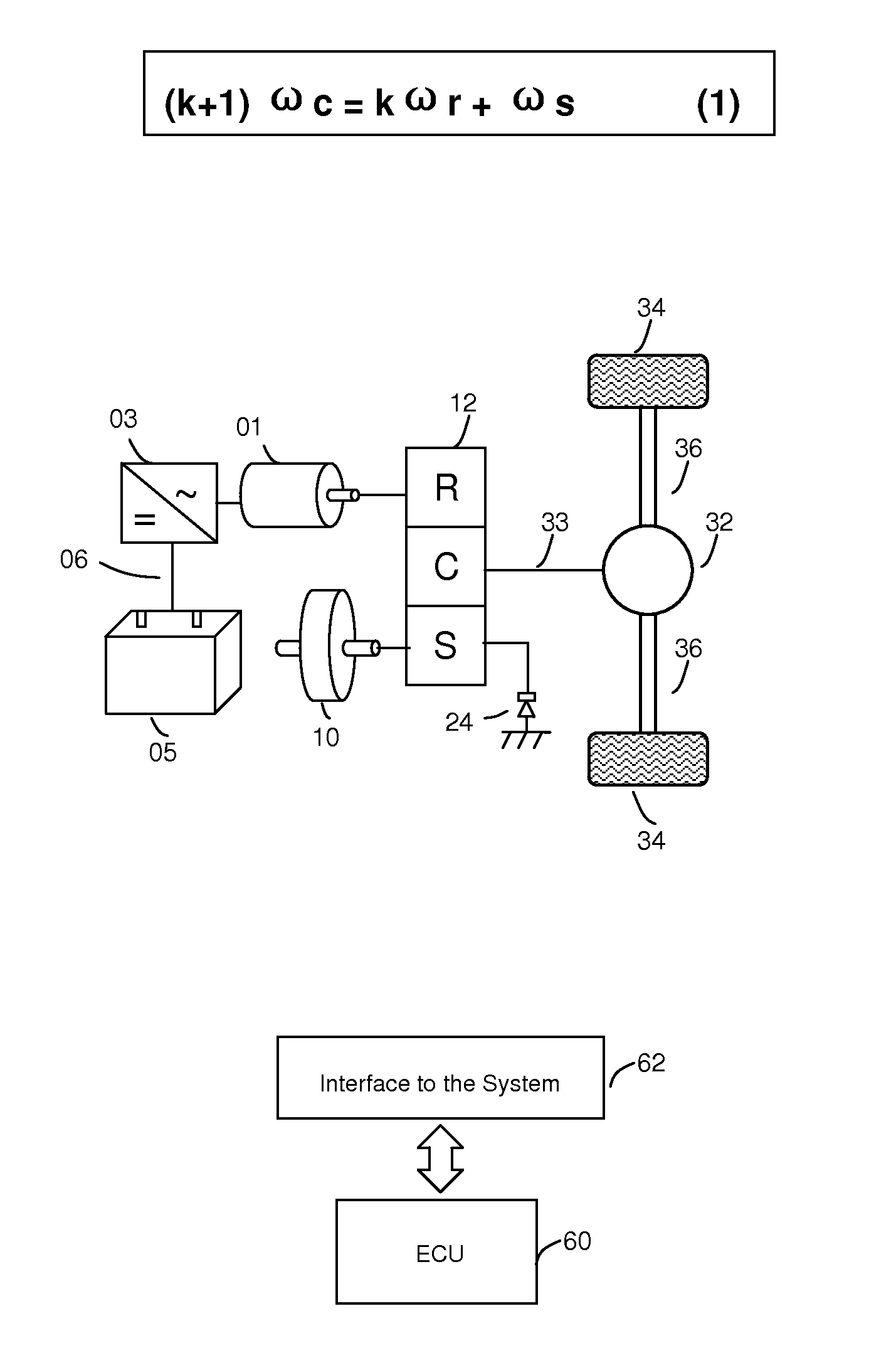
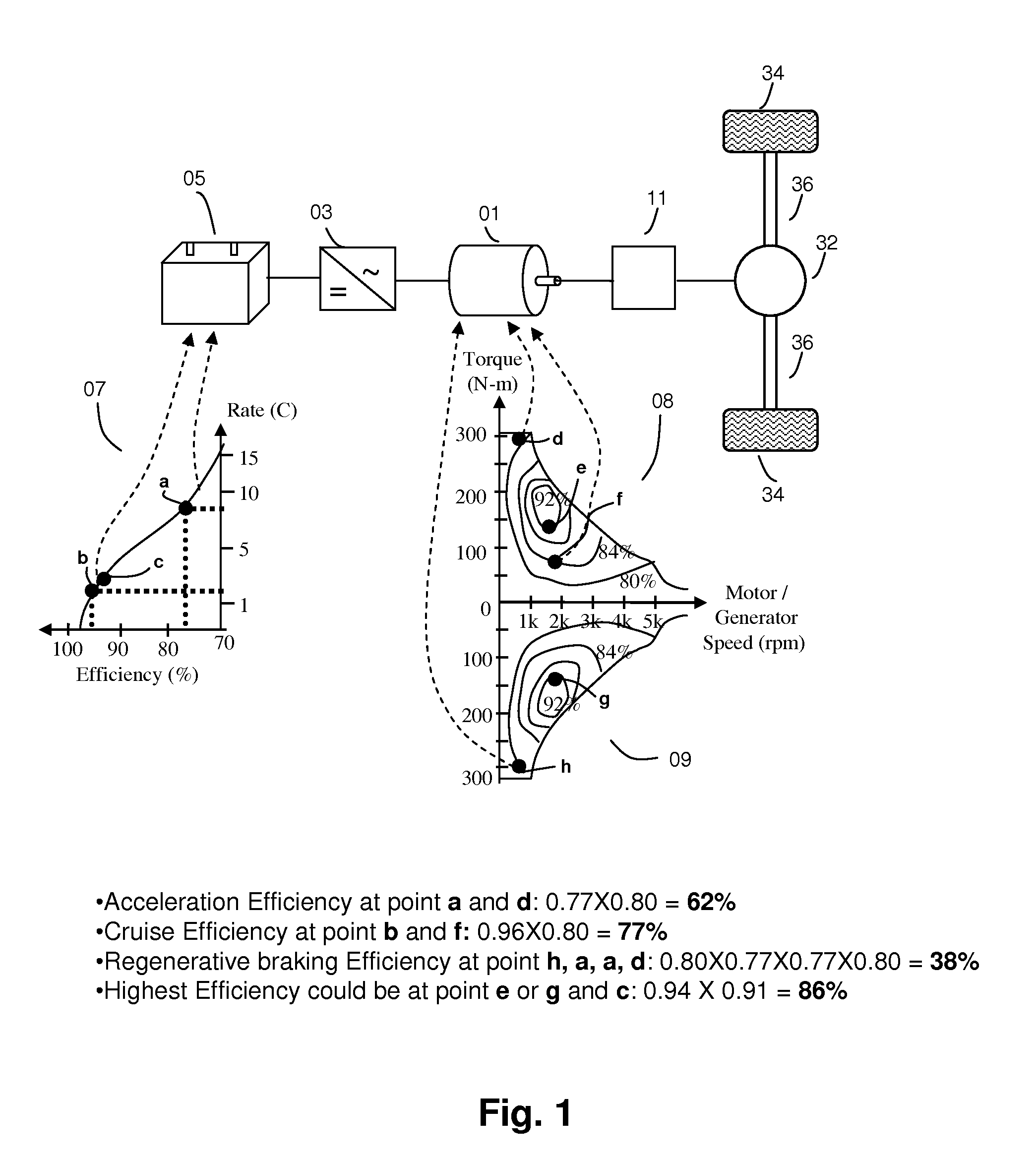
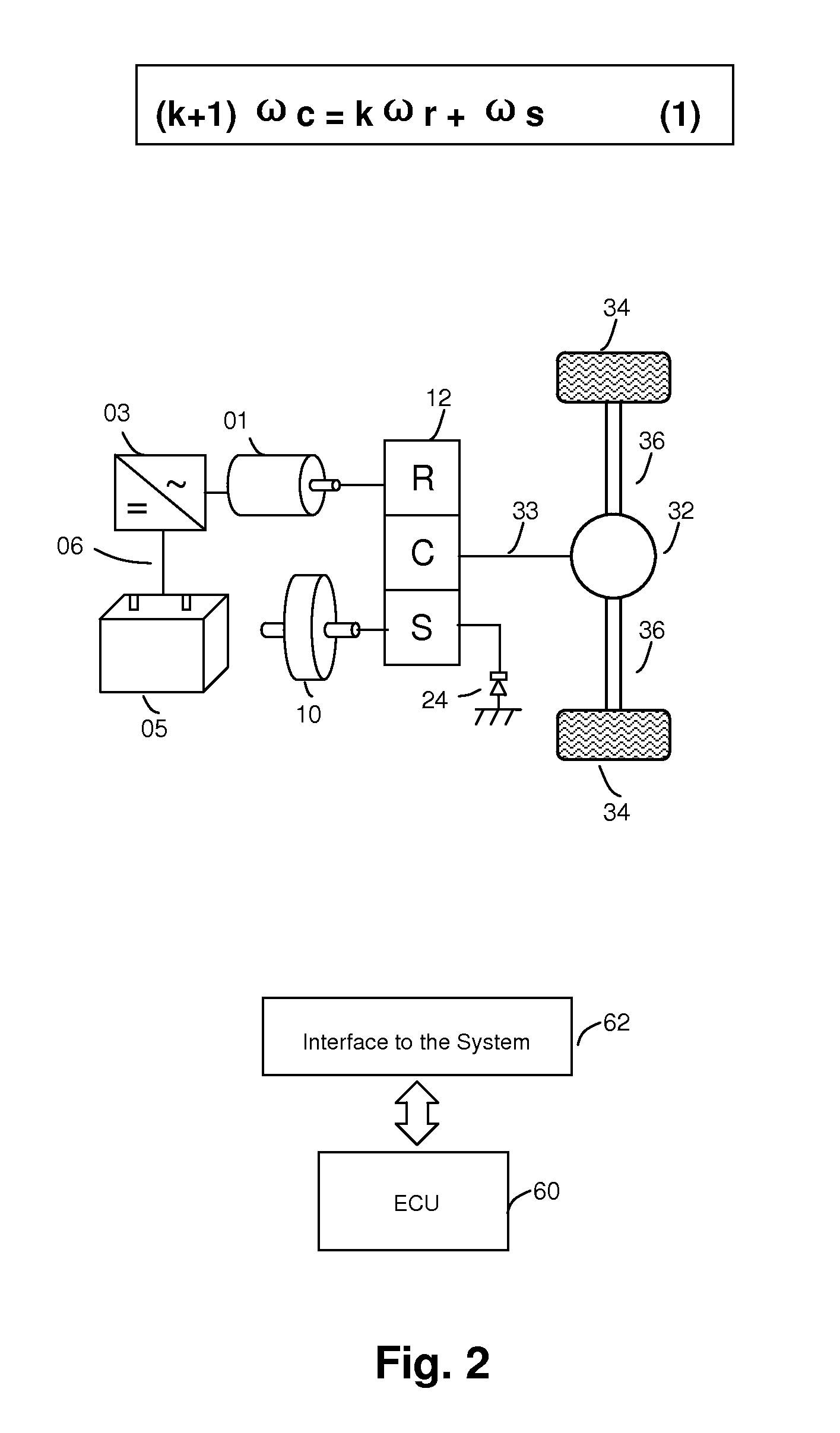
- The use of a four-port compound power split continuously variable transmission (CVT) that connects the final drive to its own independent port, allowing the flywheel, engine, and motor/generator to share ports, eliminating the need for a separate engine transmission and minimizing energy conversion losses through direct mechanical energy transfer.

Cost-Benefit Analysis of Flywheel vs Supercapacitor
The economic evaluation of flywheel and supercapacitor energy storage systems reveals distinct cost structures and operational benefits that significantly impact their commercial viability. Initial capital expenditure represents the most substantial difference between these technologies, with flywheel systems typically requiring higher upfront investment due to sophisticated mechanical components, precision bearings, and vacuum containment systems. Supercapacitors demonstrate lower initial costs per unit but may require larger quantities to achieve equivalent energy storage capacity.
Operational expenditure analysis shows contrasting patterns over the system lifecycle. Flywheel systems incur minimal maintenance costs during normal operation, as magnetic bearings eliminate mechanical wear and vacuum environments prevent degradation. However, periodic maintenance of vacuum systems and bearing replacements can result in significant intermittent costs. Supercapacitors exhibit gradual performance degradation over time, requiring systematic replacement of individual cells or modules, creating more predictable but continuous maintenance expenses.
The charge-discharge efficiency directly influences operational economics through energy losses and associated costs. Flywheel systems typically achieve 85-95% round-trip efficiency, with losses primarily occurring in power electronics and motor-generator interfaces. Supercapacitors demonstrate superior efficiency rates of 95-98%, translating to reduced energy waste and lower operational costs over extended periods. This efficiency advantage becomes particularly significant in applications with frequent cycling requirements.
Lifecycle cost analysis reveals that supercapacitors often provide better economic returns in high-frequency cycling applications despite potentially higher aggregate replacement costs. The superior efficiency and predictable degradation patterns enable more accurate financial planning and reduced operational risks. Conversely, flywheel systems demonstrate economic advantages in applications requiring longer discharge durations and where mechanical reliability outweighs efficiency considerations.
Market pricing trends indicate declining costs for both technologies, with supercapacitor prices experiencing more rapid reduction due to manufacturing scale improvements and material innovations. Flywheel cost reduction progresses more gradually, primarily through design optimization and manufacturing process refinements rather than fundamental material cost reductions.
Operational expenditure analysis shows contrasting patterns over the system lifecycle. Flywheel systems incur minimal maintenance costs during normal operation, as magnetic bearings eliminate mechanical wear and vacuum environments prevent degradation. However, periodic maintenance of vacuum systems and bearing replacements can result in significant intermittent costs. Supercapacitors exhibit gradual performance degradation over time, requiring systematic replacement of individual cells or modules, creating more predictable but continuous maintenance expenses.
The charge-discharge efficiency directly influences operational economics through energy losses and associated costs. Flywheel systems typically achieve 85-95% round-trip efficiency, with losses primarily occurring in power electronics and motor-generator interfaces. Supercapacitors demonstrate superior efficiency rates of 95-98%, translating to reduced energy waste and lower operational costs over extended periods. This efficiency advantage becomes particularly significant in applications with frequent cycling requirements.
Lifecycle cost analysis reveals that supercapacitors often provide better economic returns in high-frequency cycling applications despite potentially higher aggregate replacement costs. The superior efficiency and predictable degradation patterns enable more accurate financial planning and reduced operational risks. Conversely, flywheel systems demonstrate economic advantages in applications requiring longer discharge durations and where mechanical reliability outweighs efficiency considerations.
Market pricing trends indicate declining costs for both technologies, with supercapacitor prices experiencing more rapid reduction due to manufacturing scale improvements and material innovations. Flywheel cost reduction progresses more gradually, primarily through design optimization and manufacturing process refinements rather than fundamental material cost reductions.
Environmental Impact Assessment of Energy Storage Systems
The environmental implications of flywheel and supercapacitor energy storage systems present distinct profiles across their entire lifecycle, from raw material extraction through manufacturing, operation, and end-of-life disposal. Both technologies offer significant environmental advantages over conventional battery systems, yet each carries unique ecological considerations that influence their sustainability credentials.
Flywheel energy storage systems demonstrate relatively favorable environmental characteristics due to their material composition. The primary components include steel or composite rotors, magnetic bearings, and vacuum chambers, materials that are largely recyclable and pose minimal toxic risks. The manufacturing process generates moderate carbon emissions, primarily associated with steel production and precision machining operations. During operational phases, flywheels produce no direct emissions and require minimal maintenance, contributing to their environmental appeal.
Supercapacitors present a more complex environmental profile, heavily dependent on electrode materials and electrolyte composition. Carbon-based electrodes generally exhibit lower environmental impact compared to metal oxide alternatives, while electrolyte selection significantly influences toxicity levels. Organic electrolytes may pose disposal challenges, whereas aqueous systems demonstrate superior environmental compatibility. The manufacturing process involves chemical synthesis and high-temperature treatments, resulting in moderate energy consumption and potential chemical waste generation.
Lifecycle carbon footprint analysis reveals that flywheels typically demonstrate lower overall emissions due to their mechanical nature and extended operational lifespan exceeding 20 years. Supercapacitors, while requiring more energy-intensive manufacturing processes, compensate through high efficiency and rapid cycling capabilities that reduce system-level energy losses.
End-of-life considerations favor flywheels significantly, as steel and composite materials can be readily recycled through established industrial processes. Supercapacitor disposal requires specialized handling for electrolyte management and electrode material recovery, though emerging recycling technologies are improving material recovery rates.
Resource depletion concerns differ substantially between technologies. Flywheels primarily utilize abundant materials like steel and carbon fiber, minimizing supply chain environmental risks. Supercapacitors may require rare earth elements or specialized carbon materials, potentially creating resource scarcity issues and associated environmental impacts from mining operations.
Water usage during manufacturing represents another differentiating factor, with flywheel production requiring minimal water resources compared to supercapacitor manufacturing, which involves chemical processing and purification steps demanding significant water consumption and treatment.
Flywheel energy storage systems demonstrate relatively favorable environmental characteristics due to their material composition. The primary components include steel or composite rotors, magnetic bearings, and vacuum chambers, materials that are largely recyclable and pose minimal toxic risks. The manufacturing process generates moderate carbon emissions, primarily associated with steel production and precision machining operations. During operational phases, flywheels produce no direct emissions and require minimal maintenance, contributing to their environmental appeal.
Supercapacitors present a more complex environmental profile, heavily dependent on electrode materials and electrolyte composition. Carbon-based electrodes generally exhibit lower environmental impact compared to metal oxide alternatives, while electrolyte selection significantly influences toxicity levels. Organic electrolytes may pose disposal challenges, whereas aqueous systems demonstrate superior environmental compatibility. The manufacturing process involves chemical synthesis and high-temperature treatments, resulting in moderate energy consumption and potential chemical waste generation.
Lifecycle carbon footprint analysis reveals that flywheels typically demonstrate lower overall emissions due to their mechanical nature and extended operational lifespan exceeding 20 years. Supercapacitors, while requiring more energy-intensive manufacturing processes, compensate through high efficiency and rapid cycling capabilities that reduce system-level energy losses.
End-of-life considerations favor flywheels significantly, as steel and composite materials can be readily recycled through established industrial processes. Supercapacitor disposal requires specialized handling for electrolyte management and electrode material recovery, though emerging recycling technologies are improving material recovery rates.
Resource depletion concerns differ substantially between technologies. Flywheels primarily utilize abundant materials like steel and carbon fiber, minimizing supply chain environmental risks. Supercapacitors may require rare earth elements or specialized carbon materials, potentially creating resource scarcity issues and associated environmental impacts from mining operations.
Water usage during manufacturing represents another differentiating factor, with flywheel production requiring minimal water resources compared to supercapacitor manufacturing, which involves chemical processing and purification steps demanding significant water consumption and treatment.
Unlock deeper insights with PatSnap Eureka Quick Research — get a full tech report to explore trends and direct your research. Try now!
Generate Your Research Report Instantly with AI Agent
Supercharge your innovation with PatSnap Eureka AI Agent Platform!