

Gate-All-Around vs. Memristor-Based Circuits: Longevity Metrics
APR 15, 20268 MIN READ
Generate Your Research Report Instantly with AI Agent
PatSnap Eureka helps you evaluate technical feasibility & market potential.
GAA vs Memristor Circuit Longevity Background and Goals
The semiconductor industry stands at a critical juncture where traditional silicon-based technologies are approaching fundamental physical limits, necessitating exploration of alternative architectures and materials. Gate-All-Around (GAA) transistors represent the next evolutionary step in conventional CMOS scaling, offering enhanced electrostatic control through their cylindrical channel design. Meanwhile, memristor-based circuits emerge as a revolutionary paradigm, leveraging resistance switching mechanisms to enable novel computing architectures that blur the boundaries between memory and processing.
The convergence of these technologies addresses the growing demand for energy-efficient, high-performance computing solutions across diverse applications ranging from edge AI devices to data center infrastructure. As Moore's Law scaling becomes increasingly challenging and expensive, the industry seeks alternatives that can deliver superior performance per watt while maintaining acceptable manufacturing costs and reliability standards.
Longevity metrics have become paramount in evaluating these competing technologies, as device reliability directly impacts total cost of ownership and system availability. For GAA transistors, longevity concerns center around bias temperature instability, hot carrier injection, and time-dependent dielectric breakdown in the complex three-dimensional gate structures. Memristor devices face distinct challenges including resistance drift, endurance limitations, and retention degradation that affect their long-term operational stability.
The primary objective of this comparative analysis is to establish comprehensive longevity assessment frameworks that enable fair evaluation of GAA and memristor technologies across multiple reliability dimensions. This includes developing standardized testing methodologies, identifying critical failure mechanisms, and establishing predictive models for long-term performance degradation under various operational conditions.
Furthermore, this research aims to quantify the trade-offs between performance gains and reliability risks inherent in each technology, providing decision-making frameworks for technology adoption in different application domains. The ultimate goal is to accelerate the development of next-generation computing systems by providing clear guidance on technology selection based on longevity requirements and performance objectives.
The convergence of these technologies addresses the growing demand for energy-efficient, high-performance computing solutions across diverse applications ranging from edge AI devices to data center infrastructure. As Moore's Law scaling becomes increasingly challenging and expensive, the industry seeks alternatives that can deliver superior performance per watt while maintaining acceptable manufacturing costs and reliability standards.
Longevity metrics have become paramount in evaluating these competing technologies, as device reliability directly impacts total cost of ownership and system availability. For GAA transistors, longevity concerns center around bias temperature instability, hot carrier injection, and time-dependent dielectric breakdown in the complex three-dimensional gate structures. Memristor devices face distinct challenges including resistance drift, endurance limitations, and retention degradation that affect their long-term operational stability.
The primary objective of this comparative analysis is to establish comprehensive longevity assessment frameworks that enable fair evaluation of GAA and memristor technologies across multiple reliability dimensions. This includes developing standardized testing methodologies, identifying critical failure mechanisms, and establishing predictive models for long-term performance degradation under various operational conditions.
Furthermore, this research aims to quantify the trade-offs between performance gains and reliability risks inherent in each technology, providing decision-making frameworks for technology adoption in different application domains. The ultimate goal is to accelerate the development of next-generation computing systems by providing clear guidance on technology selection based on longevity requirements and performance objectives.
Market Demand for Durable Advanced Circuit Technologies
The semiconductor industry faces unprecedented pressure to develop circuit technologies that can withstand increasingly demanding operational environments while maintaining performance over extended periods. As electronic devices become more pervasive in critical applications ranging from automotive systems to aerospace components, the market demand for durable advanced circuit technologies has intensified significantly. This demand is particularly acute in sectors where device failure can result in substantial economic losses or safety risks.
Gate-All-Around transistor architectures have emerged as a compelling solution for applications requiring exceptional longevity and reliability. The automotive electronics market represents a primary driver for this technology, where components must operate reliably for decades under extreme temperature variations, vibrations, and electromagnetic interference. Similarly, industrial automation systems and infrastructure monitoring equipment require circuit technologies that can function continuously without degradation over multi-year operational cycles.
Memristor-based circuits address a different segment of the durability market, particularly in applications where data retention and energy efficiency are paramount. The growing demand for edge computing devices and Internet of Things sensors has created substantial market opportunities for non-volatile memory solutions that can maintain data integrity without continuous power supply. These applications often require circuits that can endure millions of read-write cycles while preserving stored information for years without refresh operations.
The defense and aerospace sectors represent high-value market segments driving demand for both technologies. These applications require circuits capable of operating in radiation-rich environments, extreme temperatures, and high-stress mechanical conditions. The stringent reliability requirements in these sectors often justify premium pricing for advanced circuit technologies that demonstrate superior longevity metrics compared to conventional silicon-based solutions.
Enterprise data centers and cloud computing infrastructure constitute another significant market driver, where the total cost of ownership calculations heavily favor durable circuit technologies. The operational expenses associated with hardware replacement, system downtime, and maintenance activities create strong economic incentives for adopting circuit architectures with enhanced longevity characteristics, even when initial acquisition costs are higher than traditional alternatives.
Gate-All-Around transistor architectures have emerged as a compelling solution for applications requiring exceptional longevity and reliability. The automotive electronics market represents a primary driver for this technology, where components must operate reliably for decades under extreme temperature variations, vibrations, and electromagnetic interference. Similarly, industrial automation systems and infrastructure monitoring equipment require circuit technologies that can function continuously without degradation over multi-year operational cycles.
Memristor-based circuits address a different segment of the durability market, particularly in applications where data retention and energy efficiency are paramount. The growing demand for edge computing devices and Internet of Things sensors has created substantial market opportunities for non-volatile memory solutions that can maintain data integrity without continuous power supply. These applications often require circuits that can endure millions of read-write cycles while preserving stored information for years without refresh operations.
The defense and aerospace sectors represent high-value market segments driving demand for both technologies. These applications require circuits capable of operating in radiation-rich environments, extreme temperatures, and high-stress mechanical conditions. The stringent reliability requirements in these sectors often justify premium pricing for advanced circuit technologies that demonstrate superior longevity metrics compared to conventional silicon-based solutions.
Enterprise data centers and cloud computing infrastructure constitute another significant market driver, where the total cost of ownership calculations heavily favor durable circuit technologies. The operational expenses associated with hardware replacement, system downtime, and maintenance activities create strong economic incentives for adopting circuit architectures with enhanced longevity characteristics, even when initial acquisition costs are higher than traditional alternatives.
Current Longevity Challenges in GAA and Memristor Circuits
Gate-All-Around (GAA) transistors face significant longevity challenges primarily related to electromigration and hot carrier injection effects. The nanowire or nanosheet structures in GAA devices experience accelerated degradation due to their reduced cross-sectional areas, which concentrate current density and increase susceptibility to atomic migration. This phenomenon becomes particularly pronounced at elevated operating temperatures, where the mean time to failure can decrease exponentially. Additionally, the multiple gate interfaces in GAA structures create additional stress points where charge trapping and interface state generation occur over extended operation periods.
The complex three-dimensional geometry of GAA devices introduces manufacturing-induced defects that serve as degradation nucleation sites. These defects, including grain boundaries in polycrystalline channels and interface roughness, contribute to threshold voltage shifts and mobility degradation over time. The wraparound gate configuration, while providing superior electrostatic control, also creates non-uniform stress distributions that can lead to mechanical reliability issues, particularly under thermal cycling conditions.
Memristor-based circuits encounter fundamentally different longevity challenges centered around filament stability and material degradation. The conductive filaments formed in memristive devices are inherently unstable, subject to dissolution and reformation processes that can lead to gradual resistance drift over time. This drift phenomenon significantly impacts the reliability of stored information in memory applications and computational accuracy in neuromorphic systems. The stochastic nature of filament formation and rupture introduces variability that compounds with device aging.
Endurance limitations represent another critical challenge for memristor longevity, as repeated switching operations cause cumulative damage to the switching medium. The electrochemical processes involved in resistance switching gradually degrade the active material, leading to reduced switching contrast and eventual device failure. Interface degradation between electrodes and switching materials further exacerbates these issues, particularly under high-frequency operation or elevated voltage stress conditions.
Both GAA and memristor technologies struggle with temperature-dependent degradation mechanisms that accelerate under typical operating conditions. Thermal management becomes crucial as elevated temperatures not only increase the rate of intrinsic degradation processes but also amplify the impact of manufacturing defects and material impurities on long-term reliability performance.
The complex three-dimensional geometry of GAA devices introduces manufacturing-induced defects that serve as degradation nucleation sites. These defects, including grain boundaries in polycrystalline channels and interface roughness, contribute to threshold voltage shifts and mobility degradation over time. The wraparound gate configuration, while providing superior electrostatic control, also creates non-uniform stress distributions that can lead to mechanical reliability issues, particularly under thermal cycling conditions.
Memristor-based circuits encounter fundamentally different longevity challenges centered around filament stability and material degradation. The conductive filaments formed in memristive devices are inherently unstable, subject to dissolution and reformation processes that can lead to gradual resistance drift over time. This drift phenomenon significantly impacts the reliability of stored information in memory applications and computational accuracy in neuromorphic systems. The stochastic nature of filament formation and rupture introduces variability that compounds with device aging.
Endurance limitations represent another critical challenge for memristor longevity, as repeated switching operations cause cumulative damage to the switching medium. The electrochemical processes involved in resistance switching gradually degrade the active material, leading to reduced switching contrast and eventual device failure. Interface degradation between electrodes and switching materials further exacerbates these issues, particularly under high-frequency operation or elevated voltage stress conditions.
Both GAA and memristor technologies struggle with temperature-dependent degradation mechanisms that accelerate under typical operating conditions. Thermal management becomes crucial as elevated temperatures not only increase the rate of intrinsic degradation processes but also amplify the impact of manufacturing defects and material impurities on long-term reliability performance.
Existing Longevity Testing and Enhancement Solutions
01 Gate-All-Around transistor structure design for enhanced reliability
Gate-All-Around (GAA) transistor architectures provide improved electrostatic control and reduced short-channel effects, which contribute to enhanced device longevity. The surrounding gate structure minimizes leakage currents and improves threshold voltage control, leading to more stable operation over extended periods. Advanced GAA designs incorporate nanowire or nanosheet configurations that optimize carrier mobility while maintaining structural integrity during prolonged operation.- Gate-All-Around transistor structure design for enhanced reliability: Gate-All-Around (GAA) transistor architectures provide improved electrostatic control and reduced short-channel effects, which contribute to enhanced device longevity. The surrounding gate structure minimizes leakage currents and improves threshold voltage control, leading to more stable operation over extended periods. Advanced GAA designs incorporate nanowire or nanosheet configurations that optimize carrier mobility while maintaining structural integrity during prolonged operation cycles.
- Memristor material composition and switching layer optimization: The longevity of memristor-based circuits depends significantly on the materials used in the resistive switching layer. Optimized material compositions, including metal oxides and chalcogenides, demonstrate improved endurance and retention characteristics. Proper selection and engineering of electrode materials and switching media reduce degradation mechanisms such as ion migration and filament dissolution, thereby extending operational lifetime and maintaining consistent switching behavior.
- Thermal management and heat dissipation techniques: Effective thermal management is critical for extending the longevity of both GAA transistors and memristor circuits. Heat dissipation structures and thermal interface materials help maintain optimal operating temperatures, preventing thermal-induced degradation and performance drift. Advanced packaging solutions and integrated cooling mechanisms reduce thermal stress on active devices, minimizing failure rates and extending the functional lifetime of circuit components.
- Programming and operation schemes for endurance enhancement: Specialized programming algorithms and operation schemes significantly improve the endurance of memristor-based circuits. Techniques such as adaptive voltage control, current limiting, and multi-level programming reduce electrical stress during write and erase operations. Smart operation protocols distribute wear across memory cells and implement error correction mechanisms, effectively extending the number of reliable switching cycles and overall circuit longevity.
- Protective layers and encapsulation for device stability: Implementation of protective layers and advanced encapsulation techniques prevents environmental degradation and maintains device stability over time. Barrier layers protect sensitive materials from moisture, oxygen, and contaminants that can cause performance degradation. Passivation structures and hermetic sealing methods preserve the integrity of both GAA transistor channels and memristor switching elements, ensuring consistent electrical characteristics throughout the device lifetime.
02 Memristor material composition and switching layer optimization
The longevity of memristor-based circuits depends significantly on the materials used in the resistive switching layer. Optimized material compositions, including metal oxides and chalcogenides, demonstrate improved endurance and retention characteristics. Proper selection and engineering of electrode materials and switching media reduce degradation mechanisms such as ion migration and filament dissolution, thereby extending operational lifetime.Expand Specific Solutions03 Circuit architecture for memristor array longevity
Specialized circuit architectures designed for memristor arrays incorporate techniques to distribute stress and minimize wear on individual devices. These architectures include crossbar configurations with optimized access schemes, current limiting mechanisms, and voltage regulation circuits that prevent overstress conditions. Such designs enable uniform aging across the array and extend overall system lifetime.Expand Specific Solutions04 Programming and operation schemes for extended device lifetime
Advanced programming algorithms and operation schemes significantly impact the longevity of both GAA transistors and memristor devices. These include adaptive voltage scaling, pulse width modulation techniques, and refresh strategies that minimize electrical stress. Intelligent control mechanisms monitor device health and adjust operating parameters dynamically to prevent premature failure and maintain performance over time.Expand Specific Solutions05 Protective layers and encapsulation for reliability enhancement
Implementation of protective layers and advanced encapsulation techniques provides crucial barriers against environmental factors and operational stress. These protective measures include dielectric barriers, passivation layers, and hermetic sealing that prevent moisture ingress, oxidation, and contamination. Such protection mechanisms are essential for maintaining device characteristics and ensuring long-term reliability in both GAA transistors and memristor-based circuits.Expand Specific Solutions
Key Players in GAA and Memristor Circuit Industry
The Gate-All-Around versus Memristor-Based Circuits longevity comparison represents a critical juncture in semiconductor evolution, where the industry transitions from traditional scaling to novel architectures. The market spans billions in R&D investments across foundries and research institutions globally. Technology maturity varies significantly: Gate-All-Around technology shows advanced development at TSMC, Samsung Electronics, and Intel, with commercial implementations emerging, while memristor-based circuits remain largely in research phases at institutions like IBM, GLOBALFOUNDRIES, and various universities including Huazhong University of Science & Technology and Peking University. Leading foundries like SMIC and Renesas Electronics are exploring both pathways, indicating parallel development tracks that will determine future semiconductor longevity standards and manufacturing viability.
Taiwan Semiconductor Manufacturing Co., Ltd.
Technical Solution: TSMC has developed advanced Gate-All-Around (GAA) nanosheet technology for 3nm and beyond nodes, featuring enhanced electrostatic control and reduced short-channel effects. Their GAA FETs demonstrate superior performance with 15-20% power reduction and 10-15% performance improvement compared to FinFET technology. The company has also invested in reliability testing methodologies for GAA devices, including time-dependent dielectric breakdown (TDDB) analysis and bias temperature instability (BTI) characterization to ensure longevity metrics meet industry standards for 10+ year operational lifespans.
Strengths: Industry-leading manufacturing capabilities, extensive reliability testing infrastructure, proven track record in advanced node development. Weaknesses: Limited memristor technology development, high capital investment requirements for GAA transition.
QUALCOMM, Inc.
Technical Solution: Qualcomm has focused on system-level integration of advanced transistor technologies including GAA FETs for mobile and edge computing applications, emphasizing power efficiency and thermal management for extended device longevity. Their research includes reliability characterization of GAA devices under real-world operating conditions, including dynamic voltage scaling and thermal cycling effects. The company has also explored memristive computing elements for AI acceleration, studying the longevity implications of hybrid CMOS-memristor architectures. Qualcomm's longevity metrics framework considers both individual device reliability and system-level degradation patterns, providing comprehensive assessment methodologies for next-generation mobile computing platforms.
Strengths: Strong system-level integration expertise, focus on real-world operating conditions, comprehensive thermal and power management capabilities. Weaknesses: Dependent on foundry partners for advanced technology development, limited in-house manufacturing capabilities for cutting-edge nodes.
Core Innovations in Circuit Durability Metrics
Compensated readout of a memristor array, a memristor array readout circuit, and method of fabrication thereof
PatentWO2016203397A1
Innovation
- A compensated readout method for gated memristor arrays using a circuit with transistors and capacitors to sample and compare currents, effectively subtracting leakage current from the desired cell current, allowing for accurate data retrieval while minimizing power consumption.


Memristor-based circuit and method
PatentActiveUS20220329254A1
Innovation
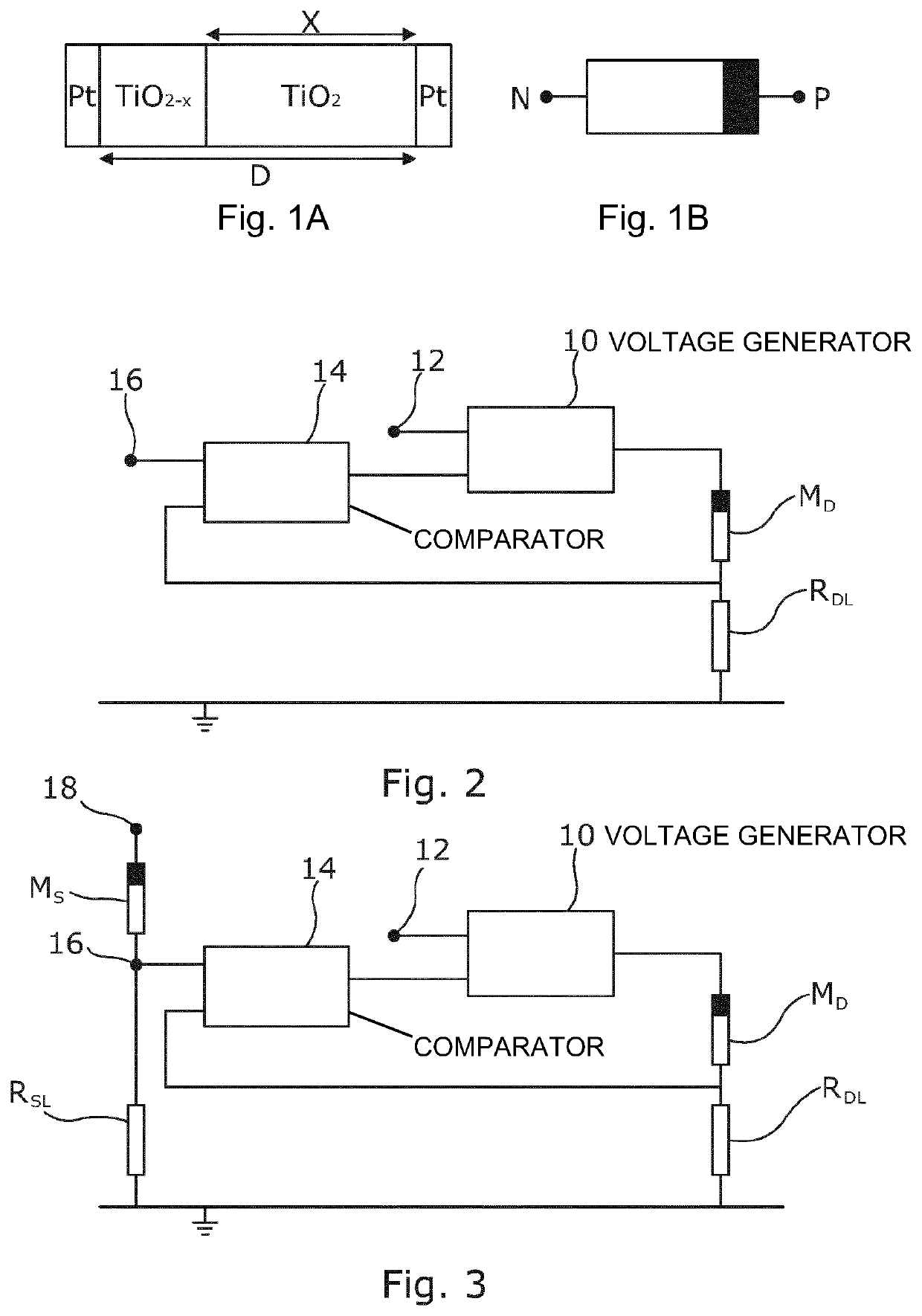
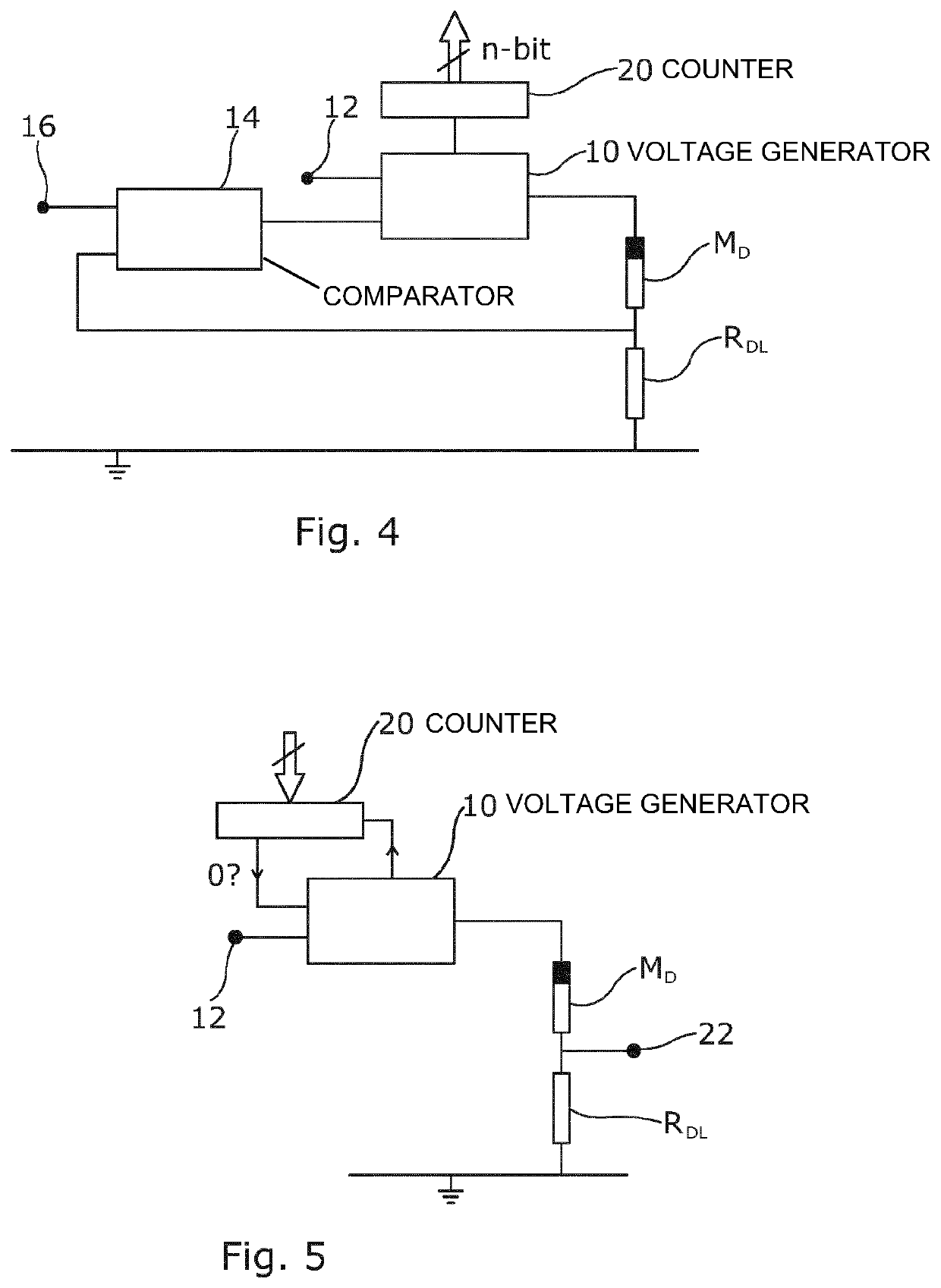
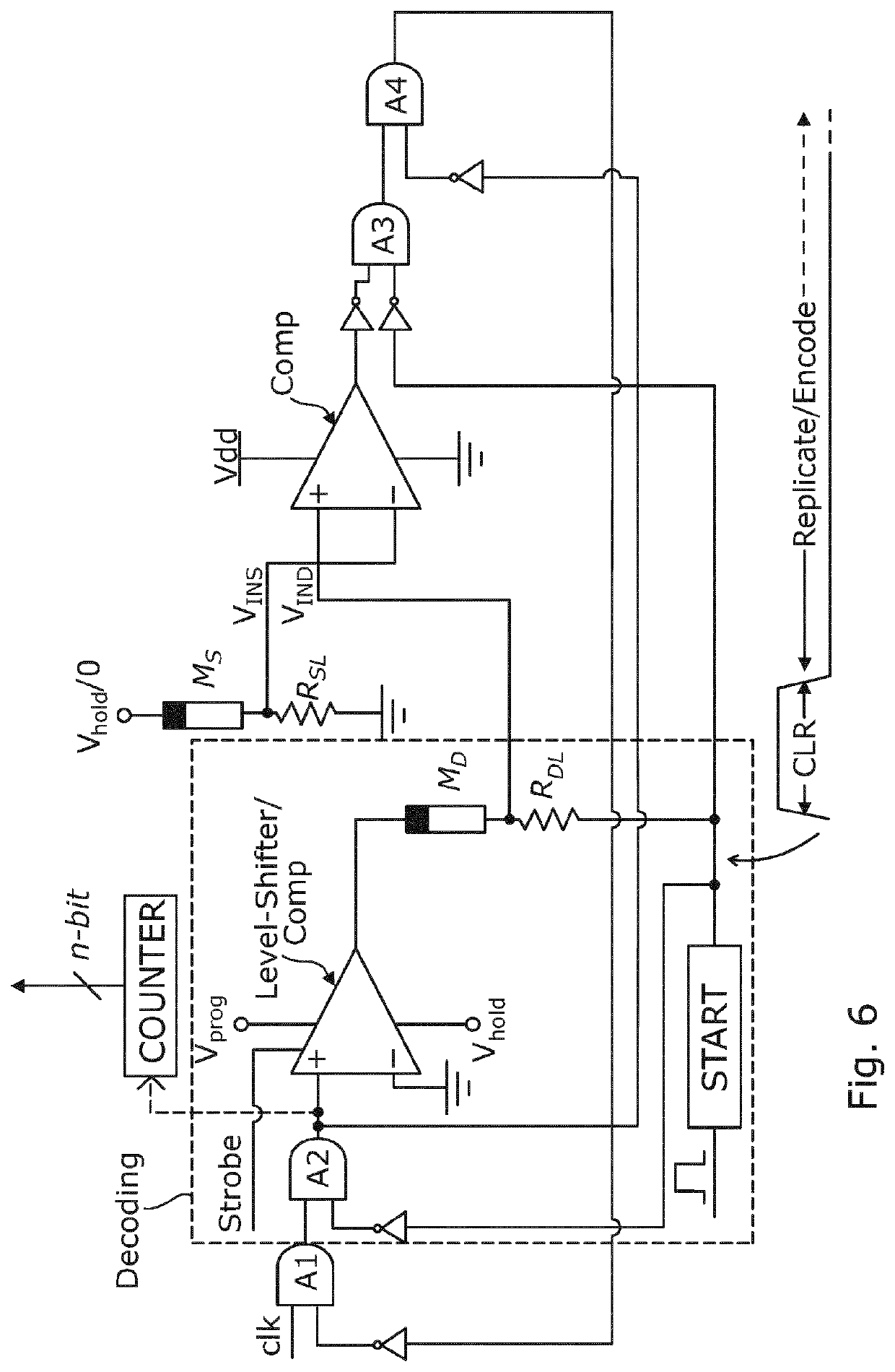
- A memristor-based circuit comprising a voltage generator that applies series of voltage pulses to incrementally change the memristor resistance, a comparator to ensure defined conditions are met, and a counter to track pulse numbers, enabling efficient replication, encoding, decoding, and authentication.

Semiconductor Manufacturing Standards and Regulations
The semiconductor manufacturing landscape for Gate-All-Around (GAA) and memristor-based circuits operates under distinct regulatory frameworks that directly impact longevity assessment methodologies. Current standards primarily focus on traditional CMOS technologies, with GAA transistors falling under established JEDEC and IEC reliability testing protocols. These standards mandate specific stress testing conditions, including temperature cycling, bias temperature instability testing, and hot carrier injection assessments that directly correlate with device longevity metrics.
Memristor-based circuits face a more complex regulatory environment due to their emerging nature and unique failure mechanisms. The absence of dedicated international standards necessitates adaptation of existing protocols, particularly those governing non-volatile memory devices. Current approaches rely heavily on ASTM standards for resistive switching devices and modified JEDEC specifications for emerging memory technologies.
Manufacturing quality control standards significantly influence longevity predictions for both technologies. ISO 9001 and automotive-grade AEC-Q100 standards establish baseline requirements for process control and statistical quality metrics. For GAA devices, these standards emphasize gate oxide integrity and interface quality, while memristor applications require additional focus on switching layer uniformity and electrode stability.
Environmental compliance regulations, including RoHS and REACH directives, impose material restrictions that affect both device architectures. These constraints particularly impact memristor electrode materials and GAA metal gate compositions, potentially influencing long-term reliability characteristics. The regulatory emphasis on lead-free processes and restricted substances creates additional challenges for optimizing device longevity.
Emerging standards development through IEEE and SEMI organizations addresses specific longevity testing requirements for advanced node technologies. These evolving frameworks establish standardized metrics for comparing GAA and memristor longevity performance, including accelerated aging protocols and statistical lifetime modeling approaches that enable meaningful cross-technology comparisons.
Memristor-based circuits face a more complex regulatory environment due to their emerging nature and unique failure mechanisms. The absence of dedicated international standards necessitates adaptation of existing protocols, particularly those governing non-volatile memory devices. Current approaches rely heavily on ASTM standards for resistive switching devices and modified JEDEC specifications for emerging memory technologies.
Manufacturing quality control standards significantly influence longevity predictions for both technologies. ISO 9001 and automotive-grade AEC-Q100 standards establish baseline requirements for process control and statistical quality metrics. For GAA devices, these standards emphasize gate oxide integrity and interface quality, while memristor applications require additional focus on switching layer uniformity and electrode stability.
Environmental compliance regulations, including RoHS and REACH directives, impose material restrictions that affect both device architectures. These constraints particularly impact memristor electrode materials and GAA metal gate compositions, potentially influencing long-term reliability characteristics. The regulatory emphasis on lead-free processes and restricted substances creates additional challenges for optimizing device longevity.
Emerging standards development through IEEE and SEMI organizations addresses specific longevity testing requirements for advanced node technologies. These evolving frameworks establish standardized metrics for comparing GAA and memristor longevity performance, including accelerated aging protocols and statistical lifetime modeling approaches that enable meaningful cross-technology comparisons.
Reliability Testing Methodologies for Advanced Circuits
Reliability testing methodologies for advanced circuits, particularly Gate-All-Around (GAA) and memristor-based architectures, require sophisticated approaches that address the unique failure mechanisms inherent to each technology. Traditional semiconductor reliability testing protocols must be adapted and enhanced to accommodate the distinct physical properties and operational characteristics of these emerging circuit topologies.
For GAA transistors, reliability testing focuses on gate dielectric integrity, interface trap generation, and electromigration effects in the nanowire or nanosheet channels. Accelerated stress testing protocols employ elevated temperatures, voltages, and frequencies to simulate long-term operational conditions. Time-dependent dielectric breakdown (TDDB) testing becomes particularly critical due to the increased gate surface area and complex three-dimensional geometry that can create non-uniform electric field distributions.
Memristor-based circuits present fundamentally different reliability challenges requiring specialized testing methodologies. Endurance testing evaluates the device's ability to maintain consistent switching behavior over millions of cycles, while retention testing assesses the stability of resistance states over extended periods. Temperature cycling and humidity exposure tests are essential for understanding the impact of environmental factors on the metal oxide interfaces that govern memristive behavior.
Statistical reliability assessment methodologies must incorporate Monte Carlo simulations and Weibull distribution analysis to predict failure rates and establish confidence intervals for longevity projections. These approaches account for process variations and manufacturing tolerances that significantly impact device-to-device consistency in both GAA and memristor technologies.
Advanced in-situ monitoring techniques enable real-time observation of degradation mechanisms during stress testing. Electrical parameter drift analysis, noise spectroscopy, and impedance measurements provide early indicators of impending failure modes. Machine learning algorithms increasingly support pattern recognition in reliability data, enabling predictive maintenance strategies and improved failure forecasting accuracy for next-generation circuit architectures.
For GAA transistors, reliability testing focuses on gate dielectric integrity, interface trap generation, and electromigration effects in the nanowire or nanosheet channels. Accelerated stress testing protocols employ elevated temperatures, voltages, and frequencies to simulate long-term operational conditions. Time-dependent dielectric breakdown (TDDB) testing becomes particularly critical due to the increased gate surface area and complex three-dimensional geometry that can create non-uniform electric field distributions.
Memristor-based circuits present fundamentally different reliability challenges requiring specialized testing methodologies. Endurance testing evaluates the device's ability to maintain consistent switching behavior over millions of cycles, while retention testing assesses the stability of resistance states over extended periods. Temperature cycling and humidity exposure tests are essential for understanding the impact of environmental factors on the metal oxide interfaces that govern memristive behavior.
Statistical reliability assessment methodologies must incorporate Monte Carlo simulations and Weibull distribution analysis to predict failure rates and establish confidence intervals for longevity projections. These approaches account for process variations and manufacturing tolerances that significantly impact device-to-device consistency in both GAA and memristor technologies.
Advanced in-situ monitoring techniques enable real-time observation of degradation mechanisms during stress testing. Electrical parameter drift analysis, noise spectroscopy, and impedance measurements provide early indicators of impending failure modes. Machine learning algorithms increasingly support pattern recognition in reliability data, enabling predictive maintenance strategies and improved failure forecasting accuracy for next-generation circuit architectures.
Unlock deeper insights with PatSnap Eureka Quick Research — get a full tech report to explore trends and direct your research. Try now!
Generate Your Research Report Instantly with AI Agent
Supercharge your innovation with PatSnap Eureka AI Agent Platform!