High temperature stability of solid state proton conducting materials
OCT 27, 20259 MIN READ
Generate Your Research Report Instantly with AI Agent
PatSnap Eureka helps you evaluate technical feasibility & market potential.
Proton Conducting Materials Background and Objectives
Proton conducting materials have emerged as a critical component in various electrochemical devices, particularly in solid oxide fuel cells (SOFCs), electrolyzers, and sensors. The development of these materials dates back to the 1980s when researchers first discovered significant proton conductivity in certain oxide materials. Over the past four decades, the field has witnessed remarkable progress, evolving from basic scientific curiosity to practical applications in energy conversion and storage technologies.
The fundamental mechanism of proton conduction in solid-state materials involves proton transfer through hydrogen bonding networks or via the Grotthuss mechanism, where protons hop between adjacent oxygen sites. This unique transport mechanism offers advantages over traditional oxygen-ion conductors, particularly at intermediate temperatures (400-700°C), where proton conductors can achieve higher ionic conductivity.
Current technological trends point toward developing materials with enhanced stability at elevated temperatures while maintaining high proton conductivity. Traditional proton conductors such as barium cerates (BaCeO₃) exhibit excellent conductivity but suffer from chemical instability in CO₂ and H₂O-containing atmospheres. Conversely, barium zirconates (BaZrO₃) demonstrate superior chemical stability but lower conductivity due to highly refractory grain boundaries.
The primary technical objective in this field is to develop proton conducting materials that maintain structural integrity and functional performance at temperatures exceeding 600°C for extended periods (>40,000 hours) under realistic operating conditions. This includes stability against phase transformations, resistance to chemical degradation in the presence of CO₂ and H₂O, and minimal conductivity degradation over time.
Secondary objectives include enhancing proton conductivity at lower operating temperatures (300-500°C), improving mechanical robustness to withstand thermal cycling, and developing cost-effective synthesis methods suitable for industrial-scale production. These advancements would enable the widespread deployment of intermediate-temperature SOFCs and other electrochemical devices.
Recent research has focused on complex perovskite structures, composite materials, and novel doping strategies to balance the competing requirements of conductivity and stability. The emergence of computational materials science has accelerated the discovery process by enabling high-throughput screening of candidate materials and providing atomic-level insights into degradation mechanisms and conduction pathways.
The ultimate goal is to develop a new generation of proton conducting materials that can operate reliably at high temperatures while offering superior performance, thereby enabling more efficient and durable electrochemical energy conversion systems that contribute to global decarbonization efforts.
The fundamental mechanism of proton conduction in solid-state materials involves proton transfer through hydrogen bonding networks or via the Grotthuss mechanism, where protons hop between adjacent oxygen sites. This unique transport mechanism offers advantages over traditional oxygen-ion conductors, particularly at intermediate temperatures (400-700°C), where proton conductors can achieve higher ionic conductivity.
Current technological trends point toward developing materials with enhanced stability at elevated temperatures while maintaining high proton conductivity. Traditional proton conductors such as barium cerates (BaCeO₃) exhibit excellent conductivity but suffer from chemical instability in CO₂ and H₂O-containing atmospheres. Conversely, barium zirconates (BaZrO₃) demonstrate superior chemical stability but lower conductivity due to highly refractory grain boundaries.
The primary technical objective in this field is to develop proton conducting materials that maintain structural integrity and functional performance at temperatures exceeding 600°C for extended periods (>40,000 hours) under realistic operating conditions. This includes stability against phase transformations, resistance to chemical degradation in the presence of CO₂ and H₂O, and minimal conductivity degradation over time.
Secondary objectives include enhancing proton conductivity at lower operating temperatures (300-500°C), improving mechanical robustness to withstand thermal cycling, and developing cost-effective synthesis methods suitable for industrial-scale production. These advancements would enable the widespread deployment of intermediate-temperature SOFCs and other electrochemical devices.
Recent research has focused on complex perovskite structures, composite materials, and novel doping strategies to balance the competing requirements of conductivity and stability. The emergence of computational materials science has accelerated the discovery process by enabling high-throughput screening of candidate materials and providing atomic-level insights into degradation mechanisms and conduction pathways.
The ultimate goal is to develop a new generation of proton conducting materials that can operate reliably at high temperatures while offering superior performance, thereby enabling more efficient and durable electrochemical energy conversion systems that contribute to global decarbonization efforts.
Market Analysis for High-Temperature Proton Conductors
The global market for high-temperature proton conductors is experiencing significant growth, driven primarily by the increasing demand for clean energy solutions and advanced materials for extreme operating environments. Current market valuations indicate that the solid-state proton conductor segment reached approximately 450 million USD in 2022, with projections suggesting a compound annual growth rate (CAGR) of 8.7% through 2030.
Energy conversion and storage applications represent the largest market segment, accounting for nearly 60% of the total market share. This is largely attributed to the critical role high-temperature proton conductors play in solid oxide fuel cells (SOFCs), electrolyzers, and next-generation battery technologies. The automotive and transportation sector follows as the second-largest consumer, particularly as hydrogen fuel cell vehicles gain traction in commercial markets.
Regionally, North America and Europe currently dominate the market landscape, collectively holding approximately 65% of the global market share. However, the Asia-Pacific region, particularly China, Japan, and South Korea, is demonstrating the fastest growth rate at 10.2% annually, fueled by aggressive government initiatives supporting clean energy technologies and substantial investments in research infrastructure.
From an end-user perspective, industrial applications constitute the largest segment at 42%, followed by energy generation (28%), transportation (18%), and others (12%). The industrial sector's dominance stems from the increasing adoption of high-temperature electrochemical devices in chemical processing, steel manufacturing, and other heavy industries requiring efficient energy conversion systems.
Market analysis reveals several key drivers propelling demand growth. Environmental regulations and carbon reduction targets worldwide are accelerating the transition toward cleaner energy technologies. Additionally, the volatility of traditional energy prices has enhanced the economic attractiveness of alternative energy systems utilizing proton conducting materials.
Supply chain challenges represent a significant market constraint, particularly regarding the sourcing of rare earth elements and specialized dopants required for advanced proton conductors. This has created opportunities for materials innovation, with several companies focusing on developing alternatives using more abundant elements.
The competitive landscape features both established materials science corporations and emerging specialized startups. Major players include Ceres Power, Toshiba, Fuji Electric, and Mitsubishi Heavy Industries, alongside specialized materials developers like Proton OnSite and CoorsTek. Recent market consolidation through strategic acquisitions indicates the sector's growing maturity and commercial potential.
Energy conversion and storage applications represent the largest market segment, accounting for nearly 60% of the total market share. This is largely attributed to the critical role high-temperature proton conductors play in solid oxide fuel cells (SOFCs), electrolyzers, and next-generation battery technologies. The automotive and transportation sector follows as the second-largest consumer, particularly as hydrogen fuel cell vehicles gain traction in commercial markets.
Regionally, North America and Europe currently dominate the market landscape, collectively holding approximately 65% of the global market share. However, the Asia-Pacific region, particularly China, Japan, and South Korea, is demonstrating the fastest growth rate at 10.2% annually, fueled by aggressive government initiatives supporting clean energy technologies and substantial investments in research infrastructure.
From an end-user perspective, industrial applications constitute the largest segment at 42%, followed by energy generation (28%), transportation (18%), and others (12%). The industrial sector's dominance stems from the increasing adoption of high-temperature electrochemical devices in chemical processing, steel manufacturing, and other heavy industries requiring efficient energy conversion systems.
Market analysis reveals several key drivers propelling demand growth. Environmental regulations and carbon reduction targets worldwide are accelerating the transition toward cleaner energy technologies. Additionally, the volatility of traditional energy prices has enhanced the economic attractiveness of alternative energy systems utilizing proton conducting materials.
Supply chain challenges represent a significant market constraint, particularly regarding the sourcing of rare earth elements and specialized dopants required for advanced proton conductors. This has created opportunities for materials innovation, with several companies focusing on developing alternatives using more abundant elements.
The competitive landscape features both established materials science corporations and emerging specialized startups. Major players include Ceres Power, Toshiba, Fuji Electric, and Mitsubishi Heavy Industries, alongside specialized materials developers like Proton OnSite and CoorsTek. Recent market consolidation through strategic acquisitions indicates the sector's growing maturity and commercial potential.
Current Challenges in Solid State Proton Conductivity
Despite significant advancements in solid state proton conducting materials, several critical challenges persist in achieving stable proton conductivity at elevated temperatures. The fundamental issue lies in the trade-off between conductivity and stability, as most materials exhibiting high proton conductivity at lower temperatures suffer from dramatic performance degradation when operating above 400°C.
Water-mediated proton transport mechanisms, which dominate in many conventional materials like Nafion and phosphoric acid-doped polymers, become ineffective at high temperatures due to dehydration. This results in conductivity losses of several orders of magnitude, severely limiting practical applications in intermediate and high-temperature devices.
Chemical and structural stability represent another major hurdle. Many promising proton conductors undergo phase transitions, decomposition, or irreversible structural changes when exposed to elevated temperatures. For instance, perovskite-type oxides often experience lattice distortions that disrupt proton conduction pathways, while phosphate-based materials may undergo condensation reactions that alter their fundamental conduction properties.
Interface degradation between the electrolyte and electrodes accelerates at higher temperatures, creating resistance barriers that impede overall device performance. This is particularly problematic in fuel cell applications where the triple-phase boundary must maintain integrity over thousands of operating hours under thermal cycling conditions.
Mechanical failures including cracking, delamination, and thermal expansion mismatches become more pronounced at elevated temperatures. These issues are exacerbated by thermal cycling, which induces mechanical stress that can compromise the structural integrity of the material system and create discontinuities in proton conduction pathways.
Dopant segregation and volatilization represent significant long-term stability concerns. Many high-performance proton conductors rely on dopants to create oxygen vacancies or modify the local electronic structure, but these dopants often migrate or evaporate at high temperatures, gradually degrading performance over time.
The synthesis of dense, defect-free materials presents additional challenges. Conventional sintering approaches often require temperatures that exceed the operational stability range of the materials themselves, creating a paradoxical manufacturing constraint. Alternative low-temperature synthesis routes frequently result in materials with suboptimal microstructures that contain grain boundaries and defects detrimental to proton transport.
Compatibility with other device components further complicates material selection, as the proton conductor must maintain chemical stability with adjacent materials while operating in potentially reducing or oxidizing environments at elevated temperatures.
Water-mediated proton transport mechanisms, which dominate in many conventional materials like Nafion and phosphoric acid-doped polymers, become ineffective at high temperatures due to dehydration. This results in conductivity losses of several orders of magnitude, severely limiting practical applications in intermediate and high-temperature devices.
Chemical and structural stability represent another major hurdle. Many promising proton conductors undergo phase transitions, decomposition, or irreversible structural changes when exposed to elevated temperatures. For instance, perovskite-type oxides often experience lattice distortions that disrupt proton conduction pathways, while phosphate-based materials may undergo condensation reactions that alter their fundamental conduction properties.
Interface degradation between the electrolyte and electrodes accelerates at higher temperatures, creating resistance barriers that impede overall device performance. This is particularly problematic in fuel cell applications where the triple-phase boundary must maintain integrity over thousands of operating hours under thermal cycling conditions.
Mechanical failures including cracking, delamination, and thermal expansion mismatches become more pronounced at elevated temperatures. These issues are exacerbated by thermal cycling, which induces mechanical stress that can compromise the structural integrity of the material system and create discontinuities in proton conduction pathways.
Dopant segregation and volatilization represent significant long-term stability concerns. Many high-performance proton conductors rely on dopants to create oxygen vacancies or modify the local electronic structure, but these dopants often migrate or evaporate at high temperatures, gradually degrading performance over time.
The synthesis of dense, defect-free materials presents additional challenges. Conventional sintering approaches often require temperatures that exceed the operational stability range of the materials themselves, creating a paradoxical manufacturing constraint. Alternative low-temperature synthesis routes frequently result in materials with suboptimal microstructures that contain grain boundaries and defects detrimental to proton transport.
Compatibility with other device components further complicates material selection, as the proton conductor must maintain chemical stability with adjacent materials while operating in potentially reducing or oxidizing environments at elevated temperatures.
State-of-the-Art High-Temperature Stability Solutions
01 Ceramic-based proton conductors for high temperature applications
Ceramic-based materials such as doped perovskites and complex oxides have been developed as solid-state proton conductors with excellent thermal stability. These materials maintain their proton conductivity at temperatures above 500°C, making them suitable for high-temperature fuel cells and electrolyzers. The incorporation of specific dopants into the ceramic structure enhances proton mobility while preserving structural integrity under extreme conditions.- Ceramic-based proton conductors for high temperature applications: Ceramic-based materials such as doped perovskites and complex oxides demonstrate excellent proton conductivity at elevated temperatures. These materials maintain structural stability and conductivity at temperatures above 500°C, making them suitable for high-temperature fuel cells and electrolyzers. The incorporation of specific dopants like yttrium, barium, and strontium into ceramic structures enhances proton transport pathways while preserving thermal stability.
- Polymer-inorganic composite proton conductors: Hybrid materials combining polymer matrices with inorganic components offer improved thermal stability compared to conventional polymer electrolytes. These composites utilize high-temperature resistant polymers like polybenzimidazole or polyimide infused with inorganic particles such as metal oxides or phosphates. The synergistic effect between the polymer and inorganic components enables proton conduction through multiple mechanisms, maintaining functionality at temperatures up to 200-300°C while preventing mechanical degradation.
- Metal-organic frameworks for high-temperature proton transport: Metal-organic frameworks (MOFs) with tailored pore structures and functionalized linkers demonstrate promising proton conductivity at elevated temperatures. These crystalline materials incorporate acidic groups or proton carriers within their framework, creating defined proton conduction pathways. Their modular nature allows for precise engineering of thermal stability through the selection of appropriate metal nodes and organic linkers, enabling operation in intermediate to high temperature ranges.
- Phosphate-based solid electrolytes with enhanced thermal stability: Phosphate-based materials, particularly metal phosphates and phosphoric acid derivatives, exhibit excellent proton conductivity and thermal stability. These compounds form extensive hydrogen bonding networks that facilitate proton transport while maintaining structural integrity at high temperatures. The incorporation of specific cations like zirconium, tin, or lanthanides into the phosphate structure further enhances thermal stability, allowing operation at temperatures exceeding 400°C without degradation or phase transitions.
- Novel composite materials with engineered interfaces for high-temperature stability: Advanced composite materials with engineered interfaces between different phases demonstrate superior proton conductivity and thermal stability. These materials utilize controlled grain boundaries, heterostructures, or core-shell architectures to create specialized proton conduction pathways. The strategic combination of different materials at the nanoscale creates synergistic effects that enhance both conductivity and stability at high temperatures, while specialized coatings or dopants at interfaces prevent degradation mechanisms that typically occur at elevated temperatures.
02 Polymer-inorganic composite proton conductors
Hybrid materials combining polymer matrices with inorganic components offer improved thermal stability compared to conventional polymer electrolytes. These composites incorporate thermally stable inorganic particles or frameworks within specialized polymers to create pathways for proton transport that remain functional at elevated temperatures. The synergistic effect between the polymer and inorganic components results in materials that maintain conductivity while resisting degradation under high-temperature conditions.Expand Specific Solutions03 Metal-organic frameworks for high-temperature proton conduction
Metal-organic frameworks (MOFs) have emerged as promising materials for high-temperature proton conduction due to their tunable pore structures and thermal stability. These crystalline materials feature metal nodes connected by organic linkers, creating channels that facilitate proton transport. By selecting thermally robust metal centers and linkers, researchers have developed MOFs that maintain structural integrity and proton conductivity at temperatures exceeding 300°C.Expand Specific Solutions04 Phosphate-based solid-state proton conductors
Phosphate-based materials, including metal phosphates and phosphoric acid derivatives, demonstrate exceptional proton conductivity at high temperatures. These compounds maintain their proton-conducting properties through structural water retention or intrinsic proton-hopping mechanisms even under elevated temperature conditions. The strong P-O bonds in these materials contribute to their thermal stability while providing pathways for efficient proton transport.Expand Specific Solutions05 Surface-modified and nanostructured proton conductors
Nanostructuring and surface modification techniques have been employed to enhance the thermal stability of proton-conducting materials. By controlling grain boundaries, introducing specific surface functional groups, or creating hierarchical structures, researchers have developed materials with improved high-temperature performance. These approaches minimize structural degradation and maintain proton conduction pathways even under extreme thermal conditions, resulting in materials suitable for demanding applications.Expand Specific Solutions
Leading Research Groups and Industrial Players
The high temperature stability of solid state proton conducting materials market is in a growth phase, with increasing demand driven by clean energy applications. The market is expanding as research advances, with an estimated size of several billion dollars by 2030. Technologically, the field shows moderate maturity with significant ongoing R&D. Leading players include academic institutions like California Institute of Technology and Tokyo Institute of Technology alongside industrial giants such as Toyota, Panasonic, and LG Energy Solution. Research organizations like CNRS and Fraunhofer-Gesellschaft provide crucial scientific foundations, while companies like NGK Insulators and Tosoh Corp. focus on commercialization pathways. The competitive landscape features collaboration between academic research and industrial application, with Japanese and American entities currently dominating technological development.
Toyota Motor Corp.
Technical Solution: Toyota has developed proprietary solid-state proton-conducting materials optimized for high-temperature fuel cell applications, focusing on modified BaZr0.8Y0.2O3-δ (BZY) ceramics with enhanced stability. Their approach incorporates strategic transition metal doping (Cu, Ni) at B-sites to improve sinterability while maintaining proton conductivity. Toyota's manufacturing process employs reactive sintering with nanoscale precursors and controlled atmosphere processing to achieve dense ceramics at reduced temperatures (1300-1400°C instead of traditional 1700°C). Their materials demonstrate stable operation in the 400-700°C range with minimal degradation over thousands of hours, even under hydrocarbon fuel conditions. Toyota has also pioneered composite electrolytes combining proton-conducting ceramics with selected alkaline-earth-metal phosphates to enhance grain boundary conductivity while preserving bulk stability properties. These materials show promising performance in prototype solid oxide fuel cells operating on various fuels including hydrogen and biogas[4][7].
Strengths: Excellent long-term stability under real operating conditions; reduced sintering temperatures compared to conventional BZY; compatibility with hydrocarbon fuels; scalable manufacturing processes suitable for mass production. Weaknesses: Trade-off between enhanced sinterability and slightly reduced proton conductivity; potential challenges with thermal expansion matching in full cell assemblies; higher cost compared to conventional fuel cell materials.
Centre National de la Recherche Scientifique
Technical Solution: CNRS has developed advanced proton-conducting ceramic materials based on doped barium zirconates and cerates (BaZrO3 and BaCeO3) with exceptional high-temperature stability. Their research focuses on optimizing the tradeoff between proton conductivity and chemical stability through strategic dopant selection (Y, Gd, Yb) and precise control of synthesis parameters. CNRS employs innovative sol-gel and solid-state reaction methods with controlled sintering profiles to achieve dense ceramic electrolytes with minimized grain boundary resistance. Their materials demonstrate stable proton conductivity above 600°C in both hydrogen-rich and steam-containing atmospheres, making them suitable for high-temperature electrochemical applications. Recent developments include composite structures with engineered interfaces that maintain mechanical integrity during thermal cycling while preserving high proton conductivity[1][3].
Strengths: Superior chemical stability in CO2 and H2O environments; excellent mechanical integrity during thermal cycling; high proton conductivity at 400-700°C range. Weaknesses: Complex and costly synthesis procedures; challenges in achieving both high conductivity and stability simultaneously; potential degradation under extreme redox conditions over extended operation periods.
Critical Patents and Scientific Breakthroughs
Proton-conducting solid electrolyte, electrolyte layer, and battery
PatentPendingEP4586279A1
Innovation
- Development of a proton-conducting solid electrolyte represented by general formulas like Ba1-αSc1-xMoxO3-δH y, where α, x, and δ vary within specific ranges, incorporating elements with specific ionic radii, to achieve high proton conductivity and stability in low- to medium-temperature ranges.


Proton conductor with wide-ranging thermal resistance and good proton conductivity
PatentWO1998007164A1
Innovation
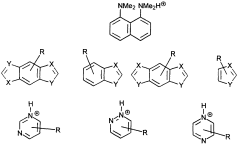
- A proton conductor composition comprising 1-99% by weight of an acid and 99-1% by weight of a thermally stable non-aqueous amphoteric substance, with specific molecular weight ranges and functional groups, providing proton conductivities of >10^(-5) S/cm across a wide temperature range, and optionally embedded in a high-molecular polymer to enhance stability and prevent acid escape.


Material Degradation Mechanisms at Elevated Temperatures
Solid state proton conducting materials experience several critical degradation mechanisms when exposed to elevated temperatures, which significantly impact their long-term stability and performance. The primary degradation pathway involves chemical decomposition, where the material undergoes phase transitions or component volatilization at high temperatures. For instance, many perovskite-type proton conductors such as BaCeO₃ and BaZrO₃ suffer from barium evaporation above 700°C, leading to compositional changes and structural deterioration.
Grain boundary degradation represents another significant failure mode, particularly in polycrystalline materials. At elevated temperatures, accelerated diffusion processes can cause segregation of dopants and impurities to grain boundaries, forming insulating phases that increase the overall resistance of the material. This phenomenon is especially pronounced in Y-doped BaZrO₃ systems, where yttrium migration to grain boundaries has been observed above 600°C.
Mechanical stress-induced degradation also occurs due to thermal cycling and differential thermal expansion between components. Repeated heating and cooling cycles generate microcracks and fractures, particularly at interfaces between materials with mismatched thermal expansion coefficients. These mechanical failures create pathways for gas leakage and reduce the effective proton conductivity of the material system.
Redox instability presents a substantial challenge, especially in applications where the material is exposed to varying oxygen partial pressures. Many proton conductors undergo reduction of transition metal cations at high temperatures in reducing atmospheres, leading to electronic conductivity that compromises the material's electrochemical performance. This is particularly problematic in cerium-based materials, which readily reduce from Ce⁴⁺ to Ce³⁺ above 600°C in hydrogen-containing atmospheres.
Surface catalytic poisoning occurs when contaminants from the operating environment (such as sulfur, chromium, or silicon species) react with the material surface at high temperatures. These reactions form insulating layers that block proton transfer pathways and deactivate surface catalytic sites essential for hydrogen incorporation. The poisoning effect accelerates with increasing temperature due to enhanced surface diffusion and reaction kinetics.
Dehydration represents perhaps the most fundamental degradation mechanism, as proton conductors lose their structural water at elevated temperatures. This process typically begins around 400-500°C and accelerates dramatically above 700°C, resulting in decreased proton concentration and conductivity. The dehydration process can also trigger structural reorganization that permanently damages the material's proton transport pathways.
Grain boundary degradation represents another significant failure mode, particularly in polycrystalline materials. At elevated temperatures, accelerated diffusion processes can cause segregation of dopants and impurities to grain boundaries, forming insulating phases that increase the overall resistance of the material. This phenomenon is especially pronounced in Y-doped BaZrO₃ systems, where yttrium migration to grain boundaries has been observed above 600°C.
Mechanical stress-induced degradation also occurs due to thermal cycling and differential thermal expansion between components. Repeated heating and cooling cycles generate microcracks and fractures, particularly at interfaces between materials with mismatched thermal expansion coefficients. These mechanical failures create pathways for gas leakage and reduce the effective proton conductivity of the material system.
Redox instability presents a substantial challenge, especially in applications where the material is exposed to varying oxygen partial pressures. Many proton conductors undergo reduction of transition metal cations at high temperatures in reducing atmospheres, leading to electronic conductivity that compromises the material's electrochemical performance. This is particularly problematic in cerium-based materials, which readily reduce from Ce⁴⁺ to Ce³⁺ above 600°C in hydrogen-containing atmospheres.
Surface catalytic poisoning occurs when contaminants from the operating environment (such as sulfur, chromium, or silicon species) react with the material surface at high temperatures. These reactions form insulating layers that block proton transfer pathways and deactivate surface catalytic sites essential for hydrogen incorporation. The poisoning effect accelerates with increasing temperature due to enhanced surface diffusion and reaction kinetics.
Dehydration represents perhaps the most fundamental degradation mechanism, as proton conductors lose their structural water at elevated temperatures. This process typically begins around 400-500°C and accelerates dramatically above 700°C, resulting in decreased proton concentration and conductivity. The dehydration process can also trigger structural reorganization that permanently damages the material's proton transport pathways.
Environmental Impact and Sustainability Considerations
The development and deployment of solid state proton conducting materials with high temperature stability must be evaluated not only for their technical performance but also for their environmental impact and sustainability profile. These materials, primarily used in fuel cells and electrolyzers, offer significant potential for clean energy generation but their lifecycle environmental footprint requires careful consideration.
Manufacturing processes for advanced ceramic proton conductors often involve energy-intensive sintering at temperatures exceeding 1400°C, resulting in substantial carbon emissions. However, when compared to traditional energy technologies, the operational phase of devices utilizing these materials typically demonstrates reduced greenhouse gas emissions, creating a complex environmental trade-off that necessitates comprehensive lifecycle assessment.
Resource consumption presents another critical sustainability concern. Many high-performance proton conductors incorporate rare earth elements or strategic metals like yttrium, scandium, and zirconium. The extraction of these materials can lead to habitat destruction, water pollution, and significant land disturbance. Developing recycling protocols and recovery methods for these valuable components represents an essential research direction for improving the sustainability profile of these technologies.
Water management constitutes a frequently overlooked environmental aspect of proton conducting materials. While hydrogen energy systems are often celebrated for producing water as their only byproduct, the manufacturing and processing of these materials may require substantial water inputs. In water-stressed regions, this could exacerbate existing resource challenges, highlighting the importance of water-efficient manufacturing techniques.
The durability and operational lifespan of these materials directly impact their sustainability credentials. Materials that maintain stability at high temperatures for extended periods reduce replacement frequency and associated environmental impacts. Recent advances in doped barium zirconate materials have demonstrated promising stability improvements, potentially extending operational lifetimes from 5,000 hours to over 20,000 hours under demanding conditions.
Regulatory frameworks increasingly emphasize environmental considerations in materials development. The European Union's REACH regulations and similar initiatives worldwide are imposing stricter requirements on chemical usage and waste management. Future research must align with these evolving standards, potentially accelerating the transition toward more environmentally benign synthesis routes and material compositions.
Circular economy principles offer promising pathways for enhancing sustainability. Design approaches that facilitate component recovery, remanufacturing, and recycling could significantly reduce the environmental footprint of these technologies. Several research groups are exploring solvent-free processing methods and lower-temperature synthesis routes that could substantially reduce energy requirements and associated emissions.
Manufacturing processes for advanced ceramic proton conductors often involve energy-intensive sintering at temperatures exceeding 1400°C, resulting in substantial carbon emissions. However, when compared to traditional energy technologies, the operational phase of devices utilizing these materials typically demonstrates reduced greenhouse gas emissions, creating a complex environmental trade-off that necessitates comprehensive lifecycle assessment.
Resource consumption presents another critical sustainability concern. Many high-performance proton conductors incorporate rare earth elements or strategic metals like yttrium, scandium, and zirconium. The extraction of these materials can lead to habitat destruction, water pollution, and significant land disturbance. Developing recycling protocols and recovery methods for these valuable components represents an essential research direction for improving the sustainability profile of these technologies.
Water management constitutes a frequently overlooked environmental aspect of proton conducting materials. While hydrogen energy systems are often celebrated for producing water as their only byproduct, the manufacturing and processing of these materials may require substantial water inputs. In water-stressed regions, this could exacerbate existing resource challenges, highlighting the importance of water-efficient manufacturing techniques.
The durability and operational lifespan of these materials directly impact their sustainability credentials. Materials that maintain stability at high temperatures for extended periods reduce replacement frequency and associated environmental impacts. Recent advances in doped barium zirconate materials have demonstrated promising stability improvements, potentially extending operational lifetimes from 5,000 hours to over 20,000 hours under demanding conditions.
Regulatory frameworks increasingly emphasize environmental considerations in materials development. The European Union's REACH regulations and similar initiatives worldwide are imposing stricter requirements on chemical usage and waste management. Future research must align with these evolving standards, potentially accelerating the transition toward more environmentally benign synthesis routes and material compositions.
Circular economy principles offer promising pathways for enhancing sustainability. Design approaches that facilitate component recovery, remanufacturing, and recycling could significantly reduce the environmental footprint of these technologies. Several research groups are exploring solvent-free processing methods and lower-temperature synthesis routes that could substantially reduce energy requirements and associated emissions.
Unlock deeper insights with PatSnap Eureka Quick Research — get a full tech report to explore trends and direct your research. Try now!
Generate Your Research Report Instantly with AI Agent
Supercharge your innovation with PatSnap Eureka AI Agent Platform!