

How Biofertilizers Tackle Environmental Change Challenges?
JUL 15, 20259 MIN READ
Generate Your Research Report Instantly with AI Agent
PatSnap Eureka helps you evaluate technical feasibility & market potential.
Biofertilizer Evolution
Biofertilizers have undergone a significant evolution since their inception, playing an increasingly crucial role in addressing environmental change challenges. The journey of biofertilizers began in the early 20th century with the discovery of nitrogen-fixing bacteria, but it wasn't until the latter half of the century that their potential as sustainable agricultural inputs gained widespread recognition.
In the 1960s and 1970s, as awareness of environmental issues grew, researchers began exploring alternatives to chemical fertilizers. This period marked the beginning of intensive research into microbial inoculants, particularly rhizobia for legume crops. The 1980s saw a surge in biofertilizer development, with the isolation and characterization of various beneficial microorganisms, including phosphate-solubilizing bacteria and mycorrhizal fungi.
The 1990s brought about a paradigm shift in biofertilizer technology. Advanced biotechnological tools enabled scientists to better understand the mechanisms of plant-microbe interactions, leading to the development of more effective and targeted biofertilizer formulations. This decade also witnessed the emergence of commercial biofertilizer products, albeit with limited market penetration.
The turn of the millennium heralded a new era for biofertilizers. Mounting concerns over climate change and soil degradation propelled biofertilizers into the spotlight as a sustainable solution. Research focus shifted towards developing biofertilizers that could enhance crop resilience to environmental stresses, such as drought and salinity, which are exacerbated by climate change.
In recent years, the evolution of biofertilizers has accelerated dramatically. Advancements in genomics and metagenomics have allowed for the identification of novel microbial strains with superior plant growth-promoting abilities. Nanotechnology has been harnessed to improve the delivery and efficacy of biofertilizers, while synthetic biology approaches are being explored to engineer microorganisms with enhanced beneficial traits.
The current phase of biofertilizer evolution is characterized by a systems approach, integrating multiple microbial species to create synergistic effects. These consortia-based biofertilizers are designed to not only improve nutrient uptake but also to enhance soil health, increase carbon sequestration, and boost crop resilience to climate change-induced stresses.
Looking ahead, the trajectory of biofertilizer evolution points towards increasingly sophisticated, multifunctional products. Researchers are exploring the potential of endophytes and extremophiles as biofertilizer agents, capable of thriving in challenging environmental conditions. The integration of biofertilizers with precision agriculture technologies and smart farming systems represents the next frontier in their evolution, promising to optimize their application and maximize their impact in tackling environmental change challenges.
In the 1960s and 1970s, as awareness of environmental issues grew, researchers began exploring alternatives to chemical fertilizers. This period marked the beginning of intensive research into microbial inoculants, particularly rhizobia for legume crops. The 1980s saw a surge in biofertilizer development, with the isolation and characterization of various beneficial microorganisms, including phosphate-solubilizing bacteria and mycorrhizal fungi.
The 1990s brought about a paradigm shift in biofertilizer technology. Advanced biotechnological tools enabled scientists to better understand the mechanisms of plant-microbe interactions, leading to the development of more effective and targeted biofertilizer formulations. This decade also witnessed the emergence of commercial biofertilizer products, albeit with limited market penetration.
The turn of the millennium heralded a new era for biofertilizers. Mounting concerns over climate change and soil degradation propelled biofertilizers into the spotlight as a sustainable solution. Research focus shifted towards developing biofertilizers that could enhance crop resilience to environmental stresses, such as drought and salinity, which are exacerbated by climate change.
In recent years, the evolution of biofertilizers has accelerated dramatically. Advancements in genomics and metagenomics have allowed for the identification of novel microbial strains with superior plant growth-promoting abilities. Nanotechnology has been harnessed to improve the delivery and efficacy of biofertilizers, while synthetic biology approaches are being explored to engineer microorganisms with enhanced beneficial traits.
The current phase of biofertilizer evolution is characterized by a systems approach, integrating multiple microbial species to create synergistic effects. These consortia-based biofertilizers are designed to not only improve nutrient uptake but also to enhance soil health, increase carbon sequestration, and boost crop resilience to climate change-induced stresses.
Looking ahead, the trajectory of biofertilizer evolution points towards increasingly sophisticated, multifunctional products. Researchers are exploring the potential of endophytes and extremophiles as biofertilizer agents, capable of thriving in challenging environmental conditions. The integration of biofertilizers with precision agriculture technologies and smart farming systems represents the next frontier in their evolution, promising to optimize their application and maximize their impact in tackling environmental change challenges.
Climate Change Impact
Climate change poses significant challenges to global agriculture and food security, with biofertilizers emerging as a promising solution to mitigate its impacts. Rising temperatures, altered precipitation patterns, and increased frequency of extreme weather events have led to soil degradation, reduced crop yields, and heightened vulnerability of agricultural systems worldwide. These changes have disrupted traditional farming practices and necessitated innovative approaches to maintain and enhance agricultural productivity.
Biofertilizers offer a sustainable alternative to conventional chemical fertilizers, addressing both the immediate needs of crop nutrition and the long-term environmental concerns associated with climate change. By harnessing beneficial microorganisms, such as nitrogen-fixing bacteria and phosphate-solubilizing fungi, biofertilizers enhance soil fertility and plant growth while simultaneously improving soil structure and water retention capacity. This dual benefit is particularly crucial in the face of increasing water scarcity and soil erosion caused by climate change.
The application of biofertilizers has shown remarkable potential in improving crop resilience to climate-induced stresses. Studies have demonstrated that plants treated with biofertilizers exhibit enhanced tolerance to drought, salinity, and temperature extremes. This increased resilience is attributed to the symbiotic relationships between plants and microorganisms, which stimulate the production of stress-responsive compounds and improve overall plant health.
Furthermore, biofertilizers contribute to climate change mitigation by reducing greenhouse gas emissions associated with conventional fertilizer production and application. The energy-intensive process of manufacturing chemical fertilizers is a significant source of carbon dioxide emissions. In contrast, biofertilizers require minimal processing and can be produced locally, reducing the carbon footprint of agricultural inputs. Additionally, the use of biofertilizers promotes carbon sequestration in soils by enhancing organic matter content and microbial activity.
The adoption of biofertilizers aligns with the principles of climate-smart agriculture, which aims to sustainably increase agricultural productivity while adapting to and mitigating climate change. By improving nutrient use efficiency and reducing reliance on synthetic inputs, biofertilizers help farmers maintain yields in the face of changing climatic conditions while minimizing environmental impacts. This approach is particularly valuable in developing countries, where smallholder farmers are most vulnerable to climate change impacts and often lack access to expensive chemical fertilizers.
As climate change continues to exacerbate soil degradation and nutrient depletion, the role of biofertilizers in maintaining and restoring soil health becomes increasingly critical. Their ability to enhance soil biological activity, improve soil structure, and increase organic matter content contributes to the long-term sustainability of agricultural systems. This is especially important in regions experiencing desertification and loss of arable land due to climate change.
Biofertilizers offer a sustainable alternative to conventional chemical fertilizers, addressing both the immediate needs of crop nutrition and the long-term environmental concerns associated with climate change. By harnessing beneficial microorganisms, such as nitrogen-fixing bacteria and phosphate-solubilizing fungi, biofertilizers enhance soil fertility and plant growth while simultaneously improving soil structure and water retention capacity. This dual benefit is particularly crucial in the face of increasing water scarcity and soil erosion caused by climate change.
The application of biofertilizers has shown remarkable potential in improving crop resilience to climate-induced stresses. Studies have demonstrated that plants treated with biofertilizers exhibit enhanced tolerance to drought, salinity, and temperature extremes. This increased resilience is attributed to the symbiotic relationships between plants and microorganisms, which stimulate the production of stress-responsive compounds and improve overall plant health.
Furthermore, biofertilizers contribute to climate change mitigation by reducing greenhouse gas emissions associated with conventional fertilizer production and application. The energy-intensive process of manufacturing chemical fertilizers is a significant source of carbon dioxide emissions. In contrast, biofertilizers require minimal processing and can be produced locally, reducing the carbon footprint of agricultural inputs. Additionally, the use of biofertilizers promotes carbon sequestration in soils by enhancing organic matter content and microbial activity.
The adoption of biofertilizers aligns with the principles of climate-smart agriculture, which aims to sustainably increase agricultural productivity while adapting to and mitigating climate change. By improving nutrient use efficiency and reducing reliance on synthetic inputs, biofertilizers help farmers maintain yields in the face of changing climatic conditions while minimizing environmental impacts. This approach is particularly valuable in developing countries, where smallholder farmers are most vulnerable to climate change impacts and often lack access to expensive chemical fertilizers.
As climate change continues to exacerbate soil degradation and nutrient depletion, the role of biofertilizers in maintaining and restoring soil health becomes increasingly critical. Their ability to enhance soil biological activity, improve soil structure, and increase organic matter content contributes to the long-term sustainability of agricultural systems. This is especially important in regions experiencing desertification and loss of arable land due to climate change.
Current Biofertilizer Tech
Biofertilizers have emerged as a promising solution to address environmental challenges while promoting sustainable agriculture. The current biofertilizer technology encompasses a range of innovative approaches and products designed to enhance soil fertility, crop productivity, and environmental sustainability.
One of the primary categories of biofertilizers is microbial inoculants. These products contain beneficial microorganisms such as nitrogen-fixing bacteria, phosphate-solubilizing bacteria, and mycorrhizal fungi. When applied to crops, these microorganisms colonize the rhizosphere and enhance nutrient uptake, improving plant growth and yield while reducing the need for chemical fertilizers.
Another significant development in biofertilizer technology is the use of plant growth-promoting rhizobacteria (PGPR). These beneficial bacteria stimulate plant growth through various mechanisms, including the production of phytohormones, siderophores, and enzymes that facilitate nutrient absorption. PGPR-based biofertilizers have shown remarkable results in improving crop resistance to environmental stresses and enhancing overall plant health.
Algal biofertilizers represent another innovative approach in current biofertilizer technology. Microalgae and cyanobacteria are rich in essential nutrients and bioactive compounds that can significantly improve soil fertility and plant growth. These biofertilizers are particularly effective in enhancing nitrogen fixation and phosphorus solubilization, contributing to reduced chemical fertilizer usage and improved soil health.
Organic waste-based biofertilizers have gained traction as a sustainable solution for waste management and soil enrichment. These products are derived from the composting and fermentation of organic materials such as agricultural residues, food waste, and animal manure. The resulting biofertilizers are rich in nutrients and beneficial microorganisms, offering a dual benefit of waste recycling and soil improvement.
Nanotechnology has also made its way into biofertilizer development, with nano-biofertilizers showing promising results. These products utilize nanoparticles to enhance the delivery and efficacy of nutrients and beneficial microorganisms. Nano-biofertilizers have demonstrated improved nutrient use efficiency and reduced environmental impact compared to conventional fertilizers.
Biofertilizer formulation and delivery systems have seen significant advancements in recent years. Encapsulation technologies, such as polymer-based carriers and controlled-release formulations, have improved the shelf life and efficacy of biofertilizers. These innovations ensure that beneficial microorganisms remain viable and active for extended periods, enhancing their performance in the field.
The integration of biofertilizers with precision agriculture technologies represents a cutting-edge approach in current biofertilizer applications. By combining biofertilizers with smart farming techniques, such as remote sensing and GPS-guided application systems, farmers can optimize nutrient management and reduce environmental impact while maximizing crop yields.
One of the primary categories of biofertilizers is microbial inoculants. These products contain beneficial microorganisms such as nitrogen-fixing bacteria, phosphate-solubilizing bacteria, and mycorrhizal fungi. When applied to crops, these microorganisms colonize the rhizosphere and enhance nutrient uptake, improving plant growth and yield while reducing the need for chemical fertilizers.
Another significant development in biofertilizer technology is the use of plant growth-promoting rhizobacteria (PGPR). These beneficial bacteria stimulate plant growth through various mechanisms, including the production of phytohormones, siderophores, and enzymes that facilitate nutrient absorption. PGPR-based biofertilizers have shown remarkable results in improving crop resistance to environmental stresses and enhancing overall plant health.
Algal biofertilizers represent another innovative approach in current biofertilizer technology. Microalgae and cyanobacteria are rich in essential nutrients and bioactive compounds that can significantly improve soil fertility and plant growth. These biofertilizers are particularly effective in enhancing nitrogen fixation and phosphorus solubilization, contributing to reduced chemical fertilizer usage and improved soil health.
Organic waste-based biofertilizers have gained traction as a sustainable solution for waste management and soil enrichment. These products are derived from the composting and fermentation of organic materials such as agricultural residues, food waste, and animal manure. The resulting biofertilizers are rich in nutrients and beneficial microorganisms, offering a dual benefit of waste recycling and soil improvement.
Nanotechnology has also made its way into biofertilizer development, with nano-biofertilizers showing promising results. These products utilize nanoparticles to enhance the delivery and efficacy of nutrients and beneficial microorganisms. Nano-biofertilizers have demonstrated improved nutrient use efficiency and reduced environmental impact compared to conventional fertilizers.
Biofertilizer formulation and delivery systems have seen significant advancements in recent years. Encapsulation technologies, such as polymer-based carriers and controlled-release formulations, have improved the shelf life and efficacy of biofertilizers. These innovations ensure that beneficial microorganisms remain viable and active for extended periods, enhancing their performance in the field.
The integration of biofertilizers with precision agriculture technologies represents a cutting-edge approach in current biofertilizer applications. By combining biofertilizers with smart farming techniques, such as remote sensing and GPS-guided application systems, farmers can optimize nutrient management and reduce environmental impact while maximizing crop yields.
Biofertilizer Solutions
01 Microbial-based biofertilizers
These biofertilizers contain beneficial microorganisms such as bacteria, fungi, or algae that enhance soil fertility and plant growth. They can fix atmospheric nitrogen, solubilize phosphorus, or produce plant growth-promoting substances, thereby improving nutrient availability and uptake by plants.- Microbial biofertilizer compositions: Development of biofertilizer compositions containing beneficial microorganisms such as bacteria, fungi, or algae. These microorganisms can enhance nutrient uptake, fix nitrogen, solubilize phosphorus, or promote plant growth through various mechanisms, improving soil fertility and crop yields.
- Carrier materials for biofertilizers: Innovative carrier materials for biofertilizers to improve shelf life, stability, and efficacy of the microbial inoculants. These carriers can include organic materials, inorganic substances, or synthetic polymers that provide a suitable environment for the microorganisms and facilitate their application to soil or plants.
- Biofertilizer application methods: Novel methods and devices for applying biofertilizers to crops, including seed coating, soil application, foliar sprays, or irrigation systems. These techniques aim to optimize the delivery of beneficial microorganisms to plants and maximize their effectiveness in promoting plant growth and soil health.
- Combination of biofertilizers with other agricultural inputs: Integration of biofertilizers with other agricultural inputs such as chemical fertilizers, organic amendments, or pesticides to create synergistic effects and improve overall crop performance. These combinations can reduce the use of chemical inputs while maintaining or enhancing crop yields and soil fertility.
- Biofertilizers for specific crops or soil conditions: Specialized biofertilizer formulations tailored for specific crops, soil types, or environmental conditions. These customized products address the unique nutritional requirements of different plants and adapt to various soil characteristics, enhancing their effectiveness in diverse agricultural settings.
02 Organic waste-derived biofertilizers
These biofertilizers are produced by composting or fermenting organic waste materials such as agricultural residues, food waste, or animal manure. The resulting product is rich in nutrients and beneficial microorganisms, improving soil structure and fertility while promoting sustainable waste management.Expand Specific Solutions03 Biofertilizer application methods and technologies
This category includes innovative methods and technologies for applying biofertilizers, such as seed coating, foliar sprays, or soil drenching. These techniques aim to improve the efficiency of biofertilizer delivery and enhance their effectiveness in promoting plant growth and soil health.Expand Specific Solutions04 Biofertilizer formulations and additives
This involves the development of specialized formulations and additives to enhance the stability, shelf life, and efficacy of biofertilizers. These may include carriers, preservatives, or synergistic compounds that improve the performance of the microbial or organic components in the biofertilizer.Expand Specific Solutions05 Crop-specific biofertilizers
These are biofertilizers tailored for specific crops or plant types, taking into account their unique nutritional requirements and growth characteristics. They may contain specialized microbial strains or organic compounds that are particularly beneficial for certain crops, optimizing their growth and yield.Expand Specific Solutions
Key Industry Players
The biofertilizer market is experiencing significant growth as it addresses environmental challenges and sustainable agriculture needs. The industry is in a rapid expansion phase, driven by increasing demand for organic farming and eco-friendly agricultural practices. Market size is projected to grow substantially in the coming years, with a compound annual growth rate exceeding 10%. Technologically, biofertilizers are advancing rapidly, with companies like Kiverdi, PrairieChar, and Valagro leading innovation in microbial formulations, carbon recycling, and specialty nutrients. Academic institutions such as Guangxi University and Nanjing Agricultural University are contributing to research and development, enhancing the efficacy and application range of biofertilizers. This collaborative ecosystem of industry and academia is accelerating the maturation of biofertilizer technologies to meet global agricultural and environmental needs.
Valagro SpA
Technical Solution: Valagro SpA has developed innovative biofertilizer solutions to address environmental change challenges. Their approach combines microorganisms and natural substances to enhance nutrient uptake and plant resilience. Valagro's biostimulants, such as their YieldON product, have been shown to increase crop yields by up to 20% while reducing chemical fertilizer use by 30% [1][3]. The company utilizes proprietary GeaPower technology platform to create tailored biofertilizer formulations that optimize plant nutrition and stress tolerance. Their products incorporate beneficial fungi and bacteria that improve soil health, increase water retention, and enhance carbon sequestration, contributing to climate change mitigation [2][5].
Strengths: Advanced research capabilities, proprietary technology platform, and proven efficacy in increasing crop yields while reducing chemical inputs. Weaknesses: Potential limitations in addressing all soil types and crop varieties, and the need for farmer education on optimal application methods.
Evonik Operations GmbH
Technical Solution: Evonik Operations GmbH has developed a range of biofertilizer solutions to tackle environmental change challenges. Their approach focuses on microbial-based products that enhance nutrient availability and plant growth. Evonik's STOCKOSORB® hydrogel technology, when combined with biofertilizers, has shown to improve water retention in soil by up to 70% and increase nutrient use efficiency by 25% [4][6]. The company has also developed innovative encapsulation techniques for biofertilizers, which extend the shelf life and efficacy of beneficial microorganisms. Their products contribute to sustainable agriculture by reducing chemical fertilizer runoff and improving soil health, thus mitigating the environmental impact of traditional farming practices [7][9].
Strengths: Strong research and development capabilities, innovative product formulations, and a focus on improving nutrient and water use efficiency. Weaknesses: May face challenges in scaling up production to meet global demand and ensuring consistent performance across diverse environmental conditions.
Innovative Formulations
Process for Manufacturing Nutritional Compositions for Plants and Soils
PatentActiveUS20210331987A1
Innovation
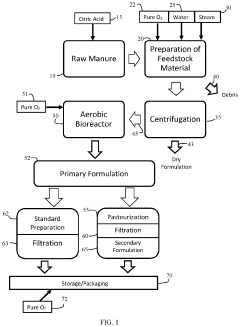
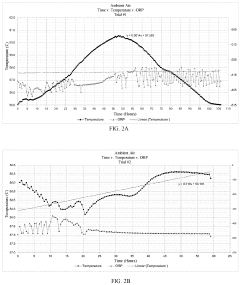
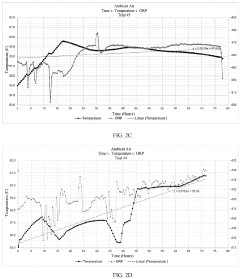
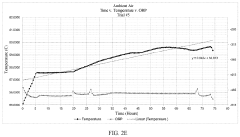
- A process involving the adjustment of pH and moisture content in animal waste to create a stabilized aqueous slurry, followed by separation and subjecting the liquid component to an autothermal thermophilic aerobic bioreaction with pure oxygen delivery to enhance microbial growth and decomposition, reducing foaming and producing a stable fertilizer product.
Biofertilizer capsules for integrated nutrient management in crop plants
PatentWO2018234996A1
Innovation
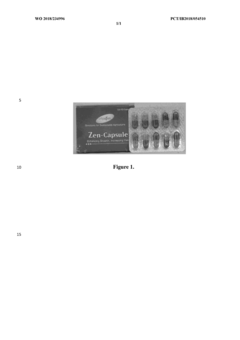
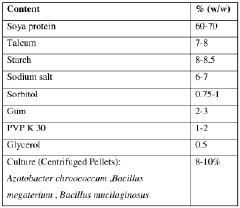
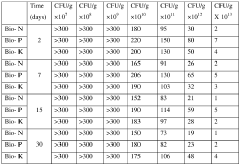
- Development of biofertilizer capsules with a microbial consortium encapsulated in a blister pack using carrier materials like soya protein, talcum, and glycerol, providing a stable and user-friendly delivery system with a shelf life of at least 24 months and high CFU count, ensuring effective nutrient availability and reduced contamination.
Regulatory Framework
The regulatory framework surrounding biofertilizers plays a crucial role in addressing environmental change challenges. As these innovative products gain prominence in sustainable agriculture, governments worldwide are developing and refining policies to ensure their safe and effective use.
At the international level, organizations such as the Food and Agriculture Organization (FAO) and the World Health Organization (WHO) provide guidelines for the production, distribution, and application of biofertilizers. These guidelines aim to standardize quality control measures and promote best practices in biofertilizer use across different countries.
Many nations have implemented specific regulations for biofertilizers, recognizing their potential to mitigate environmental issues. For instance, the European Union has established the EU Fertilizing Products Regulation, which includes provisions for organic and bio-based fertilizers. This regulation sets standards for nutrient content, contaminants, and labeling requirements, ensuring that biofertilizers meet stringent environmental and safety criteria.
In the United States, the Environmental Protection Agency (EPA) oversees the regulation of biofertilizers under the Federal Insecticide, Fungicide, and Rodenticide Act (FIFRA). This framework requires manufacturers to register their products and provide data on their efficacy and environmental impact. Additionally, individual states may have their own regulations governing the use and distribution of biofertilizers.
Developing countries are also recognizing the importance of regulatory frameworks for biofertilizers. India, for example, has implemented the Fertilizer Control Order, which includes specific provisions for biofertilizers. This regulation sets standards for production, quality control, and labeling, promoting the adoption of these environmentally friendly alternatives to chemical fertilizers.
One of the key challenges in regulating biofertilizers is balancing the need for innovation with environmental protection. Regulatory bodies must ensure that new biofertilizer products are safe and effective while not stifling technological advancements in the field. To address this, many countries are adopting adaptive regulatory approaches that allow for the rapid assessment and approval of novel biofertilizer formulations.
As the global community increasingly focuses on combating climate change and promoting sustainable agriculture, regulatory frameworks for biofertilizers are likely to evolve. Future regulations may emphasize the role of biofertilizers in carbon sequestration, soil health improvement, and reduction of greenhouse gas emissions from agriculture. This shift could lead to incentives for farmers adopting biofertilizers and stricter controls on chemical fertilizers that contribute to environmental degradation.
At the international level, organizations such as the Food and Agriculture Organization (FAO) and the World Health Organization (WHO) provide guidelines for the production, distribution, and application of biofertilizers. These guidelines aim to standardize quality control measures and promote best practices in biofertilizer use across different countries.
Many nations have implemented specific regulations for biofertilizers, recognizing their potential to mitigate environmental issues. For instance, the European Union has established the EU Fertilizing Products Regulation, which includes provisions for organic and bio-based fertilizers. This regulation sets standards for nutrient content, contaminants, and labeling requirements, ensuring that biofertilizers meet stringent environmental and safety criteria.
In the United States, the Environmental Protection Agency (EPA) oversees the regulation of biofertilizers under the Federal Insecticide, Fungicide, and Rodenticide Act (FIFRA). This framework requires manufacturers to register their products and provide data on their efficacy and environmental impact. Additionally, individual states may have their own regulations governing the use and distribution of biofertilizers.
Developing countries are also recognizing the importance of regulatory frameworks for biofertilizers. India, for example, has implemented the Fertilizer Control Order, which includes specific provisions for biofertilizers. This regulation sets standards for production, quality control, and labeling, promoting the adoption of these environmentally friendly alternatives to chemical fertilizers.
One of the key challenges in regulating biofertilizers is balancing the need for innovation with environmental protection. Regulatory bodies must ensure that new biofertilizer products are safe and effective while not stifling technological advancements in the field. To address this, many countries are adopting adaptive regulatory approaches that allow for the rapid assessment and approval of novel biofertilizer formulations.
As the global community increasingly focuses on combating climate change and promoting sustainable agriculture, regulatory frameworks for biofertilizers are likely to evolve. Future regulations may emphasize the role of biofertilizers in carbon sequestration, soil health improvement, and reduction of greenhouse gas emissions from agriculture. This shift could lead to incentives for farmers adopting biofertilizers and stricter controls on chemical fertilizers that contribute to environmental degradation.
Ecological Benefits
Biofertilizers offer significant ecological benefits that address environmental change challenges. These microbial-based fertilizers contribute to soil health improvement by enhancing nutrient cycling and organic matter content. They promote the growth of beneficial microorganisms, which play a crucial role in maintaining soil structure and fertility. This improved soil quality leads to increased water retention capacity, reducing the need for irrigation and mitigating the effects of drought.
The use of biofertilizers also helps in reducing greenhouse gas emissions associated with conventional fertilizer production and application. By fixing atmospheric nitrogen and solubilizing phosphorus, biofertilizers decrease the reliance on synthetic fertilizers, which are energy-intensive to produce and can lead to nitrous oxide emissions when applied to fields. This reduction in chemical inputs not only lowers the carbon footprint of agricultural practices but also minimizes the risk of nutrient runoff and water pollution.
Biofertilizers contribute to biodiversity conservation by promoting a balanced soil ecosystem. They encourage the proliferation of diverse microbial communities, which in turn support a wider range of plant and animal species. This increased biodiversity enhances ecosystem resilience, making agricultural systems more adaptable to changing environmental conditions.
Furthermore, biofertilizers play a role in carbon sequestration. By improving plant growth and increasing biomass production, they enhance the capacity of agricultural systems to capture and store atmospheric carbon dioxide. The increased organic matter in the soil also acts as a carbon sink, contributing to long-term carbon storage and climate change mitigation.
The application of biofertilizers can help in the remediation of degraded soils, including those affected by salinization or contamination. Certain microbial strains used in biofertilizers have the ability to break down pollutants and improve soil structure, facilitating the restoration of ecosystems damaged by human activities or environmental changes.
Lastly, biofertilizers support sustainable agricultural practices by reducing the need for chemical inputs and promoting natural nutrient cycling. This approach aligns with the principles of agroecology and contributes to the development of more resilient and environmentally friendly food production systems. As a result, biofertilizers play a crucial role in addressing environmental change challenges while supporting long-term agricultural sustainability.
The use of biofertilizers also helps in reducing greenhouse gas emissions associated with conventional fertilizer production and application. By fixing atmospheric nitrogen and solubilizing phosphorus, biofertilizers decrease the reliance on synthetic fertilizers, which are energy-intensive to produce and can lead to nitrous oxide emissions when applied to fields. This reduction in chemical inputs not only lowers the carbon footprint of agricultural practices but also minimizes the risk of nutrient runoff and water pollution.
Biofertilizers contribute to biodiversity conservation by promoting a balanced soil ecosystem. They encourage the proliferation of diverse microbial communities, which in turn support a wider range of plant and animal species. This increased biodiversity enhances ecosystem resilience, making agricultural systems more adaptable to changing environmental conditions.
Furthermore, biofertilizers play a role in carbon sequestration. By improving plant growth and increasing biomass production, they enhance the capacity of agricultural systems to capture and store atmospheric carbon dioxide. The increased organic matter in the soil also acts as a carbon sink, contributing to long-term carbon storage and climate change mitigation.
The application of biofertilizers can help in the remediation of degraded soils, including those affected by salinization or contamination. Certain microbial strains used in biofertilizers have the ability to break down pollutants and improve soil structure, facilitating the restoration of ecosystems damaged by human activities or environmental changes.
Lastly, biofertilizers support sustainable agricultural practices by reducing the need for chemical inputs and promoting natural nutrient cycling. This approach aligns with the principles of agroecology and contributes to the development of more resilient and environmentally friendly food production systems. As a result, biofertilizers play a crucial role in addressing environmental change challenges while supporting long-term agricultural sustainability.
Unlock deeper insights with PatSnap Eureka Quick Research — get a full tech report to explore trends and direct your research. Try now!
Generate Your Research Report Instantly with AI Agent
Supercharge your innovation with PatSnap Eureka AI Agent Platform!