

How Digital Hydraulics Are Used in Programmable Fluid Dynamics
MAY 22, 20269 MIN READ
Generate Your Research Report Instantly with AI Agent
PatSnap Eureka helps you evaluate technical feasibility & market potential.
Digital Hydraulics Background and Technical Objectives
Digital hydraulics represents a paradigm shift from traditional analog hydraulic systems to discrete, digitally controlled fluid power solutions. This technology emerged from the convergence of advanced valve technologies, high-speed digital control systems, and the growing demand for precise, programmable fluid manipulation in industrial applications. Unlike conventional hydraulic systems that rely on continuous flow control through proportional valves, digital hydraulics employs arrays of fast-switching on/off valves to achieve precise flow and pressure control through temporal and spatial modulation techniques.
The evolution of digital hydraulics can be traced back to the early 2000s when researchers began exploring pulse-width modulation (PWM) and pulse-code modulation (PCM) techniques for hydraulic control. Initial developments focused on overcoming the limitations of analog systems, including nonlinearities, temperature sensitivity, and limited bandwidth. The integration of microprocessor-based control units enabled sophisticated algorithms that could manage multiple valve states simultaneously, creating programmable flow patterns previously impossible with traditional systems.
In the context of programmable fluid dynamics, digital hydraulics serves as the enabling technology for creating deterministic, repeatable fluid behaviors. The system architecture typically consists of high-frequency switching valves, pressure accumulators, flow sensors, and advanced control algorithms that can execute complex fluid manipulation sequences. This configuration allows engineers to program specific flow profiles, pressure patterns, and dynamic responses that can be precisely reproduced across multiple operational cycles.
The primary technical objectives driving digital hydraulics development include achieving superior energy efficiency through elimination of throttling losses, enabling rapid system response times through high-bandwidth valve control, and providing unprecedented programmability in fluid power applications. Modern digital hydraulic systems target switching frequencies exceeding 100 Hz while maintaining flow resolution comparable to high-end proportional valves.
Contemporary research focuses on expanding the programmable capabilities to include adaptive control algorithms, machine learning integration for predictive maintenance, and multi-physics simulation capabilities for real-time system optimization. These objectives position digital hydraulics as a foundational technology for next-generation fluid power systems in aerospace, manufacturing, and mobile machinery applications.
The evolution of digital hydraulics can be traced back to the early 2000s when researchers began exploring pulse-width modulation (PWM) and pulse-code modulation (PCM) techniques for hydraulic control. Initial developments focused on overcoming the limitations of analog systems, including nonlinearities, temperature sensitivity, and limited bandwidth. The integration of microprocessor-based control units enabled sophisticated algorithms that could manage multiple valve states simultaneously, creating programmable flow patterns previously impossible with traditional systems.
In the context of programmable fluid dynamics, digital hydraulics serves as the enabling technology for creating deterministic, repeatable fluid behaviors. The system architecture typically consists of high-frequency switching valves, pressure accumulators, flow sensors, and advanced control algorithms that can execute complex fluid manipulation sequences. This configuration allows engineers to program specific flow profiles, pressure patterns, and dynamic responses that can be precisely reproduced across multiple operational cycles.
The primary technical objectives driving digital hydraulics development include achieving superior energy efficiency through elimination of throttling losses, enabling rapid system response times through high-bandwidth valve control, and providing unprecedented programmability in fluid power applications. Modern digital hydraulic systems target switching frequencies exceeding 100 Hz while maintaining flow resolution comparable to high-end proportional valves.
Contemporary research focuses on expanding the programmable capabilities to include adaptive control algorithms, machine learning integration for predictive maintenance, and multi-physics simulation capabilities for real-time system optimization. These objectives position digital hydraulics as a foundational technology for next-generation fluid power systems in aerospace, manufacturing, and mobile machinery applications.
Market Demand for Programmable Fluid Control Systems
The global market for programmable fluid control systems is experiencing unprecedented growth driven by the convergence of digitalization and industrial automation. Manufacturing sectors, particularly automotive, aerospace, and heavy machinery, are increasingly demanding precise fluid control solutions that can adapt to varying operational requirements in real-time. This demand stems from the need to optimize energy efficiency, reduce maintenance costs, and enhance system reliability across diverse applications.
Industrial automation represents the largest market segment, where programmable fluid systems enable manufacturers to achieve higher precision in processes such as injection molding, metal forming, and assembly operations. The ability to program fluid flow characteristics dynamically allows for rapid product changeovers and customized manufacturing processes, addressing the growing trend toward mass customization in modern production environments.
The construction and mining equipment sector demonstrates substantial appetite for programmable hydraulic solutions that can automatically adjust performance parameters based on load conditions and operational environments. Equipment manufacturers are seeking systems that can optimize fuel consumption while maintaining peak performance, responding to stringent environmental regulations and operational cost pressures.
Renewable energy applications, particularly in wind turbine pitch control and solar tracking systems, represent an emerging high-growth segment. These applications require fluid control systems capable of responding to rapidly changing environmental conditions while maintaining precise positioning accuracy over extended operational periods.
The aerospace and defense industries drive demand for lightweight, highly reliable programmable fluid systems that can operate under extreme conditions. These sectors prioritize systems offering redundancy, fault tolerance, and the ability to maintain performance across wide temperature and pressure ranges.
Market growth is further accelerated by the integration of Internet of Things technologies and predictive maintenance capabilities. End users increasingly expect fluid control systems that can provide real-time performance data, enable remote monitoring, and predict maintenance requirements to minimize unplanned downtime.
Regional demand patterns show strong growth in Asia-Pacific manufacturing hubs, North American automation markets, and European industrial sectors focused on energy efficiency and environmental compliance. The market trajectory indicates sustained expansion as industries continue adopting smart manufacturing principles and seeking competitive advantages through advanced fluid control technologies.
Industrial automation represents the largest market segment, where programmable fluid systems enable manufacturers to achieve higher precision in processes such as injection molding, metal forming, and assembly operations. The ability to program fluid flow characteristics dynamically allows for rapid product changeovers and customized manufacturing processes, addressing the growing trend toward mass customization in modern production environments.
The construction and mining equipment sector demonstrates substantial appetite for programmable hydraulic solutions that can automatically adjust performance parameters based on load conditions and operational environments. Equipment manufacturers are seeking systems that can optimize fuel consumption while maintaining peak performance, responding to stringent environmental regulations and operational cost pressures.
Renewable energy applications, particularly in wind turbine pitch control and solar tracking systems, represent an emerging high-growth segment. These applications require fluid control systems capable of responding to rapidly changing environmental conditions while maintaining precise positioning accuracy over extended operational periods.
The aerospace and defense industries drive demand for lightweight, highly reliable programmable fluid systems that can operate under extreme conditions. These sectors prioritize systems offering redundancy, fault tolerance, and the ability to maintain performance across wide temperature and pressure ranges.
Market growth is further accelerated by the integration of Internet of Things technologies and predictive maintenance capabilities. End users increasingly expect fluid control systems that can provide real-time performance data, enable remote monitoring, and predict maintenance requirements to minimize unplanned downtime.
Regional demand patterns show strong growth in Asia-Pacific manufacturing hubs, North American automation markets, and European industrial sectors focused on energy efficiency and environmental compliance. The market trajectory indicates sustained expansion as industries continue adopting smart manufacturing principles and seeking competitive advantages through advanced fluid control technologies.
Current State of Digital Hydraulic Technologies
Digital hydraulic technologies have reached a significant maturity level in recent years, establishing themselves as a viable alternative to traditional proportional valve systems in fluid power applications. The current technological landscape is characterized by the widespread adoption of high-speed switching valves, advanced control algorithms, and sophisticated digital signal processing capabilities that enable precise flow and pressure control in hydraulic systems.
The foundation of contemporary digital hydraulics rests on fast-switching valve technology, typically operating at frequencies ranging from 100 Hz to over 1000 Hz. These valves, primarily solenoid-operated or piezoelectric-actuated, can achieve switching times as low as 1-3 milliseconds, enabling fine-grained control over fluid flow through pulse-width modulation and pulse-frequency modulation techniques. Major manufacturers have successfully commercialized these components, making them accessible for industrial applications.
Control system integration represents another critical aspect of current digital hydraulic implementations. Modern systems leverage real-time embedded controllers with processing capabilities sufficient to handle complex control algorithms, including predictive control, adaptive filtering, and machine learning-based optimization. These controllers can process sensor feedback at high frequencies, enabling closed-loop control with response times comparable to traditional analog systems.
Current applications span multiple industrial sectors, with notable implementations in mobile machinery, manufacturing automation, and aerospace systems. In mobile hydraulics, digital systems are increasingly used for load-sensing applications, energy recovery systems, and multi-actuator coordination. The technology has demonstrated particular effectiveness in applications requiring high precision, energy efficiency, or complex motion profiles.
However, several technical challenges persist in the current state of digital hydraulics. Valve wear and reliability remain concerns due to the high-frequency switching operations, particularly in contaminated fluid environments. Additionally, the discrete nature of digital control can introduce flow ripple and pressure pulsations, requiring sophisticated filtering and compensation strategies.
Energy efficiency improvements represent one of the most significant advantages of current digital hydraulic systems. Studies have shown potential energy savings of 20-50% compared to conventional systems, primarily through elimination of throttling losses and implementation of intelligent flow management strategies. This efficiency gain has become a primary driver for adoption in energy-conscious applications.
The integration of digital hydraulics with Industry 4.0 concepts is emerging as a key trend, with systems incorporating IoT connectivity, predictive maintenance capabilities, and cloud-based optimization algorithms. These developments are positioning digital hydraulics as an enabling technology for smart manufacturing and autonomous systems applications.
The foundation of contemporary digital hydraulics rests on fast-switching valve technology, typically operating at frequencies ranging from 100 Hz to over 1000 Hz. These valves, primarily solenoid-operated or piezoelectric-actuated, can achieve switching times as low as 1-3 milliseconds, enabling fine-grained control over fluid flow through pulse-width modulation and pulse-frequency modulation techniques. Major manufacturers have successfully commercialized these components, making them accessible for industrial applications.
Control system integration represents another critical aspect of current digital hydraulic implementations. Modern systems leverage real-time embedded controllers with processing capabilities sufficient to handle complex control algorithms, including predictive control, adaptive filtering, and machine learning-based optimization. These controllers can process sensor feedback at high frequencies, enabling closed-loop control with response times comparable to traditional analog systems.
Current applications span multiple industrial sectors, with notable implementations in mobile machinery, manufacturing automation, and aerospace systems. In mobile hydraulics, digital systems are increasingly used for load-sensing applications, energy recovery systems, and multi-actuator coordination. The technology has demonstrated particular effectiveness in applications requiring high precision, energy efficiency, or complex motion profiles.
However, several technical challenges persist in the current state of digital hydraulics. Valve wear and reliability remain concerns due to the high-frequency switching operations, particularly in contaminated fluid environments. Additionally, the discrete nature of digital control can introduce flow ripple and pressure pulsations, requiring sophisticated filtering and compensation strategies.
Energy efficiency improvements represent one of the most significant advantages of current digital hydraulic systems. Studies have shown potential energy savings of 20-50% compared to conventional systems, primarily through elimination of throttling losses and implementation of intelligent flow management strategies. This efficiency gain has become a primary driver for adoption in energy-conscious applications.
The integration of digital hydraulics with Industry 4.0 concepts is emerging as a key trend, with systems incorporating IoT connectivity, predictive maintenance capabilities, and cloud-based optimization algorithms. These developments are positioning digital hydraulics as an enabling technology for smart manufacturing and autonomous systems applications.
Current Digital Valve and Control Solutions
01 Digital valve control systems for hydraulic applications
Digital control systems utilize electronic valves and programmable controllers to precisely manage hydraulic flow and pressure. These systems replace traditional analog controls with digital interfaces that allow for more accurate positioning, flow regulation, and system monitoring. The digital approach enables real-time adjustments and improved response times in hydraulic machinery and equipment.- Digital valve control systems for hydraulic applications: Digital hydraulic systems utilize electronically controlled valves that can be precisely programmed to regulate fluid flow and pressure. These systems replace traditional analog controls with digital interfaces that allow for more accurate positioning and timing control. The digital approach enables real-time adjustments and feedback control mechanisms that improve system responsiveness and reliability.
- Programmable hydraulic actuator control methods: Advanced control algorithms and programming techniques are employed to manage hydraulic actuators with enhanced precision. These methods incorporate feedback sensors and computational control units that can execute complex motion profiles and adapt to varying load conditions. The programmable nature allows for customization of hydraulic system behavior based on specific application requirements.
- Electronic control units for hydraulic system management: Sophisticated electronic control units serve as the central processing components for digital hydraulic systems. These units integrate multiple input signals, process control algorithms, and generate appropriate output commands to hydraulic components. The electronic architecture enables remote monitoring, diagnostic capabilities, and integration with broader automation systems.
- Servo-hydraulic positioning and motion control: High-precision servo-hydraulic systems combine digital control technology with hydraulic power transmission to achieve accurate positioning and smooth motion control. These systems utilize closed-loop feedback mechanisms and advanced control strategies to maintain precise position, velocity, and force control. The integration of digital processing enables complex trajectory planning and execution.
- Integrated hydraulic control networks and communication protocols: Modern digital hydraulic systems incorporate networked control architectures that enable communication between multiple hydraulic components and central control systems. These networks support standardized communication protocols and allow for distributed control strategies. The integration facilitates system-wide coordination, data sharing, and centralized monitoring of hydraulic operations across complex machinery.
02 Programmable hydraulic pump control mechanisms
Advanced pump control systems incorporate programmable logic controllers and digital interfaces to optimize hydraulic pump performance. These mechanisms allow for variable displacement control, pressure compensation, and energy-efficient operation through software-based algorithms. The programmable nature enables customization for specific applications and operational requirements.Expand Specific Solutions03 Digital feedback and monitoring systems
Sophisticated monitoring systems use digital sensors and feedback loops to continuously track hydraulic system parameters such as pressure, flow rate, temperature, and position. These systems provide real-time data processing and diagnostic capabilities, enabling predictive maintenance and system optimization through programmable control algorithms.Expand Specific Solutions04 Electrohydraulic servo control systems
Servo control systems combine electronic control units with hydraulic actuators to achieve precise motion control and positioning. These systems utilize digital signal processing and programmable control algorithms to provide high-accuracy positioning, velocity control, and force regulation in industrial automation and mobile machinery applications.Expand Specific Solutions05 Integrated digital hydraulic control networks
Network-based control systems integrate multiple hydraulic components through digital communication protocols and centralized control units. These systems enable coordinated operation of complex hydraulic machinery, remote monitoring capabilities, and integration with broader automation systems through programmable interfaces and standardized communication protocols.Expand Specific Solutions
Key Players in Digital Hydraulics Industry
The digital hydraulics field for programmable fluid dynamics is experiencing rapid growth, transitioning from an emerging technology to mainstream industrial adoption. The market demonstrates significant expansion potential, driven by increasing demand for precision control and energy efficiency across multiple sectors. Technology maturity varies considerably among key players, with established industrial giants like Robert Bosch GmbH, Siemens AG, and Danfoss A/S leading advanced system integration and commercial deployment. These companies leverage decades of hydraulic expertise to develop sophisticated programmable solutions. Meanwhile, specialized firms such as Domin Fluid Power Ltd. and Hydac Fluidtechnik GmbH focus on innovative valve technologies and precision components. Academic institutions including Purdue Research Foundation and Yanshan University contribute fundamental research, while companies like Boston Dynamics demonstrate cutting-edge applications in robotics. The competitive landscape shows a clear division between mature technology providers offering proven solutions and innovative startups developing next-generation programmable hydraulic systems for emerging applications.
Robert Bosch GmbH
Technical Solution: Bosch has developed advanced digital hydraulic systems that integrate electronic control units with high-precision valve technology for programmable fluid dynamics applications. Their solutions feature real-time pressure and flow control through digitally controlled proportional valves, enabling precise fluid manipulation in automotive and industrial applications. The system utilizes CAN-bus communication protocols for seamless integration with existing control architectures, providing response times under 10ms for critical applications. Their digital hydraulic pumps incorporate variable displacement technology with electronic feedback control, allowing for energy-efficient operation with up to 30% power savings compared to conventional systems.
Strengths: Market-leading precision control, excellent integration capabilities, proven automotive reliability. Weaknesses: Higher initial cost, complex system architecture requiring specialized maintenance expertise.
Danfoss A/S
Technical Solution: Danfoss has pioneered digital displacement technology in hydraulic systems, featuring independently controlled cylinders that enable precise fluid flow management through digital switching valves. Their PLUS+1 control platform integrates programmable logic with hydraulic components, providing real-time optimization of fluid dynamics through advanced algorithms. The system achieves efficiency improvements of up to 50% in mobile applications by eliminating throttling losses through digital control of individual pump chambers. Their solutions incorporate predictive maintenance capabilities through IoT connectivity and machine learning algorithms for optimal performance monitoring.
Strengths: Industry-leading efficiency gains, robust mobile application focus, comprehensive digital ecosystem. Weaknesses: Limited compatibility with legacy systems, requires significant operator training for optimal utilization.
Core Patents in Programmable Hydraulic Systems
Digital hydraulic system
PatentInactiveUS20130061946A1
Innovation
- A digital hydraulic system with a digital hydraulic transformer and pump that selectively connects and disconnects variable volume working chambers to manage energy input, optimizing energy utilization and storage in hydraulic accumulators.
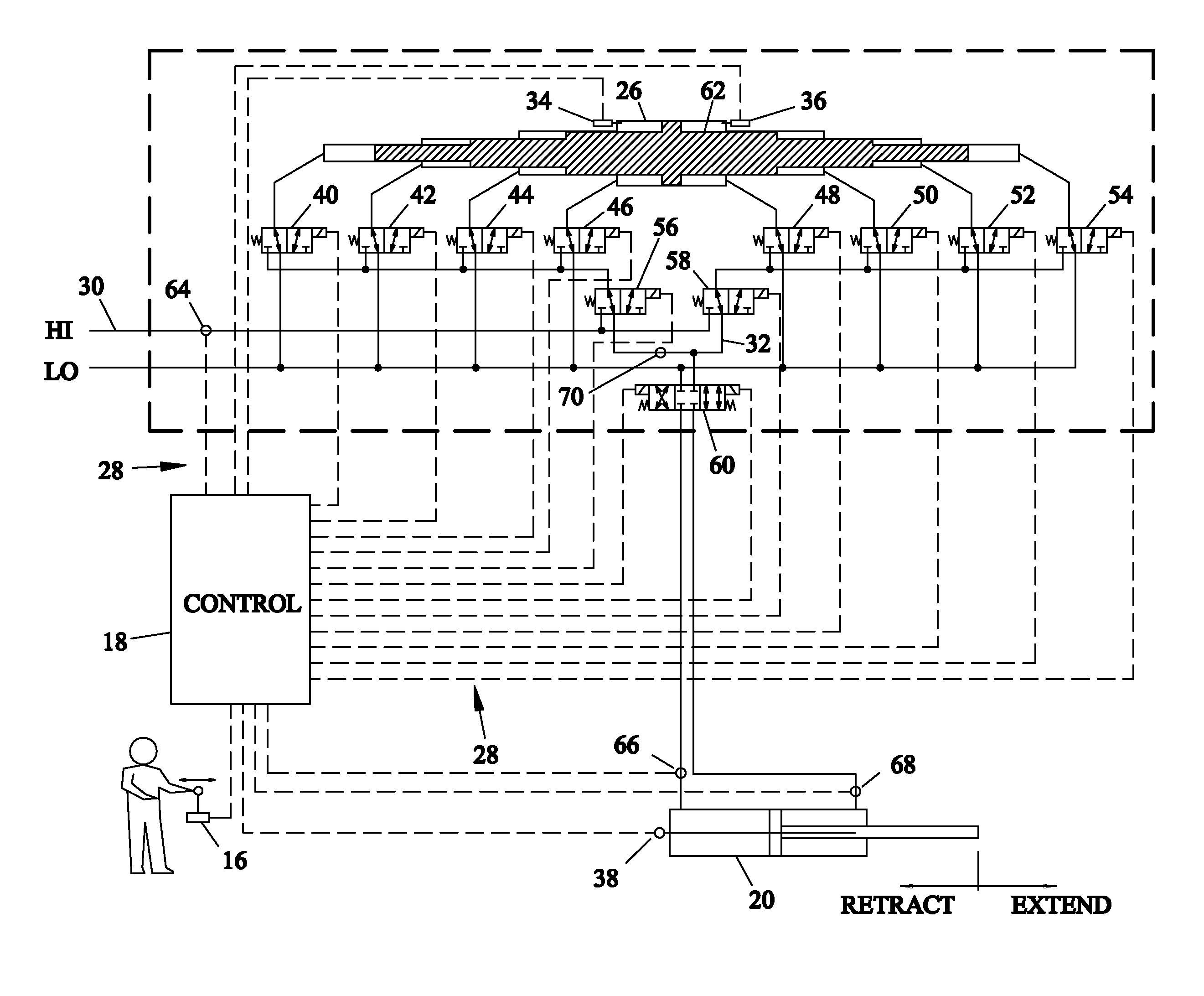
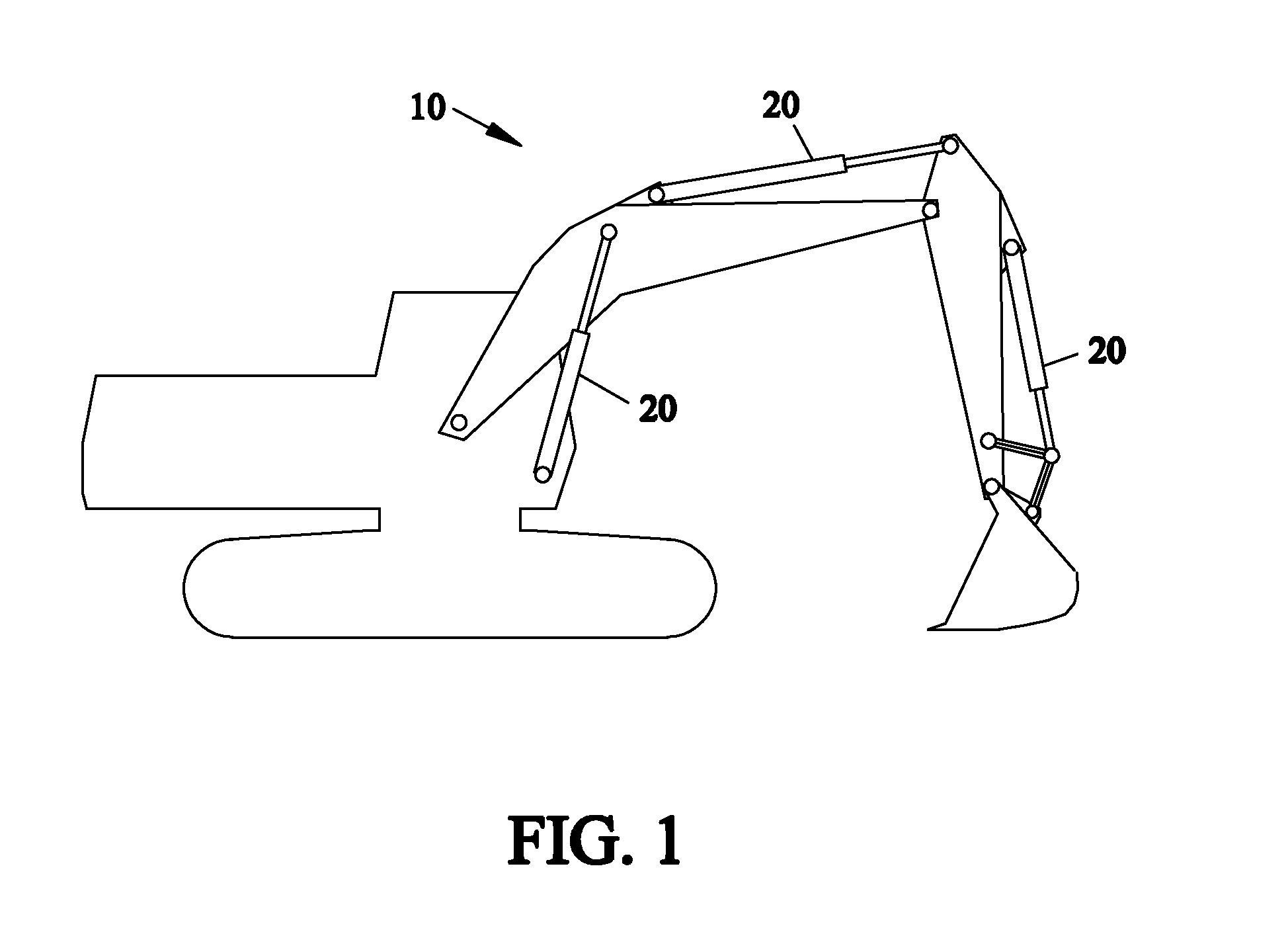
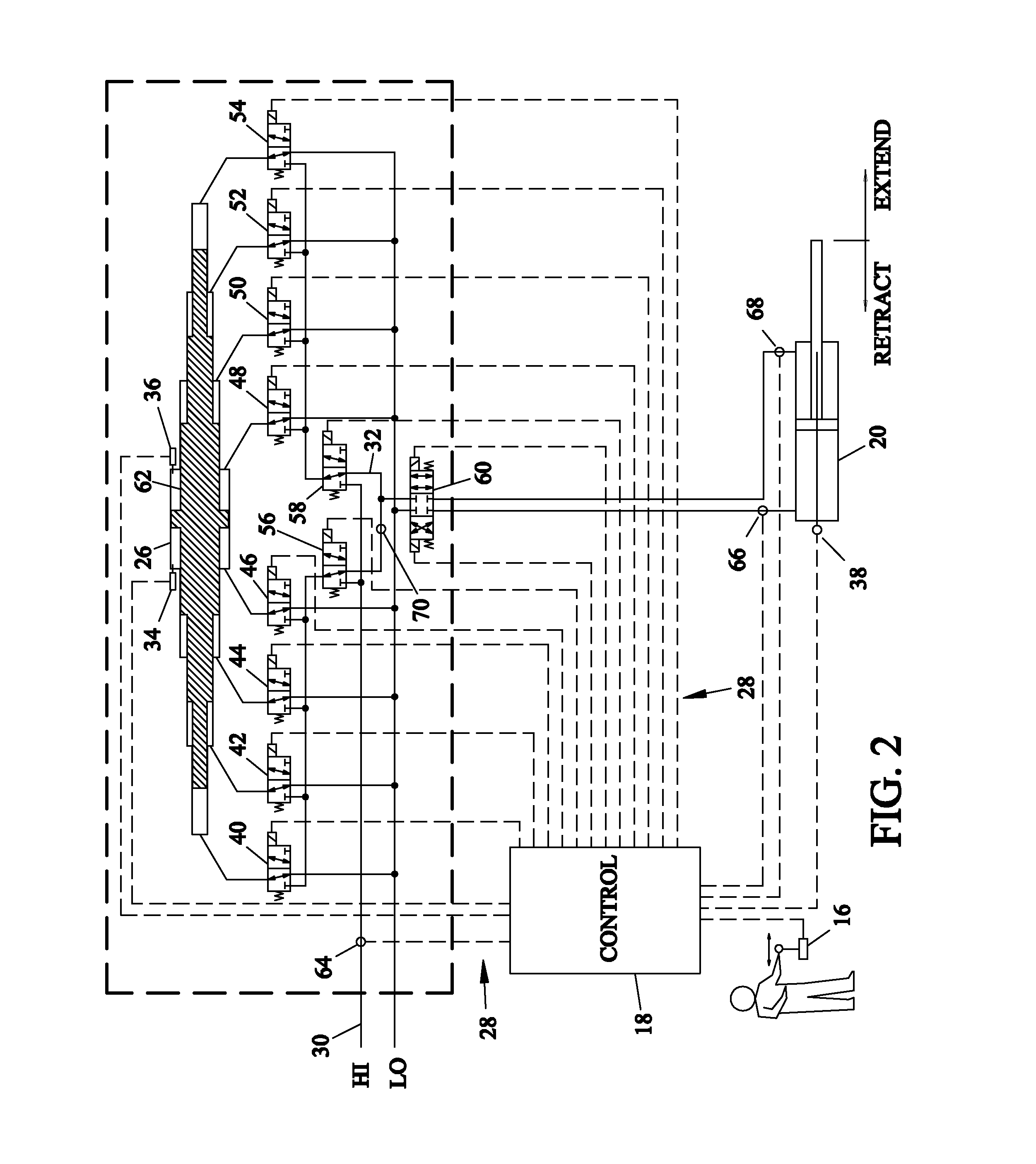

Digital Hydraulics Valve Stage
PatentInactiveUS20120286180A1
Innovation
- Incorporating a proportionally adjustable compensating valve, preferably with the smallest or second smallest switching valve's through-flow, and using pulse width modulation (PWM) to achieve sub-digit accuracy without additional installation, allowing for more precise control of position, rate, or pressure by creating interim values between opening cross-section stages.


Energy Efficiency Standards for Hydraulic Systems
Energy efficiency standards for hydraulic systems have become increasingly critical as digital hydraulics revolutionize programmable fluid dynamics applications. Traditional hydraulic systems typically operate at 30-40% efficiency, but digital hydraulic technologies are driving new regulatory frameworks that demand significantly higher performance benchmarks. Current international standards, including ISO 4413 and NFPA T2.24.1, are being updated to accommodate the precision control capabilities of digitally-controlled hydraulic components.
The European Union's Ecodesign Directive has established preliminary efficiency thresholds for digital hydraulic systems, requiring minimum 60% overall system efficiency for new installations by 2025. These standards specifically address programmable fluid dynamics applications where variable flow control and pressure modulation are essential. The directive emphasizes energy recovery systems and intelligent pump control algorithms that can adapt to real-time load conditions.
North American standards, led by ANSI/NFPA guidelines, focus on power consumption metrics for digital valve arrays and smart actuator systems. The standards mandate energy monitoring capabilities in programmable hydraulic systems, requiring real-time efficiency reporting and automatic optimization protocols. These regulations particularly impact mobile hydraulic applications where battery life and fuel consumption are critical performance indicators.
Emerging standards are addressing the unique characteristics of digital hydraulic systems, including switching frequency optimization and pressure ripple minimization. The International Electrotechnical Commission is developing IEC 61800-9-3 specifically for digitally controlled hydraulic drives, establishing efficiency classes similar to electric motor standards. These classifications range from IE1 to IE4, with IE4 representing systems achieving over 75% efficiency through advanced digital control algorithms.
Compliance verification protocols require standardized testing procedures for programmable fluid dynamics systems. The standards mandate specific measurement points for pressure, flow, and power consumption across various operating conditions. Testing must demonstrate efficiency performance under dynamic loading scenarios typical of programmable applications, including rapid pressure changes and multi-actuator coordination sequences.
Future regulatory developments are expected to incorporate machine learning-based optimization requirements, mandating adaptive control systems that continuously improve efficiency through operational data analysis. These evolving standards will likely establish minimum requirements for predictive maintenance capabilities and energy usage optimization algorithms in digital hydraulic systems.
The European Union's Ecodesign Directive has established preliminary efficiency thresholds for digital hydraulic systems, requiring minimum 60% overall system efficiency for new installations by 2025. These standards specifically address programmable fluid dynamics applications where variable flow control and pressure modulation are essential. The directive emphasizes energy recovery systems and intelligent pump control algorithms that can adapt to real-time load conditions.
North American standards, led by ANSI/NFPA guidelines, focus on power consumption metrics for digital valve arrays and smart actuator systems. The standards mandate energy monitoring capabilities in programmable hydraulic systems, requiring real-time efficiency reporting and automatic optimization protocols. These regulations particularly impact mobile hydraulic applications where battery life and fuel consumption are critical performance indicators.
Emerging standards are addressing the unique characteristics of digital hydraulic systems, including switching frequency optimization and pressure ripple minimization. The International Electrotechnical Commission is developing IEC 61800-9-3 specifically for digitally controlled hydraulic drives, establishing efficiency classes similar to electric motor standards. These classifications range from IE1 to IE4, with IE4 representing systems achieving over 75% efficiency through advanced digital control algorithms.
Compliance verification protocols require standardized testing procedures for programmable fluid dynamics systems. The standards mandate specific measurement points for pressure, flow, and power consumption across various operating conditions. Testing must demonstrate efficiency performance under dynamic loading scenarios typical of programmable applications, including rapid pressure changes and multi-actuator coordination sequences.
Future regulatory developments are expected to incorporate machine learning-based optimization requirements, mandating adaptive control systems that continuously improve efficiency through operational data analysis. These evolving standards will likely establish minimum requirements for predictive maintenance capabilities and energy usage optimization algorithms in digital hydraulic systems.
Industrial Safety Regulations for Digital Hydraulics
The industrial safety regulatory landscape for digital hydraulics represents a complex framework that addresses the unique challenges posed by electronically controlled fluid power systems. Unlike traditional hydraulic systems, digital hydraulics incorporate sophisticated electronic components, sensors, and control algorithms that require specialized safety considerations beyond conventional mechanical safeguards.
Current regulatory frameworks primarily stem from established hydraulic safety standards such as ISO 4413 and ANSI/NFPA T2.24.1, which have been adapted to accommodate digital control elements. These standards emphasize the critical importance of fail-safe mechanisms, redundant safety systems, and proper isolation procedures for electronically controlled hydraulic components. The integration of digital control systems has necessitated additional compliance requirements related to electromagnetic compatibility, cybersecurity protocols, and software validation procedures.
Pressure management regulations constitute a fundamental aspect of digital hydraulic safety, particularly given the system's ability to rapidly modulate pressure levels through electronic control. Regulatory bodies mandate the implementation of multiple pressure relief mechanisms, including both software-based pressure limiting algorithms and hardware-based mechanical relief valves. These dual-layer protection systems ensure that even in the event of electronic control failure, hydraulic pressures remain within safe operational parameters.
The programmable nature of digital hydraulic systems has introduced new regulatory considerations regarding software safety and validation. Standards such as IEC 61508 for functional safety of electrical systems now apply to digital hydraulic applications, requiring rigorous software testing, validation protocols, and documentation procedures. These regulations mandate that safety-critical software functions undergo extensive verification processes and maintain appropriate Safety Integrity Levels based on the potential consequences of system failure.
Environmental and containment regulations have evolved to address the unique operational characteristics of digital hydraulic systems. The precise control capabilities of these systems have led to more stringent requirements for fluid containment, leak detection, and environmental monitoring. Regulatory frameworks now specify advanced leak detection systems that can interface with digital control networks to provide real-time monitoring and automatic system shutdown capabilities.
Operator safety regulations emphasize comprehensive training requirements that encompass both traditional hydraulic safety principles and digital system-specific hazards. These regulations mandate specialized certification programs for technicians working with digitally controlled hydraulic systems, covering topics such as electronic safety procedures, software diagnostics, and emergency shutdown protocols. The complexity of digital hydraulic systems has resulted in more detailed lockout/tagout procedures that address both mechanical and electronic energy sources.
Current regulatory frameworks primarily stem from established hydraulic safety standards such as ISO 4413 and ANSI/NFPA T2.24.1, which have been adapted to accommodate digital control elements. These standards emphasize the critical importance of fail-safe mechanisms, redundant safety systems, and proper isolation procedures for electronically controlled hydraulic components. The integration of digital control systems has necessitated additional compliance requirements related to electromagnetic compatibility, cybersecurity protocols, and software validation procedures.
Pressure management regulations constitute a fundamental aspect of digital hydraulic safety, particularly given the system's ability to rapidly modulate pressure levels through electronic control. Regulatory bodies mandate the implementation of multiple pressure relief mechanisms, including both software-based pressure limiting algorithms and hardware-based mechanical relief valves. These dual-layer protection systems ensure that even in the event of electronic control failure, hydraulic pressures remain within safe operational parameters.
The programmable nature of digital hydraulic systems has introduced new regulatory considerations regarding software safety and validation. Standards such as IEC 61508 for functional safety of electrical systems now apply to digital hydraulic applications, requiring rigorous software testing, validation protocols, and documentation procedures. These regulations mandate that safety-critical software functions undergo extensive verification processes and maintain appropriate Safety Integrity Levels based on the potential consequences of system failure.
Environmental and containment regulations have evolved to address the unique operational characteristics of digital hydraulic systems. The precise control capabilities of these systems have led to more stringent requirements for fluid containment, leak detection, and environmental monitoring. Regulatory frameworks now specify advanced leak detection systems that can interface with digital control networks to provide real-time monitoring and automatic system shutdown capabilities.
Operator safety regulations emphasize comprehensive training requirements that encompass both traditional hydraulic safety principles and digital system-specific hazards. These regulations mandate specialized certification programs for technicians working with digitally controlled hydraulic systems, covering topics such as electronic safety procedures, software diagnostics, and emergency shutdown protocols. The complexity of digital hydraulic systems has resulted in more detailed lockout/tagout procedures that address both mechanical and electronic energy sources.
Unlock deeper insights with PatSnap Eureka Quick Research — get a full tech report to explore trends and direct your research. Try now!
Generate Your Research Report Instantly with AI Agent
Supercharge your innovation with PatSnap Eureka AI Agent Platform!