How do mild hybrids influence vehicle aerodynamic efficiency
AUG 18, 20259 MIN READ
Generate Your Research Report Instantly with AI Agent
PatSnap Eureka helps you evaluate technical feasibility & market potential.
Mild Hybrid Tech Evolution and Objectives
Mild hybrid technology has evolved significantly over the past two decades, driven by the automotive industry's pursuit of improved fuel efficiency and reduced emissions. The primary objective of mild hybrid systems is to enhance conventional internal combustion engine (ICE) vehicles with electric assistance, without the complexity and cost associated with full hybrid or plug-in hybrid systems.
The evolution of mild hybrid technology can be traced back to the early 2000s when automakers began experimenting with integrated starter-generator systems. These early iterations focused on providing start-stop functionality and limited power assist during acceleration. As the technology progressed, more sophisticated 48-volt systems emerged, offering increased electric power and expanded capabilities.
A key milestone in mild hybrid development was the introduction of belt-driven starter-generator (BSG) systems, which allowed for smoother integration with existing powertrains. This advancement paved the way for more widespread adoption across various vehicle segments. Subsequently, the integration of lithium-ion batteries and more powerful electric motors further enhanced the performance and efficiency gains of mild hybrid systems.
The current generation of mild hybrid technology aims to achieve multiple objectives simultaneously. These include improving fuel economy by up to 15%, reducing CO2 emissions, enhancing vehicle performance, and providing a more refined driving experience. Additionally, mild hybrid systems enable the implementation of advanced features such as electric torque fill, coasting, and regenerative braking, which contribute to overall vehicle efficiency.
In the context of aerodynamic efficiency, mild hybrid technology plays a crucial role in enabling design optimizations that were previously challenging to implement. The additional electrical power provided by mild hybrid systems allows for the integration of active aerodynamic features, such as grille shutters and adjustable spoilers, which can be dynamically controlled to reduce drag at higher speeds.
Furthermore, the compact nature of mild hybrid components, particularly in 48-volt systems, offers greater flexibility in vehicle packaging. This allows engineers to design more aerodynamic body shapes without compromising interior space or functionality. The reduced reliance on belt-driven accessories also contributes to a smoother underbody, further enhancing aerodynamic performance.
Looking ahead, the objectives for mild hybrid technology in relation to aerodynamic efficiency include further integration of electrified systems to support advanced active aerodynamic features, development of more compact and efficient electric components to allow for even sleeker vehicle designs, and the exploration of novel energy recovery systems that can harness aerodynamic forces to generate electricity.
The evolution of mild hybrid technology can be traced back to the early 2000s when automakers began experimenting with integrated starter-generator systems. These early iterations focused on providing start-stop functionality and limited power assist during acceleration. As the technology progressed, more sophisticated 48-volt systems emerged, offering increased electric power and expanded capabilities.
A key milestone in mild hybrid development was the introduction of belt-driven starter-generator (BSG) systems, which allowed for smoother integration with existing powertrains. This advancement paved the way for more widespread adoption across various vehicle segments. Subsequently, the integration of lithium-ion batteries and more powerful electric motors further enhanced the performance and efficiency gains of mild hybrid systems.
The current generation of mild hybrid technology aims to achieve multiple objectives simultaneously. These include improving fuel economy by up to 15%, reducing CO2 emissions, enhancing vehicle performance, and providing a more refined driving experience. Additionally, mild hybrid systems enable the implementation of advanced features such as electric torque fill, coasting, and regenerative braking, which contribute to overall vehicle efficiency.
In the context of aerodynamic efficiency, mild hybrid technology plays a crucial role in enabling design optimizations that were previously challenging to implement. The additional electrical power provided by mild hybrid systems allows for the integration of active aerodynamic features, such as grille shutters and adjustable spoilers, which can be dynamically controlled to reduce drag at higher speeds.
Furthermore, the compact nature of mild hybrid components, particularly in 48-volt systems, offers greater flexibility in vehicle packaging. This allows engineers to design more aerodynamic body shapes without compromising interior space or functionality. The reduced reliance on belt-driven accessories also contributes to a smoother underbody, further enhancing aerodynamic performance.
Looking ahead, the objectives for mild hybrid technology in relation to aerodynamic efficiency include further integration of electrified systems to support advanced active aerodynamic features, development of more compact and efficient electric components to allow for even sleeker vehicle designs, and the exploration of novel energy recovery systems that can harness aerodynamic forces to generate electricity.
Market Demand for Fuel-Efficient Vehicles
The market demand for fuel-efficient vehicles has been steadily increasing over the past decade, driven by a combination of environmental concerns, rising fuel costs, and stricter government regulations. Mild hybrid technology, which integrates electric assistance with conventional internal combustion engines, has emerged as a popular solution to meet this growing demand for improved fuel economy.
Consumer awareness of climate change and the environmental impact of transportation has significantly influenced purchasing decisions. A survey conducted by Cox Automotive revealed that 65% of consumers consider fuel efficiency as a crucial factor when buying a new vehicle. This shift in consumer preferences has prompted automakers to invest heavily in hybrid and electric vehicle technologies, with mild hybrids serving as an attractive intermediate option.
Government policies and regulations have also played a pivotal role in shaping market demand. Many countries have implemented stringent fuel economy standards and emissions regulations, incentivizing manufacturers to adopt fuel-saving technologies. For instance, the European Union's CO2 emissions targets for new cars have become increasingly stringent, with a goal of reducing emissions by 37.5% by 2030 compared to 2021 levels. These regulations have created a strong market pull for mild hybrid systems.
The global mild hybrid market has experienced substantial growth in recent years. According to a report by MarketsandMarkets, the mild hybrid market is projected to grow from 7.9 million units in 2021 to 31.6 million units by 2026, at a CAGR of 32.1%. This rapid growth is attributed to the technology's ability to provide significant fuel economy improvements without the high costs associated with full hybrid or electric vehicles.
Mild hybrid systems offer a compelling value proposition for consumers seeking improved fuel efficiency without compromising on performance or incurring the higher costs of full hybrid vehicles. The technology's ability to reduce fuel consumption by 10-15% in urban driving conditions has made it particularly attractive in congested city environments where stop-start traffic is common.
The automotive industry has responded to this demand by expanding their mild hybrid offerings across various vehicle segments. Luxury car manufacturers, such as BMW and Mercedes-Benz, have integrated mild hybrid systems into their high-end models, while mass-market brands like Ford and Volkswagen have introduced the technology in their popular compact and mid-size vehicles.
As the market for fuel-efficient vehicles continues to grow, mild hybrid technology is expected to play an increasingly important role. Its ability to improve aerodynamic efficiency through features like regenerative braking and electric boost during acceleration aligns well with consumer demands for better fuel economy and reduced environmental impact. The technology's scalability and relatively low implementation costs make it an attractive option for automakers looking to meet stringent fuel economy standards while catering to cost-conscious consumers.
Consumer awareness of climate change and the environmental impact of transportation has significantly influenced purchasing decisions. A survey conducted by Cox Automotive revealed that 65% of consumers consider fuel efficiency as a crucial factor when buying a new vehicle. This shift in consumer preferences has prompted automakers to invest heavily in hybrid and electric vehicle technologies, with mild hybrids serving as an attractive intermediate option.
Government policies and regulations have also played a pivotal role in shaping market demand. Many countries have implemented stringent fuel economy standards and emissions regulations, incentivizing manufacturers to adopt fuel-saving technologies. For instance, the European Union's CO2 emissions targets for new cars have become increasingly stringent, with a goal of reducing emissions by 37.5% by 2030 compared to 2021 levels. These regulations have created a strong market pull for mild hybrid systems.
The global mild hybrid market has experienced substantial growth in recent years. According to a report by MarketsandMarkets, the mild hybrid market is projected to grow from 7.9 million units in 2021 to 31.6 million units by 2026, at a CAGR of 32.1%. This rapid growth is attributed to the technology's ability to provide significant fuel economy improvements without the high costs associated with full hybrid or electric vehicles.
Mild hybrid systems offer a compelling value proposition for consumers seeking improved fuel efficiency without compromising on performance or incurring the higher costs of full hybrid vehicles. The technology's ability to reduce fuel consumption by 10-15% in urban driving conditions has made it particularly attractive in congested city environments where stop-start traffic is common.
The automotive industry has responded to this demand by expanding their mild hybrid offerings across various vehicle segments. Luxury car manufacturers, such as BMW and Mercedes-Benz, have integrated mild hybrid systems into their high-end models, while mass-market brands like Ford and Volkswagen have introduced the technology in their popular compact and mid-size vehicles.
As the market for fuel-efficient vehicles continues to grow, mild hybrid technology is expected to play an increasingly important role. Its ability to improve aerodynamic efficiency through features like regenerative braking and electric boost during acceleration aligns well with consumer demands for better fuel economy and reduced environmental impact. The technology's scalability and relatively low implementation costs make it an attractive option for automakers looking to meet stringent fuel economy standards while catering to cost-conscious consumers.
Current Mild Hybrid Aerodynamic Challenges
Mild hybrid vehicles present unique aerodynamic challenges that differ from conventional internal combustion engine (ICE) vehicles and full hybrid or electric vehicles. The integration of electric components and the need for efficient energy management create new considerations for aerodynamic design.
One of the primary challenges is the incorporation of additional cooling systems. Mild hybrid powertrains often require separate cooling circuits for the electric motor, battery pack, and power electronics. These additional radiators and cooling inlets can disrupt the smooth airflow around the vehicle, increasing drag and potentially reducing overall aerodynamic efficiency.
The placement of the electric motor and battery pack also poses challenges. While these components are generally smaller in mild hybrids compared to full hybrids, they still require strategic positioning to maintain optimal weight distribution and minimize impact on the vehicle's aerodynamic profile. Engineers must find innovative ways to integrate these components without compromising the vehicle's sleek design or increasing frontal area.
Regenerative braking systems, a key feature of mild hybrids, introduce another aerodynamic consideration. The energy recovery process during deceleration can affect the vehicle's dynamic behavior, potentially altering its aerodynamic characteristics at different speeds and during braking events. Designers must account for these changes to ensure consistent aerodynamic performance across various driving conditions.
The start-stop functionality of mild hybrids presents a unique challenge for thermal management. When the engine shuts off at idle, there is a need to maintain airflow for cooling critical components. This requires careful design of passive and active cooling systems that can operate efficiently without relying solely on the engine's operation, potentially impacting the vehicle's overall aerodynamic package.
Weight reduction is crucial for mild hybrids to maximize fuel efficiency gains. However, this often leads to the use of lighter materials that may have different surface properties or structural rigidity compared to traditional materials. These changes can affect the vehicle's aerodynamic behavior, requiring adjustments in body panel design and overall shape optimization.
Mild hybrids also face the challenge of balancing aerodynamic efficiency with the need for increased underbody protection. The presence of high-voltage components and batteries necessitates additional shielding, which can interfere with smooth underbody airflow – a critical factor in reducing overall drag.
Furthermore, the integration of energy-efficient technologies such as low rolling resistance tires can impact a vehicle's handling characteristics. This, in turn, may require modifications to the vehicle's aerodynamic elements to maintain stability and performance, particularly at higher speeds or in crosswind conditions.
One of the primary challenges is the incorporation of additional cooling systems. Mild hybrid powertrains often require separate cooling circuits for the electric motor, battery pack, and power electronics. These additional radiators and cooling inlets can disrupt the smooth airflow around the vehicle, increasing drag and potentially reducing overall aerodynamic efficiency.
The placement of the electric motor and battery pack also poses challenges. While these components are generally smaller in mild hybrids compared to full hybrids, they still require strategic positioning to maintain optimal weight distribution and minimize impact on the vehicle's aerodynamic profile. Engineers must find innovative ways to integrate these components without compromising the vehicle's sleek design or increasing frontal area.
Regenerative braking systems, a key feature of mild hybrids, introduce another aerodynamic consideration. The energy recovery process during deceleration can affect the vehicle's dynamic behavior, potentially altering its aerodynamic characteristics at different speeds and during braking events. Designers must account for these changes to ensure consistent aerodynamic performance across various driving conditions.
The start-stop functionality of mild hybrids presents a unique challenge for thermal management. When the engine shuts off at idle, there is a need to maintain airflow for cooling critical components. This requires careful design of passive and active cooling systems that can operate efficiently without relying solely on the engine's operation, potentially impacting the vehicle's overall aerodynamic package.
Weight reduction is crucial for mild hybrids to maximize fuel efficiency gains. However, this often leads to the use of lighter materials that may have different surface properties or structural rigidity compared to traditional materials. These changes can affect the vehicle's aerodynamic behavior, requiring adjustments in body panel design and overall shape optimization.
Mild hybrids also face the challenge of balancing aerodynamic efficiency with the need for increased underbody protection. The presence of high-voltage components and batteries necessitates additional shielding, which can interfere with smooth underbody airflow – a critical factor in reducing overall drag.
Furthermore, the integration of energy-efficient technologies such as low rolling resistance tires can impact a vehicle's handling characteristics. This, in turn, may require modifications to the vehicle's aerodynamic elements to maintain stability and performance, particularly at higher speeds or in crosswind conditions.
Existing Mild Hybrid Aerodynamic Solutions
01 Aerodynamic design for mild hybrid vehicles
Implementing aerodynamic designs in mild hybrid vehicles to reduce air resistance and improve fuel efficiency. This includes optimizing the vehicle's shape, adding spoilers, and using streamlined body panels to minimize drag and enhance overall performance.- Aerodynamic design for mild hybrid vehicles: Implementing aerodynamic designs in mild hybrid vehicles to reduce air resistance and improve fuel efficiency. This includes optimizing the vehicle's shape, adding spoilers, and using streamlined components to minimize drag and enhance overall performance.
- Integration of hybrid powertrain with aerodynamic features: Combining mild hybrid powertrains with aerodynamic enhancements to maximize energy efficiency. This involves coordinating the hybrid system's operation with aerodynamic elements to optimize power distribution and reduce energy losses during various driving conditions.
- Active aerodynamic systems for mild hybrids: Incorporating active aerodynamic systems in mild hybrid vehicles that can adjust in real-time based on driving conditions. These systems may include adaptive grille shutters, retractable spoilers, or adjustable air dams that automatically deploy to improve aerodynamics and fuel efficiency.
- Lightweight materials for improved aerodynamics: Utilizing lightweight materials in the construction of mild hybrid vehicles to enhance aerodynamic efficiency. This includes using advanced composites, high-strength steels, and aluminum alloys to reduce overall vehicle weight while maintaining structural integrity and improving fuel economy.
- Aerodynamic energy recovery systems: Developing energy recovery systems that harness aerodynamic forces in mild hybrid vehicles. These systems may include regenerative braking technologies that capture and store energy from air resistance during deceleration, further improving the overall efficiency of the hybrid powertrain.
02 Integration of hybrid powertrain with aerodynamic features
Combining mild hybrid powertrains with aerodynamic enhancements to maximize energy efficiency. This involves coordinating the hybrid system's operation with aerodynamic elements such as active grille shutters and adjustable ride height to optimize performance in various driving conditions.Expand Specific Solutions03 Lightweight materials for improved efficiency
Utilizing lightweight materials in mild hybrid vehicle construction to reduce overall weight and improve aerodynamic efficiency. This includes the use of advanced composites, high-strength steels, and aluminum alloys in body panels and structural components.Expand Specific Solutions04 Active aerodynamic systems for mild hybrids
Implementing active aerodynamic systems in mild hybrid vehicles to dynamically adjust the vehicle's aerodynamic profile based on driving conditions. This includes deployable spoilers, adaptive front grilles, and adjustable air dams that can be controlled by the vehicle's onboard computer system.Expand Specific Solutions05 Regenerative braking and aerodynamic efficiency
Optimizing the interaction between regenerative braking systems and aerodynamic features in mild hybrid vehicles. This involves coordinating brake energy recovery with aerodynamic drag reduction techniques to maximize overall energy efficiency during deceleration and cruising.Expand Specific Solutions
Key Players in Mild Hybrid Technology
The mild hybrid technology market is in a growth phase, with increasing adoption across the automotive industry. The market size is expanding as more manufacturers incorporate mild hybrid systems into their vehicle lineups. Technologically, mild hybrids are relatively mature, with established players like Toyota, Hyundai, and Audi leading the way. However, there's ongoing innovation in aerodynamic efficiency integration. Companies such as Nissan, Ford, and BMW are actively researching and developing advanced mild hybrid systems that optimize vehicle aerodynamics, aiming to further improve fuel efficiency and reduce emissions. The competitive landscape is intensifying as both traditional automakers and new entrants seek to differentiate their offerings through enhanced mild hybrid technologies.
Hyundai Motor Co., Ltd.
Technical Solution: Hyundai's approach to mild hybrid aerodynamic efficiency focuses on their innovative 48V system. This system incorporates a belt-driven starter generator that enables quick and smooth engine restarts, reducing idle time and improving overall efficiency[1]. Hyundai has also developed an active air flap system that automatically adjusts the front grille opening based on driving conditions, optimizing airflow and reducing drag[2]. Their mild hybrid vehicles feature redesigned underbody covers and rear diffusers to streamline airflow beneath the car[3]. These aerodynamic enhancements, combined with the mild hybrid powertrain, have reportedly led to a 3-5% improvement in fuel economy and reduced CO2 emissions by up to 10g/km in real-world driving conditions[4].
Strengths: Advanced 48V system integration, focus on active aerodynamic features. Weaknesses: Limited to certain vehicle models, potentially higher initial cost.
Toyota Motor Corp.
Technical Solution: Toyota has developed an advanced mild hybrid system that significantly improves vehicle aerodynamic efficiency. Their system utilizes a compact electric motor-generator integrated into the transmission, which allows for seamless engine start/stop functionality and energy recuperation during deceleration[1]. The system also incorporates active grille shutters that automatically close at high speeds to reduce drag[2]. Additionally, Toyota has implemented underbody panels and optimized wheel designs to minimize air turbulence[3]. These combined technologies have resulted in a reported 5-7% improvement in fuel efficiency for their mild hybrid vehicles compared to conventional models[4].
Strengths: Seamless integration of hybrid technology, comprehensive approach to aerodynamics. Weaknesses: Potential increased complexity and cost of manufacturing.
Core Innovations in Hybrid Aerodynamics
Mild hybrid system
PatentWO2011152619A2
Innovation
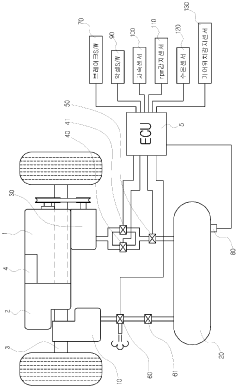
- A hybrid engine system utilizing a compressor, compressed air cylinder, turbine, and solenoid valves to control compressed air supply for smooth engine start and acceleration, reducing engine load and maintaining efficient operation without design changes to existing engines.

Mild hybrid system and method for controlling the same
PatentActiveUS20110115288A1
Innovation
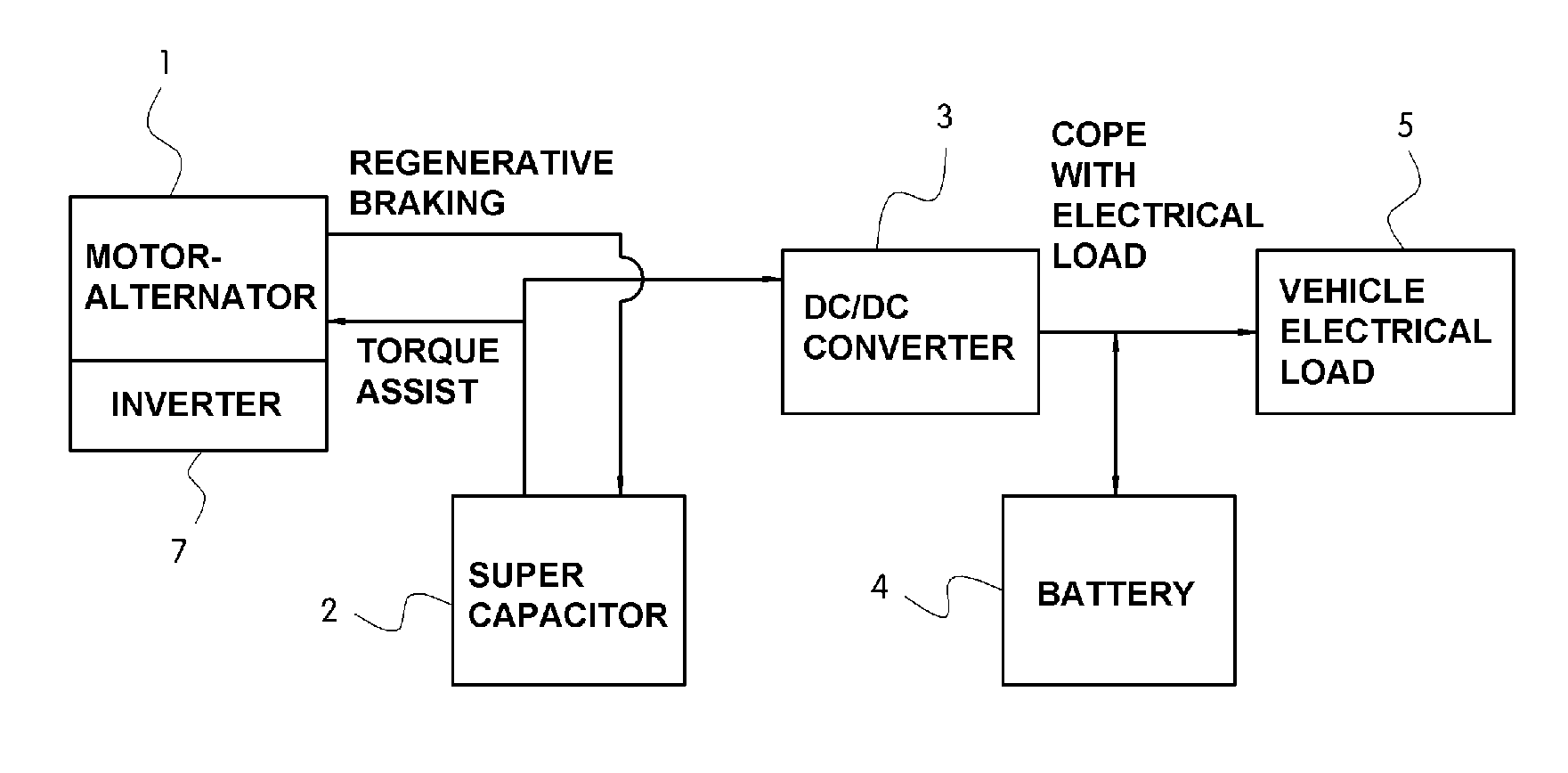
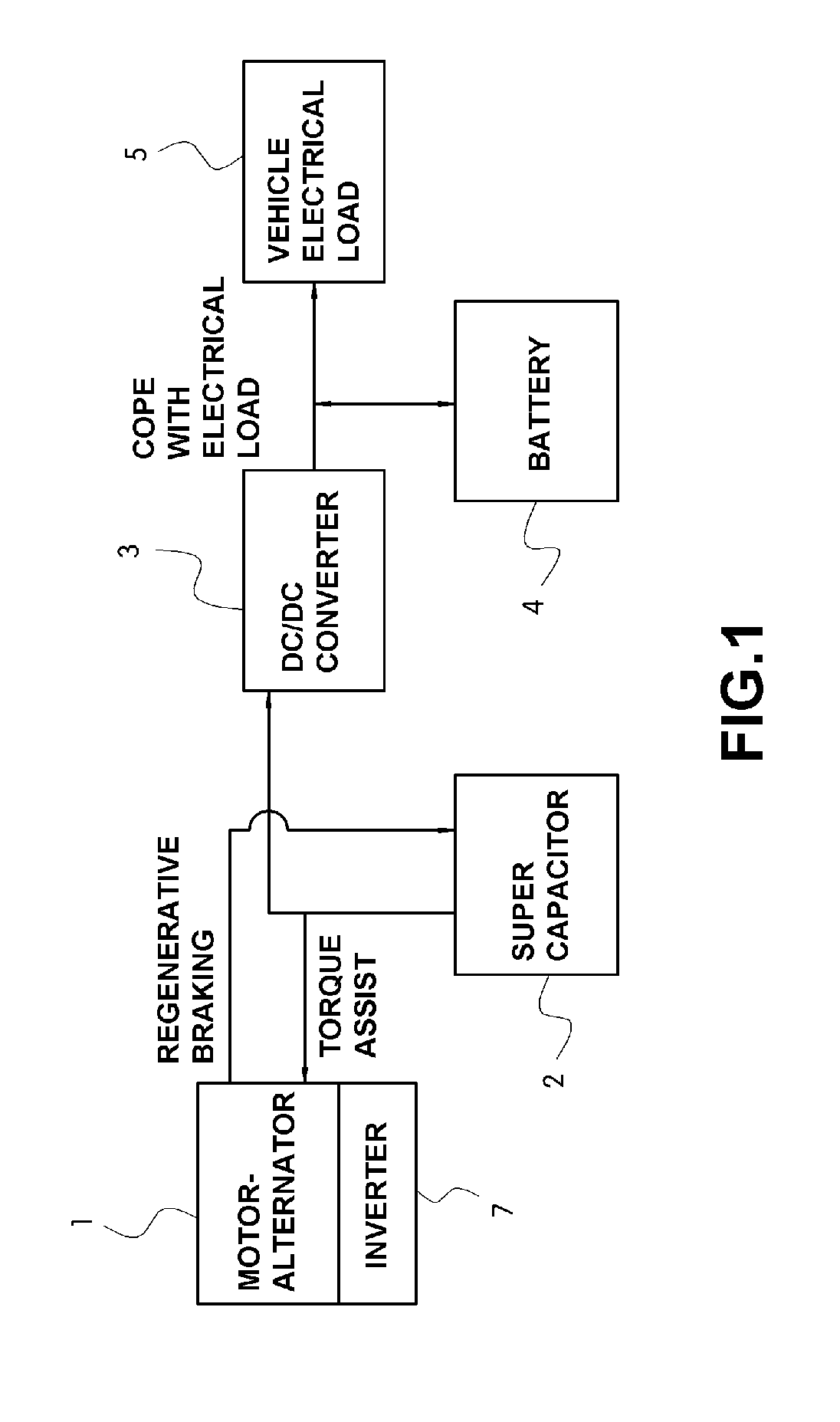
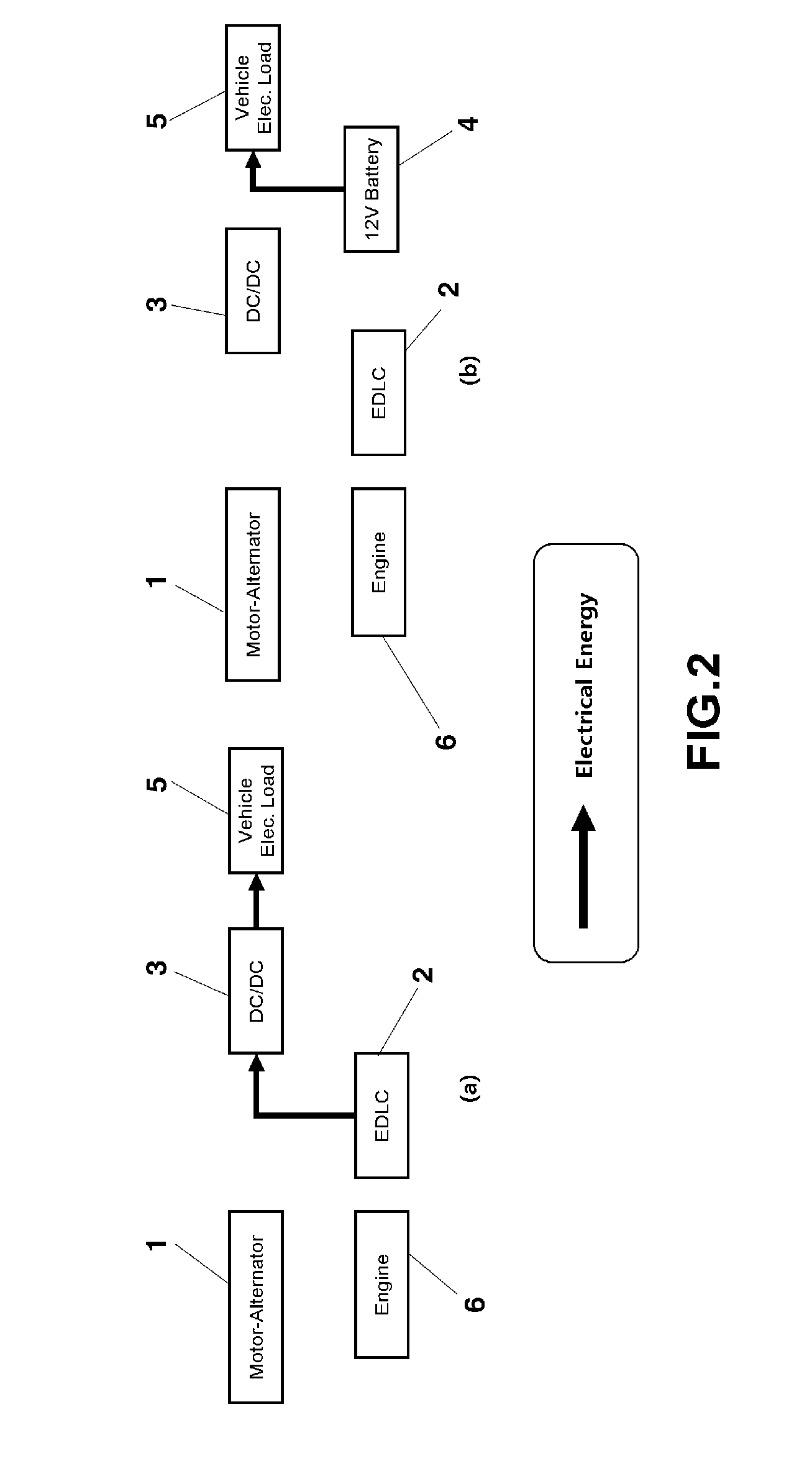
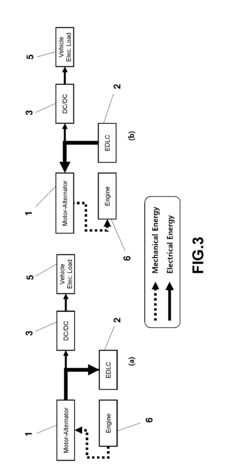
- A mild hybrid system utilizing a unidirectional DC/DC buck converter with a bypass function allows for bidirectional electricity flow, reducing the generation load of the motor-alternator and eliminating the need for a bidirectional converter by directly connecting high and low voltage terminals during high electrical loads, ensuring stable engine start-up.
Environmental Impact of Mild Hybrids
Mild hybrid vehicles, which combine traditional internal combustion engines with small electric motors, have a significant impact on the environmental footprint of automotive transportation. These systems offer a balance between conventional and fully electric vehicles, providing improved fuel efficiency and reduced emissions without the need for extensive charging infrastructure.
The primary environmental benefit of mild hybrids lies in their ability to reduce fuel consumption and, consequently, greenhouse gas emissions. By utilizing regenerative braking and providing electric assist during acceleration, mild hybrid systems can improve fuel economy by 10-15% compared to conventional vehicles. This translates to a proportional reduction in CO2 emissions, contributing to efforts to mitigate climate change and improve air quality in urban areas.
Furthermore, mild hybrid technology helps address the issue of particulate matter emissions, particularly in diesel engines. The electric assist can reduce the load on the combustion engine during acceleration, leading to more efficient combustion and fewer particulate emissions. This is especially beneficial in urban environments where air quality is a significant concern.
The manufacturing process of mild hybrid vehicles also has environmental implications. While the production of additional components such as electric motors and batteries does increase the initial environmental footprint, the long-term benefits often outweigh this initial impact. The batteries used in mild hybrid systems are typically smaller and less resource-intensive than those in full hybrid or electric vehicles, resulting in a lower overall environmental impact from production.
End-of-life considerations for mild hybrid vehicles are also important. The recycling of batteries and electric components presents both challenges and opportunities. As the technology becomes more widespread, recycling infrastructure and processes are likely to improve, further reducing the lifecycle environmental impact of these vehicles.
It's worth noting that the environmental benefits of mild hybrids can vary depending on factors such as driving conditions, vehicle size, and energy sources used for electricity generation. In regions where electricity is primarily generated from renewable sources, the environmental advantages of mild hybrids are more pronounced.
In conclusion, while mild hybrid technology represents an incremental rather than revolutionary change in vehicle propulsion, its widespread adoption can lead to significant cumulative environmental benefits. As the technology continues to evolve and become more efficient, its positive impact on reducing emissions and improving air quality is likely to increase, making it an important stepping stone in the transition towards more sustainable transportation solutions.
The primary environmental benefit of mild hybrids lies in their ability to reduce fuel consumption and, consequently, greenhouse gas emissions. By utilizing regenerative braking and providing electric assist during acceleration, mild hybrid systems can improve fuel economy by 10-15% compared to conventional vehicles. This translates to a proportional reduction in CO2 emissions, contributing to efforts to mitigate climate change and improve air quality in urban areas.
Furthermore, mild hybrid technology helps address the issue of particulate matter emissions, particularly in diesel engines. The electric assist can reduce the load on the combustion engine during acceleration, leading to more efficient combustion and fewer particulate emissions. This is especially beneficial in urban environments where air quality is a significant concern.
The manufacturing process of mild hybrid vehicles also has environmental implications. While the production of additional components such as electric motors and batteries does increase the initial environmental footprint, the long-term benefits often outweigh this initial impact. The batteries used in mild hybrid systems are typically smaller and less resource-intensive than those in full hybrid or electric vehicles, resulting in a lower overall environmental impact from production.
End-of-life considerations for mild hybrid vehicles are also important. The recycling of batteries and electric components presents both challenges and opportunities. As the technology becomes more widespread, recycling infrastructure and processes are likely to improve, further reducing the lifecycle environmental impact of these vehicles.
It's worth noting that the environmental benefits of mild hybrids can vary depending on factors such as driving conditions, vehicle size, and energy sources used for electricity generation. In regions where electricity is primarily generated from renewable sources, the environmental advantages of mild hybrids are more pronounced.
In conclusion, while mild hybrid technology represents an incremental rather than revolutionary change in vehicle propulsion, its widespread adoption can lead to significant cumulative environmental benefits. As the technology continues to evolve and become more efficient, its positive impact on reducing emissions and improving air quality is likely to increase, making it an important stepping stone in the transition towards more sustainable transportation solutions.
Cost-Benefit Analysis of Aerodynamic Improvements
The cost-benefit analysis of aerodynamic improvements in mild hybrid vehicles is a crucial consideration for manufacturers and consumers alike. Implementing aerodynamic enhancements often requires significant upfront investments in research, design, and production modifications. However, these costs must be weighed against the potential long-term benefits in fuel efficiency and vehicle performance.
One of the primary advantages of aerodynamic improvements is the reduction in fuel consumption. By minimizing air resistance, vehicles can maintain speed with less energy input, leading to improved fuel economy. For mild hybrids, this translates to extended electric-only driving range and reduced reliance on the internal combustion engine. Studies have shown that even small aerodynamic enhancements can result in fuel savings of 2-5% over the vehicle's lifetime, which can offset the initial investment costs.
The impact on vehicle performance is another key factor in the cost-benefit equation. Improved aerodynamics can lead to better handling, stability, and reduced wind noise, enhancing the overall driving experience. These improvements can contribute to increased customer satisfaction and potentially higher resale values, providing additional long-term financial benefits to owners.
From a manufacturing perspective, the costs associated with aerodynamic improvements include design and engineering expenses, tooling modifications, and potential increases in production complexity. However, these costs can often be amortized across large production volumes, reducing the per-unit impact. Additionally, as aerodynamic technologies become more standardized and widely adopted, economies of scale can further drive down implementation costs.
Environmental considerations also play a role in the cost-benefit analysis. Improved fuel efficiency leads to reduced emissions, aligning with increasingly stringent environmental regulations. This can result in avoided costs related to regulatory compliance and potential fines, as well as enhanced brand reputation in an increasingly eco-conscious market.
It's important to note that the cost-benefit ratio can vary significantly depending on the specific aerodynamic improvements implemented and the vehicle model in question. High-end vehicles may justify more extensive and costly aerodynamic enhancements due to their higher price points and performance expectations. In contrast, mass-market vehicles may require a more conservative approach to maintain competitive pricing.
In conclusion, while the upfront costs of aerodynamic improvements in mild hybrid vehicles can be substantial, the long-term benefits in fuel efficiency, performance, and environmental impact often justify the investment. As technology advances and production processes evolve, the cost-benefit ratio is likely to become increasingly favorable, making aerodynamic enhancements an essential consideration in vehicle design and development.
One of the primary advantages of aerodynamic improvements is the reduction in fuel consumption. By minimizing air resistance, vehicles can maintain speed with less energy input, leading to improved fuel economy. For mild hybrids, this translates to extended electric-only driving range and reduced reliance on the internal combustion engine. Studies have shown that even small aerodynamic enhancements can result in fuel savings of 2-5% over the vehicle's lifetime, which can offset the initial investment costs.
The impact on vehicle performance is another key factor in the cost-benefit equation. Improved aerodynamics can lead to better handling, stability, and reduced wind noise, enhancing the overall driving experience. These improvements can contribute to increased customer satisfaction and potentially higher resale values, providing additional long-term financial benefits to owners.
From a manufacturing perspective, the costs associated with aerodynamic improvements include design and engineering expenses, tooling modifications, and potential increases in production complexity. However, these costs can often be amortized across large production volumes, reducing the per-unit impact. Additionally, as aerodynamic technologies become more standardized and widely adopted, economies of scale can further drive down implementation costs.
Environmental considerations also play a role in the cost-benefit analysis. Improved fuel efficiency leads to reduced emissions, aligning with increasingly stringent environmental regulations. This can result in avoided costs related to regulatory compliance and potential fines, as well as enhanced brand reputation in an increasingly eco-conscious market.
It's important to note that the cost-benefit ratio can vary significantly depending on the specific aerodynamic improvements implemented and the vehicle model in question. High-end vehicles may justify more extensive and costly aerodynamic enhancements due to their higher price points and performance expectations. In contrast, mass-market vehicles may require a more conservative approach to maintain competitive pricing.
In conclusion, while the upfront costs of aerodynamic improvements in mild hybrid vehicles can be substantial, the long-term benefits in fuel efficiency, performance, and environmental impact often justify the investment. As technology advances and production processes evolve, the cost-benefit ratio is likely to become increasingly favorable, making aerodynamic enhancements an essential consideration in vehicle design and development.
Unlock deeper insights with PatSnap Eureka Quick Research — get a full tech report to explore trends and direct your research. Try now!
Generate Your Research Report Instantly with AI Agent
Supercharge your innovation with PatSnap Eureka AI Agent Platform!