How do mild hybrids reduce environmental noise pollution
AUG 18, 20259 MIN READ
Generate Your Research Report Instantly with AI Agent
PatSnap Eureka helps you evaluate technical feasibility & market potential.
Mild Hybrid Noise Reduction Background and Objectives
Mild hybrid technology has emerged as a significant advancement in automotive engineering, addressing both fuel efficiency and environmental concerns. The evolution of this technology can be traced back to the early 2000s when automakers began exploring ways to improve vehicle performance while reducing emissions. The primary objective of mild hybrid systems in noise reduction is to minimize the environmental impact of vehicles, particularly in urban areas where noise pollution has become a growing concern.
The development of mild hybrid systems has been driven by increasingly stringent environmental regulations and a growing public awareness of the negative effects of noise pollution. These systems aim to reduce noise levels by allowing the internal combustion engine to operate less frequently, especially during low-speed driving and idling conditions. By integrating electric motors and advanced power management systems, mild hybrids can significantly decrease the overall noise output of vehicles.
One of the key technological trends in this field is the continuous improvement of electric motor efficiency and power density. This allows for more substantial electric assistance, further reducing the reliance on the internal combustion engine and, consequently, lowering noise emissions. Additionally, advancements in battery technology have enabled more compact and powerful energy storage solutions, facilitating the integration of mild hybrid systems into a wider range of vehicle types.
The objectives of mild hybrid noise reduction technology extend beyond mere compliance with regulatory standards. They encompass enhancing the overall driving experience by creating a quieter, more comfortable environment for both passengers and pedestrians. This aligns with the broader industry trend towards creating more livable urban spaces and promoting sustainable transportation solutions.
Furthermore, the development of mild hybrid noise reduction technology intersects with other emerging automotive technologies, such as autonomous driving and connected vehicle systems. The reduced noise output of mild hybrids complements these technologies by creating a more predictable and manageable acoustic environment, which is crucial for the effective operation of noise-sensitive sensors and communication systems.
As the automotive industry continues to evolve, the goals for mild hybrid noise reduction are becoming increasingly ambitious. Future objectives include achieving near-silent operation in urban environments, developing adaptive noise reduction systems that respond to different driving conditions, and integrating noise reduction technologies with active sound design to enhance both the functional and aesthetic aspects of vehicle acoustics.
The development of mild hybrid systems has been driven by increasingly stringent environmental regulations and a growing public awareness of the negative effects of noise pollution. These systems aim to reduce noise levels by allowing the internal combustion engine to operate less frequently, especially during low-speed driving and idling conditions. By integrating electric motors and advanced power management systems, mild hybrids can significantly decrease the overall noise output of vehicles.
One of the key technological trends in this field is the continuous improvement of electric motor efficiency and power density. This allows for more substantial electric assistance, further reducing the reliance on the internal combustion engine and, consequently, lowering noise emissions. Additionally, advancements in battery technology have enabled more compact and powerful energy storage solutions, facilitating the integration of mild hybrid systems into a wider range of vehicle types.
The objectives of mild hybrid noise reduction technology extend beyond mere compliance with regulatory standards. They encompass enhancing the overall driving experience by creating a quieter, more comfortable environment for both passengers and pedestrians. This aligns with the broader industry trend towards creating more livable urban spaces and promoting sustainable transportation solutions.
Furthermore, the development of mild hybrid noise reduction technology intersects with other emerging automotive technologies, such as autonomous driving and connected vehicle systems. The reduced noise output of mild hybrids complements these technologies by creating a more predictable and manageable acoustic environment, which is crucial for the effective operation of noise-sensitive sensors and communication systems.
As the automotive industry continues to evolve, the goals for mild hybrid noise reduction are becoming increasingly ambitious. Future objectives include achieving near-silent operation in urban environments, developing adaptive noise reduction systems that respond to different driving conditions, and integrating noise reduction technologies with active sound design to enhance both the functional and aesthetic aspects of vehicle acoustics.
Market Demand for Quieter Vehicles
The market demand for quieter vehicles has been steadily increasing in recent years, driven by growing environmental awareness, stricter noise regulations, and consumer preferences for more comfortable driving experiences. Urban areas, in particular, have become hotspots for noise pollution, with traffic noise being a significant contributor to the overall soundscape. This has led to a surge in interest for vehicles that can operate more quietly, especially in densely populated areas.
Mild hybrid technology has emerged as a promising solution to address this demand. By integrating electric motors with conventional internal combustion engines, mild hybrids can significantly reduce noise emissions, particularly during low-speed operations and idling. This technology is especially appealing in stop-and-go traffic situations, where traditional vehicles tend to produce the most noise pollution.
Consumer surveys have shown that noise reduction is becoming an increasingly important factor in vehicle purchasing decisions. A recent study by a leading automotive market research firm revealed that over 60% of potential car buyers consider noise levels as a crucial factor when evaluating new vehicles. This trend is particularly pronounced among urban dwellers and environmentally conscious consumers.
Governments and regulatory bodies worldwide have also been instrumental in driving the demand for quieter vehicles. Many countries have implemented or are in the process of implementing stricter noise emission standards for vehicles. For instance, the European Union has set ambitious targets to reduce vehicle noise levels by 2024, putting pressure on manufacturers to adopt technologies like mild hybrids.
The automotive industry has responded to this market demand by investing heavily in noise reduction technologies, with mild hybrid systems being a key focus area. Major automakers have reported increased sales of their mild hybrid models, citing noise reduction as a significant selling point. This trend is expected to continue, with market analysts projecting a compound annual growth rate of over 10% for mild hybrid vehicles over the next five years.
Furthermore, the demand for quieter vehicles extends beyond personal transportation. Commercial fleets, particularly those operating in urban areas, are increasingly looking to adopt mild hybrid technology to comply with noise regulations and improve their environmental credentials. This has opened up new market opportunities for manufacturers specializing in mild hybrid systems for larger vehicles and commercial applications.
As cities worldwide strive to create more livable urban environments, the reduction of noise pollution has become a key priority. This has led to the implementation of "quiet zones" and restrictions on vehicle noise in certain areas, further driving the demand for vehicles equipped with noise-reducing technologies like mild hybrids. The market potential for such vehicles is expected to grow significantly as more cities adopt similar measures to improve quality of life for their residents.
Mild hybrid technology has emerged as a promising solution to address this demand. By integrating electric motors with conventional internal combustion engines, mild hybrids can significantly reduce noise emissions, particularly during low-speed operations and idling. This technology is especially appealing in stop-and-go traffic situations, where traditional vehicles tend to produce the most noise pollution.
Consumer surveys have shown that noise reduction is becoming an increasingly important factor in vehicle purchasing decisions. A recent study by a leading automotive market research firm revealed that over 60% of potential car buyers consider noise levels as a crucial factor when evaluating new vehicles. This trend is particularly pronounced among urban dwellers and environmentally conscious consumers.
Governments and regulatory bodies worldwide have also been instrumental in driving the demand for quieter vehicles. Many countries have implemented or are in the process of implementing stricter noise emission standards for vehicles. For instance, the European Union has set ambitious targets to reduce vehicle noise levels by 2024, putting pressure on manufacturers to adopt technologies like mild hybrids.
The automotive industry has responded to this market demand by investing heavily in noise reduction technologies, with mild hybrid systems being a key focus area. Major automakers have reported increased sales of their mild hybrid models, citing noise reduction as a significant selling point. This trend is expected to continue, with market analysts projecting a compound annual growth rate of over 10% for mild hybrid vehicles over the next five years.
Furthermore, the demand for quieter vehicles extends beyond personal transportation. Commercial fleets, particularly those operating in urban areas, are increasingly looking to adopt mild hybrid technology to comply with noise regulations and improve their environmental credentials. This has opened up new market opportunities for manufacturers specializing in mild hybrid systems for larger vehicles and commercial applications.
As cities worldwide strive to create more livable urban environments, the reduction of noise pollution has become a key priority. This has led to the implementation of "quiet zones" and restrictions on vehicle noise in certain areas, further driving the demand for vehicles equipped with noise-reducing technologies like mild hybrids. The market potential for such vehicles is expected to grow significantly as more cities adopt similar measures to improve quality of life for their residents.
Current Noise Reduction Technologies in Mild Hybrids
Mild hybrid vehicles employ a range of advanced technologies to reduce environmental noise pollution, addressing both internal combustion engine (ICE) noise and overall vehicle acoustics. One of the primary noise reduction methods in mild hybrids is the integration of a belt-driven starter generator (BSG) or integrated starter generator (ISG). These systems enable the engine to shut off when the vehicle is stationary or coasting, significantly reducing idle noise and vibration.
The electric motor in mild hybrids also assists in noise reduction by providing torque support during acceleration. This allows for smoother power delivery and reduces the need for high engine revs, which are often associated with increased noise levels. Additionally, the electric motor can help maintain vehicle speed during cruising, allowing the ICE to operate at lower, quieter RPMs.
Advanced engine mounts and sound insulation materials are extensively used in mild hybrid vehicles to minimize vibration and noise transmission from the powertrain to the vehicle cabin. These components are specifically designed to dampen both ICE and electric motor vibrations, resulting in a quieter ride experience.
Mild hybrids often incorporate active noise control (ANC) systems, which use sound waves to cancel out unwanted engine and road noise. These systems employ microphones to detect noise patterns and speakers to emit counter-phase sound waves, effectively neutralizing specific frequencies of noise within the vehicle cabin.
Aerodynamic improvements play a crucial role in reducing wind noise in mild hybrid vehicles. Designers focus on optimizing the vehicle's shape, including the use of streamlined body panels, underbody covers, and specially designed side mirrors to minimize air turbulence and associated noise.
Low rolling resistance tires are another key technology employed in mild hybrids to reduce road noise. These tires are engineered with specific tread patterns and rubber compounds that minimize the noise generated by the interaction between the tire and the road surface, without compromising safety or performance.
Exhaust system modifications, including the use of larger mufflers and resonators, are implemented to further reduce engine noise. In mild hybrids, these systems are often tuned to work in harmony with the electric motor's operation, ensuring optimal noise reduction across various driving conditions.
Lastly, advanced software algorithms are utilized to manage the transition between electric and ICE power sources. These algorithms ensure smooth power handoffs, minimizing abrupt changes in engine noise that could be perceived as disruptive by passengers and pedestrians alike.
The electric motor in mild hybrids also assists in noise reduction by providing torque support during acceleration. This allows for smoother power delivery and reduces the need for high engine revs, which are often associated with increased noise levels. Additionally, the electric motor can help maintain vehicle speed during cruising, allowing the ICE to operate at lower, quieter RPMs.
Advanced engine mounts and sound insulation materials are extensively used in mild hybrid vehicles to minimize vibration and noise transmission from the powertrain to the vehicle cabin. These components are specifically designed to dampen both ICE and electric motor vibrations, resulting in a quieter ride experience.
Mild hybrids often incorporate active noise control (ANC) systems, which use sound waves to cancel out unwanted engine and road noise. These systems employ microphones to detect noise patterns and speakers to emit counter-phase sound waves, effectively neutralizing specific frequencies of noise within the vehicle cabin.
Aerodynamic improvements play a crucial role in reducing wind noise in mild hybrid vehicles. Designers focus on optimizing the vehicle's shape, including the use of streamlined body panels, underbody covers, and specially designed side mirrors to minimize air turbulence and associated noise.
Low rolling resistance tires are another key technology employed in mild hybrids to reduce road noise. These tires are engineered with specific tread patterns and rubber compounds that minimize the noise generated by the interaction between the tire and the road surface, without compromising safety or performance.
Exhaust system modifications, including the use of larger mufflers and resonators, are implemented to further reduce engine noise. In mild hybrids, these systems are often tuned to work in harmony with the electric motor's operation, ensuring optimal noise reduction across various driving conditions.
Lastly, advanced software algorithms are utilized to manage the transition between electric and ICE power sources. These algorithms ensure smooth power handoffs, minimizing abrupt changes in engine noise that could be perceived as disruptive by passengers and pedestrians alike.
Existing Noise Reduction Solutions for Mild Hybrids
01 Noise reduction systems for mild hybrid vehicles
Mild hybrid vehicles incorporate noise reduction systems to minimize environmental noise pollution. These systems may include active noise control, sound insulation materials, and optimized engine mounts to reduce vibrations and noise transmission. The integration of electric motors in mild hybrids also contributes to quieter operation during low-speed driving and idle conditions.- Noise reduction in mild hybrid vehicles: Mild hybrid systems can be designed to reduce environmental noise pollution by optimizing the operation of the internal combustion engine and electric motor. This includes strategies for smoother transitions between power sources and implementing noise-cancelling technologies to minimize overall vehicle noise emissions.
- Active noise control systems for hybrid vehicles: Active noise control systems can be integrated into mild hybrid vehicles to counteract unwanted noise from both the internal combustion engine and electric drivetrain. These systems use advanced algorithms and strategically placed speakers to generate sound waves that cancel out specific frequencies of noise, reducing overall environmental noise pollution.
- Engine start-stop noise reduction: Mild hybrid vehicles often utilize start-stop systems to reduce fuel consumption and emissions. Specialized technologies can be implemented to minimize the noise generated during frequent engine starts and stops, such as enhanced motor mounts, improved starter motors, and optimized control strategies for smoother transitions.
- Electric motor noise reduction in hybrid powertrains: Electric motors in mild hybrid systems can contribute to noise pollution. Techniques for reducing electric motor noise include improved motor design, advanced insulation materials, and optimized control algorithms to minimize vibrations and acoustic emissions during various operating conditions.
- Acoustic design and insulation for hybrid vehicles: Specialized acoustic design and insulation techniques can be applied to mild hybrid vehicles to reduce overall noise emissions. This includes the use of advanced sound-absorbing materials, optimized vehicle body structures, and targeted insulation placement to minimize noise transmission from both the internal combustion engine and electric components.
02 Engine start-stop technology for noise reduction
Mild hybrid vehicles often utilize engine start-stop technology, which automatically shuts off the engine when the vehicle is stationary and restarts it when needed. This feature significantly reduces noise pollution in urban environments, particularly at traffic lights and in congested areas. Advanced control systems ensure smooth transitions between electric and combustion power to minimize noise during restarts.Expand Specific Solutions03 Electric motor assistance for quieter acceleration
Mild hybrid systems use electric motor assistance during acceleration, reducing the load on the internal combustion engine and consequently lowering noise emissions. This is particularly effective in urban driving conditions where frequent stops and starts occur. The electric motor provides instant torque, allowing for smoother and quieter acceleration from a standstill.Expand Specific Solutions04 Acoustic design and optimization of hybrid powertrains
Engineers focus on the acoustic design and optimization of hybrid powertrains to minimize noise pollution. This includes developing specialized engine covers, optimizing exhaust systems, and implementing sound-absorbing materials throughout the vehicle. Advanced computer modeling and simulation techniques are used to predict and mitigate noise sources in mild hybrid systems.Expand Specific Solutions05 Active noise control systems for mild hybrids
Active noise control systems are implemented in mild hybrid vehicles to counteract unwanted sounds. These systems use microphones to detect noise patterns and speakers to generate sound waves that cancel out the unwanted noise. The technology is particularly effective in addressing low-frequency engine noise and can be tailored to the specific characteristics of mild hybrid powertrains.Expand Specific Solutions
Key Players in Mild Hybrid Noise Reduction
The mild hybrid technology market is in a growth phase, with increasing adoption across the automotive industry. Major players like Toyota, BYD, and Hyundai are investing heavily in this technology to reduce environmental noise pollution. The market size is expanding rapidly, driven by stricter emissions regulations and consumer demand for more fuel-efficient vehicles. While the technology is relatively mature, ongoing innovations from companies such as Continental Isad Electronic Systems and Valeo are focusing on further noise reduction and efficiency improvements. The competitive landscape is diverse, with traditional automakers, electric vehicle specialists, and automotive suppliers all vying for market share in this growing segment.
Toyota Motor Corp.
Technical Solution: Toyota's mild hybrid system, known as the Toyota Hybrid System II (THS-II), incorporates advanced noise reduction technologies. The system utilizes a belt-driven integrated starter generator (ISG) that enables smooth engine start-stop operations, reducing noise during idle and low-speed driving [1]. Toyota's hybrid vehicles also feature active noise control systems that use sound-canceling technology to minimize engine noise inside the cabin [2]. Additionally, the company has developed specialized engine mounts and insulation materials to further reduce vibration and noise transmission from the powertrain to the vehicle interior and exterior [3].
Strengths: Extensive experience in hybrid technology, well-established noise reduction techniques. Weaknesses: Potential higher cost compared to non-hybrid vehicles, complexity of the hybrid system.
BYD Co., Ltd.
Technical Solution: BYD's DM-i super hybrid system incorporates innovative noise reduction technologies. The system uses a high-efficiency dedicated hybrid engine with a low compression ratio, which inherently produces less noise and vibration [4]. BYD's mild hybrid vehicles also feature an electric compressor for the air conditioning system, eliminating the need for a belt-driven compressor and reducing overall engine noise [5]. The company has implemented advanced sound insulation materials and structural designs to minimize noise transmission from the powertrain to the vehicle interior and exterior [6].
Strengths: Strong focus on electric and hybrid technologies, innovative approach to noise reduction. Weaknesses: Relatively newer player in the global automotive market, potentially limited brand recognition in some regions.
Core Innovations in Hybrid Noise Reduction
Method and system for reducing noise of hybrid power plant
PatentInactiveUS20230311847A1
Innovation
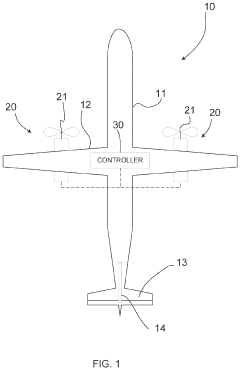
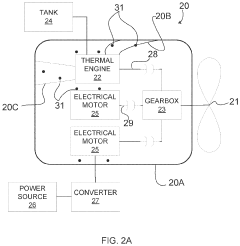
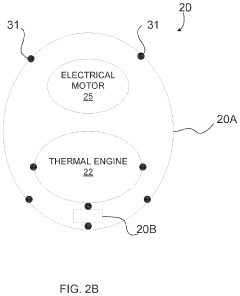
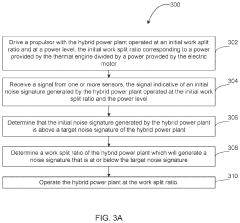
- A method and system that utilize sensors to measure noise signatures and adjust the work split ratio between thermal engines and electrical motors based on a database correlation, allowing the hybrid power plant to operate within target noise signature ranges, and optionally switch to a whisper mode during noise-restricted flight phases.
Hybrid vehicle and control method thereof
PatentWO2007052758A1
Innovation
- The hybrid vehicle system includes an internal combustion engine, an electric motor, and motoring means that detect drive shaft rotation conditions and power requests, controlling the engine start-up torque to suppress gear mechanism noise by setting the starting torque to a predetermined gear-strike suppression torque, and adjusting ignition timing to minimize vibration and noise.


Environmental Regulations on Vehicle Noise Emissions
Environmental regulations on vehicle noise emissions have become increasingly stringent in recent years, reflecting growing concerns about the impact of noise pollution on public health and quality of life. These regulations typically set maximum permissible noise levels for different vehicle categories and operating conditions, with a focus on reducing noise emissions from both stationary and moving vehicles.
In the European Union, the primary legislation governing vehicle noise emissions is Regulation (EU) No 540/2014. This regulation establishes a framework for the type-approval of motor vehicles with respect to sound levels and mandates a gradual reduction in noise limits over time. For passenger cars, the current limit is 68 dB(A), with plans to further reduce this to 66 dB(A) in the coming years.
Similarly, in the United States, the National Highway Traffic Safety Administration (NHTSA) enforces Federal Motor Vehicle Safety Standard (FMVSS) No. 141, which specifically addresses minimum sound requirements for hybrid and electric vehicles. This standard aims to ensure that these quieter vehicles are detectable by pedestrians, particularly those with visual impairments.
Many countries have adopted the United Nations Economic Commission for Europe (UNECE) Regulation No. 51, which provides harmonized methods for measuring vehicle noise emissions and sets limits for different vehicle categories. This regulation is continuously updated to reflect advancements in technology and evolving environmental priorities.
In urban areas, where noise pollution is particularly problematic, local authorities often implement additional measures such as noise mapping, action plans, and low-noise zones. These initiatives complement national and international regulations by addressing specific local concerns and promoting the use of quieter vehicles.
The enforcement of these regulations typically involves type-approval testing, where vehicles are subjected to standardized noise measurement procedures before being allowed on the market. In-use compliance checks and periodic inspections are also conducted to ensure that vehicles maintain their noise performance throughout their lifecycle.
As technology advances, regulations are evolving to address new challenges and opportunities. For instance, the emergence of electric and hybrid vehicles has led to the development of regulations for artificial sound generators, ensuring that these quieter vehicles remain audible to pedestrians and other road users for safety reasons.
The trend towards more stringent noise regulations is driving innovation in the automotive industry, encouraging manufacturers to develop and implement new technologies for noise reduction. This includes advancements in engine design, exhaust systems, and the use of sound-absorbing materials, as well as the integration of active noise control systems in vehicles.
In the European Union, the primary legislation governing vehicle noise emissions is Regulation (EU) No 540/2014. This regulation establishes a framework for the type-approval of motor vehicles with respect to sound levels and mandates a gradual reduction in noise limits over time. For passenger cars, the current limit is 68 dB(A), with plans to further reduce this to 66 dB(A) in the coming years.
Similarly, in the United States, the National Highway Traffic Safety Administration (NHTSA) enforces Federal Motor Vehicle Safety Standard (FMVSS) No. 141, which specifically addresses minimum sound requirements for hybrid and electric vehicles. This standard aims to ensure that these quieter vehicles are detectable by pedestrians, particularly those with visual impairments.
Many countries have adopted the United Nations Economic Commission for Europe (UNECE) Regulation No. 51, which provides harmonized methods for measuring vehicle noise emissions and sets limits for different vehicle categories. This regulation is continuously updated to reflect advancements in technology and evolving environmental priorities.
In urban areas, where noise pollution is particularly problematic, local authorities often implement additional measures such as noise mapping, action plans, and low-noise zones. These initiatives complement national and international regulations by addressing specific local concerns and promoting the use of quieter vehicles.
The enforcement of these regulations typically involves type-approval testing, where vehicles are subjected to standardized noise measurement procedures before being allowed on the market. In-use compliance checks and periodic inspections are also conducted to ensure that vehicles maintain their noise performance throughout their lifecycle.
As technology advances, regulations are evolving to address new challenges and opportunities. For instance, the emergence of electric and hybrid vehicles has led to the development of regulations for artificial sound generators, ensuring that these quieter vehicles remain audible to pedestrians and other road users for safety reasons.
The trend towards more stringent noise regulations is driving innovation in the automotive industry, encouraging manufacturers to develop and implement new technologies for noise reduction. This includes advancements in engine design, exhaust systems, and the use of sound-absorbing materials, as well as the integration of active noise control systems in vehicles.
Cost-Benefit Analysis of Noise Reduction Technologies
The cost-benefit analysis of noise reduction technologies in mild hybrid vehicles reveals a complex interplay between environmental benefits, economic considerations, and technological advancements. Implementing noise reduction measures in mild hybrids typically involves additional components and engineering efforts, which can increase the overall production costs.
However, these initial investments are often offset by long-term benefits, both environmental and economic. The reduction in noise pollution contributes to improved urban living conditions, potentially leading to decreased healthcare costs associated with noise-related stress and sleep disturbances. Additionally, quieter vehicles may enhance property values in urban areas, providing indirect economic benefits to communities.
From a technological perspective, the cost of noise reduction technologies has been decreasing as innovations in materials science and engineering progress. Advanced sound-absorbing materials and active noise control systems are becoming more affordable and efficient, making their integration into mild hybrid vehicles more cost-effective.
The benefits of noise reduction extend beyond immediate environmental impacts. Quieter vehicles can improve road safety by reducing driver fatigue and enhancing pedestrian awareness of approaching vehicles. This can potentially lead to fewer accidents and associated costs, further tipping the cost-benefit scale in favor of noise reduction technologies.
Market analysis indicates that consumers are increasingly valuing quieter vehicles, which can translate to improved brand perception and potentially higher sales for manufacturers investing in noise reduction technologies. This market trend suggests that the costs associated with implementing these technologies may be partially recovered through premium pricing or increased market share.
However, it's important to note that the cost-benefit ratio can vary significantly depending on the specific technology employed and the scale of production. Mass production tends to drive down costs over time, making noise reduction technologies more economically viable for widespread adoption in mild hybrid vehicles.
Regulatory factors also play a crucial role in the cost-benefit analysis. As governments worldwide implement stricter noise emission standards, the cost of non-compliance can far outweigh the investment in noise reduction technologies. This regulatory pressure serves as an additional incentive for manufacturers to prioritize noise reduction in their vehicle designs.
However, these initial investments are often offset by long-term benefits, both environmental and economic. The reduction in noise pollution contributes to improved urban living conditions, potentially leading to decreased healthcare costs associated with noise-related stress and sleep disturbances. Additionally, quieter vehicles may enhance property values in urban areas, providing indirect economic benefits to communities.
From a technological perspective, the cost of noise reduction technologies has been decreasing as innovations in materials science and engineering progress. Advanced sound-absorbing materials and active noise control systems are becoming more affordable and efficient, making their integration into mild hybrid vehicles more cost-effective.
The benefits of noise reduction extend beyond immediate environmental impacts. Quieter vehicles can improve road safety by reducing driver fatigue and enhancing pedestrian awareness of approaching vehicles. This can potentially lead to fewer accidents and associated costs, further tipping the cost-benefit scale in favor of noise reduction technologies.
Market analysis indicates that consumers are increasingly valuing quieter vehicles, which can translate to improved brand perception and potentially higher sales for manufacturers investing in noise reduction technologies. This market trend suggests that the costs associated with implementing these technologies may be partially recovered through premium pricing or increased market share.
However, it's important to note that the cost-benefit ratio can vary significantly depending on the specific technology employed and the scale of production. Mass production tends to drive down costs over time, making noise reduction technologies more economically viable for widespread adoption in mild hybrid vehicles.
Regulatory factors also play a crucial role in the cost-benefit analysis. As governments worldwide implement stricter noise emission standards, the cost of non-compliance can far outweigh the investment in noise reduction technologies. This regulatory pressure serves as an additional incentive for manufacturers to prioritize noise reduction in their vehicle designs.
Unlock deeper insights with PatSnap Eureka Quick Research — get a full tech report to explore trends and direct your research. Try now!
Generate Your Research Report Instantly with AI Agent
Supercharge your innovation with PatSnap Eureka AI Agent Platform!