How Power Steering Fluid Aeration Affects System Efficiency
JUL 28, 20259 MIN READ
Generate Your Research Report Instantly with AI Agent
PatSnap Eureka helps you evaluate technical feasibility & market potential.
Power Steering Fluid Aeration Background and Objectives
Power steering fluid aeration is a critical issue that has been gaining attention in the automotive industry due to its significant impact on system efficiency. This phenomenon occurs when air bubbles are introduced into the power steering fluid, leading to a range of performance issues and potential system failures. The evolution of power steering technology has seen a shift from traditional hydraulic systems to electric and electro-hydraulic systems, yet the problem of fluid aeration persists across various configurations.
The primary objective of investigating power steering fluid aeration is to enhance the overall efficiency and reliability of steering systems in vehicles. By understanding the causes and effects of aeration, engineers and manufacturers aim to develop more robust and efficient power steering solutions. This research is driven by the increasing demands for improved fuel economy, reduced emissions, and enhanced vehicle performance.
Historically, power steering systems have undergone significant transformations since their introduction in the 1950s. The early hydraulic systems were prone to fluid aeration issues, which led to the development of more advanced fluid formulations and system designs. As the automotive industry progressed, the focus shifted towards minimizing power consumption and improving steering feel, making the management of fluid aeration even more crucial.
The technological trajectory in this field has been marked by continuous improvements in fluid dynamics, materials science, and control systems. Recent advancements have included the integration of sensors to detect aeration levels, the development of de-aeration devices, and the implementation of adaptive control algorithms to compensate for aeration-induced performance variations.
Current research efforts are concentrated on understanding the complex interplay between fluid properties, system design, and operating conditions that contribute to aeration. This includes investigating the effects of temperature, pressure, and mechanical agitation on fluid behavior within the power steering system. Additionally, there is a growing interest in exploring alternative fluids and system architectures that could inherently reduce the likelihood of aeration.
The ultimate goal of this technological pursuit is to create power steering systems that maintain optimal performance under a wide range of operating conditions while minimizing energy losses associated with fluid aeration. This aligns with broader automotive trends towards increased electrification and autonomous driving capabilities, where precise and efficient steering control is paramount.
As we delve deeper into the intricacies of power steering fluid aeration, it becomes evident that addressing this challenge requires a multidisciplinary approach. The convergence of mechanical engineering, fluid dynamics, materials science, and control theory is essential for developing comprehensive solutions that can significantly enhance the efficiency and reliability of power steering systems in the next generation of vehicles.
The primary objective of investigating power steering fluid aeration is to enhance the overall efficiency and reliability of steering systems in vehicles. By understanding the causes and effects of aeration, engineers and manufacturers aim to develop more robust and efficient power steering solutions. This research is driven by the increasing demands for improved fuel economy, reduced emissions, and enhanced vehicle performance.
Historically, power steering systems have undergone significant transformations since their introduction in the 1950s. The early hydraulic systems were prone to fluid aeration issues, which led to the development of more advanced fluid formulations and system designs. As the automotive industry progressed, the focus shifted towards minimizing power consumption and improving steering feel, making the management of fluid aeration even more crucial.
The technological trajectory in this field has been marked by continuous improvements in fluid dynamics, materials science, and control systems. Recent advancements have included the integration of sensors to detect aeration levels, the development of de-aeration devices, and the implementation of adaptive control algorithms to compensate for aeration-induced performance variations.
Current research efforts are concentrated on understanding the complex interplay between fluid properties, system design, and operating conditions that contribute to aeration. This includes investigating the effects of temperature, pressure, and mechanical agitation on fluid behavior within the power steering system. Additionally, there is a growing interest in exploring alternative fluids and system architectures that could inherently reduce the likelihood of aeration.
The ultimate goal of this technological pursuit is to create power steering systems that maintain optimal performance under a wide range of operating conditions while minimizing energy losses associated with fluid aeration. This aligns with broader automotive trends towards increased electrification and autonomous driving capabilities, where precise and efficient steering control is paramount.
As we delve deeper into the intricacies of power steering fluid aeration, it becomes evident that addressing this challenge requires a multidisciplinary approach. The convergence of mechanical engineering, fluid dynamics, materials science, and control theory is essential for developing comprehensive solutions that can significantly enhance the efficiency and reliability of power steering systems in the next generation of vehicles.
Market Analysis of Power Steering Systems
The power steering system market has experienced significant growth in recent years, driven by the increasing demand for comfortable driving experiences and the rising production of vehicles worldwide. The global power steering market size was valued at approximately $26.5 billion in 2020 and is projected to reach $38.7 billion by 2027, growing at a CAGR of 5.6% during the forecast period.
The market is segmented into hydraulic power steering (HPS), electric power steering (EPS), and electro-hydraulic power steering (EHPS) systems. While HPS has been the traditional choice, EPS is rapidly gaining market share due to its improved fuel efficiency and compatibility with advanced driver assistance systems (ADAS). The EPS segment is expected to witness the highest growth rate in the coming years.
Geographically, Asia-Pacific dominates the power steering market, accounting for over 40% of the global market share. This is primarily due to the high vehicle production in countries like China, Japan, and South Korea. North America and Europe follow, with steady growth driven by technological advancements and stringent regulations on vehicle safety and emissions.
Key players in the power steering market include JTEKT Corporation, Robert Bosch GmbH, ZF Friedrichshafen AG, NSK Ltd., and Nexteer Automotive. These companies are focusing on research and development to introduce innovative products and gain a competitive edge in the market.
The automotive industry's shift towards electric and autonomous vehicles is expected to create new opportunities for power steering system manufacturers. The integration of steer-by-wire technology and the development of intelligent steering systems are emerging trends that are likely to shape the future of the market.
However, the market faces challenges such as the high cost of advanced steering systems and the complexity of integrating these systems with other vehicle components. Additionally, the impact of power steering fluid aeration on system efficiency is a concern that manufacturers are actively addressing through improved designs and fluid formulations.
In conclusion, the power steering system market is poised for steady growth, driven by technological advancements and increasing vehicle production. The shift towards electric power steering and the development of intelligent steering systems are expected to be the key factors influencing market dynamics in the coming years.
The market is segmented into hydraulic power steering (HPS), electric power steering (EPS), and electro-hydraulic power steering (EHPS) systems. While HPS has been the traditional choice, EPS is rapidly gaining market share due to its improved fuel efficiency and compatibility with advanced driver assistance systems (ADAS). The EPS segment is expected to witness the highest growth rate in the coming years.
Geographically, Asia-Pacific dominates the power steering market, accounting for over 40% of the global market share. This is primarily due to the high vehicle production in countries like China, Japan, and South Korea. North America and Europe follow, with steady growth driven by technological advancements and stringent regulations on vehicle safety and emissions.
Key players in the power steering market include JTEKT Corporation, Robert Bosch GmbH, ZF Friedrichshafen AG, NSK Ltd., and Nexteer Automotive. These companies are focusing on research and development to introduce innovative products and gain a competitive edge in the market.
The automotive industry's shift towards electric and autonomous vehicles is expected to create new opportunities for power steering system manufacturers. The integration of steer-by-wire technology and the development of intelligent steering systems are emerging trends that are likely to shape the future of the market.
However, the market faces challenges such as the high cost of advanced steering systems and the complexity of integrating these systems with other vehicle components. Additionally, the impact of power steering fluid aeration on system efficiency is a concern that manufacturers are actively addressing through improved designs and fluid formulations.
In conclusion, the power steering system market is poised for steady growth, driven by technological advancements and increasing vehicle production. The shift towards electric power steering and the development of intelligent steering systems are expected to be the key factors influencing market dynamics in the coming years.
Current Challenges in Power Steering Fluid Aeration
Power steering fluid aeration remains a significant challenge in modern automotive systems, impacting both performance and efficiency. The primary issue stems from the introduction of air bubbles into the hydraulic fluid, which can occur through various mechanisms such as leaks, improper fluid levels, or turbulent flow within the system.
One of the most pressing challenges is the difficulty in detecting and quantifying aeration levels in real-time. Current methods often rely on offline analysis or indirect measurements, which do not provide immediate feedback for system optimization. This lack of real-time monitoring capability hinders the development of adaptive control strategies that could mitigate the effects of aeration as they occur.
The compressibility of aerated fluid poses another significant challenge. As air bubbles are introduced, the fluid's bulk modulus decreases, leading to reduced system stiffness and responsiveness. This change in fluid properties can result in inconsistent steering feel and diminished control precision, particularly during high-demand maneuvers or in adverse driving conditions.
Furthermore, aeration can accelerate fluid degradation and component wear. The presence of air bubbles can lead to cavitation, especially in high-pressure areas of the system. This phenomenon not only damages pump components and seals but also contributes to the breakdown of the hydraulic fluid itself, necessitating more frequent maintenance and replacement.
The thermal management of aerated power steering fluid presents another challenge. Air bubbles act as insulators, reducing the fluid's ability to dissipate heat effectively. This can lead to localized hot spots and overall increased system temperatures, potentially compromising the longevity of components and the fluid's lubricating properties.
Engineers also face difficulties in modeling and simulating aerated fluid behavior accurately. The complex, multiphase nature of aerated fluids makes it challenging to develop reliable computational models that can predict system performance under various operating conditions. This limitation hampers the design optimization process and the development of more efficient power steering systems.
Lastly, the trade-off between system efficiency and aeration mitigation strategies presents an ongoing challenge. While certain design modifications can reduce aeration, they may also introduce additional energy losses or complexity to the system. Striking the right balance between aeration control and overall system efficiency remains a key focus for researchers and engineers in the field.
One of the most pressing challenges is the difficulty in detecting and quantifying aeration levels in real-time. Current methods often rely on offline analysis or indirect measurements, which do not provide immediate feedback for system optimization. This lack of real-time monitoring capability hinders the development of adaptive control strategies that could mitigate the effects of aeration as they occur.
The compressibility of aerated fluid poses another significant challenge. As air bubbles are introduced, the fluid's bulk modulus decreases, leading to reduced system stiffness and responsiveness. This change in fluid properties can result in inconsistent steering feel and diminished control precision, particularly during high-demand maneuvers or in adverse driving conditions.
Furthermore, aeration can accelerate fluid degradation and component wear. The presence of air bubbles can lead to cavitation, especially in high-pressure areas of the system. This phenomenon not only damages pump components and seals but also contributes to the breakdown of the hydraulic fluid itself, necessitating more frequent maintenance and replacement.
The thermal management of aerated power steering fluid presents another challenge. Air bubbles act as insulators, reducing the fluid's ability to dissipate heat effectively. This can lead to localized hot spots and overall increased system temperatures, potentially compromising the longevity of components and the fluid's lubricating properties.
Engineers also face difficulties in modeling and simulating aerated fluid behavior accurately. The complex, multiphase nature of aerated fluids makes it challenging to develop reliable computational models that can predict system performance under various operating conditions. This limitation hampers the design optimization process and the development of more efficient power steering systems.
Lastly, the trade-off between system efficiency and aeration mitigation strategies presents an ongoing challenge. While certain design modifications can reduce aeration, they may also introduce additional energy losses or complexity to the system. Striking the right balance between aeration control and overall system efficiency remains a key focus for researchers and engineers in the field.
Existing Solutions for Fluid Aeration Reduction
01 Fluid composition for improved efficiency
Specialized power steering fluid compositions can enhance system efficiency. These formulations may include additives to reduce friction, improve heat dissipation, and maintain viscosity under various operating conditions. Advanced fluid compositions can lead to smoother operation, reduced wear, and increased overall system efficiency.- Fluid composition optimization: Improving the composition of power steering fluid can enhance system efficiency. This includes developing fluids with better viscosity characteristics, improved thermal stability, and reduced friction properties. Advanced additives and base oils can be incorporated to minimize power losses and improve overall system performance.
- Pump design enhancements: Innovations in power steering pump design can significantly improve system efficiency. This includes developing variable displacement pumps, optimizing impeller geometry, and implementing advanced flow control mechanisms. These enhancements can reduce energy consumption and improve overall steering responsiveness.
- Hydraulic circuit optimization: Optimizing the hydraulic circuit in power steering systems can lead to improved efficiency. This involves redesigning flow paths, minimizing pressure losses, and implementing advanced valve technologies. Such improvements can reduce fluid resistance and enhance overall system performance.
- Electronic control integration: Integrating electronic control systems with hydraulic power steering can improve efficiency. This includes implementing sensors, actuators, and control algorithms to optimize fluid flow based on driving conditions. Such systems can reduce power consumption during low-demand situations and provide assistance as needed.
- Energy recovery and conservation: Implementing energy recovery and conservation techniques can enhance power steering system efficiency. This includes developing systems that can store and reuse energy from steering operations, as well as implementing intelligent power management strategies to minimize unnecessary fluid circulation and pump operation.
02 Pump design optimization
Innovative pump designs can significantly improve power steering system efficiency. This includes variable displacement pumps, flow control mechanisms, and advanced impeller designs. Optimized pumps can reduce energy consumption, provide better response, and maintain consistent performance across different operating conditions.Expand Specific Solutions03 Electronic control systems
Integration of electronic control systems in power steering can enhance efficiency. These systems can adjust steering assistance based on vehicle speed, driver input, and road conditions. Advanced sensors and algorithms allow for precise control, reducing unnecessary power consumption and improving overall system efficiency.Expand Specific Solutions04 Hydraulic circuit optimization
Improvements in hydraulic circuit design can lead to increased efficiency in power steering systems. This includes optimizing fluid flow paths, reducing pressure losses, and implementing advanced valve designs. Efficient hydraulic circuits can minimize energy waste and improve system responsiveness.Expand Specific Solutions05 Integration with hybrid and electric vehicle systems
Adapting power steering systems for hybrid and electric vehicles can improve overall efficiency. This may involve electric power steering systems or hybrid hydraulic-electric designs. These integrated approaches can reduce energy consumption, improve packaging, and enhance overall vehicle efficiency.Expand Specific Solutions
Key Players in Power Steering Industry
The power steering fluid aeration market is in a growth phase, driven by increasing demand for efficient automotive systems. The global market size is expanding, with major players like Ford, ZF Friedrichshafen, and Hitachi Automotive Systems leading technological advancements. The technology's maturity varies, with established companies like ThyssenKrupp Presta and ZF Lenksysteme offering proven solutions, while newer entrants like Chery Automobile and Astemo are innovating to improve system efficiency. Companies such as BMW and Mercedes-Benz are integrating advanced power steering technologies into their vehicles, further driving market growth and technological refinement.
Ford Global Technologies LLC
Technical Solution: Ford has developed a multi-faceted approach to address power steering fluid aeration. Their system incorporates a high-efficiency air separator in the fluid reservoir, which uses a combination of gravitational and centrifugal forces to remove air bubbles[7]. Ford has also implemented an advanced pump design that reduces cavitation through optimized impeller geometry and precise clearance control[8]. The system includes pressure sensors that continuously monitor fluid conditions, allowing for real-time adjustments to pump speed and pressure to maintain optimal performance even when aeration occurs[9]. Additionally, Ford has developed a proprietary fluid formulation with enhanced air release properties to further mitigate the effects of aeration[10].
Strengths: Comprehensive system addressing aeration through mechanical, electronic, and chemical means. Real-time adaptive control enhances system robustness. Weaknesses: Complex system may have higher initial costs and potential for more points of failure.
Hitachi Automotive Systems Ltd.
Technical Solution: Hitachi Automotive Systems has developed a novel approach to mitigate power steering fluid aeration. Their system utilizes a combination of advanced fluid formulation and system design. The fluid contains specially engineered additives that reduce surface tension, making it more difficult for air bubbles to form and persist[4]. The system design incorporates strategically placed baffles and flow straighteners within the fluid reservoir and lines to minimize turbulence and promote natural deaeration[5]. Hitachi has also implemented an intelligent pressure control system that adjusts pump output based on real-time fluid conditions, helping to maintain optimal system performance even when some aeration is present[6].
Strengths: Holistic approach combining fluid chemistry and mechanical design. Adaptive system can compensate for varying degrees of aeration. Weaknesses: Specialized fluid may be more expensive and less widely available for replacement or top-ups.
Core Innovations in Aeration Mitigation
Fuel efficient power steering control system and method
PatentInactiveUS6988581B2
Innovation
- A system with an electronic control unit that calculates and controls the current for an electronic flow control device to manage fluid flow from the power steering pump to the steering gear, using a PID control algorithm that evaluates vehicle speed and steering wheel rate to provide variable steering assist and optimize fuel economy.


Power steering fluid exchange system and method of use
PatentInactiveUS6772803B2
Innovation
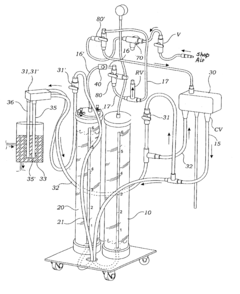
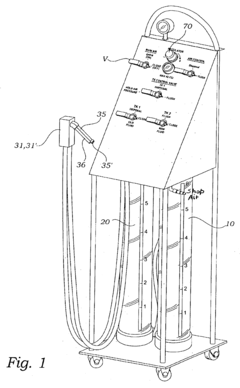
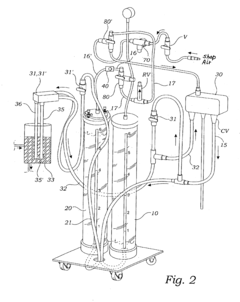
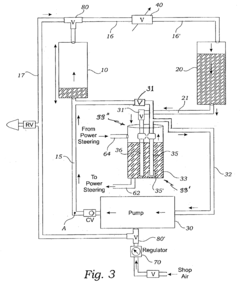
- An apparatus comprising a fluid receiving container, a fluid supply container, a utility fluid pump, and a pressure actuated fluid valve, where air is compressed by spent fluid to open the valve when 80-90% of spent fluid is removed, allowing replacement fluid to enter the power steering system, ensuring minimal mixing with the spent fluid.
Environmental Impact of Power Steering Fluids
Power steering fluids play a crucial role in the operation of vehicle steering systems, but their environmental impact is often overlooked. These fluids, typically composed of mineral oils or synthetic compounds, can have significant consequences for ecosystems and human health when improperly handled or disposed of.
One of the primary environmental concerns associated with power steering fluids is their potential for soil and water contamination. When these fluids leak from vehicles or are improperly disposed of, they can seep into the ground, polluting soil and potentially reaching groundwater sources. This contamination can have far-reaching effects on plant life, soil microorganisms, and aquatic ecosystems.
The toxicity of power steering fluids varies depending on their composition, but many contain additives that can be harmful to wildlife and vegetation. Some fluids may contain heavy metals or other toxic compounds that can bioaccumulate in the food chain, posing long-term risks to ecosystems and potentially affecting human health through contaminated water sources or food.
Another significant environmental issue is the contribution of power steering fluids to air pollution. As these fluids degrade or are exposed to high temperatures, they can release volatile organic compounds (VOCs) into the atmosphere. VOCs are known to contribute to the formation of ground-level ozone, a key component of smog, which can have detrimental effects on air quality and human respiratory health.
The production and disposal of power steering fluids also have environmental implications. The manufacturing process often involves the use of non-renewable resources and can result in emissions and waste products that require proper management. End-of-life disposal presents additional challenges, as many power steering fluids are classified as hazardous waste and require specialized handling and treatment to prevent environmental contamination.
Efforts to mitigate the environmental impact of power steering fluids include the development of more environmentally friendly formulations, such as biodegradable options derived from plant-based sources. These alternatives aim to reduce toxicity and improve biodegradability, lessening the long-term environmental burden of fluid leaks and disposal.
Proper maintenance and handling practices are essential in minimizing the environmental footprint of power steering fluids. Regular vehicle inspections to prevent leaks, proper disposal methods for used fluids, and increased recycling efforts can significantly reduce the potential for environmental contamination. Additionally, educating vehicle owners and mechanics about the importance of responsible fluid management is crucial in fostering environmentally conscious practices.
As environmental regulations become more stringent, there is a growing push for the automotive industry to innovate and develop more sustainable power steering systems. This includes exploring alternative technologies that reduce or eliminate the need for traditional power steering fluids, such as electric power steering systems, which have the potential to significantly decrease the environmental impact associated with hydraulic steering systems.
One of the primary environmental concerns associated with power steering fluids is their potential for soil and water contamination. When these fluids leak from vehicles or are improperly disposed of, they can seep into the ground, polluting soil and potentially reaching groundwater sources. This contamination can have far-reaching effects on plant life, soil microorganisms, and aquatic ecosystems.
The toxicity of power steering fluids varies depending on their composition, but many contain additives that can be harmful to wildlife and vegetation. Some fluids may contain heavy metals or other toxic compounds that can bioaccumulate in the food chain, posing long-term risks to ecosystems and potentially affecting human health through contaminated water sources or food.
Another significant environmental issue is the contribution of power steering fluids to air pollution. As these fluids degrade or are exposed to high temperatures, they can release volatile organic compounds (VOCs) into the atmosphere. VOCs are known to contribute to the formation of ground-level ozone, a key component of smog, which can have detrimental effects on air quality and human respiratory health.
The production and disposal of power steering fluids also have environmental implications. The manufacturing process often involves the use of non-renewable resources and can result in emissions and waste products that require proper management. End-of-life disposal presents additional challenges, as many power steering fluids are classified as hazardous waste and require specialized handling and treatment to prevent environmental contamination.
Efforts to mitigate the environmental impact of power steering fluids include the development of more environmentally friendly formulations, such as biodegradable options derived from plant-based sources. These alternatives aim to reduce toxicity and improve biodegradability, lessening the long-term environmental burden of fluid leaks and disposal.
Proper maintenance and handling practices are essential in minimizing the environmental footprint of power steering fluids. Regular vehicle inspections to prevent leaks, proper disposal methods for used fluids, and increased recycling efforts can significantly reduce the potential for environmental contamination. Additionally, educating vehicle owners and mechanics about the importance of responsible fluid management is crucial in fostering environmentally conscious practices.
As environmental regulations become more stringent, there is a growing push for the automotive industry to innovate and develop more sustainable power steering systems. This includes exploring alternative technologies that reduce or eliminate the need for traditional power steering fluids, such as electric power steering systems, which have the potential to significantly decrease the environmental impact associated with hydraulic steering systems.
Regulatory Standards for Automotive Fluids
Regulatory standards for automotive fluids play a crucial role in ensuring the safety, performance, and environmental impact of vehicles. In the context of power steering fluid aeration and its effects on system efficiency, several regulatory bodies have established guidelines and requirements.
The Society of Automotive Engineers (SAE) has developed specific standards for power steering fluids, including SAE J1703 and SAE J1704. These standards outline the minimum performance requirements for power steering fluids, including their resistance to aeration and foaming. The standards also specify testing methods to evaluate fluid performance under various operating conditions.
The International Organization for Standardization (ISO) has also contributed to the regulatory landscape with ISO 4925, which defines the classification and specifications for brake fluids used in motor vehicles. While primarily focused on brake fluids, this standard has implications for power steering fluids due to the similarities in hydraulic system requirements.
In the United States, the National Highway Traffic Safety Administration (NHTSA) oversees Federal Motor Vehicle Safety Standards (FMVSS), which include regulations related to power steering systems. FMVSS No. 135, for instance, addresses brake system performance and indirectly influences power steering fluid requirements due to the interconnected nature of these hydraulic systems.
The Environmental Protection Agency (EPA) regulates the environmental impact of automotive fluids, including their disposal and potential for contamination. Power steering fluids must comply with EPA guidelines to minimize environmental risks associated with leaks, spills, and disposal.
European regulations, such as those set by the European Union's European Chemicals Agency (ECHA), impose additional requirements on automotive fluids. The Registration, Evaluation, Authorization, and Restriction of Chemicals (REACH) regulation affects the composition and use of power steering fluids in the European market.
Manufacturers must also consider regional variations in regulatory standards. For example, California's Air Resources Board (CARB) has stricter emissions standards that can impact the formulation of automotive fluids, including power steering fluids.
As the automotive industry moves towards electrification, regulatory bodies are adapting their standards to address new technologies. This includes the development of guidelines for electric power steering systems and their associated fluids, which may have different aeration characteristics compared to traditional hydraulic systems.
Compliance with these regulatory standards is essential for automotive manufacturers and fluid suppliers. Regular testing and certification processes ensure that power steering fluids meet the required performance criteria, including resistance to aeration, which directly impacts system efficiency and overall vehicle safety.
The Society of Automotive Engineers (SAE) has developed specific standards for power steering fluids, including SAE J1703 and SAE J1704. These standards outline the minimum performance requirements for power steering fluids, including their resistance to aeration and foaming. The standards also specify testing methods to evaluate fluid performance under various operating conditions.
The International Organization for Standardization (ISO) has also contributed to the regulatory landscape with ISO 4925, which defines the classification and specifications for brake fluids used in motor vehicles. While primarily focused on brake fluids, this standard has implications for power steering fluids due to the similarities in hydraulic system requirements.
In the United States, the National Highway Traffic Safety Administration (NHTSA) oversees Federal Motor Vehicle Safety Standards (FMVSS), which include regulations related to power steering systems. FMVSS No. 135, for instance, addresses brake system performance and indirectly influences power steering fluid requirements due to the interconnected nature of these hydraulic systems.
The Environmental Protection Agency (EPA) regulates the environmental impact of automotive fluids, including their disposal and potential for contamination. Power steering fluids must comply with EPA guidelines to minimize environmental risks associated with leaks, spills, and disposal.
European regulations, such as those set by the European Union's European Chemicals Agency (ECHA), impose additional requirements on automotive fluids. The Registration, Evaluation, Authorization, and Restriction of Chemicals (REACH) regulation affects the composition and use of power steering fluids in the European market.
Manufacturers must also consider regional variations in regulatory standards. For example, California's Air Resources Board (CARB) has stricter emissions standards that can impact the formulation of automotive fluids, including power steering fluids.
As the automotive industry moves towards electrification, regulatory bodies are adapting their standards to address new technologies. This includes the development of guidelines for electric power steering systems and their associated fluids, which may have different aeration characteristics compared to traditional hydraulic systems.
Compliance with these regulatory standards is essential for automotive manufacturers and fluid suppliers. Regular testing and certification processes ensure that power steering fluids meet the required performance criteria, including resistance to aeration, which directly impacts system efficiency and overall vehicle safety.
Unlock deeper insights with PatSnap Eureka Quick Research — get a full tech report to explore trends and direct your research. Try now!
Generate Your Research Report Instantly with AI Agent
Supercharge your innovation with PatSnap Eureka AI Agent Platform!