

How Precision Fermentation Tackles Waste Reduction Challenges
MAY 18, 20269 MIN READ
Generate Your Research Report Instantly with AI Agent
PatSnap Eureka helps you evaluate technical feasibility & market potential.
Precision Fermentation Background and Waste Reduction Goals
Precision fermentation represents a revolutionary biotechnology approach that harnesses engineered microorganisms to produce specific compounds, proteins, and materials with unprecedented accuracy and efficiency. This technology emerged from the convergence of synthetic biology, metabolic engineering, and advanced fermentation processes, building upon decades of traditional fermentation practices used in food and pharmaceutical industries. Unlike conventional fermentation methods that rely on naturally occurring microorganisms, precision fermentation employs genetically modified bacteria, yeast, fungi, or algae that have been specifically programmed to produce target molecules.
The historical development of precision fermentation can be traced back to the early recombinant DNA technologies of the 1970s, which enabled scientists to insert foreign genes into microorganisms. However, the field has experienced exponential growth in recent years due to advances in CRISPR gene editing, synthetic biology tools, and computational modeling capabilities. Major breakthroughs include the successful production of insulin through engineered bacteria in the 1980s, followed by more complex applications in producing enzymes, vitamins, and specialty chemicals.
Current technological trends indicate a shift toward more sophisticated metabolic pathway engineering, enabling microorganisms to convert simple feedstocks into complex molecules that traditionally required resource-intensive agricultural or chemical processes. The integration of artificial intelligence and machine learning has further accelerated strain optimization and process development, reducing development timelines from years to months.
The primary waste reduction goals of precision fermentation center on addressing multiple environmental challenges simultaneously. Traditional manufacturing processes often generate substantial waste streams, consume excessive natural resources, and produce harmful byproducts. Precision fermentation aims to minimize these impacts by utilizing renewable feedstocks, such as agricultural residues, food waste, or even carbon dioxide, as raw materials for production.
Key objectives include reducing land use requirements by eliminating the need for extensive agricultural cultivation of source materials, decreasing water consumption through optimized bioprocess design, and minimizing greenhouse gas emissions by replacing carbon-intensive manufacturing methods. Additionally, precision fermentation targets the reduction of chemical waste by enabling cleaner production pathways that generate fewer toxic byproducts and require less harsh processing conditions.
The technology also addresses packaging and transportation waste by enabling localized production facilities that can operate closer to end markets, reducing the carbon footprint associated with global supply chains. Furthermore, precision fermentation supports circular economy principles by converting waste streams into valuable products, effectively transforming linear waste disposal models into regenerative production systems.
The historical development of precision fermentation can be traced back to the early recombinant DNA technologies of the 1970s, which enabled scientists to insert foreign genes into microorganisms. However, the field has experienced exponential growth in recent years due to advances in CRISPR gene editing, synthetic biology tools, and computational modeling capabilities. Major breakthroughs include the successful production of insulin through engineered bacteria in the 1980s, followed by more complex applications in producing enzymes, vitamins, and specialty chemicals.
Current technological trends indicate a shift toward more sophisticated metabolic pathway engineering, enabling microorganisms to convert simple feedstocks into complex molecules that traditionally required resource-intensive agricultural or chemical processes. The integration of artificial intelligence and machine learning has further accelerated strain optimization and process development, reducing development timelines from years to months.
The primary waste reduction goals of precision fermentation center on addressing multiple environmental challenges simultaneously. Traditional manufacturing processes often generate substantial waste streams, consume excessive natural resources, and produce harmful byproducts. Precision fermentation aims to minimize these impacts by utilizing renewable feedstocks, such as agricultural residues, food waste, or even carbon dioxide, as raw materials for production.
Key objectives include reducing land use requirements by eliminating the need for extensive agricultural cultivation of source materials, decreasing water consumption through optimized bioprocess design, and minimizing greenhouse gas emissions by replacing carbon-intensive manufacturing methods. Additionally, precision fermentation targets the reduction of chemical waste by enabling cleaner production pathways that generate fewer toxic byproducts and require less harsh processing conditions.
The technology also addresses packaging and transportation waste by enabling localized production facilities that can operate closer to end markets, reducing the carbon footprint associated with global supply chains. Furthermore, precision fermentation supports circular economy principles by converting waste streams into valuable products, effectively transforming linear waste disposal models into regenerative production systems.
Market Demand for Sustainable Fermentation Solutions
The global market for sustainable fermentation solutions is experiencing unprecedented growth driven by mounting environmental pressures and regulatory demands for waste reduction across multiple industries. Food and beverage manufacturers face increasing scrutiny over their environmental footprint, particularly regarding organic waste streams that traditionally end up in landfills or require energy-intensive disposal methods. This regulatory landscape has created substantial market pull for precision fermentation technologies that can transform waste materials into valuable products.
Consumer awareness regarding sustainability has reached a tipping point, with purchasing decisions increasingly influenced by environmental considerations. This shift has compelled manufacturers to seek innovative solutions that not only reduce waste but also align with consumer expectations for sustainable production practices. The demand extends beyond mere compliance, as companies recognize the competitive advantage of positioning themselves as environmental leaders through advanced fermentation technologies.
Industrial sectors including pharmaceuticals, chemicals, and agriculture are actively seeking precision fermentation solutions to address their specific waste reduction challenges. Pharmaceutical companies generate significant organic waste during production processes, while chemical manufacturers face pressure to minimize hazardous waste streams. Agricultural operations require efficient methods to process crop residues and organic byproducts, creating diverse market opportunities for tailored fermentation solutions.
The circular economy paradigm has fundamentally altered market dynamics, with businesses increasingly viewing waste as a resource rather than a liability. This perspective shift has expanded the addressable market for precision fermentation technologies, as companies seek to capture value from previously discarded materials. The economic incentives align with environmental goals, creating sustainable business models around waste-to-value conversion processes.
Investment patterns reflect strong market confidence in sustainable fermentation solutions, with venture capital and corporate funding flowing toward companies developing innovative waste reduction technologies. This financial backing indicates robust market demand and validates the commercial viability of precision fermentation approaches to waste management challenges across diverse industrial applications.
Consumer awareness regarding sustainability has reached a tipping point, with purchasing decisions increasingly influenced by environmental considerations. This shift has compelled manufacturers to seek innovative solutions that not only reduce waste but also align with consumer expectations for sustainable production practices. The demand extends beyond mere compliance, as companies recognize the competitive advantage of positioning themselves as environmental leaders through advanced fermentation technologies.
Industrial sectors including pharmaceuticals, chemicals, and agriculture are actively seeking precision fermentation solutions to address their specific waste reduction challenges. Pharmaceutical companies generate significant organic waste during production processes, while chemical manufacturers face pressure to minimize hazardous waste streams. Agricultural operations require efficient methods to process crop residues and organic byproducts, creating diverse market opportunities for tailored fermentation solutions.
The circular economy paradigm has fundamentally altered market dynamics, with businesses increasingly viewing waste as a resource rather than a liability. This perspective shift has expanded the addressable market for precision fermentation technologies, as companies seek to capture value from previously discarded materials. The economic incentives align with environmental goals, creating sustainable business models around waste-to-value conversion processes.
Investment patterns reflect strong market confidence in sustainable fermentation solutions, with venture capital and corporate funding flowing toward companies developing innovative waste reduction technologies. This financial backing indicates robust market demand and validates the commercial viability of precision fermentation approaches to waste management challenges across diverse industrial applications.
Current Waste Challenges in Traditional Fermentation
Traditional fermentation processes face significant waste generation challenges that impact both economic viability and environmental sustainability. These conventional methods typically produce substantial amounts of organic waste, including spent substrates, biomass residues, and byproduct streams that often lack efficient utilization pathways. The accumulation of these waste materials creates disposal burdens and represents lost value opportunities for manufacturers.
Resource inefficiency stands as a primary concern in traditional fermentation systems. Conventional approaches frequently exhibit poor substrate conversion rates, with significant portions of raw materials remaining unutilized after fermentation completion. This inefficiency stems from suboptimal microbial strain performance, inadequate process control, and limited ability to fine-tune metabolic pathways for maximum substrate utilization.
Water consumption and wastewater generation present additional challenges in traditional fermentation operations. These processes typically require extensive water usage for cleaning, dilution, and cooling purposes, subsequently generating large volumes of contaminated wastewater containing organic compounds, nutrients, and potentially harmful substances. Treatment and disposal of this wastewater impose substantial costs and environmental impacts on manufacturing facilities.
Energy waste represents another critical challenge area. Traditional fermentation systems often operate with poor energy efficiency due to suboptimal temperature control, inadequate heat recovery systems, and energy-intensive downstream processing requirements. The inability to precisely control metabolic processes leads to extended fermentation times and increased energy consumption per unit of desired product.
Byproduct management difficulties compound waste challenges in conventional fermentation. Many traditional processes generate unwanted secondary metabolites or incomplete conversion products that require costly separation and disposal procedures. These byproducts often cannot be easily repurposed or valorized, creating additional waste streams that burden overall process economics.
Quality control limitations in traditional fermentation contribute to waste generation through batch failures and off-specification products. Insufficient monitoring capabilities and limited process control precision result in higher rejection rates and product losses, necessitating reprocessing or disposal of failed batches.
The scalability constraints of traditional fermentation methods also create waste challenges when attempting to optimize processes for different production volumes. Fixed process parameters and limited flexibility in microbial system management often lead to suboptimal performance at various scales, generating proportionally higher waste levels during scale-up or scale-down operations.
Resource inefficiency stands as a primary concern in traditional fermentation systems. Conventional approaches frequently exhibit poor substrate conversion rates, with significant portions of raw materials remaining unutilized after fermentation completion. This inefficiency stems from suboptimal microbial strain performance, inadequate process control, and limited ability to fine-tune metabolic pathways for maximum substrate utilization.
Water consumption and wastewater generation present additional challenges in traditional fermentation operations. These processes typically require extensive water usage for cleaning, dilution, and cooling purposes, subsequently generating large volumes of contaminated wastewater containing organic compounds, nutrients, and potentially harmful substances. Treatment and disposal of this wastewater impose substantial costs and environmental impacts on manufacturing facilities.
Energy waste represents another critical challenge area. Traditional fermentation systems often operate with poor energy efficiency due to suboptimal temperature control, inadequate heat recovery systems, and energy-intensive downstream processing requirements. The inability to precisely control metabolic processes leads to extended fermentation times and increased energy consumption per unit of desired product.
Byproduct management difficulties compound waste challenges in conventional fermentation. Many traditional processes generate unwanted secondary metabolites or incomplete conversion products that require costly separation and disposal procedures. These byproducts often cannot be easily repurposed or valorized, creating additional waste streams that burden overall process economics.
Quality control limitations in traditional fermentation contribute to waste generation through batch failures and off-specification products. Insufficient monitoring capabilities and limited process control precision result in higher rejection rates and product losses, necessitating reprocessing or disposal of failed batches.
The scalability constraints of traditional fermentation methods also create waste challenges when attempting to optimize processes for different production volumes. Fixed process parameters and limited flexibility in microbial system management often lead to suboptimal performance at various scales, generating proportionally higher waste levels during scale-up or scale-down operations.
Existing Waste Reduction Solutions in Fermentation
01 Fermentation process optimization and control systems
Advanced control systems and optimization techniques are employed to monitor and regulate fermentation parameters such as temperature, pH, dissolved oxygen, and nutrient levels. These systems help minimize waste generation by ensuring optimal fermentation conditions, reducing the production of unwanted byproducts, and maximizing the efficiency of substrate conversion to desired products.- Fermentation process optimization and control systems: Advanced control systems and optimization techniques are employed to monitor and adjust fermentation parameters in real-time, reducing waste generation through improved process efficiency. These systems utilize sensors, automated feedback loops, and data analytics to maintain optimal conditions throughout the fermentation cycle, minimizing substrate loss and maximizing product yield.
- Substrate utilization enhancement and recovery methods: Techniques for improving the complete utilization of fermentation substrates and recovering unused materials to minimize waste. These methods include substrate pretreatment processes, enzymatic enhancement systems, and recovery protocols that ensure maximum conversion efficiency of raw materials into desired products while reducing residual organic matter.
- Byproduct valorization and secondary metabolite recovery: Systems and processes designed to capture and convert fermentation byproducts into valuable secondary products, effectively reducing waste streams. These approaches transform what would traditionally be considered waste materials into useful compounds, creating circular economy models within fermentation operations and improving overall process sustainability.
- Waste treatment and biomass processing technologies: Specialized equipment and methodologies for treating fermentation waste streams and processing residual biomass. These technologies include filtration systems, separation techniques, and biological treatment methods that reduce the environmental impact of fermentation operations while potentially recovering additional value from waste materials.
- Integrated fermentation systems with waste minimization design: Comprehensive fermentation system designs that incorporate waste reduction principles from the ground up, featuring integrated components for continuous monitoring, automated waste handling, and resource recycling. These systems are engineered to minimize waste generation through optimized reactor design, improved mass transfer, and integrated downstream processing capabilities.
02 Substrate utilization and feed optimization
Strategies for improving substrate utilization efficiency include optimized feeding strategies, substrate pretreatment methods, and the use of alternative or waste-derived substrates. These approaches reduce raw material waste and improve overall process economics by maximizing the conversion of input materials into valuable products while minimizing unconsumed substrates.Expand Specific Solutions03 Byproduct recovery and valorization systems
Technologies for capturing, processing, and converting fermentation byproducts into valuable secondary products or raw materials for other processes. These systems include separation techniques, purification methods, and downstream processing equipment that transform what would otherwise be waste streams into commercially viable products, thereby reducing overall waste generation.Expand Specific Solutions04 Waste stream treatment and recycling technologies
Integrated waste treatment systems that process fermentation effluents and solid wastes through biological, chemical, or physical methods. These technologies enable the recycling of water, nutrients, and other valuable components back into the fermentation process, while treating remaining waste to meet environmental discharge standards and minimize environmental impact.Expand Specific Solutions05 Equipment design and reactor configuration for waste minimization
Specialized fermentation equipment and reactor designs that inherently reduce waste generation through improved mass transfer, better mixing, enhanced separation capabilities, and integrated downstream processing. These designs focus on maximizing product yield while minimizing the generation of waste streams through optimized reactor geometry, internal components, and process integration.Expand Specific Solutions
Key Players in Precision Fermentation Industry
The precision fermentation industry for waste reduction is in its early commercialization stage, transitioning from research-driven initiatives to scalable applications. The market demonstrates significant growth potential as companies like Nature's Fynd leverage revolutionary fermentation technology to produce protein using minimal land and water resources compared to traditional agriculture. Technology maturity varies considerably across the competitive landscape, with established research institutions including MIT, Tongji University, and Huazhong Agricultural University driving fundamental innovations, while specialized companies such as River Road Research and Axibio SAS focus on converting food waste into valuable products through bioconversion processes. Industrial giants like Siemens AG and engineering firms like Black & Veatch provide infrastructure support, indicating mainstream adoption potential. The sector benefits from strong academic-industry collaboration, particularly evident in Asian markets with companies like Shandong Futian Pharmaceutical and various Chinese environmental technology firms developing complementary waste processing capabilities, suggesting a maturing ecosystem ready for broader commercial deployment.
Fraunhofer-Gesellschaft eV
Technical Solution: Fraunhofer has developed comprehensive precision fermentation solutions specifically targeting industrial waste reduction through biotechnological approaches. Their technology platform combines advanced bioreactor design with engineered microbial consortia to process complex waste streams including lignocellulosic materials, food processing waste, and municipal organic waste. The system utilizes multi-stage fermentation processes with optimized pH, temperature, and nutrient control to achieve maximum biomass conversion. Fraunhofer's approach integrates downstream processing technologies for product recovery and purification, enabling the production of bio-based chemicals, enzymes, and biomaterials from waste feedstocks. Their pilot-scale facilities demonstrate consistent waste volume reduction of 70-80% while generating commercially viable products.
Strengths: Proven industrial-scale experience, comprehensive technology integration, strong European market presence. Weaknesses: Limited global reach, technology transfer complexity, regulatory compliance challenges in different markets.
Linde Brv Biowaste Technologies AG
Technical Solution: Linde BRV specializes in precision fermentation technologies specifically designed for organic waste processing and biogas production optimization. Their advanced anaerobic digestion systems incorporate precision control mechanisms for temperature, pH, and substrate feeding to maximize methane production while minimizing waste residues. The technology utilizes multi-phase fermentation processes with specialized microbial communities that can efficiently break down complex organic waste materials including food waste, agricultural residues, and industrial organic byproducts. Their systems integrate gas purification and upgrading technologies to produce high-quality biomethane, while the digestate is processed into valuable fertilizer products, achieving near-zero waste discharge in many applications.
Strengths: Specialized waste processing expertise, proven commercial track record, integrated gas processing capabilities. Weaknesses: Limited to anaerobic fermentation applications, geographic market constraints, technology adaptation challenges for diverse waste streams.
Core Innovations in Precision Fermentation Waste Management
Method for facilitating aerobic fermentation reaction using combustion waste gas
PatentActiveUS11091731B2
Innovation
- A method that utilizes combustion waste gas to heat organic waste in fermentation reactors, combining biological fermentation with waste gas treatment by mixing waste gas with external air and controlling the ratio using sensors and valves to optimize heating and purification, thereby reducing energy use and equipment costs.

System and method of improved fermentation and elutriation of wastewater solids
PatentWO2025117975A1
Innovation
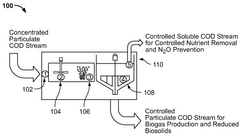
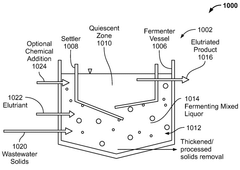
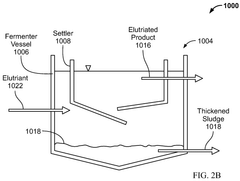
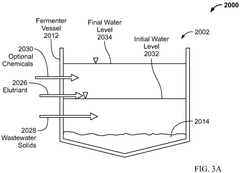
- The introduction of an intensified fermentation reactor system (inFERMx) that incorporates multiple stages, including microscreening, pre-conditioning, micro-aeration/fractional aeration, and elutriation, along with advanced instrumentation and control systems, to enhance fermentation efficiency and control.
Environmental Regulations for Fermentation Waste
Environmental regulations governing fermentation waste have become increasingly stringent as governments worldwide recognize the environmental impact of biotechnology manufacturing processes. The regulatory landscape encompasses multiple jurisdictions, with the European Union leading through comprehensive frameworks under the Waste Framework Directive and REACH regulations, while the United States operates under EPA guidelines that classify fermentation byproducts based on their biological origin and potential environmental risks.
Current regulatory frameworks distinguish between different categories of fermentation waste, including spent biomass, filtration residues, and chemical byproducts. The classification system determines disposal requirements, with hazardous waste streams requiring specialized treatment protocols and non-hazardous organic matter often eligible for composting or agricultural applications. Regulatory bodies mandate detailed documentation of waste composition, generation rates, and disposal methods, creating compliance burdens that drive innovation in waste reduction technologies.
Emerging regulations specifically target precision fermentation facilities due to their unique waste profiles, which may include genetically modified organisms and novel protein structures. The containment and inactivation requirements for GMO-derived waste streams have prompted regulatory agencies to develop specialized guidelines that address both environmental safety and public health concerns. These regulations often require thermal treatment or chemical inactivation before disposal, significantly increasing operational costs.
The regulatory trend toward circular economy principles has introduced extended producer responsibility frameworks that hold fermentation companies accountable for the entire lifecycle of their waste products. This shift has catalyzed investment in waste valorization technologies and closed-loop production systems. Companies must now demonstrate waste minimization efforts and explore beneficial reuse options before pursuing traditional disposal methods.
Compliance monitoring has intensified with the implementation of real-time reporting systems and mandatory waste audits. Regulatory agencies increasingly require digital tracking of waste streams from generation to final disposition, creating transparency that enables better enforcement and encourages proactive waste reduction strategies. Non-compliance penalties have escalated substantially, with some jurisdictions imposing production shutdowns for serious violations.
Future regulatory developments indicate movement toward performance-based standards that set specific waste reduction targets rather than prescriptive treatment methods. This approach encourages technological innovation while maintaining environmental protection objectives, positioning precision fermentation companies to develop competitive advantages through superior waste management capabilities.
Current regulatory frameworks distinguish between different categories of fermentation waste, including spent biomass, filtration residues, and chemical byproducts. The classification system determines disposal requirements, with hazardous waste streams requiring specialized treatment protocols and non-hazardous organic matter often eligible for composting or agricultural applications. Regulatory bodies mandate detailed documentation of waste composition, generation rates, and disposal methods, creating compliance burdens that drive innovation in waste reduction technologies.
Emerging regulations specifically target precision fermentation facilities due to their unique waste profiles, which may include genetically modified organisms and novel protein structures. The containment and inactivation requirements for GMO-derived waste streams have prompted regulatory agencies to develop specialized guidelines that address both environmental safety and public health concerns. These regulations often require thermal treatment or chemical inactivation before disposal, significantly increasing operational costs.
The regulatory trend toward circular economy principles has introduced extended producer responsibility frameworks that hold fermentation companies accountable for the entire lifecycle of their waste products. This shift has catalyzed investment in waste valorization technologies and closed-loop production systems. Companies must now demonstrate waste minimization efforts and explore beneficial reuse options before pursuing traditional disposal methods.
Compliance monitoring has intensified with the implementation of real-time reporting systems and mandatory waste audits. Regulatory agencies increasingly require digital tracking of waste streams from generation to final disposition, creating transparency that enables better enforcement and encourages proactive waste reduction strategies. Non-compliance penalties have escalated substantially, with some jurisdictions imposing production shutdowns for serious violations.
Future regulatory developments indicate movement toward performance-based standards that set specific waste reduction targets rather than prescriptive treatment methods. This approach encourages technological innovation while maintaining environmental protection objectives, positioning precision fermentation companies to develop competitive advantages through superior waste management capabilities.
Economic Impact of Precision Fermentation Adoption
The adoption of precision fermentation technology presents substantial economic implications across multiple sectors, fundamentally reshaping traditional manufacturing paradigms and creating new value propositions. This biotechnology approach offers significant cost advantages over conventional production methods, particularly in high-value ingredient manufacturing where traditional agriculture or chemical synthesis proves economically inefficient.
Initial capital investment requirements for precision fermentation facilities represent a considerable barrier to entry, with typical production plants requiring investments ranging from $50 million to $200 million depending on scale and product complexity. However, operational cost structures demonstrate favorable economics once facilities reach commercial scale, with reduced raw material costs, lower energy consumption per unit output, and minimal waste disposal expenses compared to traditional manufacturing processes.
The technology generates substantial cost savings through waste reduction mechanisms, eliminating expensive waste treatment processes and converting potential waste streams into valuable co-products. Companies implementing precision fermentation report 30-60% reductions in waste management costs, while simultaneously creating additional revenue streams from previously discarded materials. This dual benefit significantly improves overall production economics and accelerates return on investment timelines.
Labor cost implications favor precision fermentation adoption, as automated bioprocessing systems require fewer operational personnel compared to traditional manufacturing. While initial workforce transition costs exist, long-term labor expenses decrease substantially due to reduced manual handling requirements and streamlined production workflows. Additionally, the technology creates high-skilled employment opportunities in biotechnology sectors, contributing to economic development in regions hosting these facilities.
Market pricing dynamics reflect the economic advantages of precision fermentation, with products typically achieving 20-40% cost reductions compared to conventional alternatives once production scales are optimized. This pricing competitiveness drives market penetration and creates sustainable competitive advantages for early adopters. Furthermore, regulatory compliance costs decrease significantly due to reduced environmental impact and simplified waste management requirements, contributing to overall economic attractiveness of precision fermentation adoption across various industrial applications.
Initial capital investment requirements for precision fermentation facilities represent a considerable barrier to entry, with typical production plants requiring investments ranging from $50 million to $200 million depending on scale and product complexity. However, operational cost structures demonstrate favorable economics once facilities reach commercial scale, with reduced raw material costs, lower energy consumption per unit output, and minimal waste disposal expenses compared to traditional manufacturing processes.
The technology generates substantial cost savings through waste reduction mechanisms, eliminating expensive waste treatment processes and converting potential waste streams into valuable co-products. Companies implementing precision fermentation report 30-60% reductions in waste management costs, while simultaneously creating additional revenue streams from previously discarded materials. This dual benefit significantly improves overall production economics and accelerates return on investment timelines.
Labor cost implications favor precision fermentation adoption, as automated bioprocessing systems require fewer operational personnel compared to traditional manufacturing. While initial workforce transition costs exist, long-term labor expenses decrease substantially due to reduced manual handling requirements and streamlined production workflows. Additionally, the technology creates high-skilled employment opportunities in biotechnology sectors, contributing to economic development in regions hosting these facilities.
Market pricing dynamics reflect the economic advantages of precision fermentation, with products typically achieving 20-40% cost reductions compared to conventional alternatives once production scales are optimized. This pricing competitiveness drives market penetration and creates sustainable competitive advantages for early adopters. Furthermore, regulatory compliance costs decrease significantly due to reduced environmental impact and simplified waste management requirements, contributing to overall economic attractiveness of precision fermentation adoption across various industrial applications.
Unlock deeper insights with PatSnap Eureka Quick Research — get a full tech report to explore trends and direct your research. Try now!
Generate Your Research Report Instantly with AI Agent
Supercharge your innovation with PatSnap Eureka AI Agent Platform!