

How Redistribution Layer Thickness Affects Capacitance Levels
APR 7, 20268 MIN READ
Generate Your Research Report Instantly with AI Agent
PatSnap Eureka helps you evaluate technical feasibility & market potential.
RDL Thickness Impact on Capacitance Background and Objectives
The redistribution layer (RDL) has emerged as a critical component in advanced semiconductor packaging technologies, serving as the primary interconnect structure that enables signal routing between different functional blocks within integrated circuits. As semiconductor devices continue to scale down and packaging densities increase, the electrical characteristics of RDL structures have become increasingly important for overall system performance. Among these characteristics, capacitance levels represent a fundamental parameter that directly impacts signal integrity, power consumption, and electromagnetic interference in high-frequency applications.
The relationship between RDL thickness and capacitance levels has gained significant attention in the semiconductor industry due to its profound implications for next-generation packaging solutions. Traditional packaging approaches are being challenged by the demands of 5G communications, artificial intelligence processors, and high-performance computing applications, where parasitic capacitance can severely degrade system performance. Understanding how geometric parameters, particularly layer thickness, influence capacitive behavior has become essential for optimizing electrical performance while maintaining manufacturing feasibility.
Historical development in this field traces back to the early 2000s when flip-chip packaging first introduced the concept of redistribution layers for fan-out applications. Initially, thickness variations were primarily driven by mechanical reliability considerations rather than electrical optimization. However, as operating frequencies increased and signal rise times decreased, the electrical implications of RDL geometry became increasingly apparent, necessitating a more systematic approach to thickness design.
The primary objective of investigating RDL thickness impact on capacitance is to establish predictive models that enable precise control of parasitic capacitance in advanced packaging designs. This involves developing comprehensive understanding of the physical mechanisms governing capacitive coupling between adjacent conductors, substrate interactions, and the role of dielectric materials in determining overall capacitance behavior.
Furthermore, this research aims to identify optimal thickness ranges that balance electrical performance requirements with manufacturing constraints and cost considerations. The ultimate goal is to provide design guidelines that enable engineers to achieve target capacitance specifications while ensuring robust manufacturing yields and long-term reliability in diverse operating environments.
The relationship between RDL thickness and capacitance levels has gained significant attention in the semiconductor industry due to its profound implications for next-generation packaging solutions. Traditional packaging approaches are being challenged by the demands of 5G communications, artificial intelligence processors, and high-performance computing applications, where parasitic capacitance can severely degrade system performance. Understanding how geometric parameters, particularly layer thickness, influence capacitive behavior has become essential for optimizing electrical performance while maintaining manufacturing feasibility.
Historical development in this field traces back to the early 2000s when flip-chip packaging first introduced the concept of redistribution layers for fan-out applications. Initially, thickness variations were primarily driven by mechanical reliability considerations rather than electrical optimization. However, as operating frequencies increased and signal rise times decreased, the electrical implications of RDL geometry became increasingly apparent, necessitating a more systematic approach to thickness design.
The primary objective of investigating RDL thickness impact on capacitance is to establish predictive models that enable precise control of parasitic capacitance in advanced packaging designs. This involves developing comprehensive understanding of the physical mechanisms governing capacitive coupling between adjacent conductors, substrate interactions, and the role of dielectric materials in determining overall capacitance behavior.
Furthermore, this research aims to identify optimal thickness ranges that balance electrical performance requirements with manufacturing constraints and cost considerations. The ultimate goal is to provide design guidelines that enable engineers to achieve target capacitance specifications while ensuring robust manufacturing yields and long-term reliability in diverse operating environments.
Market Demand for Advanced RDL Capacitance Control
The semiconductor packaging industry is experiencing unprecedented demand for precise capacitance control in redistribution layer applications, driven by the relentless miniaturization of electronic devices and the proliferation of high-performance computing systems. Advanced mobile processors, 5G communication chips, and artificial intelligence accelerators require increasingly sophisticated RDL designs where capacitance levels must be controlled within extremely tight tolerances to ensure signal integrity and power delivery efficiency.
Market drivers are particularly strong in the smartphone and automotive electronics sectors, where space constraints demand innovative packaging solutions that can deliver superior electrical performance in compact form factors. The transition to heterogeneous integration and chiplet architectures has created new requirements for RDL capacitance management, as multiple dies with different electrical characteristics must be seamlessly integrated within single packages.
The growing adoption of advanced packaging technologies such as fan-out wafer-level packaging and 2.5D/3D integration has intensified the need for precise RDL thickness control methodologies. These applications require capacitance values that can be predictably adjusted through layer thickness optimization, enabling designers to fine-tune electrical characteristics without compromising mechanical reliability or thermal performance.
Enterprise data centers and cloud computing infrastructure represent another significant demand driver, where high-bandwidth memory interfaces and processor interconnects rely heavily on controlled capacitance levels for maintaining signal quality at increasingly higher frequencies. The market for RDL capacitance control solutions is further expanding due to emerging applications in Internet of Things devices, where power efficiency and electromagnetic compatibility requirements necessitate careful management of parasitic capacitances.
Supply chain considerations have also elevated the importance of advanced RDL capacitance control, as semiconductor manufacturers seek to reduce design iterations and improve yield rates through better predictability of electrical characteristics. This trend has created substantial market opportunities for equipment suppliers, materials providers, and design automation software companies that can deliver comprehensive solutions for RDL thickness and capacitance optimization.
Market drivers are particularly strong in the smartphone and automotive electronics sectors, where space constraints demand innovative packaging solutions that can deliver superior electrical performance in compact form factors. The transition to heterogeneous integration and chiplet architectures has created new requirements for RDL capacitance management, as multiple dies with different electrical characteristics must be seamlessly integrated within single packages.
The growing adoption of advanced packaging technologies such as fan-out wafer-level packaging and 2.5D/3D integration has intensified the need for precise RDL thickness control methodologies. These applications require capacitance values that can be predictably adjusted through layer thickness optimization, enabling designers to fine-tune electrical characteristics without compromising mechanical reliability or thermal performance.
Enterprise data centers and cloud computing infrastructure represent another significant demand driver, where high-bandwidth memory interfaces and processor interconnects rely heavily on controlled capacitance levels for maintaining signal quality at increasingly higher frequencies. The market for RDL capacitance control solutions is further expanding due to emerging applications in Internet of Things devices, where power efficiency and electromagnetic compatibility requirements necessitate careful management of parasitic capacitances.
Supply chain considerations have also elevated the importance of advanced RDL capacitance control, as semiconductor manufacturers seek to reduce design iterations and improve yield rates through better predictability of electrical characteristics. This trend has created substantial market opportunities for equipment suppliers, materials providers, and design automation software companies that can deliver comprehensive solutions for RDL thickness and capacitance optimization.
Current RDL Thickness Challenges and Capacitance Issues
The semiconductor industry faces significant challenges in managing redistribution layer thickness while maintaining optimal capacitance performance in advanced packaging applications. Current manufacturing processes struggle with achieving uniform thickness distribution across large wafer areas, particularly as device dimensions continue to shrink and packaging density increases. Variations in RDL thickness directly impact the dielectric properties between conductive layers, leading to unpredictable capacitance fluctuations that can compromise circuit performance and signal integrity.
Process control limitations represent a major obstacle in RDL fabrication. Traditional deposition techniques such as sputtering and electroplating exhibit inherent non-uniformities that become more pronounced as target thickness decreases below 5 micrometers. These variations can reach 10-15% across a single wafer, resulting in capacitance mismatches that exceed acceptable tolerances for high-frequency applications. The challenge intensifies when multiple RDL layers are stacked, as thickness variations compound through the vertical structure.
Material selection constraints further complicate thickness optimization efforts. Low-k dielectric materials, while beneficial for reducing parasitic capacitance, often exhibit poor mechanical properties and thermal stability when deposited in thin layers. This creates a trade-off between electrical performance and manufacturing reliability, forcing engineers to compromise on either capacitance targets or process yield. The interaction between different dielectric materials in multi-layer structures adds another layer of complexity to thickness control.
Thermal management during RDL processing presents additional challenges that directly affect both thickness uniformity and capacitance stability. Temperature gradients across the wafer during deposition and curing processes cause differential expansion and contraction, leading to stress-induced thickness variations. These thermal effects become more critical as RDL structures become thinner and more densely packed, requiring precise temperature control systems that current manufacturing equipment struggles to provide consistently.
Metrology and characterization limitations hinder accurate assessment of RDL thickness impact on capacitance. Existing measurement techniques lack the spatial resolution needed to correlate local thickness variations with capacitance changes at the device level. This measurement gap makes it difficult to establish robust process control parameters and optimize thickness targets for specific capacitance requirements, creating a feedback loop that perpetuates manufacturing inconsistencies.
Process control limitations represent a major obstacle in RDL fabrication. Traditional deposition techniques such as sputtering and electroplating exhibit inherent non-uniformities that become more pronounced as target thickness decreases below 5 micrometers. These variations can reach 10-15% across a single wafer, resulting in capacitance mismatches that exceed acceptable tolerances for high-frequency applications. The challenge intensifies when multiple RDL layers are stacked, as thickness variations compound through the vertical structure.
Material selection constraints further complicate thickness optimization efforts. Low-k dielectric materials, while beneficial for reducing parasitic capacitance, often exhibit poor mechanical properties and thermal stability when deposited in thin layers. This creates a trade-off between electrical performance and manufacturing reliability, forcing engineers to compromise on either capacitance targets or process yield. The interaction between different dielectric materials in multi-layer structures adds another layer of complexity to thickness control.
Thermal management during RDL processing presents additional challenges that directly affect both thickness uniformity and capacitance stability. Temperature gradients across the wafer during deposition and curing processes cause differential expansion and contraction, leading to stress-induced thickness variations. These thermal effects become more critical as RDL structures become thinner and more densely packed, requiring precise temperature control systems that current manufacturing equipment struggles to provide consistently.
Metrology and characterization limitations hinder accurate assessment of RDL thickness impact on capacitance. Existing measurement techniques lack the spatial resolution needed to correlate local thickness variations with capacitance changes at the device level. This measurement gap makes it difficult to establish robust process control parameters and optimize thickness targets for specific capacitance requirements, creating a feedback loop that perpetuates manufacturing inconsistencies.
Existing RDL Thickness Optimization Solutions
01 Redistribution layer structure design for capacitance optimization
The redistribution layer (RDL) structure can be specifically designed to optimize capacitance characteristics in semiconductor devices. This involves configuring the geometric layout, thickness, and spacing of redistribution layers to achieve desired capacitance values. The design considerations include the dielectric materials between layers, the width and pitch of conductive traces, and the overall layer stack configuration to control parasitic capacitance and provide intentional capacitive elements for signal integrity and power delivery.- Redistribution layer structure design for capacitance optimization: The redistribution layer (RDL) structure can be specifically designed to optimize capacitance characteristics in semiconductor devices. This involves configuring the geometric layout, thickness, and spacing of redistribution layers to achieve desired capacitance values. The design considerations include the dielectric materials between layers, the width and pitch of conductive traces, and the overall layer stack configuration to control parasitic capacitance and provide intentional capacitive elements for signal integrity and power delivery.
- Integrated capacitor structures within redistribution layers: Capacitor structures can be directly integrated into redistribution layers to provide decoupling capacitance or other capacitive functions. These integrated capacitors utilize the conductive and dielectric layers of the RDL stack to form parallel plate capacitor configurations. The integration approach allows for compact capacitor implementation without requiring additional discrete components, improving space efficiency and electrical performance by placing capacitance closer to active circuits.
- Dielectric material selection for RDL capacitance control: The choice of dielectric materials in redistribution layers significantly impacts the capacitance characteristics. High-k dielectric materials can be employed to increase capacitance density, while low-k materials help reduce parasitic capacitance between signal lines. Material properties such as dielectric constant, thickness uniformity, and breakdown voltage are critical parameters. Multiple dielectric layers with different properties may be combined to achieve optimal capacitance performance for specific applications.
- Capacitance measurement and characterization methods for RDL: Various measurement and characterization techniques are employed to evaluate capacitance in redistribution layer structures. These methods include electrical testing approaches that measure capacitance values at different frequencies and voltages. Characterization may involve test structures specifically designed for capacitance extraction, modeling techniques to predict capacitance from physical dimensions, and verification methods to ensure capacitance values meet design specifications throughout the manufacturing process.
- Multi-layer RDL configurations for enhanced capacitance functionality: Multi-layer redistribution structures enable sophisticated capacitance implementations through stacked configurations. These designs utilize multiple metal and dielectric layers to create complex capacitor networks, provide distributed capacitance for power distribution networks, and enable three-dimensional capacitor arrangements. The multi-layer approach allows for increased capacitance density, improved electrical performance through reduced inductance, and flexible routing options while maintaining desired capacitive properties.
02 Integrated capacitor structures within redistribution layers
Capacitor structures can be directly integrated into redistribution layers to provide decoupling capacitance or other capacitive functions. These integrated capacitors utilize the conductive and dielectric layers of the RDL stack to form parallel plate capacitor configurations. The integration approach allows for compact capacitor implementation without requiring additional discrete components, improving space efficiency and electrical performance by placing capacitance closer to active circuits.Expand Specific Solutions03 Dielectric material selection for RDL capacitance control
The choice of dielectric materials in redistribution layers significantly impacts the capacitance characteristics. High-k dielectric materials can be employed to increase capacitance density, while low-k materials help reduce parasitic capacitance between signal lines. Material properties such as dielectric constant, thickness uniformity, and breakdown voltage are critical parameters. Multiple dielectric layers with different properties may be combined to achieve optimal capacitance performance for specific applications.Expand Specific Solutions04 Capacitance measurement and characterization techniques for RDL
Various measurement and characterization techniques are employed to evaluate capacitance in redistribution layer structures. These methods include impedance spectroscopy, capacitance-voltage measurements, and time-domain reflectometry to assess both intentional and parasitic capacitance. Characterization approaches help validate design models, identify manufacturing variations, and ensure that capacitance values meet specifications. Advanced techniques may involve frequency-dependent analysis to understand capacitance behavior across different operating conditions.Expand Specific Solutions05 Multi-layer RDL configurations for enhanced capacitance functionality
Multi-layer redistribution configurations enable sophisticated capacitance management through vertical stacking of conductive and dielectric layers. These structures allow for the creation of complex capacitor networks, including series and parallel combinations, to achieve specific capacitance values and distributions. The multi-layer approach provides flexibility in routing while simultaneously implementing distributed capacitance for power delivery networks and signal conditioning. Advanced configurations may include interdigitated structures and three-dimensional capacitor geometries.Expand Specific Solutions
Key Players in RDL and Semiconductor Packaging Industry
The redistribution layer thickness technology represents a mature segment within the advanced semiconductor packaging industry, currently experiencing steady growth driven by increasing demand for miniaturized electronic devices and enhanced performance requirements. The market demonstrates significant scale with established players like Samsung Electronics, TSMC, and Micron Technology leading through extensive R&D investments and manufacturing capabilities. Technology maturity varies across participants, with semiconductor giants like Samsung, TSMC, and Qualcomm showcasing advanced redistribution layer optimization techniques, while component specialists such as Murata Manufacturing and TDK Corp contribute specialized materials expertise. Memory manufacturers including ChangXin Memory Technologies and Nanya Technology focus on application-specific implementations, while research institutions like Industrial Technology Research Institute drive innovation in thickness control methodologies. The competitive landscape reflects a consolidated market where technological differentiation centers on precision control, material selection, and integration with next-generation packaging solutions.
Samsung Electronics Co., Ltd.
Technical Solution: Samsung has implemented comprehensive RDL thickness optimization strategies in their advanced semiconductor packaging, particularly for mobile processors and memory devices. Their approach involves detailed electromagnetic field simulation to understand the relationship between RDL thickness and parasitic capacitance. Samsung's packaging technology incorporates variable RDL thickness designs where different regions of the package utilize optimized thickness values to minimize unwanted capacitive coupling while maintaining signal integrity. The company has developed proprietary materials and deposition techniques that enable precise control over RDL thickness uniformity, which directly impacts the predictability and consistency of capacitance levels across their product portfolio.
Strengths: Comprehensive vertical integration allowing for optimized RDL design and manufacturing control. Weaknesses: Technology primarily focused on high-volume consumer applications, potentially limiting customization for specialized requirements.
Taiwan Semiconductor Manufacturing Co., Ltd.
Technical Solution: TSMC has developed advanced redistribution layer (RDL) technologies for their advanced packaging solutions, particularly in their Integrated Fan-Out (InFO) and Chip-on-Wafer-on-Substrate (CoWoS) platforms. Their RDL process utilizes multiple metal layers with optimized thickness control to manage parasitic capacitance effects. The company employs sophisticated modeling techniques to predict how RDL thickness variations impact capacitance levels, enabling precise control of electrical performance in high-density packaging applications. Their advanced lithography and deposition processes allow for RDL thickness control within nanometer precision, which is critical for maintaining consistent capacitance characteristics across different packaging configurations.
Strengths: Industry-leading process control and advanced packaging expertise with precise thickness management. Weaknesses: High manufacturing costs and complex process requirements limit accessibility for cost-sensitive applications.
Core Innovations in RDL-Capacitance Relationship Control
Method and apparatus for a power distribution system
PatentActiveUS7605460B1
Innovation
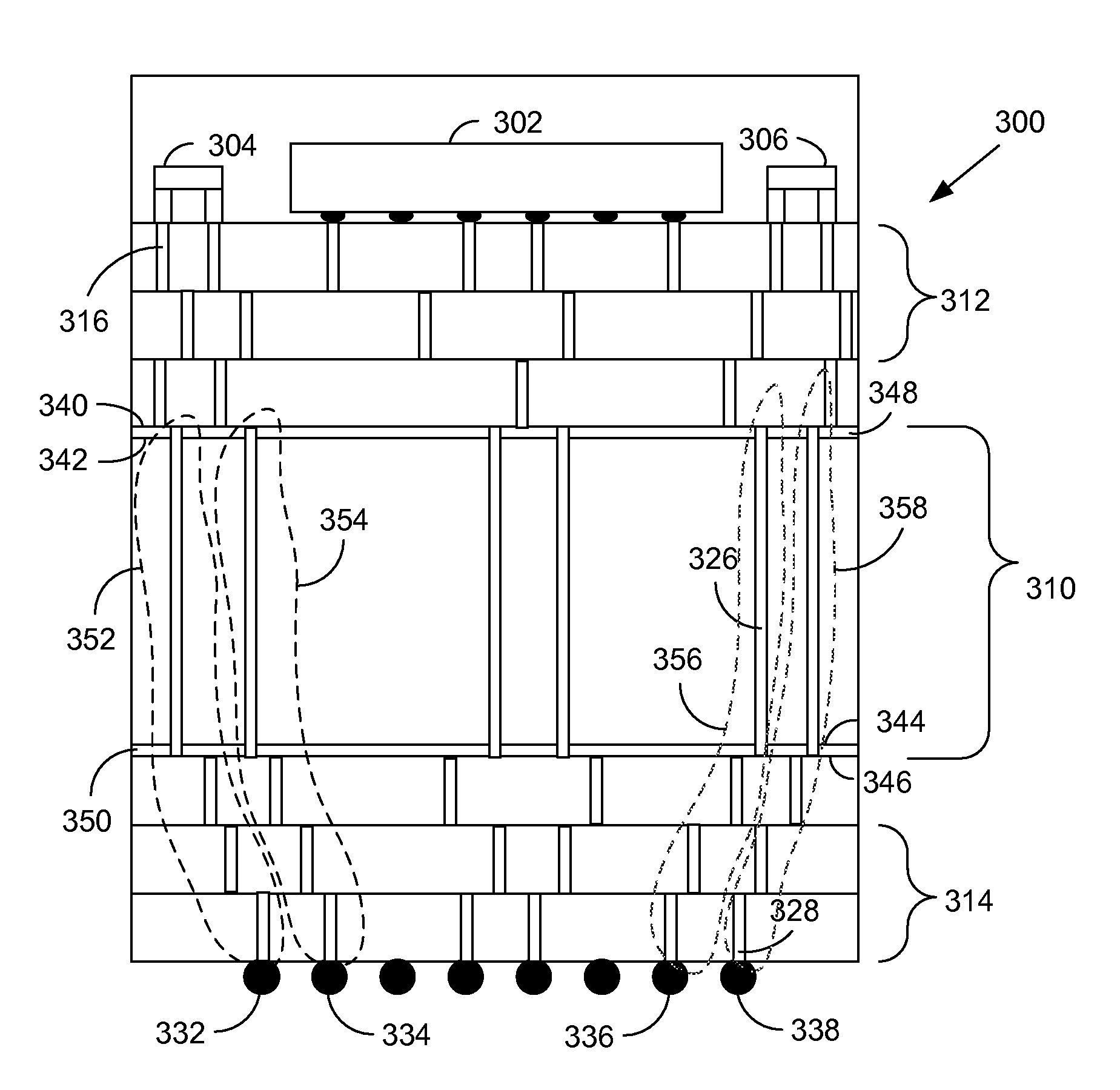
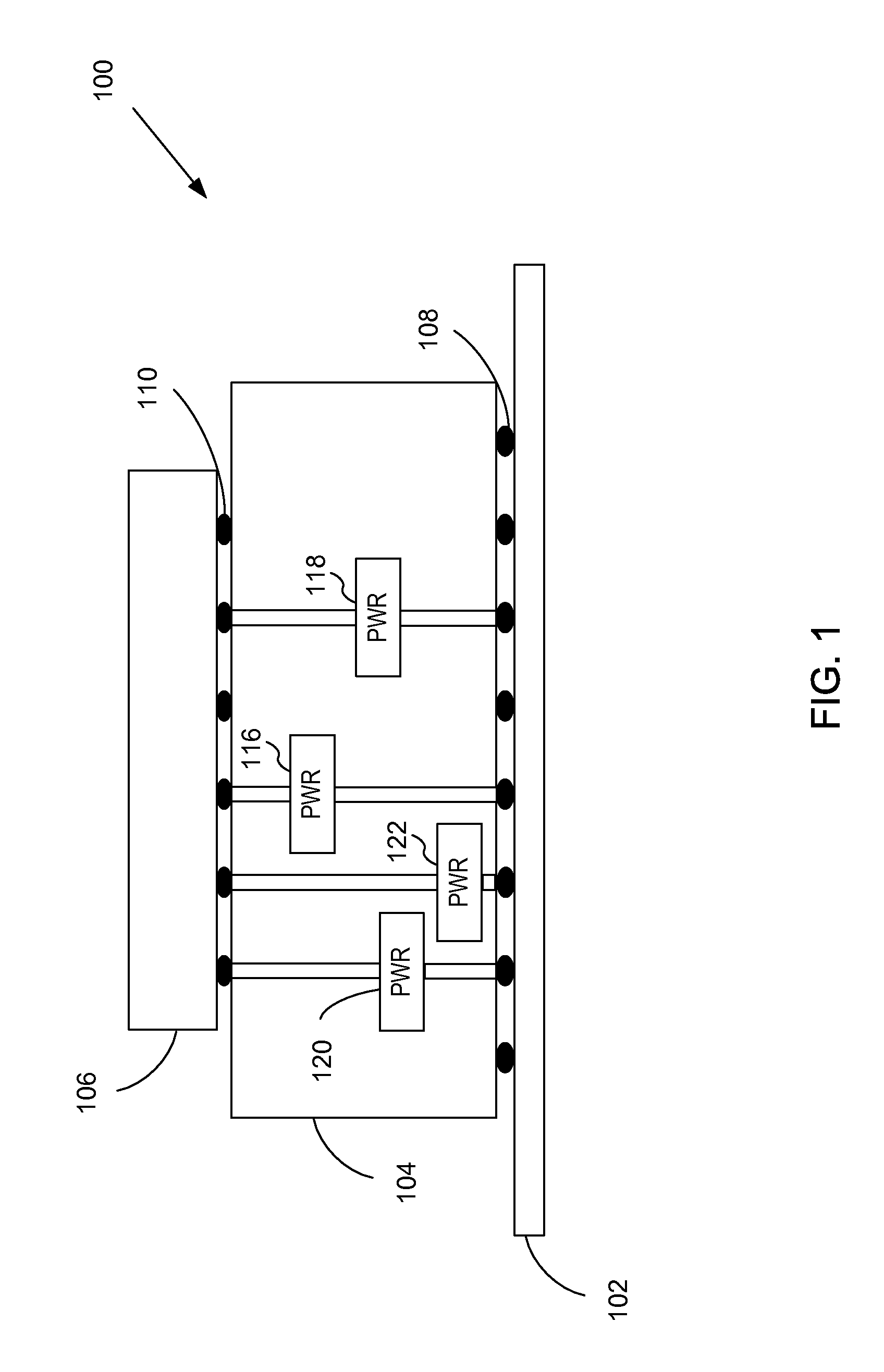
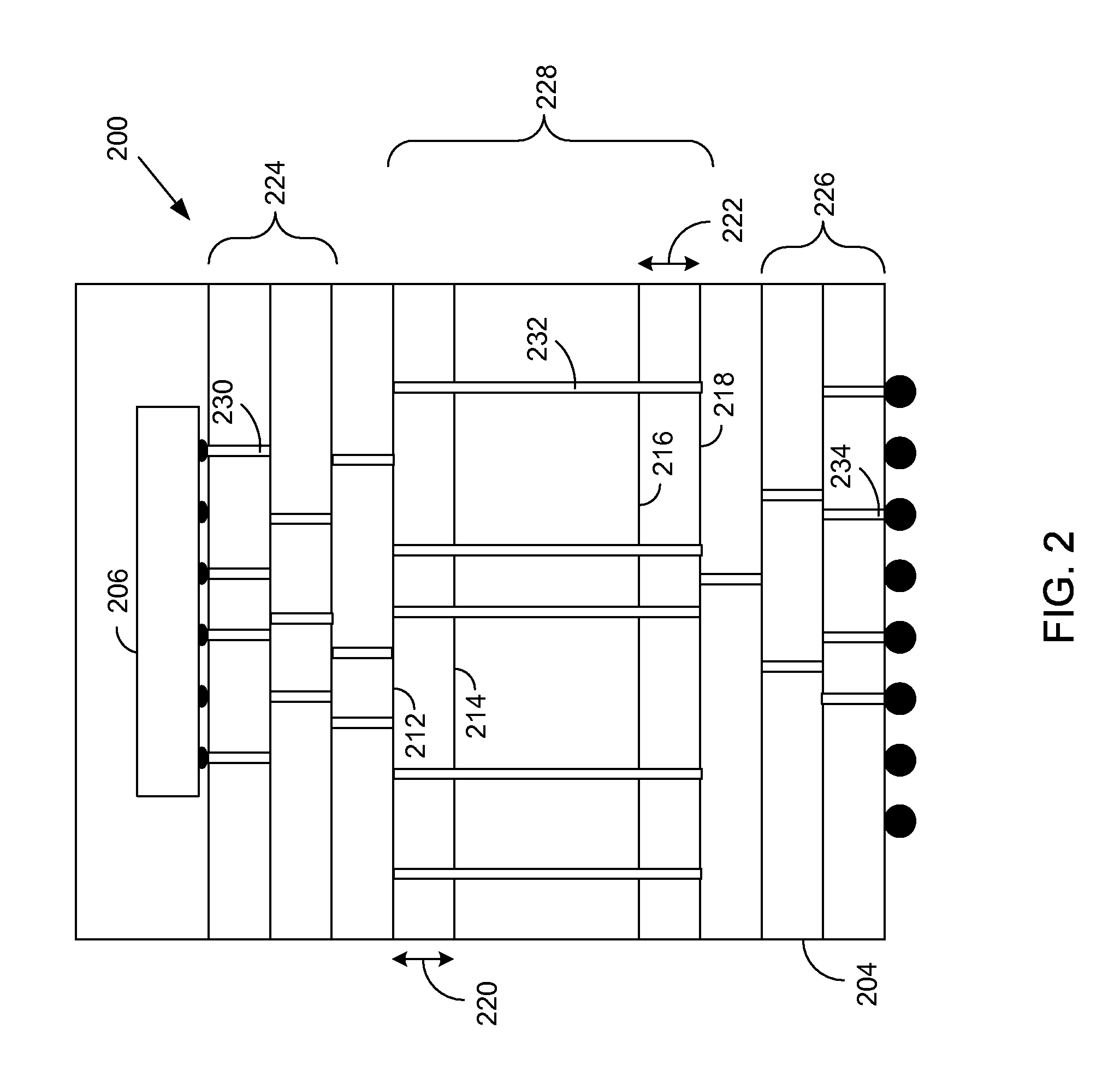
- The implementation of copper-clad laminate structures with reduced dielectric layer thickness, typically between 1-15 micrometers, and the use of perforated mesh patterns or non-conductive spacer posts to minimize spreading inductance and maximize distributed capacitance, thereby optimizing current flow and reducing impedance.

Redistribution layer of fan-out package and manufacturing method thereof
PatentInactiveUS20210272907A1
Innovation
- A redistribution layer with a 2P1M or 3P3M structure, featuring alternating dielectric and metal ion layers with specific ion implantation and gap formation, which increases distances between dielectric and wiring layers, reducing capacitive effects while maintaining low power consumption.


Manufacturing Standards for RDL Process Control
The establishment of robust manufacturing standards for RDL process control is critical for managing the relationship between redistribution layer thickness and capacitance levels in advanced semiconductor packaging. These standards encompass precise dimensional tolerances, material specifications, and process parameter windows that directly influence the electrical performance of interconnect structures.
Thickness uniformity standards typically require RDL layers to maintain variations within ±5% across the substrate surface, with local thickness deviations not exceeding ±2% within any 10mm x 10mm area. These tight tolerances are essential because capacitance exhibits a direct inverse relationship with dielectric thickness, making thickness control paramount for achieving consistent electrical characteristics across the package.
Material property specifications define acceptable ranges for dielectric constant values, typically maintaining εr variations within ±3% for production lots. The standards also establish requirements for surface roughness, with Ra values typically limited to less than 50nm to minimize interface effects that can influence capacitance calculations and create parasitic effects in high-frequency applications.
Process control parameters include deposition rate specifications, typically maintained within ±10% of target values, and curing temperature profiles with tolerance windows of ±5°C. These parameters directly affect the final dielectric properties and thickness uniformity of RDL structures. Chamber conditioning protocols and substrate preparation standards ensure consistent starting conditions for each processing cycle.
Quality assurance protocols mandate in-line thickness measurements using ellipsometry or profilometry at predetermined sampling frequencies, typically every fifth substrate or hourly intervals during production runs. Statistical process control charts track thickness variations and trigger corrective actions when measurements approach specification limits.
Equipment calibration standards require regular verification of deposition tools, measurement systems, and environmental controls. Preventive maintenance schedules ensure consistent tool performance, while qualification procedures validate process capability following any equipment modifications or maintenance activities that could affect layer thickness uniformity or material properties.
Thickness uniformity standards typically require RDL layers to maintain variations within ±5% across the substrate surface, with local thickness deviations not exceeding ±2% within any 10mm x 10mm area. These tight tolerances are essential because capacitance exhibits a direct inverse relationship with dielectric thickness, making thickness control paramount for achieving consistent electrical characteristics across the package.
Material property specifications define acceptable ranges for dielectric constant values, typically maintaining εr variations within ±3% for production lots. The standards also establish requirements for surface roughness, with Ra values typically limited to less than 50nm to minimize interface effects that can influence capacitance calculations and create parasitic effects in high-frequency applications.
Process control parameters include deposition rate specifications, typically maintained within ±10% of target values, and curing temperature profiles with tolerance windows of ±5°C. These parameters directly affect the final dielectric properties and thickness uniformity of RDL structures. Chamber conditioning protocols and substrate preparation standards ensure consistent starting conditions for each processing cycle.
Quality assurance protocols mandate in-line thickness measurements using ellipsometry or profilometry at predetermined sampling frequencies, typically every fifth substrate or hourly intervals during production runs. Statistical process control charts track thickness variations and trigger corrective actions when measurements approach specification limits.
Equipment calibration standards require regular verification of deposition tools, measurement systems, and environmental controls. Preventive maintenance schedules ensure consistent tool performance, while qualification procedures validate process capability following any equipment modifications or maintenance activities that could affect layer thickness uniformity or material properties.
Quality Assurance in RDL Capacitance Performance
Quality assurance in RDL capacitance performance requires comprehensive testing methodologies and stringent control measures to ensure consistent electrical characteristics across manufacturing batches. The relationship between redistribution layer thickness and capacitance levels necessitates precise measurement protocols that can detect minute variations in dielectric properties and geometric parameters.
Electrical testing protocols form the foundation of RDL capacitance quality assurance. Capacitance-voltage measurements must be conducted across multiple frequency ranges to characterize the dielectric response accurately. High-frequency testing reveals parasitic effects that may not be apparent in DC measurements, while low-frequency analysis provides insights into charge storage mechanisms. Temperature cycling tests validate capacitance stability across operational ranges, ensuring reliable performance in diverse environmental conditions.
Process control monitoring represents a critical aspect of maintaining consistent RDL capacitance performance. Real-time thickness measurement systems using ellipsometry or interferometry enable immediate feedback during deposition processes. Statistical process control charts track key parameters such as deposition rate, substrate temperature, and chamber pressure to identify drift patterns before they impact electrical performance. Automated inspection systems equipped with high-resolution imaging capabilities detect surface irregularities that could affect capacitance uniformity.
Reliability testing protocols must address long-term stability concerns specific to RDL structures. Accelerated aging tests under elevated temperature and voltage stress conditions reveal potential degradation mechanisms. Electromigration testing evaluates conductor integrity under current stress, while dielectric breakdown testing determines voltage handling capabilities. These assessments provide confidence intervals for capacitance drift over operational lifetimes.
Calibration and traceability standards ensure measurement accuracy across different testing equipment and facilities. Reference standards with known capacitance values enable cross-validation of measurement systems. Regular calibration schedules maintain measurement precision within specified tolerances. Documentation protocols track all quality metrics, enabling trend analysis and continuous improvement initiatives that enhance overall RDL capacitance performance consistency.
Electrical testing protocols form the foundation of RDL capacitance quality assurance. Capacitance-voltage measurements must be conducted across multiple frequency ranges to characterize the dielectric response accurately. High-frequency testing reveals parasitic effects that may not be apparent in DC measurements, while low-frequency analysis provides insights into charge storage mechanisms. Temperature cycling tests validate capacitance stability across operational ranges, ensuring reliable performance in diverse environmental conditions.
Process control monitoring represents a critical aspect of maintaining consistent RDL capacitance performance. Real-time thickness measurement systems using ellipsometry or interferometry enable immediate feedback during deposition processes. Statistical process control charts track key parameters such as deposition rate, substrate temperature, and chamber pressure to identify drift patterns before they impact electrical performance. Automated inspection systems equipped with high-resolution imaging capabilities detect surface irregularities that could affect capacitance uniformity.
Reliability testing protocols must address long-term stability concerns specific to RDL structures. Accelerated aging tests under elevated temperature and voltage stress conditions reveal potential degradation mechanisms. Electromigration testing evaluates conductor integrity under current stress, while dielectric breakdown testing determines voltage handling capabilities. These assessments provide confidence intervals for capacitance drift over operational lifetimes.
Calibration and traceability standards ensure measurement accuracy across different testing equipment and facilities. Reference standards with known capacitance values enable cross-validation of measurement systems. Regular calibration schedules maintain measurement precision within specified tolerances. Documentation protocols track all quality metrics, enabling trend analysis and continuous improvement initiatives that enhance overall RDL capacitance performance consistency.
Unlock deeper insights with PatSnap Eureka Quick Research — get a full tech report to explore trends and direct your research. Try now!
Generate Your Research Report Instantly with AI Agent
Supercharge your innovation with PatSnap Eureka AI Agent Platform!